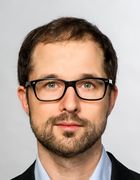
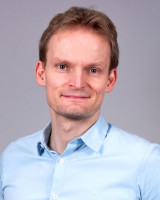
Jan Henrik Röwekamp is a researcher at the Department of Computer Science, University of Hamburg. His work focuses on theoretical computer science with emphases on Petri nets, distributed systems, algorithm design, and computational geometry. He holds a Master's (2013) and Bachelor's (2011) degree from the same institution. His research includes distributed simulation of Petri nets via web-based stateless services, containerization strategies for Petri net simulations, and applying Petri nets to computer vision tasks like Euclidean distance approximation. He has contributed to modeling IoT/Edge Computing architectures using Petri nets and explored distributed execution frameworks for reference nets using virtual machines. Publications span international workshops such as PNSE'19, PNSE'18, and AWPN 2017. His work bridges theoretical foundations with practical implementations in distributed systems and software engineering.
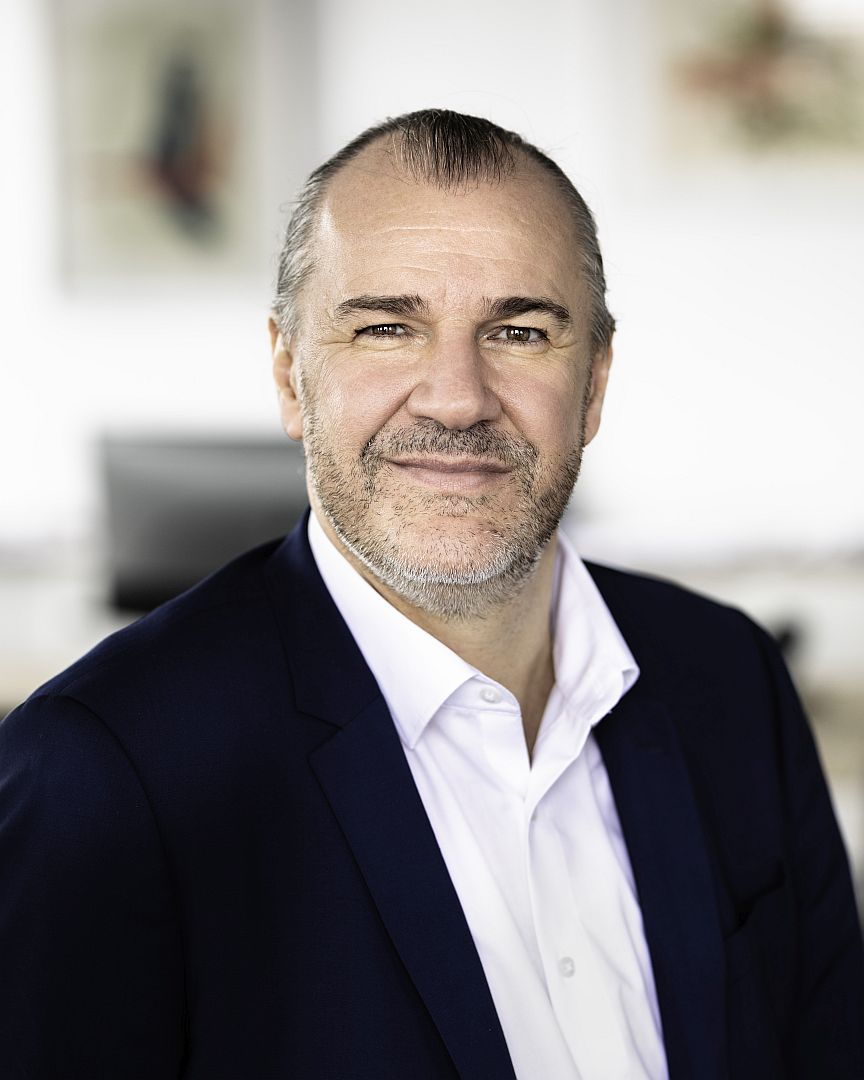
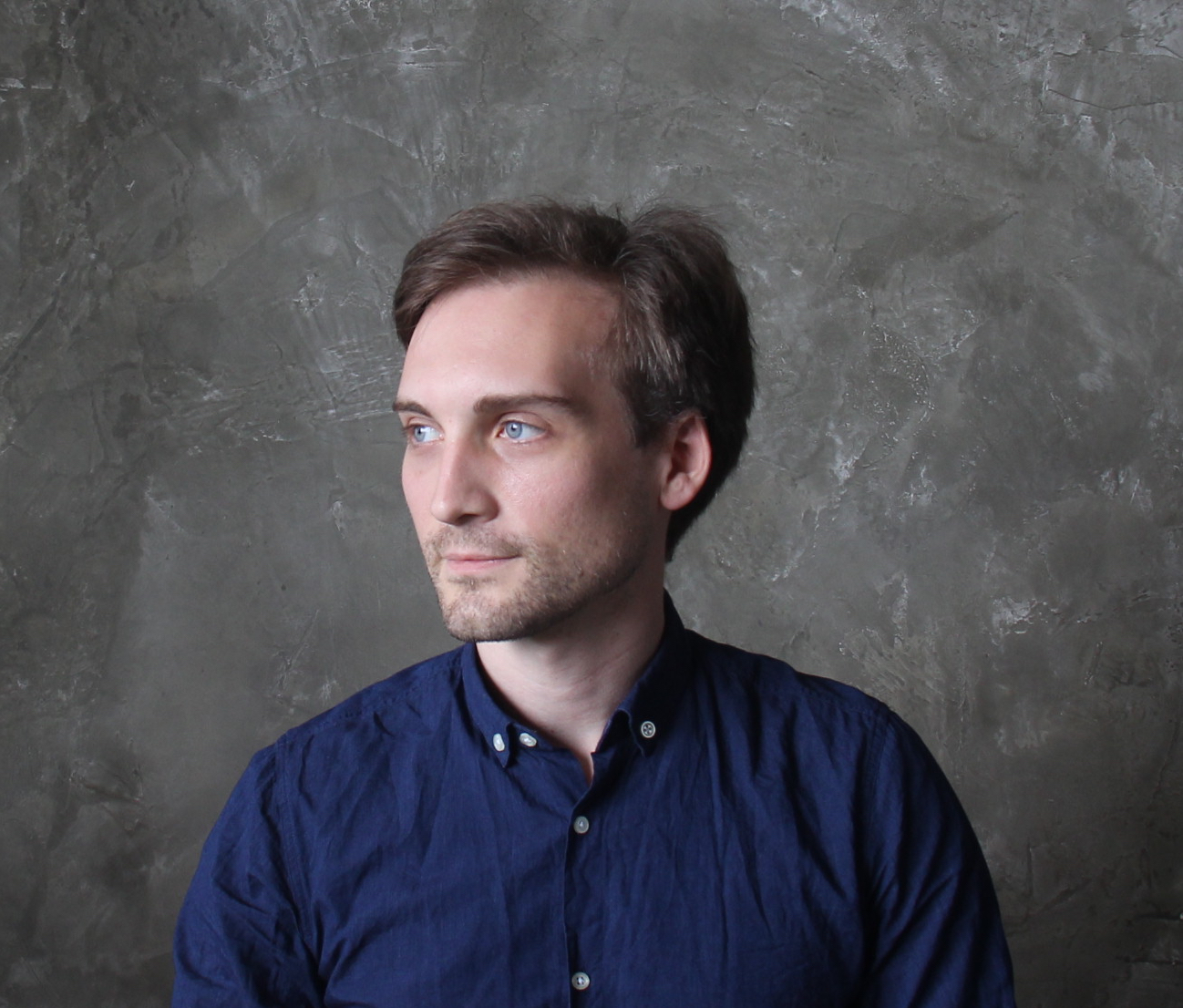
Prof. Dr. Ulrich Bauer is a Professor at the Technische Universität München (TUM) , leading the Applied and Computational Topology research group within the TUM School of Computation, Information and Technology . His academic career includes positions at Freie Universität Berlin, Georg-August-Universität Göttingen (where he earned a doctoral degree in Mathematics), and the Institute of Science and Technology Austria. Bauer specializes in applied and computational topology, focusing on multi-scale data connectivity and developing computational methods for large datasets. He is a key member of the Collaborative Research Center Discretization in Geometry and Dynamics and the Centre for Topological Data Analysis . Research Interests: Bauer’s work bridges theoretical foundations and practical applications in topology. He explores methods like persistent homology and discrete Morse theory to uncover global data structures. His contributions include advancing algorithms for topological data analysis, with applications in medical imaging, computational biology, and geometric modeling. Bauer’s software tool Ripser is widely recognized for efficient computation of persistence barcodes. Awards: ATMCS Best New Software Award (2016) Best Paper Award TopoInVis (2013) Apple Design Award (2003) O’Reilly Mac OS X Innovators Award (2003) Grants & Leadership: Bauer’s leadership roles include the executive board of the CRC Discretization in Geometry and Dynamics. His research has been supported by grants focusing on topological methods in data science and geometry. He actively contributes to advancing interdisciplinary collaborations between mathematics, computer science, and applied fields. Labs & Teams: As founder of the Applied and Computational Topology group at TUM, Bauer fosters innovation in computational topology, mentoring researchers and students in developing cutting-edge methodologies. His work intersects with the TUM School’s broader mission in computational and data-driven science.
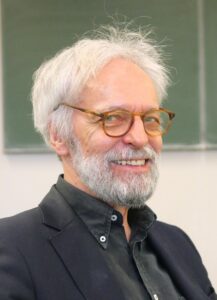
Francisco Criado is a researcher with significant contributions to computational geometry, discrete mathematics, and applied algorithm design. His work spans theoretical and applied domains, including convex optimization, Voronoi diagrams, and geometric modeling in gas dynamics and earthquake decision-making frameworks. Collaborators : Francisco Santos, Sebastian Pokutta, Michael Joswig Key Venues : Discrete & Computational Geometry , Foundations of Computational Mathematics , NeurIPS Research Interests focus on geometric algorithms, polyhedral complexes, and applications of fuzzy logic. His 2025 papers explore convex hulls, zonotopes, and tropical geometry, while earlier works address gas dynamics and decision-making models. Article Trends reveal expertise in high-dimensional geometry, combinatorial optimization, and numerical methods. He frequently employs randomized and linear convergence algorithms in 2022–2025. Advising and Grants : No explicit data provided, but his extensive co-authorship network suggests collaborative research leadership.
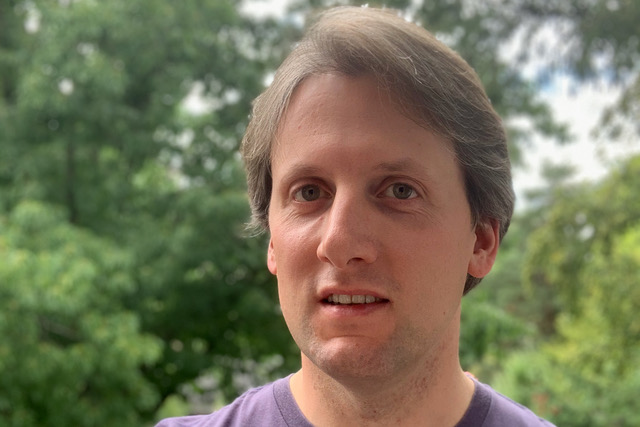
Robert Beinert is a Senior Lecturer (Privatdozent) in Applied Mathematics at the Technische Universität Berlin, affiliated with the Department of Applied Mathematics within the Faculty of Mathematics and Natural Sciences. He holds a Dr. rer. nat. (Ph.D.) from Georg-August-Universität Göttingen (2015) and completed his Habilitation at Technische Universität Berlin in 2025. His research focuses on inverse problems, optimal transport, phase retrieval, and mathematical imaging, with applications in signal processing and data analysis. He has held academic positions including Research Associate roles at TU Berlin (2020–2025), Karl-Franzens-Universität Graz (2016–2020), and Georg-August-Universität Göttingen (2016). His work bridges theoretical foundations and practical applications, with contributions to regularization techniques, optimal transport theory, and algorithmic development. Key research interests include phase retrieval uniqueness analysis, Gromov-Wasserstein transport, and denoising methodologies for manifold-valued data. His recent publications emphasize advancements in optimal transport frameworks, regularization strategies, and applications in image processing and machine learning.
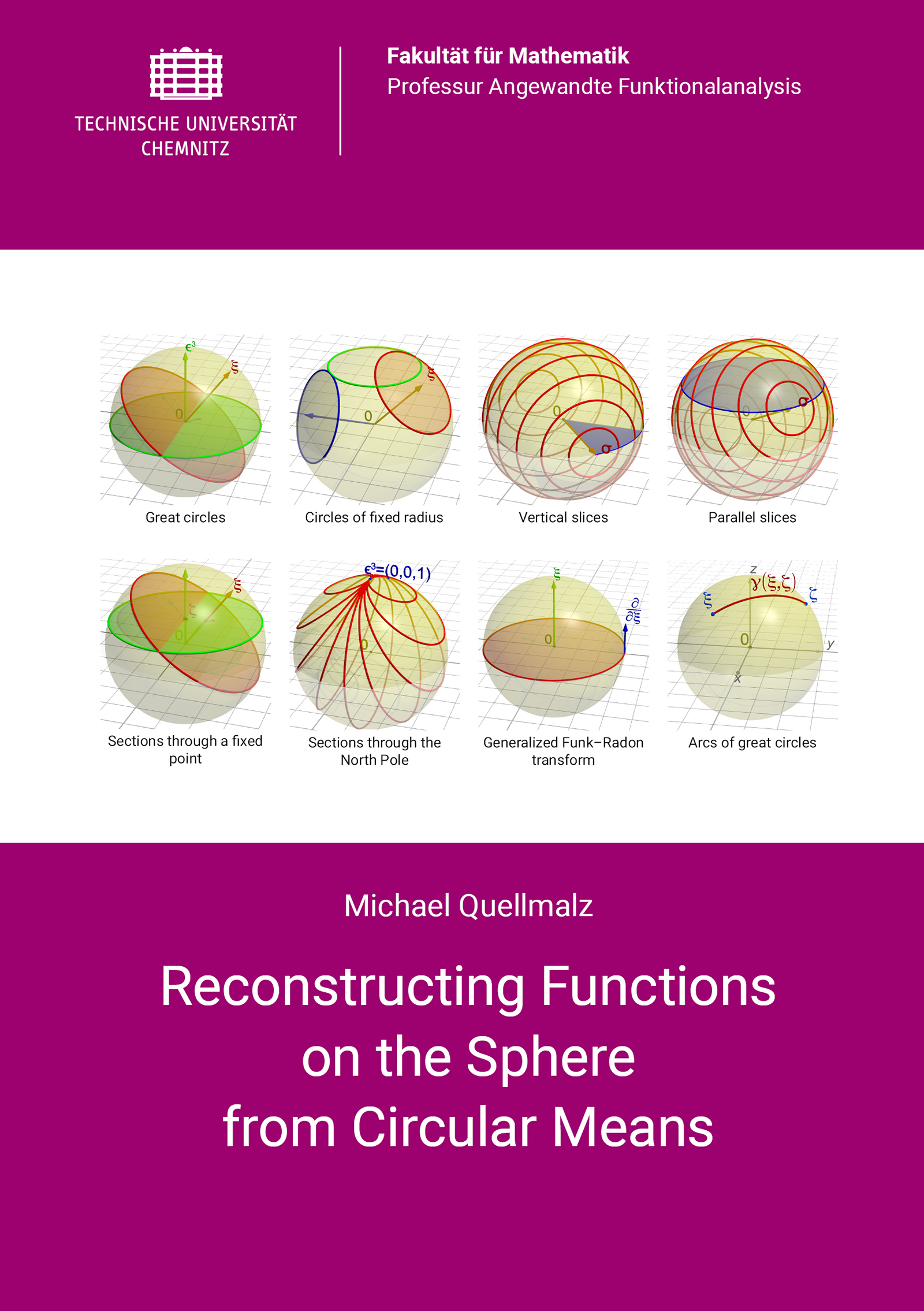
Dr. Michael Quellmalz is a Researcher in Applied Mathematics at the Technical University of Berlin (TU Berlin), affiliated with Faculty II - Mathematics and Natural Sciences and the Institute of Mathematics. His research focuses on inverse problems, tomography, optimal transport, and Fourier analysis with applications in medical imaging and computational geometry. He actively contributes to the SFB Tomography Across the Scales collaborative research center, advancing reconstruction techniques in diffraction tomography and motion detection. He teaches a variety of courses including Analysis II for Engineering, Harmonic Analysis I, and Numerical Mathematics, emphasizing both theoretical foundations and their practical implementations. His work has been recognized through awards such as the Universitätspreise 2020 and a Digital Fellowship for innovative educational contributions in adaptive feedback systems. Key publications include advancements in sliced optimal transport on spheres, motion detection algorithms, and Fourier-based reconstruction methods. Dr. Quellmalz's research group develops MATLAB toolboxes for applications like FourierODT and NFFT-Sinkhorn, reflecting his commitment to bridging mathematical theory with computational tools. His academic journey includes a PhD from TU Chemnitz (2019) and extensive participation in international conferences, workshops, and collaborative projects across Europe.
Florian Beier is a Researcher at the Institute of Mathematics, Technical University of Berlin, specializing in Applied Mathematics. Since October 2021, he has served as a research assistant pursuing his Dr. rer. nat. His academic journey includes a Master of Science (2021) and Bachelor of Science (2018), both in Mathematics from TU Berlin, with thesis topics focusing on Optimal Transport and Percolation Theory. Research interests revolve around Optimal Transport theory, particularly multi-marginal and Gromov-Wasserstein formulations, with applications to mathematical imaging and computational geometry. His work bridges theoretical advancements and practical implementations, addressing challenges in transportation barycenters, entropic regularization, and algorithmic design for complex data analysis. Notable achievements include the Best Poster Award at the 2022 International Conference on Curves and Surfaces and recognition for academic excellence at TU Berlin's Dies Mathematicus. He actively contributes to conferences and workshops, presenting groundbreaking research on transport operators and barycenter computations. Current projects involve developing fixpoint iteration methods for Gromov-Wasserstein barycenters and exploring transport kernels for unpaired data analysis. His collaborations span institutions like the University of Tübingen and KTH Royal Institute of Technology, emphasizing interdisciplinary approaches to transport problems.
Prof. Manfred Hauswirth is the Managing Director of Fraunhofer Institute for Open Communication Systems (FOKUS) and holds the Chair for Open Distributed Systems at Technical University of Berlin. His research focuses on distributed systems, IoT, stream processing, quantum computing, and blockchain. He has held roles including Vice Director at Digital Enterprise Research Institute (DERI) and professor at National University of Ireland, Galway. He leads multiple strategic initiatives, including the Fraunhofer Quantum Technologies Research Field and the Weizenbaum Institute. His work bridges academia and industry, emphasizing digitalization, quantum computing, and IoT. Education: Dipl.-Ing. (1993), Dr. techn. (1999) in Computer Science from Vienna University of Technology. Postdoctoral work at École Polytechnique Fédérale de Lausanne (EPFL). Research Interests: Prof. Hauswirth’s work spans distributed systems, semantic web technologies, quantum algorithms, and IoT edge computing. He emphasizes real-world applications like smart cities, autonomous driving, and secure data management. Recent trends in his publications include quantum programming frameworks (e.g., Qrisp), scalable graph distillation, and edge-based AI systems. Awards: Not explicitly listed, but his work has been recognized through leadership roles in IEEE, ACM, and Fraunhofer committees. Advising & Grants: Active in funding initiatives like the Berlin Institute for Learning and Data (BIFOLD) and Einstein Center Digital Future (ECDF). Leads projects on quantum benchmarking, energy flexibility markets, and semantic stream processing. Labs/Teams: Directs the Fraunhofer High Performance Center for Digital Networking and chairs the Quantum Computing Competence Network, integrating interdisciplinary teams across quantum computing, IoT, and AI domains.
Sabine Storandt is a Lecturer at the Department of Computer Science, University of Freiburg, with a focus on algorithm design and transportation systems. She has contributed significantly to research in route planning, electric vehicle navigation, and public transit optimization. Her work emphasizes practical applications of theoretical algorithms in real-world scenarios. Her research interests include algorithms for vehicle navigation, route optimization, and facility location problems. She has received notable awards, including the Best Paper Award at VLDB 2014 and the INFOS Award for her PhD thesis on 'Algorithms for Vehicle Navigation.' In teaching, she has led courses such as Information Retrieval (as a tutor), Randomized Algorithms (lecture + tutorial), and Information Extraction (seminar). She has also collaborated on projects like DORC (Distributed Online Route Computation) and Enabling E-Mobility, addressing challenges in transportation and energy efficiency. Her recent publications highlight advancements in electric vehicle infrastructure, public transit planning, and efficient route algorithms, reflecting her expertise in bridging theoretical computer science with practical transportation solutions.
Dr. Alexander Stottmeister is a researcher and group leader at the Institute of Theoretical Physics within the Faculty of Mathematics and Physics at Leibniz University Hannover. His primary research focuses on theoretical and mathematical aspects of quantum theory at the intersection of quantum information theory and quantum field theory. His group explores foundational concepts such as operator-algebraic renormalization, quantum simulation algorithms with error bounds, and applications of classical probability methods to the renormalization group. They also investigate mathematical frameworks for quantum theory, including Schmidt rank, embezzlement, and semi-group theory. Key research areas include: Renormalization group approaches using operator algebras and functional analysis Quantum simulation of conformal field theories Entanglement embezzlement in relativistic quantum fields Mathematical structures in quantum information and quantum field theory Notable achievements include the development of operator-algebraic renormalization techniques and contributions to understanding entanglement properties of quantum fields. His work is supported by the Stay Inspired program of Lower Saxony's Ministry of Science. Students advised include doctoral candidate Lauritz van Luijk and master's student Tobias Pahlke. Recent publications highlight advancements in entanglement embezzlement, lattice Green functions, and mathematical foundations of quantum systems.
Prof. Dr. Robert Wille is a Full Professor at the Technical University of Munich (TUM) in the School of Computation, Information and Technology and Chief Scientific Officer at the Software Competence Center Hagenberg GmbH . He leads the Chair for Design Automation , focusing on automatic methods for complex system design in conventional and future technologies. Studied Computer Science (Diploma) at the University of Bremen (2002-2006) Doctorate (summa cum laude) from the University of Bremen (2009) His research spans quantum computing , microfluidic biochips , field-coupled nanotechnologies , and reversible circuits , with applications in machine learning , artificial intelligence , and cyber-physical systems . Recent work includes quantum circuit verification, radar-camera fusion, and silicon dangling bond logic optimization. Robert Wille has received prestigious awards such as the ERC Consolidator Grant , Google Research Award , and Distinguished Professor appointment . He serves as Associate Editor for journals like IEEE TCAD and Springer LNCS, and has chaired conferences including DATE and ICCAD.
Adrian Röllin is a Professor at the Department of Statistics and Data Science, National University of Singapore. He leads research in distributional approximations, Stein’s method, and infectious disease modeling. The department is actively recruiting tenure-track faculty and postdocs in statistics and data science. Current affiliation: National University of Singapore Department: Statistics and Data Science Research interests span probability theory, stochastic modeling of epidemics, and machine learning applications to active matter systems. His recent work involves Lévy-type processes and transition path theory. Key methodologies: Stein’s method, Score-based algorithms, Dynamical network modeling Application areas: Neuroscience, Epidemiology, Statistical physics Scientific contributions include serving as Chair of the Scientific Programme Committee for the 65th ISI World Statistics Congress (2025). He co-supervises PhD students and visiting researchers, with recent graduates working on SIR epidemic models and Lévy noise dynamics. PhD advisees: Ryo Imai, Shang Li, Wai Hoh Tang Postdocs: Francesca Cottini, Yuanfei Huang, Tianshu Cong His GitHub projects include csgc for subgraph statistics, RSTISim for STI simulations, and a residual convolutional neural network for Reversi game AI. He also co-authored a humorous whiskey tasting study.
Mathieu Laurière is an Assistant Professor of Mathematics and Data Science at New York University Shanghai, actively contributing to the NYU-ECNU Institute of Mathematical Sciences. His academic trajectory includes a postdoctoral fellowship at NYU Shanghai, a Postdoctoral Research Associate position at Princeton University’s Operations Research and Financial Engineering department, and a Visiting Faculty Researcher role at Google Research (Brain Team, Paris). His educational credentials comprise a Master of Science from Sorbonne University (Paris 6) and École normale supérieure Paris-Saclay (formerly ENS Cachan), followed by a PhD from Université Paris Diderot (Paris 7). Research focuses on Mean Field Games and Mean Field Control , developing numerical methods and machine learning algorithms for large-scale strategic interactions. He bridges stochastic analysis , partial differential equations , and deep learning to address finance, operations research, and environmental challenges like traffic routing and epidemic control. Recent work emphasizes scalability and robustness in multi-agent systems. His 2024-2025 publications reveal a dominant trend toward reinforcement learning for mean field games, featuring convergence guarantees, graphon-based control, Stackelberg formulations for green regulation, and cross-disciplinary links with optimal transport. Key applications target investment strategies, carbon markets, and traffic systems using simulation-free deep learning. No scientific awards or fellowships are documented in the provided sources. As faculty, he mentors graduate students though specific names aren’t listed. His leadership in co-organizing webinars and delivering tutorials (e.g., at INFORMS and AAAI conferences) underscores academic engagement. Research is supported by institutional collaborations with Google Brain and Princeton University, but grant details remain unspecified. He operates within the NYU-ECNU Institute of Mathematical Sciences at NYU Shanghai, building on prior affiliations with Google’s Brain Team and Princeton’s ORFE department. His work integrates teams across machine learning, operations research, and financial engineering for real-world implementations.
Prof. Hajo Leschke is a Professor of Theoretical Physics at Friedrich-Alexander-Universität Erlangen-Nürnberg (FAU), affiliated with the Department of Physics, specifically Theoretical Physics I. His research group focuses on quantum and statistical physics, with emphasis on disordered systems, entanglement, and mathematical foundations of quantum mechanics. Research interests span: Theoretical Quantum Systems : Quantum spin glasses, fermionic entanglement, and disorder-driven phase transitions. Statistical Mechanics : Scaling behavior of entropy, free energy in spin models, and thermodynamic limits. Mathematical Physics : Rigorous analysis of Schrödinger operators, spectral theory, and path integral formalisms. His publications (2000–2023) predominantly explore quantum disorder effects, entanglement entropy scaling in Fermi gases, and applications of operator theory to statistical physics. Trends include mathematical rigor in quantum models and interdisciplinary links to quantum information science. Prof. Leschke advises multiple students, including current researchers (e.g., Helmut Fink, Sebastian Rothlauf) and former doctoral/diploma candidates. No awards or grants are detailed in available texts. His group maintains active collaborations, notably with international institutions like the American Institute of Mathematics.
Denis Belomestny is a Professor of Applied Stochastics at the Department of Mathematics, University of Duisburg-Essen. His academic journey includes a PhD from Lomonosov Moscow State University (2002), postdoctoral work at the University of Bonn, and research positions at WIAS Berlin and Humboldt University Berlin. He currently leads research at the intersection of stochastic processes and financial mathematics. PhD in Mathematics, Lomonosov Moscow State University (2002) W3 Professorship in Applied Stochastics, University of Duisburg-Essen (2011–present) His research focuses on statistics of stochastic processes , optimal stopping/control , and Monte Carlo methods , with applications in financial mathematics and machine learning. Key collaborations include work with John Schoenmakers on multilevel approximation algorithms and Alexey Naumov on variance reduction techniques. Recent publications (2025–2023) explore deep neural networks for SDEs , generative adversarial networks , and nonparametric estimation in complex stochastic models. His work spans stochastic differential equations , financial derivatives pricing , and machine learning-driven statistical inference . He supervises doctoral students, including Sascha Nolte (research: robust optimal stopping without reference models). Current projects involve McKean-Vlasov SDEs , gamma-driven processes , and reinforced optimal control .
Dr. Xin Lin is a Professor at the School of Computer Science and Technology, University of Science and Technology of China in Hefei. With an extensive publication record spanning computer vision, machine learning, and artificial intelligence, Dr. Lin leads a research group focused on solving challenging problems in image processing, robotics, and wireless communications. His work bridges theoretical advancements with practical applications across healthcare, autonomous systems, and industrial manufacturing. Dr. Lin's research interests encompass computer vision, machine learning, image processing, and artificial intelligence, with particular expertise in image restoration, 3D object detection, and human pose estimation. His laboratory develops innovative approaches to handle multiple image degradations simultaneously and create lightweight, efficient vision systems suitable for real-world deployment. The research demonstrates strong interdisciplinary connections, applying computer vision techniques to medical imaging, satellite communications, and industrial IoT applications. Analysis of Dr. Lin's recent publications reveals a strong focus on multi-task learning approaches that address multiple image degradation problems simultaneously. His work shows increasing sophistication in handling complex real-world scenarios, from low-light conditions to rain interference, while maintaining computational efficiency. The research trajectory demonstrates a clear path from fundamental image processing techniques to practical applications in autonomous driving, healthcare, and industrial systems. Dr. Lin has received recognition for his contributions to the field through numerous publications in top-tier venues including CVPR, IEEE Transactions, and ACL. His work on image restoration, particularly the Dual Degradation Representation framework, has gained significant attention in the computer vision community. Dr. Lin actively supervises graduate students and collaborates with researchers worldwide. His laboratory works on cutting-edge projects involving digital twins for manufacturing, satellite communications, and medical imaging applications. Current research directions include developing more robust and efficient models for real-world deployment scenarios, with particular attention to resource-constrained environments.