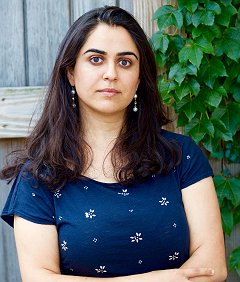
Maryam Mehri Dehnavi is an Associate Professor in the Department of Computer Science at the University of Toronto and a Principal Research Scientist at NVIDIA. She holds the Canada Research Chair in Parallel and Distributed Computing and leads the ParaMathics research group. Research focuses on high-performance computing , machine learning , sparse matrix optimizations , and compiler design for heterogeneous systems. Her work develops domain-specific languages , scalable numerical libraries , and auto-vectorization techniques for cloud and GPU platforms. Recent publications address LLM compression , sparse code translation , GPU kernel synchronization , and control flow optimization . Scientific recognition: Ontario Early Researcher Award (2021), NSF CRII Grant, NSERC New Frontiers in Research Fund. Current students: Mushegh Shahinyan , Martin Phan , Maryam Haghifam , and others. Former advisees: Kazem Cheshmi (NJIT), Zachary Blanco (MIT Lincoln Lab), Yuanxi Li (Amazon).
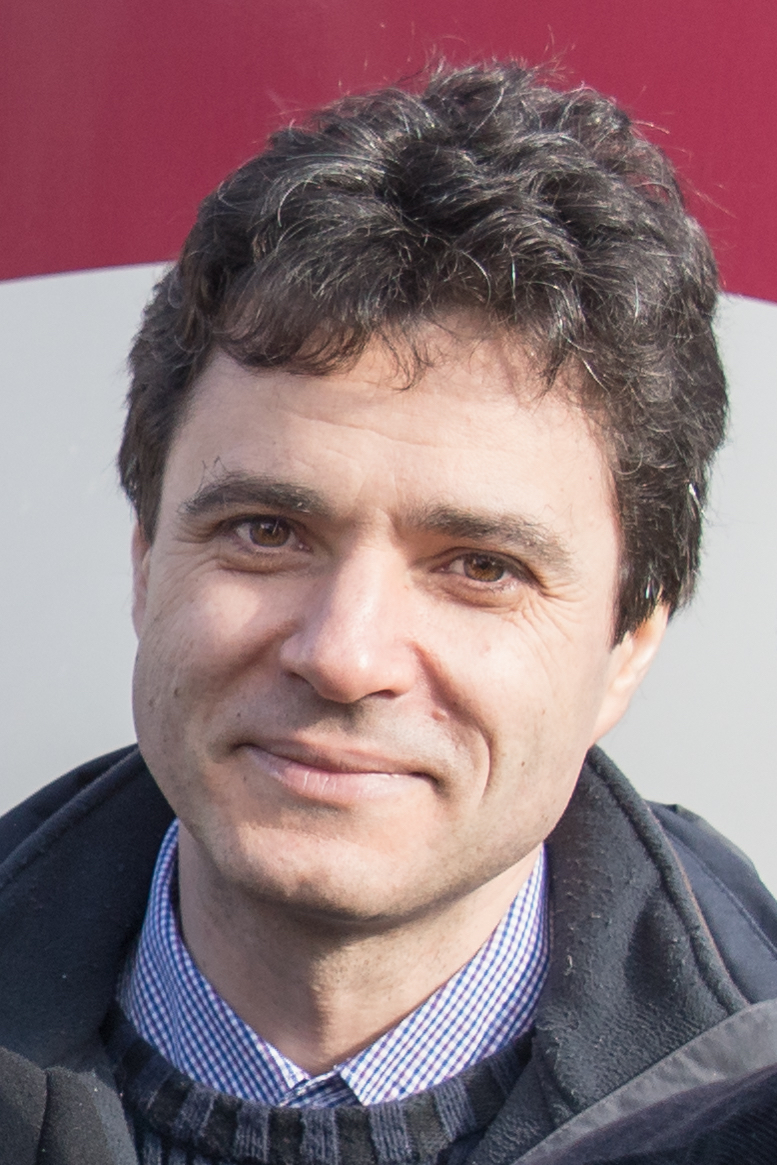
Ioan Todinca is a Professor of Computer Science at the University of Orléans, France, affiliated with the LIFO (Laboratoire d'Informatique Fondamentale d'Orléans) research laboratory. His academic career spans over two decades, with significant contributions to theoretical computer science, particularly in graph algorithms and distributed computing. Faculty of Science, University of Orléans LIFO Research Laboratory Member of Institut thématique pluridisciplinaire Modélisation, Systèmes, Langages (since 2014) Former director of MIPTIS doctoral school (2012-2014) Former head of Computer Science degree program (2007-2011) Former leader of LIFO Graphs, Algorithms and Computational Models team (2008-2012) Todinca's research focuses primarily on graph algorithms, with expertise in exact algorithms (moderately exponential), parameterized algorithms, and algorithms for specific graph classes. He has made significant contributions to techniques involving tree decompositions, treewidth, minimal separators, and potential maximal cliques. More recently, his work has expanded into distributed algorithms, especially in communication-constrained models like the broadcast congested clique. His research bridges theoretical foundations with practical algorithmic approaches for NP-hard problems. The analysis of his recent publications reveals a strong trend toward distributed computing problems, particularly in congested network models. His work spans from fundamental graph theory problems (cycle detection, graph modification) to applications in quantum computing and model checking. The consistent focus on communication complexity, verification, and efficient algorithms across different computational models demonstrates his ability to adapt theoretical computer science principles to emerging computational paradigms. Todinca has supervised numerous PhD students and has been actively involved in the theoretical computer science community through conference organization and editorial work. His publications appear consistently in top-tier venues including SIAM Journal on Computing, Algorithmica, and proceedings of major conferences like STACS, WG, and DISC. Teaching responsibilities include algorithms, graph theory, and discrete structures for undergraduate and graduate students, with previous experience teaching databases, programming, and software engineering. His educational materials are hosted on the university's Celene platform.
Cristina Bazgan is a University Professor at Université Paris-Dauphine, affiliated with LAMSADE (Laboratoire d'Analyse et Modélisation de Systèmes pour l'Aide à la Décision) within PSL University. Her office is located at P 409 with contact number 01 44 05 40 90. She maintains an active research profile with numerous publications spanning graph theory, combinatorial optimization, and multi-objective optimization. Professor Bazgan's research primarily focuses on graph theory and combinatorial optimization , with significant contributions to domination theory, network analysis, approximation algorithms, and multi-objective optimization. Her work bridges theoretical computer science and operations research, addressing fundamental problems in computational complexity while developing practical algorithmic solutions. She has made notable contributions to understanding graph partitions, community detection in networks, and the complexity of various optimization problems. Analysis of her recent publications reveals a strong trend in multi-objective optimization and parameterized complexity . Her work often explores the interface between theoretical computer science and operations research, with applications to network analysis and decision support systems. A significant portion of her research addresses the complexity and approximability of graph-theoretic problems, particularly those related to domination, community structure, and anonymization in networks. Professor Bazgan has co-authored the book Combinatorial Algorithms (2022) with H. Fernau and contributed chapters to authoritative works on combinatorial optimization. While specific scientific awards aren't mentioned in the available information, her extensive publication record in top-tier journals demonstrates significant recognition in her field. She maintains an active collaboration network, frequently working with researchers such as Vanderpooten D., Tuza Z., Chlebíková J., and Herzel A. Her research has practical applications in network security, social network analysis, and decision support systems. The LAMSADE laboratory, where she is based, focuses on decision support systems and operations research, providing an interdisciplinary environment for her theoretical and applied work.
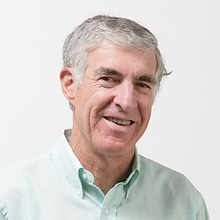
Hanan Samet is a Distinguished University Professor in the Computer Science Department at the University of Maryland, College Park. He holds affiliations with the Center for Automation Research and the Institute for Advanced Computer Studies (UMIACS). His academic journey includes a PhD from Stanford University (1975) in Computer Science, following degrees in Engineering (UCLA) and Operations Research/Computer Science (Stanford). Affiliations: University of Maryland, College Park (since 1975) Roles: Professor, Founding Editor-in-Chief of ACM Transactions on Spatial Algorithms and Systems, Founder of ACM SIGSPATIAL Samet's research focuses on spatial data structures, spatial databases, GIS, computer vision, and information retrieval. His seminal work includes the Foundations of Multidimensional and Metric Data Structures , an award-winning book addressing spatial indexing and query optimization. He pioneered frameworks like NewsStand for map-based news exploration and Coronaviz for pandemic visualization. Key contributions span spatial synonyms for approximate search, SAND spatial browser for digital government, and trajectory analysis systems for aviation safety and urban mobility. His work bridges theory and practice, influencing databases, graphics, and geographic systems. Education: B.S. Engineering, UCLA M.S. Operations Research, Stanford M.S./Ph.D. Computer Science, Stanford Samet has advised numerous students and led NSF-funded projects on spatio-textual data, similarity search, and spreadsheet analysis. His honors include the ACM Paris Kanellakis Award (2011), IEEE Wallace McDowell Award (2014), and UCGIS Research Award (2009). His labs and teams focus on spatial algorithms, visualization, and GIS applications. Notable projects include VASCO (spatial index demo), MARCO (image databases), and CHOLERA (disease tracking).
Romain Raveaux is an Associate Professor at the LIFAT Computer Science Laboratory, University of Tours, affiliated with Polytech Tours. His research focuses on Image Analysis, Machine Learning, Structural Pattern Recognition, Graph Matching, Graph Neural Networks, Discrete Optimization, Reinforcement Learning, and Transfer Learning . Email: romain.raveaux@gmail.com , romain.raveaux@laposte.net Address: 64 av. Jean Portalis, Tours, France, 37200 Phone: +33 (0)2 47 36 14 27 Research Interests Graph Matching and Neural Networks Discrete Optimization for Pattern Recognition Transfer Learning in Graph-Based Models Historical Document Analysis Scientific Trends His recent work bridges Graph Neural Networks with Mixed-Integer Programming , focusing on Image Semantic Segmentation and Graph Cycle Detection . Earlier studies emphasize Genetic Algorithms for graph classification and Graph Edit Distance optimization in pattern recognition.
Andrea Araldo is an Associate Professor at Telecom SudParis within the SAMOVAR research lab, specializing in NeSS (Networks, Systems, and Services). His work focuses on optimizing transportation systems, edge computing, and network resource allocation using advanced techniques like reinforcement learning and game theory. He has published extensively on topics including demand-responsive transit, vehicular cloud computing, and multi-tenant edge resource management. His research addresses challenges in urban mobility equity, infrastructure resilience, and energy-efficient network design. Research Interests: Transportation systems optimization Edge computing architectures Reinforcement learning applications Network resource allocation Urban accessibility equity Autonomous mobility systems Recent Trends in Publications: Recent work emphasizes adaptive transport network design during disruptions, equity-driven public transit planning, and vehicular cloud alternatives to traditional edge computing. He explores hybrid optimization methods combining reinforcement learning with classical algorithms for virtual network embedding and resource scheduling. Grants & Collaborations: Engages in multi-institutional projects involving institutions like Université Paris-Saclay and industry partnerships. Active in conferences such as TRB, IEEE ICC, and ACM SIGCOMM. Labs/Teams: Leads projects within SAMOVAR lab focusing on smart transportation and edge computing systems.
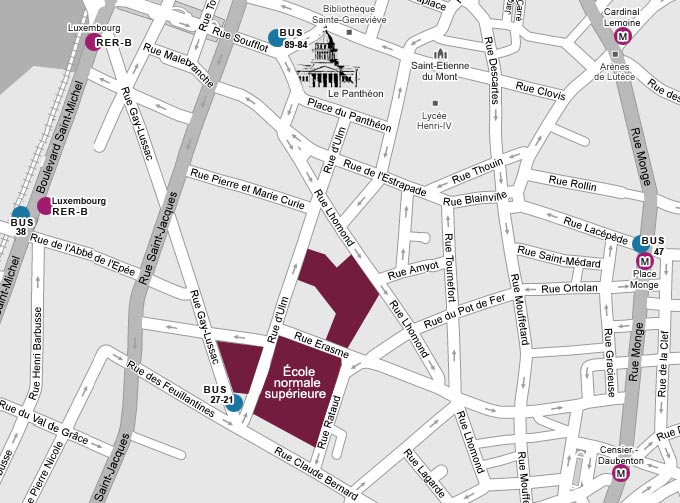
Phong Nguyen is a Research Professor at Inria (Directeur de recherche) and a part-time professor at the Computer Science Department (DI ENS) of École Normale Supérieure (ENS), PSL University in Paris. He leads the ENS Crypto Team (Inria Equipe Projet Cascade) and serves as the principal investigator for the ERC Advanced Grant PARQ (2020) focused on lattices in parallel and quantum computing. He holds a PhD (1999) and Habilitation (2007) from ENS-Lyon, with an agrégation de mathématiques (1997). His research integrates cryptography, algorithmic number theory, and lattice-based computations, emphasizing: Cryptanalysis : Deconstructing cryptographic protocols, especially lattice-based systems Post-quantum cryptography : Developing quantum-resistant solutions Lattice algorithms : Optimization of reduction, enumeration, and sieving techniques Real-world applications : Bridging theoretical constructs with practical security implementations His publications (spanning Eurocrypt, Asiacrypt, and Journal of Cryptology) demonstrate deep expertise in lattice cryptography, with recurring themes in algorithm efficiency, cryptanalysis of NTRU/GGH systems, and theoretical advancements in lattice reduction. Recent work (2024) continues this trajectory with improved BKZ analysis and hypercubic lattice optimizations. Awards include : ERC Advanced Grant (2020) for PARQ project Best Paper Award at EUROCRYPT 2006 Cor Baayen Award (2001) He advises PhD students (e.g., Henry Bambury, Leo Ducas) and interns from institutions like École Polytechnique and ENS. He directs the ENS Crypto Team and previously held leadership roles as: French Director of the Japanese-French Laboratory for Informatics (2015-2019) European Director of LIAMA (Sino-European Computer Science Lab, 2013-2015) Coordinator of ECRYPT II virtual labs (2008-2012)
Pierre Duhamel is a researcher affiliated with the Signals and Systems Laboratory, focusing on digital signal processing, communication systems, and multimedia security. His work spans theoretical and applied research in network coding, image compression, and channel coding. Primary affiliation: Signals and Systems Laboratory Research roles: Academic researcher, inventor (patents in image coding) Research interests: Duhamel's work addresses challenges in signal processing (e.g., wavelet transforms, L∞ norm compression), communication systems (e.g., robust decoding, WiMAX MAC protocols), and multimedia security (asymmetric watermarking, screen content coding). He explores optimization techniques for wireless networks and error resilience in multimedia transmission. Recent publications (2024–2025) reflect trends in image and signal processing , network optimization , and communication security , with applications to hyperspectral imaging, turbo coding, and cooperative wireless systems.
Benjamin Graille is a Lecturer in Applied Mathematics at Paris-Saclay University, affiliated with the Orsay Institute of Mathematics. His research focuses on lattice Boltzmann methods, numerical analysis, and computational physics, particularly for solving hyperbolic conservation laws and plasma dynamics problems. His recent work emphasizes multiresolution-based mesh adaptation techniques, error control mechanisms, and finite difference formulations for lattice Boltzmann schemes. Publications highlight applications in fluid dynamics and kinetic theory of plasmas. Contact: benjamin.graille@universite-paris-saclay.fr bgraille.upsaclay@gmail.com Laboratory: Orsay Institute of Mathematics
Claire Mathieu is a CNRS Research Director in the Computer Science department at École normale supérieure, specializing in algorithm design and analysis with emphasis on approximation schemes for NP-hard problems. Her academic background includes: Former student at École normale supérieure PhD in Computer Science from Paris-Sud University (1988) Dr. Mathieu's research focuses on theoretical foundations of algorithms, particularly developing local search methods for clustering problems where enlarged neighborhoods yield near-optimal solutions through separability structures. Her work bridges theoretical guarantees with practical applications in combinatorial optimization, advancing approximation techniques for computationally intractable problems. Prior to her current position, she held research and faculty appointments at CNRS, Paris-Sud University, École Polytechnique, and Brown University, demonstrating extensive international experience across French and American academic institutions.
Anna Korba is an Assistant Professor at CREST-ENSAE Paris within the Statistics Department. She holds an ENSAE Engineering degree in Data Science and a Master's in Mathematics, Vision & Learning (MVA) from ENSAE Paris. Her career includes a Ph.D. in Machine Learning at Télécom ParisTech, followed by a postdoctoral position at UCL's Gatsby Unit. Her research focuses on sampling techniques, Bayesian inference, optimal transport, and generative modeling, with recent work on constrained sampling and fairness integration. She contributes to collaborative efforts at the intersection of machine learning, dynamical systems, and PDEs. Notably, she co-presented tutorials on Wasserstein gradient flows at ICML 2022. Her work addresses unsolved challenges in sampling efficiency and fairness constraints. She is actively involved in CREST research initiatives and academic mentorship.
Simon Lacoste-Julien is an Associate Professor at Université de Montréal, affiliated with the Department of Computer Science and Operations Research (DIRO). He also serves as the Associate Scientific Director of Mila – Quebec Institute of Artificial Intelligence and holds the position of Vice President Lab Director at Samsung SAIT AI Lab Montreal (SAIL). His research focuses on machine learning, optimization, and their applications in areas like deep learning, generative models, causality, and computer vision. Lacoste-Julien has held academic positions at INRIA in Paris and has a PhD from UC Berkeley, with postdoctoral work at the University of Cambridge. He teaches advanced graduate courses on probabilistic graphical models and structured prediction. His work includes contributions to optimization algorithms (e.g., Frank-Wolfe methods), causal discovery, and generative models. Lacoste-Julien has supervised numerous students and postdocs, and his awards include being a CIFAR Fellow and Canada CIFAR AI Chair. His research spans theoretical foundations and practical applications, with a strong emphasis on scalable and efficient machine learning techniques.
Thomas Stoll is a tenured Professor at the Faculty of Science and Technology , University of Lorraine, Nancy, France. He leads research in Analytic and Combinatorial Number Theory , focusing on Diophantine equations , digital expansions , and sum-of-digits functions . He is affiliated with the IECL (Institut Élie Cartan de Lorraine) and has coordinated ANR-FWF research projects like MuDeRa and ArithRand .
Ludovic Sacchelli is an Inria researcher (CR) affiliated with the McTAO team at the Centre Inria d'Université Côte d'Azur and the Laboratoire J.A. Dieudonné of Université Côte d'Azur. His research spans control theory, sub-Riemannian geometry, and mathematical neuroscience, focusing on optimal control, observers, and estimation problems. His work on sub-Riemannian manifolds and control systems includes stabilization techniques for non-uniformly observable systems and applications to UAV control, neural fields, and bioprocess modeling. He has contributed to heat kernel analysis, line fields interpolation, and geometric models for sound processing. His recent publications address topics like distributed state estimation in neural models, polynomial state-affine control systems, and geometric algorithms for orientation field interpolation. He has also explored observability singularities in bilinear systems and stabilization of weakly contractive systems. Teaching roles include instructing Measure Theory , Stochastic Processes , and applied mathematics at institutions such as Université Côte d'Azur, Polytech Nice, Lehigh University, and École Polytechnique. His mentorship includes supervising a Masters research project on numerical implementation of line fields interpolation in 2019.
Assia Mahboubi is a tenured researcher at Inria in the Gallinette team , Nantes, France, and an endowed professor in the Algebra and Number Theory section at Vrije Universiteit Amsterdam , Netherlands. Her work bridges formal methods, type theory, and computer-aided mathematics. Research Interests: Her research centers on the formalization of mathematics in dependent type theory and the automated verification of mathematical proofs. She is particularly interested in the interplay between computer algebra and formal proofs, and in how formal representations enhance understanding of mathematical objects. She is a lead developer of the Mathematical Components libraries and a key user of the Coq proof assistant. Recent Research Trends: Her recent publications focus on diagram chasing in category theory, continuity in constructive type theory, proof transfer mechanisms (e.g., Trocq), and the formal verification of advanced mathematical results such as the irrationality of ζ(3) and the unsolvability of the quintic. These works demonstrate a consistent emphasis on foundational rigor, automation, and scalability in formal proofs. ERC Consolidator Grant: FRESCO (Fast and Reliable Symbolic Computation) Advising and Grants: Mahboubi supervises PhD students including Enzo Crance, Martin Baillon, and postdoc Matthieu Piquerez. She leads the FRESCO project funded by an ERC grant, supporting research in symbolic computation and formal verification. Team Affiliation: She is a core member of the Gallinette team at Inria, which focuses on the intersection of proofs and programs, promoting the development of reliable and verifiable software and mathematical systems.