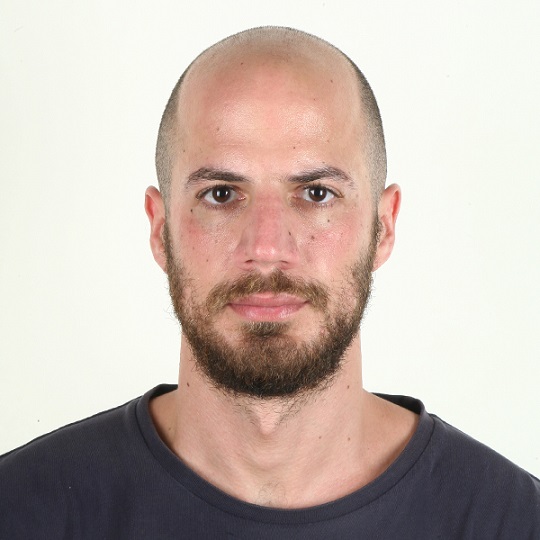
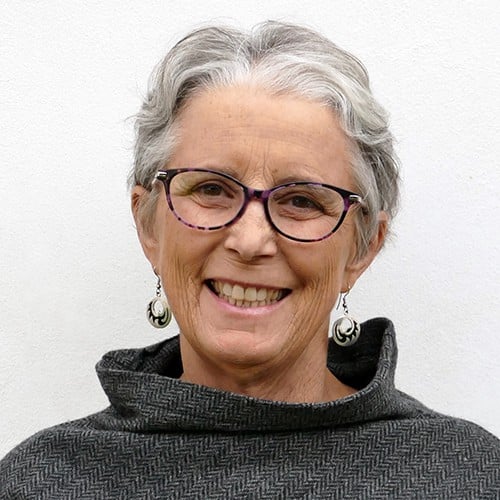
Ioannis Caragiannis is a Professor at the Department of Computer Science, Aarhus University. His research focuses on algorithmic game theory, fair division, mechanism design, and social choice theory. He explores computational aspects of fairness in resource allocation, voting systems, and multi-agent systems. His work often addresses theoretical challenges in designing efficient and fair algorithms with provable guarantees. Key research areas include social choice mechanisms, metric distortion in collective decisions, clustering algorithms with fairness constraints, and truthful mechanisms for budget allocation and facility assignment. He has contributed to understanding the complexity of Pareto-optimal and envy-free outcomes, as well as the efficiency of serial dictatorship mechanisms. His recent work investigates welfare-optimal allocations under computational constraints and the metric properties of sortition-based decision-making. Caragiannis has published extensively in top venues like AAAI, ICML, and SAGT. Notable contributions include studies on proportional fairness in non-centroid clustering, randomized learning-augmented auctions, and the distortion of sortition systems. His research bridges theoretical computer science with practical applications in fair resource distribution and collective decision-making processes.
Peter Schneider-Kamp is a Professor of Data Science at the Department of Mathematics and Computer Science, University of Southern Denmark. His research focuses on Artificial Intelligence, Machine Learning, Privacy-Preserving Techniques, and Algorithms. He has led projects such as the Danish Foundation Models initiative and the PREPARE cardiovascular disease project. His work spans synthetic data frameworks (e.g., Syntheval), quantization-aware neural networks (BitNet), and autonomous drone systems (Drones4Safety). He has been honored with awards including the Researcher Award 2014 and the Friedrich-Wilhelm-Preis 2009. Key research interests include optimizing sorting networks, termination analysis, and UAV-based infrastructure inspection. He has contributed to over 112 publications and actively participates in academic activities like organizing the 13th ACM SIGPLAN Symposium on Principles and Practice of Declarative Programming. Schneider-Kamp also engages in educational roles, teaching courses such as DS806 and DM564 on database systems. His projects highlight interdisciplinary impact, including cardiovascular disease risk estimation (PREPARE) and AI-driven health advice analysis. He collaborates internationally, with recent work featured in venues like the International Conference on Agents and Artificial Intelligence.
Alexandros Gelastopoulos is a Research Fellow at the Institute for Advanced Studies in Toulouse with a PhD in Mathematics from Boston University (2019). His research employs mathematical modeling to study biological and social systems, focusing on probability theory, stochastic processes, and reinforcement dynamics in social contexts like cumulative advantage and ranking-based behaviors. Primary research interests include analyzing how popularity rankings influence social systems, studying brain oscillations for memory functions, and exploring decision-making paradoxes. His work often bridges mathematical rigor with behavioral sciences to uncover mechanisms driving social inequalities and neural computations. His publication trends show strong emphasis on social dynamics (e.g., lock-in effects, reinforcement processes) and computational neuroscience (e.g., neural rhythms, memory substrates), using stochastic modeling and empirical validation across disciplines. European Commission's Seal of Excellence (2024) Collaborates extensively with international researchers on projects involving mathematical sociology and behavioral experiments. Teaches game theory and mathematical courses while developing expository materials on real analysis and information theory.
Aurélien Desoeuvres is a Postdoctoral Researcher (Research Fellow) at the Department of Materials and Production within Aalborg University's Faculty of Engineering and Science. He conducts research in the Section of Applied Systems Research, specifically the Artificial Intelligence for Operations Research group, with an office at Fibigerstræde 16, 9220 Aalborg Øst, Denmark. His academic foundation includes a PhD in System Biology, transitioning from pure mathematics to applied mathematics with expertise in modeling and optimization methods. His research spans Artificial Intelligence, Operations Research, and Machine Learning, applied to System Biology and Chemical Reaction Networks. Key contributions include developing path planning algorithms, optimization techniques for dynamical systems, and AI-driven tools for scientific problem-solving. His work bridges theoretical mathematics with practical applications in healthcare and biochemical systems. Recent publications (2022-2024) demonstrate strong trends in AI/ML applications for oncology use cases and mathematical analysis of chemical reaction networks. He has pioneered semi-automated solution recommenders leveraging Scopus and OpenAI, alongside advanced methods for model reduction using conservation laws and tropical geometry. These works reflect interdisciplinary innovation at the intersection of computer science and life sciences. Desoeuvres actively collaborates internationally within the Artificial Intelligence for Operations Research group, focusing on applying AI to industrial optimization challenges and complex scientific modeling problems requiring novel computational approaches.
Christian S. Jensen is a Professor at the Department of Computer Science, Aalborg University, affiliated with The Technical Faculty of IT and Design. His primary research focuses on data management, spatiotemporal systems, and AI-driven solutions for mobility and cyber-physical systems. He leads projects like DiCyPS (Data-Intensive Cyber-Physical Systems) and MALOT (Managing Mobility Data Quality for Location of Things). He has published over 700 papers, with recent work emphasizing time series forecasting, trajectory analysis, and edge computing. Notable contributions include frameworks like Memory Guided Transformers and TEAM for traffic prediction. His work has been recognized with awards including the IEEE TCDE Impact Award (2019) and the Order of Dannebrog (2016). Jensen actively collaborates internationally, holding roles in organizations like the Max Planck Institute and the Villum Foundation. His research bridges theory and practice, addressing real-world challenges in smart cities, energy systems, and autonomous driving.
Stephanie Forrest is a Professor in the School of Computing and Augmented Intelligence (SCAI) at Arizona State University (ASU), where she also serves as Director of the Biodesign Center for Biocomputation, Security and Society. She is an External Faculty member of the Santa Fe Institute (SFI), where she previously held leadership roles including Co-Chair of the Science Board (2010–2013) and Interim Vice President for Academic Affairs (1999–2000). Prior to joining ASU, she was a Regents Distinguished Professor and Department Chair of Computer Science at the University of New Mexico (2006–2011). B.A., St. John's College M.S., Ph.D., University of Michigan, Computer Science Her research lies at the intersection of biology and computation, focusing on computational immunology, automated software repair, evolutionary computation, and modeling complex systems such as cancer and immune responses. She pioneers bio-inspired algorithms for cybersecurity and develops evolutionary techniques for software optimization and repair. Her work integrates principles from immunology, genetics, and complex adaptive systems to solve problems in computer science. The trends in her recent publications reveal a sustained focus on automated program repair using evolutionary computation, GPU code optimization, and modeling biological systems. Her work increasingly combines machine learning with mutation-based search, explores semantic representations in code repair, and applies bio-inspired models to real-world software and security challenges. ACM/AAAI Allen Newell Award (2011) Presidential Young Investigator Award (1991) Stanislaw Ulam Memorial Lectures, SFI (2013) IEEE Fellow UNM Annual Research Lecture (2012) IEEE S&P Test of Time Award (2020) ICSE Most Influential Paper Award (2019) ACM/SIGEVO Impact Award (2019) SEAMS Best Paper Award (2019) WEIS Best Paper Award (2015) Stephanie Forrest has advised numerous students and researchers, often in collaboration with W. Weimer, C. Le Goues, and M. Moses. Her research is supported by major funding agencies including the National Science Foundation (NSF), Defense Advanced Research Projects Agency (DARPA), Air Force Research Laboratory (AFRL), and the Santa Fe Institute. She has also contributed to public policy as a Jefferson Science Fellow at the U.S. Department of State (2013–2014), advising on cyber-policy. She currently chairs the Government Affairs Committee of the Computing Research Association (CRA). She leads the Biodesign Center for Biocomputation, Security and Society, which brings together interdisciplinary teams to study the co-evolution of technology and society. Her research group has developed tools for intrusion detection (e.g., STIDE, pH, RISE), automated software repair (e.g., GenProg), and biological modeling (e.g., CancerSim). Current projects include engineering diversity for enhanced cybersecurity, measuring internet censorship, and modeling immune and cancer systems.
Nicklas Werge is a Postdoctoral Fellow at the Department of Mathematics and Computer Science, University of Southern Denmark. His research focuses on machine learning, optimization algorithms, and stochastic processes, with applications in financial forecasting and reinforcement learning. Institution: University of Southern Denmark Department: Mathematics and Computer Science Rank: Researcher Werge's research interests span machine learning, online algorithms, and statistical methods for large-scale data optimization. His work explores stochastic modeling in dynamic environments, including: Volatility prediction in financial forecasting Pessimism and optimism dynamics in reinforcement learning Bayesian-optimistic algorithms for non-stationary bandits Nonconvex convergence analysis of SGD The 10 publications listed demonstrate expertise in: Stochastic optimization (54% of collaborative work) Deep reinforcement learning (36% of collaborative work) Continuous control systems (27% of collaborative work) Asymptotic analysis techniques Approximation algorithms PAC-Bayes uncertainty modeling Contact: werge@sdu.dk | ORCID
Kim Skak Larsen is a Professor in the Department of Mathematics and Computer Science at the University of Southern Denmark, Faculty of Science. He serves as Head of Section and is affiliated with the Algorithms VIP group and the Digital Democracy Centre, reflecting his dual focus on theoretical algorithmics and societal applications of computing. His research lies in online algorithms, data structures, database systems, and algorithmics , with a strong emphasis on competitive analysis and performance measures. Key research themes include competitive ratio optimization, online matching, knapsack problems, and the integration of predictions into algorithmic frameworks. His recent work explores algorithmic trade-offs under uncertainty and misinformation on social media. His recent publications (2023–2024) reveal a consistent focus on online algorithms with predictions , spanning scheduling, matching, and knapsack problems. These works analyze competitive ratios and performance under prediction errors, contributing to the growing field of learning-augmented algorithms. His interdisciplinary engagement includes contributions to public discourse on digital trust and news authenticity. Project: Trade-Offs for Algorithms Facing Uncertainty (2025–2027) Project: Online Algorithms with Predictions - DIREC (2022–2025) Project: Algorithmic Challenges (2014–2017) Project: Trust and News Authenticity (ongoing) He has supervised PhD students and contributed to academic service as a peer reviewer, conference participant, and series editor. He teaches courses such as Formal Languages, Advanced Data Structures, and Geometric Algorithms, and has been active in public outreach through media contributions on combating scam articles online.
Simon Kristensen is a Professor in the Department of Mathematics at the University of Aarhus, Denmark. His primary research focuses on Number Theory, particularly Diophantine approximation, dynamical systems, and fractal geometry, with interdisciplinary connections to physics, signal processing, and wireless communication. Key Affiliation: Department of Mathematics, University of Aarhus Research Themes: Quantitative rational approximation, resonance phenomena, metric theory, and applications to dynamical systems. Selected Publications reflect his expertise in p-adic Diophantine approximation, BBP-type formulas, and metrical theorems on affine forms. His work bridges classical number theory with modern applications. Conference Participation: Palanga Conference (2013), Journées Arithmetiques (2011, 2013), Arctic Number Theory Workshop (2013), and collaborations with institutions like the University of Bristol and NUI Maynooth.
Troels Bjerre Lund is an Associate Professor in the Computer Science Department at the IT University of Copenhagen. His research focuses on Algorithmic Game Theory , Equilibrium Computation , and Mechanism Design , with applications in artificial intelligence and poker game theory. He has served on program committees for major conferences including AAMAS, SAGT, IJCAI, AAAI, and EC. His work includes developing GT-Framework (gtf) for analyzing two-player zero-sum games and creating poker-playing AI systems like Tartanian and GS3. Education: PhD from Aarhus University (2008) Key Contributions: Polynomial-time algorithms for proper equilibrium computation, complexity analysis of game-theoretic concepts, and automated game abstraction techniques.
Holger Dell is a Lecturer in Theoretical Computer Science and Algorithms at the IT University of Copenhagen. His research focuses on computational complexity, graph theory, and algorithmic efficiency. Active in polynomial-time algorithms and oracle-based methods Contributions to edge estimation in hypergraphs and fairness in node embeddings Key collaborations with BARC (Basic Algorithms Research Copenhagen) project Research trends show expertise in causal modeling, finite field polynomial solving, and graph embedding techniques. Recent work emphasizes algorithmic fairness and abstract causal relationships. Participated in a major project funded by the Villum Foundation (2017-2024) as a collaborator.
Alex Hørby Christensen is a Clinical Associate Professor at the Department of Clinical Medicine, University of Copenhagen, with a dual appointment at the Capital Region of Denmark. His clinical work is focused on Internal Medicine: Cardiology at Herlev and Gentofte Hospital. He has a substantial research output with approximately 100 publications, primarily in the field of cardiology with a strong emphasis on genetic aspects of cardiac conditions, hypertrophic cardiomyopathy, and sudden cardiac death. Dr. Christensen's research interests span several key areas in cardiology: Genetic basis of cardiac conditions including arrhythmogenic right ventricular cardiomyopathy Hypertrophic cardiomyopathy and its management Sudden cardiac death and family screening protocols Cardiac amyloidosis diagnosis and management Electrocardiographic findings in various cardiac conditions Genetic screening for inherited cardiac conditions His recent publications demonstrate a strong focus on the intersection of genetics and cardiology, with numerous studies examining the genetic basis of cardiac conditions, diagnostic approaches for cardiac amyloidosis, and management strategies for hypertrophic cardiomyopathy. Dr. Christensen frequently collaborates with researchers across multiple institutions, particularly within Denmark, and his work often involves large-scale clinical studies and genetic analyses. Dr. Christensen has received significant attention for his research, with several publications garnering substantial citations and social media mentions. His work on hypertrophic cardiomyopathy, particularly the randomized clinical trial on exercise training, has been particularly influential with 10 Scopus citations. As a clinician-researcher, Dr. Christensen bridges the gap between clinical practice and academic research, contributing to both the understanding of cardiac conditions and the development of improved diagnostic and treatment approaches. His dual appointment allows him to directly translate research findings into clinical practice at Herlev and Gentofte Hospital.
Giampiero Iaffaldano serves as Associate Professor in Solid Earth Geophysics at the Department of Geosciences and Natural Resource Management within the Faculty of Science at the University of Copenhagen, Denmark. He has held this position since June 2015, following a tenured Assistant Professor role at the Australian National University's Research School of Earth Sciences (2010-2015) and a Reginald A. Daly Postdoctoral Fellowship at Harvard University (2008-2010). His academic journey reflects an international career spanning European, North American, and Australian institutions. His educational credentials include: PhD in Natural Sciences - Geophysics (summa cum laude), Ludwig–Maximilians University Munich, Germany (2007) MSc in Physics (summa cum laude), University of Rome "La Sapienza", Italy (2003) Iaffaldano specializes in observational geodynamics, developing computational models constrained by geological and geophysical observations to understand forces controlling the coupled lithosphere-mantle system. His research integrates forward and inverse modeling approaches with empirical data to address fundamental questions about Earth's dynamic processes across spatial and temporal scales. His work bridges theoretical geophysics with practical applications in hazard assessment and resource management. His recent publication record (2023-2025) reveals a strong thematic focus on plate boundary dynamics, mantle plume influences on plate motions, and earthquake cycle processes. His research spans global to regional scales with particular emphasis on the North Atlantic region (Icelandic plume effects), South American plate boundaries, and microplate systems in Asia and Europe. The consistent presence of high-impact journals like Earth and Planetary Science Letters and Geophysical Journal International demonstrates his standing in the geophysics community. Among his significant scientific recognitions: Elected member of the Young Academy of Europe (2017) Ringwood Fellowship at Australian National University (2010) Reginald A. Daly Postdoctoral Fellowship at Harvard University (2007) Elite Netzwerk PhD scholarship of the Bavarian Government (2005) Professor Iaffaldano has secured approximately DKK 14,000,000 in research funding from major international sources including the Independent Research Fund Denmark, Villum Foundation, National Science Foundation (USA), and Australian Research Council. He chairs the steering committee for DanSeis – Danish National Center for Seismic Instrumentation. His teaching portfolio includes Geodynamics (MSc), Quantitative Problem-Solving in Geosciences (BSc), and specialized PhD courses on plate kinematics. He serves as Associate Editor for Geosphere and has reviewed for premier journals including Nature, Science, and Journal of Geophysical Research. His extensive international collaborations with institutions in Denmark, Australia, USA, Chile, and Europe reflect the global nature of contemporary geophysical research and his leadership in the field.
Mark Poulsen Khurana is a Medical Doctor and Epidemiologist currently working as a Research Fellow at the University of Copenhagen's Faculty of Health and Medical Sciences. He is affiliated with the Department of Public Health, specifically within the Section for Health Data Science and AI. His work bridges clinical medicine, epidemiology, and computational approaches to understanding infectious disease dynamics. Dr. Khurana holds an MD and an MSc in Epidemiology, with ongoing doctoral studies focused on phylogenetics and mathematical modeling of infectious diseases. His educational background combines clinical training with advanced quantitative skills in epidemiology. His research spans several interconnected domains with a strong emphasis on phylogenetics and the mathematical modeling of infectious diseases . He has made significant contributions to understanding SARS-CoV-2 transmission through genomic epidemiology, developing AI approaches for disease modeling, and examining broader questions about medical progress and innovation. His work in digital health explores how emerging technologies can transform medical education and healthcare delivery. Dr. Khurana's research demonstrates a unique integration of clinical insight, epidemiological methods, and computational approaches. An analysis of his recent publications reveals a strong trajectory connecting computational methods with practical public health applications. His work on AI for infectious disease modeling, phylogenetic tree representations, and large-scale genomic epidemiology of SARS-CoV-2 demonstrates technical sophistication combined with real-world relevance. He has also published thought-provoking analyses on research trajectories in medical science and the implementation of solutions for antimicrobial resistance. Dr. Khurana actively collaborates with researchers across multiple institutions and countries, as evidenced by his extensive co-authorship network. His work has been recognized through citations and engagement on academic platforms, with several publications gaining attention in policy discussions and academic discourse. His leadership in the analysis of Denmark's extensive SARS-CoV-2 genomic dataset (covering approximately 290,000 genomes) demonstrates his capacity to manage and interpret large-scale public health data. This work has contributed significantly to understanding viral evolution and transmission patterns during the pandemic.