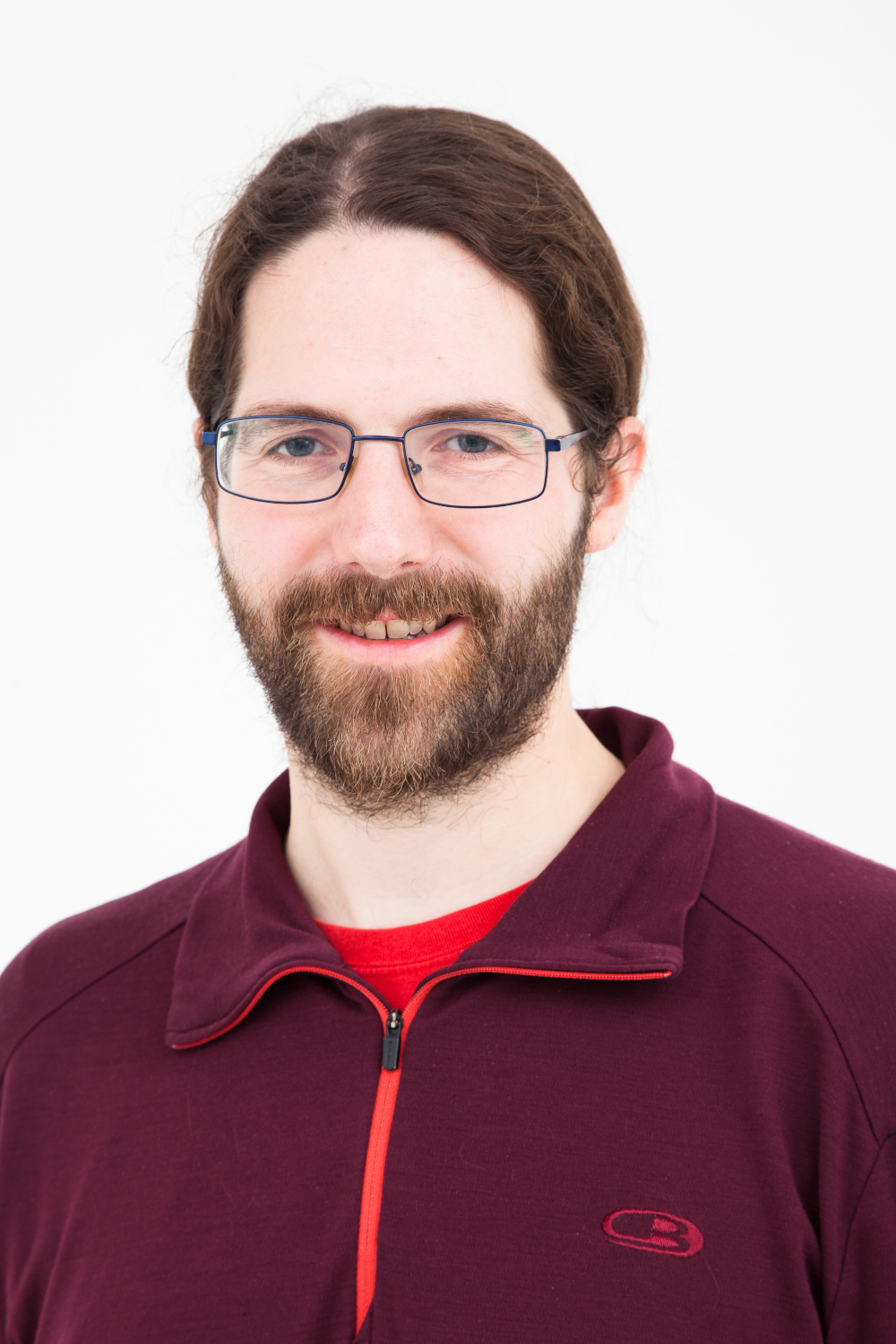
Fabian Klute is a Research Fellow at Universitat Politècnica de Catalunya, specializing in discrete and computational geometry. His research focuses on graph drawing, automated cartography, map labeling, and geometric computing, with emphasis on theoretical foundations and algorithm development. Klute's publications demonstrate consistent focus on geometric complexity, graph visualization, and combinatorial optimization. Recent works establish hardness results for segment folding and edge insertion problems, develop algorithms for geometric set diversity, and advance boundary labeling techniques. A significant research thread explores parameterized complexity in graph modification problems. His contributions in graph drawing include innovations in confluent drawings, book embeddings, and 1-planar extensions. Cartography-related research advances automated labeling and spatial representation for complex curve arrangements.
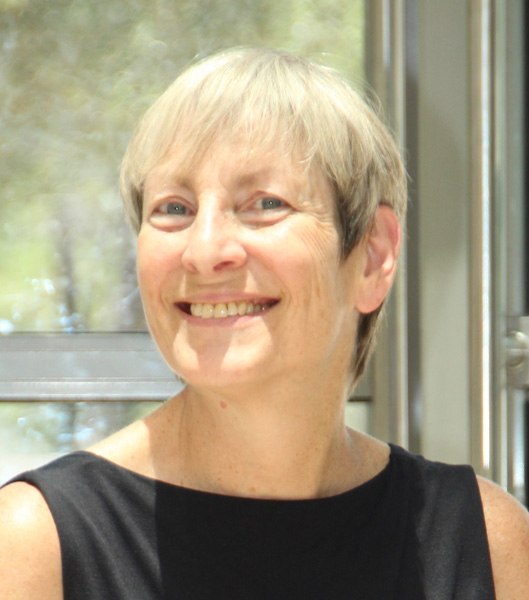
Orna Grumberg is a Leumi Chair Professor in the Computer Science Department at the Technion - Israel Institute of Technology. She has held this professorship since 2005 and was awarded the Leumi Chair in Science in 2011. Professor Grumberg serves on the Steering Committee of the Computer-Aided Verification (CAV) conference and has been actively involved in the academic community through editorial boards and conference committees. Her educational background is deeply rooted at the Technion, where she received her B.Sc., M.Sc., and Ph.D. in Computer Science. Professor Grumberg's research spans several critical areas in computer science, with a primary focus on formal verification methods. Her work has significantly advanced the field of model checking and automated verification systems. She has made substantial contributions to abstraction techniques, refinement methods, and counterexample analysis in verification processes. Her research extends to compositional model checking, SAT-based approaches, distributed verification systems, and applications to security vulnerability detection. Her theoretical work on temporal logics and automata on infinite objects provides the mathematical foundation for many practical verification tools. The publication record of Professor Grumberg demonstrates a consistent research trajectory focused on improving model checking techniques. Her work shows evolution from foundational model checking approaches to more specialized techniques like abstraction-refinement, SAT-based solving, and security applications. The research spans theoretical computer science, practical software engineering applications, and hardware verification, reflecting the interdisciplinary nature of formal methods. Professor Grumberg has received recognition through her leadership roles in the field, including serving on the Steering Committee of the CAV conference and editorial boards of prestigious journals like "Information and Computation" and "Formal Methods in System Design". Her book "Model Checking" co-authored with E.M. Clarke and D. Peled has become the standard reference in the field. As an educator and mentor, Professor Grumberg has shaped the verification landscape in Israel. She served as Associate Dean for Graduate Studies at the Technion and established the software engineering track with a strong verification component. Her introductory model checking course attracts approximately 100 students annually. Her students now hold prominent positions in academia (Hebrew University, Tel-Aviv University) and industry (particularly at IBM). She maintains strong industry collaborations, with ongoing projects with IBM on UML Verification and with Rafael on Finding Security Vulnerabilities in Network Protocols. Professor Grumberg leads research groups that form the foundation for verification teams in major Israeli technology companies like IBM and Intel, demonstrating the practical impact of her academic work.
Juraj Hromkovič is a Full Professor of Computer Science at the Swiss Federal Institute of Technology (ETH Zurich) , holding this position since 2004. His academic career spans multiple institutions, including Professorships at Christian Albrechts University in Kiel (1994-1997), RWTH Aachen (1997-2003), and earlier roles at Comenius University and the University of Paderborn. Education : 1977–1982: Studied Computer Science at Comenius University, Bratislava 1982: Dr. rer. nat. (PhD equivalent) from Comenius University 1986: CSc (Ph.D.) in Theoretical Cybernetics 1990: Dr. Sc. in Mathematics and Physics Research Interests focus on Theoretical Computer Science , particularly Algorithms , Complexity Theory , and Communication Protocols . His work explores Randomized Algorithms , Approximation Techniques , and Automata Theory , with notable contributions to understanding exponential gaps in computational models and optimizing information dissemination in networks. His publications span books, journal articles, and conference papers addressing foundational and applied aspects of computing. Scientific Awards include membership in the Slovak Academy of Sciences (2001) and two awards from the Slovak Literature Foundation for Scientific Literature (2002, 2004). He has supervised 11 PhD dissertations and one habilitation, demonstrating his commitment to academic mentorship.
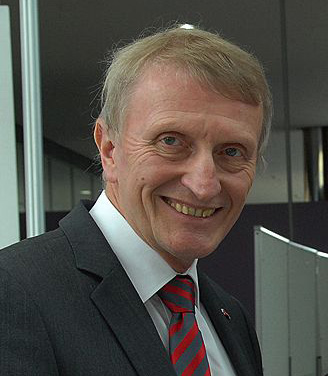
Hans Suenkel is a distinguished Austrian academic and Full Professor for Mathematical and Numerical Geodesy at Graz University of Technology (TU Graz) since 1983. He has held numerous leadership roles, including Rector of TU Graz (2003–2007, 2007–2011) and President of Universities Austria (2010–2011). His work spans mathematical geodesy , satellite gravity field determination , and geodynamics , with a focus on ESA's GOCE mission and geodetic modeling. Education : Dipl.-Ing. (1973), PhD in Technical Sciences (1976) from TU Graz; Habilitation in Numerical Geodesy (1981). Research : Pioneered satellite geodesy, gravity field modeling, and geodynamic simulations. Notable work includes GOCE mission data processing and Austrian geoid determination. Awards : Wilhelm-Exner Medal (2003), Grand Josef Krainer Prize (2010), and Fellow of multiple international academies. Leadership : Head of TU Graz's Institute of Theoretical Geodesy (1987–1998), Managing Director of the Space Research Institute (2001–2004), and organizer of major symposia like the 20th IUGG General Assembly (1991).
Carl-Martin Pfeiler is affiliated with TU Wien's Research Group Numerics of PDEs (E101-02-2). He holds academic qualifications including Dipl.-Ing. (Master of Engineering) and Dr.techn. (PhD in Technical Sciences). His research focuses on computational micromagnetics, numerical methods for partial differential equations (PDEs), and magnetic skyrmion dynamics. Key contributions include developing the mass-lumped midpoint scheme for skyrmion dynamics simulations and advancing IMEX-type integrators for the Landau-Lifshitz-Gilbert equation. Education: Dipl.-Ing. (Engineering) from TU Wien Dr.techn. (Technical Sciences PhD) from TU Wien Research interests emphasize computational approaches to magnetic phenomena , with a focus on: Numerical analysis of micromagnetic models Algorithm development for efficient simulations (e.g., Commics software) Study of topological spin textures like magnetic skyrmions Stability and convergence of numerical schemes Publications highlight advancements in: Nonlinear dynamics of skyrmions Efficient finite element methods Preconditioning strategies for iterative solvers Chiral skyrmion simulations Collaborations include work with Dirk Praetorius, Michele Ruggeri, and the Commics development team. His work bridges applied mathematics and materials science, addressing challenges in spintronics and nanomagnetism.
Univ.-Prof. Dr. Eva Kopecká is a Professor at the University of Innsbruck's Department of Mathematics, Faculty of Mathematics, Computer Science and Physics. She specializes in Functional Analysis, Geometry of Banach Spaces, Nonlinear Analysis, and Combinatorics. Currently teaching Discrete Mathematics and Introduction to Higher Analysis in the 2024 summer semester, she also leads the Research Seminar in Functional Analysis. Her work focuses on projection algorithms, Lipschitz mappings, and fixed point theory. Notable research includes studies on alternating projections, zone diagrams, and geometric embeddings. She has conducted projects funded by the Austrian Science Fund (FWF), including work on Lipschitz mappings and contraction operators. No formal awards are listed, but her contributions to operator theory and functional analysis are widely recognized. Consultation hours are by email appointment.
Andreas Hauser is an Associate Professor at the Institute for Experimental Physics , Graz University of Technology. His research bridges theoretical molecular physics and quantum chemistry with practical applications in nanotechnology, catalysis, and machine learning-driven computational methods. He leads a dynamic group integrating theory with experimental collaborations, focusing on metallic cluster physics, molecular spectroscopy, and quantum technologies. Current projects include nuclear spin control, vibrational magnetism, and AI-enhanced material design. Recent publications highlight his work in: Quantum spin manipulation via laser pulses (2024) Machine learning for molecular energy surfaces (2023-2024) Non-adiabatic coupling in confined systems (2022) CO2 activation and nanomaterial stability (2019-2023) Helium droplet electron dynamics (2017) His team employs methods like Gaussian Process Regression, density functional theory, and custom Python toolkits while mentoring numerous PhD and Master's students in high-impact research areas.
Prof. Dr. Philipp Grohs is a full professor of Mathematical Data Science at the University of Vienna and head of the Mathematical Data Science group at RICAM (Austrian Academy of Sciences). He holds a MSc from TU Vienna (2006) and a PhD from the same institution (2007). After postdoc positions at TU Graz, KAUST, and ETH Zurich, he became an assistant professor at ETH Zurich in 2011 before moving to the University of Vienna in 2016. His research focuses on designing efficient algorithms for signal processing, computational sciences, and finance, with recent contributions to understanding deep learning algorithms and solving high-dimensional PDEs using machine learning. He has received the ETH Latsis Prize (2014) and was selected for an Alexander von Humboldt Professorship (2019). Research Interests: Mathematical foundations of deep learning High-dimensional PDEs and their numerical solutions Signal and image processing (phase retrieval, Gabor systems) Approximation theory and function spaces Computational finance and mathematical modeling Recent Research Trends: His work explores theoretical guarantees for neural network performance, particularly in overcoming dimensionality challenges. Notable contributions include phase retrieval algorithms, analysis of DNN expressivity, and applications of deep learning in quantum chemistry and epidemiology modeling. Awards: ETH Latsis Prize (2014) Alexander von Humboldt Professorship (2019) Advising & Projects: Leads research initiatives such as the 'Data Science' hub at Vienna, and has coordinated projects on hybrid computational sciences and explainable AI models. Active in supervising interdisciplinary research teams across mathematics and computer science. Labs/Teams: Directs the Mathematical Data Science group at RICAM and oversees computational research collaborations with institutions like KAUST and ETH Zurich. Engages in applied projects like group testing strategies for SARS-CoV-2 and neural network-based electronic structure calculations.
Monika Henzinger is a Full Professor of Computer Science at the Institute of Science and Technology Austria (IST Austria) and Deputy Speaker of the Vienna Graduate School on Computational Optimization. She holds a PhD from Princeton University and has held positions at Cornell University, Digital Equipment Corporation, Google, EPFL, and the University of Vienna. Her research focuses on combinatorial algorithms, dynamic optimization, and efficient graph algorithms. She leads a group at IST Austria exploring algorithm design for dynamic environments, privacy-preserving algorithms, and practical implementations of theoretical results. Research Interests: Combinatorial algorithms (especially graphs), dynamic algorithms, approximation algorithms, algorithmic game theory, and privacy-preserving computation. Her work includes breakthroughs in decremental graph algorithms, submodular optimization, and computational advertising. Collaborations: Works with Vladimir Kolmogorov, Nysret Musliu, Günther Raidl (Combinatorial Optimization), Birgit Rudloff (Dynamic Optimization), and Dan Alistarh (Parallel/Distributed Optimization). Awards: Wittgenstein Award (2021), ERC Advanced Grants (2021, 2014), ACM Fellow (2016), and numerous others listed in her CV. Grants & Labs: Principal investigator on an ERC Advanced Grant for graph algorithms. Her team includes PhD students (e.g., Bardiya Aryanfard, Antoine El-Hayek) and postdocs focused on algorithmic challenges in dynamic systems.
Prof. Birgit Rudloff is a Full Professor at the Institute for Statistics and Mathematics, Vienna University of Economics and Business (WU). She holds the title of Deputy Institute Chair and leads a research group focused on optimization and financial mathematics. Her work bridges dynamic programming, set-valued risk measures, and systemic risk analysis, with applications in finance and economics. Affiliations: Vienna Graduate School on Computational Optimization (VGSCO), FWF-funded projects. Education: Habilitation (2016), Ph.D. (2006) in Financial Mathematics, M.Sc. (2002). Research Interests: Multivariate dynamic programming, set-valued Bellman principle, time consistency in optimization, systemic risk measurement, and algorithm development for vector optimization. Her group explores financial risk modeling under transaction costs and dynamic game equilibria. Publications: Over 47 peer-reviewed articles in top journals (e.g., Operations Research, Mathematical Programming ). Recent work includes set-valued systemic risk measures and Nash equilibrium approximations in convex games. Grants: FWF (€1.8M), OeNB (€170k), NSF-funded research communities. Labs/Teams: Leads a team of 3 PostDocs and 2 PhD students, fostering cross-disciplinary projects with experts in optimization, dynamic systems, and computational finance.
Dr. Mher Safaryan is a postdoctoral researcher at the Institute of Science and Technology Austria (ISTA), affiliated with Prof. Dan Alistarh's research group since 2022. Previously, he held postdoctoral positions at King Abdullah University of Science and Technology (KAUST) from 2019-2022 and served as a research technician there from 2016-2019. He earned his Ph.D. in Mathematics from Yerevan State University in 2018 under Prof. Grigori Karagulyan's supervision. Education: Ph.D. in Mathematics (2018, YSU) Past Affiliations: KAUST (2016-2022), Neural Magic/Red Hat (industrial secondment) His research focuses on optimization theory and algorithms for machine learning , particularly in developing communication/computation/memory-efficient methods for large-scale training and federated learning. Key contributions include LDAdam (low-dimensional gradient statistics optimization), GradSkip (accelerated local gradient methods), and Unified Scaling Laws for compressed representations. He has published in top venues like NeurIPS, ICML, ICLR, TMLR, and The Journal of Geometric Analysis. Scientific Awards: Marie Skłodowska-Curie Fellowship (MSCA COFUND IST-BRIDGE) His work bridges machine learning optimization with mathematical foundations from his earlier research in real harmonic analysis. Current collaborations include Prof. Dan Alistarh (ISTA), Dr. Alexandre Marques (Neural Magic), and Prof. Peter Richtárik (KAUST).
Univ.-Prof. Dr. Susanne Auer-Mayer serves as Head of the Institute for Austrian and European Labour Law and Social Law and Deputy Head of the Department of Private Law at the Vienna University of Economics and Business (WU Wien). With a distinguished academic career spanning over 15 years, she has established herself as a leading expert in labor law, social law, and European labor and social law. Her academic leadership extends to supervising numerous Bachelor's and Master's theses, contributing significantly to legal education in Austria. Prof. Auer-Mayer's research focuses on contemporary challenges at the intersection of labor law and digital transformation, with particular expertise in digitalization in employment , data protection in employment relationships , disability law , and anti-discrimination law . Her work bridges theoretical legal frameworks with practical workplace applications, addressing issues such as AI in the workplace, remote working arrangements, and the evolving nature of employment relationships in the digital age. Her recent publications demonstrate a strong trend toward examining the legal implications of digital transformation in labor relations, with approximately 40% of her 2023-2025 publications focusing on digital workplace issues, AI applications, data protection, and the adaptation of traditional labor law concepts to new work arrangements. Another significant portion addresses disability rights, equal treatment, and social security law. Researcher of the Month (WU Vienna, February 2023) "Herbert Tumpel Prize" within the framework of the Theodor Körner Fund (2018) "AK Science Prize" of the Chamber of Labor of Upper Austria (2011) "Award of Excellence" of the Federal Ministry of Science and Research (2011) Prof. Auer-Mayer actively supervises Bachelor's and Master's theses according to established guidelines and has secured significant research funding, including a European Commission project on "Study supporting the monitoring of the Posting of Workers Directive 2018/957/EU and of the Enforcement Directive 2014/67/EU" and collaboration with the Max Planck Institute on "Pension Maps - Visualising the Institutional Structure of Old Age Security." Her research leadership extends to directing the Competence Center for Nonprofit Organizations and Social Entrepreneurship. As Head of the Institute for Austrian and European Labour Law and Social Law, she oversees a dynamic research environment that examines labor law from both national and European perspectives, with particular emphasis on how traditional legal frameworks adapt to contemporary workplace challenges including digitalization, changing employment relationships, and evolving social security needs.
Robert Ernstbrunner is a researcher affiliated with the Faculty of Computer Science , contributing to algorithm development and parallel computing. His work focuses on low-rank approximations and fault-tolerant strategies in linear algebra methods. Research Interests: His research spans computational efficiency, numerical linear algebra, and fault tolerance in high-performance computing environments. Key areas include sparse matrix operations and resilience mechanisms for iterative algorithms. Publications: He has published two peer-reviewed papers: (1) a 2022 study on precision-cost trade-offs in low-rank matrix approximations, and (2) a 2020 framework for node-failure resilience in iterative linear algebra methods. Academic Activities: Robert has presented at international conferences, including the 2022 IEEE IPDPS and the 2020 FTXS workshop.
Dr. Nils Morten Kriege is an Associate Professor at the Faculty of Computer Science, University of Vienna, where he leads the Data Mining and Machine Learning research group. Previously, he served as Assistant Professor (2020-2023) at the same institution and held positions at TU Dortmund including Interim Professor (2019/2020) and Postdoctoral Researcher (2015-2020). His research focuses on graph-based machine learning methods with applications in cheminformatics and drug discovery. His educational background includes a Doctorate in Computer Science (2015) and Diploma in Computer Science (2009), both from TU Dortmund. He has also been a Visiting Researcher at the University of York, UK. Dr. Kriege's research centers on graph algorithms and machine learning with graphs, particularly focusing on graph neural networks, graph kernels, and their applications in cheminformatics and drug discovery. His work bridges theoretical computer science with practical applications, developing novel methods for graph similarity, graph classification, and network analysis. He has made significant contributions to understanding the expressivity and robustness of graph neural networks, as well as developing efficient algorithms for graph similarity search and molecular analysis. His recent publications (2023-2025) demonstrate a strong focus on graph neural networks, with particular attention to their expressivity, robustness against attacks, and practical applications in drug discovery. His work spans theoretical foundations (Weisfeiler-Leman hierarchy, graph isomorphism testing), practical implementations (efficient quantization, defense frameworks), and domain-specific applications (cheminformatics, drug discovery). Vienna Research Groups for Young Investigators (2019) - €1,466k funding for "Algorithmic Data Science for Computational Drug Discovery" Member of the Global Young Faculty V, Stiftung Mercator (2017) Dr. Kriege leads an independent research group funded through the Vienna Research Groups for Young Investigators program, focusing on computational drug discovery. He has served on program committees for major conferences including NeurIPS, ICML, IJCAI, AAAI, ICLR, and ICDM, and has reviewed for prestigious journals such as Transactions on Pattern Analysis and Machine Intelligence. His teaching portfolio includes courses on Data Mining, Graph Learning, and Introduction to Machine Learning. He leads the Machine Learning with Graphs work group within the Data Mining and Machine Learning Research Group at the University of Vienna, collaborating with researchers like Wilfried Gansterer and Petra Mutzel on graph-based methods for drug design and molecular analysis.
Joël Ouaknine is a Scientific Director at the Max Planck Institute for Software Systems since 2016, where he led the Institute as Managing Director from 2018 to 2020. He is also an Adjunct Professor at Saarland University's Department of Computer Science and a part-time Professorial Research Fellow at Oxford University's Department of Computer Science. His academic career includes a Full Professor role at Oxford (2010-2016), Deputy Head of Department (2014-2016), and prior positions at Carnegie Mellon and Tulane Universities. Education: PhD in Computer Science (2001, Oxford University) MSc in Mathematics (1995, McGill University) BSc in Mathematics (1993, McGill University) Joël's research focuses on foundational aspects of algorithmic verification, linear dynamical systems, logic in verification, automated software analysis, concurrency, and verification of real-time, probabilistic, and infinite-state systems. His work bridges theoretical and applied computer science, emphasizing formal methods for system reliability. Joël has secured major funding, including the CRC 248 grant (€11M, 2018-2022) as a principal investigator and an ERC Consolidator Grant (€1.835M) for research on infinite-state systems. He has received prestigious awards such as the BCS Roger Needham Award , EPSRC Leadership Fellowship , and multiple Outstanding Teaching Awards . His work has also been recognized with best paper awards at ICALP 2014 and CONCUR 2011. Joël actively contributes to the academic community as Associate Editor for the Journal of Computer and System Sciences and through leadership roles in conference program committees, including co-chairing LICS (2017), RP (2014), MFPS (2011), and FORMATS (2009). He has served on approximately 50 program committees and remains on the steering committees of LICS (since 2017) and MFPS (since 2012).