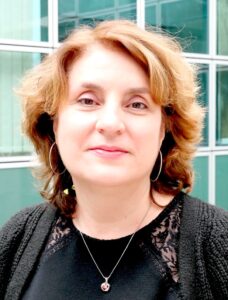
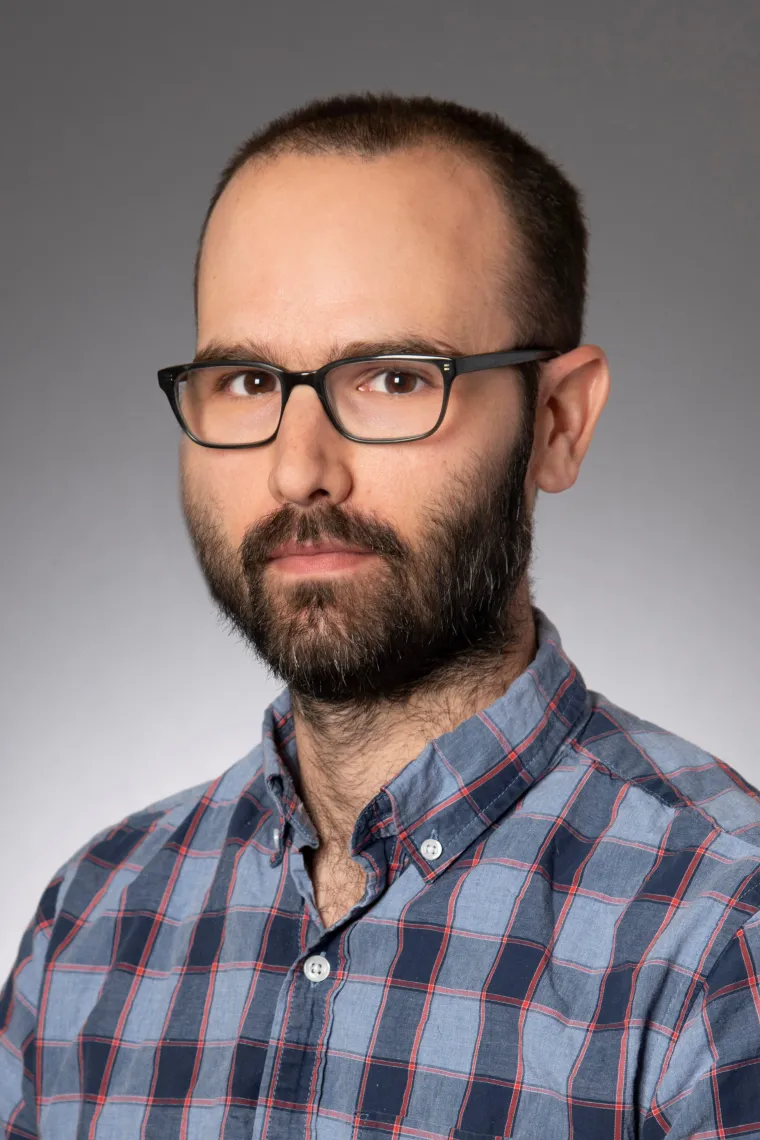
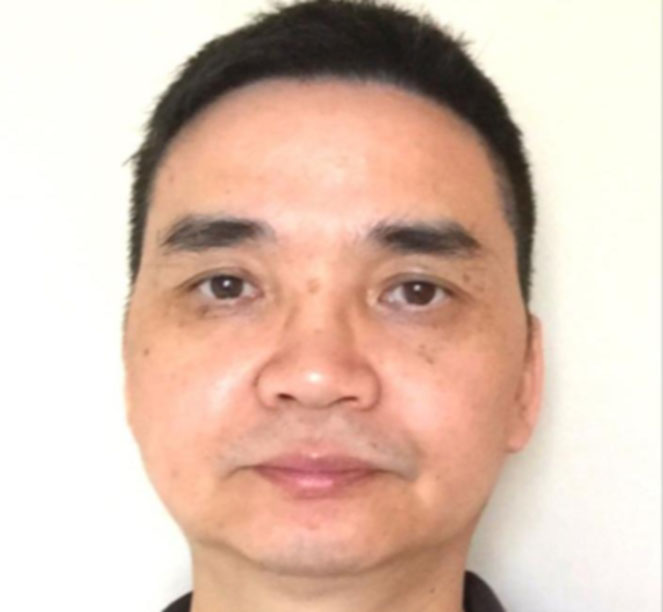
Sihem Amer-Yahia is a distinguished Research Professor at the University of Grenoble Alpes (affiliated with Grenoble Informatics Laboratory ), with significant contributions to database systems , data exploration , and fairness in AI . Her work bridges human-computer interaction and machine learning to create systems that enhance data-driven decision-making. Research Pillars : Algorithmic fairness, interactive data mining, recommender systems, and human-AI collaboration Recent Advances : 2023-2025 publications focus on statistically sound hypothesis testing , multi-objective recommendation , and conversational analytics Leadership : Co-organized major conferences (DASFAA 2024) and led DEI initiatives in database communities Her 15 most recent articles (2020-2025) span topics like producer fairness in recommendation , statistical hypothesis frameworks , and AI-powered education systems , with keywords covering database optimization , reinforcement learning , and ethical data mining . She actively contributes to ACM/IEEE journals and VLDB/SIGMOD conferences.
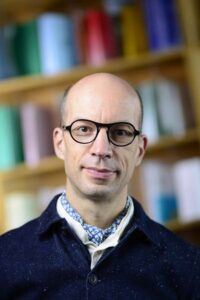
Tanya Braun is a Junior Professor in the Institute of Computer Science at the University of Münster, Department of Mathematics and Computer Science. She leads the Data Science research group, focusing on statistical-relational AI, human-aware AI, and text understanding. Her work bridges formal AI methods with real-world applications in healthcare, digital humanities, and public sector systems. Education: Bachelor's and Master's in Computational Informatics, Hamburg University of Technology Doctorate in Computer Science, University of Lübeck (2020), thesis: 'Rescued from a Sea of Queries - Exact Inference in Probabilistic Relational Models' Her research centers on probabilistic inference in relational domains , with a focus on lifted inference techniques that exploit symmetries to scale reasoning. She investigates human-aware AI , particularly how AI systems can reconcile learned models with human expectations to improve explainability and trust. Her work on text understanding addresses challenges in data-scarce settings such as digital humanities, where traditional large language models fail. She has developed methods for identifying and enriching subjective content descriptions, topic modeling in specialized domains, and feedback-driven model improvement. The 15 most recent publications highlight a strong trajectory in lifted inference, model compression, privacy-preserving AI, and explainability . Her work integrates formal AI foundations with practical concerns in high-stakes domains like healthcare. She frequently publishes in top venues such as AAAI, IJCAI, ECAI, and Artificial Intelligence, often in collaboration with Ralf Möller, Marcel Gehrke, and Jan Speller. Scientific Awards: No specific awards listed in the provided text. Tanya Braun actively advises students and leads the HAPPI project, which focuses on human-AI model reconciliation using lifted probabilistic inference. She has supervised multiple theses and mentored researchers including Jan Speller (PostDoc), Nazlı Nur Karabulut, and Sagad Hamid. She has secured funding from the Ministry of Culture and Science of North Rhine-Westphalia for her research. She is deeply involved in academic service: serving as program co-chair for KI 2025, guest-editing special issues in journals like Künstliche Intelligenz and Annals of Mathematics and Artificial Intelligence , and organizing major conferences including ICCS and KR. Labs and Teams: She leads the Data Science Group at the University of Münster, which conducts research in AI, probabilistic modeling, and data science. The group is actively involved in teaching and mentoring students in advanced AI topics.
Dr. Luis Espath is an Assistant Professor of Applied Mathematics at the University of Nottingham, affiliated with the School of Mathematical Sciences. His research spans theoretical and computational mechanics, uncertainty quantification, and machine learning. He has held postdoctoral and research scientist roles at KAUST and RWTH Aachen, respectively, and authored the Springer Nature book Mechanics & Geometry of Enriched Continua . Education : Engineering Diploma (2007) at PUCRS, Brazil; Master’s and Ph.D. (2013) at UFRGS, Brazil; Habilitation in Mathematics (2021) at RWTH Aachen, Germany. Dr. Espath’s research focuses on the application of phase-field and continuum mechanics to model complex systems, with an emphasis on thermodynamic consistency and computational efficiency. He integrates stochastic optimization and machine learning into fluid dynamics and structural modeling. His recent publications highlight expertise in phase-field gradient theory, fluid-structure interaction, and Bayesian experimental design. The 2021 articles reflect his work on Navier-Stokes equations, reactive Cahn-Hilliard systems, and divergence-free fluid flow approximations.
Prof. Dr. Roland Langrock holds the Chair of Statistics and Data Analysis at the Faculty of Economics, University of Bielefeld . He is a spokesperson for the Center for Statistics and a subproject manager in the Transregio 212 NC³ collaboration. His research spans ecological statistics, sports analytics, and time series modeling. 2026–present: Principal investigator for "Data-based indication of fraud in live betting" (DFG) 2025–present: Subproject manager D06 in TRR 212 NC³ 2021–present: ERASMUS representative for Master of Statistical Sciences Research Interests: His work focuses on hidden Markov models for analyzing animal movement, sports performance, and commercial data. Key applications include marine predator behavior , football match dynamics , and fraud detection in betting . He develops flexible statistical frameworks for state-switching processes across domains. Scientific Awards: Multiple German Research Foundation grants (2017–2026) and participation in EU-funded projects. Notable publications in Journal of the Royal Statistical Society , Ecology Letters , and Science . Additional Roles: Member of the Bielefeld Graduate School in Theoretical Sciences, organizer of advanced statistical methods courses, and contributor to software packages like moveHMM . His collaborations extend to marine biology (blue whales), subterranean rodent studies, and retail demand forecasting.
Jens Ledet Jensen is a Professor in the Department of Mathematics at Aarhus University, with over 40 years of academic experience. His research focuses on mathematical statistics, asymptotics, saddlepoint approximations, and probabilistic modeling in biological experiments. He has collaborated with institutions like Aarhus University Hospital and researchers in political science, particularly on applications of the NIG distribution. Key research areas: Mathematical Statistics, Asymptotics, Saddlepoint Approximations, Hidden Markov Models, High-Dimensional Data Inference Affiliation: Aarhus University (Faculty of Science, Department of Mathematics) Jensen has contributed to data science education, including developing an English-language bachelor's program and authoring interactive web-based statistics materials. His recent work involves interdisciplinary collaborations, particularly in public administration and biological data analysis. Selected activities include workshops, seminars, and conference participation (e.g., 58th ISI Congress in 2011, workshops on ambit stochastics in 2011, and presentations on topics like multiple regression in 2018).
Madalina Deaconu is an Inria Research Director and Assistant Scientific Delegate (DSA) at the Inria Center of the University of Lorraine since January 2022. She leads the PASTA joint project team (Processus Aléatoires Spatio-Temporels et leurs Applications) hosted at the Institut Elie Cartan de Lorraine (IECL). Her academic affiliation is with the Faculty of Science and Technology at the University of Lorraine, where she conducts research in probability theory and stochastic modeling. She serves on multiple committees including the Inria Evaluation Commission, the Geophysics Program Committee of the RT CNRS "Earth & Energies", and has held leadership positions including Director of the Charles Hermite Federation (2018-2022). Dr. Deaconu completed her Habilitation à diriger des recherches (HDR) at Université Henri Poincaré – Nancy 1 in 2008 and earned her PhD in Stochastic Processes and Partial Differential Equations from the same institution in 1997. Habilitation à diriger des recherches (HDR), Université Henri Poincaré – Nancy 1, France, 2008 PhD in Stochastic Processes and Partial Differential Equations, Université Henri Poincaré – Nancy 1, France, 1997 Madalina Deaconu's research focuses on stochastic modeling with applications across multiple domains. Her primary areas include data-enriched stochastic modeling, probabilistic approaches to coagulation/fragmentation models, numerical methods for diffusion reach times, and stochastic methods for linear and nonlinear partial differential equations. Her work bridges theoretical probability with practical applications in environmental science, geophysics, and actuarial science. She develops innovative probabilistic simulation methods and analyzes random spatio-temporal processes, with particular emphasis on fragmentation equations, Bessel processes, and Hawkes processes. Her research has significant applications in modeling avalanches, natural disasters, insurance risk assessment, and hydrochemical data analysis. She has established international collaborations with researchers from University of Turin, University of Uruguay, and institutions in Bucharest, as well as national collaborations with University of Burgundy and INRAE Grenoble. Analysis of Dr. Deaconu's recent publications reveals a consistent focus on fragmentation processes and stochastic modeling approaches. Her work spans theoretical developments in probability theory, numerical methods for stochastic processes, and practical applications in environmental science and actuarial mathematics. A notable trend is her increasing focus on Bayesian inference methods and point process applications, particularly for environmental and insurance contexts. Her most recent work demonstrates strong interdisciplinary connections, applying stochastic methods to hydrochemical data analysis, insurance recommendation systems, and natural disaster modeling. The consistent thread throughout her publications is the development and application of sophisticated probabilistic techniques to solve complex real-world problems. Dr. Deaconu has received recognition for her contributions to research: Paper and Poster award at EWEA 2015 (European Wind Energy Association) Plenary speaker at the 14th International Conference on Monte Carlo Methods and Applications (MCM23) While specific student names aren't listed in the provided text, Dr. Deaconu is involved in doctoral training through the IECL and supervises research in stochastic modeling. She coordinates multiple research collaborations including industrial partnerships with Le Foyer Luxembourg and SnT Université du Luxembourg (2018-2022). Her teaching activities include Stochastic Modeling at Master 2 level, Stochastic Differential Equations at École des Mines de Nancy, and Monte Carlo Simulation for Financial Market Engineering. Dr. Deaconu leads the PASTA research team (Processus Aléatoires Spatio-Temporels et leurs Applications), a joint Inria project hosted at IECL. She previously directed the Charles Hermite Federation (2018-2022), which brought together three major research laboratories: CRAN (Automatic Control), IECL (Mathematics), and LORIA (Computer Science). Her work is centered at the Institut Elie Cartan de Lorraine, a mathematics research institute affiliated with the University of Lorraine, where she contributes to both theoretical developments and practical applications of stochastic methods across multiple scientific domains.
Antoine Lejay is a Researcher in the Department of Probability and Statistics at the Faculty of Science and Technology, Université de Lorraine. He is affiliated with the Inria PASTA project team and contributes to interdisciplinary initiatives like the Inria Apollon Exploratory Action (2022–2024) and the CNRS MITI project (2024–2025). His roles include Deputy Director of the AM2I division and former Head of the Probability and Statistics team (2016–2022). His research spans Rough trajectories , Stochastic analysis , and Probabilistic numerical methods , with applications in Fragmentation equations , Diffusion modeling , and Digital Humanities . He develops algorithms for stochastic processes in discontinuous media and statistical estimators for non-standard models like skew Brownian motion. Recent publications highlight methodological advancements in Rough differential equations , Hawkes processes for insurance risk, and Fragmentation dynamics . His work combines theoretical analysis (e.g., asymptotic behavior) with computational frameworks (e.g., random walk simulations, interface conditions). Lejay has held leadership positions in the Charles Hermite Federation (2022–2023) and the GdR TRAG (2018–2023). He collaborates with academic and industrial partners, focusing on interdisciplinary applications in insurance, engineering, and porous media.
Michael A. Zazanis is a Professor in the Department of Statistics at the Athens University of Economics and Business (AUEB), where he has been a faculty member since 1997. He previously held positions as Assistant Professor at Northwestern University (1986-1993) and Associate Professor at the University of Massachusetts, Amherst (1993-1997). Dr. Zazanis received his Engineering Diploma from the National Technical University of Athens (1982), followed by an M.Sc. (1983) and Ph.D. (1986) in Applied Mathematics from Harvard University. His academic journey reflects a strong foundation in both engineering and theoretical mathematics. His research focuses on Applied Probability, Queueing Systems, Stochastic Simulation, and applications in Manufacturing and Risk Management. Over his career, his work has evolved from foundational perturbation analysis of queueing systems to contemporary research on age-of-information metrics in communication networks. His contributions span theoretical developments in stochastic processes and practical applications in production control systems and risk analysis. Dr. Zazanis has published extensively in leading journals including Journal of Applied Probability, Stochastic Processes and their Applications, Operations Research, Management Science, and Queueing Systems. His 1988 paper in Management Science on perturbation analysis for the M/G/1 queue is considered seminal in the field. Best Publication Award from the TIMS College on Simulation (1990) He has served in administrative roles including Graduate Program Director (2003-2006) and Head of the Statistics Department (2006-2008) at AUEB. Dr. Zazanis teaches undergraduate courses in Mathematical Methods, Stochastic Processes, and Probabilities, as well as graduate courses in Advanced Stochastic Processes and Operations Research. He is married to Corinna Anastassakou and has one son, Aristomenes.
Richard M. Karp is a Professor at the University of California, Berkeley, holding the Class of 1939 Chair in the Department of Electrical Engineering and Computer Sciences within the College of Engineering. He has been affiliated with UC Berkeley from 1968-1994 and again from 1999 to present, and has also served as a Research Scientist at the International Computer Science Institute in Berkeley since 1988. His career spans over five decades, beginning with his time at IBM Research from 1959-1968. His educational background includes a Ph.D. in Applied Mathematics from Harvard University (1959), an S.M. in Applied Mathematics (1956), and an A.B. in Mathematics (1955), all from Harvard. Karp's research spans multiple domains with a focus on algorithmic methods in genomics and computer networking . His work integrates theoretical computer science with practical applications in biological systems. He has made significant contributions across three primary research areas: Biosystems & Computational Biology (BIO), Operating Systems & Networking (OSNT), and Theory (THY). His interdisciplinary approach connects computational theory with real-world problems in molecular biology, network design, and combinatorial optimization. His early work in theoretical computer science laid foundations for complexity theory, while his later work has focused increasingly on computational biology applications. His research has been supported through affiliations with the Center for Computational Biology (CCB), Industrial Engineering and Operations Research (IEOR), and the Simons Institute for the Theory of Computing (SITC). Among his numerous honors are the Turing Award, National Medal of Science, Kyoto Prize, Von Neumann Theory Prize, and membership in multiple prestigious academies including the U.S. National Academies of Sciences and Engineering, the American Philosophical Society, and the French Academy of Sciences. Karp has supervised thirty-six Ph.D. students throughout his career, contributing significantly to the development of new generations of computer scientists. His work has been supported by numerous research grants across theoretical computer science, computational biology, and network theory. He has been instrumental in establishing interdisciplinary research programs that bridge computer science with biological sciences. He has been actively involved with the International Computer Science Institute in Berkeley since 1988, contributing to research teams focused on theoretical computer science and its applications to biological problems. His work has often involved collaborative teams spanning multiple disciplines, particularly in the field of computational biology where computer scientists work alongside biologists and medical researchers.
Gary Leal is Research Professor and Professor Emeritus of Chemical Engineering at the University of California, Santa Barbara , within the Robert Mehrabian College of Engineering. A member of the National Academy of Engineering and a Fellow of the American Physical Society, AIChE, Society of Rheology, and American Academy of Arts & Sciences, he has spent decades investigating the dynamics of complex fluids including polymer solutions, emulsions, foams, and liquid-crystalline polymers. Education: B.S. Chemical Engineering, University of Washington, 1965 M.S. Chemical Engineering, Stanford University, 1968 Ph.D. Chemical Engineering, Stanford University, 1969 Research Interests: Leal's current work centers on microstructure–flow coupling in complex fluids. Using a blend of large-scale computation and advanced experimental techniques (many unique to his laboratory), his group studies coalescence, thin-film stability, surfactant effects, nanoparticle-laden interfaces, and the nonlinear rheology of entangled polymers and liquid-crystalline systems. A strong emphasis is placed on quantitative prediction of macroscopic properties from molecular and mesoscale physics. His recent publications reveal sustained leadership in shear banding , flow-induced concentration fluctuations , and orientation imaging via Rheo-SANS. Collectively these works advance the multiscale modeling of soft materials undergoing industrial processing flows and provide diagnostic tools to fingerprint microstructural evolution in real time. Honors & Awards: Bingham Medal (Society of Rheology, 2001) Fluid Dynamics Prize (American Physical Society, 2002) G.I. Taylor Medal (Society of Engineering Science, 2015) Fellow of APS, AIChE, Society of Rheology, AAAS National Academy of Engineering Member since 1987 Dozens of named lectureships including Batchelor, Mason, Lacey, Finlayson, and more Grants & Teams: While specific grant numbers are not cited, Leal has continuously led large, multi-investigator projects—evidenced by NASA Group Achievement Awards, NSF/DOE citations in articles, and extensive experimental facilities. His team operates a multifaceted laboratory coupling rheometry, microfluidic four-roll mills, custom tensiometers, and neutron/x-ray scattering beamlines, maintaining collaborations with national laboratories and international centers for soft-matter research.
Cédric HERZET is a Permanent Member of CREST at INRIA Rennes, focusing on statistical learning theory, optimization, and inverse problems. His work bridges theoretical analysis with practical algorithm development. Primary affiliation: INRIA Rennes (French National Institute for Research in Digital Science) Research Interests: Statistical Learning Theory, Optimization algorithms, Operational Research, Inverse Problems. His work particularly addresses sparse approximation, compressed sensing, and iterative thresholding methods. Key Contributions: Development of Bayesian pursuit algorithms, geometric analysis of subspace clustering with outliers, and analysis of state evolution in dense graph message passing. His theoretical work has direct applications in signal/image processing and machine learning. Software: Created MATLAB implementations of sparse approximation algorithms and Bernoulli-Gaussian Lab toolbox for Bayesian pursuit simulation.
Jason Pacheco serves as an Assistant Professor in the Department of Computer Science at the University of Arizona, maintaining an office in GS 724. He earned his Ph.D. from Brown University in 2016 and specializes in theoretical and applied machine learning. His educational background includes: Ph.D. in Computer Science, Brown University (2016) Dr. Pacheco's research centers on statistical machine learning, probabilistic graphical models, and approximate inference algorithms, with emphasis on information-theoretic decision making. He bridges theoretical foundations with practical applications in cybersecurity, privacy-preserving AI, and environmental monitoring systems, developing novel approaches for robust sequential decision making under uncertainty. Analysis of his 15 most recent publications (2021-2025) reveals three dominant research thrusts: (1) Privacy-preserving machine learning, particularly federated learning and differential privacy for large language models; (2) Adversarial reinforcement learning for cyber defense and malware detection; and (3) Variational information-theoretic methods for mutual information estimation and sequential decision making. His work consistently integrates theoretical rigor with real-world applications in security and environmental science.
Joe Watson is a Postdoctoral Researcher at the University of Oxford within the Applied Artificial Intelligence Lab at the Oxford Robotics Institute . He earned his PhD in 2024 from the Technical University of Darmstadt , supervised by Prof. Jan Peters, and holds an MEng in Information & Computer Engineering from University of Cambridge . His research focuses on statistical methods for robot learning , particularly the duality between entropy-regularized optimization and Bayesian inference. Key interests include uncertainty quantification , policy optimization , and incorporating structural knowledge into robotics. Scientific contributions include Coherent Soft Imitation Learning (NeurIPS 2023, spotlight) and Monte Carlo Posterior Policy Iteration (CoRL 2022, oral). Recent publications address safe foundation models and tensor motion planning in 2025. 2022 : R:SS Pioneer for robotics research 2016 : Charles Babbage Senior Scholarship at Cambridge He has contributed to open-source projects like i2c and monte-carlo-posterior-policy-iteration , with 534 GitHub contributions in the last year.
Shangzhen Luo is a Professor in the Department of Mathematics at the University of Northern Iowa, affiliated with the College of Humanities, Arts and Sciences. Their research focuses on stochastic analysis, financial mathematics, and filtering theory, with applications in insurance, reinsurance, and risk management. Research Interests include stochastic control, differential games, and probabilistic modeling in financial and insurance contexts. Key themes in their work involve optimizing reinsurance strategies, analyzing time-inconsistent preferences in retirement planning, and studying risk processes under stochastic volatility. Publication Trends reveal a strong emphasis on stochastic differential equations , reinsurance optimization , and Markov-driven dynamics . Their work bridges theoretical stochastic analysis with practical applications in insurance, investment, and decision-making under uncertainty. Key Contributions span topics like barrier strategies for insurance surplus, Pareto-optimal reinsurance policies, and robust control under ambiguity. They have developed models for jump-diffusion risk processes, Brownian risk minimization, and multi-dimensional filtering systems.
Professor Andrzej Murawski is a Tutorial Fellow at Worcester College , affiliated with the University of Oxford Department of Computer Science . His research spans the semantics of programming languages , automata theory , and software verification , integrating game semantics and probabilistic computation for modeling complex systems. Education: D.Phil., University of Oxford (2001) His work addresses higher-order recursion , concurrent programs , and probabilistic verification , including differential privacy and machine learning applications. Recent publications focus on reachability analysis , contextual equivalence , and automata over infinite alphabets . Key activities include organizing SIGLOG (Vice-Chair), editing SIGLOG News , and serving on LICS , POPL , and CONCUR program committees. Awards include the POPL 2025 Distinguished Paper Award . Students : Current advisees include Benedict Bunting and Haoxuan Yin; past students include Fabian Zaiser and David Hopkins.