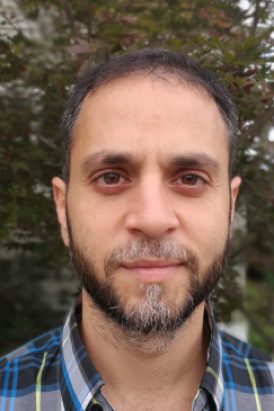
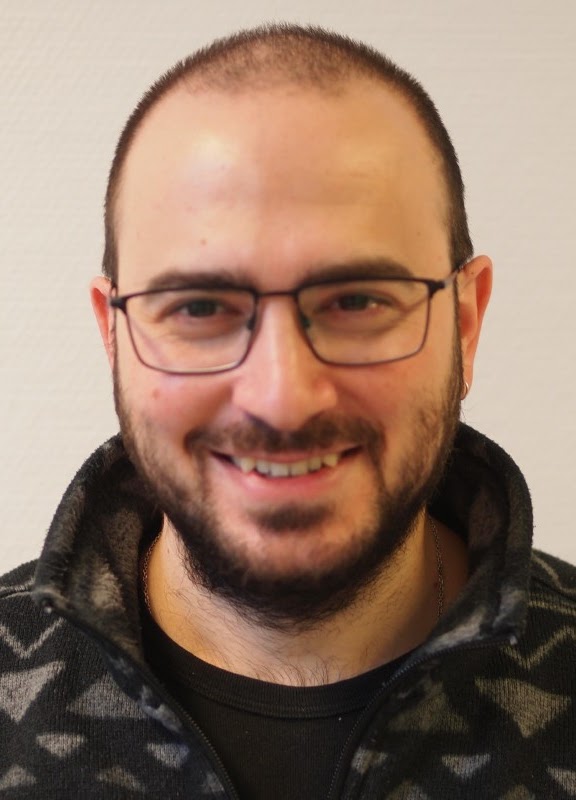
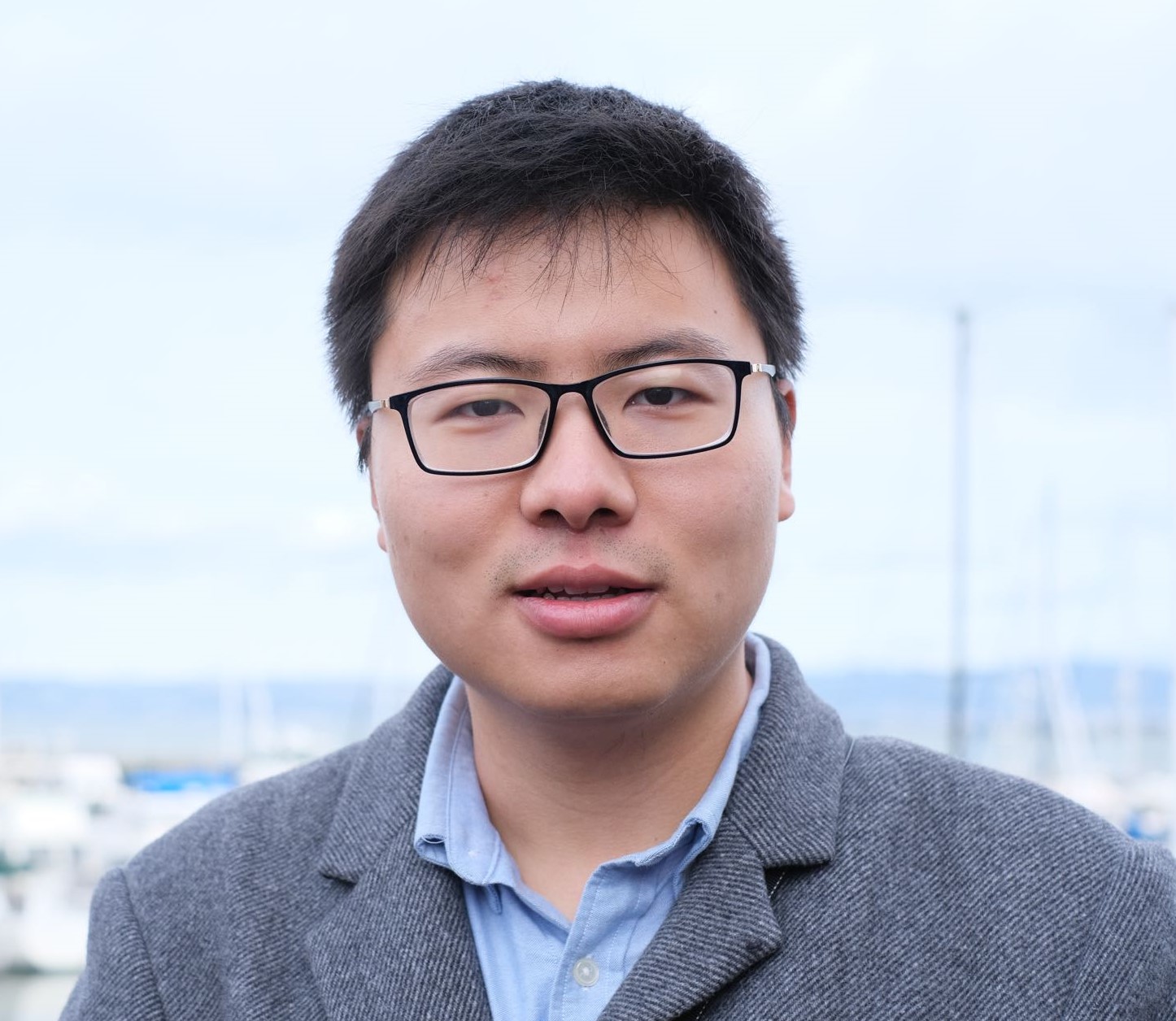
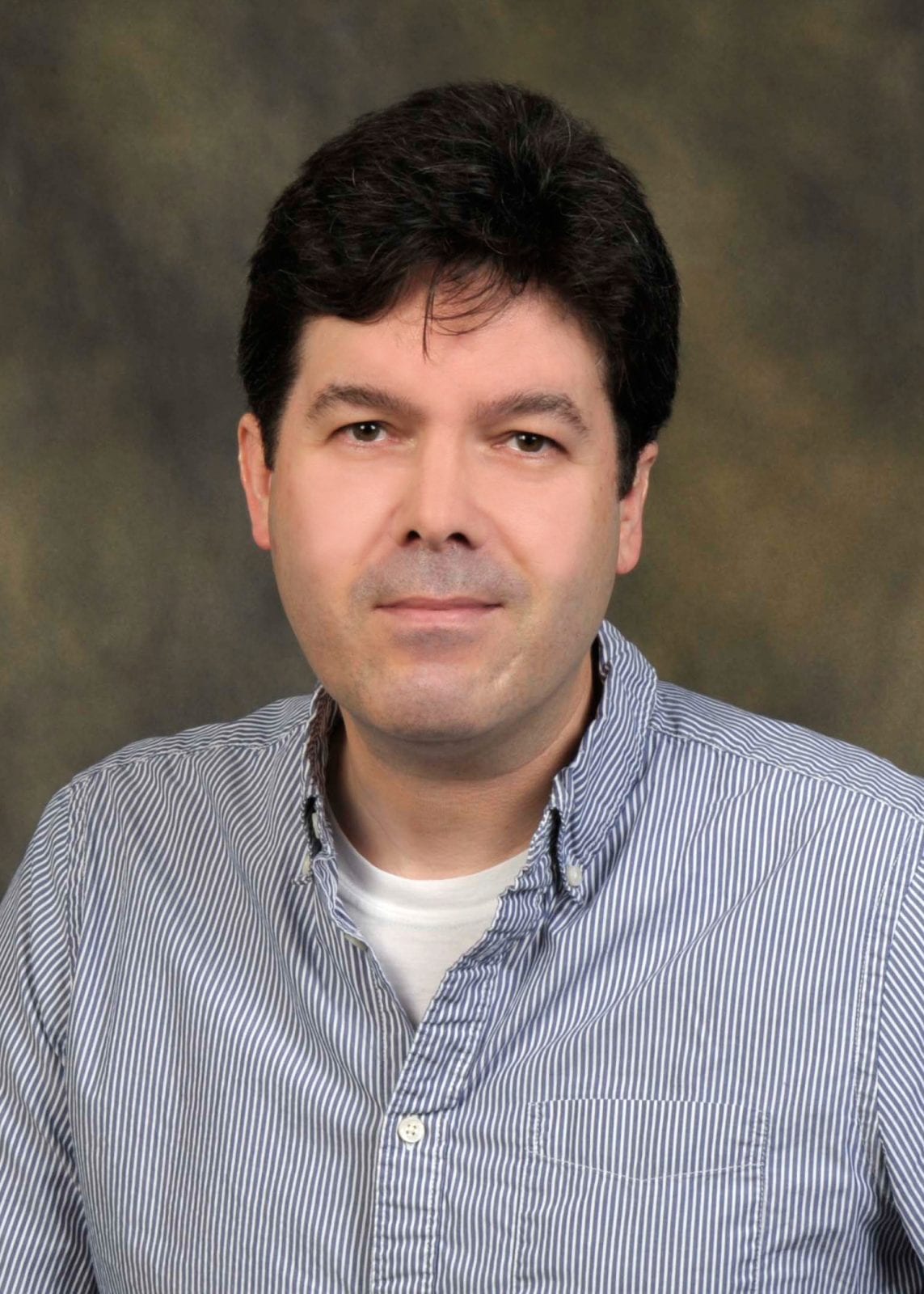
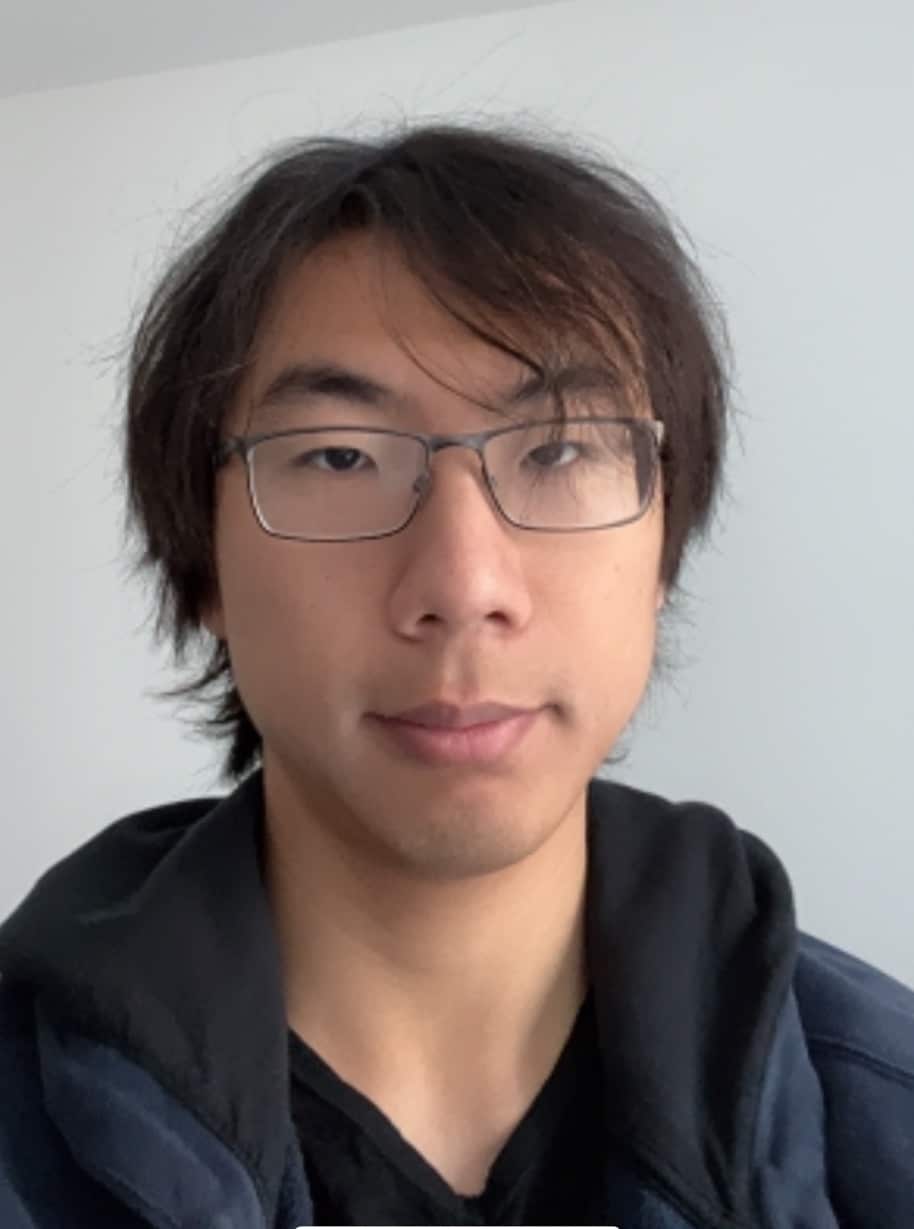
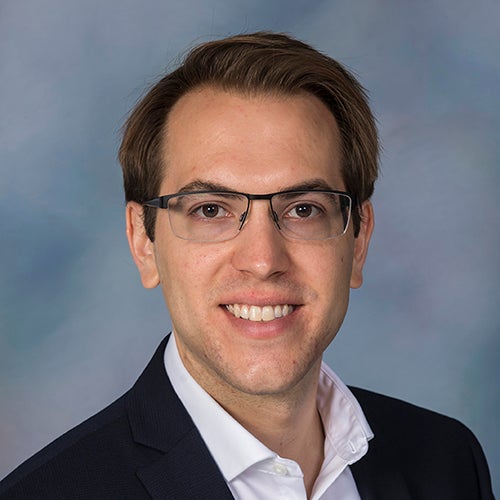
Asaf Cohen is an Associate Professor in the Department of Mathematics at the University of Michigan, Ann Arbor, affiliated with the College of Literature, Science, and the Arts. He holds a B.Sc., M.Sc., and Ph.D. from Tel-Aviv University (2005–2013). His research focuses on applied probability, stochastic processes, and control theory, with emphasis on mean-field games, mathematical finance, actuarial science, diffusion and large deviation analysis, machine learning, and risk-sensitive control. His work also addresses applications in stochastic networks, energy markets, epidemiology, and economics. Key research areas include diffusion approximations, large deviations, queueing theory, and partial differential equations. Dr. Cohen has contributed to the analysis of multiclass queueing systems, optimal dividend strategies, and strategic server behavior in heavy traffic regimes. His methods often involve advanced stochastic control techniques and game-theoretic models. He has published extensively on topics such as mean-field games, SIR models for epidemics, and Bayesian sequential testing. His academic contributions span theoretical advancements and practical applications in finance, insurance, and operations research.
Edriss S. Titi is a University Distinguished Professor and Arthur Owen Professor of Mathematics at Texas A&M University within the College of Arts & Sciences. His research focuses on nonlinear partial differential equations, applied mathematics, and geophysical fluid dynamics. He leads studies on fluid mechanics, atmospheric and oceanic dynamics, data assimilation, and control theory. His work often addresses mathematical rigor in modeling complex systems like climate dynamics and turbulent flows. Research Interests: Nonlinear PDEs and their applications Fluid dynamics and turbulence Data assimilation algorithms Climate and ocean modeling Infinite-dimensional dynamical systems Recent publications emphasize Navier-Stokes equations , primitive equations , and data assimilation in chaotic systems . His methodologies bridge theoretical analysis and computational modeling, with applications to weather prediction and geophysical flows. Collaborations include the Institute for Applied Mathematics and Computational Science (IAMCS) at Texas A&M. Notable contributions include rigorous analysis of global well-posedness for oceanic models and development of CDAnet, a physics-informed deep learning framework for fluid flow downscaling.
David Frazier is a Professor in the Department of Econometrics & Business Statistics at Monash University, specializing in simulation-based inference, financial econometrics, and nonparametric/semiparametric modeling. He teaches ETC 1010: Data Modeling and Computing. His research focuses on robust statistical methods, Bayesian computation, and model misspecification. Key projects include 'Consequences of Model Misspecification in Approximate Bayesian Computation' (2020-2025) and 'Loss-based Bayesian Prediction' (2020-2025). Recent work addresses forecasting in misspecified models, weak identification in econometric frameworks, and robust variational Bayes techniques. His contributions align with UN Sustainable Development Goals related to economic and environmental sustainability. Projects: 4 active/funded projects with ARC, Brown University, and international collaborators. Publications: Over 37 peer-reviewed articles in journals like the Journal of the American Statistical Association and Journal of Econometrics. Research interests include advancing Bayesian methodologies for complex models, with applications in asset pricing and economic forecasting. His work emphasizes reliability in statistical inference under model uncertainty and computational efficiency.
Georgios Arvanitidis is an Associate Professor at the Technical University of Denmark (DTU) in the Department of Applied Mathematics and Computer Science, specifically within the Section for Cognitive Systems (CogSys). He has established himself as a leading researcher in geometric machine learning, focusing on the application of differential geometry principles to enhance machine learning models. His work bridges theoretical mathematics with practical applications in artificial intelligence, with particular emphasis on understanding the geometric structure of data manifolds and latent spaces. Dr. Arvanitidis completed his educational journey with a Bachelor's degree from the Department of Informatics at the Aristotle University of Thessaloniki, followed by a Master's degree in Computer Science from Saarland University supported by the Max Planck Institute for Informatics. He earned his PhD at DTU's Cognitive Systems section under the supervision of Søren Hauberg, with additional research experience at Philipp Hennig's Probabilistic Numerics group. Prior to his current position as associate professor, he was a PostDoc at the Max Planck Institute for Intelligent Systems working with Bernhard Schölkopf. Dr. Arvanitidis's research primarily focuses on differential geometry in machine learning , where he explores how geometric structures can enhance representation learning and statistical modeling. His work in generative models investigates how learning the geometry of data manifolds can improve deep learning architectures. In the domain of deep learning theory , he examines why deep learning models generalize effectively on unseen data, with particular attention to the curvature properties of loss landscapes. His research in approximate Bayesian inference applies geometric principles to improve uncertainty quantification in neural networks. Through his innovative approaches, Dr. Arvanitidis has established himself as a leading researcher in geometric machine learning, contributing to both theoretical foundations and practical applications across various domains including robotics and life sciences. The publication trends of Dr. Arvanitidis reveal a consistent and evolving focus on geometric approaches to machine learning problems. His recent work (2023-2025) demonstrates increasing sophistication in applying Riemannian geometry to deep learning architectures, with particular emphasis on latent space geometry, optimization on manifolds, and geometric interpretations of neural network behavior. A notable pattern is the progression from foundational work on geometric representations to more applied research in areas like robotics and causal inference. His publications span top-tier conferences including NeurIPS, ICML, ICLR, and AISTATS, reflecting the high impact of his research. The interdisciplinary nature of his work is evident in collaborations across mathematics, computer science, and robotics domains, with recent papers addressing challenges in multimodal sampling, safety guarantees for dynamical systems, and counterfactual explanations. Dr. Arvanitidis has received several notable scientific awards and recognitions: Sapere Aude starting grant from the Independent Research Fund Denmark (DFF) GADL funding i-Rase, Pathfinder, and EIC (European Innovation Council) funding Best reviewer award for NeurIPS 2019 Best reviewer award for NeurIPS 2018 Best student paper award at Robotics: Science and Systems (R:SS) 2021 Dr. Arvanitidis actively mentors PhD students and researchers, currently supervising Alejandro Valverde, Johanna Gegenfurtner, and Albert Kjøller Jacobsen. He has previously co-supervised Alison Pouplin's PhD and worked with research assistant Georgios Pantis. His group receives substantial funding through multiple prestigious grants including the Sapere Aude starting grant from the Independent Research Fund Denmark, as well as European Innovation Council funding. He has been instrumental in creating opportunities for students interested in geometric machine learning, offering BSc and MSc thesis projects focused on generative models, deep learning theory, and optimization techniques. Dr. Arvanitidis also contributes significantly to the academic community as a reviewer for top conferences including ICLR and TMLR, and as an area chair for NeurIPS, ICML, AISTATS, and UAI. He co-organized the Machine Learning Summer School 2020 in Tübingen, further demonstrating his commitment to education and community building. Dr. Arvanitidis leads a vibrant research group focused on geometric machine learning within the Cognitive Systems section at DTU. His team includes multiple PhD students working on cutting-edge research at the intersection of differential geometry and artificial intelligence. The group has developed notable software tools, including the "geometric_ml" GitHub repository with over 70 stars, which contains implementations for applying Riemannian geometry in machine learning. His research has practical applications in robotics, where geometric approaches enable more robust motion planning, as evidenced by his work on "Reactive Motion Generation on Learned Riemannian Manifolds" which received a best student paper award. Additionally, his methodologies have found applications in life sciences, as mentioned in his 2022 AISTATS paper. The collaborative nature of his work is evident through extensive partnerships with researchers at institutions including the Max Planck Institute for Intelligent Systems, University of Cambridge, and various European universities. His recent news items indicate active engagement with the academic community through talks, conference presentations, and ongoing supervision of new PhD students joining his group.
Jes Frellsen is an Associate Professor at the Department of Applied Mathematics and Computer Science (DTU) since 2016. Previously, he held academic positions at the IT University of Copenhagen (2016-2019), postdoctoral roles at University of Cambridge (2013-2016) and University of Copenhagen (2011-2013). Education: PhD in Bioinformatics (2011), University of Copenhagen MSc in Bioinformatics (2007), University of Copenhagen BSc in Mathematics and Computer Science (2005), University of Copenhagen EAP Exchange at University of California, Santa Cruz (2004-2005) Research Focus Jes Frellsen specializes in statistical machine learning , particularly generative AI and deep generative models with applications in bioinformatics . His work integrates Bayesian inference , directional statistics , and Markov chain Monte Carlo methods to address challenges in macromolecular structure prediction and missing data imputation . Recent efforts explore uncertainty quantification in image segmentation and generative modeling for materials science. Advising & Collaborations He actively supervises PhD students and postdoctoral researchers in projects spanning news recommendation systems , medical imaging , and 3D structure generation . Collaborations include work with Zoubin Ghahramani (Cambridge) and Thomas Hamelryck (Copenhagen), with contributions to protein structure prediction and statistical methods in structural bioinformatics .
Wenlong Mou is an Assistant Professor at the University of Toronto's Department of Statistical Sciences, with additional affiliation at the Vector Institute for AI. His research develops optimal statistical methods and efficient algorithms for data-driven decision-making, focusing on reinforcement learning, stochastic approximation, and causal estimation. He teaches advanced courses in theoretical statistics (STA3000) and stochastic processes (STA447/2006). Education: Ph.D. in EECS, University of California, Berkeley (2023) B.Sc. in Computer Science and Economics, Peking University Research Focus: Mou's work bridges statistical theory with machine learning practice. Key areas include: Theoretical foundations of reinforcement learning (e.g., Bellman equations, continuous-time systems) Efficient algorithms for semi-parametric estimation and debiasing Non-asymptotic analysis of stochastic optimization and MCMC methods High-dimensional statistical inference and causal modeling Publication Trends: Recent articles (2023–2025) emphasize reinforcement learning theory (policy evaluation, adaptive interpolation), causal inference (debiased estimators, propensity scores), and statistical computing (diffusion processes, Langevin algorithms). Methodological rigor and non-asymptotic guarantees characterize his work. Awards: INFORMS APS Student Paper Competition Finalist (2022) Advising and Labs: Actively recruiting PhD students with backgrounds in mathematics or deep learning. Students access GPU clusters via the Vector Institute. Grants unspecified in sources.
Jason Swanson is an Associate Professor in the Department of Mathematics at the University of Central Florida, specializing in stochastic processes and probability theory. His research encompasses stochastic differential equations, fractional Brownian motion, and the foundations of probability. Recent work includes developing the iterated Dirichlet process for Bayesian inference and extending representations for row-exchangeable arrays. He maintains an active research program connecting mathematical logic with probability theory. Teaching responsibilities include graduate courses in Measure and Probability (MAA 6238) and undergraduate probability (MAP 4113). His lecture notes on measure-theoretic probability are publicly available.
Maxim Raginsky is a Professor at the University of Illinois at Urbana-Champaign, holding appointments in the Department of Electrical and Computer Engineering, Coordinated Science Laboratory, and a courtesy appointment in Computer Science. His work bridges probability, stochastic processes, control theory, machine learning, optimization, and information theory , focusing on modeling, learning, and simulation of nonlinear dynamical systems with applications to advanced electronics, autonomy, and artificial intelligence. Research Interests Nonlinear dynamical systems in machine learning and control Statistical machine learning theory Information-theoretic methods in learning Stochastic control and filtering Scientific Contributions Co-author of foundational monographs on concentration inequalities and generalization bounds Recipient of the NSF CAREER Award (2013) , IEEE Fellow (2025) , and Roberto Tempo Best CDC Paper Award (2024) Editorial roles in Foundations and Trends in Machine Learning , Journal of Machine Learning Research , and SIAM Journal on Mathematics of Data Science Academic Leadership Advising 15+ graduate students and postdocs including Joshua Hanson, Belinda Tzen, and Tanya Veeravalli Teaching core graduate courses: Control of Stochastic Systems , Statistical Learning Theory , Optimization by Vector Space Methods
Oliver G. Ernst is a Professor of Numerical Analysis at Technische Universität Chemnitz . His research focuses on Numerical Analysis , Uncertainty Quantification , and Inverse Problems , with applications in Thermo-Hydro-Mechanical (THM) processes , Electromagnetics , and Stochastic Partial Differential Equations . He is associated with the Numerical Analysis group at TU Chemnitz. Key Research Areas : Efficient numerical methods for PDEs Krylov subspace techniques Stochastic finite element methods Multi-physics modeling Geoscientific applications Recent Publications (2025-2010): THM simulations under uncertainty Neural network PDE solvers Bayesian inversion frameworks Rational Krylov algorithms Deflated restarting strategies Collaborations : TU Bergakademie Freiberg University of Manchester Technical University of Munich University of Maryland University of Geneva Software Development : Contributor to OpenGeoSys platform Developer of FEMALY MATLAB library Academic Recognition : h-index 32, i10-index 66, with over 4423 citations since 2020.
Brooks Paige serves as an Associate Professor in Machine Learning at University College London's Department of Computer Science, where he leads research at the intersection of artificial intelligence, computational biology, and environmental science. His work bridges theoretical machine learning with high-impact applications in drug discovery, genomics, and climate modeling. His research portfolio spans: Machine Learning (core methodology development) Artificial Intelligence (generative models and deep learning) Information Systems (data-intensive applications) Cognitive and Computational Psychology (human-AI interaction aspects) Analysis of his 56 publications (2021-2025) reveals a dominant focus on generative modeling for molecular design, particularly protein-ligand binding prediction and antibody-epitope analysis. His methodological innovations include Gibbs sampling variants, Gaussian processes on non-Euclidean domains, and active learning frameworks, applied across biomedical and environmental domains including Arctic sea ice forecasting and urban analytics. No scientific awards are documented in available sources. Similarly, student advisement records, research grant details, laboratory facilities, and collaborative team structures remain unspecified in the current dataset.
David M. Blei is the William B. Ransford Professor of Statistics and Computer Science at Columbia University. He is a leading researcher in machine learning, with a focus on probabilistic modeling and Bayesian statistics. His work bridges theoretical foundations with practical applications across various domains. Professor Blei's research spans several key areas in modern machine learning: Development and analysis of probabilistic models for complex data Bayesian inference methods, particularly variational inference Topic modeling and mixed-membership models Causal inference and model criticism Deep generative models and representation learning Applications in natural language processing and recommendation systems His recent publications demonstrate continued advancement in variational inference theory while exploring applications in deep learning and causality. Blei's work on posterior collapse in variational autoencoders, black box variational inference, and scalable recommendation systems has been particularly influential in the machine learning community. Professor Blei mentors PhD students and postdoctoral researchers, fostering the next generation of machine learning researchers. He actively teaches graduate courses on probabilistic models, machine learning, and causal inference at Columbia University, including STCS 6701: Probabilistic Models and Machine Learning (scheduled for Fall 2025). He leads a research group focused on probabilistic modeling, contributing significantly to both theoretical advancements and practical applications of statistical methods in artificial intelligence. The group is part of Columbia's thriving machine learning community, which spans multiple departments and research centers.
Pierre ALQUIER is a Professor at ESSEC Business School (Singapore) since 2023, specializing in statistical learning and machine learning. Previously, he held professorships at ENSAE Paris (2014–2019) and the University of Dublin (2012–2014). He earned his PhD in Mathematical Statistics from Pierre and Marie Curie University in 2006, with a focus on advanced statistical methodologies. His research centers on Bayesian methods, PAC-Bayes bounds, high-dimensional data analysis, and robust estimation, with applications in quantum computing and time series. He has authored over 60 peer-reviewed articles, including influential works on kernel mean embeddings and meta-learning. Alquier has received the 2019 Best Paper Award at the Asian Conference on Machine Learning. He actively contributes to academic leadership, serving as an associate editor for leading journals like the Journal of Machine Learning Research and organizing international workshops. His educational contributions include co-supervising multiple doctoral theses on topics like robust Bayesian inference and non-negative matrix factorization. Education: PhD in Mathematical Statistics (2006), Pierre and Marie Curie University MSc in Probability Theory and Statistics (2003), Pierre and Marie Curie University Diploma in Statistician-Economist (2003), ENSAE Research Focus: Machine learning theory, PAC-Bayes bounds, Bayesian computation, high-dimensional statistics, quantum tomography, and time series forecasting. Grants & Activities: Member of key academic societies (IMS, SFdS), reviewer for top conferences (NeurIPS, ICML), and organizer of workshops on approximate Bayesian inference and high-dimensional data analysis. His recent work emphasizes robust regression, meta-learning, and the theoretical foundations of deep learning, often addressing challenges in dependent data and model misspecification. He has developed R packages like regMMD for robust statistical estimation.
Hanwen Xing is a Research Associate at St Peter's College and a Postdoctoral Researcher in Artificial Intelligence at the Nuffield Department of Women's & Reproductive Health, University of Oxford. He holds a DPhil in Statistics (2022) and MSc in Statistical Science (2018) from Oxford, following a Bachelor of Mathematics from the University of Waterloo (2017). Affiliations: University of Oxford, St Peter's College Roles: Academic support for MSc/DPhil students, Bayesian methodology development His research focuses on computational statistics and Bayesian modelling, particularly applying approximate Bayesian inference methods to healthcare and medical science challenges. He has developed novel Bayesian approaches for integrating drug response and protein profiling data to identify tumor-specific cancer dependencies, demonstrated through projects like DepInfeR-GP. His work bridges statistical theory with practical applications in precision oncology. Key research outputs include advancements in Gaussian process modelling for single-cell perturbation data, continual learning frameworks using probabilistic methods, and improved bridge estimators via f-GAN techniques. These contributions highlight his expertise in both foundational statistical theory and applied computational methods. No scientific awards explicitly mentioned. He advises students in statistics programs and contributes to collaborative projects involving ex-vivo drug sensitivity analysis. His GitHub repository hosts implementations of his Bayesian models, reflecting a commitment to open-source scientific software development.
Daniel Kowal is an Associate Professor in the Department of Statistics and Data Science at Cornell University, effective July 2024. Previously, he served as the Dobelman Chair Assistant Professor at Rice University. His research focuses on Bayesian methodology for complex dependent data, including functional, time series, and spatial datasets, with applications in environmental health, epidemiology, finance, and astronomy. He develops scalable algorithms for high-dimensional data and interpretable uncertainty quantification. His work has been recognized with the Blackwell-Rosenbluth Award (2021) and ARO Young Investigator Award (2020). Education: Ph.D. in Statistics (Cornell University), M.S. in Statistics (Cornell University), B.A. in Mathematics (Washington University in St. Louis). Research interests include Bayesian models for prediction/inference, decision theory, discrete data analysis, and scalable approximations. Key areas of application: environmental health policy, wearable devices, economics, biomedical engineering, and astronomy. Recent grants include NSF-funded projects on adaptive dependent data models and Army Research Office initiatives on Bayesian approximations. He has supervised multiple Ph.D. students, including Yunan Gao, Thomas Sun, and Brian King. His software contributions include R packages like countSTAR, SeBR, and lmabc for Bayesian regression and data synthesis. Awards include Lindley Prize Honorable Mention (2024), Arnold Zellner Thesis Award (2018), and numerous student paper awards from ASA sections.
Dan Steinberg is a senior research scientist and team leader of the Decisions & Statistical Learning team at CSIRO Data61 in Canberra, Australia. His expertise lies in probabilistic machine learning, variational inference, Bayesian deep learning, causal inference, and their application to domains spanning synthetic biology, geospatial analytics, and algorithmic fairness. Education PhD in Computer Vision / Machine Learning (2013) – University of Sydney, Australian Centre for Field Robotics Bachelor of Engineering (Mechatronics, First-Class Honours) – University of Sydney (2008) Bachelor of Commerce (Finance) – University of Sydney (2008) Research Interests Steinberg’s core research agenda revolves around building scalable probabilistic models that can learn efficiently from limited or noisy data and provide principled uncertainty estimates. Key themes include: Variational Inference & Bayesian Deep Learning: developing lightweight yet powerful algorithms for approximate posterior inference in complex models (e.g., Aboleth, Revrand). Active Learning & Experimental Design: creating methods that decide which experiments or measurements will maximise information gain, with recent focus on in-silico protein engineering via Variational Search Distributions (VSD). Causal Inference: leveraging machine-learning tools to perform robust observational causal studies for evidence-based policy, including work on youth well-being and academic outcomes. Algorithmic Fairness: translating normative notions of equity into quantifiable objectives for regression-based decision systems. Large-scale Spatial Analytics: Landshark—an open-source TensorFlow toolkit for supervised learning on massive geospatial raster datasets. Notable Software & Tools Aboleth: A minimal-overhead TensorFlow framework for Bayesian deep learning. Landshark: Command-line tools for large-scale spatial inference. Revrand: Scalable Bayesian generalised linear models with non-conjugate likelihoods. libcluster: Extensible C++ library for hierarchical Bayesian clustering. Scientific Awards Oral Presentation Award – ICML 2025 Workshop on Scaling up Intervention Models (SIMS) Oral Presentation Award – NeurIPS 2024 Workshop on Bayesian Decision-making and Uncertainty (BDU) Oral Presentation Award – NeurIPS 2023 Workshop on Adaptive Experimental Design and Active Learning Spotlight Paper Award – NeurIPS 2014 (Extended and Unscented Gaussian Processes) Research Team & Collaborations As Team Leader – Decisions & Statistical Learning at CSIRO Data61, Steinberg directs a multi-disciplinary group that partners with government agencies (e.g., Jobs and Skills Australia, Australian Institute of Health and Welfare) and industry to deploy machine-learning solutions at scale. He has previously held roles as Principal Researcher at Gradient Institute (2019-2023), Senior Research Engineer at CSIRO Data61 (2016-2019), Researcher at NICTA (2013-2016), and Research Associate at the University of Sydney (2012-2013).