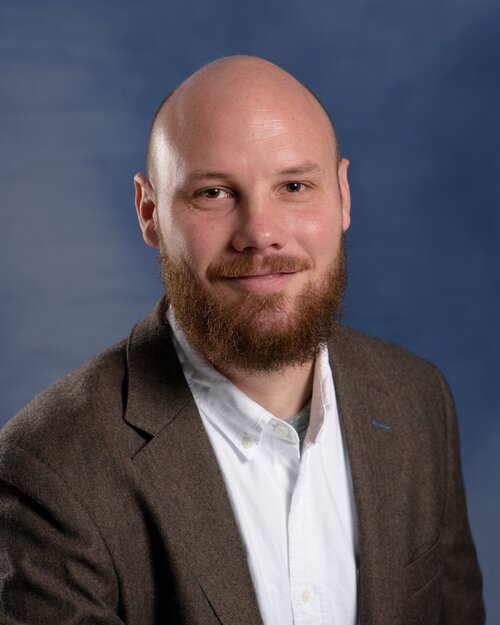
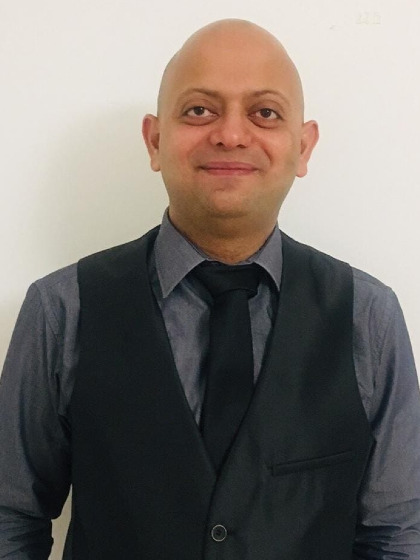
Amir Mohammadi is a Professor in the Department of Mathematics at the University of California, Berkeley , appointed in 2025. He is a member of the Senate Faculty and conducts research in the College of Letters and Science. His research interests lie at the intersection of ergodic theory , dynamical systems , and discrete subgroups of Lie groups . He explores deep connections between homogeneous dynamics, number theory, and geometry, with a focus on effective equidistribution, measure rigidity, and Diophantine approximation. His recent publications reflect a strong emphasis on effective results in homogeneous dynamics, including studies on unipotent flows, quadratic forms, and geodesic planes in hyperbolic manifolds. The work often involves collaboration with leading mathematicians and appears in top-tier journals such as Inventiones Mathematicae , Duke Mathematical Journal , and the Journal of the American Mathematical Society . Research is supported in part by the National Science Foundation (NSF) .
Myrto Mavraki is an Assistant Professor in the Department of Mathematics at the University of Toronto, with affiliations to both the St. George and Mississauga campuses. She specializes in arithmetic geometry and dynamical systems, particularly the theory of unlikely intersections and canonical heights in families of rational maps. Institution: University of Toronto School: Faculty of Arts and Science Department: Department of Mathematics Rank: Assistant Professor Her research focuses on deep connections between arithmetic geometry and dynamical systems. Key areas include equidistribution, variation of canonical heights, preperiodic points, and unlikely intersections in families of maps, especially on the projective line and in elliptic surfaces. These topics lie at the heart of modern arithmetic dynamics and have strong ties to Diophantine geometry and number theory. The most recent publications show a sustained focus on canonical height variation, equidistribution, and the geometry of post-critically finite and preperiodic loci in parameter spaces. Collaborations with leading mathematicians such as Laura DeMarco, Harry Schmidt, and Hexi Ye reflect her central role in current developments in arithmetic dynamics. Her work combines algebraic, analytic, and arithmetic techniques to solve deep conjectures and establish foundational results. Her research is supported by an NSERC Discovery Grant and an Early Career Supplement (2024–2029), and previously by an NSF grant (DMS-2200981). She has mentored or collaborated with several prominent researchers and is likely supervising graduate students, though none are explicitly named. She does not list formal awards, but her publication record in top journals and prestigious fellowships indicate high recognition in the mathematical community. Mavraki held the Benjamin Peirce Fellowship at Harvard (2020–2023), a highly competitive postdoctoral position, and prior positions at the University of Basel and Northwestern University. She earned her PhD from the University of British Columbia under Dragos Ghioca.
Professor Barak Weiss is a distinguished faculty member in the School of Mathematical Sciences at Tel Aviv University's Faculty of Exact Sciences. His research focuses on the intersection of dynamical systems, number theory, and geometry, particularly in the areas of homogeneous dynamics, ergodic theory, and Diophantine approximation. Professor Weiss has made significant contributions to the understanding of translation surfaces, lattice orbits, and the dynamics of flows on homogeneous spaces. His work often bridges pure mathematics with applications in number theory and geometry, revealing profound connections between seemingly disparate fields. His research on horocycle dynamics, measure rigidity for fractal carpets, and the classification of cut-and-project sets has advanced our understanding of geometric structures and their dynamical properties. His recent publications (2023-2025) demonstrate a strong focus on equidistribution phenomena, statistical properties of dynamical systems, and the application of homogeneous dynamics to problems in geometric number theory. A notable trend in his work is the interplay between geometric structures and their arithmetic properties, particularly in the context of Diophantine approximation. Professor Weiss actively organizes the "Homogeneous Dynamics and Applications" seminar at Tel Aviv University, which has been running continuously since at least 2014 with detailed schedules available through 2025. This seminar serves as a hub for cutting-edge research discussions, featuring both local and international speakers working on dynamical systems and related areas. He teaches advanced courses in analysis and supervises graduate students, with recent teaching assignments including Real Analysis for summer semester 2025. His office is located in Schreiber building, room 329, and his regular office hours are Tuesdays from 15:00-16:00.
Alireza Salehi Golsefidy is a Professor in the Department of Mathematics at the University of California, San Diego (UCSD). He received his Ph.D. from Yale University under Gregory Margulis, a Fields Medalist. His research focuses on algebraic, arithmetic, and analytic properties of linear groups, homogeneous dynamical systems, and expander graphs. He has held positions at Princeton University and the Institute for Advanced Study as a Veblen Research Instructor before joining UCSD in 2011. Education: Ph.D. in Mathematics, Yale University (2006). Research Interests: His work bridges discrete subgroups of Lie groups, homogeneous dynamics, and number theory. Recent contributions include studies on super-approximation, spectral independence, and geometric group theory. He has organized workshops on thin groups, arithmetic groups, and homogeneous dynamics at MSRI and Oberwolfach. Grants & Awards: Alfred P. Sloan Research Fellowship (2012), Clay Liftoff Award (2006), NSF grants 1602137, 1902090, and 2302519. His research explores applications of expander graphs and random walks in algebraic structures. Teaching: Currently teaching Algebra (Math 200C) in Spring 2025. Past courses include advanced algebraic topology, representation theory, and graduate-level number theory. Labs/Teams: Co-organizes UCSD's Algebra Seminar and contributed to the 2013 Lie Theory Workshop. Active in collaborative projects on group actions and automorphic forms.
Dr. Arno Berger is a Professor in the Department of Mathematical and Statistical Sciences at the University of Alberta. He holds a Dipl.Ing. (ME) and Dipl.Ing. (MSc) in Mechanical Engineering and Applied Mathematics from TU Wien (Vienna University of Technology), followed by a Dr. techn (PhD) and Habilitation in Applied Mathematics from the same institution. His research focuses on dynamical systems, ergodic theory, Benford's Law, nonautonomous dynamics, bifurcation theory, applied probability, and dimensional analysis. He has held visiting positions at prestigious institutions including Georgia Tech, University of Warwick, Goethe University Frankfurt, and University of Canterbury. His recent work includes studies on Saint-Venant-Polya inequalities, planar curves with position-dependent curvature, and distributions of logarithmic functions. He co-authored the seminal book An Introduction to Benford's Law (2015), and maintains the Benford Online Bibliography. His teaching spans courses like Differential Equations and Real Variables. Dr. Berger’s research has explored Benford’s Law in diverse contexts, from stochastic processes to finite-time dynamics. His articles often bridge theoretical insights with practical applications, emphasizing the ubiquity of Benford’s Law in mathematical systems.
Zachary Kincaid is an Associate Professor in the Department of Computer Science at Princeton University's School of Engineering and Applied Science. His research focuses on program analysis, logic, and programming languages, with an emphasis on making program analysis compositional and robust. He received his PhD from the University of Toronto under the supervision of Azadeh Farzan. His work has been implemented in the Duet program analyzer, and he has an Erdős number of 3. Dr. Kincaid's research interests include: Compositional program analysis techniques Algebraic approaches to program analysis Termination analysis and ranking function synthesis Verification of concurrent and parallel programs Automated reasoning and decision procedures Analysis of numerical programs and loops His recent publications show a strong focus on developing novel techniques for program analysis that bridge theoretical computer science with practical verification tools, particularly in nonlinear analysis, quantified reasoning, and compositional verification. Dr. Kincaid has received research support from ONR grant N00014-19-1-2318 for his work on robust program analysis. He has advised graduate students including: Current: Jake Silverman, Nicolas Koh, Nikhil Pimpalkhare Graduated: Shaowei Zhu (PhD 2024, Researcher at Amazon), Charlie Murphy (PhD 2023, Postdoc at University of Wisconsin–Madison) Dr. Kincaid teaches courses including: COS 320 – Compiling Techniques (Spring 2024, 2022, 2020, 2019) COS 516 / ELE 516 – Automated Reasoning about Software (Fall 2025, 2022, 2018) COS 217 – Introduction to Programming Systems (Fall 2024) COS IW – Practical Solutions to Intractable Problems (Fall 2023, Spring 2023, 2018, 2017) COS IW – Little Languages (Spring 2018) COS 597D – Reasoning about concurrent systems (Fall 2016)
Daniel Hyde is an Associate Professor in the Department of Psychology at the University of Illinois Urbana-Champaign, affiliated with the College of Liberal Arts & Sciences and the Neuroscience Program. His research explores the nature and development of abstract conceptual knowledge through behavioral and neural measures. PhD in Psychology from Harvard University Hyde investigates cognitive development from infancy to adulthood, focusing on quantitative reasoning , spatial reasoning , and psychological reasoning using techniques like event-related brain potentials (ERPs) , functional near-infrared spectroscopy (fNIRS) , and behavioral assessments. His recent work examines how symbolic number knowledge builds on non-symbolic foundations and how neural sensitivity to mental states in infancy predicts later theory of mind abilities. Hyde's publications demonstrate a consistent focus on numerical cognition, multisensory integration, and developmental neuroscience. He leads the Brain and Cognitive Development Lab , participates in global initiatives like ManyNumbers and ManyBabies , and collaborates across disciplines to apply developmental insights to education and public health contexts.
Patrick Ingram is an Associate Professor at the Department of Mathematics and Statistics , Faculty of Science , York University . His research focuses on number theory and diophantine geometry , particularly the arithmetic of elliptic curves and surfaces , and dynamical systems over global fields . His scholarly work includes significant contributions to the study of canonical heights , post-critically finite maps , and primitive divisors in arithmetic dynamics . His research often bridges complex dynamics with number theory, exploring the interplay between Galois representations , Drinfeld modules , and polynomial iterations . Patrick has received the Top Cited Article 2007 - 2011 award from the Journal of Number Theory . He collaborates with leading mathematicians in arithmetic dynamics, including Joseph H. Silverman , and has published extensively in top-tier journals such as the Duke Mathematical Journal , Proceedings of the London Mathematical Society , and Transactions of the American Mathematical Society . His work spans both theoretical advancements and computational techniques in algebraic divisibility sequences and rigidity theorems .
Dr. Farhad Merchant is an Assistant Professor of Innovative Computer Architecture at the Bernoulli Institute, University of Groningen, since July 2024. Previously, he served as a Lecturer (Assistant Professor) at Newcastle University (2022–2024) and held research roles at Bosch Research, NTU, and RWTH Aachen University. His research focuses on emerging technology-based computing and hardware-oriented security, including neuromorphic architectures, in-memory computing, and secure hardware design. Education: PhD in Electronics Engineering from the Indian Institute of Science, Bangalore, with a DAAD-funded visit to RWTH Aachen University. He also holds industry experience from Bosch Research. Research Interests : - Hardware Security - Neuromorphic Computing - Algorithm-Architecture Co-design - Reconfigurable Computing - Computer Arithmetic Projects : - Coordinator for the REACT project (2025–2029): Focuses on self-aware neuromorphic architectures. - Principal Investigator for Privacy-Preserving Computer Architectures (CogniGron, 2025–2029). - Completed BioNanoLock project (DFG-funded, focusing on bio-nanoelectronic security). Awards : - Best Paper Awards at ISQED 2022, NEWCAS 2023, and VLSI-DAT 2024. - Minerva Fellowship (Technion, Israel), HiPEAC Technology Transfer Award (2019). He co-founded the SeHAS workshop (since 2019) and serves on editorial and program committees for major conferences like DAC, ISLPED, and VLSI-SoC.
Francesco Cellarosi is an Associate Professor in the Department of Mathematics and Statistics at Queen's University, within the Faculty of Arts and Science. His research focuses on the intersection of dynamics, probability theory, ergodic theory, number theory, and mathematical physics. He investigates how classical number-theoretic objects exhibit random features, employing dynamical methods such as spectral theory of group actions and analysis of flows on homogeneous spaces. Educational Background: PhD in Mathematics (2011), Princeton University MSc in Mathematics (2007), Princeton University Laurea Magistrale (Master's) in Mathematics (2006), Università degli Studi di Bologna Research Interests: Dr. Cellarosi explores probabilistic phenomena in number theory, including theta sums, quadratic Weyl sums, and k-free integers. His work bridges ergodic theory and quantum mechanics, analyzing autocorrelation functions and spectral properties of physical systems. Key themes include limit theorems, random processes of number-theoretic origin, and applications to statistical mechanics. Professional Profile: He teaches advanced courses such as MATH 892 and MATH/MTH 328. His office is Jeffery Hall 506, and he maintains a Google Scholar profile and personal website. No awards are explicitly listed, but his extensive publication record reflects scholarly contributions. Labs/Teams: While no specific labs are mentioned, his collaborations span pure mathematics and mathematical physics, often involving interdisciplinary dynamics and probability.
Vitaly Bergelson is a Professor of Mathematics and Physical Sciences at The Ohio State University, affiliated with the Department of Mathematics within the College of Arts and Sciences. His work focuses on Ergodic Theory , Combinatorics , Ergodic Ramsey Theory , Polynomial Szemerédi Theorems , and Number Theory . He holds a PhD from the Hebrew University of Jerusalem (1984). His research explores the interplay between ergodic systems, combinatorial structures, and number-theoretic phenomena. Notable contributions include polynomial extensions of Szemerédi's theorem and foundational work on ergodic Ramsey theory. Recent articles address topics like multiplicative functions, Diophantine approximations, and quasirandom group structures. His work often bridges abstract mathematical frameworks with concrete combinatorial problems, yielding applications in additive combinatorics and symbolic dynamics. Publications highlight advancements in recurrence properties, uniform distribution, and the structure of algebraic dynamical systems. Collaborations with scholars like A. Leibman, N. Hindman, and J. Moreira underscore his interdisciplinary approach. His research is disseminated through top-tier journals such as Inventiones Mathematicae and Journal d'Analyse Mathématique .
Dr. Lorenzo Pellis is a Research Fellow at the University of Manchester, holding the Sir Henry Dale Fellowship, and a Visiting Fellow at the University of Warwick's Mathematics Institute and Zeeman Institute. He is also an Honorary Research Associate at the Medical Research Council (MRC) Centre for Outbreak Analysis and Modelling, within the Department of Infectious Disease Epidemiology at Imperial College London. His research bridges applied mathematics and epidemiology, focusing on developing models that inform public health decisions. He earned his Doctoral degree in Mathematical Biology from Imperial College London in 2009, with a dissertation titled Mathematical models for emerging infections in socially structured populations: the presence of households and other social structures II: Comparisons and implications for vaccination . Pellis's research interests include the development of novel deterministic and stochastic methods to model infection spread dynamics, particularly in human populations with complex social structures. He focuses on directly transmitted infections and the impact of co-infections on epidemiological and evolutionary outcomes. His work emphasizes multi-scale models integrating within-host and between-host processes, with applications to antimicrobial resistance, HIV-TB co-infections, and respiratory syncytial virus (RSV) transmission in Kenya. He also explores model comparison techniques to assess the utility of simple models in public health decision-making. His recent articles collectively explore mathematical modeling in infectious disease dynamics, with a focus on network-based approaches, multi-strain infections, and the integration of within-host and between-host processes. They highlight challenges in metapopulation and network models, as well as the evolutionary dynamics of HIV and TB co-infections. Sir Henry Dale Fellow , funded by the Wellcome Trust and Royal Society His grants include support for his Sir Henry Dale Fellowship, which funds research on co-infections and multi-scale models. He collaborates with Prof. Matt Keeling and Dr. Thomas House at Warwick and Prof. James Nokes on RSV studies in Kenya. His work also involves improving epidemic dynamics approximation methods on networks. He is affiliated with the applied Mathematics group at Manchester's School of Mathematics, the Zeeman Institute at Warwick, and the MRC Centre at Imperial College. His interdisciplinary collaborations span institutions and disciplines, including applied mathematics, epidemiology, and public health.
Dr. Bence Borda is an Assistant Professor in Mathematics at the University of Sussex, affiliated with the School of Mathematical and Physical Sciences. He holds a PhD from Rutgers University (2016), advised by József Beck, and has held postdoctoral positions at the Alfréd Rényi Institute of Mathematics (2017–2019) and Graz University of Technology (2019–2024), supported by a Lise Meitner Fellowship (FWF) from 2022–2024. PhD: Mathematics, Rutgers University (2016) His research lies at the intersection of probabilistic number theory , Diophantine approximation , random walks on groups , and harmonic analysis , with a focus on equidistribution theory and discrepancy measures. Recent publications explore limit laws for cotangent sums, quantum modular forms, and stochastic behavior in number-theoretic sequences. Key trends in his work include the use of Wasserstein metrics for quantifying equidistribution, random matrix eigenvalues in compact groups, and determinantal point processes on geometric manifolds. His contributions span both theoretical analysis and computational applications. Scientific Awards Lise Meitner Fellowship (FWF), 2022–2024 He has supervised teaching at institutions including Rutgers University and Budapest Semesters in Mathematics, covering calculus, analysis, and graduate-level courses. He co-organized the 2025 Analysis and Optimal Transport Workshop at Sussex and actively participates in international conferences.
Rupert Klein is a Professor at Freie Universität Berlin in the Department of Mathematics and Computer Science , specializing in Geophysical Fluid Dynamics . His research spans atmospheric dynamics, numerical methods, and gas dynamics of combustion. Research Interests : Geophysical Fluid Dynamics and Atmospheric Modeling Multiscale Asymptotic Analysis Wave Propagation and Turbulence Combustion and Pressure Gain Combustion Climate Dynamics and Data Assimilation Scientific Awards : DRS Award for Excellent Supervision (2014) ECMWF Fellowship (renewed 2017) His recent work includes multiscale models for atmospheric flows, vortex dynamics, and combustion processes. Key collaborations involve DFG SPP 1276, CRC 1029 (TurbIn), and CRC 1114 (SCCS) projects. He contributes to numerical methods for low-Mach-number flows and geophysical simulations.
Donald Robertson is a Lecturer in Pure Mathematics at the University of Manchester, specializing in ergodic theory with applications to additive combinatorics. His work connects measurable dynamics with combinatorial number theory problems. Research explores ergodic properties of interval exchange transformations, sumset configurations in infinite sets, and equidistribution in homogeneous dynamics. Recent publications address Erdős' sumset conjecture (2022), saddle connection distributions (2023), and disjointness in measurable group actions. He teaches measure theory and ergodic theory courses, employing problem-based learning through weekly take-home tests. Coursework emphasizes Lebesgue integration, ergodic theorems, and connections between dynamics and combinatorics.