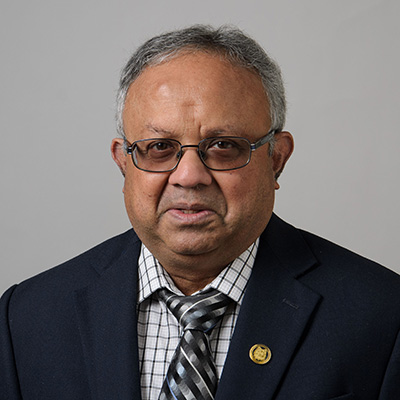
Dipak Dey is a Professor in the Department of Statistics at the University of Connecticut . His work bridges theoretical and applied statistics, with a focus on Bayesian methodologies and computational statistics. Affiliations : University of Connecticut, Department of Statistics Contact : dipak.dey@uconn.edu , Office: AUST 327, Phone: (860) 486-4755 His research interests span Bayesian analysis , Biostatistics , Computational statistics , Statistical genetics , and Spatio-temporal modeling . He has pioneered techniques in spatial curvature processes and scalable Bayesian algorithms for large datasets. Recent publications highlight his contributions to Bayesian spatial modeling (blockNNGP, curvature processes), survival analysis (skew-t distributions, cure rate models), and computational statistics (variable selection in Gaussian processes, fast inference algorithms). Applications include insurance data , epidemiology , and environmental statistics . Scientific Awards : Board of Trustees Distinguished Professor (University of Connecticut) He actively collaborates on interdisciplinary projects and mentors researchers in advanced statistical methodologies for complex data structures.
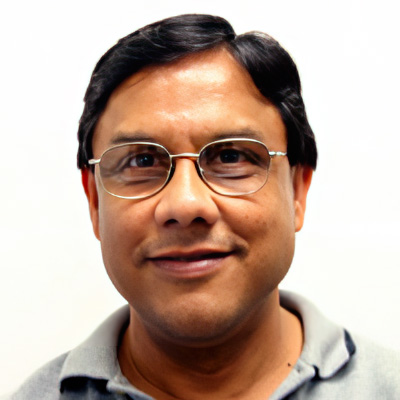
Nitis Mukhopadhyay is a Professor in the Department of Statistics at the University of Connecticut, with extensive research contributions in sequential analysis and statistical inference. His academic work focuses on developing innovative methodologies for confidence interval and point estimation problems, particularly in sequential and multistage sampling frameworks. His research has significant applications across various domains including environmental science, clinical trials, and survey methodology. Professor Mukhopadhyay's research interests center on sequential analysis, with particular emphasis on confidence interval estimation, point estimation, survey sampling, environmental sampling, clinical trials, and multivariate data analysis. His work bridges theoretical statistical developments with practical applications, developing methodologies that address real-world data challenges while maintaining rigorous mathematical foundations. His research often involves complex statistical problems requiring sophisticated solutions that balance accuracy with efficiency. Analysis of Professor Mukhopadhyay's recent publications reveals a strong focus on advanced sequential methodologies, particularly in minimum risk point estimation, fixed-width confidence interval problems, and multistage sampling strategies. His work demonstrates increasing attention to big data contexts and computational implementations, while maintaining rigorous theoretical foundations. The publications show consistent development of second-order asymptotic properties and practical implementations across various parametric families including normal, exponential, and gamma distributions. Professor Mukhopadhyay maintains active correspondence with the statistical community through his office at AUST 331 on the Storrs Campus of the University of Connecticut. His work continues to influence methodological developments in sequential analysis and statistical inference, with applications spanning environmental monitoring, clinical research, and various scientific domains requiring sophisticated sampling strategies.
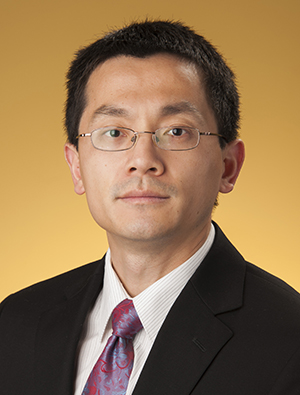
Xiao Huang is a Professor in the Department of Economics, Finance & Quantitative Analysis at Kennesaw State University. He holds a Ph.D. in Economics from the University of California, Riverside, and a B.A. in Economics from Fudan University. Ph.D. in Economics, University of California, Riverside (2005) B.A. in Economics, Fudan University (2000) His research focuses on econometric methodologies for analyzing financial and economic data, particularly addressing challenges in dynamic panel modeling, cross-sectional dependence, and stochastic processes. Key areas include quasi-maximum likelihood estimation, nonparametric techniques, and applications to vector autoregression frameworks. Research outputs emphasize econometric theory, financial modeling, and computational methods. Publications investigate multivariate diffusions, jump-diffusion processes, and panel data structures with cross-sectional interactions. Coles College of Business Faculty Research Award Xiao Huang's academic contributions span econometric theory development and applied financial modeling. He has presented at major conferences including the Econometric Society and Midwest Econometrics Group meetings.
Giovanna Guerrini is an Associate Professor in the Department of Informatics, Bioengineering, Robotics, and Systems Engineering (DIBRIS) at the University of Genoa, Italy. She is actively involved in research, teaching, and academic service, with leadership roles in major conferences such as EDBT (Executive Board Member and Treasurer), SOFSEM (Track Chair), and UMAP (Workshop Chair). Her research interests include: Data Management Large Scale and Semantic Data Management Approximate and Adaptive Query Processing Linked Data and Ontology Matching Graph Matching and Geospatial Ontologies Spatio-Temporal Data and Location Inference Computer Science Education and Computational Thinking Her recent publications show a growing focus on computer science education, particularly in using gamified and extended reality environments, Sonic Pi for teaching concurrency, and AI-driven tools for enhancing computational thinking. This reflects a shift toward pedagogical innovation and student-centered learning methodologies. She has been recognized through active participation in top-tier program committees (SIGMOD, ISWC, ICDE) and organizing key workshops and schools (EDBT School 2017, APCSE at UMAP). No formal scientific awards are listed in the provided text. She advises multiple PhD students, both current and past, and contributes to academic grants and collaborative projects, particularly in database education and data science initiatives. She is affiliated with research groups including the DaMA Research Group, Data Science and Engineering Research Program, Big Data Interest Group UniGe, and CINI Big Data Research Lab.
Scott McManus is a Lecturer in Spatial Science at Charles Sturt University, affiliated with the School of Agricultural, Environmental and Veterinary Sciences. He is an active academic researcher and educator, contributing to interdisciplinary studies that bridge data science, geostatistics, and Indigenous knowledge systems. PhD in Data Science, Charles Sturt University (2022) Graduate Certificate in Applied Statistics, CSU (2017) Graduate Diploma in Applied Science (Information Science), CSU (2005) Graduate Diploma in Archaeological Heritage, University of New England (2004) B.App.Sci in Applied Geology, CSU (1994) Scott's research focuses on the application of data science and machine learning in environmental and health contexts, with a strong emphasis on ethical AI, digital data sovereignty, and responsible use of data when working with First Nations communities. His work integrates Western scientific methods with Indigenous methodologies, particularly in conservation efforts such as koala habitat protection and mangrove ecosystem recovery. His recent publications and research outputs (23 total) demonstrate a consistent trend in merging geospatial analytics, Bayesian uncertainty modeling, and deep learning with ethical and cultural frameworks. Key areas include fire impact on coastal vegetation, river blockage detection in Southeast Asia, and reconciliation in science through collaborative Indigenous-Western research practices. Faculty Early Career Researcher (ECR) Scheme (2023) Open Access Publishing Scheme (2025) Conference Travel Grant (2018) CSU ILWS Category B Research Support Fund (2020) Executive Deans List (2017) Scott is a registered Professional Geologist (Australian Institute of Geoscientists), member of the International Association for Mathematical Geosciences, and the Aboriginal and Torres Strait Islander Mathematics Alliance. He serves as a Faculty representative on the Indigenous Board of Studies and is a registered supervisor. His work is supported by ongoing grants focused on AI, machine learning, and open-access research dissemination. He actively participates in academic workshops, particularly in digital learning platforms like Brightspace, and contributes to public engagement through media appearances on koala conservation and environmental stewardship. Scott is involved in the Data Science and Engineering Research Unit and the Data Mining Research Group (DaMRG) at CSU, where he contributes to projects on predictive analytics and responsible data use. His collaborative network includes researchers in environmental science, Indigenous studies, and conservation biology, reflecting his commitment to interdisciplinary and culturally responsive research.
Professor V. Radu Craiu is a distinguished faculty member in the Department of Statistical Sciences within the Faculty of Arts and Science at the University of Toronto. He has served as Chair of the Department for 5 years (2018-2022 and 2023-2024) after joining as an Assistant Professor in 2001, being promoted to Associate Professor in 2006 and to Full Professor in 2013. Ph.D. in Statistics (2001) - University of Chicago M.S. in Mathematics (1996) - University of Bucharest B.S. in Mathematics (1995) - University of Bucharest Professor Craiu's research spans multiple domains of statistics with particular expertise in computational methods. His work has evolved from foundational research on Markov chain Monte Carlo samplers to broader applications in Bayesian statistics, copula models, statistical genetics, and more recently, astronomy. His research demonstrates both theoretical depth and practical applications across diverse fields including genetics, ecology, and astrophysics. His recent publications show a strong focus on advancing computational methodologies while addressing complex real-world problems. The research trends reveal increasing interdisciplinary collaboration, particularly with astronomers working on radio transients and stellar flares, while maintaining strong contributions to core statistical methodology in areas like copula modeling, MCMC algorithms, and dimension reduction. Fellow of the American Statistical Association (2022) Fellow of the Institute of Mathematical Statistics (2020) Faculty Affiliate of the Vector Institute (2020) CJS Award for 'Likelihood Inflating Sampling Algorithm' (2019) CRM-SSC prize from Centre de Recherches Mathematiques and Statistical Society of Canada (2016) Elected Member of the International Statistical Institute (2015) Professor Craiu has supervised numerous doctoral students whose work spans statistical genetics, computational methods, and copula modeling. His editorial service includes positions as Contributing Editor for the IMS Bulletin and Associate Editor for multiple prestigious journals including Harvard Data Science Review, Journal of Computational and Graphical Statistics, Statistics Surveys, The Canadian Journal of Statistics, and Statistical Methods and Applications. His research has been supported by various grants that have enabled extensive collaborations across disciplines.
Chaithanya Bandi is an Associate Professor at the National University of Singapore (NUS) in the Analytics and Operations Department of the NUS Business School, with a joint appointment in the Department of Mathematics. His research focuses on decision-making under uncertainty, robust optimization, and their applications in operations management, healthcare, e-commerce, and energy systems. He develops robust optimization models for queueing control, risk optimization, and mechanism design. Key research areas include robust queue inference, two-stage distributionally robust optimization, and multi-item auction mechanisms. He has contributed to operational challenges in healthcare (e.g., patient re-entry scheduling), energy systems (electricity generation optimization), and e-commerce (price optimization for fashion products). His work integrates theoretical advancements with practical implementations in large-scale systems. Recent publications emphasize adversarial evaluation of large language models, dynamic scheduling algorithms, and robust policies for uncertain environments. His methodologies often involve novel optimization frameworks and scalable computational approaches. Dr. Bandi holds a PhD in Operations Research and has collaborated with industry leaders like Flipkart and healthcare providers to apply his models in real-world settings. His contributions bridge theoretical rigor and practical applicability in complex operational systems.
Professor Mårten Olsson holds the Sverker Sjöström Professorship in Reliable Structures at the Royal Institute of Technology (KTH) within the Department of Materials and Structural Mechanics. He has led the department since 2006 and previously held roles such as Director of PhD Education and Head of Solid State Engineering programs. His research focuses on strength engineering methods to enhance product reliability and robustness through advanced fatigue analysis, multiaxial loading models, and probabilistic failure prediction. Olsson has authored over 60 peer-reviewed articles and supervised 14 completed PhD students, contributing to fields like additive manufacturing, engine block dynamics, and composite material behavior. His work integrates computational modeling with experimental validation to address industry challenges in structural reliability and optimization. Research Interests: Olsson’s research spans fatigue analysis, multiaxial loading effects, reliability-based design optimization, and material degradation mechanisms. Notable areas include probabilistic modeling of standing contact fatigue, fracture mechanics in composites, and vibration analysis in engine systems. Key Contributions: His publications highlight advancements in second-order reliability methods, fatigue probability models for complex geometries, and the integration of deformation effects into structural dynamics. Olsson’s methodologies have been applied to aerospace components (e.g., gas turbine blades) and automotive systems (e.g., engine gaskets). Academic Leadership: Beyond research, Olsson has orchestrated educational programs at KTH, including the Master of Science in Engineering Physics, and pioneered competency specialization tracks in Solid State Engineering. His teaching spans undergraduate through doctoral levels, emphasizing practical industrial applications.
John E. Kolassa is a Professor of Statistics at Rutgers, the State University of New Jersey. He is affiliated with the Department of Statistics, where he conducts research and teaching in asymptotics and biostatistics. His academic credentials include a Ph.D. from the University of Chicago, and he maintains an active research profile with numerous publications and contributions to statistical methodology. Ph.D., University of Chicago Dr. Kolassa's research is centered on asymptotic theory, nonparametric statistics, and biostatistical methods. His work includes the development and analysis of saddlepoint approximations, Edgeworth expansions, and inference techniques for complex data. He has a strong focus on theoretical statistics, with applications in medical and biological contexts. His expertise spans categorical data analysis, life data analysis, and regression models, as reflected in his teaching of graduate courses such as 960:555 (Nonparametric Statistics) and 960:583 (Methods of Inference). The 15 most recent publications, spanning from 2021 to 2013, demonstrate a consistent focus on statistical theory and methodology. Key themes include the refinement of approximation techniques (e.g., Edgeworth and saddlepoint), inference in complex models (e.g., posterior densities, penalized likelihood), and nonparametric methods. His work often addresses foundational issues in statistical inference, such as the validity of expansions, the reliability of p-values, and the handling of zero-event studies in meta-analysis. The research bridges theoretical development with practical application in biostatistics and health sciences. Fellow of the American Statistical Association (ASA) Fellow of the Institute of Mathematical Statistics (IMS) Elected member of the International Statistical Institute (ISI) Editor, Stat Dr. Kolassa is an active advisor and researcher, contributing to the academic community through his editorial role for the journal Stat . He has received significant recognition through his fellowships in the ASA and IMS, highlighting his impact on the field. His work has been supported through academic appointments and professional activities, though specific grant details are not provided in the source material. He is also involved in the development of statistical software, having created R packages for nonparametric methods and infinite estimates. Dr. Kolassa leads a research team focused on theoretical and applied statistics, with a particular emphasis on developing and validating statistical methodologies. He has mentored students and collaborated on interdisciplinary research, particularly in biostatistics and health outcomes. His laboratory or research group is centered on computational and theoretical statistics, utilizing tools like R for simulation and analysis.
Antoine Lejay is a Researcher in the Department of Probability and Statistics at the Faculty of Science and Technology, Université de Lorraine. He is affiliated with the Inria PASTA project team and contributes to interdisciplinary initiatives like the Inria Apollon Exploratory Action (2022–2024) and the CNRS MITI project (2024–2025). His roles include Deputy Director of the AM2I division and former Head of the Probability and Statistics team (2016–2022). His research spans Rough trajectories , Stochastic analysis , and Probabilistic numerical methods , with applications in Fragmentation equations , Diffusion modeling , and Digital Humanities . He develops algorithms for stochastic processes in discontinuous media and statistical estimators for non-standard models like skew Brownian motion. Recent publications highlight methodological advancements in Rough differential equations , Hawkes processes for insurance risk, and Fragmentation dynamics . His work combines theoretical analysis (e.g., asymptotic behavior) with computational frameworks (e.g., random walk simulations, interface conditions). Lejay has held leadership positions in the Charles Hermite Federation (2022–2023) and the GdR TRAG (2018–2023). He collaborates with academic and industrial partners, focusing on interdisciplinary applications in insurance, engineering, and porous media.
Sylvain Sardy is an Associate Professor in the Department of Mathematics at the University of Geneva, where he conducts research at the intersection of statistics, optimization, and machine learning. He is affiliated with the Analysis, Mathematical Physics and Probability research group and has held significant editorial positions including Associate Editor for Computational Statistics and Data Analysis since 2020. Professor Sardy's research focuses on statistical machine learning, sparsity, and optimization with applications spanning astronomy, chemometrics, finance, and tomography. His work develops innovative methods for high-dimensional data analysis, particularly using wavelet-based approaches and LASSO regularization techniques for feature selection, denoising, and model selection. His publications reveal a consistent focus on finding sparse signals in complex datasets across diverse scientific domains. Professor Sardy has mentored numerous graduate students, currently supervising PhD candidate Maxime van Cutsem and having previously guided Dr. Xiaoyu Ma, Dr. Pascaline Descloux, Prof. Jairo Diaz Rodriguez, and Dr. Caroline Giacobino. His Master's students include Jairo Diaz (now Professor at Universidad del Norte, Colombia), Jean-Luc Baeriswyl, and others who have pursued careers in academia, industry, and education. His academic service includes leadership roles as Swiss representative at the European Regional Committee of the Bernoulli Society (2014-2018), President of the Doctoral School of Applied Statistics and Probability (2010-2013), and Student Advisor for the Mathematics Section (2008-2015). His teaching portfolio includes Optimization with Applications I, Statistical Machine Learning, and Pharmaceutical Statistics and Methodology, reflecting his expertise in statistical methodology and its practical implementation.
Somdatta Goswami serves as Assistant Professor in Civil and Systems Engineering and Applied Mathematics and Statistics at Johns Hopkins University, with dual affiliations at the Institute for Data Intensive Engineering and Science (IDIES) and Hopkins Extreme Materials Institute (HEMI). She leads the Centrum IntelliPhysics research group developing AI-driven methodologies for scientific discovery. Her educational trajectory includes: Bachelor's in Civil Engineering from Birla Institute of Technology, Mesra (2011) Master's in Structural Engineering from Indian Institute of Engineering Science and Technology (2013) PhD in Civil Engineering and Structural Mechanics from Bauhaus University-Weimar, Germany (2020) funded by DAAD Dr. Goswami's research pioneers Scientific Machine Learning at the intersection of computational mechanics and AI, focusing on neural operator architectures that accelerate physics-based simulations. Her group develops methods for long-time horizon prediction, multiscale multiphysics modeling, and real-time inference in complex systems through latent space representations and physics-informed learning. Current emphases include cardiac digital twins, structural response under natural hazards, and RNA electrophoresis modeling. Analysis of her 2024-2025 publications reveals dominant trends in latent operator learning, physics-informed neural networks, and hybrid solvers combining traditional numerical methods with deep learning. These innovations enable breakthroughs in computational efficiency across engineering and biological domains, particularly in multiscale modeling and uncertainty-aware simulation. Her scientific recognition includes: National Science Foundation’s National Artificial Intelligence Research Resource (NAIRR) Pilot Johns Hopkins University Discovery Award 2024 Dr. Goswami mentors PhD candidates including Dibakar Roy Sarkar (Creel Family Engineering Fellow), Sharmila, and Maryam. Major research funding comprises: NSF grant for "Cardiac Digital Twins" with Kevrekidis, Trayanova, and Maggioni NSF grant for exascale AI-integrated simulations with UT Austin DOE grant for uncertainty-informed latent operators with Shields, Graham-Brady, and Kevrekidis Johns Hopkins Discovery Award for biological systems modeling The Centrum IntelliPhysics group operates within JHU's Latrobe Hall, collaborating with IDIES and HEMI on interdisciplinary projects spanning computational mechanics, materials science, and biological systems. Their work integrates high-performance computing with novel neural architectures to solve previously intractable scientific problems.
Henryk Zähle is a Full Professor of Stochastics at Saarland University's Department of Mathematics, where he has held a W3 position since 2014. He previously served as a W2 Professor (2013-2014) and W1 Junior Professor (2010-2012) at Saarland, and earlier at TU Dortmund University (2007-2010). He earned his Ph.D. in Mathematics from Technical University Berlin (2004) and a Diploma in Mathematics from University of Göttingen (2000). His research focuses on statistical robustness of risk measures asymptotic theory for empirical processes quantitative risk management Markov decision models insurance and financial mathematics with methodological contributions to bootstrapping, quasi-Hadamard differentiability, and sensitivity analysis. Article trends show sustained engagement with stochastic process theory nonparametric estimation robust statistical functionals applications to insurance and finance asymptotic error distributions time series analysis spanning both theoretical and applied domains. Scientific awards include Marie Curie Fellowship (University of Warwick, 2001) DFG Fellowship (2000-2003) He has supervised numerous Ph.D., Master's, and Bachelor's theses on topics like risk measure asymptotics empirical process convergence copula robustness Markov decision sensitivity nonparametric risk estimation statistical bootstrap methods and serves as Associate Editor for Metrika .
Panagiotis Papastamoulis serves as Assistant Professor at the Department of Statistics within the School of Information Sciences and Technology at Athens University of Economics and Business (AUEB). He joined AUEB in April 2020 after working as an Adjunct Lecturer from 2018-2019 and completing extensive postdoctoral research at prestigious institutions including the University of Manchester (2012-2018) and INRA in France (2011-2012). His educational background includes a BSc in Mathematics from the University of Patras (2003), an MSc in Applied Statistics (2006), and a PhD in Statistics (2010) from the University of Piraeus. His doctoral thesis addressed the label switching problem in Bayesian analysis of mixtures of distributions under the supervision of Professor G. Iliopoulos. Dr. Papastamoulis's research program centers on Bayesian and computational statistics, with particular expertise in finite mixture models, model-based clustering, and bioinformatics applications. His methodological contributions span theoretical developments in label switching solutions, reversible jump MCMC algorithms, and practical implementations for RNA-seq data analysis. His work demonstrates a consistent trajectory from foundational statistical theory to real-world biological applications. Analysis of his publication record reveals a strong focus on developing statistical methodology for complex data structures, with significant contributions to mixture modeling, Bayesian factor analysis, and bioinformatics. His most recent work (2023-2025) extends into cure rate modeling, directional data analysis, and multinomial mixture models for spatial data, showing continued innovation while maintaining connections to his core research themes. As an educator, he teaches undergraduate courses including Linear Models and Bayesian Inference Methods, and graduate courses such as Statistical Genetics-Bioinformatics and High Dimensional Statistics. He has also developed multiple open-source R packages that have become standard tools in the statistical community, including label.switching, BayesBinMix, and fabMix, which address fundamental challenges in mixture model analysis. Dr. Papastamoulis actively contributes to the academic community through organizing research seminars at AUEB and participating in conference committees, including the 22nd European Young Statisticians Meeting in 2021. His research integrates theoretical statistical development with practical computational implementations, creating tools that advance both methodology and application in multiple scientific domains.
Lior Rennert serves as Associate Dean for Health Sciences in the College of Behavioral, Social, and Health Sciences at Clemson University, where he is also an Associate Professor of Biostatistics in the Department of Public Health Sciences and Founding Director of the Clemson Center for Public Health Modeling and Response. He earned his Ph.D. in Biostatistics from the University of Pennsylvania (2018), MS in Statistics from the University of Chicago (2011), and BS in Mathematics from Pennsylvania State University (2009). Dr. Rennert's research focuses on developing data-driven approaches to guide health-related decision making, with particular expertise in infectious disease modeling, opioid epidemic analysis, and statistical methodology. His work spans multiple domains including public health policy, neurodegenerative disease research, and health equity initiatives. During the COVID-19 pandemic, he led Clemson's Public Health Strategy team to provide data analytics and guide university policy. His publication record shows a strong trajectory in public health modeling, with recent work emphasizing real-time outbreak detection, opioid surveillance, and mobile health interventions. The research demonstrates a clear evolution from methodological statistical work to applied public health solutions with direct policy implications, particularly in infectious disease control and substance use disorder management. Clemson University Junior Researcher of the Year (2021) Clemson University College of Behavioral, Social and Health Sciences: Award of Excellence in Research - Emerging Scholar (2021) Clemson University Data and Analytics Working Group Standout Project of the Year (2021) Data Access, Transparency and Advocacy Group: COVID-19 Data Hero Award Nominee (2021) Clemson University College of Behavioral, Social and Health Sciences: Award of Excellence in Graduate Student Advising and Mentoring (2020) W. Edwards Deming Student Scholar Award in Applied Statistics (2017) Dr. Rennert has secured approximately $30 million in funding as principal investigator from the National Institutes of Health and Centers for Disease Control and Prevention. His projects aim to develop a statewide network for real-time opioid and infectious disease outbreak detection, forecasting, and coordinating emergency health response. He has mentored numerous graduate students, with several listed as first authors on publications. The Clemson Center for Public Health Modeling and Response, which he founded, serves as a hub for interdisciplinary collaboration between state health departments, health systems, community partners, and academic institutions to integrate research into practice and improve health outcomes across South Carolina and the nation.