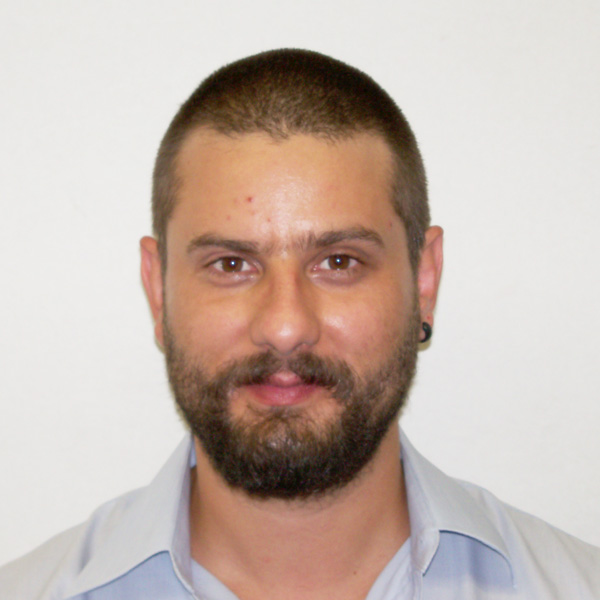
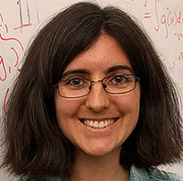
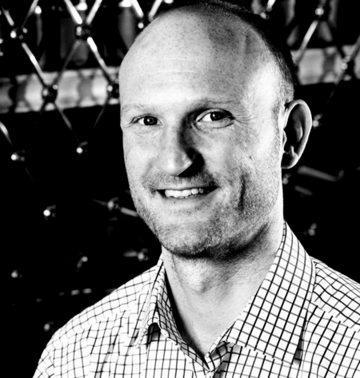
Trevor Campbell is an Associate Professor in the Department of Statistics at the University of British Columbia (UBC), Vancouver. He holds a Ph.D. in Machine Learning and Statistics from MIT and a B.A.Sc. in Aerospace Engineering from the University of Toronto. His research focuses on automated, scalable Bayesian inference algorithms, Bayesian nonparametrics, and streaming data analysis. Campbell is a core contributor to probabilistic programming tools like Pigeons.jl and has developed influential methods for coreset-based Bayesian inference. Education : Ph.D. in Machine Learning and Statistics (2016), MIT M.S. in Aeronautics and Astronautics (2013), MIT B.A.Sc. in Aerospace Engineering (2011), University of Toronto Research Interests : His work emphasizes scalable Bayesian computation, including variational inference, MCMC optimization, and coresets. He develops algorithms that balance statistical accuracy with computational efficiency, particularly for large-scale datasets. His recent work explores adaptive samplers (e.g., AutoStep, autoMALA) and theoretical guarantees for coreset methods. Applications span astrophysics, materials science, and network analysis. Awards & Grants : NSERC Discovery Grant (2025) Blackwell-Rosenbluth Award (2021) PIMS Early Career Award (2023) Google Perception Academic Funding (2020) Advising & Labs : He supervises a team of PhD and M.Sc. students at UBC, focusing on Bayesian methodology and computational tools. His lab collaborates with institutions like SFU and MIT on projects involving distributed sampling and probabilistic modeling. He co-organizes workshops on Bayesian computation and serves on editorial boards for Bayesian Analysis and TMLR.
Nancy Margaret Reid is a University Professor of Statistical Sciences at the University of Toronto, holding the Canada Research Chair in Statistical Theory and Applications. She has served as Scientific Director of the Canadian Statistical Sciences Institute (2015–2019) and led the Department of Statistical Sciences as Chair (1997–2002). Her research focuses on theoretical statistics, particularly likelihood inference and foundational aspects of statistical methodology. Reid earned her PhD from Stanford University (1979) under Rupert G. Miller, with Brad Efron and Vernon Johns on her committee. Reid's accolades include Fellowships from the Royal Society, Royal Society of Canada, and National Academy of Sciences, as well as the Guy Medal in Gold (2022) and David R. Cox Award (2023). She has authored influential books like *Theory of the Design of Experiments* and contributed to courses on mathematical statistics and likelihood inference. Active in academic service, she teaches graduate-level courses and has advised numerous students and postdocs in theoretical and applied statistical research.
Geoffrey Pleiss is an Assistant Professor in the Department of Statistics at the University of British Columbia's Faculty of Science. He is also a CIFAR AI Chair at the Vector Institute and an inaugural member of CAIDA's AIM-SI (AI Methods for Scientific Impact) cluster. His work bridges statistical theory, machine learning, and computational methods with applications across various scientific domains. Pleiss received his PhD from the Computer Science department at Cornell University in 2020, where he was advised by Kilian Weinberger and worked closely with Andrew Gordon Wilson. Prior to his faculty position at UBC, he was a postdoctoral researcher at Columbia University with John P. Cunningham. His research focuses on the intersection of deep learning and probabilistic modeling, particularly on developing heuristic and approximate notions of uncertainty from machine learning models. His work has significant implications for reliable and optimal decision-making in experimental design and scientific discovery. Major research thrusts include neural network uncertainty quantification, Bayesian optimization, Gaussian processes, and ensemble methods. Pleiss develops theoretical frameworks while maintaining strong connections to practical applications across scientific domains. An analysis of his recent publications reveals a strong focus on uncertainty quantification in deep learning models, with particular attention to the limitations and capabilities of ensemble methods in the era of overparameterized models. His work increasingly addresses practical challenges in Bayesian optimization for scientific discovery, especially in materials science. There's also a growing emphasis on computational efficiency in Gaussian process methods, reflecting his commitment to making advanced statistical techniques accessible for real-world applications. CIFAR AI Chair Pleiss currently advises several graduate students including Donney Fan (PhD, Computer Science), Tim G. Zhou (MSc, Computer Science), Zachary Lau (MSc, Statistics), Nathan Cantafio (BSc, Statistics), and Tristan Cinquin (Research Intern at Vector Institute). His research is supported by multiple funding sources including his CIFAR AI Chair position, which provides significant research resources for advancing machine learning methodologies with scientific impact. Pleiss co-created and maintains GPyTorch, a highly efficient and modular implementation of Gaussian processes in PyTorch designed for speed, modularity, and prototyping. He is also involved with CoLA (Compositional Linear Algebra), a library for structured linear algebra operations in JAX and PyTorch that enables fast linear algebra computations by automatically exploiting matrix structure.
Alexandre Bouchard-Côté is a Professor of Statistics at the University of British Columbia (UBC), affiliated with the Department of Statistics within the Faculty of Science. His research focuses on computational statistics, Bayesian methods, and Monte Carlo techniques, with applications in evolutionary biology, cancer genomics, and computational linguistics. Education : PhD in Computer Science (with Designated Emphasis in Statistics) from UC Berkeley (2010), BSc in Mathematics and Computer Science from McGill University (2005). Affiliations : Director of the Blang probabilistic programming project and leader of the Bouncy Particle Sampler research group. Research Interests : Bouchard-Côté develops scalable Bayesian computational methods, including non-reversible Monte Carlo algorithms like the Bouncy Particle Sampler, and applies these to problems in cancer phylogenetics, evolutionary dynamics, and historical linguistics. His work emphasizes bridging theoretical foundations with practical tools for data science. Publications Trends : Recent work spans distributed sampling frameworks (e.g., Pigeons.jl), variational phylogenetic inference, and cancer clonal evolution modeling. His articles often address algorithmic scalability and interdisciplinary applications in biology and astronomy. Awards : CRM-SSC Prize in Statistics (2024) PIMS-UBC Mathematical Sciences Young Faculty Award (2018) Tweedie New Researcher Award (2016) Advising & Grants : Supervises graduate students (e.g., Son Luu, Nikola Surjanovic) and leads funded projects on distributed MCMC and cancer genomics. Collaborates with institutions like the Simons Foundation and the Canadian Statistical Sciences Institute (CANSSI). Labs/Teams : Core member of the UBC Statistical Machine Learning group, contributing to open-source tools like Blang and the Bouncy Particle Sampler implementation.
Professor Scott Sisson is Director of the UNSW Data Science Hub (uDASH) and Professor of Statistics and Data Science at the University of New South Wales, School of Mathematics and Statistics. His research focuses on computational statistics, particularly solving 'intractable' statistical problems through Bayesian methods, big data techniques, simulation algorithms, and extreme value theory with environmental applications. Education includes a PhD in Statistics from Bristol University (2002), MSc in Environmental Statistics from Lancaster University (1997), and BSc in Mathematics and Statistics from Lancaster University (1996). Research interests span: Bayesian statistics and uncertainty quantification Big data analytics and scalable algorithms Machine learning integration with statistical methods Extreme value modeling for climate/environment Computational techniques for intractable problems Recent publications (2022-2025) demonstrate strong emphasis on Bayesian computation, spatiotemporal modeling, and interdisciplinary applications in materials science, oncology, quantum computing, transportation policy, and ecology. Methodological innovations include likelihood-free inference, modular Bayesian analyses, and symbolic data modeling. Awards and honors: 2020 Service Award (Statistical Society of Australia) 2017 ARC Future Fellowship 2015 G. N. Alexander Medal (Engineers Australia) 2011 Moran Medal (Australian Academy of Science) 2010 J.G. Russell Award (Australian Academy of Science) 2010 Queen Elizabeth II Research Fellowship As Director of uDASH, he leads data science initiatives across UNSW. He maintains sustained ARC funding and supervises students in computational statistics, Bayesian methods, extreme value theory, and machine learning. Professional service includes editorial roles for Statistics and Computing and past presidency of Statistical Society of Australia.
Andrew M. Stuart is a Professor at the California Institute of Technology's Division of Engineering and Applied Science. His research bridges computational mathematics, machine learning, and physical modeling, focusing on inverse problems, partial differential equations, and multiscale systems. He has pioneered methodologies integrating Gaussian processes, Kalman inversion, and neural operators for scientific computing. His recent publications highlight innovations in competitive protein dimerization networks, nonlinear Bayesian inference, and operator learning. Articles span applications in materials science, geophysics, and biochemical signal processing, emphasizing data-driven discovery of differential equations and scalable algorithms for high-dimensional problems. Stuart's work addresses challenges in structural error modeling, uncertainty quantification, and graph-based learning, with implications for climate modeling and dynamical systems. Despite extensive contributions, the scraped data does not specify students, awards, or contact details.
Stefano NASINI is an Associate Professor at the University of Lille 3, specializing in Quantitative Methods within the Economics and Mathematics Sciences. He holds a HDR (Habilitation à Diriger des Recherches) from the University of Lille 3 (2021), a Ph.D. in Statistics and Operations Research from the Polytechnic University of Catalonia (2015), and a Master in Statistics (2011). His research focuses on optimization, complex networks, statistical inference, and microeconomic applications. He has held academic positions including a post-doctoral role at IESE Business School (2014–2016) and a visiting researcher role at the University of Lisbon (2014). His work spans scheduling optimization, network analysis, financial contagion modeling, and energy system planning. Key contributions include specialized algorithms for large-scale optimization problems and frameworks for decentralized portfolio management. He is a member of the LEM research group and teaches courses in optimization, econometrics, and social network analysis at the Grande École and MSc levels. Publications highlight interdisciplinary applications, including network-based diffusion models, multi-market financial strategies, and dynamic choice analysis. His research bridges theoretical advancements in operations research with practical challenges in economics, energy, and transportation systems. No scientific awards are explicitly listed in the provided materials. His advising roles and grants are not detailed here, but his extensive publication record reflects active collaboration within academic and applied domains.
Theo Damoulas is a Professor of Machine Learning at the University of Warwick with a joint appointment in the Department of Computer Science and Statistics. He is a Turing AI Fellow (2021-2026) through UK Research and Innovation, an ELLIS member, and a Visiting Professor at New York University's Center for Urban Science and Progress (CUSP). He founded and leads the Warwick Machine Learning Group and has directed major projects at The Alan Turing Institute including Project Odysseus and the London Air Quality project. Education includes: PhD in Probabilistic Multiple Kernel Learning (University of Glasgow, 2009) MSc in Informatics (Distinction, University of Edinburgh, 2004) MEng in Mechanical Engineering (1st Class, University of Manchester, 2003) His research focuses on probabilistic machine learning and Bayesian statistics, emphasizing the integration of structural priors, spatiotemporal dependencies, physical laws, and causal relationships. Key applications include Digital Twins, urban science, and computational sustainability. His work advances robust and scalable inference methodologies for complex real-world systems. Publications demonstrate strong emphasis on Bayesian methods, spatiotemporal modeling, and uncertainty quantification, with applications spanning battery modeling, urban mobility, federated learning, and causal inference. Recent work shows increased focus on physics-informed models, federated learning frameworks, and causal abstraction techniques. Major scientific awards: Turing AI Acceleration Fellowship (2021-2026) Best Paper Awards (Wilkes 2024, AISTATS 2022, IEEE ICMLA 2010) ACM SIGMOD Most Reproducible Paper (2017) Dissertation Award (Classification Society 2012) Teaching Excellence nominations (Warwick 2015-2017) He actively advises PhD students and secured significant grants including the £multi-million Turing AI Fellowship. Current doctoral researchers investigate federated learning, causal inference, and spatiotemporal modeling. He leads the Warwick Machine Learning Group, a cross-departmental team developing foundational ML methods for scientific and societal challenges.
Professor Alexandra M. Schmidt is a leading academic in Biostatistics at McGill University, holding an endowed University Chair. She specializes in spatial and spatio-temporal modeling, particularly in epidemiology and environmental health. Previously, she served as a Full Professor at the Federal University of Rio de Janeiro (2012–2016). Her research focuses on Bayesian methodologies for analyzing complex processes, including disease spread, environmental hazards, and socio-economic disparities. She has authored influential books such as Spatio-Temporal Methods in Environmental Epidemiology with R (2023) and contributed to over 150 peer-reviewed articles. Key awards include the ISBA Fellowship (2024), ASA Fellowship (2020), and the Abdel El-Shaarawi Award (2008). Education: PhD in Statistics (2001, University of Sheffield, UK), MSc and BSc in Statistics (Federal University of Rio de Janeiro, Brazil). Research interests span Bayesian inference, spatial statistics, and environmental epidemiology. She has advised numerous PhD/MSc students and collaborated on projects linking statistical methods to public health challenges, such as modeling dengue outbreaks and air pollution impacts. Active in academic service, she has chaired major conferences (e.g., 2022 ISBA World Meeting) and serves on editorial boards of top journals like Bayesian Analysis and Canadian Journal of Statistics . Teaching includes advanced courses on generalized linear models, spatial epidemiology, and Bayesian analysis. Her work bridges theoretical statistics with practical applications, addressing global health issues through innovative spatio-temporal modeling techniques.
Ann B. Lee is a Professor and Co-Director of the PhD Program in Statistics at Carnegie Mellon University , with a joint appointment in the Department of Statistics & Data Science and the Machine Learning Department. Prior to joining CMU, she held positions as a J.W. Gibbs Assistant Professor at Yale University and a visiting research associate at Brown University. PhD in Physics, Brown University MSc/BSc in Engineering Physics, Chalmers University of Technology, Sweden Her research focuses on statistical methodology for complex data in the physical sciences , emphasizing trustworthy inference, uncertainty quantification, and integration of classical statistics with machine learning. Recent work includes likelihood-free inference, calibrated forecasting, and diagnostics for generative models. The STAMPS research group , which she co-founded in 2018, hosts weekly meetings and public webinars. In Fall 2024, STAMPS will transition into a CMU Research Center. Recent publications span likelihood-free inference , climate modeling , and astronomy . Notable collaborations include applications to hurricane intensity guidance , galaxy redshift estimation , and cosmological parameter biases . She mentors PhD students and has advised multiple award-winning researchers, including ASA Best Student Paper Award winners. Her teaching includes advanced courses on probability, regression, and AI for climate sciences.
Tamara Broderick is an Associate Professor in the Department of Electrical Engineering and Computer Science at MIT, specializing in machine learning and statistics. Her research focuses on developing methods for uncertainty quantification in data analysis, Bayesian nonparametrics, and scalable inference algorithms. She leads a research group advising PhD students and postdocs in statistical machine learning. Her work spans Bayesian modeling, variational inference, spatial statistics, and applications in epidemiology and environmental science. Recent projects involve uncertainty-aware forecasting, robustness analysis of statistical methods, and efficient algorithms for high-dimensional inference. Broderick teaches Bayesian Modeling and Inference and contributes to MIT's statistics and data science initiatives.
Damek Davis serves as an Associate Professor of Statistics and Data Science and Co-Academic Director of the Dual Master's Degree in Statistics at the Wharton School, University of Pennsylvania. His academic base is the Department of Statistics and Data Science within the Wharton School, with his office located at the Academic Research Building in Philadelphia, PA. His research expertise centers on optimization theory for data science, with deep specialization in nonsmooth and stochastic optimization problems. Key focus areas include convergence analysis of first-order methods, variance reduction techniques, and theoretical guarantees for algorithms in nonconvex settings. His work bridges mathematical rigor with practical applications in machine learning and statistical inference, particularly in developing efficient computational frameworks for large-scale data analysis. Analysis of his 2022-2024 publications reveals dominant themes in optimization for modern data challenges: nonsmooth stochastic approximation, linear convergence under sharpness conditions, and global optimality in mixture models. His research consistently appears in premier venues across optimization (Mathematical Programming, SIAM Journal), statistics (The Annals of Statistics), and machine learning (IEEE Transactions), demonstrating cross-disciplinary impact in both theoretical foundations and computational methodologies.
Michael U. Gutmann is a Senior Lecturer in Machine Learning at the School of Informatics, University of Edinburgh, and a member of the Institute for Adaptive and Neural Computation. His research lies at the intersection of machine learning, statistics, and scientific applications, with a focus on developing inference methods for complex and implicit models. Education: PhD in Computational Neuroscience, University of Tokyo MSc in Engineering and Applied Mathematics, Swiss Federal Institute of Technology (ETH) Zurich MSc, Ecole Centrale Paris His primary research interests include Bayesian inference, likelihood-free inference, optimal experimental design, unsupervised learning, and applications in computational biology and neuroscience. He is best known for introducing Noise-Contrastive Estimation (NCE), a foundational technique for training unnormalized statistical models. His recent work spans variational inference, density ratio estimation, flow models for missing data, and AI-driven experimental design in behavioral and biological sciences. His publications, including in NeurIPS , ICML , JMLR , and eLife , demonstrate a strong emphasis on methodological innovation for scientific discovery. He has contributed to open-source tools such as ELFI (Engine for Likelihood-Free Inference) and developed practical implementations of robust inference algorithms. Scientific Awards: No specific awards listed in the provided texts. Michael Gutmann actively supervises students and collaborates with leading researchers in machine learning and computational biology. He has secured research funding from EPSRC and BBSRC for projects in generative modeling and infectious disease epidemiology. He teaches advanced courses such as Probabilistic Modelling and Reasoning and Data Mining, reflecting his deep engagement with both theoretical and applied aspects of machine learning. Labs and Research Groups: Institute for Adaptive and Neural Computation (ANC), University of Edinburgh Former affiliations with Department of Mathematics and Statistics and Department of Computer Science at the University of Helsinki and Aalto University
Professor Nick Chater is a leading figure in the field of Behavioural Science, affiliated with the University of Warwick at Warwick Business School since 2010. He has held previous chairs in psychology at Warwick and UCL. His research spans cognitive and social foundations of rationality, with applications to business and public policy, and he has authored over 200 papers and six books. He is a fellow of the British Academy, Cognitive Science Society, and Association for Psychological Science. His research interests include cognitive science, behavioral economics, decision making, and computational psychology, with a focus on reasoning, language, and mathematical modeling of mental processes. He has been recognized with prestigious awards such as the Spearman Medal, Experimental Psychology Society Prize, and the David E Rumelhart Prize for lifetime achievement in cognitive science. His work extends to practical applications through co-founding Decision Technology and advising the UK government's Climate Change Committee and the Behavioural Insight Team. Recent publications highlight his interdisciplinary approach, bridging economics, cognitive science, computational modeling, and behavioral public policy. Topics include thermal macroeconomic theory, Bayesian sampling, paradoxes in cognition, and language emergence via social interaction. These works emphasize probability judgments, moral cognition, and computational limitations in human inference. British Psychological Society's Spearman Medal (1996) Experimental Psychology Society Prize (1997) David E Rumelhart Prize (2023) PROSE Award (2019) Chater's academic contributions include collaborations with researchers like Adam N. Sanborn, Hossam Zeitoun, and Morten H. Christiansen, focusing on Bayesian inference, behavioral public policy, and cognitive modeling. He has also been a resident scientist on BBC Radio 4's The Human Zoo.
Vladimir Spokoiny is a Professor at the Departments of Mathematics and Economics of the Humboldt University of Berlin and Head of the Research Group "Stochastic Algorithms and Nonparametric Statistics" at the Weierstrass Institute for Applied Analysis and Stochastics (WIAS) in Berlin, Germany. His research spans multiple areas of statistics, machine learning, and financial mathematics, with significant contributions to nonparametric statistics, high-dimensional data analysis, and statistical methods in finance. Spokoiny received his M.Sc. in applied mathematics from the Moscow Institute of Railway Engineering in 1981 and his Ph.D. in mathematics from Lomonosov Moscow State University in 1988. He completed his Habilitation at Humboldt University in 1996. His academic career includes positions at the All-Union Institute of Railway Transport in Moscow, the Institute for Information Transmission Problems in Moscow, and the Institute for Applied Analysis and Statistics in Berlin before joining the Weierstrass Institute and Humboldt University where he has been a professor since 2002. Spokoiny's research focuses on adaptive nonparametric smoothing and hypothesis testing, high dimensional data analysis, statistical methods in finance, image analysis with applications to medicine, classification, and nonlinear time series. His work often addresses the challenges of nonstationarity in time series data and develops innovative methods for volatility estimation and risk management. He has made significant contributions to the development of adaptive weights smoothing procedures, which have applications in image processing, community detection, and manifold learning. His recent work has expanded into high-dimensional statistics, Bayesian inference, and optimization methods for machine learning, with publications demonstrating novel approaches to Gaussian approximation, Laplace methods, and statistical inference in non-Euclidean spaces. Spokoiny has supervised numerous PhD students including Oliver Reiss, Danilo Mercurio, Ying Chen, Elmar Diederichs, and Mstislav Elagin, whose research has focused on mathematical finance, time series analysis, and statistical methods. He serves as an Associate Editor for The Annals of Statistics (since 2004) and Statistics and Decisions (since 2002), and has previously served on the editorial board of the Journal of Statistical Planning and Inference. His professional activities include reviewing for major statistical journals including Annals of Statistics, Bernoulli, Econometrica, and Journal of American Statistical Association, as well as reviewing grant proposals for the National Science Foundation (USA), German Research Foundation, and Netherlands Organisation for Scientific Research. Spokoiny is a member of several professional societies including the International Statistical Institute, American Statistical Association, Institute of Mathematical Statistics, and Bernoulli Society. He is fluent in Russian (mother tongue), English, and German, and has good knowledge of French. His research group at WIAS focuses on developing novel statistical methodologies with applications across various scientific domains, particularly emphasizing adaptivity and robustness in complex data environments. The group's work has significant implications for financial risk management, medical imaging, and machine learning applications, with recent publications addressing fundamental questions in high-dimensional statistics and nonparametric inference.