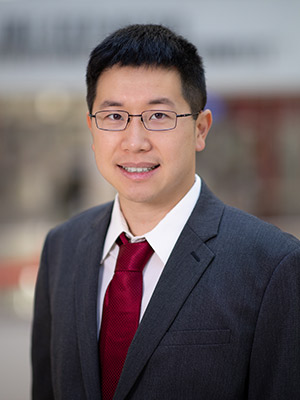
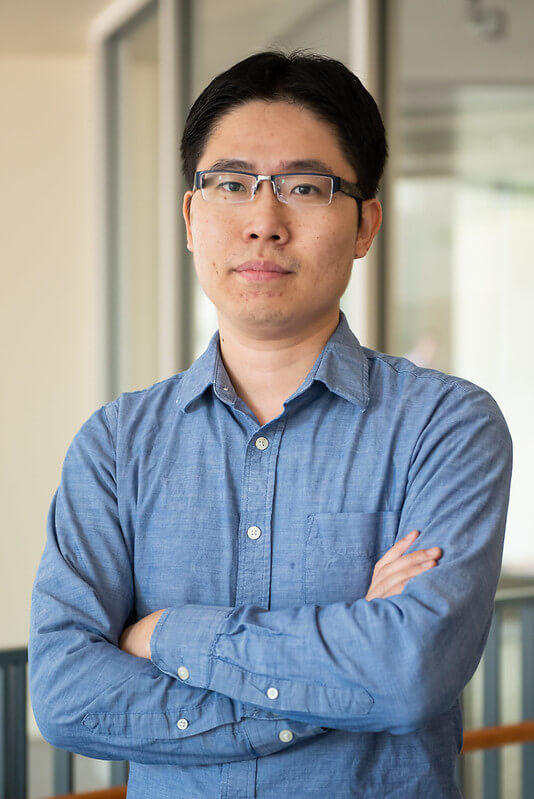
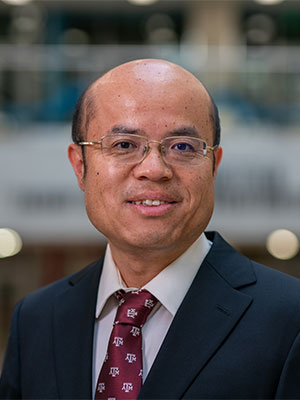
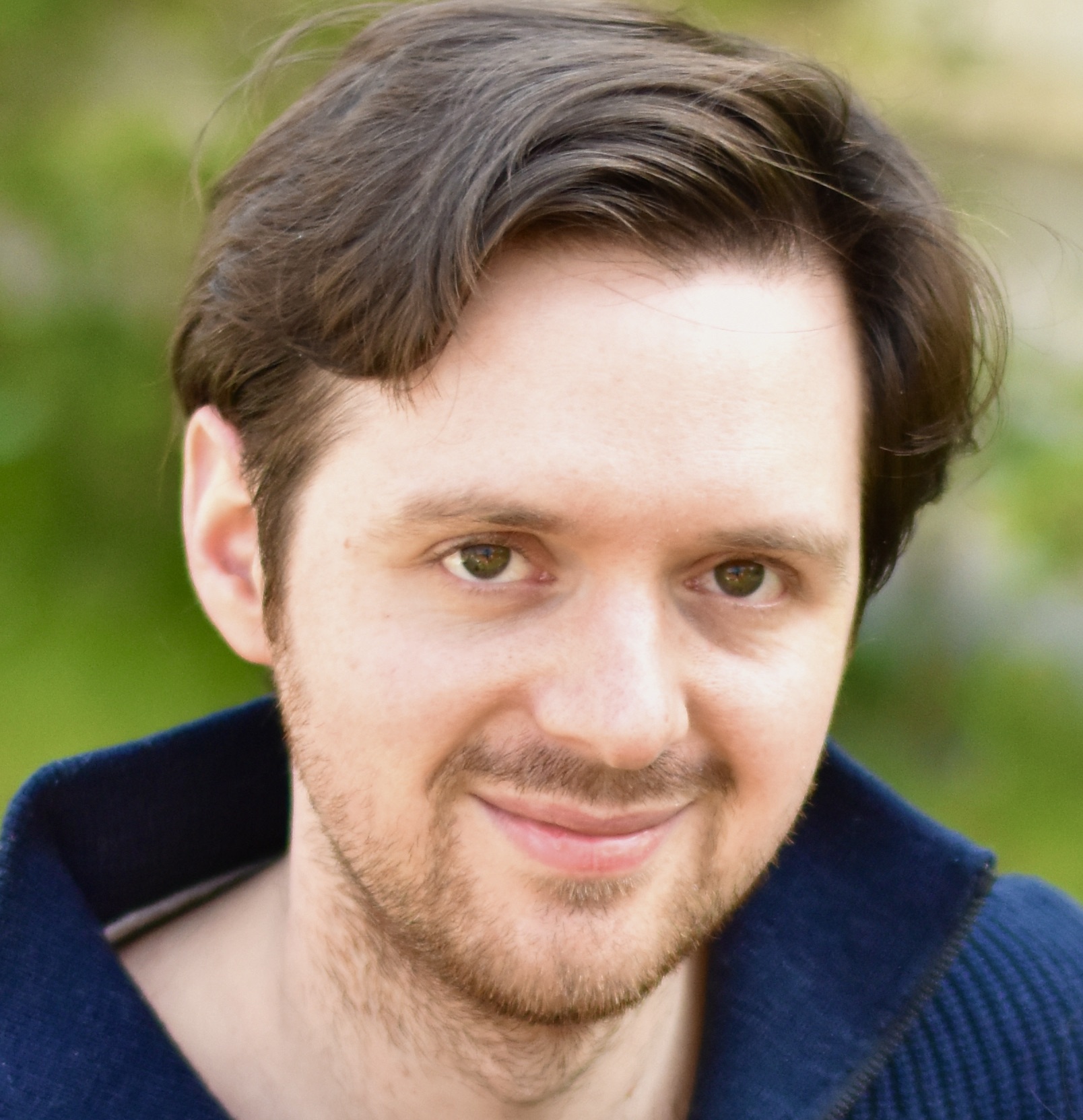
Elliot Hui, Ph.D., is an Associate Professor in the Department of Biomedical Engineering at the University of California, Irvine (UCI), within the Samueli School of Engineering. His research focuses on biological microtechnology, including spatial cell biology, microscale tissue engineering, global health diagnostics, and microfluidic computing. He leads the Hui Lab, which develops tools for automating biochemical reactions, controlling cellular organization, and understanding tissue development dynamics. Key achievements include pioneering microfluidic logic systems for autonomous laboratory automation and creating novel cell culture platforms to study intercellular communication in tissues. His work bridges engineering and biology, addressing challenges in diagnostics and regenerative medicine. Notable contributions include the development of a programmable finite state machine for microfluidic control and a SLAS Fellowship awarded to his student Erik. Research Interests: Microfluidic devices, cell-cell interaction modeling, tissue engineering, and lab-on-a-chip systems. Labs/Teams: Hui Lab at UCI, specializing in microscale biological systems and automation. Publications span topics such as microfluidic computing architectures, tissue dissociation devices, and Bayesian experimental design. His work emphasizes applications in global health diagnostics and mechanistic studies of cellular processes.
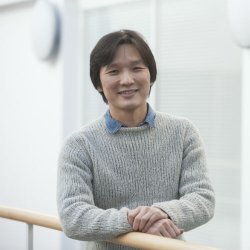
Naratip Santitissadeekorn is a Senior Lecturer in Data Assimilation at the School of Mathematics and Physics, University of Surrey, where he is affiliated with the Mathematics at the Interface Group. His work bridges mathematics, data science, and real-world applications in urban planning, crime analysis, and geophysical fluid dynamics. Dr. Santitissadeekorn received his PhD from Clarkson University in 2008, with a dissertation titled "Transport Analysis and Motion Estimation of Dynamical Systems of Time-Series data." His doctoral research was supervised by Professor Erik Bollt. Following his PhD, he completed two significant postdoctoral positions: from 2008-2011 at the University of New South Wales, Sydney, Australia, working with Professor Gary Froyland on numerical techniques for finite-time Lagrangian coherent set identification, with applications to delimiting the polar vortex and Agulhas rings; and from 2011-2014 at the University of North Carolina-Chapel Hill, working with Professor Chris Jones on data assimilation projects. Dr. Santitissadeekorn's research focuses on inverse problems and data assimilation in geophysical fluid dynamics, the applications of Lagrangian Coherent Structures (LCS), and computational ergodic theory. His work combines theoretical mathematics with practical applications, particularly in urban growth modeling and crime analysis. He has developed innovative methods for identifying coherent structures in fluid flows, estimating transition probabilities from spatiotemporal data, and creating data-driven frameworks for urban expansion scenarios. His research demonstrates how mathematical techniques can be applied to solve real-world problems in environmental science, urban planning, and public safety. An analysis of Dr. Santitissadeekorn's recent publications (2020-2023) reveals a strong focus on urban expansion modeling and network analysis. His work on urban growth has evolved from basic cellular automata models to sophisticated frameworks that manage uncertainty through parameter clustering and growth mode identification. His research on Hawkes processes has advanced ensemble-based filtering techniques for analyzing count data in large networks. These publications demonstrate a consistent pattern of applying mathematical rigor to complex spatiotemporal phenomena, with increasing emphasis on data-driven approaches and practical applications. Dr. Santitissadeekorn has made significant contributions to data assimilation methods, particularly through the development of the extended Poisson-Kalman filter (ExPKF) for urban crime modeling. His teaching includes courses in Algebra and Bayesian Statistics, reflecting his expertise in both theoretical and applied mathematics. While specific awards are not mentioned in the available information, his extensive publication record in high-impact journals demonstrates recognition within his field. Dr. Santitissadeekorn's research has practical implications for urban planning and law enforcement. His work on urban expansion models helps planners understand different growth trajectories, while his crime modeling research contributes to improved police patrolling strategies. His interdisciplinary approach, combining mathematics, computer science, and domain-specific knowledge, positions him at the forefront of applying data science to societal challenges.
Peter K. Friz is an Einstein Professor in Mathematics at TU-Berlin, affiliated with the Institute of Mathematics, and associated with the Weierstrass Institute for Applied Analysis and Stochastics. His research focuses on stochastic analysis, rough path theory, and mathematical finance, with particular emphasis on volatility modeling and applications to quantitative finance. He has held prestigious grants, including ERC Starting and Consolidator Grants, and coordinates the DFG research unit 'Rough paths, stochastic partial differential equations, and related topics.' Friz's work bridges theoretical stochastic analysis and practical financial applications, emphasizing rough path theory and its implications for differential equations and stochastic processes. His collaborations include organizing international conferences and courses on rough paths, with invited lectures at institutions like Cambridge, Paris, and Bonn. Supported by DFG, the European Research Council, and the Einstein Foundation, his research explores geometric aspects of pathwise analysis and stochastic volatility dynamics. He has advised numerous PhD students and maintains active roles in academic administration, including coordinating Berlin Mathematical School programs and teaching advanced topics in stochastic calculus. His contributions to rough path theory and stochastic finance are recognized through his academic leadership and influential publications, including co-authoring the seminal book Multidimensional Stochastic Processes as Rough Paths .
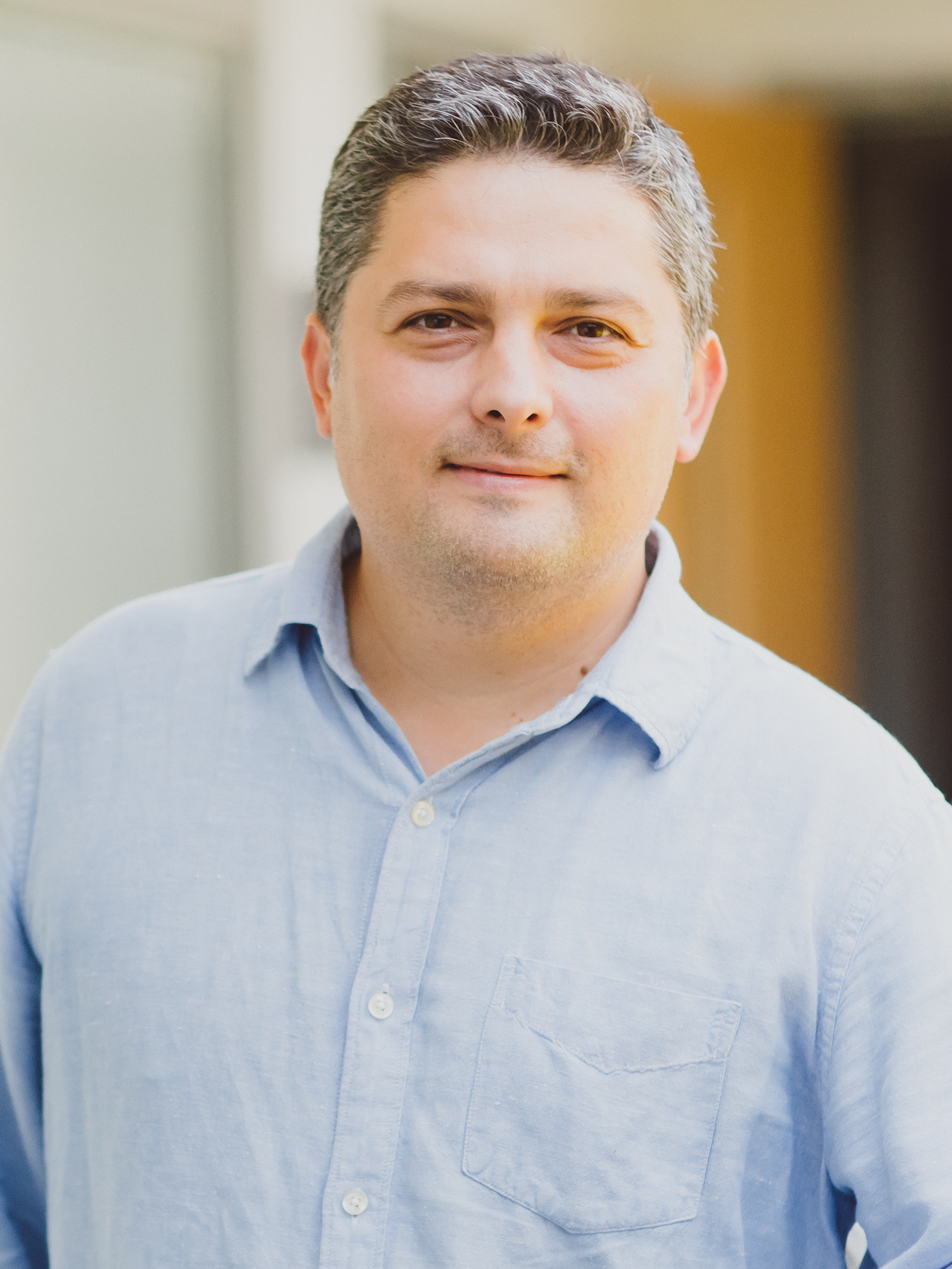
Prof. Dan Olteanu is a full professor at the Department of Informatics, University of Zurich, leading the Data Systems and Theory (DaST) group. He holds visiting professorships at the University of Oxford and is an emeritus fellow of St Cross College. His academic journey includes a PhD from Ludwig Maximilian University (2005), postdoctoral roles at Saarland University and Cornell University, and prior faculty positions at Oxford (2007–2020). He has also worked in industry with companies like LogicBlox and RelationalAI, focusing on database systems and AI. Education: Bachelor’s in Computer Science, Politehnica University of Bucharest (2000) PhD in Computer Science, Ludwig Maximilian University (2005) Professional Roles: Full Professor, University of Zurich (since 2020) Visiting Professor, University of Oxford Emeritus Fellow, St Cross College Editorial Roles: ACM TODS, VLDBJ, SIGMOD Conference Chair: ICDT Council (since 2022) His research focuses on data systems theory, including query optimization, probabilistic databases, factorized databases, and in-database machine learning. He co-authored the seminal book Probabilistic Databases (2011) and has pioneered algorithms for efficient machine learning over relational data and incremental maintenance of analytical workloads. His work emphasizes scalable, theoretically grounded solutions for real-world data challenges. Awards: ICDT 2019 Best Paper Award ACM SIGMOD 2018 Distinguished PC Member Award ERC Consolidator Grant (2016) Oxford Outstanding Teaching Award (2009) Grants & Funding: Supported by Google, Microsoft Azure, Amazon AWS, EPSRC, and the European Commission. His research bridges academia and industry, with contributions to commercial systems like LogicBlox and RelationalAI. Labs & Teams: Heads the DaST group at Zurich, focusing on data systems theory and applications. Collaborates widely in the database and AI communities.
Professor Ahmed Hemani is a faculty member at the Division of Electronics and Embedded Systems, KTH Royal Institute of Technology, affiliated with the Digital Futures Faculty. He holds the role of PI for the project 'New Chip Architectures for Industrial Vision' and leads research in reconfigurable computing, memristor-based systems, and hardware acceleration for AI and edge computing. His work bridges theoretical computer science with practical VLSI design and embedded systems development. He actively contributes to cross-disciplinary initiatives at Digital Futures, a joint center with Stockholm University and RISE Research Institutes of Sweden focused on digital innovation. His research emphasizes scalable FPGA/HPC architectures, low-power neuromorphic systems, and optimization techniques for custom silicon solutions. Current projects include a Lego-inspired edge AI framework and memristor-driven MIMO acceleration. Teaching responsibilities span advanced courses in SOC design, digital system verification, and embedded systems. He supervises advanced-level degree projects across computer engineering and ICT innovation specializations, emphasizing hands-on hardware-software co-design methodologies. Recent publications highlight innovations in memristor applications, FPGA-based acceleration, and reconfigurable architectures for neural networks and bioinformatics. His work addresses challenges in dark silicon utilization, energy-efficient computation, and high-performance embedded systems.
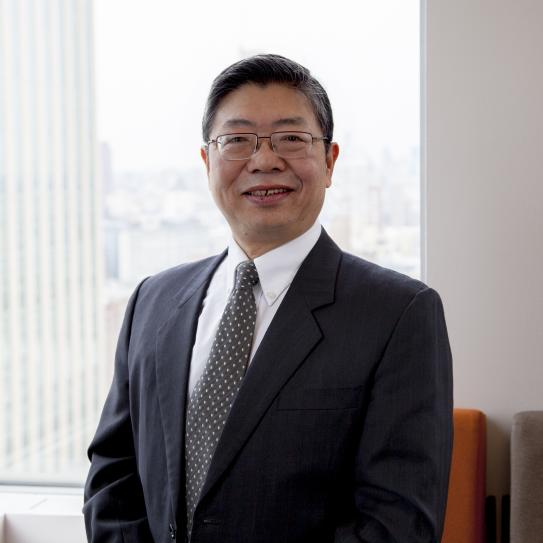
H. Jonathan Chao is a Professor in the Department of Electrical and Computer Engineering at New York University (NYU Tandon School of Engineering). He is the Director of the High-Speed Networking Lab, leading a team of 6 PhD students and 10 Master’s students. His research focuses on software-defined networking, network function virtualization, datacenter networks, and high-speed packet processing. Chao has held significant roles, including Head of the ECE Department (2004–2014) and former CTO of Coree Networks. He has authored over 200 publications and holds 58 patents. His awards include IEEE Fellow and National Academy of Inventors (NAI) Fellow. Education: B.S. and M.S. from National Chiao Tung University (Taiwan), Ph.D. from Ohio State University. Research Highlights Developing solutions for data center networks, network security, and quality of service control. Pioneering work in programmable packet schedulers, reinforcement learning for traffic engineering, and SDN security frameworks like SDNShield. Contributions to hybrid SDN networks, bufferless switch architectures, and energy-efficient data center designs. Awards Fellow of National Academy of Inventors (NAI) Fellow of IEEE Telcordia Excellence Award (1987) IEEE Best Paper Award (2001) IEEE New Jersey Coast Section Speaker of the Year (2003) Advisees & Labs Supervises 6 PhD and 10 Master’s students in the High-Speed Networking Lab. Collaborates with the Center for Advanced Technology in Telecommunications (CATT) to advance telecom innovations. Labs & Teams Directs the High-Speed Networking Lab, focusing on cutting-edge networking solutions, and contributes to CATT’s mission of technology transfer and entrepreneurship.
Edriss S. Titi is a University Distinguished Professor and Arthur Owen Professor of Mathematics at Texas A&M University within the College of Arts & Sciences. His research focuses on nonlinear partial differential equations, applied mathematics, and geophysical fluid dynamics. He leads studies on fluid mechanics, atmospheric and oceanic dynamics, data assimilation, and control theory. His work often addresses mathematical rigor in modeling complex systems like climate dynamics and turbulent flows. Research Interests: Nonlinear PDEs and their applications Fluid dynamics and turbulence Data assimilation algorithms Climate and ocean modeling Infinite-dimensional dynamical systems Recent publications emphasize Navier-Stokes equations , primitive equations , and data assimilation in chaotic systems . His methodologies bridge theoretical analysis and computational modeling, with applications to weather prediction and geophysical flows. Collaborations include the Institute for Applied Mathematics and Computational Science (IAMCS) at Texas A&M. Notable contributions include rigorous analysis of global well-posedness for oceanic models and development of CDAnet, a physics-informed deep learning framework for fluid flow downscaling.
Samson Zhou is an Assistant Professor in the Department of Computer Science & Engineering at Texas A&M University, part of the College of Engineering. He holds a Ph.D. from Purdue University and dual B.S. and M.Eng. degrees from MIT in Computer Science and Mathematics. His research focuses on theoretical computer science, data science, and machine learning, with specializations in numerical linear algebra, streaming algorithms, and differential privacy. He has held postdoctoral positions at institutions including Carnegie Mellon University and Rice University. Education: Ph.D., Computer Science, Purdue University (2018) M.Eng., Computer Science, MIT (2011) B.S., Computer Science & Mathematics, MIT (2010-2011) Research Interests: Dr. Zhou explores intersections of algorithms, data science, and machine learning, emphasizing numerical linear algebra, streaming algorithms, differential privacy, and adversarial robustness. He designs efficient algorithms for large-scale data processing with provable guarantees. Key Contributions: His work includes advancements in sliding window clustering, adversarially robust streaming algorithms, and privacy-preserving techniques. Notable achievements include the Silver Best Paper Award at ICML 2021 and spotlight presentations at ICLR 2025. Service & Leadership: He organizes workshops (e.g., TTIC 2024 on Learning-Augmented Algorithms) and serves on program committees for SOSA, NeurIPS, and COLT. He also co-leads the TAMU Math Circle's problem-solving sessions and the Algorithms & Data Science Reading Group. Labs/Teams: He collaborates on projects involving co-hosted postdocs (e.g., Chen Wang) and masters students (e.g., Shenghao Xie), focusing on topics like coresets, streaming algorithms, and fair clustering.
Prof. Francesca Biagini is a Full Professor of Applied Mathematics at the University of Munich (LMU), leading the Department of Mathematics within the Faculty of Mathematics, Computer Science, and Statistics. She holds additional roles as Vice President for International Affairs and Diversity at LMU since 2019, and served as President of the Bachelier Finance Society (2022–2023). Her academic career includes professorships at LMU (since 2009) and prior roles at the University of Bologna and Leibniz University Hannover. She specializes in financial and insurance mathematics, focusing on asset pricing, systemic risk, and model uncertainty. Education: PhD in Mathematical Finance (Scuola Normale Superiore, 2001), Laurea in Mathematics (University of Pisa, 1997). She has advised over 14 PhD students and 180+ master/bachelor students, collaborating with institutions like Allianz, MunichRe, and SwissRe. Research: Biagini’s work bridges financial and actuarial mathematics, including stochastic processes, systemic risk modeling, and insurance frameworks. Notable contributions include modeling asset bubbles, xVA calculations, and liquidity-based frameworks. She has published extensively in journals like *Finance and Stochastics* and *Mathematical Finance*. Awards and Activities: Recipient of the Prinzessin Therese von Bayern Preis (2019) and Zonta Clubpreis (2015). She organizes international conferences, serves on editorial boards (e.g., *Mathematical Finance*), and chairs the Munich Risk and Insurance Center. Her research is funded by grants from BayernLB and LMU Excellence programs.
Xianyang Zhang is a Professor in the Department of Statistics at Texas A&M University, affiliated with the College of Arts & Sciences. He holds a Ph.D. from the University of Illinois at Urbana-Champaign (2013) and a B.S. from the University of Science & Technology of China (2008). His research focuses on high-dimensional statistics, functional data analysis, kernel methods, and genomics, supported by grants from NIH, NSF, and Texas A&M. Education: Ph.D., Statistics, University of Illinois at Urbana-Champaign, 2013 B.S., Statistics, University of Science & Technology of China, 2008 Research Interests: Xianyang Zhang develops statistical theories and methodologies for complex data structures, including high-dimensional inference, kernel-based testing, change-point detection, and microbiome analysis. His work bridges computational and theoretical statistics, addressing challenges in genomics, omics-wide studies, and spatial statistics. Key Contributions: Developed KDist , a package for kernel and distance-based statistical inference Authored fastcpd for efficient change-point detection Advanced covariate-adaptive FDR control methods for omics studies Contributed to microbiome analysis tools like MicrobiomeStat and LinDA Advising & Grants: Advises multiple Ph.D. students in statistics and interdisciplinary projects Recipient of NIH and NSF grants for high-dimensional statistical research Collaborates with institutions like Mayo Clinic and Chinese University of Hong Kong Labs/Teams: Leads research groups focused on statistical methodology development, software implementation, and applications in computational biology and genomics.
Shuiwang Ji is a Professor and Truchard Family Endowed Chair in the Department of Computer Science & Engineering at Texas A&M University, where he also holds Presidential Impact Fellow and Chancellor EDGES Fellow titles. He specializes in machine learning, AI for science/engineering, and language models/agents. His research bridges theoretical advances and practical applications in materials science, quantum chemistry, and biomedical engineering. Education: Ph.D. in Computer Science from Arizona State University (2010). Research focuses on equivaraint neural networks for symmetry-aware learning, graph-based molecular modeling, and generative AI for scientific discovery. He develops algorithms that integrate physics principles with deep learning, addressing challenges in materials design, PDE solving, and biomolecular structure prediction. Publications emphasize symmetry-aware architectures (e.g., equivariant Fourier neural operators), efficient interatomic potential computations, and diffusion models for protein/DNA design. Recent work explores trustworthiness in LLMs and causal reasoning in graph neural networks. Awards include NSF CAREER Award (2014), IEEE Fellow (2023), and Texas A&M teaching excellence awards. His work has been recognized in top venues like NeurIPS, ICML, and ICLR. His research group collaborates on projects funded by NSF, NIH, and industry partners, advancing AI applications in healthcare, robotics, and environmental science.
Geoffroy Couteau is a CNRS research scientist at IRIF (Institut de Recherche en Informatique Fondamentale), Université Paris Cité, where he conducts research in theoretical and applied cryptography. He obtained his PhD from École Normale Supérieure de Paris in 2017 under the supervision of David Pointcheval and Hoeteck Wee, followed by a postdoctoral position at Karlsruhe Institute of Technology (KIT) from 2017 to 2019. His primary research interests include secure multiparty computation, zero-knowledge proofs, and the theoretical foundations of cryptography, with a particular emphasis on pseudorandom correlation generators and efficiency improvements in cryptographic protocols. He has made significant contributions to fine-grained cryptography, non-interactive zero-knowledge proofs, and post-quantum secure computation. The recent publications reflect a strong trend toward foundational advances in secure computation, with increasing focus on efficiency, practicality, and connections to complexity theory and learning theory. His work often bridges theoretical hardness assumptions with practical protocol design. ERC Starting Grant (2023) for project OBELiSC (Overcoming Barriers and Efficiency Limitations in Secure Computation) Geoffroy Couteau has advised numerous PhD and master’s students, including Dung Bui, Clément Ducros, Eliana Carozza, and Ulysse Léchine. He has also hosted many visiting students and postdocs, fostering a vibrant research group. He has served on the program committees of major conferences such as EUROCRYPT, CRYPTO, TCC, and PKC. He is currently leading research in cryptography at IRIF and is involved in postdoctoral hiring for projects in advanced cryptographic primitives. He maintains a research blog and resource collection for students, including LaTeX templates, a probability cheat sheet, and curated answers to common cryptography questions.
Anna-Karin Tornberg is a Professor in Numerical Analysis at the Department of Mathematics, KTH Royal Institute of Technology. She holds positions as Vice Chair of the Department of Mathematics and previously served as Head of the Numerical Analysis division (2011–2023). Her research focuses on numerical methods for PDEs, particularly boundary integral methods for fluid flows involving particles and drops. She is active in the Linne FLOW Centre and Swedish e-Science Research Center (SeRC). Key roles include membership in the Royal Swedish Academy of Engineering Sciences (IVA), Royal Academy of Sciences, and receipt of awards like the Göran Gustafsson Prize (Mathematics, 2014). She has advised numerous PhD students and postdocs, including current supervisees Anna Broms, David Krantz, and Emanuel Ström. Her work spans theoretical, computational, and applied fluid dynamics with emphasis on microfluidics and high-accuracy numerical techniques. Education includes a PhD in Numerical Analysis from KTH (2000) followed by postdoctoral positions at NYU’s Courant Institute. Promoted to Full Professor at KTH in 2012. Service roles include membership in KTH’s University Board, Faculty Council, and editorial roles at Advances in Computational Mathematics and BIT Numerical Mathematics . Active in international conferences, delivering plenary/invited lectures at ICIAM, ECM, and ICM. Research group projects include development of fast numerical methods for microfluidics and molecular dynamics simulations. Current openings for PhD candidates in numerical methods for non-elliptic PDEs in time-dependent domains. Her lab collaborates on high-performance computing and fluid-structure interaction problems.
Mark Ainsworth is a Francis Wayland Professor of Applied Mathematics at Brown University and holds a joint faculty appointment with Oak Ridge National Laboratory. He obtained his PhD from Durham University (1989) and has held prominent roles such as Director of the Centre for Numerical Algorithms and Intelligent Software (2011-2012). His research focuses on numerical analysis, particularly finite element methods for partial differential equations, a posteriori error estimation, and high-performance computing challenges like resiliency on exascale systems. Education: PhD in Mathematics, Durham University, 1989 BSc in Mathematics, Durham University, 1986 Research Interests: Numerical approximation of PDEs A posteriori error estimation and adaptive methods High order finite element methods Resiliency of numerical algorithms on emerging architectures Fractional PDEs and scientific data compression Awards: SIAM Fellow (2014) FIMA (2010) Whitehead Prize (2004) J.L. Lions Prize (2004) Fellow of Royal Society of Edinburgh (2003) Grants & Leadership: Co-PI for ARO MURI on fractional PDEs (2015-2020) Directed NAIS center (2011-2012), a £5M multi-institutional initiative Organized major international conferences on computational mathematics Labs/Teams: Collaborations include Oak Ridge National Lab and international research networks in numerical analysis and scientific computing.
Professor Tobias Nipkow is a leading researcher in formal methods and interactive theorem proving at the Technical University of Munich (TUM), affiliated with the School of Computation, Information and Technology and the Department of Computer Science. He is a core developer of the Isabelle proof assistant and leads the Theorem Proving Group. His work has profoundly influenced program verification, semantics, and formalized mathematics. University: Technical University of Munich School: School of Computation, Information and Technology Department: Department of Computer Science Research Group: Theorem Proving Group Key Projects: Isabelle, Archive of Formal Proofs, Concrete Semantics His research focuses on formal verification, higher-order logic, semantics of programming languages, and verified algorithms. He has pioneered the formalization of textbook algorithms, data structures like B+-trees and quadtrees, and logical systems. His work bridges theoretical foundations with practical tools for software correctness. The most recent publications show a strong trend in verifying classical algorithms (e.g., Gale-Shapley, Earley parser), data structures (B+-trees, deques), and decision procedures, primarily using Isabelle/HOL. His contributions span foundational logic, program analysis, and educational approaches to formal methods. Best Paper Award at CADE 28 (2021) Tobias Nipkow has made extensive contributions to advising and collaborative research, co-authoring with numerous researchers and students. He has secured support for large-scale formalization efforts and contributed to major projects like the Flyspeck proof of the Kepler conjecture. His work is supported by ongoing development of the Isabelle framework and the Archive of Formal Proofs. He leads the Theorem Proving Group at TUM, which is central to the development and application of Isabelle. The group fosters international collaboration, contributes to the Archive of Formal Proofs, and advances research in automated reasoning, semantics, and verified systems.