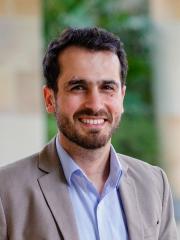
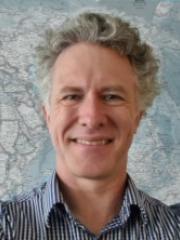
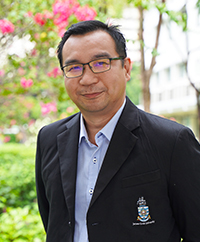
Anastasia Semykina is a Professor of Economics and Deputy Dean (Research and Innovation) at RMIT University's School of Economics, Finance & Marketing. She holds a PhD from Michigan State University (2006) and previously served as Charles and Joan Haworth Professor of Economics at Florida State University. Her expertise spans theoretical and applied econometrics, with a focus on panel data models, missing data estimation, and their application in labor economics, education economics, transition economies, and economic psychology. She teaches advanced econometrics and microeconomics courses at both undergraduate and graduate levels. Research Interests: Theoretical and Applied Econometrics Labor Economics Economics of Education Transition Economies Economics and Psychology Health Economics Her recent publications address topics such as panel data methodologies, healthcare cost-effectiveness analysis, and educational policy evaluation. She is actively involved in supervising PhD and Master's research students in econometrics and applied economics.
Dr. Metin Uyanik is a Senior Lecturer at the School of Economics, The University of Queensland. He holds a PhD from Johns Hopkins University (2016) and previously worked as a Postdoctoral Research Fellow at the University of Rochester's Wallis Institute of Political Economy. His research focuses on Economic Theory, Game Theory, Political Economy, Computational Economics, and Mathematical Economics. His work has been published in top-tier journals such as Economic Theory , Games and Economic Behavior , and Journal of Mathematical Economics . Education: Bachelor of Economics, Bogazici University Masters (Research) of Economics, Koc University Doctor of Philosophy, The Johns Hopkins University Research Interests: Dr. Uyanik's research bridges theoretical and applied economics, emphasizing foundational mathematical approaches. His work explores general equilibrium theory, discontinuous games, topological methods in economics, and welfare economics. Key themes include the analysis of non-convex economies, fixed-point theorems, and the integration of axiomatic frameworks with behavioral assumptions. Teaching: He teaches Advanced Microeconomics, Economics for Commerce, and Introduction to Strategic Thinking at UQ. His pedagogical focus includes mathematical rigor and practical applications of economic theory. Collaborations & Future Work: Collaborations with scholars like M. Ali Khan and Richard P. McLean highlight his engagement with complex theoretical frameworks. Ongoing projects include studies on large production economies, myersonian common knowledge, and computational methods in equilibrium analysis.
Dr. Ly Fie Sugianto is an Associate Professor in the Department of Accounting at Monash Business School, Monash University. Her research focuses on the integration of data analytics, artificial intelligence, and machine learning in accounting and business systems, with applications in the energy sector and organizational behavior. Monash Business School, Monash University Department of Accounting Specialization: Accounting Information Systems, Data Analytics, AI Her research interests span Accounting Information Systems , Agent-Based Simulation , Decision Support Systems , and Technology Adoption . She applies computational methods to study competitive dynamics in deregulated electricity markets and the impact of digital tools on employee well-being and organizational resilience. The recent publications reflect a strong trend in using AI and simulation to analyze complex socio-technical systems, particularly in energy markets and leadership dynamics. Keywords across her work include agent-based modeling , data analytics , servant leadership , and enterprise social media , indicating interdisciplinary research at the intersection of information systems, management, and public policy. Her scientific awards include competitive grants from the ARC (SPIRT/Linkage) , the Australia Indonesia Governance Research Partnership (AIGRP) , and the Sumitomo Foundation . ARC Grant: Dispatch Optimisation in the Australian National Electricity Market Sumitomo Foundation: Technology Use and Employee Well-Being AIGRP: Governance and MSME Resilience during Pandemic Dr. Sugianto has advised research projects and collaborated with industry partners such as Western Power , Ecogen Energy , and AEMO . She is currently accepting PhD students and leads externally funded research initiatives. Her work contributes to UN Sustainable Development Goals related to industry innovation and responsible consumption. She is affiliated with research teams focusing on intelligent decision support systems and digital transformation in business , with active collaborations in Australia and Indonesia.
Demetris Christodoulou is an Associate Professor in Accounting, Governance and Regulation at the University of Sydney. He holds a BEcon from Piraeus University, an MSc(Fin) from the University of York (UK), and a PhD from Athens University of Economics and Business (AUEB). His research focuses on applying data analytics, econometrics, and visualization techniques to financial analysis, equity valuation, life insurance, and financial advice. He co-directs the PEMA research group, specializing in productivity and performance measurement analytics, and previously led the MEAFA research group (2007–2022). He has collaborated extensively with industry partners including Deloitte and Australian insurers, and developed training programs for over 1,000 executives. His work includes open-source contributions to Stata software and the Graph Workflow platform, alongside $662k in workshop-generated funds supporting academic programs. He has advised multiple PhD students and taught at leading universities globally. Education: BEcon in Economics (Econometrics), Piraeus University MSc in Finance, University of York (UK) PhD in Accounting and Financial Analysis, Athens University of Economics and Business His research interests span financial reporting models, life insurance underwriting strategies, and behavioral finance. Recent projects address dishonesty mitigation in insurance disclosures and the adviser effect on customer disclosures. He has published widely in top journals like the Review of Accounting Studies and Stata Journal , and his work was featured in The Australian for insights on insurance fraud reduction. He maintains international collaborations, including visiting roles at Columbia Business School and the University of Cyprus, and serves on advisory boards for organizations like Behaviour.ai. Publications highlight methodological innovations in econometrics and visualization, with 2025's upcoming Stata Journal paper advancing time-series analysis techniques. His grants include partnerships with industry on longitudinal studies of insured lives, aiming to improve risk modeling and public policy insights.
Professor Guy Wallis is a Professor and Director of Research at the School of Human Movement and Nutrition Sciences, Faculty of Health, Medicine and Behavioural Sciences at the University of Queensland. He is also an Affiliate of the Centre for Sensorimotor Performance. His work bridges visual neuroscience, computational modeling, and applied human factors research, with significant contributions to understanding visual recognition and visuomotor behavior. Education: Bachelor (Honours) of Engineering in Electrical and Electronic Engineering from Imperial College London PhD in Visual Neuroscience from University of Oxford, UK Prof. Wallis's research program combines computational modeling with behavioral studies, many conducted in computer-controlled virtual environments. His work spans visual neuroscience, object recognition, visuomotor control, and simulator-based training. He has made significant theoretical contributions to understanding how visual recognition is achieved in biological systems and how everyday visuomotor tasks are regulated, challenging existing paradigms and offering new insights. His recent publications reveal a strong focus on virtual reality applications, visual-motor integration challenges, and cross-species cognitive studies. There's a clear trend toward investigating how virtual environments can be optimized for training and assessment, with particular attention to visual perception limitations and how humans adapt to these environments across diverse contexts from surgical training to aviation. Scientific Awards and Recognitions: Elected Fellow of the Queensland Academy of Arts and Sciences (2022) ARC Medical Research Advisory Group (2022-2024) ARC College of Experts (2019-2021) CSIRO CSS Human Research Ethics Committee member (2020-2022) UQ Health and Behavioural Sciences Faculty, HDR Supervision Award (2018) ARC Future Fellowship (2011-2014) ARC QEII Fellowship (2003-2007) UQ Postdoctoral Fellowship (2001-2003) Prof. Wallis has successfully secured funding from major organizations including the Australian Research Council, the Human Frontier Science Program, and the Wellcome Trust. His industry partnerships span diverse sectors such as construction training, mining, healthcare, and aerospace. His research has led to the development of novel training programs for health professionals, impacted the design of man-machine interfaces for mining equipment, and informed the design parameters for pilot training systems. As Director of Research, he oversees the research direction of the School of Human Movement and Nutrition Sciences, fostering interdisciplinary collaborations and supporting early-career researchers through his leadership in the Centre for Sensorimotor Performance.
Laura Robinson is a Senior Lecturer at the School of Psychology , University of Wollongong. She holds a Doctor of Philosophy in Psychology and extensive teaching experience in behavioral sciences, statistics, and applied psychology. Education : PhD in Psychology (2017), Postgraduate Diploma in Psychology (2010), Bachelor of Psychology (2009), and Bachelor of Aviation (2004) Her research focuses on vulnerable populations, particularly women and youth, with expertise in substance use disorders, eating disorders, mental health comorbidity, and health equity. She has published extensively on residential treatment outcomes, continuing care interventions, and stigma reduction in mental healthcare. Recent publications highlight longitudinal analyses of psychological distress, weight stigma, and integrated approaches to substance use and physical health. She supervises PhD students on topics like veterans' mental health, methamphetamine use, and suicide prevention. Laura has received funding from internal and external sources, including grants for stimulant use interventions and health literacy studies. She serves on committees like the Australasian Professional Society for Alcohol and Drugs and contributes to peer-reviewed journals as a reviewer.
Professor Gavan McNally is a distinguished behavioral neuroscientist at the University of New South Wales, where he serves as a Professor in the School of Psychology. He is actively engaged in research on the fundamental behavioral and brain mechanisms for learning and motivation, with applications to clinical conditions such as addictions, anxiety disorders, and mood disorders. McNally holds several prestigious editorial positions, including Editor-in-Chief of Neurobiology of Learning & Memory and Senior Editor of The Journal of Neuroscience. He also serves as President-Elect of the European Behavioral Pharmacology Society and is a Member of the Australian Research Council College of Experts. McNally's research interests span behavioral neuroscience, focusing on how fundamental brain mechanisms apply to clinical conditions. He employs a systems neuroscience approach, combining well-controlled behavioral approaches with optogenetics, chemogenetics, in vivo calcium imaging, and whole brain circuit mapping in both normal and transgenic animals. His work bridges basic science with clinical applications through collaborations with colleagues at University of Sydney, Sydney Local Health District, Monash University, and Turning Point. McNally's research particularly examines the cellular, circuit, and systems level mechanisms underlying learning, motivation, and their dysregulation in disorders like addiction. His laboratory investigates how these mechanisms translate to human conditions, with a strong emphasis on developing new treatments for psychological disorders. His extensive publication record demonstrates a clear trajectory in understanding punishment learning, addiction mechanisms, and the neural circuits underlying motivated behavior. Recent work has increasingly focused on the cognitive pathways to punishment insensitivity, the role of specific neural circuits in addiction, and translational approaches to understanding maladaptive behaviors. McNally's research bridges animal models with human studies, creating a comprehensive understanding of the neural mechanisms that govern learning and motivation, with particular attention to how these processes go awry in addiction and other psychological disorders. 2008 QEII Fellow, Australian Research Council 2009 Association for Psychological Science, International Rising Star 2010 Fellow, Association for Psychological Science 2010 UNSW Faculty of Science Staff Excellence Award for Research and Training 2011 Pavlovian Research Award, The Pavlovian Society 2012 Future Fellow (Level 3), Australian Research Council 2016 D.G. Marquis Behavioral Neuroscience Award, American Psychological Association 2017 Fellow, American Psychological Association 2019 Fellow of the Academy of Social Sciences in Australia 2021 D.G. Marquis Behavioral Neuroscience Award, American Psychological Association 2022 Ross Day Plenary Lecturer, Australasian Brain and Psychological Sciences 2023 European Behavioural Pharmacology Society Plenary Lecturer 2024 Elspeth McLachlan Plenary Lecturer, Australasian Neuroscience Society 2024 D.G. Marquis Behavioral Neuroscience Award, American Psychological Association Professor McNally actively supervises several students including Bixuan Lin, Si Yin Lui, Hannah Machet, Bart Cooley, Kelly Zhuang, and Alexandra Gregory. His current research is supported by significant funding including an Australian Research Council Discovery Project (2024-2026) on "Risky choices: From cells and circuits to computations and behaviour," another Discovery Project (2025-2028) on "Multimodal mapping of punishment learning," and NHMRC grants including a Synergy Grant on "Linking clinical and basic science discovery to find new treatments for alcohol-use disorder" and an Ideas Grant on "Novel pathways to abstinence from alcohol seeking." These projects reflect his commitment to both fundamental neuroscience and translational applications for treating psychological conditions. His teaching responsibilities include PSYC2081 Learning & Physiological Psychology and PSYC3051 Physiological Psychology. McNally's laboratory employs advanced techniques including optogenetics, chemogenetics, in vivo calcium imaging, and whole brain circuit mapping to investigate the neural mechanisms underlying learning, motivation, and their dysregulation in disorders. His team works at the intersection of basic neuroscience and clinical applications, with strong collaborations across multiple institutions to translate fundamental findings into potential treatments for addiction and other psychological disorders. The lab has made significant contributions to understanding the role of brain regions like the ventral pallidum, paraventricular thalamus, and nucleus accumbens in addiction, fear learning, and punishment sensitivity.
Professor Philip Birch is a distinguished academic in Criminology at the University of Technology Sydney (UTS), Faculty of Design & Society, School of International Studies & Education. With over 15 years of academic experience across British, American, and Australian university systems, he has established himself as a leading expert in policing, community safety, and criminal justice. His extensive practical background in criminology, including roles as a Specialist Crime Team Manager, Community Safety Research Manager, and Through Care Worker in UK correctional facilities, informs his applied research approach. Professor Birch's educational background includes a BSocSci. (Hons) in Social Policy (Crime & Justice) from the University of Manchester, multiple postgraduate qualifications from the Open University (including an MSc. in Social & Criminological Research Methods), a Post Graduate Certificate in Higher Education Practice from the University of Huddersfield, and a PhD in Criminology from the University of New South Wales. He also holds a Fellowship with the Higher Education Academy. His research centers on six key areas: Police & Policing; Community Safety & Crime Prevention; Prisons, Probation & Parole Policy & Practice; Assessment, Treatment & Management of Offenders; Gender & sexuality inclusive Domestic and Family Violence; and Sex Work, Sex Workers and Procurement. His work emphasizes the practical application of criminological research to real-world justice issues, with strong industry engagement across law enforcement and correctional services. Recent publications reveal a clear trend toward police mental health, aging in policing, hate crime identification, trauma-informed policing approaches, and digital community safety initiatives. His research employs diverse methodologies including qualitative case studies, Delphi methods, rapid evidence assessments, and comparative analyses across multiple jurisdictions. Teaching award (2019) from Australian College of Educators for outstanding contribution to education Literati Award (2019) for published work Fellowship of the Higher Education Academy Professor Birch has supervised numerous Honours, Masters by Coursework, Masters by Research and PhD students in Criminology, Criminal Justice and Policing, with several completions to date. He has secured over $1.3 million in research funding, including an ARC Linkage grant, and has acted as an external assessor for domestic and international funding bodies. His research projects address critical issues in criminology and policing, often with direct policy implications. He established the Crime & Security Science (CaSS) Research Group at UTS in 2022, a cross-faculty initiative connecting academia with industry to advance evidence-based criminology, criminal justice, policing, and community safety research. This group serves as a hub for collaborative projects addressing contemporary security challenges through translational research.
Dr. Tan Kim Lim is a Senior Lecturer at the James Cook University (Singapore Campus), specializing in organizational psychology and consumer behavior. He holds a PhD from Curtin University (2016–2019), an MBA from the University of Melbourne (2004–2006), and a Bachelor of Business from Monash University (1999–2002). His research focuses on the future of work, employee attitudes, technology adoption in hospitality/tourism, and consumer behavior analysis. He employs advanced methodologies like PLS-SEM and has published over 47 articles in top journals like the European Business Review and Asia Pacific Journal of Marketing and Logistics . Dr. Lim has held roles including Assistant Professor at BNU-HKBU United International College (2020–2022) and Post-doctoral researcher at the Human Capital Leadership Institute (2019–2021). He currently serves on editorial boards of the Journal of Responsible Tourism Management and Journal of Global Responsibilities , and is a member of the Singapore Human Resource Institute and Society of Industrial-Organizational Psychology. His applied research spans commissioned projects for governments and private entities, including studies on waste classification behavior, country music festivals, and AI adoption in social services. Awards include the JCUS Early Career Researcher Award (2023) and Emerald Literati Reviewer Award (2022). Dr. Lim also actively speaks at regional conferences on topics like AI in networking and post-pandemic workplace trends. His current research interests include STARA (Smart Technologies, AI, Robotics, Algorithms) impacts on work, meaningful work dynamics, and tourism behavior analysis. He supervises PhD students exploring AI in social services, indigenous tourism, and workplace technology adoption.
Minh Hue Nguyen is a Senior Lecturer in EAL/TESOL Teacher Education at Monash University's School of Curriculum, Teaching and Inclusive Education within the Faculty of Education. She holds a PhD in Education (TESOL focused) from Monash University and has taught at Vietnam National University, Deakin University, and the University of Melbourne. Her educational background includes: PhD in Education (TESOL focused), Monash University (2015) MA in Applied Linguistics, Victoria University of Wellington (2008) BA in English Language Teaching, Vietnam National University (2003) Nguyen's research centers on teachers' professional learning, curriculum, and pedagogy in TESOL and EAL contexts, with specific focus on emotional experiences, identity development, mentoring, agency, and collaboration. She explores sociocultural contexts of teacher development through activity theory and sociocultural perspectives, examining how institutions support teachers' learning journeys from preservice to in-service stages. Recent work investigates professional learning for teacher educators and implementation of the Victorian EAL Curriculum. Her 15 most recent publications (2024-2025) reveal a strong thematic focus on language teacher agency, identity negotiation, and multilingual pedagogies. The research increasingly examines emotional dimensions of teaching, cross-cultural identity tensions, and collaborative models between EAL and content teachers, with significant contributions to understanding how teachers navigate complex educational contexts while developing professional identities. Her scientific recognition includes: Penny McKay Award Special Commendation Monash Education Research Community's Publication Award ATEA/Kay Martinez Award for Best Paper Monash Dean of Education’s ECR Project Award Advancing Women's Research Success Grant Vietnamese Government Merit-based Scholarships Nguyen actively supervises PhD research in TESOL teacher professional learning, teacher identity, and curriculum development, though is currently unavailable for new PhD students until 2027. She contributes to editorial boards for Teaching and Teacher Education, Second Language Teacher Education, and System journals, and serves on the Australian Teacher Education Association. Her work supports UN Sustainable Development Goal 4 (Quality Education) through inclusive pedagogical frameworks. She leads research projects including 'Elucidating practices to assist EAL learners to acquire specialised science vocabulary' and 'Establishing an online community-of-practice model for learner agency during work placements,' demonstrating commitment to practical educational innovations.
Professor Susan Thorp is a Finance academic at the University of Sydney Business School . With a PhD in Economics from UNSW and prior roles at University of Technology Sydney and the Reserve Bank of Australia, she focuses on household finance , retirement planning , and financial market behavior . BEc (Hons) - University of Sydney Dip. Ed. - University of New England PhD - University of New South Wales Her research interests include: Life-cycle financial decision-making Behavioral influences on savings and investments Superannuation policy and market integration Commodity market dynamics Economic impacts of financial literacy Crises-driven market contagion Recent publications analyze retirement decumulation , financial trust , and commodity-equity market correlations . She leads cross-disciplinary teams applying dynamic programming , econometric modeling , and experimental design to financial challenges. Her grants include ARC Linkage Projects and ASIC commissions for improving financial communication and regulatory frameworks . Media outlets frequently cite her expertise on superannuation policy , market volatility , and retirement savings behavior .
Nicholas Feltovich is a Professor of Economics at Monash University, specializing in experimental economics, game theory, and behavioral economics. His research focuses on understanding strategic behavior in markets, bargaining institutions, and decision-making under uncertainty, with notable contributions to schizophrenia-related loss aversion studies and experimental political science. He holds a PhD in Economics from the University of Pittsburgh (1997) and a BS in Mathematics from Virginia Tech (1991). Education PhD in Economics, University of Pittsburgh, 1997 BS in Mathematics, Virginia Polytechnic Institute and State University, 1991 Research Interests His work explores experimental investigations of market institutions, bargaining power dynamics, and social norms. Key topics include the effects of communication in strategic interactions, the role of fairness perceptions in pricing, and the application of neuroeconomic methods to study decision-making impairments in schizophrenia. He has conducted influential studies on corporate social responsibility, leadership in public goods provision, and the impact of leniency programs on collusion. Grant Activities Posted prices, bargaining and auctions : ARC-funded project (2014–2019) examining experimental economics of market mechanisms. Effect of bargaining power : ARC project (2013–2018) analyzing institutional and normative influences on bargaining outcomes. Collaborations He collaborates internationally on projects spanning behavioral ethics, experimental game theory, and schizophrenia-related economic behavior. His work contributes to the UN Sustainable Development Goal on Quality Education through applied research in decision-making frameworks.
Di Bu is an Associate Professor in the Department of Applied Finance at Macquarie University, leading the Macquarie University FinTech and Banking Research Centre. He holds a PhD in Finance from the University of Queensland (2015). His research focuses on FinTech innovations, climate finance, household finance, and behavioral finance, with an emphasis on embedding sustainability into financial systems. He has secured over AUD 4 million in research funding through ARC Linkage and Discovery projects, focusing on AI-driven credit assessments, Open Banking, ESG analytics, and climate resilience. Education PhD in Finance, University of Queensland (2015) Research Interests Di's work explores belief formation in financial decisions, sustainable lending practices, and climate adaptation tools. He pioneers projects such as AI credit scoring systems, behavioral interventions for sustainable investing, and digital platforms for climate resilience. His interdisciplinary approach bridges industry, government, and academia to address financial and environmental challenges. Projects & Funding AUD 4M+ in grants including two ARC Linkage and one ARC Discovery projects Current initiatives: Greenwashing detection, ESG rating divergence analysis, and climate-resilient finance platforms Labs/Teams Director of the FinTech & Banking Research Centre and affiliated with Data Horizons Research Centre and Frontier AI Research Centre at Macquarie University.
Braam Lowies is a Senior Lecturer in Property at UniSA Business, University of South Australia, based at the City West Campus. He is an active researcher and Research Degree Supervisor, focusing on the intersection of financial behaviour, mental health, and ageing in Australia. His work spans multiple disciplines including housing, public policy, gerontology, and behavioural economics. Institution: University of South Australia School: UniSA Business Department: Property Position: Senior Lecturer Email: Braam.Lowies@unisa.edu.au Dr. Lowies' research primarily explores the financial and psychological wellbeing of older Australians, particularly in the context of retirement, housing equity, and crises such as the COVID-19 pandemic. His studies examine how savings, debt, hope, and mental health influence financial decisions, and how the home environment affects health outcomes across different age groups in later life. He frequently employs large-scale datasets like HILDA and applies both qualitative and quantitative methods. His recent publications highlight trends in ageing-in-place, equity release, digital banking challenges, and the socio-ecological determinants of financial stress. These works appear in high-impact journals such as Stress and Health , PLoS One , and Ageing & Society , as well as in book chapters with Edward Elgar Publishing. His research has relevance for policy development in housing, retirement planning, and mental health support systems. Dr. Lowies collaborates extensively with researchers such as Kurt Lushington, Rajabrata Banerjee, and Vandana Arya. His work has been cited in academic databases and picked up by media outlets, indicating its societal impact. Understanding the effect of financial behaviour on mental health: evidence From Australia (2025) Ageing-in-place (2024) The home environment: influences on the health of young-old and old-old adults in Australia (2024) The effect of psychological factors on financial behaviour among older Australians (2023) COVID‐19: financial well‐being of older Australians in times of crisis (2022) Dr. Lowies has no listed scientific awards in the provided materials. He is actively involved in supervising research degrees but specific student names are not mentioned. There is no information about grants, laboratories, or research teams he leads, though his collaborative work suggests strong interdisciplinary engagement.
Ingebjorg Kristoffersen is a Lecturer in the Department of Economics at the UWA Business School, The University of Western Australia. She holds a PhD in Economics from UWA and a Master of Business (Finance) from Edith Cowan University. A Fellow of the Higher Education Academy since 2021, she specializes in applied microeconomics focusing on economic psychology, wellbeing, and gender issues. Her research explores how values, perceptions, and emotions influence economic behavior, particularly in areas like health, financial literacy, and gender roles. She has published in journals such as Journal of Economic Psychology and Health Promotion International . Currently, she teaches Microeconomics and research methods courses and serves as Undergraduate Coordinator for Economics. Dr. Kristoffersen contributes to initiatives like the National Indigenous Business Summer School and actively reviews for top academic journals. Her work aligns with UN Sustainable Development Goals related to education and gender equality.