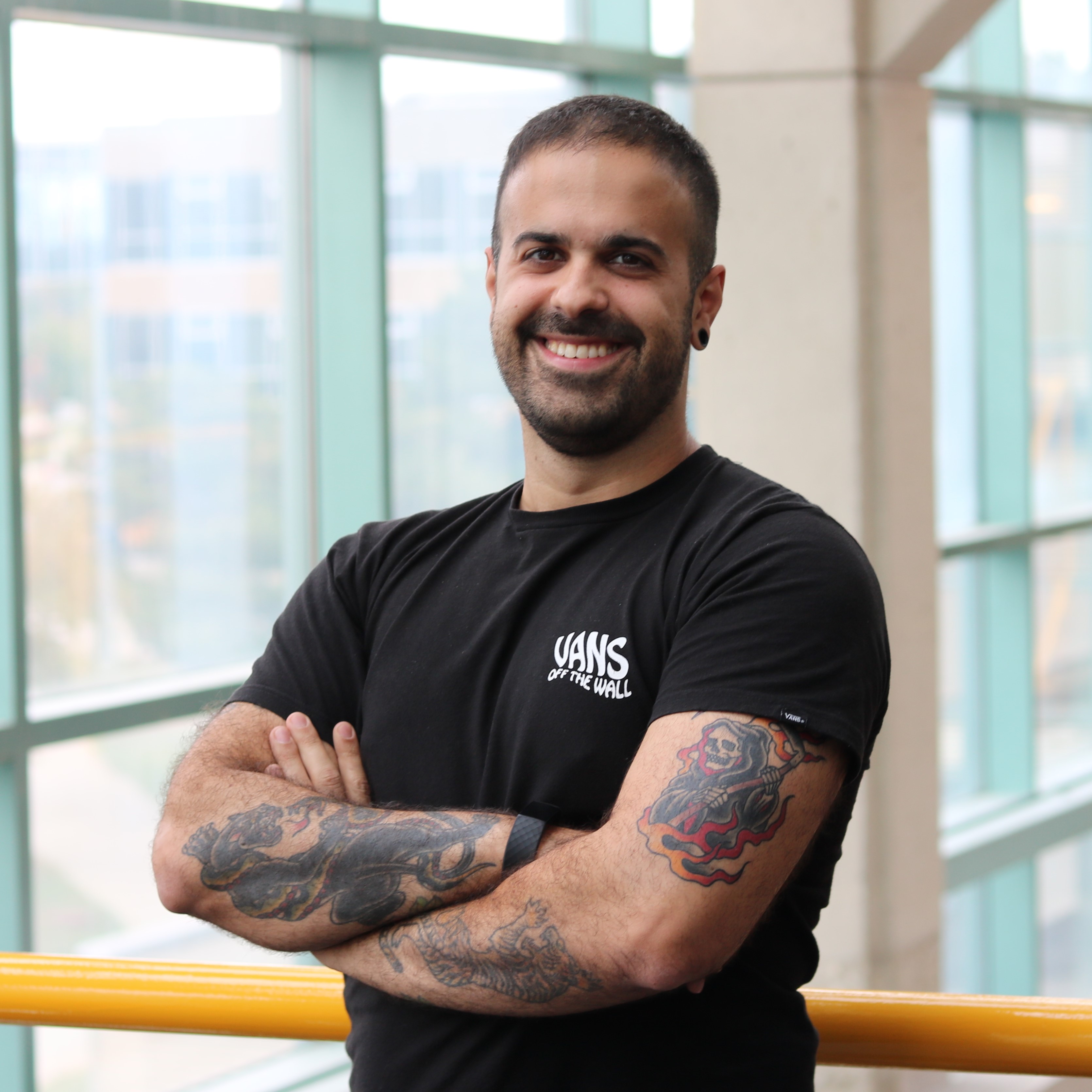
Maxime Malnou is a Senior Research Fellow in the Advanced Microwave Photonics Group, focusing on quantum-limited microwave amplifiers and parametric circuits for quantum computing and dark matter detection applications.
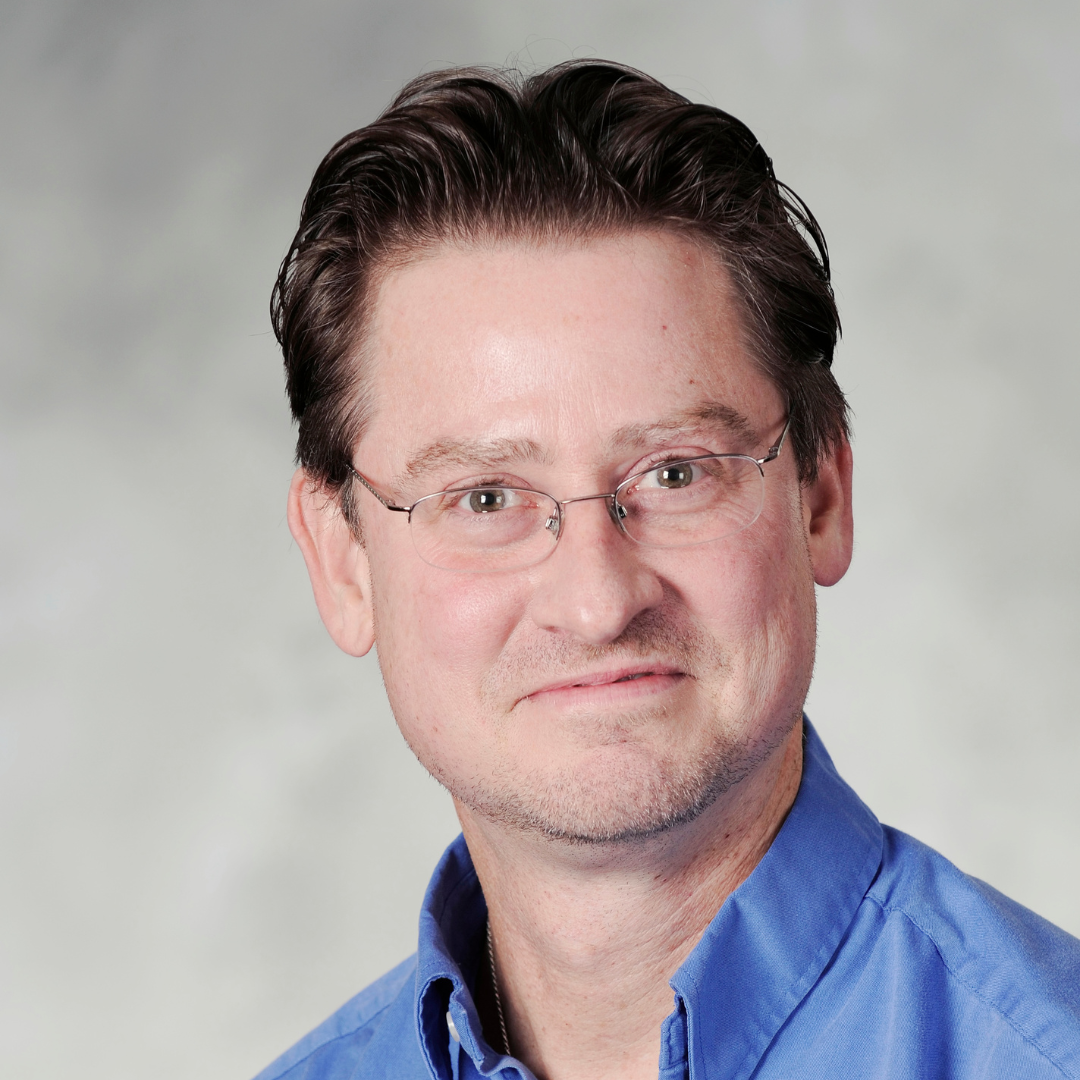
Simon Oya is an Assistant Professor in the Department of Electrical and Computer Engineering at the University of British Columbia (UBC), Faculty of Applied Science. He holds a PhD in Information Technologies and Communications from the University of Vigo (Spain) and was previously a postdoctoral fellow at the Cryptography, Security and Privacy (CrySP) group at the University of Waterloo. His educational background includes: BSc, MSc, PhD from University of Vigo (Spain) Simon Oya's research focuses on designing and evaluating privacy-enhancing technologies with strong privacy and utility guarantees. He approaches privacy problems from a statistical perspective, using theoretical tools from signal processing and information theory to quantify privacy leakage and develop effective defenses. His primary research areas include: Privacy-preserving searchable encryption Machine learning privacy (particularly membership inference attacks) Anonymous communication systems Location privacy Differential privacy His publication record demonstrates a consistent focus on analyzing and improving privacy mechanisms across various domains. His recent work has particularly emphasized the intersection of machine learning and privacy, as well as advancing techniques for searchable encryption. His research methodology typically involves developing statistical models to understand privacy leakage and designing optimization-based approaches to improve privacy-utility tradeoffs. His notable scientific contributions include developing attacks against searchable encryption schemes to better understand their privacy limitations, and designing improved privacy mechanisms for location-based services. His work on statistical disclosure attacks against anonymous communication systems has also been influential in the field. As an educator, he teaches CPEN 442: Introduction to Cybersecurity at UBC. He actively seeks motivated graduate students interested in privacy research, particularly those with strong backgrounds in statistics, machine learning, or optimization.
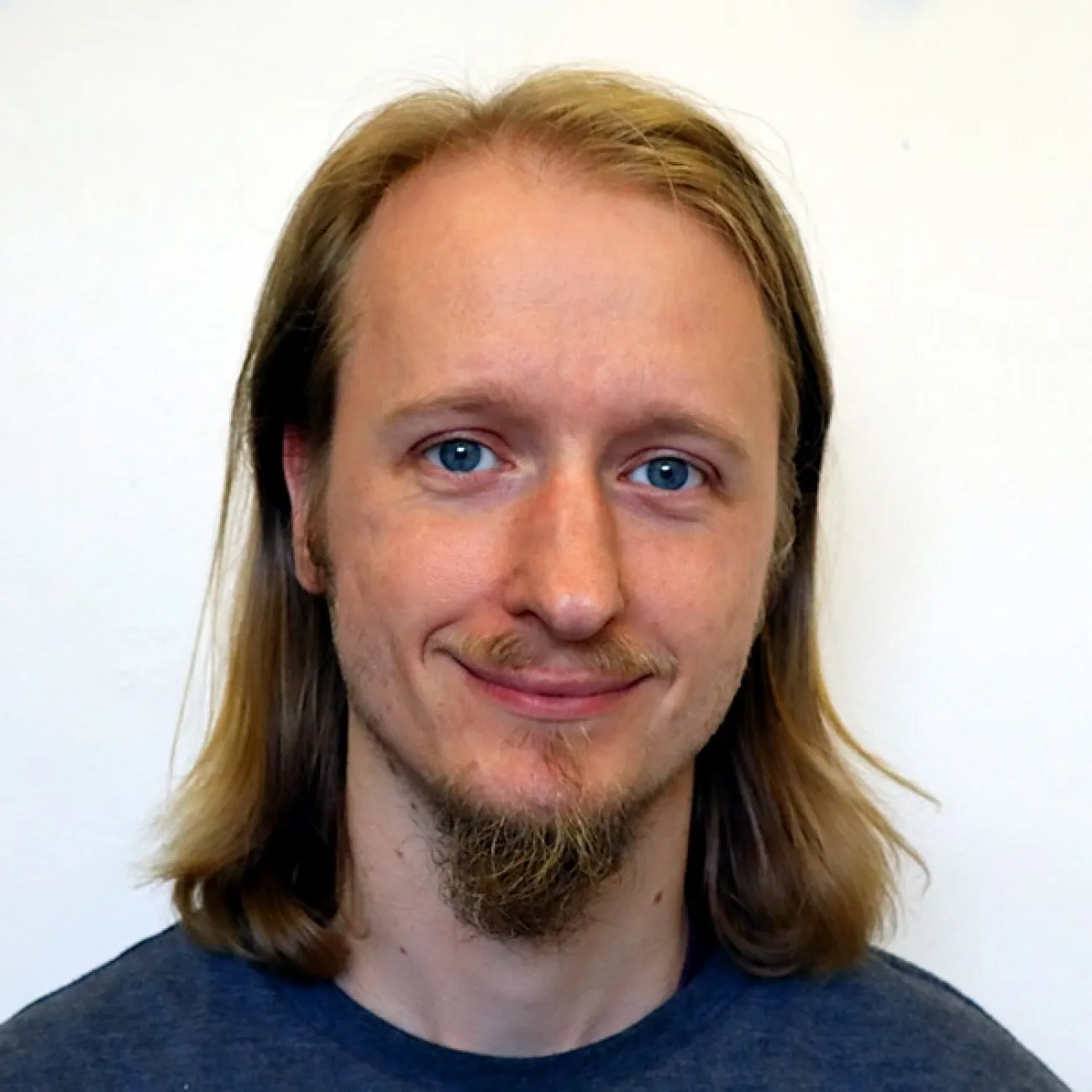
Professor Jordan Taylor is affiliated with Princeton University as a faculty member in the Department of Biomedical Engineering within the School of Engineering and Applied Science. His research focuses on unraveling computational processes in motor control and learning, with particular emphasis on interactions between explicit cognitive strategies and implicit motor adaptation during skill acquisition. Taylor leads the Intelligent Performance and Adaptation Laboratory , aiming to develop optimal training protocols for motor rehabilitation post-stroke or disease. Research Interests : Taylor investigates how humans learn motor skills through dual mechanisms of declarative strategy formation and implicit neural adaptation. His work explores the neural systems underlying these processes and their functional consequences, especially in pathological conditions like cerebellar degeneration. Current studies examine working memory constraints, reward modulation of implicit adaptation, and plan-based generalization of motor learning. Publication Trends : Recent articles analyze dual mechanisms in sensorimotor learning, reward-driven adaptation, and contextual influences on motor memory. His computational neuroscience approach combines behavioral experiments, neural imaging, and theoretical modeling to study cognitive-motor interactions across various tasks.
John D. Cressler is a Regents Professor and Schlumberger Chair in Electronics at the Georgia Institute of Technology's School of Electrical and Computer Engineering. He earned his B.S. in Physics from Georgia Tech (1984) and Ph.D. in Applied Physics from Columbia University (1990). After pioneering SiGe research at IBM (1984-1992), he joined academia at Auburn University before moving to Georgia Tech in 2002. His research specializes in silicon-germanium heterojunction technology, with focuses on: RF/microwave/mm-wave circuits Radiation effects in electronics Cryogenic semiconductor behavior Device reliability physics Compact modeling for SiGe devices His 700+ publications demonstrate consistent innovation in SiGe HBT design, radiation-hardened circuits, and millimeter-wave systems. Recent work emphasizes radiation tolerance for space applications, high-frequency circuit optimization, and novel fabrication techniques. Major Awards: IEEE Fellow (2001) IEEE Leon K. Kirchmayer Graduate Teaching Award (2011) ONR Young Investigator Award (1994) IEEE Third Millennium Medal (2000) He leads Georgia Tech's SiGe research group with extensive industry collaborations and teaches courses including ECE 3040 (Microelectronic Circuits), ECE 6444 (SiGe Devices), and interdisciplinary courses on science/religion dialogue.
Xin Li is a Professor in the Department of Electrical and Computer Engineering at Duke University and serves as the Associate Vice Chancellor at Duke Kunshan University. He holds a Ph.D. from Carnegie Mellon University (2005) and has held leadership roles in research consortia like the FCRP Focus Research Center and the Center for Silicon System Implementation (CSSI). His research bridges integrated circuits , machine learning , and cyber-physical systems , with applications in autonomous driving, battery lifetime prediction, and smart buildings. Education : Ph.D., Carnegie Mellon University (2005); M.S., Fudan University (2001); B.S., Fudan University (1998) His work emphasizes robust design methodologies for analog/RF circuits, data-driven predictive modeling , and Bayesian inference for high-dimensional variation spaces. Recent publications focus on generative adversarial networks for circuit design, multi-view imputation for incomplete data, and knowledge-driven autonomous systems . He has received numerous accolades, including the NSF CAREER Award (2012) , IEEE Donald O. Pederson Best Paper Awards (2013, 2016) , and IEEE Fellow (2017) . He has served as Editor for journals like IEEE Transactions on Biomedical Engineering and as Chair for conferences including ISVLSI and CAD/Graphics.
Felix Langfeldt is an Associate Professor and Doctoral Programme Director at the Institute of Sound and Vibration Research (ISVR), part of the Faculty of Engineering and Physical Sciences at the University of Southampton . His work focuses on developing active and passive acoustic metamaterials for low-frequency noise reduction in transport systems and living spaces. Research Interests : Acoustic Metamaterials Low-Frequency Sound Insulation Aircraft Cabin Noise Control Vibro-acoustics of Lightweight Structures Analytical Modeling of Multi-layered Partitions Teaching Roles : Module Lead for Electroacoustics (ISVR6137) since 2022/23 Module Lead for Active Control of Sound and Vibration (ISVR6139) since 2024/25 Lecturer for Theoretical and Computational Acoustics (ISVR3073/6148) since 2023/24 Academic Background : BEng, MSc in Aeronautical Engineering (2012) PhD (2018) on Membrane-type acoustic metamaterials for aircraft noise shields Industry Collaborations : Airbus, 3M. Professional Timeline : 2021: Visiting Academic at ISVR 2022: Lecturer appointment 2023: Doctoral Programme Director 2024: Promoted to Associate Professor
Xinyu Jia is currently a Humboldt Research Fellow at the Engineering Risk Analysis Group, Technical University of Munich since June 2024, and concurrently serves as Associate Professor in the Department of Mechanical Engineering at Hebei University of Technology, China since October 2022. Her research focuses on advancing uncertainty quantification, structural reliability, and risk assessment methodologies for engineering systems. Her academic background includes: PhD in Mechanical Engineering, University of Thessaly, Greece (2018-2021) Bachelor of Engineering and Master of Science in Mechanical Engineering, Hunan University, China (2011-2018) Dr. Jia specializes in Bayesian learning frameworks for physics-based models, with particular expertise in uncertainty propagation in structural dynamics and industrial robotics applications. Her work develops hierarchical Bayesian approaches that integrate multi-level data to enhance predictive accuracy for complex engineering systems, addressing critical challenges in structural health monitoring and risk-informed decision making. Analysis of her 2022-2023 publications reveals a concentrated research trajectory in applying Bayesian inference to structural dynamics, with emphasis on hierarchical modeling techniques, variational inference schemes, and nonlinear model updating. These contributions predominantly appear in top-tier mechanical engineering journals, demonstrating methodological innovations that bridge theoretical statistics with practical engineering reliability problems. Her scientific recognition includes: Humboldt Research Fellowship (2023) Marie Curie Early Stage Researcher Fellowship (2018) No specific student advisement records are documented, though her Associate Professor role implies teaching responsibilities. Her fellowship awards represent significant research funding supporting her work in uncertainty quantification. As an active member of TUM's Engineering Risk Analysis Group, she contributes to high-impact projects including digital twins for ships, S3UQDyn, Navigating Risk, and infrastructure resilience initiatives like BIG-ROHU and INFRA.RELEARN, focusing on probabilistic risk modeling across civil and mechanical engineering domains.
Sami Äyrämö is an Associate Professor at the Faculty of Information Technology , University of Jyväskylä. His research bridges machine learning and health science , focusing on innovative applications in biomechanics , medical imaging , and exercise physiology . Specializes in automated scoring systems for medical diagnostics Pioneer in domain-specific transfer learning for healthcare data Develops synthetic data for wellbeing sector innovation His work spans colorectal cancer tissue analysis , ACL injury risk modeling , and dementia detection from speech , with recent studies applying cluster analysis and deep learning to sports biomechanics challenges. Current projects include the WellbeingDataLab initiative for synthetic exercise data, and collaborations with the Computational Data Science Research Group on spectral imaging and health analytics.
Stefano Bonetti is an Associate Professor in the Department of Physics at Stockholm University , leading the Ultrafast Condensed Matter Dynamics Group . His research focuses on manipulating quantum materials using terahertz (THz) and near-infrared laser fields to study spin dynamics and ultrafast phenomena at nanoscale and femtosecond timescales. PhD in Materials Physics (KTH Royal Institute of Technology, Sweden) MSc in Engineering Physics (KTH) BSc in Technical Physics (Politecnico di Milano, Italy) Recent research efforts involve time-resolved X-ray microscopy to visualize spin currents and magnetization dynamics, leveraging facilities like free-electron lasers. His work bridges experimental physics and applied materials science, aiming to enhance energy efficiency in data storage technologies by understanding ultrafast spin-lattice interactions . Key scientific awards and grants: ERC Starting Grant (2017-2021) Wallenberg Academy Fellow (2018-2023) VR's free grant (2019-2023) International Career Grant (COFUND) (2015-2019) He has contributed to developing THz-based techniques for magnetic control and authored foundational work on spin-wave solitons and nonlinear magnetoelastic coupling . His group collaborates internationally, utilizing advanced synchrotron and free-electron laser facilities.
Dr.-Ing. Ullrich Mönich is a Senior Researcher and Lecturer at the Technical University of Munich (TUM) , affiliated with the Chair of Theoretical Information Technology and leading research activities at the Advanced Communication Systems and Embedded Security Lab (ACES Lab) . Since 2019, he has been instrumental in shaping experimental and theoretical research in 6G communications, physical layer security, and signal processing. Education: Dr.-Ing. in Electrical Engineering, Technische Universität München (2011) – supervised by Prof. Holger Boche Previous affiliations include MIT (2012–2015) and TU Berlin Research Focus: His research spans signal processing, wireless communications, machine learning, and sampling theory , with a strong emphasis on physical layer security , computability in signal processing , and 6G communications . He explores theoretical foundations and practical implementations, including neuromorphic computing, digital twinning, and secure modular coding schemes. Publications & Trends: His recent publications (2023–2025) are heavily concentrated in 6G communications , integrated sensing and communications (ISAC) , semantic physical layer security , and digital twinning . These works often combine theoretical analysis with experimental validation using 5G/6G testbeds and neuromorphic hardware. Teaching & Supervision: Regularly teaches "Foundations of Analog, Digital, and Quantum Computers" (tutorials since 2018) Previously taught "Applied Functional Analysis" and "Advanced Signal Theory" Involved in practical courses like "Software Defined Radio Laboratory" Labs & Teams: He leads the ACES Lab at TUM, which focuses on experimental validation of advanced communication systems, including physical layer security, neuromorphic computing, and 6G testbeds. The lab collaborates with national and international partners, including MIT, and is supported by major funding bodies such as the German Federal Ministry of Education and Research (BMBF) and the German Research Foundation (DFG).
Dr. Erma Perenda serves as Professor and Chair of Distributed Signal Processing at RWTH Aachen University, Germany, leading research within the Department of Distributed Signal Processing. Her contact details include email perenda@dsp.rwth-aachen.de and phone +49 241 80-27879, with office location at Kopernikusstraße 16, 52074 Aachen in the ICT Cubes facility. Her research spans: Distributed Signal Processing Wireless Communications Machine Learning (Deep Reinforcement Learning, Federated Learning) Modulation Classification AI-driven Network Optimization She focuses on solving real-world challenges in wireless systems including hardware impairments, channel variations, and energy efficiency through advanced AI techniques. Analysis of her 2018-2024 publications reveals consistent innovation in applying multi-agent deep reinforcement learning to wireless power allocation, developing robust modulation classification methods resilient to channel impairments, and implementing federated learning for industrial edge computing. Her work bridges theoretical machine learning with practical wireless communication constraints. Scientific Awards: No awards documented in available sources Advising and Grants: No student advisees or grant information provided Labs and Teams: Leads Distributed Signal Processing research group at RWTH Aachen University Based in ICT Cubes building focusing on wireless AI systems
Luka Radic is a Researcher in the Machine Learning Section at the Department of Computer Science, University of Copenhagen. His work bridges theoretical and applied research in machine learning, with a focus on quantum machine learning , large language models , and fairness in AI systems.
A. Lynn Abbott is a Professor in the Bradley Department of Electrical and Computer Engineering at Virginia Tech , specializing in computer vision, biometrics, and AI-driven sensing systems. His work bridges theoretical and applied domains, including autonomous vehicle perception, physiological signal analysis, and secure healthcare monitoring. Education: Ph.D., University of Illinois, 1990 M.S., Stanford University, 1981 B.S., Rutgers University, 1980 Research Interests focus on computer vision for autonomous systems, biometrics using physiological signals, and deep learning applications in transportation safety and healthcare. Recent projects include neural networks for intersection safety modeling and vision-based cardiovascular signal recovery. Publications highlight advancements in graph neural networks for traffic analysis, spatiotemporal filtering for 3D object detection, and privacy-preserving biometric authentication. His work spans disciplines like transportation safety, biomedical signal processing, and computer architecture. Labs & Teams: Affiliated with the Center for Embedded Systems for Critical Applications , contributing to real-time vision systems and hardware-software co-design for safety-critical domains.
Cameron Taylor is an Assistant Professor in the Lampe Joint Department of Biomedical Engineering at UNC Chapel Hill and NC State University . His research focuses on neuromuscular sensing and stimulation , electromagnetics , and computational science . He teaches BMME 385 - Bioinstrumentation and leads the Hi-PHI Lab , which develops transformative human interfacing technologies to restore ability in persons with movement disorders. His work integrates magnetoquasistatics , neural interfacing , and muscle physiology . Ph.D. in Media Arts and Sciences (Biomechatronics) MIT, 2020 M.S. in Media Arts and Sciences (Biomechatronics) MIT, 2016 B.S. in Electrical Engineering Brigham Young University, 2014 A.S. Mesa Community College, 2012 His research interests include novel electromagnetic strategies for sensing and imaging the human body, with applications in wearable technologies and clinical interventions. His lab’s innovations include magnetomicrometry —a first-of-its-kind technology for real-time muscle tissue tracking in humans. Awards : - 2023 Promising Investigator Award from the Rocky Mountain Muscle Symposium Lab and Team : The Hi-PHI Lab, launching Fall 2025, seeks graduate students and postdocs with expertise in electromagnetics , algorithm development , or signal processing . Current advisees include Mahavir Prasad (PhD candidate focused on affordable human interfacing technologies) and John Goebel (PhD candidate working on bioelectronic equipment for tissue measurements). His work has been featured in Physics World , MIT Technology Review , and Electronic Design .
Dr. Taran Rai is a Researcher at the University of Surrey, affiliated with the Centre for Vision, Speech and Signal Processing (CVSSP) and the School of Veterinary Medicine. His work focuses on computational pathology, deep learning for medical imaging, and applying AI to veterinary medicine. Rai holds a PhD and has contributed to advancements in necrosis and mitosis detection in canine tumors, leveraging CNNs and digital pathology. His research interests include AI-driven diagnostic tools, social media listening for health insights, and optimizing neural networks for medical applications. He has published extensively on topics like synthetic histopathology data evaluation, diffusion models, and adaptive thresholding methods in pathology. Rai's recent work explores the integration of large language models with medical imaging (e.g., the IPATH dataset) and addresses challenges in veterinary healthcare through social media data. His studies often bridge computational methods with real-world clinical needs, aiming to improve diagnostic accuracy and patient care.