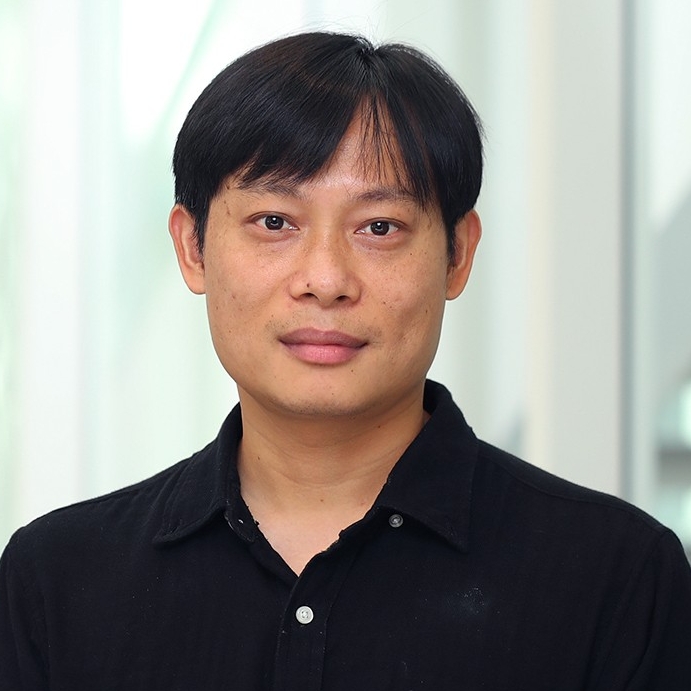
Zhanwei Wang is an Unpaid employee at the Department of Applied Mechanics and the Federated labs AI and Robotics at Vrije Universiteit Brussel. His research focuses on soft robotics, self-healing materials, fluid dynamics, and vacuum technology. He holds a PhD in Mechanical Engineering from VUB (2024), focusing on encoding physical intelligence into soft robotics via smart materials and continuum mechanics. Prior degrees include a Master's in Chemical Process Equipment (Northeastern University, China, 2020) and a Bachelor's in Process Equipment and Control Engineering (Northeastern University, China, 2017). His work emphasizes interdisciplinary innovation in robotics, sustainability, and material science. Key Research Areas: Self-healing robots, 3D printing for robotics, fluid dynamics in soft systems. Recent Collaborations: Peer reviews for Sensors Journal, IEEE Robotics & Automation Letters, and the 2025 IEEE/RSJ IROS conference. His publications explore adaptive robotic systems, sensor integration, and sustainable material solutions. He participated in the IMEC ITF World 2024 conference and contributed to media discussions on self-locking suction cups for robots.
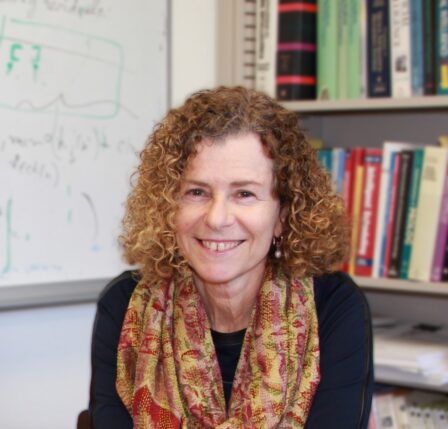
Michele Zorzi is a Professor of Telecommunications at the School of Engineering, University of Padova, Italy, where he has held a faculty position since 2003. He leads the SIGNET (Signal processing and Networking) Research Group, focusing on cutting-edge wireless networking challenges including mmWave communications and underwater networks. His extensive publication record exceeds 600 papers in top-tier journals and conferences, reflecting significant contributions to the field through both theoretical and experimental work. He received his Laurea Degree (1990) and Ph.D. (1994) in Electrical Engineering from the University of Padova. Prior academic appointments include Politecnico di Milano (1993-1996), University of California San Diego (1995-1998), and University of Ferrara (1998-2003), where he progressed from Associate Professor to full Professor. His educational trajectory demonstrates deep roots in Italian academia with international exposure. Professor Zorzi's research spans wireless communications and networking, with current emphases on mmWave networking for vehicular systems, underwater acoustic/optical communications, non-terrestrial networks, and AI-driven networking solutions. His group conducts experimental validations including at-sea trials for underwater systems and testbeds for vehicular networks. Key projects include PRATA for predictive QoS in autonomous driving and IoT-based environmental monitoring of the Venice Lagoon, demonstrating practical applications of theoretical work. Analysis of his 2022-2025 publications reveals strong trends in applying artificial intelligence to networking challenges across diverse environments. There is significant emphasis on vehicular networks (predictive QoS, teleoperated driving), underwater systems (acoustic/optical communications, AUV swarms), and satellite networks (Starlink integration, NTN security). Experimental validation in real-world scenarios like the Venice Lagoon monitoring project and underwater sea trials characterizes his applied research approach. His scientific accolades include: IEEE Fellow (2007) IEEE Communications Society Best Tutorial Paper Award (2008, 2019) Stephen O. Rice Best Paper Award (2018) Multiple best paper awards at IEEE conferences (2005-2020) As principal investigator for numerous European and US research projects plus 20+ industry-funded initiatives, Professor Zorzi has mentored over 35 PhD students and post-docs. Graduates now hold prominent positions at institutions including Stanford, UCSD, CTTC, and Huawei. His SIGNET group maintains active international collaborations and contributes to open-source networking tools via GitHub, demonstrating commitment to community engagement. The SIGNET Research Group, housed within the Department of Information Engineering, operates specialized experimental facilities for mmWave and underwater communications. Current initiatives include AI-based predictive QoS frameworks for vehicular networks, underwater optical communication systems using ultraviolet light, and large-scale IoT deployments for environmental monitoring. The group's GitHub presence indicates strong open-science practices, while recent sea trials confirm hands-on experimental capabilities beyond theoretical work.
Sumeet Kumar Gupta is an Associate Professor in the Department of Electrical and Computer Engineering at Purdue University. His academic career spans from his current role to a prior Assistant Professorship at Pennsylvania State University (2014-2017) and an engineering position at Qualcomm Inc. (2012-2014). He holds a PhD in Electrical and Computer Engineering from Purdue University (2012), an M.S. from the same institution (2008), and a B.Tech in Electrical Engineering from IIT Delhi (2006). B.Tech, Electrical Engineering, IIT Delhi (2006) M.S., Electrical and Computer Engineering, Purdue University (2008) PhD, Electrical and Computer Engineering, Purdue University (2012) Dr. Gupta's research focuses on neuromorphic computing, low power variation-aware VLSI design in emerging nanotechnologies, device-circuit co-design, and nano-scale device modeling/simulations. His work addresses challenges in ferroelectric materials, crossbar arrays for deep neural networks, and energy-efficient AI hardware. Recent publications (2025-2024) highlight trends in: Ferroelectric HfO2/HZO thin films Compute-in-memory architectures Variability/stochasticity analysis Machine learning for device optimization Interconnect resistance/temperature effects AI hardware fault tolerance Scientific Awards & Recognitions: DARPA Young Faculty Award (2016) Early Career Professorship, Penn State (2014) 6th TSMC Outstanding Student Research Bronze Award (2012) Magoon Award (Purdue) Outstanding Teaching Assistant Award (Purdue, 2007) Intel PhD Fellowship (2009) His professional journey includes academic appointments at Purdue University (2020-present, Associate Professor) and Pennsylvania State University (2014-2017, Assistant Professor) after industry experience at Qualcomm Inc. (2012-2014). He maintains IEEE and EDS membership while publishing over 100 refereed works.
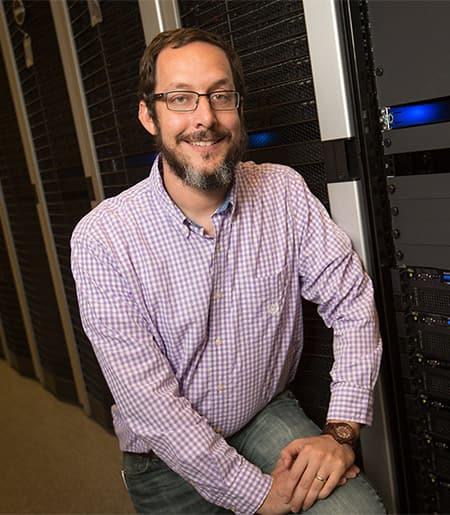
Amr Youssef is a Professor at the Concordia Institute for Information Systems Engineering, Concordia University. His research focuses on applied cryptography, network security, cyber-physical systems security, blockchain, and privacy. He has contributed extensively to securing smart grids, IoT devices, and web applications through cryptographic protocols and machine learning-driven solutions. His work addresses critical challenges in cybersecurity, including e-voting systems, fault-tolerant differential protection, and privacy-preserving communication protocols. He explores vulnerabilities in modern systems such as SSO permissions, JavaScript exploits, and stalkerware tools, while developing frameworks like MEGR-APT for APT detection and TEE-Receipt for non-repudiation. Youssef’s research integrates interdisciplinary approaches, combining cryptography with AI (e.g., vision transformers for power quality analysis) and leveraging trusted execution environments (TEE) for secure computing. His projects often involve collaboration with industrial standards (e.g., IEC 61850), emphasizing practical implementations in real-world systems.
Joan Bruna is a Full Professor of Computer Science, Data Science, and affiliated Mathematics at New York University's Courant Institute and Center for Data Science. He leads the CILVR group and co-founded the MaD group. His research focuses on mathematical foundations of machine learning, deep learning, signal processing, and their applications in computational science, climate modeling, and geophysics. He holds a Ph.D. in Applied Mathematics from École Polytechnique and has held roles at UC Berkeley, the Institute for Advanced Study, and the Flatiron Institute. Education: Ph.D. (2013) and M.Sc. (2005) in Applied Mathematics, École Polytechnique and ENS Cachan; dual B.Sc./M.Sc. in Telecommunications and Mathematics from UPC Barcelona (2002–2004). Awards include the NSF CAREER Award (2019) and Alfred P. Sloan Fellowship (2018). Research interests span theoretical aspects of deep learning, optimization, and statistical methods, with applications to climate science and inverse problems. He has advised numerous PhD students and postdocs, contributing to seminal work on scattering networks, geometric deep learning, and neural ODEs. Professional service includes editorial roles at TMLR, JMLR, and TPAMI, plus program chairs for major conferences. His work bridges mathematics and machine learning, emphasizing rigorous analysis and real-world impact.
Andrew M. Stuart is a Professor at the California Institute of Technology's Division of Engineering and Applied Science. His research bridges computational mathematics, machine learning, and physical modeling, focusing on inverse problems, partial differential equations, and multiscale systems. He has pioneered methodologies integrating Gaussian processes, Kalman inversion, and neural operators for scientific computing. His recent publications highlight innovations in competitive protein dimerization networks, nonlinear Bayesian inference, and operator learning. Articles span applications in materials science, geophysics, and biochemical signal processing, emphasizing data-driven discovery of differential equations and scalable algorithms for high-dimensional problems. Stuart's work addresses challenges in structural error modeling, uncertainty quantification, and graph-based learning, with implications for climate modeling and dynamical systems. Despite extensive contributions, the scraped data does not specify students, awards, or contact details.
Dana Anderson is a Professor of Physics and JILA Fellow at the University of Colorado Boulder. He holds dual affiliations with the Department of Physics and JILA, a joint institute between the University of Colorado Boulder and the National Institute of Standards and Technology (NIST). His research focuses on ultracold atoms, quantum computing, and atomtronics, with applications in quantum sensing and space-based experiments. He currently serves as Chief Strategy Officer (CSO) of Infleqtion (formerly ColdQuanta), a quantum technology company he co-founded. Anderson is a principal investigator in the Quantum Pathways Institute, a NASA-funded initiative to develop quantum-based Earth-sensing technologies. He collaborates with institutions like NIST, JPL, and ColdQuanta on projects such as the Cold Atom Laboratory (CAL) for space-based ultracold atom research. His work has been recognized by TIME Magazine and led to significant grants, including a $15M NASA award for quantum space research. Research interests include atomtronics (hybrid atom-electronics systems), neutral atom quantum computing, and ultracold atom gyroscopes. His group develops novel atom chip technologies, such as window atom chips enabling high-resolution imaging, and explores applications like matterwave transistors and quantum inertial sensors. Current projects include shaken lattice interferometry for navigation and Rydberg atom-based microwave sensors. Anderson has pioneered concepts like the matterwave transistor oscillator and contributed to the first neutral atom quantum computing arrays. His work bridges fundamental physics and applied technologies, with a focus on translating quantum phenomena into practical devices. He actively mentors students and postdocs in experimental atomic physics and quantum engineering.
Yi Fang is an Associate Professor of Computer Engineering and an affiliated Associate Professor of Computer Science at New York University Abu Dhabi (NYUAD), and a Global Network Associate Professor at NYU Tandon. He is a core faculty member in the Division of Engineering, specializing in Electrical and Computer Engineering. His research is centered at the intersection of Embodied AI, Robotics, and AI-driven assistive technologies, with strong support from agencies such as the US NSF, UAE ADEK, and ASPIRE. PhD, Purdue University Yi Fang's research interests span 3D Computer Vision, Multimedia Processing, Machine Learning, Deep Learning, and Embodied AI . He focuses on AI-driven perception, learning, and real-world applications, particularly in engineering, medicine, and accessibility. His lab, the Embodied AI and Robotics (AIR) Lab, develops intelligent robotic systems that integrate perception, learning, and decision-making to solve complex societal challenges. His work emphasizes large-scale visual computing, deep visual learning, and cross-domain/multimodal foundation models , with recent innovations in assistive AI for the Deaf and Hard-of-Hearing community. The 15 most recent publications reflect a consistent focus on 3D vision, sketch-based 3D retrieval, point cloud learning, and assistive computer vision . His work leverages deep learning, adversarial training, metric learning, and generative models to bridge modalities such as sketches, depth images, and 3D models. There is a clear trend toward cross-modal understanding, unsupervised representation learning, and real-world assistive applications , especially for visually impaired individuals. Yi Fang actively contributes to the academic community as an Area Chair for top-tier conferences including CVPR, ECCV, ICCV, IJCAI, and IROS. He also serves in peer review and mentoring roles, shaping the future of AI and robotics research. As a dedicated educator, he teaches foundational and advanced courses such as Computer Vision, Applied Machine Learning, Data Structures, and Capstone Design . He mentors students through research seminars and honors projects, fostering innovation and technical excellence. His research is supported by major grants from US NSF, UAE ADEK, and ASPIRE, enabling high-impact interdisciplinary collaborations. He founded and directs the Embodied AI and Robotics (AIR) Lab at NYU Abu Dhabi, a dedicated research space for developing intelligent systems that seamlessly integrate perception, learning, and decision-making. The lab promotes interdisciplinary collaboration across engineering, medicine, and social sciences, advancing the frontiers of Embodied AI.
Marcia O’Malley is the Thomas Michael Panos Family Professor in Mechanical Engineering, Computer Science, Electrical and Computer Engineering, and Bioengineering at Rice University’s George R. Brown School of Engineering. She chairs the Department of Mechanical Engineering and directs the Mechatronics and Haptic Interfaces (MAHI) Lab. Her research focuses on haptics and robotic rehabilitation, particularly wearable robotic systems for training and rehabilitation in virtual environments. She holds adjunct roles at Baylor College of Medicine and the University of Texas Medical School. Educated at Purdue University (B.S., 1996) and Vanderbilt University (M.S./Ph.D., 1999/2001), Dr. O’Malley has been recognized with prestigious awards, including the ONR Young Investigator Award, NSF CAREER Award, and multiple fellowships. She has twice won Rice’s George R. Brown Award for Superior Teaching. Her work bridges engineering and medicine, addressing human-robot interaction challenges in surgical training, workforce safety, and neurorehabilitation. The MAHI Lab develops devices like the hBracelet and Rice Haptic Rocker to enhance human-robot collaboration. She co-founded Houston Medical Robotics, Inc., applying her innovations to real-world medical applications. Research Interests: Haptics, wearable robotics, neural interfaces, surgical training metrics, and rehabilitation robotics. Labs/Teams: MAHI Lab (Biosciences Research Collaborative), collaborations with medical institutions. Grants/Awards: Extensive funding from NSF, ONR, and industry partnerships; leadership in editorial roles for IEEE Transactions on Haptics.
Rina Dechter is a Professor of Computer Science at the University of California, Irvine (UCI), affiliated with the Donald Bren School of Information and Computer Sciences (ICS). She specializes in automated reasoning, probabilistic and constraint-based graphical models, and causal inference. Dechter has held leadership roles, including Co-Editor-in-Chief of Artificial Intelligence since 2011 and editorial board memberships in journals such as the Constraint Journal and Journal of Machine Learning Research . Education : Ph.D., Computer Science, University of California, Los Angeles (UCLA) M.S., Applied Mathematics, Weizmann Institute B.S., Mathematics and Statistics, Hebrew University of Jerusalem Research Interests : Dechter’s work focuses on computational aspects of automated reasoning, constraint processing, probabilistic reasoning, and causal inference. She develops efficient algorithms for graphical models, emphasizing tractable reasoning tasks and anytime search strategies. Her recent projects include causal decision-making frameworks funded by a $5M NSF grant. Awards : Presidential Young Investigator Award (1991) AAAI Fellow (1994) ACP Research Excellence Award (2007) ACM Fellow (2013) Elected to the American Academy of Arts & Sciences (2025) Grants & Collaborations : She leads a multi-institutional NSF-funded project on causal foundations of AI decision-making. Her work emphasizes trustworthiness in AI through causal models, with applications in robotics and public health.
Jonathan Klamkin is a Professor in the Department of Electrical and Computer Engineering at the University of California, Santa Barbara (UCSB). He also serves as the Director of the Nanofabrication Facility, overseeing advanced photonics fabrication resources. His research focuses on integrated photonics, silicon photonics, optical communications, and compound semiconductor integration. Klamkin holds a PhD in Materials from UCSB, an MS in Electrical and Computer Engineering from UCSB, and a BS in Electrical and Computer Engineering from Cornell University. His research interests span cutting-edge areas such as electronic-photonic integration, nanophotonics, and microwave photonics. He has pioneered techniques for heterogeneous integration of compound semiconductors on silicon, enabling scalable photonic systems for applications in LiDAR, high-speed communications, and quantum technologies. Notable awards include the DARPA Young Investigator Award, NASA Early Career Faculty Award, and the PIERS Young Scientist Award. His recent work emphasizes beam steering systems, high-power quantum dot lasers, and photonic integrated circuits for remote sensing and lidar. Klamkin’s lab develops both fundamental materials science and applied photonic devices, with a focus on bridging the gap between semiconductor growth and integrated system design. Key contributions include innovations in grating coupler design, antiphase boundary-free epitaxy for GaAs on silicon, and analog coherent detection for energy-efficient data centers. His research bridges photonics, electronics, and materials science to address challenges in high-performance integrated systems.
BONILLA MANRIQUE, OSCAR ELIAS is an Assistant Professor at Carlos III University of Madrid. His affiliation is listed under the Torres Quevedo building (Leganés campus), office 4.0.F21. Contact details include the email oscarelias.bonilla@uc3m.es and phone number 916248398. Research interests are associated with the Grupo Universitario de Tecnologías de Identificación (GUTI), focusing on identification technologies, computer science applications, and engineering solutions. Specific areas include data security, signal processing, and applied mathematics methodologies. His professional activities include participation in research projects and co-authorship networks, though specific publications or grants are not detailed in the provided information. He is part of the university’s research portal infrastructure, indicating active involvement in academic collaboration and knowledge transfer initiatives. Laboratory/team affiliation: Member of GUTI (Grupo Universitario de Tecnologías de Identificación).
John Paisley is an Associate Professor of Electrical Engineering at Columbia University's Fu Foundation School of Engineering and Applied Science, and a member of Columbia's Data Science Institute (DSI). He holds a B.S., M.S., and Ph.D. in Electrical and Computer Engineering from Duke University (2004-2010), followed by postdoctoral research in Computer Science at Princeton University and UC Berkeley. His research focuses on Bayesian models, posterior inference techniques for Big Data, and applications in data analysis, recommendation systems, information retrieval, and compressed sensing. He has pioneered methods like Bayesian Gaussian Process ODEs and Double Normalizing Flows, with recent work emphasizing uncertainty quantification in environmental modeling and neuroimaging analysis. His collaborative workflows (e.g., bneR ) address air pollution exposure and PM2.5 concentration uncertainties, combining Bayesian nonparametric ensembles with geospatial data. He has also developed frameworks for neural network interpretability, image denoising, and compressed sensing MRI. Paisley's work bridges statistical theory and applied machine learning, with applications in healthcare, environmental science, and geophysics. His academic contributions include over 50 publications since 2016, spanning topics like deep metric learning, adversarial learning, and variational inference optimization. He maintains an active research group and serves on editorial boards for machine learning and signal processing journals.
David Bindel is an Associate Professor in the Department of Mathematics at Cornell University, affiliated with the College of Arts and Sciences, College of Engineering, and Cornell Ann S. Bowers College of Computing and Information Science. He earned his Ph.D. in Mathematics from the University of California, Berkeley in 2006. His research focuses on applied numerical linear algebra, eigenvalue problems, and their applications in plasma physics, network analysis, and nonlinear systems. He develops methods for analyzing complex systems, including magnetic confinement in stellarators, stability of MHD systems, and community detection in networks. His work bridges theoretical foundations with practical computational tools, such as formal verification of linear algebra algorithms and scalable Gaussian process models. Bindel’s research explores the interplay between structure and computation, leveraging eigenvalue analysis to address challenges in computer vision, opinion dynamics, and engineering design. He has contributed to advancements in numerical methods for large-scale systems, including iterative solvers, spectral approximation techniques, and stochastic optimization. His interdisciplinary approach spans applied mathematics, computer science, and physics, with applications in fusion energy, machine learning, and network science. Recent work highlights include high-order expansions for magnetic confinement, adaptive filtering for dynamical systems, and Bayesian optimization strategies. His publications emphasize rigorous analysis alongside computational scalability, addressing both theoretical and practical aspects of modern scientific computing. Despite no explicitly listed awards, his contributions reflect significant impact in his fields.
Jeffrey Schall is a Full Professor of Biology and Program Director of the Visual Neurophysiology Centre at York University. He holds the Canada Research Chair in Translating Neuroscience. His research focuses on neural mechanisms underlying behavior, integrating neurophysiological and computational approaches across multiple scales. Schall is a core member of the Centre for Vision Research and the Canada First Research Excellence Fund Connected Minds initiative. Education: PhD in Anatomy (University of Utah School of Medicine, 1986), postdoctoral training at MIT. Awards include the Troland Research Award, Sloan Foundation Fellowship, and AAAS Fellowship. He served as Vision Science Society President in 2019. Research interests include visual attention, executive control, error monitoring, and translational neuroscience applications in law. His work bridges basic science with applied studies in clinical populations like schizophrenia patients. Collaborative projects involve EEG/MEG analysis, cortical microcircuitry modeling, and neuromodulation techniques. Teaching: YU_NRSC 2100 Systems, Behavioral, and Cognitive Neuroscience. Active in interdisciplinary initiatives linking neuroscience with legal systems through scholarship and policy engagement.