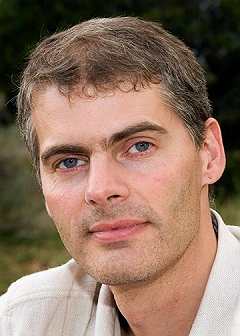
Professor Chatziantoniou Damianos holds a position at the Athens University of Economics and Business (AUEB) within the Department of Management Science and Technology (DMST), School of Business. He earned a B.Sc. in Applied Mathematics from the National & Kapodistrian University of Athens (1991), M.Sc. from New York University's Courant Institute of Mathematical Sciences, and a Ph.D. from Columbia University. His research focuses on big data systems, business intelligence, query processing, and real-time data analysis, with contributions influencing commercial database systems like Microsoft SQL Server and Oracle. As Director of AUEB's Master’s program in Business Analytics and Big Data, he previously served as an Assistant Professor at Stevens Institute of Technology (1997–1999). His industry collaborations include co-founding Panakea Software and VoiceWeb SA, and consulting roles at Aster Data Systems (now Teradata). He leads big data projects for companies like Cosmote, Piraeus Bank, and HEDNO. His research has been published in top venues including VLDB, ICDE, and SIGMOD, emphasizing practical applications in large-scale analytics and OLAP systems. He advises on strategic partnerships for the MSc program and maintains an active role in academic administration, including steering committees and quality assurance initiatives.
Benjamin C. Pierce serves as the Henry Salvatori Professor of Computer and Information Science in the School of Engineering and Applied Science at the University of Pennsylvania. He is a Fellow of the ACM with extensive editorial experience, having served as co-Editor in Chief of the Journal of Functional Programming and Managing Editor for Logical Methods in Computer Science. His research spans programming languages, type systems, language-based security, formal verification, differential privacy, and synchronization technologies. Pierce is renowned for developing foundational frameworks in bidirectional transformations (lenses), property-based testing, and differential privacy verification. His work bridges theoretical computer science with practical implementation, particularly evident in his development of the Unison file synchronizer and the Clowdr virtual conference platform. The trends in his recent publications reveal a sustained focus on verification techniques for privacy-preserving systems, particularly differential privacy, alongside continued innovation in bidirectional data transformations and property-based testing methodologies. His work increasingly integrates formal verification with practical implementation concerns. Fellow of the ACM Pierce has mentored numerous researchers through PLMW (Programming Languages Mentoring Workshop) events and has served on numerous program committees for major conferences including POPL, PLDI, and ICFP. His editorial work has significantly shaped the programming languages research community through his leadership roles in key journals. He leads development of the Unison file synchronizer, a cross-platform tool used worldwide, and co-developed the Clowdr virtual conference platform that gained prominence during the pandemic. His work demonstrates a consistent pattern of creating practical tools grounded in deep theoretical foundations.
Isambo Karali is an Assistant Professor in the Department of Informatics and Telecommunications at the National and Kapodistrian University of Athens, a position she has held since November 2007. Prior to this, she served as a Lecturer at the same department from September 1999 to November 2007. Her academic career spans over three decades with significant contributions to knowledge representation, uncertainty reasoning, and semantic web technologies. Dr. Karali's educational background includes: PhD in Informatics (1995) from the University of Athens MSc in Computer Science (1988) from University College, University of London Bachelor of Mathematics (1986) from the Department of Mathematics, University of Athens Dr. Karali's research focuses on Knowledge Representation and Reasoning with Uncertainty, Artificial Intelligence, Logic Programming, and Object-Oriented Programming. She has made significant contributions to applying Dempster-Shafer theory for handling uncertainty in Semantic Web applications. Her work bridges theoretical foundations of logic programming with practical applications in knowledge representation, particularly in distributed and heterogeneous environments. She has supervised numerous PhD and master's theses in these areas. Her recent publications demonstrate a strong trend toward integrating uncertainty reasoning with Semantic Web technologies, particularly using Dempster-Shafer theory and fuzzy logic. Her work addresses challenges in managing imprecise and uncertain information in large-scale knowledge systems, with applications in recommendation systems, news analysis, and semantic search. The interdisciplinary nature of her research connects artificial intelligence, knowledge representation, and web technologies to solve complex information management problems. Dr. Karali has been actively involved in research funding and collaboration: Principal Investigator for "Handling uncertainty in data intensive applications on a distributed computing environment (cloud computing)" under the "Thalis" Program Scientific Responsible for "Artificial Intelligence and Logic Programming Techniques for Knowledge on the World Wide Web" at the National and Kapodistrian University of Athens Scientific Responsible for "Semantic Web and Logic Programming - Application to Guided Search" at the National and Kapodistrian University of Athens Participant in multiple EU research projects including MISSION, COSMOS, ADDSIA, PARACHUTE, APPLAUSE, and EDS As an educator, Dr. Karali has taught core undergraduate courses including Object-Oriented Programming and Logic Programming, as well as graduate courses on Knowledge Technologies and Artificial Intelligence. She has supervised numerous PhD and master's students, with a focus on uncertainty reasoning, semantic web technologies, and logic programming applications. Her mentorship extends to student competitions, including guiding the Department's team in the Microsoft ImagineCup 2009. Dr. Karali has also contributed to the academic community through service activities, including membership on program committees for conferences like IEEE ICTAI, reviewer for prestigious journals, and organizational roles in academic events. From 2000 to 2012, she was responsible for the Department's website, contributing to its architecture design and system development.
Kleopatra Kontouli serves as a Lecturer at the Centre for Foreign Language Teaching, Aristotle University of Thessaloniki, instructing English language courses across multiple departments including Pharmacy, Film Studies, German Language and Literature, French Language and Literature, and Economics. Her academic credentials include: BA in English Language and Literature, Aristotle University of Thessaloniki (1989) MA in English, Kent State University (1991) PhD in English, Kent State University (1996) with specialization in 20th century British Literature, Linguistics, and 20th century American Literature Her research centers on Applied Linguistics and English Language Teaching methodology, particularly examining language acquisition in professional economic contexts. This focus is evident in her 2009 publication analyzing socio-economic dimensions of language training. She maintains scholarly interest in 20th century literary traditions while prioritizing practical language education for diverse academic disciplines. Her publication record demonstrates consistent engagement with language pedagogy frameworks, though recent scholarly output appears concentrated in teaching rather than new research outputs. Current academic activities remain focused on delivering language instruction across AUTH's multidisciplinary programs.
Angelos Charalambidis is an Assistant Professor at Harokopio University, affiliated with the Department of Informatics and Telematics. His academic and professional engagements focus on theoretical and applied aspects of computational logic and programming languages. Education: B.S. in Informatics, University of Athens (2005) M.S. in Computer Systems, University of Athens (2008) Ph.D. in Higher-Order Logic Programming, University of Athens (2014) His research interests include declarative programming languages, computational logic, and reasoning techniques, contributing to the broader field of Programming Languages and Software Systems. He has also explored applications in knowledge representation, preference modeling, and cloud-native systems. The trends in Angelos Charalambidis's publications highlight advancements in logic programming, including higher-order logic, fixpoint theory, ordered disjunction, and federated query processing. His work bridges theoretical foundations with practical implementations in formal methods and computational logic.
Associate Professor Ioannis Ispirilidis holds a PhD from the Democritus University of Thrace and specializes in football coaching and sports training theory. He teaches courses such as N411, N415, and N414 in the fall semester, and N412, N413 in the spring. His research focuses on soccer training methodologies, injury prevention, and performance optimization in athletes. His work includes studies on muscular imbalances, inflammatory responses post-soccer games, and flexibility training using Pilates. He has authored/co-authored over 15 peer-reviewed articles since 2003, covering topics like proprioception training, anaerobic performance recovery, and aerobic capacity effects. His career includes coaching certifications from German and UEFA federations, and he maintains expertise in German, Italian, and Spanish languages. Education: PhD (2003, Democritus University), Postgraduate Diploma (1987, Cologne Sports School), BSc (1982, Aristotle University) Coaching Licenses: UEFA PRO (2007), German A-Lizenz (1990), B-Lizenz (1983) Research highlights include pioneering studies on isokinetic training for soccer players and the acute effects of warm-up protocols. His lab (TRAINING) focuses on applied sports science with collaborations across European institutions. No awards are explicitly listed, but his extensive publication record indicates sustained academic contribution.
Eleni Karantzola is a Professor of Linguistics at the Department of Mediterranean Studies (Archaeology, Linguistics, International Relations) at the University of the Aegean, part of the School of Humanities. She has held leadership roles including President of the Department (2010–2012), Director of the Southeast Mediterranean Linguistics Laboratory (since 2008), and Secretary General of Lifelong Learning at the Ministry of Education (2012–2013). Her research focuses on Early Modern Greek (16th–17th centuries), language contact, writing systems, language policy, and adult education. Education: Bachelor’s in Philology and Linguistics at Aristotle University of Thessaloniki Postgraduate studies in Sociology of Communication (Paris VII) and Speech Sciences (École des Hautes Études en Sciences Sociales) PhD with a three-year Onassis Foundation scholarship Her work bridges historical linguistics and sociopolitical contexts, emphasizing language standardization, literacy networks, and multilingual education. She has coordinated curriculum committees, managed e-learning initiatives, and led collaborative projects like the UNESCO-supported Literacy Network and study groups on Early Modern Greek. She contributed to national and EU programs (EPEAEK, NSRF, Reprise, Modeval) addressing language education and policy. Her publications span monographs, edited volumes (e.g., Language – Education – Society series), and journals like Journal of Pragmatics and Journal of Greek Linguistics , focusing on language change, sociolinguistic factors, and educational policies.
Dominik Helm serves as an interim professor at the University of Duisburg-Essen and is a researcher at the Software Technology Group, Technical University of Darmstadt since 2018. He holds a Dr.-Ing. degree and serves as the lead maintainer of the OPAL static analysis framework. Helm is also affiliated with ATHENE (National Research Center for Applied Cybersecurity) and CRISP, where he contributes to cybersecurity research focusing on 'Security at Large' for comprehensive systems. Dr. Helm's research centers on modularization and automatic parallelization of collaborative static analyses to improve precision, soundness, and performance. His work specifically targets the OPAL framework for Java VM bytecode, with expertise spanning purity and immutability analyses, modular call graphs, and bug/security vulnerability detection. His research bridges theoretical foundations with practical implementation, addressing real-world challenges in static analysis. His publication record shows consistent contributions to top-tier conferences (PLDI, ISSTA, ESEC/FSE, ASE) with recent work focusing on cross-language analysis, modular call graph algorithms, and evaluation of static analysis precision. Helm has demonstrated particular interest in making static analysis more practical through modularity and parallelization. As an educator, Helm teaches courses including Software Engineering, Type Systems, Quality Assurance, and Program Analysis at the University of Duisburg-Essen. He has supervised multiple student teams through bachelor and master projects, guiding research on call graphs for dynamic languages, IDE solvers, alias analysis, and immutability analysis. Dr. Helm actively contributes to the academic community through program committee service for ICSE, ISSTA, ASE, and other major conferences. His work with the OPAL framework represents a significant contribution to the static analysis community, providing a platform for developing and composing modular analyses for Java bytecode processing and analysis.
Michalis Vazirgiannis is a Professor in the Department of Informatics at the Athens University of Economics and Business (AUEB), specializing in data mining and machine learning with applications in web and social network analysis. His work bridges theoretical algorithms and real-world scalability challenges. Education: Bachelor Degree in Informatics, National and Kapodistrian University of Athens, 1986 Master (M.Sc.) in Robotics, National and Kapodistrian University of Athens, 1988 Master (M.Sc.) in Knowledge Based Systems, Heriot Watt University, Edinburgh, 1989 Ph.D. in Informatics, National and Kapodistrian University of Athens, 1994 Research Focus: Professor Vazirgiannis pioneers clustering algorithms with subjective/objective validation, distributed feature selection for evolving graphs, and temporal link analysis for dynamic page ranking. His research addresses critical gaps in semi-supervised learning for large-scale web and social networks, emphasizing dimensionality reduction and ranking predictability in temporal contexts. Publication Trends: His 2007-dominated publications reveal a strategic shift toward graph-based web mining, with recurring themes of distributed processing (P2P similarity search), clustering validity frameworks, and semantic web personalization. The work consistently targets scalability bottlenecks in real-world network data. Scientific Recognition: ERCIM Post-doctoral Scholarship (2001) Marie Curie European Scholarship (2006) Leadership & Collaboration: As ERASMUS coordinator for AUEB's Informatics Department and editorial board member of Intelligent Data Analysis journal, he bridges academia and industry. His EU project leadership (FP6 SQO-OSS, Marie Curie NGWeMiS) and program committee roles (IEEE/ICDM 2008, ECML/PKDD 2008) highlight his influence in data mining standardization. International collaborations span INRIA, Fraunhofer, Max Planck, and IBM Research. Technical Innovation: His patent contributions and invited lectures at ECML/PKDD 2006/SIAM/SDM 2006 demonstrate applied impact, particularly in web personalization engines (SEWeP) and evolving graph analytics.
Konstantinos Limniotis is an ICT Specialist at the Hellenic Data Protection Authority since 2009 and an active academic teaching at multiple Greek and Cypriot universities. He is currently teaching 'Network and Telecommunications Systems Security' at the University of Athens, 'Cryptography' and 'Security risk management' at the Open University of Cyprus, and has previously taught at the University of Peloponnese, Harokopio University of Athens, and Technological Educational Institutes. Since 2022, he is a member of ENISA's Ad Hoc Working Group on Data Protection Engineering. Dr. Limniotis received his B.Sc. in computer science (1999), M.Sc. in communications systems and networks (2002), and Ph.D. in 'Signal Processing Techniques in Cryptography' (2007) from the Department of Informatics and Telecommunications at the National and Kapodistrian University of Athens, under the supervision of Professor N. Kalouptsidis. His research focuses on the intersection of cryptography, security, and data protection. Dr. Limniotis has made significant contributions to cryptographic Boolean functions, particularly in algebraic immunity properties, and has extended his expertise to practical applications in data protection and privacy. His work bridges theoretical cryptography with real-world applications in personal data protection, particularly in the context of GDPR compliance. Recent research directions include post-quantum cryptography, blockchain security, and privacy-enhancing technologies for emerging applications like AI systems and IoT ecosystems. His publications demonstrate a clear trajectory from theoretical cryptographic research to applied security and privacy solutions that address contemporary regulatory and technological challenges. Dr. Limniotis has received multiple 'Excellence in Teaching' Awards from the Open University of Cyprus (2019-2023), recognizing his contributions to cybersecurity education. His teaching spans graduate programs in Computer and Network Security, Telecommunications Systems, and Data Science. As an active contributor to data protection policy, Dr. Limniotis has participated in multiple ENISA reports on pseudonymization techniques, data protection engineering, and personal data sharing. His work with the Hellenic Data Protection Authority since 2009 demonstrates a strong commitment to bridging academic research with practical data protection implementation.
Markodimitraki Maria is an Associate Professor at the University of Crete, specializing in developmental psychology with a focus on twin studies, autism spectrum disorders, and parent-infant interactions. Her work bridges theoretical and applied research in early childhood development. Education : PhD (2003), BSc (1992) Research Interests : Her scholarship explores emotional coordination in twin interactions, imitation in preschoolers, and the impact of physical difficulties on parental perceptions. She investigates parental speech patterns and the effects of family dynamics on child development. Scientific Awards : No specific awards mentioned in available records. Advising & Grants : No direct student advisement records found. Collaborates extensively on research projects related to developmental psychology and special education.
Lamprini Seremeti is an Assistant Professor at the Department of Agricultural Economics & Rural Development, School of Applied Economics and Social Science, Agricultural University of Athens (2013–present). She also served as Collaborative Academic Staff at the same university since 2019. Her expertise spans computer science, mathematics, law, and education, with a focus on inclusive education, ambient intelligent systems, and knowledge management through ontologies. Educations: PhD in Computer Science (Hellenic Open University), focusing on knowledge propagation in ontology networks. Master in Special Education (University of Rome). Master in Pure Mathematics (University of Patras). Bachelor in Mathematics (University of Patras). Bachelor in Informatics (University of Western Greece). Bachelor in Law (University of Nicosia). Research & Projects: She has contributed to EU-funded projects involving mathematical modeling, data processing, and conceptualization in socio-economic, educational, biomedical, and ambient intelligent environments. Her work includes over 14 peer-reviewed journal articles, 5 book chapters, and 30 conference presentations. Teaching: She has taught at universities since 2005, covering programming (Python, computer science fundamentals), statistics, calculus, algebra, and informatics in pedagogy. Earlier, she was a schoolteacher for Informatics, Mathematics, and Special Education in primary/secondary schools (2001–present).
Ronghui Gu is the inaugural Tang Family Associate Professor of Computer Science at Columbia University's Fu Foundation School of Engineering and Applied Science. He leads a research group focused on building verified systems software and serves on program committees for major conferences including PLDI, POPL, OSDI, and SOSP. His educational background includes: Ph.D. in Computer Science from Yale University (2016), where he received the Distinguished Dissertation Award B.S. in Computer Science from Tsinghua University (2011), graduating with Highest Distinction (3 out of 140) Gu's research centers on certified software systems, spanning programming language design, OS kernel development, formal semantics, compiler development, proof engineering, and concurrency. His work bridges theoretical foundations with practical systems, particularly in the areas of formal verification for operating systems, distributed protocols, and quantum computing. He has pioneered approaches that combine formal methods with machine learning techniques to automate verification tasks that were previously intractable. Analysis of his publication record shows a clear trajectory from foundational work on verified operating systems (CertiKOS, mCertiKOS) to broader applications in distributed systems (DistAI, DuoAI), quantum computing (Gleipnir, Giallar, HyperQ), and blockchain security. His recent work increasingly focuses on automation techniques that make formal verification practical for real-world systems. His notable achievements include: OSDI Jay Lepreau Best Paper Award (2021) SOSP Best Paper Award (2019) Multiple Amazon Research Awards (2021-2025) NSF CAREER Award (2023) VMware Systems Research Award (2023) CACM Research Highlight Gu has secured substantial research funding including a $4.5 million DARPA grant for Verified Enclave Layers. He has advised numerous PhD students who have gone on to positions at top institutions and companies. As founder of CertiK, a Web3 cybersecurity unicorn valued at $2 billion, he has successfully translated academic research into real-world impact, securing over $300 billion in cryptocurrency assets. His lab maintains active collaborations with industry partners including VMware, AWS, Google, and quantum computing companies, focusing on making formal verification practical for critical systems.
Martin Bodin is a Researcher at Inria in Grenoble, France, where he is a member of the Spades team. Previously, he completed a PhD at Inria Rennes and held postdoctoral positions at the Center for Mathematical Modeling (CMM) in Santiago de Chile and at Imperial College London in the Verified Trustworthy Software Specification research group. Dr. Bodin's research focuses on programming languages design, formalizations, and analyses. He specializes in applying formal methods to real-world programming languages using the Coq/Rocq proof assistant. His work addresses the challenge of formalizing complex languages with many special behaviors that can lead to serious programming mistakes. He believes formal methods can help programmers detect and avoid these mistakes. His research has resulted in formalizations of widely used programming languages including JavaScript, R, and WebAssembly. Notably, his formalizations of JavaScript and R are among the largest in the field. To manage this complexity, he helped design "skeletons," a formalism to express and derive formally-proven program analyses from large formalizations. Currently, Dr. Bodin is working with IREM within the LiberAbaci project to understand how to design mathematics courses that incorporate Coq/Rocq-based tutorials, collaborating with mathematics teachers for mathematics students.
Delphine Demange is an Associate Professor in Computer Science at University of Rennes, working in the Epicure research group (formerly Celtique) at IRISA (UMR 6074 / Inria). Her research focuses on formal methods for programming languages and compilers, with particular emphasis on compiler verification, program semantics, and language-based security. Her research interests include formal semantics of programming languages, program transformations, compiler verification, static analysis, computer-aided verification, and language-based security. She has made significant contributions to the formal verification of compiler intermediate representations, particularly static single assignment (SSA) form, and has worked extensively on verified compilation techniques. Her publication record shows a consistent focus on formal verification of programming language constructs and compiler components. Recent work (2023-2025) centers on dataflow circuits and solvers, while earlier work (2015-2020) focused on SSA-based optimizations, garbage collection verification, and information-flow security architectures. Her research demonstrates a strong commitment to applying formal methods to practical compiler and language implementation problems. Her scientific awards include the EAPLS Best PhD Dissertation Award in 2012 and the Gilles Kahn PhD Thesis Award in 2013 for her thesis Semantic Foundations of Intermediate Program Representations . She serves on numerous program committees for major programming languages conferences including CC, CGO, OOPSLA, and POPL, and has held leadership roles such as Program Co-Chair for CC 2021 and General Co-Chair for JFLA 2023 and 2024. She is also a member of the CC Steering Committee (2021-2024). Her teaching portfolio includes undergraduate and graduate courses in programming, algorithmics, compilation, and program verification, with a particular focus on trustworthy programming techniques using deductive verification in Why3.