Lappeenranta-Lahti University of Technology LUTFinland
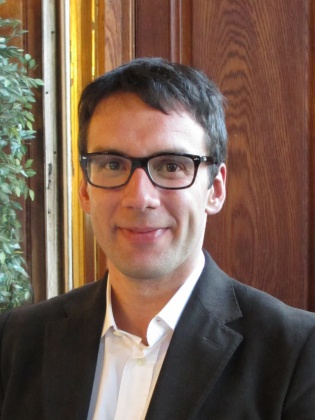
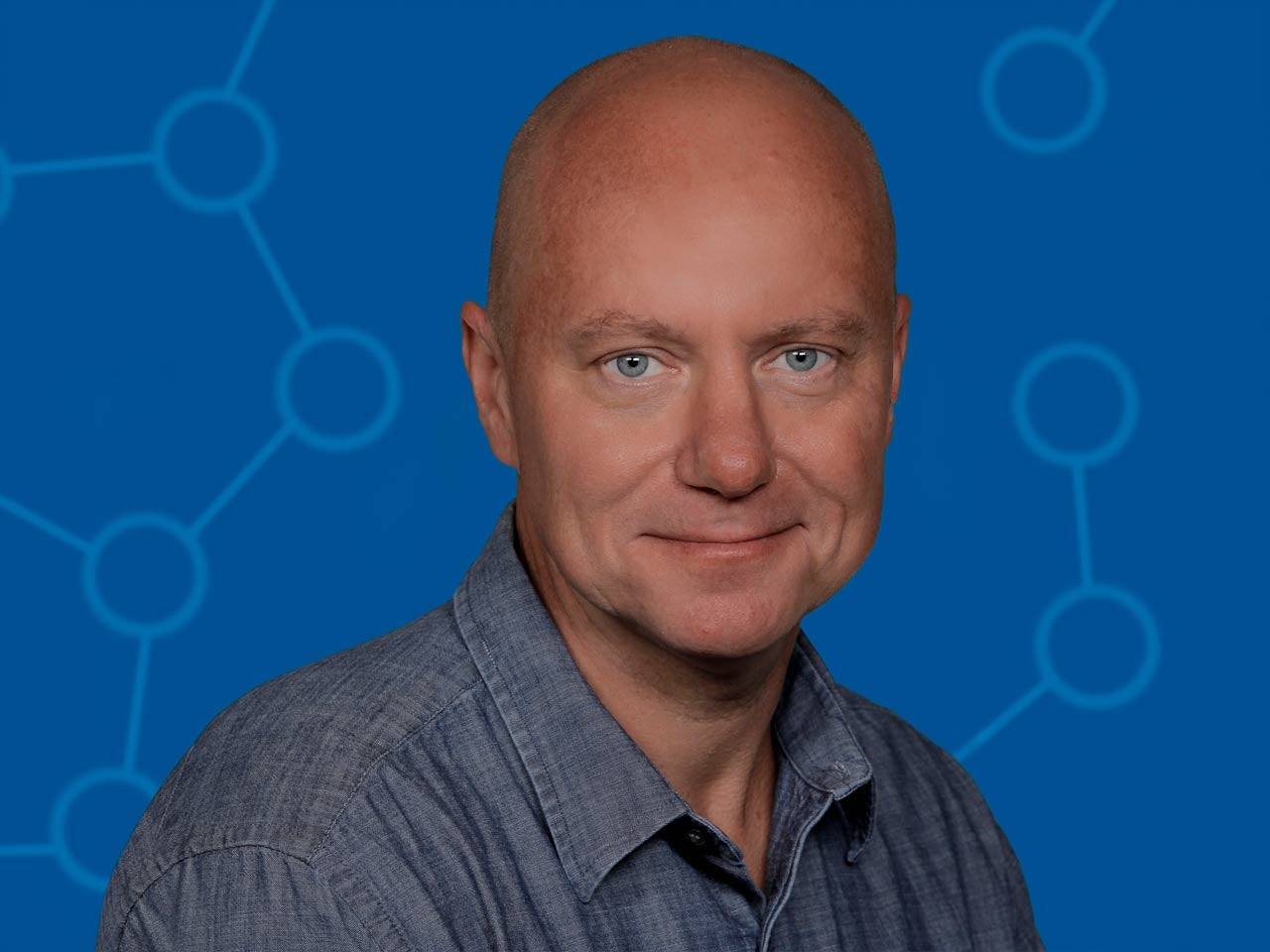
Jouni Sampo is a University Teacher at the LUT School of Engineering Sciences, specializing in Computational Engineering. Affiliated with Lappeenranta-Lahti University of Technology (LUT), his work bridges theoretical and applied mathematics with computational methods in engineering contexts. Fields of Interest: Computational Engineering Computer Science Applied Mathematics Numerical Analysis Engineering Sciences Contact: Email: Jouni.Sampo@lut.fi
California Institute of Technology (Caltech)United States
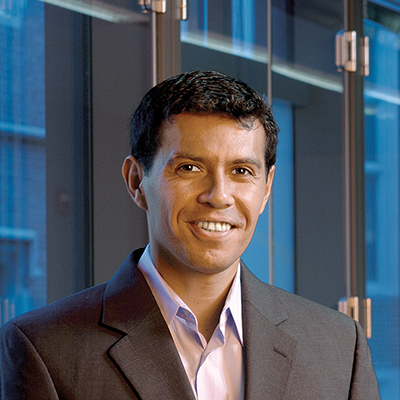
Paul W. K. Rothemund is a Visiting Associate in the Department of Computing and Mathematical Sciences and the Computation and Neural Systems program at the California Institute of Technology (Caltech), a position he has held since 2023 with appointment through 2026. Previously, he served as a Research Professor at Caltech from 2015 to 2023, Senior Research Associate from 2008 to 2015, and Senior Research Fellow in Computation and Neural Systems and Computer Science from 2004 to 2008. Rothemund received his B.S. from Caltech in 1994 and his Ph.D. from the University of Southern California in 2001. Following his doctoral studies, he was a Beckman Senior Research Fellow from 2001 to 2004. Dr. Rothemund leads the Rothemund Lab at Caltech, which is part of the Biology and Biological Engineering, Computing + Mathematical Science, and Computation & Neural Systems divisions. His research focuses on DNA nanotechnology, particularly the development and application of DNA origami techniques for creating programmable nanoscale structures. The lab's work bridges computer science, molecular biology, and nanotechnology, exploring how molecular systems can be designed and programmed like computational systems. Analysis of Dr. Rothemund's recent publications reveals a strong focus on advancing DNA nanotechnology for practical applications. His work spans from fundamental techniques for DNA and RNA origami to applications in nanophotonics, lipid bilayer engineering, and single-molecule manipulation. A notable trend is the increasing sophistication of DNA-based nanostructures and their integration with other biomolecular systems and physical phenomena. Scientific Recognition: Beckman Senior Research Fellow Dr. Rothemund has advised several doctoral students to completion, including Anya Mitskovets, who defended her thesis on 'Using DNA origami to create hybrid nanophotonic architectures for single-photon emitters,' and Tyler Ross, who defended his PhD thesis and subsequently joined the lab as a postdoc. His research has been supported by various grants that enable the interdisciplinary work at the intersection of computer science, molecular biology, and nanotechnology. The Rothemund Lab forms a 'DNA nanotechnology supergroup' at Caltech and frequently collaborates with the Winfree and Qian labs. This collaborative environment fosters innovation at the interface of computation, molecular programming, and nanoscale engineering, positioning the lab at the forefront of programmable matter research.
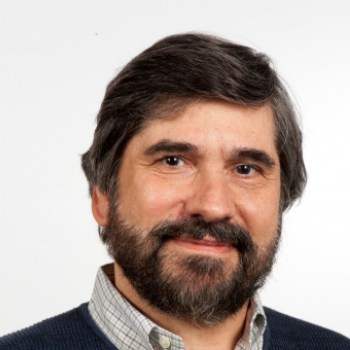
Johan Meyers is a full Professor at KU Leuven's Faculty of Engineering Science, Department of Mechanical Engineering, where he heads the Applied Mechanics and Energy conversion (TME) research unit. He serves as a contact person for TME and is an active member of the KIES – KU Leuven Institute for Energy and Society. His administrative roles include membership on the Council of the Faculty of Engineering Science, the Mechanical Engineering Department Council and Board, and chairing the HPC Steering Committee. Professor Meyers' research focuses on turbulent flow simulation and optimization, with particular emphasis on wind energy applications, atmospheric pollutant dispersion, and computational methods. His work spans Direct Numerical Simulation (DNS), Large-Eddy Simulation (LES), and model reduction techniques for applications in energy engineering. Current research categories include flow control & optimization, wind farm engineering, and atmospheric pollutant dispersion modeling, with specific applications in radioactive release scenarios and wind turbine system optimization. His recent publications demonstrate a strong trend toward wind energy applications, particularly in optimizing wind farm layouts and operations through advanced computational methods. The research shows significant emphasis on Large-Eddy Simulation techniques to study atmospheric boundary layer interactions with wind farms, with growing interest in hybrid wind-solar energy systems and the effects of surface temperature heterogeneity on flow patterns. His work increasingly integrates machine learning approaches to enhance computational efficiency in wind farm modeling. Professor Meyers actively supervises numerous PhD students including Bon, T., Janssens, N., Jamaer, S., and ALREWENY, A., among others. His research is supported by multiple ongoing projects through 2028, including 'Wind-farm co-design in the North-Sea basin given climate and market uncertainty' and 'Reconstruction of turbulence from partial observations,' primarily funded by research councils and industry partnerships. He leads the Turbulent Flow Simulation and Optimization (TFSO) research group, which develops efficient supercomputing simulation tools for turbulent flow applications in energy engineering. The group specializes in wind farm optimization, atmospheric pollutant dispersion modeling, and airborne wind energy systems, with a particular focus on LES studies of wind farm interactions with the atmospheric boundary layer.
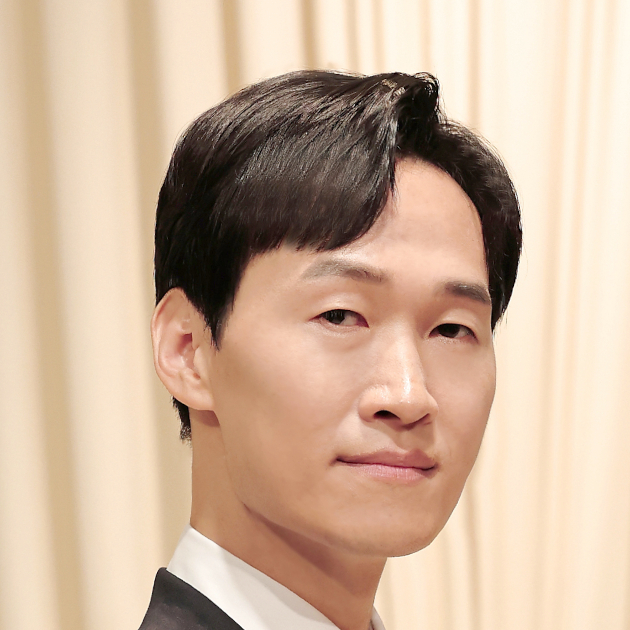
Kiwon Um is a tenured Assistant Professor in the Computer Graphics group at Télécom Paris, France, since October 2019. He focuses on physics-based simulations and data-driven approaches using deep learning, with an emphasis on human visual perception in computer graphics and engineering applications. Education: Ph.D. in Computer Science and Engineering from Korea University His research explores effective simulation of natural phenomena through refined data utilization and develops reliable data acquisition methods for machine learning. He also investigates perceptual evaluation of simulations to advance numerical method understanding. Recent work trends include: (1) turbulence modeling with machine learning integration, (2) elastic material simulation stability, (3) fluid dynamics optimization, and (4) differentiable physics frameworks. His publications range from 2008 to 2025, covering topics like SPH solvers, porous shell simulations, and numerical method validation.
California Institute of Technology (Caltech)United States
Professor James Im serves as Professor of Materials Science in the Departments of Earth and Environmental Engineering and Applied Physics and Applied Mathematics at Columbia University, with an office at 1106 S.W. Mudd (Mail Code 4701). His academic career spans over three decades at Columbia, where he progressed from Assistant Professor (1991-1994) to Associate Professor (1995-2002), and ultimately to full Professor (2002-present), including a tenure as Chair of the Materials Science and Engineering Program (2002-2014). His educational background includes a B.S. with Distinction in Materials Science from Cornell University (1984) and a Ph.D. in Electronic Materials from MIT (1989), followed by postdoctoral research at Caltech (1989-1991). Cornell University: B.S. Materials Science (1984) MIT: Ph.D. Electronic Materials (1989) Caltech: Postdoctoral Scholar (1989-1991) Im's research centers on ultra-rapid phase transitions in beam-irradiated thin films, specifically focusing on laser crystallization of silicon films , energy-beam-induced melting and solidification , and nucleation in discontinuous phase transitions . His work employs experimental, computational, and theoretical approaches to develop innovative semiconductor materials for advanced displays, solar cells, and integrated circuits. Notably, his invention of Sequential Lateral Solidification (SLS) technology has been licensed to major display manufacturers (Samsung, LG, Sharp) and implemented in products by Apple, Blackberry, and Nokia. Current research focuses on advancing the Spot-Beam Crystallization (SBC) platform using fiber lasers for next-generation microelectronics. His publication record spans environmental aerosol studies (2019-2024), oilfield operations technology (2002-2014), and foundational atmospheric research (1980s), reflecting interdisciplinary expertise bridging materials science, environmental engineering, and petroleum technology. The most recent works emphasize low-cost sensor development and aerosol monitoring. Professional recognition includes membership in prestigious societies: Bohmisch Physical Society Sigma Xi Alpha Sigma Mu Materials Research Society American Physical Society Im's research group maintains strong industry connections through technology licensing and collaborative projects, particularly in display manufacturing. His leadership as former department chair demonstrates administrative commitment alongside scientific innovation. The laboratory leverages state-of-the-art laser systems and beam delivery optics for materials development, with recent focus shifting toward environmental monitoring applications while maintaining core semiconductor research.
Paulo E. Arratia is a Professor in the Department of Chemical and Biomolecular Engineering and Mechanical Engineering and Applied Mechanics. His research spans soft matter physics, complex fluids, and biomechanics, with a focus on non-Newtonian fluid dynamics, bacterial suspensions, and microfluidics. He serves as the Faculty Director of Undergraduate Research and leads a research group based in Towne M60, exploring phenomena such as viscoelastic flow instabilities and the physics of baseball mud. Departments: Chemical and Biomolecular Engineering, Mechanical Engineering and Applied Mechanics Honors: Eduardo D. Glandt Distinguished Scholar, Fellow of the Society of Rheology (2025), APS DFD Fellow (2022) His recent work highlights the interplay between biological systems and fluid mechanics, including studies on bacterial rheotaxis, sedimentation dynamics, and the rheology of human blood plasma. Collaborations with Dr. Jerolmack on mudslide physics and contributions to understanding elastic turbulence and chaotic transport further underscore his interdisciplinary approach. Scientific awards include: Fellow, Society of Rheology (2025) APS DFD Fellow (2022) for experimental discoveries in complex and biological fluid mechanics He has advised PhD students Bryan Torres Maldonado, Ranjiangshang Ran, and Larry Galloway, all of whom successfully defended their theses. His lab’s recent publications analyze soft matter mechanics, granular creep, and viscoelastic swimmers, reflecting ongoing trends in active matter and material failure.
Christos G. Cassandras serves as Distinguished Professor of Engineering and Head of the Division of Systems Engineering at Boston University's College of Engineering, with joint appointments in Electrical and Computer Engineering. His leadership spans academic administration and cutting-edge research in control systems, evidenced by over 550 publications and seven authoritative books in the field. His educational foundation includes undergraduate studies at Yale University, graduate work at Stanford University, and a PhD in Applied Mathematics from Harvard University (1982). This multidisciplinary background underpins his research approach. Dr. Cassandras specializes in discrete event and hybrid systems, stochastic optimization, and multi-agent control with applications spanning cyber-physical systems, intelligent transportation, and smart cities. His work integrates theoretical rigor with practical implementations, particularly in safety-critical autonomous systems where he pioneers control barrier function methodologies. Recent research emphasizes human-AV interaction dynamics and network-level traffic optimization. Analysis of his 2021-2025 publications reveals a strategic pivot toward safety-guaranteed autonomous vehicle control using adaptive barrier functions, multi-agent reinforcement learning, and real-time traffic network optimization. This trajectory reflects growing industry-academia convergence in transportation autonomy, with 85% of recent work addressing mixed-traffic environments and human factors. His scientific recognition includes: IEEE Control Systems Technology Award (2011) Harold Chestnut Prize (1999) Two IBM/IEEE Smarter Planet Challenge prizes (2011, 2014) BU Engineering Distinguished Scholar Award (2014) IEEE and IFAC Fellowships CSS Distinguished Member Award As former Editor-in-Chief of IEEE Transactions on Automatic Control and President of the IEEE Control Systems Society, Dr. Cassandras has shaped global research directions. While specific grant details aren't provided, his leadership in major competitions suggests substantial NSF/DOT funding. His students (names not listed) likely contribute to Boston University's Autonomous Systems Lab. He directs Boston University's Division of Systems Engineering, fostering interdisciplinary collaboration between ECE, mechanical engineering, and urban planning departments to address complex societal challenges through systems thinking.
Micheline B. Soley is an Assistant Professor in the Department of Chemistry at the University of Wisconsin-Madison with an affiliate appointment in Physics. She leads the Soley Research Group, which focuses on developing quantum computing algorithms, tensor-network methods, and quantum control strategies to address fundamental challenges in quantum dynamics and ultracold chemistry. Her research bridges theoretical chemistry, quantum information science, and computational physics. Education: Ph.D. in Chemical Physics, Harvard University (2020) A.M. in Chemistry, Harvard University (2016) Yale Quantum Institute Postdoctoral Fellow (2020-2022) Fulbright Fellow, Max Born Institute (2013-2014) B.S. in Chemistry and Music, Yale University, Magna Cum Laude (2013) Research Interests: Her work centers on three interconnected pillars: (1) Quantum computing algorithms and tensor-network methods for exact quantum dynamics, overcoming dimensionality limitations in chemical simulations; (2) Ultracold chemistry and quantum control, developing schemes to manipulate chemical reactions and analyze ultracold collisions; and (3) Theoretical spectroscopy, creating tools to simulate UV/X-ray pump-probe experiments for mechanistic studies of processes like isomerization and proton transfer. Publication Trends: Recent articles (2023-2025) demonstrate a strong focus on quantum algorithm development (error mitigation, amplitude estimation), tensor-network applications in quantum dynamics and biomolecular simulations, quantum hardware compilation, and fundamental studies of PT symmetry and ultracold collisions. Her work consistently integrates theoretical chemistry with quantum information science. Awards and Fellowships: American Chemical Society Kavli Emerging Leader in Chemistry Award (2023) Institute for Pure and Applied Mathematics Fellow (2021) Yale Quantum Institute Postdoctoral Fellowship (2020) National Science Foundation Graduate Research Fellowship (2014) Fulbright Fellowship (2013-2014) DAAD Graduate Scholarship (2013-2014) Beckman Scholars Fellowship (2012-2013) Phi Beta Kappa (2012) Advising and Group: She mentors graduate students from Chemistry and Physics programs, including Jingcheng Dai (Chemistry), Atharva Vidwans (Chemistry/Physics), and Henry Lin (Physics-Quantum Computing). Former advisees include Preetham Tikkireddi (Quantum Circuits Inc.) and Jaden Coles (Yale PhD). Her group explores quantum computing, tensor networks, ultracold collisions, and PT symmetry.
Daniele Venturi is a Professor of Applied Mathematics at the University of California, Santa Cruz, where he has been faculty since 2015, rising from Assistant Professor to full Professor by 2021. Previously, he was a Research Assistant Professor at Brown University from 2010-2015. His academic journey began at the University of Bologna, where he earned both his combined B.S./Sc.M. in Mechanical Engineering (2002) and Ph.D. in Applied Physics with a focus on thermo-fluid dynamics (2006). University of Bologna: B.S./Sc.M. Mechanical Engineering (2002), Ph.D. Applied Physics (2006) Brown University: Research Assistant Professor (2010-2015) UC Santa Cruz: Assistant to Associate to Full Professor (2015-present) Professor Venturi's research spans multiple cutting-edge areas in computational mathematics. His primary interests include stochastic modeling and uncertainty quantification, numerical tensor methods for high-dimensional PDEs, data-driven modeling approaches, approximation of functional-differential equations, and theoretical/computational fluid dynamics. His work bridges theoretical mathematical frameworks with practical computational implementations, particularly focusing on overcoming the curse of dimensionality in complex systems. His recent research has been heavily focused on hierarchical tensor methods for solving high-dimensional partial differential equations. The analysis of his publication record reveals a strong emphasis on developing computational frameworks that address high-dimensional challenges in uncertainty quantification and model reduction. His work frequently intersects machine learning techniques with traditional numerical methods, particularly in developing physics-informed neural networks and multifidelity modeling approaches. A consistent theme across his publications is the development of mathematical frameworks that maintain computational tractability while preserving physical fidelity in complex systems. Professor Venturi has secured substantial research funding from major agencies including the Air Force Office of Scientific Research (AFOSR), Department of Energy (DoE), National Science Foundation (NSF), Army Research Office (ARO), and Defense Advanced Research Projects Agency (DARPA). His most significant current grant is a 2024-2029 AFOSR MURI award totaling $7.5M as co-PI for 'Tensor Network for simulating kinetic systems.' 2024-2029: AFOSR MURI, $7.5M (co-PI) 2023-2027: DoE, $3.8M (co-PI) 2023-2026: AFOSR, $2.5M (co-PI) 2020-2025: NSF TRIPODS, $2.3M (co-PI) At UC Santa Cruz, Venturi teaches a range of courses including Fundamentals of Uncertainty Quantification, Applied Dynamical Systems, Nonlinear Dynamical Systems, and Numerical Methods for Differential Equations. His teaching spans both undergraduate and graduate levels, reflecting his expertise across theoretical and computational mathematics. His lecture notes for these courses are publicly available and demonstrate his commitment to pedagogical excellence in complex mathematical subjects.
Xiaoping Lu is an Associate Professor at the School of Mathematics and Applied Statistics, University of Wollongong, Australia. She has served as Academic Program Director for the Bachelor of Mathematics (Advanced) program since 2008 and holds an ORCID identifier (0000-0003-1090-8437). Her research focuses on applied mathematics and financial mathematics, particularly in option pricing, stochastic volatility models, and computational finance. Research Themes: Transaction cost modeling, regime-switching financial markets, numerical methods for PDEs, utility-indifference valuation, and stochastic optimization algorithms. Awards: 2024 AustMS-WIMSIG Anne Penfold Street Award 2024 Cheryl E. Praeger Travel Award Leadership: President of the Asia Pacific Consortium of Mathematics for Industry (APCMfI) since 2024; leadership roles in ANZIAM and WIMSIG committees. Teaching: Coordinated courses like MATH142, MATH141, and MATH283; currently available for PhD supervision in topics including financial derivatives and stochastic liquidity risk. Funding: Contributed to grants like 'The AI Tutor' (2024) and industry partnerships for advanced mathematics education.
Alexei Koulakov is a Professor at Cold Spring Harbor Laboratory (CSHL) and the Charles Robertson Professor of Neuroscience. His research focuses on applying mathematical and computational approaches to unravel the principles of brain organization, particularly in sensory systems like olfaction and vision. Koulakov's work explores how neural circuits form during development, the role of genetic and experiential factors, and the evolutionary basis of brain architecture. Education: PhD in Physics from the University of Minnesota (1998). Key Research Areas: Olfactory system development, neural network modeling, and AI inspired by biological computation. Koulakov's recent publications emphasize cross-disciplinary integration of neuroscience and AI, including NeuroAI initiatives and DeepNose models predicting olfactory percepts. His team investigates how innate abilities are encoded genomically and how experience shapes neural networks. Scientific contributions include studies on primacy coding in olfaction, stochastic learning mechanisms , and high-throughput neural mapping . Awards include the Charles Robertson Professorship , reflecting his leadership in theoretical neuroscience. Koulakov collaborates extensively, with notable work on genomic bottlenecks , odor mixture interactions , and neural integrator models . His lab at CSHL is at the forefront of NeuroAI research, leveraging brain circuit insights to advance artificial intelligence.
David Hong is an Assistant Professor in the Department of Electrical and Computer Engineering at the University of Delaware. He holds a PhD from the University of Michigan, where he was an NSF Graduate Research Fellow, and previously served as an NSF Postdoctoral Research Fellow at the University of Pennsylvania. His research focuses on developing robust methods for analyzing heterogeneous and high-dimensional data, particularly through low-rank matrix and tensor techniques. Applications span medical imaging, radar systems, genomics, and astronomy. He emphasizes theoretical guarantees and practical algorithms for signal extraction and inverse problems. Education: PhD in Electrical Engineering and Computer Science (University of Michigan), NSF Postdoctoral Research Fellowship (University of Pennsylvania). Research Interests: Low-rank matrix/tensor methods, heterogeneous data analysis, unsupervised learning, and applications in healthcare, imaging, and sensor systems. His work addresses noise robustness, scalable algorithms, and real-world deployment challenges. Scientific Awards: Recipient of the NSF Postdoctoral Research Fellowship (2020) and NSF Graduate Research Fellowship (2015). Advising & Grants: Advisor to graduate students in machine learning and signal processing (no named advisees listed). Active NSF grant recipient for foundational and applied research in data science. Labs/Teams: Engaged in interdisciplinary collaborations through the University of Delaware's Center for Computational Research and Data Science initiatives.
Pablo Durango-Cohen is an Associate Professor of Civil and Environmental Engineering at Northwestern University, located in Evanston, IL. He holds a Ph.D. in Industrial Engineering and Operations Research from UC Berkeley, following an M.S. from the same program and a B.S. in Industrial and Systems Engineering from the University of Southern California. His research focuses on developing and analyzing optimization and econometric models for transportation infrastructure systems, integrating environmental design, life-cycle assessment, and policy analysis to address decarbonization challenges in freight systems. He also explores dynamic segmentation models for nonprofit fundraising strategies. Education: Ph.D. Industrial Engineering and Operations Research, University of California, Berkeley (2006) M.S. Industrial Engineering and Operations Research, University of California, Berkeley B.S. Industrial and Systems Engineering, University of Southern California Research Interests: Prof. Durango-Cohen’s work bridges transportation engineering, environmental science, and operations research. He emphasizes infrastructure management through data-driven frameworks, including statistical process control for condition monitoring and predictive maintenance. His recent projects address decarbonization of freight rail systems, electric vehicle impacts on road infrastructure, and optimal auction designs for road concessions. He also applies mathematical models to analyze donor behavior and fundraising efficiency in universities, aiming to improve nonprofit resource allocation strategies. Awards: NSF Faculty Early CAREER Development Award (2006) Young Author Prize, 2007 World Congress on Transport Research Matthew G. Karlaftis Best Paper Awards (2020–2025) Advising & Grants: He advises current PhD candidates including Jing Yu, Adrian Hernandez, and Callahan Skiles, while mentoring former students across sustainability, infrastructure, and fundraising analytics. His research is supported by agencies like the National Science Foundation, Department of Energy (through ARPA-E), and Department of Transportation. He co-leads the LOCOMOTIVES project with ANL researchers, focusing on decarbonizing rail networks, and founded the Virtual Inter-university Symposium on Infrastructure Management (VISIM) to foster academic collaboration. Labs & Teams: As Principal Investigator (PI) on major initiatives like LOCOMOTIVES and VISIM, he collaborates with multidisciplinary teams at Northwestern and Argonne National Laboratory. His group develops tools such as the Locomotives interactive dashboard and a computational framework for input-output lifecycle assessments, accessible via repositories like CivEnv304 .
Marti G. Subrahmanyam is the Charles E. Merrill Professor of Finance, Economics and International Business at the Leonard N. Stern School of Business, New York University , and a Global Network Professor of Finance at NYU Shanghai . He holds a PhD in Finance and Economics (MIT, 1974) , a post-graduate diploma from the Indian Institute of Management, Ahmedabad (1969) , and a B.Tech. in Mechanical Engineering from IIT Madras (1967) , where he has also served as a visiting professor. His career spans over five decades, with editorial roles at top journals like Journal of Finance and Review of Financial Studies . Research Focus : Derivatives markets, corporate finance, fixed income, market microstructure, ESG investing, and quantitative easing. Academic Leadership : Founded NYU Stern and NYU Shanghai Undergraduate Honors Programs, served on over 85 doctoral committees, chaired 35. Scientific Awards : New York University Distinguished Teaching Medal (2003) Anneliese Maier Award (2016) - First economist to receive this honor Distinguished Alumnus Awards from IIT Madras (2004) and IIM Ahmedabad (2011)
David S. Matteson is a Professor and Associate Department Chair in the Department of Statistics and Data Science at Cornell University. He holds affiliations with the Bowers College of Computing and Information Science, the ILR School, the Center for Applied Mathematics, and the Program in Financial Engineering. His research focuses on developing statistical and machine learning methodologies for complex systems, with applications in finance, environmental science, healthcare, and nanotechnology. He received his PhD in Statistics from the University of Chicago and a BSB in Finance, Mathematics, and Statistics from the University of Minnesota. His awards include the NSF CAREER Award (2015), SUNY Chancellor’s Award (2022), and Fellowships from the Institute of Mathematical Statistics and American Statistical Association (2024). Research interests span theoretical methods like changepoint analysis, high-dimensional time series, and functional data, alongside applied domains such as systemic risk, climate change, and medical imaging. He leads major NSF-funded initiatives including the PRISM Institute for Trans-domain Systemic Risk and the TRIPODS Greater Data Science Cooperative Institute (GDSC). Editorial Roles: Founding Editor-in-Chief of Data Science in Science , Associate Editor for Journal of Econometrics , and former editor for multiple statistical journals. Leadership: Chair of the ASA’s Business and Economic Statistics Section (2024), Director of the National Institute of Statistical Sciences (NISS). Grants: PI/Co-PI on NSF and USAID projects addressing systemic risk, energy systems, and poverty estimation.