Neda Haj Hosseini is a Senior Lecturer and Associate Professor in Biomedical Engineering at Linköping University's Department of Biomedical Engineering (IMT) . She contributes to teaching courses like TBMT56 - Medical Technology and TBME08 - Biomedical Modeling and Simulation , while leading research initiatives in AI-driven cancer diagnostics and biomedical optics. Research Focus: Development of AI methods for cancer diagnostics, optical coherence tomography (OCT) applications, and fluorescence spectroscopy in surgical guidance Affiliations: Center for Medical Image Science and Visualization (CMIV) , Analytic Imaging Diagnostic Arena (AIDA) , Swedish Medical Technology Association Recent Research Trends demonstrate expertise in applying deep learning to: Pediatric brain tumor classification using multimodal imaging Optical biopsy techniques for intraoperative decision support Automated biomarker quantification in histopathology Medical imaging data integrity and algorithm validation Scientific Awards include grants from: Joanna Cocozza Foundation (2022) Swedish Childhood Cancer Foundation (2024) Academic Leadership involves mentoring students in projects such as: "Multiple Instance Attention-based Learning for Brain Tumor Classification" "Vision Transformers for Multiclass Brain Tumor Tissue Classification" "Reaction-diffusion Models for Image-driven Tumor Simulation"
Elina Rönnberg is a Professor and Deputy Head of Department at the Department of Mathematics, Linköping University, where she leads research in discrete optimisation and intelligent decision-making. Her work bridges theoretical method development and real-world applications in sectors such as healthcare, aviation, mining, and transportation. She is actively involved in the Wallenberg AI, Autonomous Systems and Software Program (WASP) and has collaborated with industry leaders like Saab and Scania. Her research focuses on advanced optimisation techniques including Dantzig-Wolfe decomposition, Lagrangian relaxation, column generation, branch-and-price, and logic-based Benders decomposition. She also explores hybrid methods combining mathematical programming with constraint programming and machine learning. Applications span nurse rostering, electric vehicle routing, aircraft arrival scheduling, and underground mine planning. Recent publications highlight a strong trend toward integrating AI and machine learning—particularly graph neural networks—with classical optimisation frameworks to accelerate solution methods. Her work emphasizes practical impact, robustness, and scalability in solving complex scheduling and resource allocation problems. Nurse Rostering with Strategic Planning of Skills for Sick-Leave Robustness (2024) Pricing for the EVRPTW with Piecewise Linear Charging (2024) Speeding Up Logic-Based Benders Decomposition with Graph Neural Networks (2024) Elina supervises several PhD students and has co-supervised doctoral research at international institutions including Makarere University (Uganda) and the University of Exeter (UK). She has contributed to applied projects through student theses in collaboration with Scania and Saab, focusing on electric vehicle routing and search-and-rescue optimisation. She previously served as a Specialist in Optimisation at Saab Aeronautics (2014–2020) and co-founded Schemagi, a scheduling tool aimed at improving quality in healthcare. She teaches courses such as Introduction to Optimization (TAOP07) and Project - Applied Mathematics (TATA62). Her research group, 'Mathematics and algorithms for intelligent decision-making,' operates within the Division of Applied Mathematics (TIMA) at the Department of Mathematics. The team develops decision support tools that enhance efficiency and sustainability in complex systems, particularly under the growing demands of electrification and digitalisation in transport and logistics.
Christian Smith is an Associate Professor and Lecturer at the Department of Robotics, Perception and Learning at Kungliga Tekniska Högskolan (KTH Royal Institute of Technology). His research focuses on robotics and applications in human-centered environments like home environments, small workshops, and healthcare facilities, including the development of new robotic systems for research. Teaching Roles: Course Coordinator/Teacher/Examiner for courses such as Introduction to Robotics (DD2410), Research Project in Robotics (DD2411), and Java Programming for Python Programmers (DD1380) Research Themes: Human-Robot Interaction, Behavior Trees, Exoskeletons, Intent Recognition, and Multimodal Perception Awards: No specific scientific awards mentioned in the provided text His KTH profile highlights work on adaptive robotics systems and formalized control strategies. The research portfolio spans from theoretical studies on behavior tree programming to applied work in assistive technologies and teleoperation systems.
Tommy Löfstedt is an Associate Professor at Umeå University , affiliated with the Department of Computing Science and the Department of Mathematics and Mathematical Statistics. His research focuses on machine learning , computer vision , and medical image analysis , with applications in life sciences, radiation therapy, and biomedical imaging. He leads multiple research projects, including AI-driven delineation in radiation therapy, quantitative MRI for radiotherapy, and machine learning for plant nutrient uptake. Current research emphasizes structured regularization methods to improve model interpretability and robustness. Key applications include medical image segmentation , Alzheimer's classification , and uncertainty estimation in MRI . Recent publications highlight his work on morphological regularization , adversarial attack mitigation , and multi-task learning in medical imaging contexts. His projects span 2022–2026 with funding for pediatric oncology automation and gynecological cancer staging. Affiliated with both computing and mathematical departments, he bridges algorithm development with applied mathematical frameworks in medical and life science domains.
Saleh Javadi is a Senior Lecturer at the Department of Mathematics and Natural Sciences at Blekinge Institute of Technology (BTH) in Karlskrona, Sweden. He is actively engaged in research and teaching within the field of systems engineering. His educational background includes: B.Sc. in Electrical-Control Engineering from Amirkabir University of Technology (2009) M.Sc. in Electrical, Electronic and Systems Engineering from The National University of Malaysia (2013) Ph.D. in Systems Engineering from Blekinge Institute of Technology (BTH) (2021) Saleh Javadi's research focuses on signal processing, machine learning, and computer vision , with applications spanning remote sensing, intelligent transportation systems, and AI-driven industrial optimization. His work bridges theoretical advancements with practical implementations, particularly in SAR imagery analysis, drone-based agricultural monitoring, and traffic surveillance systems. His recent publications demonstrate a strong focus on remote sensing technologies, particularly Synthetic Aperture Radar (SAR) image processing and analysis. There's a clear trend toward applying machine learning techniques to solve complex problems in aerial and satellite imagery, traffic monitoring, and agricultural applications. His research shows interdisciplinary connections between computer vision, signal processing, and practical engineering applications. Saleh Javadi has received significant recognition for his innovative work: Innovator of the Year award (SKAPA – Innovation Prize in Memory of Alfred Nobel) in Blekinge for innovative efforts in optimizing and reducing energy consumption in industries by using artificial intelligence ÅForsk Entrepreneur's prize at the Swedish Innovation Council Day – Swedish Incubators & Science Park's annual conference in May 2019 Dr. Javadi is involved in practical applications of his research through projects such as "Artificiell intelligens AI kan reducera ogräsfrön i utsäde" (ongoing) and "Bekämpa Renkavle med hjälp av drönare och Artificiell Intelligens (AI)" (completed). His work demonstrates a strong commitment to translating academic research into real-world solutions that address industrial and environmental challenges. His research appears to be conducted within a collaborative framework, working with colleagues on drone technology, SAR image analysis, and AI applications across multiple domains including agriculture, maritime monitoring, and transportation systems.
Erik Prytz is a Senior Associate Professor in Cognitive Science at the Department of Computer and Information Science (IDA) at Linköping University. His research focuses on applying human factors principles to improve safety-critical systems, particularly in emergency response domains such as first aid, disaster medicine, and prehospital care. He holds a PhD in Human Factors Psychology and has served in roles including Director of the Forum Securitatis graduate school and Program Chair for the Cognitive Science BSc program. Education: PhD in Human Factors Psychology (Old Dominion University, 2014), MSc in Cognitive Science (LiU, 2010). Research Interests: Simulation-based training, stress and mental workload, emergency responder teamwork, and human-system interaction in crisis scenarios. His work emphasizes interdisciplinary collaboration, combining cognitive science, computer science, and medicine to enhance emergency response systems. Recent projects explore driver behavior toward emergency vehicles, ad-hoc responder group dynamics, and optimal placement of bleeding control kits in public spaces. He contributes to initiatives like the Center for Advanced Research in Emergency Response (CARER) and the Forum Securitatis graduate school. Erik’s teaching includes courses on human factors, distributed cognition, and emergency response systems. He actively participates in curriculum development and quality assurance committees within the Faculty of Arts and Sciences.
Anna Johansson is an Assistant Professor at the Karolinska Institutet , leading research in cancer epidemiology and biostatistics at the Department of Medical Epidemiology and Biostatistics . She serves as a Docent and group leader, with affiliations at Karolinska University Hospital, Capio St Göran Hospital, and Uppsala University Hospital. Research Interests: Her work spans Cancer epidemiology with focus on breast cancer Reproductive factors and cancer risk Socioeconomic inequalities in healthcare Applied biostatistics and register-based methods Nordic cross-country collaborations Recent Article Trends show emphases on Nordic cancer survival comparisons Pregnancy-associated cancer outcomes Stage-specific mortality analysis Impact of healthcare disruptions Statistical methods for registry data Fertility preservation in oncology Scientific Awards Senior Investigator Award, Swedish Cancer Society Teaching & Mentorship includes survival analysis, epidemiological designs, and data management workshops within the Karolinska Doctoral Programme. She supervises PhD students in cancer and reproductive epidemiology. Collaborative Networks extend to the Nordic Cancer Union, Cancer Registry of Norway, and clinical research teams across Sweden and the Nordic region.
Franziska Klügl is a Professor in Computer Science at Örebro University's Faculty of Business, Science and Engineering, affiliated with the Center for Applied Autonomous Sensor Systems (AASS). She currently leads the KKS-funded TeamRob project on Human-Robot Teamwork and serves as Deputy Dean of the faculty since January 2023, chairing the academic appointment committee. Previously, she headed the Computer Science department (2020-2022) and served on the faculty board (2019-2022). Her research focuses on: Multi-agent systems : Development of languages, processes, and tools for agent-based simulation Interdisciplinary applications : Transportation, economics, epidemics, production, and mining simulations Simulation engineering : Integrating AI, machine learning, and formal methods to create accessible modeling tools for domain experts She created SeSAm , a visual programming tool for agent-based simulation that enables rapid prototyping of complex models. Analysis of her recent publications reveals three dominant themes: Human-robot collaboration frameworks and intention recognition systems Economic impacts of automation on labor markets and engineering services Advanced simulation methodologies using affordance theory and reinforcement learning She teaches software engineering, multi-agent systems, and agent-based modeling across multiple programs, including the WASP AI&ML PhD course. She leads research groups at the Machine Perception and Interaction Lab and oversees the TeamRob human-robot teamwork project.
Bobby Lee Townsend Sturm JR is an Associate Professor at KTH Royal Institute of Technology, leading the MUSAiC project (ERC-2019-COG). He holds a PhD in Electrical and Computer Engineering from UC Santa Barbara (2009), followed by postdoctoral research at LAM, Paris 6, and academic roles at Aalborg University and Queen Mary University of London. His research focuses on AI ethics in music, generative AI for music, and folk music preservation. Current roles at KTH include teaching and supervising in Machine Learning, Music Informatics, and AI Ethics. He has pioneered AI music generation challenges (e.g., 2020 Double Jigs Challenge) and investigates societal impacts of AI on traditional music cultures. His work bridges technical innovation with cultural and ethical considerations, addressing issues like data colonialism, algorithmic bias, and human-AI collaboration in creative contexts. Education: PhD (UCSB, 2009), Postdoc (Paris 6), Academic appointments at Aalborg University (2010–2014) and Queen Mary University (2014–2018) Key Projects: MUSAiC (ERC), Virtual Session System for Irish Music, Traditional Music Dataset Analysis Teaching: Courses in Machine Learning, Music Acoustics, and ICT Innovation Publications span peer-reviewed journals and conferences, emphasizing ethical AI, music generation, and interdisciplinary research in MIR (Music Information Retrieval). He actively collaborates with musicians, anthropologists, and technologists to ensure culturally informed AI development.
Johan Sidén is a Lecturer and Associate Professor at Mid Sweden University , employed in the Department of Computer and Electrical Engineering (DET) . His work focuses on RFID technology , antenna design , and printed/flexible electronics , with a particular emphasis on industrial IoT and welfare technology applications. Research Keywords : Radio Frequency Identification, Antenna Design, Flexible Electronics, Wireless Sensor Networks, Microwave Engineering, Electronic Design Key Projects : DRIVEN (data-driven industrial transformation), SmartArea (functional surfaces), Pressure (ulcer monitoring), MakeSense! (welfare technology) Publications : 15+ recent works on wearable antennas, smart packaging, UWB antenna design, and RFID sensor integration Collaborations include partnerships with industrial and academic institutions, focusing on sustainable electronics, sensor systems, and smart infrastructure. His technical expertise spans antenna optimization , printed circuits , and edge computing for harsh environments.
Romain Bordes is a Researcher in Applied Chemistry at Chalmers University of Technology, specializing in colloid and interface science with applications spanning sustainable materials development, art conservation science, and environmental remediation technologies. His work bridges fundamental chemical research with practical applications addressing contemporary challenges in cultural heritage preservation and green chemistry. Dr. Bordes' research interests focus on several interconnected domains: Development and application of amino acid-based surfactants and green chemistry solutions for sustainable applications Nanocellulose and biomaterials for art conservation, packaging, and textile applications Surface chemistry and interfacial phenomena in complex colloidal systems Novel separation techniques for environmental remediation, particularly heavy metal removal Sustainable materials development for cultural heritage preservation Analysis of Dr. Bordes' extensive publication record reveals a consistent trajectory toward increasingly sophisticated applications of colloid science. His recent work demonstrates a growing integration of advanced characterization techniques like acoustic levitation with traditional colloid chemistry approaches, enabling non-contact analysis of delicate materials. A significant portion of his research addresses practical challenges in art conservation, with particular emphasis on developing sustainable alternatives to traditional conservation methods. His work on beeswax nanoemulsions and nanocellulose-based consolidants represents innovative approaches to longstanding challenges in cultural heritage preservation. Dr. Bordes has secured substantial research funding from multiple prestigious sources including VINNOVA, the European Commission (EC), the Swedish Research Council (VR), and the Swedish Foundation for Strategic Research (SSF). His collaborative projects demonstrate strong interdisciplinary connections across chemistry, materials science, conservation science, and environmental engineering. The GREENART project (2022-2025) and NANORESTART project (2015-2018) particularly highlight his leadership in applying advanced materials science to cultural heritage challenges. His research group appears to focus on developing sustainable chemical solutions that address real-world problems at the intersection of environmental science, cultural preservation, and materials innovation, with particular emphasis on replacing hazardous chemicals with bio-based alternatives in conservation practices and industrial applications.
Stefano Bonetti is an Associate Professor in the Department of Physics at Stockholm University , leading the Ultrafast Condensed Matter Dynamics Group . His research focuses on manipulating quantum materials using terahertz (THz) and near-infrared laser fields to study spin dynamics and ultrafast phenomena at nanoscale and femtosecond timescales. PhD in Materials Physics (KTH Royal Institute of Technology, Sweden) MSc in Engineering Physics (KTH) BSc in Technical Physics (Politecnico di Milano, Italy) Recent research efforts involve time-resolved X-ray microscopy to visualize spin currents and magnetization dynamics, leveraging facilities like free-electron lasers. His work bridges experimental physics and applied materials science, aiming to enhance energy efficiency in data storage technologies by understanding ultrafast spin-lattice interactions . Key scientific awards and grants: ERC Starting Grant (2017-2021) Wallenberg Academy Fellow (2018-2023) VR's free grant (2019-2023) International Career Grant (COFUND) (2015-2019) He has contributed to developing THz-based techniques for magnetic control and authored foundational work on spin-wave solitons and nonlinear magnetoelastic coupling . His group collaborates internationally, utilizing advanced synchrotron and free-electron laser facilities.
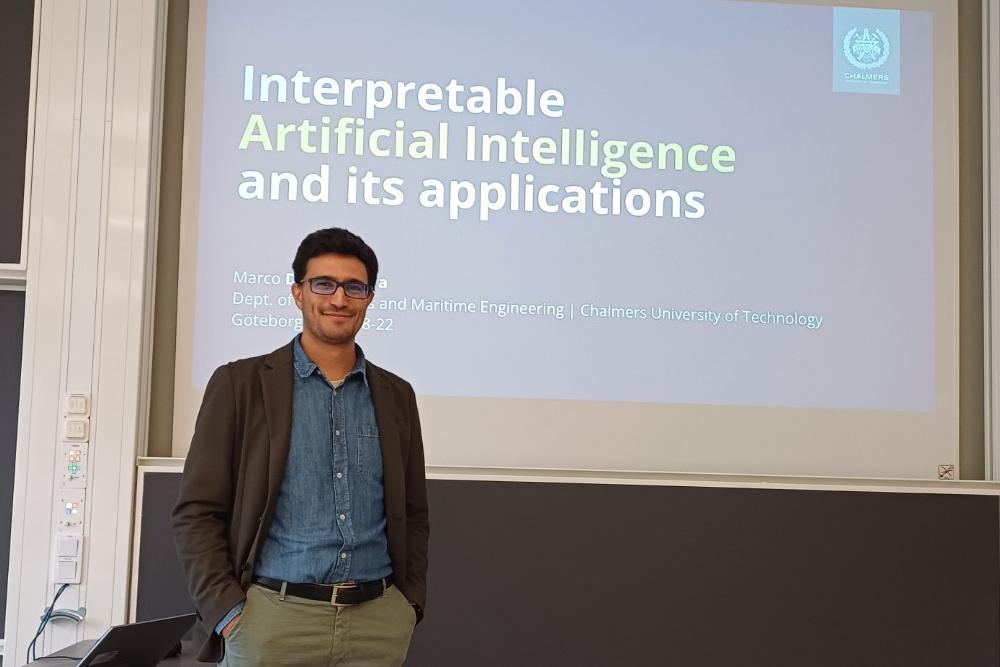
Marco L. Della Vedova is a Senior Lecturer in Applied Artificial Intelligence at Chalmers University of Technology, Sweden. He works in the Vehicle Engineering and Autonomous Systems division within the Department of Mechanics and Maritime Sciences, as part of Prof. Mattias Wahde's research group. Since 2025, he has served as Director of the Data Science and AI master's programme (MPDSC) at Chalmers, where he teaches courses including Introduction to Artificial Intelligence and Digitalization in Sports. Dr. Della Vedova earned his academic foundation at the University of Pavia, Italy, where he completed his BSc (2006), MSc (2009), and PhD (2013) in Computer Engineering. His doctoral research focused on "Real-Time Physical Systems and Electric Load Scheduling" under Prof. Tullio Facchinetti. During his PhD studies, he spent a year at U.C. Berkeley hosted by Prof. Francesco Borrelli at the Model Based Predictive and Distributed Control Lab. His research spans multiple AI domains with a strong emphasis on interpretability. Dr. Della Vedova develops interpretable methods for conversational AI, naturalness evaluation of forests using canopy height models, and geospatial applications. His work bridges theoretical AI with practical societal benefits, particularly in environmental monitoring, transportation systems, and orienteering. He has previously contributed to cloud computing, hate speech detection, and cyber-physical energy systems, demonstrating his interdisciplinary approach to AI research. Dr. Della Vedova's publication record reveals a consistent trajectory of impactful research across multiple domains of artificial intelligence. His recent work shows a strong focus on interpretability in AI systems, with significant contributions to natural language processing, geospatial analysis, and causal inference. The research demonstrates both theoretical depth and practical applications, particularly in environmental monitoring and social media analysis. His methodology often combines traditional machine learning approaches with novel interpretability techniques, creating bridges between complex AI systems and human understanding. Dr. Della Vedova has received several prestigious recognitions for his work: Best PhD thesis award from the Order of the Engineers of Bergamo (2013) Italian champion of Il Cervellone (2012) Top Italian performer in IEEEXtreme 6.0 programming competition (148th overall globally, 2012) Premio Arturo Schena award from Fondazione Credito Valtellinese (2010) With over 50 students supervised through bachelor's and master's theses, Dr. Della Vedova has established himself as a dedicated mentor in the AI community. His current PhD students include Minerva Suvanto working on interpretable NLP and Vivien Lacorre developing AI for railway infrastructure inspection. His supervision spans diverse topics from forest naturalness evaluation to hate speech detection and transportation optimization. Beyond formal supervision, he actively contributes to educational initiatives including serving as Director of Chalmers' Data Science and AI master's program and developing innovative teaching methods that connect theoretical concepts with real-world applications. Dr. Della Vedova is deeply embedded in both academic and professional communities. He leads the Applied Artificial Intelligence research group at Chalmers while maintaining strong connections with European research networks through projects like the ERASMUS+ EUrienteering initiative. His interdisciplinary approach is reflected in collaborations across computer science, environmental science, and social sciences. Notably, he applies his AI expertise to orienteering both as a researcher developing localization methods and as a licensed Event Advisor for the International Orienteering Federation, demonstrating how his professional and personal interests converge in innovative ways.
Federica Viola is a Researcher at Linköping University, affiliated with the Department of Health, Medicine and Caring Sciences (HMV) and the Division of Diagnostics and Specialist Medicine (DISP). She is part of the Cardiovascular Magnetic Resonance Group (CMR) and the HEART4FLOW initiative. Her primary research focuses on improving cardiovascular 4D flow MRI data quality, hemodynamic modeling, and applying deep learning techniques for automated analysis in clinical settings. Key affiliations include the Center for Medical Image Science and Visualization (CMIV), which develops advanced imaging tools for healthcare. She collaborates with faculty members such as Professors Tino Ebbers, Petter Dyverfeldt, and Carljohan Carlhäll on projects integrating imaging and computational models to study cardiovascular diseases like hypertension and diabetes. Her research emphasizes personalized medicine, combining 4D flow MRI with mathematical models to assess diastolic function, quantify blood flow dynamics, and evaluate treatment effects. Recent work addresses challenges in reproducibility of cardiac models and automated segmentation using AI. Her contributions span cardiovascular imaging technology, hemodynamic analysis, and interdisciplinary collaborations in the Circulation and Metabolism (CircM) strategic network. She actively publishes in journals like Scientific Reports , Journal of Cardiovascular Magnetic Resonance , and Frontiers in Cardiovascular Medicine .
Tino Weinkauf is a Professor of Visualization and Head of the Division of Computational Science and Technology at KTH Royal Institute of Technology in Stockholm. His work bridges computer science and applied mathematics, with a focus on visualization and topological data analysis. He leads research in visualizing complex data from fields like fluid dynamics, neurobiology, and human-computer interaction. Education: Ph.D. in Computer Science (not explicitly stated in provided texts, but inferred from career trajectory). Research interests include flow visualization, topological methods for data analysis, and interactive visualization techniques. He develops tools like the TopoInVis Toolkit (TTK) and contributes to infrastructure such as the Swedish Research Infrastructure for Visualization Support (InfraVis). His work emphasizes applications in turbulence modeling, biomedical imaging, and user-centered design. Teaching: Responsible for courses such as Advanced Topics in Visualization and Computer Graphics , Information Visualization , and Introduction to Visualization and Computer Graphics . Supervises degree projects in Computer Science and Engineering across specializations like Machine Learning and Interactive Media Technology. Publications focus on topological data analysis, flow segmentation, and algorithm optimization. Notable projects include binary segmentation of turbulent flows and interactive reward tuning systems for preference elicitation. Labs/Teams: Leads the Division of Computational Science and Technology at KTH, fostering interdisciplinary research in computational methods and visualization technologies.