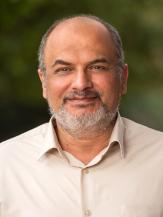
Prof. Dr. Emanuel Kitzelmann is a Professor of Applied Artificial Intelligence at Brandenburg University of Technology and Scientific Director of the AI Laboratory since 2023. His work bridges classical symbolic AI and modern machine learning, with a focus on integrating Large Language Models (LLMs) with structured knowledge bases like knowledge graphs and ontologies to enable reliable, explainable AI. He co-leads the SCALE-C research project on secure AI content generation for cybersecurity and directs the SmartRetrieve project on GraphRAG for campus chatbots. University: Brandenburg University of Technology Department: Computer Science and Media Rank: Professor His research spans hybrid neurosymbolic AI, inductive program synthesis, and robotics as AI application areas. Recent publications explore hallucination mitigation in LLMs, RAG techniques, and AI educational tools. He actively collaborates with industry partners like membraPure and REMINE GmbH, supervising student projects in cybersecurity, chatbots, and image-based analysis. Key initiatives include workshops on machine learning with ZF Getriebe Brandenburg and program committee roles for ECAI 2025 and IJCLR 2025.
Prof. Dr.-Ing. Gerd-Jürgen Giefing serves as Professor of Information and Communication Technology at Georg Agricola University of Applied Sciences since 2003, concurrently leading the Electrical and Information Engineering Master's Program, Digital Signal Processing Laboratory, and serving as Deputy Head of the Software Engineering Laboratory. His academic foundation includes: Electrical engineering studies with data processing focus at University of Karlsruhe and Technical University of Munich (1983-1988) Doctorate in neuroinformatics and technical vision from Ruhr University Bochum (1988-1993) Research spans cognitive robotics with emphasis on behavior-oriented scene analysis and distributed communication frameworks, augmented reality systems, and traffic telematics applications including driver face recognition. His foundational work in biologically inspired computer vision established video-based facial capture systems using multiprocessor architectures, later evolving into cognitive robotics frameworks. Current investigations focus on brain-computer interfaces and nomadic point cloud calibration for mobile robotics. Publication trends reveal a progression from neurobiological vision models (1990s) to cognitive robotics infrastructure (2010s), consistently addressing real-world applications in automation and human-machine interaction through IEEE conference proceedings. Key recognitions: Innovation Award '94 from Bochum Technology Transfer Association European Information Technology Award 1996 from European Council for Applied Sciences and Engineering As IEEE Systems Man and Cybernetics Society member, he maintains active research leadership without documented grant specifics. His laboratory direction fosters applied research in signal processing and software engineering for cognitive systems development.
Žiga Emeršič is an Assistant Professor at the University of Ljubljana, Faculty of Computer and Information Science , affiliated with the Computer Vision Laboratory . His work bridges biometrics , deep learning , and computer vision , with a focus on ear-based recognition systems and explainable AI. IEEE Member #98052610 Email: ziga.emersic@fri.uni-lj.si Office: R2.33, LRV Laboratory Office Hours: Tuesdays 12:30 or by arrangement Research interests include biometric recognition , deep neural networks , object detection , and privacy-preserving AI . He pioneered ear biometrics research, developing tools like the Ear Biometric Database in the Wild and ContexedNet for context-aware recognition. Recent publications analyze biometric model performance ( Neural Computing & Applications, 2018 ), explore k-Same-Net for face deidentification ( Entropy, 2018 ), and advance ear alignment using two-stack hourglass networks ( IET Biometrics, 2023 ). His 2021 work on context-aware ear detection addresses real-world variability. Awards include the European Association for Biometrics Award (2021) , SDRV Excellence Plaque (2023) , and multiple University of Ljubljana recognitions for teaching and research (2016, 2018, 2022). He co-organized the 1st Machine Learning Summer School in Central America (2018) . As co-founder of OOSM Ltd (2014-2015), he applied deep learning to smart city solutions. His 2017 doctoral thesis on visual ear detection in unconstrained environments solidified his expertise in biometric AI .
Tsichlas Kostas serves as an Associate Professor in the Department of Computer Engineering and Informatics at the University of Patras, Greece, within the Division of Applications and Foundations of Computer Science. His research spans fundamental and applied computing domains with active involvement in the ML@Cloud laboratory. His expertise centers on algorithmic innovation across multiple dimensions: Memory-optimized algorithms for primary/secondary storage systems Distributed environment data structures and computational geometry Physics-informed computing and complex network analysis Specialized domains including alphanumeric and graph algorithms Recent publication trends (2022-2025) demonstrate concentrated research in historical graph management systems, temporal network analysis, and physics-computing intersections. Key contributions include vertex-centric partitioning strategies, temporal community detection frameworks, and machine learning applications for energy data motif discovery. He maintains active laboratory affiliations with the LARGE-SCALE CLOUD DATA MACHINE LEARNING WORKSHOP (ML@Cloud lab), Combinatorial Algorithms Laboratory, and Distributed Systems and Telematics Laboratory, contributing to Greece's computational research infrastructure.
Nikolaos Pelekis is a Professor at the Department of Statistics and Actuarial Science, School of Finance and Statistics, University of Piraeus, where he teaches courses in Data Science, Data Management, Information Systems, and Computer Programming. He has been actively involved in both undergraduate and postgraduate education, offering specialized courses such as "Statistical Data Mining Methods" in the Applied Statistics Master's program and "Big Data Management" in the Cybersecurity and Data Science postgraduate program. Born in 1975, Professor Pelekis earned his Bachelor's degree in Computer Science from the University of Crete (1998), followed by an MSc in Information Systems Engineering (1999) and a PhD in Moving Object Databases (2002) from UMIST University in the United Kingdom. His educational background laid the foundation for his distinguished career in data science and database management. Professor Pelekis' research spans multiple domains within data science and database management, with particular emphasis on mobility data analytics. His work focuses on data mining, big data management and analytics, with special attention to location and motion data including trajectories of moving objects. He has made significant contributions to spatial and spatiotemporal database management, moving object database systems, privacy-preserving data mining, and OLAP analysis. His research bridges theoretical foundations with practical applications, particularly in maritime and transportation domains. An analysis of Professor Pelekis' recent publications reveals a strong trend toward maritime data analytics and vessel traffic prediction. His work increasingly focuses on applying machine learning techniques to maritime trajectory data, developing systems for collision risk assessment, vessel location forecasting, and maritime route prediction. The research demonstrates a progression from foundational database management techniques to sophisticated analytics for time-critical mobility forecasting, with applications in aviation and maritime domains. Five best research paper awards 1st & 3rd place in the SemEval-2017 competition 3rd place in the ACM SIGSPATIAL Cup 2016 competition Best paper award at ACM SIGSPATIAL'14 (Path-based Queries on Trajectory Data) Best paper award at ER'13 (Baquara: A Holistic Ontological Framework for Movement Analysis with Linked Data) Best application paper award at ICDM'09 (Clustering Trajectories of Moving Objects in an Uncertain World) Ralf H. Güting best research paper award at SSTD'21 (A Novel Indexing Method for Spatial-Keyword Range Queries) Best Demo Paper award at SSTD'21 (MaSEC: Discovering Anchorages and Co-movement Patterns on Streaming Vessel Trajectories) Professor Pelekis has been actively involved in advising and research funding acquisition. He has participated in over 10 European and National Research and Development projects as principal investigator or key researcher. His leadership extends to directing research laboratories and coordinating large-scale collaborative projects. As co-founder of the Data Science Lab - DataStories at the University of Piraeus, he has mentored numerous researchers and students. His research has been supported by prestigious funding programs including Horizon Europe, Horizon 2020, and national research initiatives. Professor Pelekis co-founded and leads the Data Science Lab - DataStories at the University of Piraeus, which comprises 9 faculty members from 4 different Departments along with experienced and young researchers. He previously served as Head of Research for the Information Management Lab (InfoLab) at the Department of Informatics, University of Piraeus (2005-2014). His current research team is actively engaged in multiple European projects including "DAT.AI – Energy-efficient AI-ready Data Spaces" and "EMERALDS – Extreme-scale Urban Mobility Data Analytics as a Service," focusing on cutting-edge applications of data science in maritime and urban mobility contexts.
Dr. Dmytro Uhryn is an Associate Professor at the Department of Computer Science, Yuriy Fedkovych Chernivtsi National University. With a Doctor of Technical Sciences degree (2021) and specialization in Computer Science (12DC No. 029057, 2011), he actively contributes to research in swarm intelligence and geographic information systems . As a member of the Bukovina Information Technology Cluster since 2019, he focuses on intelligent forecasting systems , medical image analysis , and financial data modeling . Education: Applied Mathematics (2003, Chernivtsi National University) and Organizational Management (National Technical University "Kharkiv Polytechnic Institute") Research Interests: Information technologies for decision support, swarm intelligence systems, industry-specific GIS, medical image processing, and financial market algorithms. Recent publications (2023-2024) demonstrate expertise in swarm intelligence applications for migration forecasting, medical diagnostics using laser autofluorescence, and financial systems modeling. His 2021 dissertation established foundational methods for swarm intelligence in GIS . Professional development includes certifications in educational programming (Sigma Software University), NATO modeling , and international teaching methodologies (Lyublin Institute, 2023). He collaborates with researchers across Ukraine and Poland on biomedical optics, financial IT, and tourism technology projects.
Ye Xu, Ph.D., is a senior data science manager and business analyst at the Yale School of Medicine's Biomedical Informatics & Data Science department. With over 15 years of experience in healthcare technology innovation, Xu specializes in applying artificial intelligence, machine learning, and image analysis to medical diagnostics and education. Ph.D. in Computer Science (2007) and MS in Computer Science (2001) from the University of Iowa Executive certifications in Data Science (Johns Hopkins 2024) and AI Business Strategy (MIT 2024) Current role in Health Sciences IT focuses on digital technology integration in medical education Xu's research bridges computational methods with clinical applications, particularly in: Medical imaging analysis for lung and breast diagnostics Environmental health impact modeling AI-driven curriculum development Text mining for clinical insights Public health informatics Digital innovation in education Recent publications demonstrate Xu's expertise in 3D texture classification algorithms for pulmonary pathologies and pollution impact analysis. The work shows consistent application of computer vision to medical diagnostics, with a transition toward educational technology innovation. Scientific recognition includes: 2023 Digital Transformation Recognition Award 2014 Individual R&D Award 2013 Team Excellence Award for breast cancer diagnostics 2007 Gerard P. Weeg Scholarship Xu mentors graduate students across multiple institutions including MIT's Business Analytics program and Columbia University's Data Science Institute, while maintaining active collaborations in clinical informatics projects at Yale.
Elena Toscano is a researcher in the Department of Mathematics and Computer Science at the University of Palermo. She specializes in numerical analysis, machine learning, and computational mathematics, with a focus on mesh-free methods like Smoothed Particle Hydrodynamics (SPH) and applications to physics, engineering, and interdisciplinary fields. Teaching: Numerical Analysis (Master's in Informatics and Mathematics, 2025/2026) Research Areas: Signal/image processing, SPH consistency restoration, genetic algorithms for tomography, and mathematical-literary collaborations (e.g., Oulipo). Her publications span computational physics, machine learning, and mathematical modeling, emphasizing numerical stability and interdisciplinary innovation.
Hiroyuki Kasai is a Full Professor at the School of Fundamental Science and Engineering, Waseda University, where he leads research in signal processing, machine learning, and optimization. He holds a B.Eng. (1996), M.Eng. (1998), and Dr.Eng. (2000) in Electronics, Information, and Communication Engineering from Waseda University. His career includes positions as Associate Professor and Professor at the University of Electro-Communications (2007-2019), Senior Policy Researcher at Japan's Cabinet Office (2011-2013), and visiting roles at Technical University of Munich and British Telecom. His research spans: Fundamental methodologies : Riemannian optimization, stochastic gradient algorithms, tensor decomposition Applied domains : Network analysis, multimedia systems, environmental sound processing, video coding Emerging areas : Low-rank modeling, manifold learning, and large-scale anomaly detection His publications focus on efficient algorithms for high-dimensional data, with recent work emphasizing Riemannian manifold optimization and real-time tensor analysis. This includes development of open-source tools like SGDLibrary (MATLAB) and McTorch (PyTorch) for optimization tasks. Awards include: IEEE ICCE Best Paper Award (2011) Yamashita Memorial Award (2003) Ericsson Young Scientist Award (2001) 電気通信普及財団賞 (2015) IEICE Service Recognition Award (2010) He maintains memberships in IEEE, IEICE, IPSJ, and JSIAM, and has contributed to over 100 peer-reviewed publications with significant citation impact (h-index 27 via Google Scholar).
Yasushi Nagata is a Professor at Waseda University's School of Creative Science and Engineering. With a Doctor of Engineering from Osaka University, he specializes in statistical quality control, Taguchi methods, and multivariate analysis. Key affiliations: Japan Society for Quality Control Japan Statistical Society Japan Behaviormetrics Society Research Interests: His work focuses on advancing Taguchi's robust parameter design, Mahalanobis-Taguchi systems, and statistical anomaly detection. He has developed novel methods for handling missing data, high-dimensional datasets, and non-normal distributions in quality control contexts. Scientific Awards: He has received multiple Best Paper Awards at ANQ Congresses (2017-2024) Deming Prize for Individuals (2019) Waseda University Teaching Awards (2018, 2022) Nikkei Quality Control Literature Prizes Publications: His recent studies examine non-stationary extreme precipitation data, robust parameter design for multilevel systems, and EM-λ algorithm integration with MT methods. These works bridge theoretical statistics with practical engineering applications.
Mamoru IWABUCHI is a Professor at Waseda University's School of Human Sciences, where he has served since April 2018. Previously, he held positions as Associate Professor and Project Associate Professor at The University of Tokyo's Research Center for Advanced Science and Technology (2009-2018), and as Associate and Assistant Professor at Hiroshima University's Graduate School of Education (2001-2008). His academic journey includes international experience as a Visiting Researcher at the University of Washington (2003-2004) and Research Associate at the University of Dundee (1997-2000). Dr. IWABUCHI earned his Doctor of Engineering and Master of Engineering from Osaka University, and an MSc from the University of Dundee. His educational background spans Electrical Engineering and Applied Computing, providing a strong foundation for his interdisciplinary research. His research focuses on Rehabilitation Science and Human-Computer Interaction with particular emphasis on assistive technology for people with disabilities. He has pioneered smartphone-based diagnostic systems for eye health assessment and developed innovative communication interfaces for individuals with severe and multiple disabilities. His work bridges engineering, healthcare, and education, creating practical solutions that enhance accessibility and inclusion. Recent projects integrate machine learning with everyday technologies to support reading and writing difficulties, while maintaining compatibility with standard classroom materials. Analysis of his publication record reveals a consistent trajectory from fundamental assistive technology research toward increasingly sophisticated, integrated solutions that leverage mainstream technologies like smartphones and tablets. His work demonstrates a progression from specialized assistive devices toward adaptations of commercially available technologies that serve both disabled and non-disabled users. 2020.11: Outstanding Presentation Award, Human Interface Society 2019.12: Excellent Presentation Award, Japan Society for Welfare of the City 2017-2014: Microsoft MVP Awards (Windows Development and Kinect for Windows) 2008: University of Washington DO-IT Program Trailblazer Award 2004: Japan Society for Industrial Technology Education Meritorious Service Award Dr. IWABUCHI has secured significant research funding through Japan Society for the Promotion of Science grants, focusing on inclusive education, communication support for severe disabilities, and digital fabrication for assistive technology. His laboratory (iwalab.jp) serves as a hub for developing practical solutions that bridge technological innovation with real-world disability support needs. He has held leadership roles in professional societies including the Human Interface Society and ISAAC (International Society for Augmentative and Alternative Communication), contributing to the advancement of accessibility standards and practices in Japan and internationally.
Raffaele Argiento is a Full Professor of Statistics at the Department of Economics, University of Bergamo since September 2021. His academic career focuses on advanced statistical methodologies with applications across various domains including environmental science, public health, and data analysis. His research is prominently featured in high-impact statistical journals and conference proceedings. Argiento's research interests center around Bayesian statistical methods, particularly in functional data analysis, nonparametric Bayesian modeling, and clustering techniques. His work demonstrates expertise in developing innovative statistical approaches for complex data structures, including spatio-temporal data, categorical variables, and high-dimensional datasets. His research has significant applications in environmental monitoring (particularly air pollution analysis), public health (obesity rate modeling), and seismic monitoring through crowdsourced data. His methodological contributions include advancements in mixture models, partition models, and computational algorithms for statistical inference. His recent publication record shows a strong trend toward developing computationally efficient Bayesian methods for real-world applications. The research spans from theoretical developments in nonparametric Bayesian statistics to practical implementations for environmental monitoring, health data analysis, and functional data processing. His work demonstrates a consistent focus on bridging theoretical statistical advancements with practical applications across multiple scientific domains. Professor Argiento teaches several advanced statistical courses at the University of Bergamo, including Applied Statistical Modelling , Probability and Statistics , and Statistical Models for both undergraduate and graduate programs in Economics and Data Analysis. His teaching reflects his research expertise, emphasizing modern statistical methodologies and computational approaches.
Sebastian Hönel is a postdoctoral researcher at Linnaeus University, affiliated with the Faculty of Technology and the Department of Computer Science and Media Technology. He is an active member of the Data Intensive Software Technologies and Applications (DISTA) research group and currently serves as a co-Principal Investigator in the project "In-line visual inspection using unsupervised learning" focused on manufacturing defect detection using machine learning techniques. Hönel completed his Doctoral Thesis in 2023 titled "Quantifying Process Quality: The Role of Effective Organizational Learning in Software Evolution" and earned his Licentiate Thesis in 2020 on "Efficient Automatic Change Detection in Software Maintenance and Evolutionary Processes," both from Linnaeus University. His educational background demonstrates a strong foundation in software engineering and data analysis. Hönel's research spans software engineering, machine learning, and data science. Initially focusing on applying Machine Learning and Deep Learning to software evolutionary processes and organizational learning, his current work emphasizes unsupervised and zero/few-shot learning techniques for industrial anomaly detection. He has particular expertise in Deep Density Estimation (especially Normalizing Flows) and Representation Learning, with applications in manufacturing quality assessment and software maintenance. His research interests include anomaly detection methodologies, architectural innovations in autoencoders, and methodological considerations for evaluation metrics in machine learning applications. An analysis of his publication record reveals a consistent focus on bridging software engineering with advanced machine learning techniques. His most recent work shows a strategic shift toward industrial applications of unsupervised learning, particularly in manufacturing defect detection, while maintaining his foundational work in software metrics and quality assessment. The publications demonstrate progression from theoretical software metrics to practical applications of deep learning in quality inspection systems. Hönel actively contributes to academic education by teaching (Deep) Machine Learning courses (4DV652, 4DV660, 4DV661) and previously served as a teaching assistant for agile product development courses (1DV508, 4DV611). His role as co-PI on the visual inspection project indicates successful research funding and leadership capabilities. While specific grant details aren't provided in the available information, his position suggests ongoing research support. As part of the DISTA research group, Hönel collaborates extensively with colleagues including Ericsson, Löwe, and Wingkvist on projects that combine software engineering with advanced data analysis techniques. His work environment supports interdisciplinary research at the intersection of computer science, software engineering, and machine learning applications, with particular emphasis on practical implementations in both software development contexts and manufacturing quality control systems.
Alaa Sheta is a tenured Professor of Computer Science at Southern Connecticut State University , New Haven, CT, USA. With over 180 refereed publications, three authored books, and extensive funded research, he is a globally recognized authority in machine learning, evolutionary computation, image processing, and robotics. Education B.E. Electronics & Communication Engineering, Cairo University, 1988 M.Sc. Electronics & Communication Engineering, Cairo University, 1994 Ph.D. Computer Science, George Mason University, USA, 1997 Research Interests Prof. Sheta’s research integrates machine learning , deep learning , and evolutionary algorithms to solve complex real-world problems. Core themes include image and signal processing for medical and industrial applications, autonomous robotics for navigation and inspection, big-data analytics for environmental and financial forecasting, and software reliability modeling using computational intelligence. His work frequently leverages meta-heuristic optimization techniques such as genetic algorithms, particle swarm optimization, and hybrid neuro-fuzzy systems. Publication Trends From 2015-2021, Prof. Sheta’s publications reveal a clear pivot toward deep learning and healthcare informatics , with multiple studies on obstructive sleep-apnea diagnosis using ECG and depth-sensor data, brain-tumor detection in MR images, and mobile-health applications. Earlier work emphasizes industrial process modeling , power-system optimization , and software effort estimation , reflecting sustained contributions across both theoretical algorithmic advances and high-impact interdisciplinary applications. Scientific Awards & Honors Best Poster Award, SGAI International Conference on Artificial Intelligence, Cambridge, UK, 2011 Senior Member, IEEE Vice-President, Arab Computer Society (2011) Associate Editor, International Journal of Advanced Computer Science and Applications (IJACSA) Associate Editor, International Journal of Computational Complexity and Intelligent Algorithms (IJCCIA) Advising & Grants Prof. Sheta has successfully supervised more than 30 master’s and Ph.D. students in the United States, United Kingdom, Jordan, and Syria. His research has been funded by the U.S. National Science Foundation , as well as agencies in Egypt, Saudi Arabia, and Jordan. He has also consulted for the Egyptian Ministry of Communication & IT (2002-2004) and UNDP Smart Schools project (2003). Labs, Workshops & Leadership He is the founder and chair of the Advanced Computation for Engineering Applications (ACEA) workshop series, held five times across Egypt, Jordan, and Saudi Arabia. He served as Program Chair of the Science and Information Conference 2013 in London and has held academic leadership roles such as Associate Dean (2008-2009) and Assistant Dean for Planning & Development (2006-2008) at Al-Balqa Applied University, Jordan.
Laura Langohr is a Postdoctoral Researcher at the Finnish Institute of Molecular Medicine (FIMM), University of Helsinki, specializing in computational approaches to biomedical research. Her work bridges computer science and molecular medicine through advanced data analysis techniques. Her core research domains include: Data Mining for pattern extraction in complex datasets Graph Theory applied to biological networks Computational Biology for genetic and physiological modeling Network Analysis of weighted and probabilistic systems Genetics-focused algorithm development Langohr's publication history reveals consistent innovation in subgroup discovery and network algorithms, with emphasis on identifying non-redundant information and representative nodes in biological contexts. Her methodologies directly support molecular medicine applications through computational rigor. Current research funding includes: MetaStem: Academy of Finland Center of Excellence in Stem Cell Metabolism (2023-2025) New insights into leukemia development (Academy of Finland, 2022-2026) iCAN: Digital personalized cancer medicine flagship (Academy of Finland, 2022-2026) Organ transport mechanisms in stem cells (Academy of Finland, 2024-2028) No scientific awards or fellowships are documented in available sources. As a research-focused academic, her contributions center on collaborative project execution rather than formal student supervision. She operates within FIMM's interdisciplinary ecosystem, connecting computational theory with experimental biomedical research.