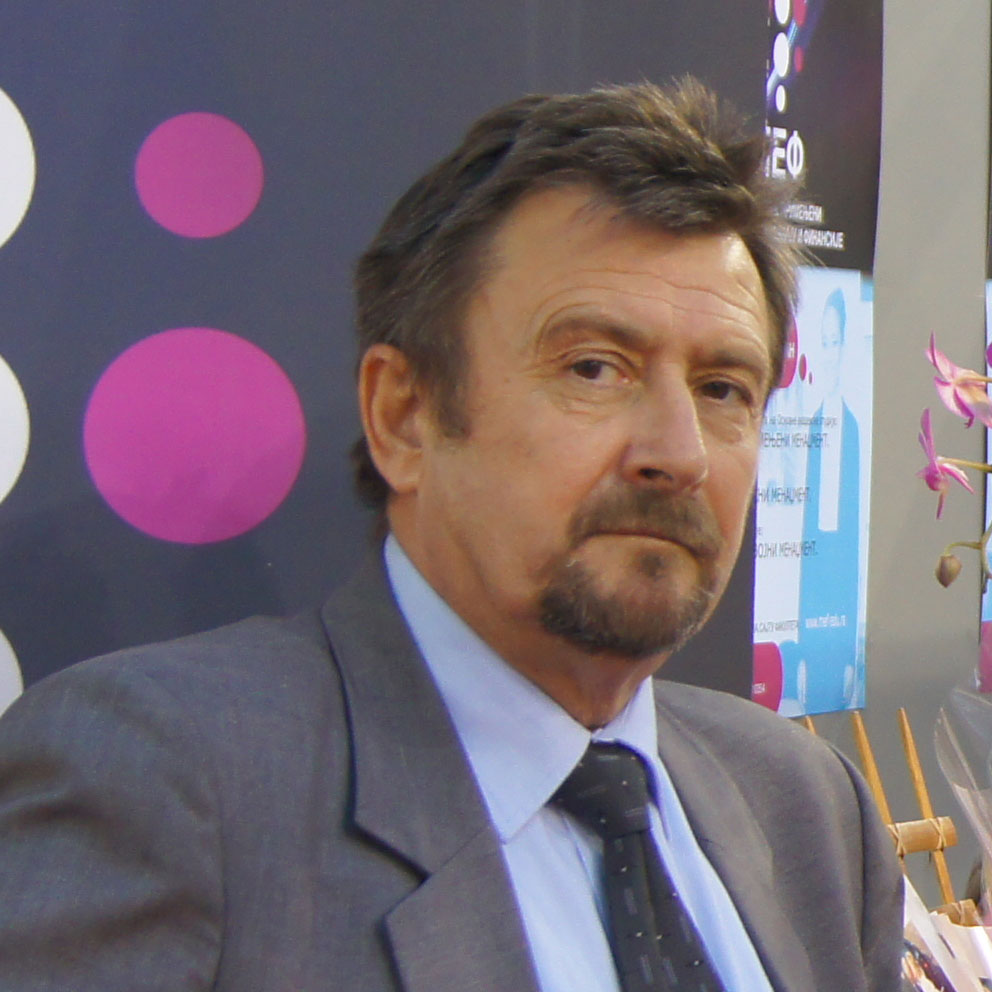
Ivan Radosavljevic is a researcher at Singidunum University's Department of Postgraduate Studies, actively contributing to the fields of Artificial Intelligence, Machine Learning, and Software Engineering. His work spans diverse applications including environmental monitoring, educational technology, medical diagnostics, and geospatial systems. Research interests focus on AI-driven solutions for air quality assessment, synthetic dataset generation for semantic segmentation, real estate price prediction from internet ads, and medical imaging analysis. He has developed software tools for remote rendering monitoring, automated grading, and eye-tracking-based code interaction studies. His publications demonstrate expertise in integrating fuzzy logic with GIS for environmental applications, creating innovative educational technologies, and applying machine learning to healthcare diagnostics. Ivan collaborates with colleagues across multiple domains while maintaining a strong focus on practical implementations of artificial intelligence.
Miloš Ivanović serves as an Assistant Professor at the Institute of Mathematics and Informatics within the Faculty of Natural Sciences and Mathematics at the University of Kragujevac. His academic career is deeply rooted in computer science and computational mathematics, with research spanning multiple interdisciplinary domains that bridge theoretical computer science with practical applications in engineering, physics, and biology. Dr. Ivanović earned his Doctorate in Computer Science from the Faculty of Natural Sciences and Mathematics (PMF) at the University of Kragujevac, establishing a foundation for his subsequent research career focused on computational methods and high-performance computing. His research interests represent a sophisticated convergence of computational theory and practical applications. Ivanović specializes in advanced computing paradigms including grid computing, GPGPU computing, and cloud-based high-performance computing systems. His work in fluid modeling employs meshless methods and particle dynamics approaches, particularly SPH and DPD techniques applied to microfluidic systems. The breadth of his research extends from theoretical mathematics (graph theory and chemical indices) to practical applications in hydrology, biomedical engineering, and nuclear physics. His interdisciplinary approach enables innovative solutions across diverse scientific domains that require intensive computational resources. The collection of his publications reveals a consistent trajectory of research focused on computational methods with applications spanning multiple scientific disciplines. His work demonstrates strong expertise in parallel computing architectures and their application to complex scientific problems. The publications show a progression from fundamental computational mathematics toward increasingly complex multi-domain applications, particularly in biomedical and environmental systems. His research consistently addresses the challenge of implementing computationally intensive methods on distributed and parallel architectures to solve real-world scientific problems. Throughout his career, Ivanović has participated in numerous national and European research and infrastructure projects, including FP6, FP7, and Tempus initiatives. His collaborative approach is evident in the diverse range of co-authors spanning multiple institutions and disciplines, reflecting his ability to bridge computational science with domain-specific applications. Dr. Ivanović is affiliated with the Group for Mathematical Modeling and Computer Simulations, which develops computational solutions across various domains including fluid dynamics, biomedical applications, and environmental modeling. The group's work encompasses software development for simulation purposes, as evidenced by projects like the SPH07 software package and various specialized simulation tools for engineering and biomedical applications.
Dr. Boban Stojanović serves as an Associate Professor at the Institute of Mathematics and Informatics within the Faculty of Natural Sciences and Mathematics at the University of Kragujevac. His academic career is deeply rooted in computational methodologies applied across multiple scientific domains. Stojanović earned his PhD in Technical Sciences from the University of Kragujevac, establishing a foundation for his interdisciplinary research approach that bridges mathematics, computer science, and engineering applications. His educational background has equipped him with expertise spanning theoretical frameworks to practical implementations. His research focuses on computational modeling and computer simulations , with particular emphasis on optimization methods , bioengineering applications (especially muscle modeling), and hydroinformatics . Stojanović has developed significant expertise in numerical simulations and has contributed to advancing methodologies in finite element analysis for complex biological systems. His work demonstrates a consistent pattern of applying computational techniques to solve real-world engineering and medical challenges. Analysis of his publication record reveals a strong trajectory in biomechanics and computational engineering, with increasing sophistication in modeling approaches from 2007-2012. His work shows particular strength in developing specialized finite element models for biological systems, transitioning from muscle mechanics to respiratory and swallowing physiology. The publications demonstrate collaborative work with international institutions including Steward/St. Elizabeth Hospital in Boston. Stojanović has participated in multiple international scientific projects including FP7 and TEMPUS initiatives. He serves as lead researcher on a bioengineering project with Steward/St. Elizabeth Hospital in Boston. Additionally, he is a co-founder of the Serbian Society for Computational Mechanics and serves on the Entrepreneurship Committee of the University of Kragujevac, demonstrating commitment to both academic advancement and practical application of research. He leads the Group for Mathematical Modeling and Computer Simulations, which serves as his primary research unit. This group focuses on developing advanced computational frameworks for engineering and biomedical applications, with particular attention to creating practical software solutions based on theoretical models.
Ivana Stojiljković is a Lecturer in Chemistry at the Faculty of Forestry , University of Belgrade . She has been employed since 2015 and holds a PhD in Theoretical Chemistry from the same university's Faculty of Chemistry. Her research focuses on organic chemistry , computational chemistry , and nanotechnology , particularly in adsorption technologies for environmental applications . Education: BSc, MSc, and PhD in Chemistry (University of Belgrade) Professional Affiliations: Serbian Chemical Society, Educational Forum, Petnica Research Station (visiting lecturer since 2019) Her recent publications highlight interdisciplinary work combining organic synthesis , quantum chemical modeling , and environmental remediation . She has contributed to projects on pesticide removal , heavy metal biosorption , and chemical valorization of waste materials . Her 2025 study on Douglas Fir needles for heavy metal retention and 2023 work on braneworld theory demonstrate her broad research scope. She co-authored the textbook "Praktikum iz Hemije sa radnom sveskom" (2018) for forestry students and participated in the CLEVER Cities initiative (2020), a Horizon 2020-funded project. Her article trends include adsorption mechanisms , quantum modeling , and sustainable materials . Collaborations span institutions like Ghent University (South Korea) and projects funded by the Ministry of Science, Republic of Serbia . She has no explicitly listed scientific awards but contributes to promotional activities at the Faculty of Forestry.
Ljubiša Bojić is a Senior Research Fellow at the Digital Society Lab (DigiLab) within the Institute for Philosophy and Social Theory at the University of Belgrade and concurrently at the Institute for Artificial Intelligence of Serbia. He serves as External Faculty at the Complexity Science Hub Vienna, focusing on AI's societal implications, particularly AI alignment, recommender systems, and metaverse ethics. His work bridges communication science, futurology, and digital humanism to address critical challenges in technology governance. Education: Ph.D. in Communication Science, University of Lyon II, France (2014) Research Focus: Bojić investigates how AI systems can uphold human values through ethical design, with emphasis on recommender algorithms as the most powerful social force shaping contemporary society. His pioneering work on digital addictions examines how AI-driven platforms create echo chambers and social polarization. He advocates for declaring recommender systems a public good and digital identity a human right, exploring both the addictive risks and therapeutic potentials of immersive technologies like the metaverse. Publication Trends: His recent output (2022-2025) reveals a strategic evolution from analyzing digital addiction mechanisms toward developing concrete AI governance frameworks. Key themes include linguistic pragmatics in large language models, consciousness metrics in AI, and cross-platform social dynamics. His research increasingly informs global policy through rigorous computational social science methods applied to real-world challenges like vaccine hesitancy and political polarization. Scientific Recognition: Fellow, Institute for Human Sciences Vienna (IWM) (2023) Member, United Nations Environment Programme Foresight Expert Panel (2023) Policy Engagement: Bojić co-developed Serbia's AI ethics standards and advised Spain's AI strategy. His Horizon Europe project TWON generated Policy Handout No. 8, mandating algorithms to deliver emotionally balanced, diverse content. His 'CERN for AI' framework influenced G7 policy briefs and was featured by the World Economic Forum. He regularly testifies before international bodies on AI governance. Institutional Leadership: As founder of EMERGE: Forum on the Future of AI Driven Humanity and initiator of the Belgrade Digital Freedom Pledge (signed by OSCE officials), he drives global conversations on digital rights. At DigiLab, he leads research on social media dynamics using big data analytics, while coordinating international networks like COST Action CA21129 on opinion analysis.
Miodrag Brzaković is a Full Professor and President of the Council at the Faculty of Applied Management, Economics and Finance, University of Economics and Business in Novi Sad, where he has taught since 2010. His academic leadership spans informatics and general management disciplines within Serbia's higher education sector. His educational background includes: Doctorate in Security Sciences (University of Belgrade, 2009) Master's in Electrical Engineering (University of Belgrade, 1988) Diploma in Telecommunications Engineering (Military Technical Academy Zagreb, 1977) Brzaković's research focuses on the intersection of computer science and management systems, with emphasis on information security standards (ISO 27000), quality management (ISO 9001), and sustainable development applications. His work bridges theoretical frameworks with practical implementations in logistics, healthcare, and tourism sectors, often utilizing multi-criteria decision-making methodologies like EDAS. He actively contributes to standardization through Serbia's Commission KS I1224 for IT security and financial services. Analysis of his 15 most recent publications (2015-2019) reveals consistent application of decision science to real-world problems: tourism site selection, mining safety, urban planning, and personnel management. A dominant theme is adapting international standards (ISO, SERVQUAL) to Serbian industry contexts while addressing ecological and social sustainability. His professional certifications include: Lead Auditor for SRPS ISO/IEC 27001:2013 (Information Security) Lead Auditor for SRPS ISO 9001:2008 (Quality Management) With extensive pre-academic experience directing military telecommunications (1988-1997) and defense IT systems (1997-2006), Brzaković brings operational expertise to his academic role. He has led projects implementing integrated management systems for business information, health information, and sports facilities, often collaborating with Serbian Standardization Institute on security protocols. His current work emphasizes sustainable development frameworks for rural tourism and smart city planning.