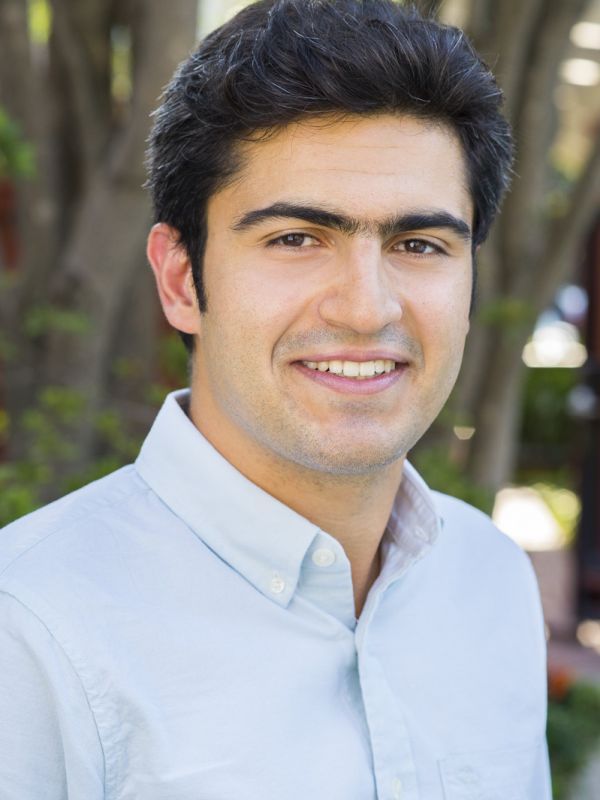
Roman Vaculín is a Researcher at IBM Research, focusing on interdisciplinary domains where artificial intelligence, blockchain technologies, and data-centric workflows converge. His work spans automated machine learning, time series analysis, and secure computation via cryptographic methods like homomorphic encryption. Affiliation: IBM Research Key research areas: Time Series Analysis, Blockchain, AI Explainability, Business Process Management Across his publications, Vaculín explores: Time Series Modeling: Developing robust frameworks like TsSHAP and end-to-end architectures for forecasting and imputation. Blockchain Applications: Designing trusted AI systems, secure multi-party computation, and verifiable simulations. Automated Machine Learning: Creating toolkits for industrial AI explainability and automation. Privacy-preserving Techniques: Optimizing encrypted inference and secure decision tree protocols. His methodology often integrates formal verification with practical implementations, emphasizing efficiency and interpretability in complex systems. While no formal awards or students are documented in the provided data, his collaborative publications with institutions like IBM Research and academic partners highlight his role in advancing applied AI research.
Sepehr Amir-Mohammadian is an Associate Professor in the Department of Computer Science at the University of the Pacific, part of the School of Engineering and Computer Science. His research focuses on cybersecurity, programming languages, and formal software security assurance, particularly applying linguistic approaches to ensure properties in security-critical applications. He earned his PhD in Computer Science from the University of Vermont (2017), focusing on in-depth security policy enforcement, following an MS in Information Security Engineering (Amirkabir University of Technology, 2011) and a BS in Information Technology Engineering (Amirkabir University of Technology, 2009). Teaching interests include computer networking, reliable software design, programming languages, and theoretical computer science. He has held leadership roles such as Engineering & Computer Science Council Chair (2020-2021) and currently represents his school in the Technology in Education Committee. His research bridges theory and practice, with contributions to audit logging correctness, quantitative information flow analysis, and cybersecurity in cyber-physical systems. Recent work emphasizes concurrent audit logging in distributed systems, timing attack analysis in cyber-physical systems, and leveraging digital twins for security quantification. Notable collaborations include the OpenMRS medical records system and PRISM-Leak tool development for probabilistic program analysis. His publications span conferences like ACM CPSS, IEEE COMPSAC, and IEEE ICNC, addressing challenges in microservices, concurrency, and formal methods. While no specific awards are noted, his contributions to security frameworks and practical implementations reflect significant scholarly impact. Research groups and projects include work on hybrid-dynamic systems, concurrent logging, and network protocol testing with large language models.
Richard Yetter Chappell is an Associate Professor of Philosophy at the University of Miami's College of Arts and Sciences. He received his PhD from Princeton University in 2012 and has established himself as a significant voice in contemporary moral philosophy, particularly in consequentialism, utilitarianism, and effective altruism. His academic profile demonstrates a commitment to both theoretical rigor and practical application of ethical principles. Chappell's educational background includes a doctorate from Princeton University, completed in 2012. His dissertation work laid the foundation for his subsequent scholarly contributions, particularly in the interpretation and development of Derek Parfit's ethical theories, which culminated in his book Parfit's Ethics published by Cambridge University Press. His research interests center on fundamental questions in moral philosophy: what is fundamentally worth caring about, what we should do about it, and what concepts and methods philosophers should use to make progress on these questions. Chappell advocates for a view where we should fundamentally care that each individual's life goes well, with concern aggregating to prefer greater over lesser improvements to overall welfare. He argues that in practice, we should seek opportunities to help others effectively while respecting commonsense constraints for reasons of non-ideal decision theory. His methodological approach challenges the exaggerated significance many philosophers place on deontic questions, suggesting instead that deeper telic questions offer more potential for philosophical progress. Chappell's publication record reveals a consistent focus on refining consequentialist frameworks while engaging with practical ethical dilemmas. His recent work shows increasing attention to pandemic ethics, effective altruism, and the philosophical foundations of beneficence. A notable trend is his willingness to engage with controversial topics like human challenge trials during pandemics and the ethical implications of status quo bias in medical decision-making. His scholarship demonstrates a distinctive blend of theoretical sophistication and practical relevance, particularly evident in his collaborations with prominent figures like Peter Singer. Co-authored op-ed with Peter Singer on pandemic ethics for the Washington Post (2020) Lead editor for the open-access textbook An Introduction to Utilitarianism Author of Parfit's Ethics (Cambridge University Press) Editor for PhilPapers in the area of Consequentialism Chappell actively engages in public philosophy through his Substack newsletter Good Thoughts , which has attracted over 5,000 subscribers. His commitment to making philosophical insights accessible extends to his role as lead editor for the open-access textbook on utilitarianism, demonstrating his dedication to educational outreach and the practical application of ethical theory. While the available information doesn't specify formal grant funding, his work on pandemic ethics appears to have been developed in response to urgent real-world challenges, suggesting potential connections to public health policy discussions.
Liyi Li is an Assistant Professor in the Department of Computer Science at Iowa State University. He holds a Ph.D. from the University of Illinois at Urbana-Champaign, where his research focused on compiler verification and formal methods. After completing his postdoctoral work at the University of Maryland, he expanded his research to include quantum computing, software engineering, and compiler optimization. Education: B.S. in Computer Science, University of Illinois at Urbana-Champaign (2012) M.S. in Computer Science, University of Illinois at Urbana-Champaign (2014) Ph.D. in Computer Science, University of Illinois at Urbana-Champaign (2020) Research Interests: Liyi Li’s work bridges formal methods, programming languages, and quantum computing. Key areas include quantum program verification, compiler correctness, memory-safe dialects (e.g., Checked C), and distributed quantum systems. He emphasizes applying formal techniques to ensure software reliability and security. Awards: 2020 UMD Victor Basili Postdoctoral Fellowship 2019 UIUC Spring Outstanding Teaching Assistant Award 2012 UIUC University Honor (Bronze Tablet) Grants & Advising: Co-PI for NSF Grant NQVL:QSTD (2024–2025) focusing on quantum analog pathways PI for NSF Grant CCF-2422127 (2024–2027) on Just-in-Time Verification Advises over 13 students, including PhD candidates at Iowa State, University of Maryland, and William & Mary Collaborations: Liyi Li collaborates with institutions such as the University of Maryland and works with researchers like Mingwei Zhu and Xiaodi Wu on quantum verification and compiler optimization tools.
Roman Langrehr is a Researcher affiliated with the Institute for Theoretical Computer Science at ETH Zürich, Switzerland. He is part of the Professorship for Computer Science and contributes to the Numerical Analysis of Dynamical Systems research group, involved in projects such as the DFG Priority Research Program DANSE focusing on connecting orbits in high-dimensional dynamical systems. His work bridges theoretical computer science with applied mathematics, particularly in economic modeling and dynamical systems analysis. Research interests include numerical methods for dynamical systems, computational economics, and optimization strategies for economic models. He has contributed to studies on Skiba sets in optimal control problems and numerical techniques for boundary value problems. His cryptographic research spans functional encryption, lattice-based cryptography, and secure key exchange protocols. Publications highlight advancements in non-interactive key exchange (NIKE), malleable SNARKs, and deniable authentication protocols. He collaborates on projects involving dynamic optimization and has explored the intersection of economic theory with computational methods. His work is characterized by a focus on rigorous numerical analysis and applied cryptography.
Dr. Ian Levely is a Lecturer in Economics at King's College London's Department of Political Economy within the School of Politics & Economics. He holds a PhD from Charles University (Prague) and conducted post-doctoral research at Wageningen University. His research focuses on behavioral aspects of economic development, employing experimental methods in developing countries such as Uganda, Tanzania, and Afghanistan. Dr. Levely explores topics like poverty's psychological effects, institutional impacts on decision-making, and intra-household bargaining. Research Interests: Experimental and behavioral economics, development economics, and their intersections with political economy. Specific areas include poverty's influence on time preferences, ethnic group dynamics in sanctioning systems, and post-conflict reintegration mechanisms. His work frequently bridges microeconomic theory with field experiments in global south contexts. Research Groups: Quantitative Political Economy (bridging economics & political science via quantitative methods) Global South Research Group (international political/economic trends analysis) Political Economy of Peace & Conflict (analyzing conflict resolution and institutional design) Teaching & Supervision: Teaches Experimental Economics courses (7SSPP121/6SSPP385). Supervises PhD students in applied microeconomics, particularly behavioral experiments addressing poverty, institutions, and social preferences. Open to collaborative projects on lab/field experiments. Recent Events: Organized the 2023 Workshop on Economics and Politics of Migration with EBRD and Kadir Has University. Active in disseminating findings like the role of formal institutions in reducing ethnic trust gaps.
Pietro Colombo is an Assistant Professor of Computer Science at the University of Insubria specializing in database security and access control systems. His research develops security frameworks for NoSQL databases and IoT ecosystems. Research Focus: Colombo designs fine-grained access control mechanisms for distributed systems, with recent work on policy enforcement in industrial IoT environments. His approaches integrate formal methods with practical implementations. Publications demonstrate innovations in attribute-based access control for non-relational databases.
Xavier Allamigeon is a researcher at INRIA and CMAP (Centre de Mathématiques Appliquées) at École Polytechnique, where he also serves as a part-time associate professor in the Applied Mathematics Department. His research focuses on optimization, combinatorics, tropical geometry, game theory, and formalization of mathematics in proof assistants, with a particular emphasis on computational aspects of these fields. He earned his Ph.D. in 2009 from École Polytechnique with a thesis on static analysis of memory manipulations and tropical polyhedra. His work bridges theoretical mathematics and practical applications, including contributions to emergency call center modeling and epidemic monitoring during the COVID-19 pandemic. Key awards include the 2022 Prix Inria–Académie des sciences, the 2021 SIAM SIGEST award, and the 2010 Gilles Kahn Prize for Best Dissertation in Computer Science. His research has led to the development of tools like the Tropical Polyhedra Library (TPLib) and formal proofs in proof assistants such as Coq. He has supervised multiple Ph.D. students and contributed to funded projects such as URGE (2023–2026) and CAPPS (2018–2021). His interdisciplinary work spans optimization, formal methods, and applied mathematics, with applications in healthcare systems and computational geometry.
Sebastiano Delre is an Associate Professor in the Department of Marketing, Sales, & Branding at MBS Education. His research focuses on social influence mechanisms, network science, and innovation diffusion in marketing contexts, with a particular emphasis on shared consumption behaviors, agent-based modeling, and big data analysis. Methodologically, he bridges social science, statistics, and computer science to study marketing dynamics. His work examines topics such as strategic budget choices in the motion picture industry, brand personality impacts on equity over time, and the temporal dynamics of electronic word-of-mouth on movie box office performance. Recent studies include investigations into how internships foster innovation and frugal behavior among students. Delre's research has been published in prestigious journals like the Journal of Industrial Economics , Journal of the Academy of Marketing Science , and Journal of Marketing Research . His approach combines rigorous quantitative methods with practical insights, aiming to uncover how consumer decisions and social interactions shape market outcomes. Despite no explicitly listed awards, his prolific publication record reflects his scholarly contributions. While no formal advising or grant details are provided, his work consistently addresses applied marketing challenges through computational simulations and longitudinal data analysis.
Alexander Beiser is a Researcher at TU Wien's Department of Databases and Artificial Intelligence, part of the Faculty of Informatics. His work focuses on neurosymbolic reasoning, logic programming systems like Answer Set Programming (ASP), and hybrid grounding techniques to optimize computational workflows. He teaches the 2025S Algorithms and Data Structures course (186.866) as a VU lecture. His research bridges formal methods with practical applications in AI, emphasizing user interaction frameworks (e.g., clinguin) and improving efficiency in logic-based systems. Key areas include advancing neurosymbolic integration with LLMs, optimizing ASP-driven systems through hybrid grounding, and developing tools for interactive logic programming. Recent contributions address bottlenecks in grounding processes via splitting and rewriting strategies, aiming to enhance scalability in complex reasoning tasks. Alexander is based at Favoritenstrasse 9, Room HA0302, and can be reached via alexander.beiser@tuwien.ac.at. His work reflects a blend of theoretical advancements and applied systems engineering in AI and database technologies.
João Pedro Hespanha is a Distinguished Professor holding dual appointments in the Electrical and Computer Engineering and Mechanical Engineering departments at the University of California, Santa Barbara. He is affiliated with the Center for Control, Dynamical-Systems and Computation (CCDC) and the Institute for Collaborative Biotechnologies, where he leads research at the intersection of control theory, networked systems, and biological applications. Dr. Hespanha has established himself as a leading authority in hybrid systems and networked control with significant theoretical contributions and practical implementations. Dr. Hespanha received his Licenciatura and MS in Electrical and Computer Engineering from Instituto Superior Técnico in Lisbon, Portugal, before earning his PhD in Electrical Engineering and Applied Science from Yale University in 1998. After serving as an Assistant Professor at the University of Southern California from 1999-2001, he joined UC Santa Barbara in 2002 where he has remained ever since, rising to his current distinguished position. His educational background reflects a strong foundation in both theoretical mathematics and practical engineering applications. His research program spans multiple interconnected domains including hybrid and switched systems, networked control systems, cooperative control of autonomous agents, and systems biology. Dr. Hespanha's work on hybrid systems has fundamentally advanced the mathematical frameworks for modeling systems that combine continuous dynamics with discrete logic transitions. His research on networked control systems addresses critical challenges in communication-constrained environments, while his work in cooperative control tackles computational complexity and limited communication in multi-agent systems. His systems biology research applies control theory to model gene regulatory networks using stochastic hybrid systems. Dr. Hespanha's recent publications demonstrate consistent innovation across theoretical foundations and practical applications. His work shows a clear trajectory toward more complex networked systems, with increasing emphasis on security, resilience, and uncertainty quantification. The publications reveal strong interdisciplinary connections between control theory, computer science, and biology, with applications spanning autonomous vehicles, communication networks, and biological processes. Among his numerous accolades: Elevated to IEEE Fellow in 2008 for contributions to stability techniques for switched and hybrid systems Awarded the prestigious Ruberti Young Researcher Prize in 2009 Received the George S. Axelby Outstanding Paper Award in 2006 Honored with the Automatica Theory/Methodology best paper prize in 2005 Named IFAC Fellow in 2016 Received ACM SIGBED HSCC Best Paper Award in 2019 Dr. Hespanha has successfully mentored over 25 PhD students who have gone on to prominent positions in academia and industry. His research has been consistently supported by substantial funding from NSF, NIH, ONR, and other agencies, with current projects including pandemic management decision systems, precision drug delivery, and control of autonomous vehicle networks. He has taught numerous influential courses including Linear Systems Theory and Noncooperative Game Theory, authoring widely used lecture notes published by Princeton Press. Dr. Hespanha leads an active research group within the Center for Control, Dynamical-Systems and Computation, collaborating with researchers across engineering disciplines and biology. His lab maintains strong connections with industry partners working on autonomous systems, communication networks, and biological applications. He has organized major conferences including serving as General Chair for the 9th International Workshop on Hybrid Systems: Computation and Control in 2006, further establishing UCSB as a leading center for control systems research.
Luigi Amedeo Bianchi is an Associate Professor in the Department of Mathematics at the University of Trento. His expertise spans stochastic processes, partial differential equations, fluid mechanics, and probability theory with a focus on stochastic partial differential equations. He has contributed to areas like turbulence modeling, stochastic fluid dynamics, and mathematical physics. His work bridges theoretical mathematics with applications in cosmology, astrophysics, and education through Olympiad mathematics resources. Research interests include stochastic differential equations under Gaussian noise, fractional processes, and modulation equations in unbounded domains. He has published extensively on topics ranging from stochastic Navier-Stokes equations to logical reasoning in mathematical competitions. His recent work (2023-2024) explores Wagner Framework systematization in graph theory and reinforcement learning, alongside improved cosmological data analysis methods. Notable contributions include textbook authorship on probability theory with exercises, and editorial work honoring prominent stochastic analysts. His publications reflect interdisciplinary engagement with both pure and applied mathematical challenges. Academic career includes teaching and research activities at the University of Trento, though specific educational background details are not provided here. No listed awards or grants are mentioned in the current data.
Roles & Affiliations: Wenqing Hu is an Associate Professor of Mathematics at the Department of Mathematics and Statistics, Missouri University of Science and Technology (formerly University of Missouri, Rolla). He holds memberships in professional societies including The Bachelier Finance Society, INFORMS, SIAM, and the Society of Actuaries. Education: Ph.D. in Mathematics, University of Maryland at College Park (2013) B.S. in Mathematics, Peking University (2008) Research Interests: His work spans Probability (stochastic analysis, multiscale problems), Machine Learning (optimization algorithms, neural networks), Operations Research (smart grid systems), Math Biology (Ao's potential function), and Cryptology (zero-knowledge proofs in blockchain). Recent breakthroughs include contributions to zero-knowledge virtual machines and high-dimensional data analysis . Publications Overview: His 15 most recent works (2025-2012) span topics like cryptology (e.g., zkEVM), stochastic differential equations, and reinforcement learning applications in manufacturing. Key themes include stochastic processes, nonlinear optimization, and interdisciplinary applications in energy systems and biology. Awards & Grants: Miner Alumni Teaching Award (2018) Simons Foundation Collaboration Grant (2020-2025) NSF-funded travel support for the 2018 ICM Labs & Collaborations: Active in cross-disciplinary projects such as subspace indexing on Grassmann manifolds and nonlinear optimization in ML .
Andrei Bulatov is a Professor of Computing Science at Simon Fraser University (SFU), affiliated with the School of Computing Science within the Faculty of Applied Sciences. His research focuses on computational complexity, constraint satisfaction problems (CSP), combinatorics, and universal algebra. Bulatov earned his Ph.D. and M.Sc. in Mathematics from Ural State University, Russia, in 1995 and 1991, respectively. His work bridges theoretical computer science and algebra, with notable contributions to the complexity classification of CSPs. He has received a Best Paper Award at FOCS 2002 for his dichotomy theorem on three-element set constraints. Bulatov’s research also explores counting CSPs, algorithms for satisfiability, and applications of algebraic methods in discrete mathematics. He is part of the Algorithms & Theory Group and the Computational Logic Laboratory at SFU. Bulatov’s publications span journals like Journal of Computer and System Sciences, Theoretical Computer Science, and SIAM Journal on Computing, addressing topics from graph theory to randomized algorithms. His academic service includes roles in professional organizations and editorial work. Bulatov’s teaching includes courses such as Discrete Mathematics (MACM 101) and Directed Reading (CMPT 894).
Ken Hart is a Professor of Psychology at the University of Windsor. His research emphasizes psychological mechanisms in recovery, forgiveness, and the effects of stress and personality traits on health. Notably, his work has intersected with Olympic athlete Tessa Virtue, who referenced his contributions to her personal journey during a radio interview. Research interests include addiction recovery pathways, the role of spirituality in mental health, and psychosocial stressors affecting cardiovascular health. He explores how forgiveness mediates well-being and investigates Type A behavior's physiological consequences. His publications (2006–2017) demonstrate a focus on clinical interventions, such as randomized trials testing forgiveness strategies for recovering alcoholics, and theoretical frameworks linking religiosity to resilience. He also examines adherence to recovery programs and the influence of dispositional factors like luck on behavioral health outcomes. Dr. Hart has not been associated with any listed scientific awards. His contributions span both academic research and applied clinical studies, including studies on anger management in Type A individuals and the effects of dieting on eating behavior. No formal advisees or students are mentioned in the provided texts. Labs or research teams affiliated with his work are not explicitly detailed in the texts. Collaborations and institutional affiliations remain unreported beyond his primary position.