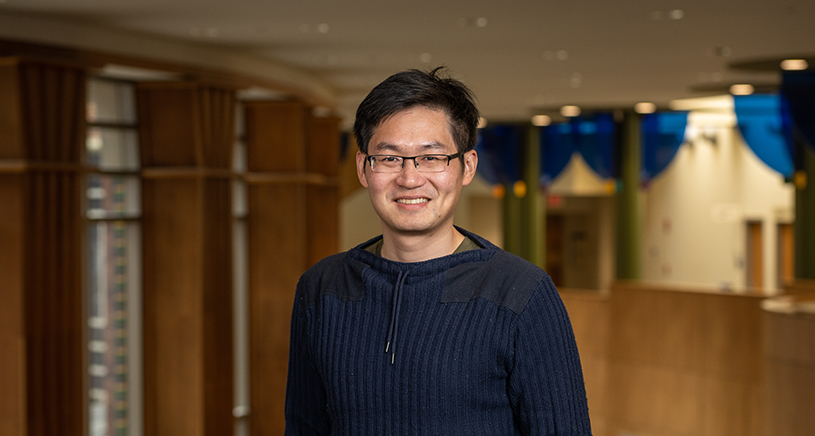
Helmut Rainer is a Professor of Economics at the University of Munich and Director of the Center for Labor and Demographic Economics at the ifo Institute. Previously, he held a faculty position at the University of St. Andrews' School of Economics and Finance. He earned his Ph.D. from the University of Essex in 2005. Education: Ph.D. in Economics, University of Essex, 2005 Research Interests: Focuses on applied microeconomics, particularly family economics and labor economics. His work extends to policy analysis involving domestic violence, gender equality, immigration, and social policy. Notable areas include quantifying domestic violence during crises, evaluating childcare policies, and studying the socioeconomic impacts of political movements like Fridays for Future. Policy Contributions: Advised German Federal Government on the Second Gender Equality Report (2015–2017) and contributed to evaluations of family policies and labor market reforms. His recent work highlights the effectiveness of arrests in reducing domestic violence cycles and analyzes the economic consequences of sports-related violence. Awards: Economic Journal Best Paper Award 2016 Grants & Funding: DFG-funded projects on custody effects and gender dynamics Leibniz Association grants for research on violence against women and economic uncertainty Labs/Teams: Leads the Center for Labor and Demographic Economics at ifo Institute, focusing on policy-relevant economic analysis of labor markets, family structures, and demographic trends.
Professor Denis O'Carroll is Deputy Head of the School of Civil and Environmental Engineering at the University of New South Wales (UNSW) and Managing Director of the Water Research Laboratory (WRL). His research focuses on environmental engineering challenges, particularly in water resource management and contaminant remediation. His primary research interests include: Development of nanoscale materials for environmental restoration PFAS contamination assessment and treatment technologies Groundwater remediation and contaminant transport modeling Green infrastructure performance evaluation Fate and transport of emerging contaminants in aquatic systems Electrochemical degradation of persistent pollutants Bioremediation and microbial transformation processes Professor O'Carroll's recent publications demonstrate a strong focus on PFAS research, with multiple studies examining global contamination patterns, degradation mechanisms, and innovative treatment technologies. His work also shows consistent attention to nanomaterial applications for environmental remediation, particularly sulfidated zerovalent iron systems for chlorinated solvent treatment. The research spans laboratory studies to field-scale validations. As Managing Director of the Water Research Laboratory, Professor O'Carroll leads significant research initiatives addressing water quality challenges. His laboratory conducts both fundamental research and applied studies with direct relevance to environmental policy and remediation practice.
Gabriel Chandler is a Professor of Mathematics and Statistics at Pomona College, part of The Claremont Colleges, with affiliation dating back to 2010. He is currently on leave for the 2025-2026 academic year. His research focuses on statistical theory, time series analysis, and computational methods, with notable contributions to nonparametric estimation, volatility modeling, and sports analytics. Education: Ph.D. in Statistics, University of California, Davis (2004) M.S. in Statistics, University of California, Davis (2001) B.S. in Mathematics, California Lutheran University (1999) Research interests include advanced statistical methodologies such as tree-based set estimation and time-varying autoregression, with applications in sports statistics. His recent publications explore volatility mode identification, minor league baseball performance metrics, and heteroscedastic autoregression models. He has advised students like Guy Stevens on collaborative research projects. Teaching responsibilities include courses in biostatistics, statistical linear models, and statistical theory. No specific grants or labs are explicitly listed, though his work suggests involvement in interdisciplinary statistical collaborations.
Michael Dworsky is a Senior Economist and Professor of Policy Analysis at the RAND School of Public Policy. He specializes in health economics, labor economics, and public finance, with a focus on workers' compensation, health insurance, disability, and healthcare utilization. His work applies quasi-experimental methods to large administrative datasets, particularly in California's workers' compensation system. He leads studies on topics such as racial disparities in injury economic consequences, minimum wage impacts on employer-sponsored insurance, and Affordable Care Act effects on healthcare use. His research includes evaluations of Medicare Advantage Value-Based Insurance Design (VBID) models, tradeoffs in insurance pricing using consumer data, and alternatives to workers' compensation mental health care for first responders. He has published in journals like the American Economic Review and Health Affairs. He holds a Ph.D. in Economics from Stanford University and is affiliated with the RAND Corporation, contributing to policy-relevant studies on healthcare, insurance, and labor markets. Recent projects include a NIOSH-funded study on injury disparities, analysis of hospital indemnity insurance for Medicare beneficiaries, and studies on nurse practitioner-led primary care under Medicaid pay parity. His work often addresses systemic challenges in healthcare access, cost management, and policy design.
Vassilis Christophides is a Professor of Computer Science at the University of Crete and holds an advanced research position at Inria Paris, where he leads work in the MiMove team. His research spans databases, web information systems, big data processing, and IoT analytics, with a strong emphasis on entity resolution, data integration, and scalable data mining. He has supervised numerous research projects funded by the European Union and the Greek State, and has published over 130 articles in top-tier conferences and journals. Research Interests: His primary research areas include Databases, Web Information Systems, Big Data Processing and Analytics, and Information Systems for the Internet of Things. He also focuses on entity resolution, knowledge graphs, streaming data, and explainable AI, particularly in the context of anomaly detection and fairness-aware data systems. His recent work explores hybrid attention models for entity alignment and causal analysis in time series classification. Recent Research Trends: Analysis of his recent publications (2021–2025) reveals a strong focus on entity resolution with fairness constraints, explainable anomaly detection, and adaptive scheduling in IoT edge analytics. He also investigates deepfake detection, crop type mapping using satellite data, and structural bias in knowledge graphs, demonstrating a broad and impactful research portfolio at the intersection of data management and machine learning. Scientific Awards: 2004 SIGMOD Test of Time Award Best Paper Award, ISWC 2003 Best Paper Award, ISWC 2007 Advising and Grants: While specific student names are not listed in the provided texts, Christophides has co-authored numerous papers with researchers such as Vasilis Efthymiou, Ioannis Tsamardinos, and Nikolaos Myrtakis, suggesting active mentorship. He has been the scientific coordinator of multiple EU and national research projects, indicating substantial grant leadership and project management experience. Labs and Teams: He is affiliated with the MiMove team at Inria Paris, a research group focused on mobility and data-intensive systems. His work bridges academic and applied research, leveraging Inria’s infrastructure for large-scale data experimentation and innovation in IoT and edge computing environments.
Laura Purvis is a Professor in Supply Chain Management at Cardiff Business School, Cardiff University, where she has been a faculty member since September 2007. She is a member of the Logistics and Operations Management Department and a Fellow of the Higher Education Academy. She is available for postgraduate supervision and teaches International Business Logistics and Strategic Supply Chain Management at both undergraduate and postgraduate levels. Education: BEng in Industrial Engineering (First Class) from Transilvania University, Brasov, Romania; PhD in 'Agile Supply Chain Management in the Fashion Sector' from Edinburgh Napier University. Prior Affiliation: Worked at Edinburgh Napier University before joining Cardiff University. Laura’s research focuses on supply chain management strategies, agile and resilient supply networks, flexible supply systems, and supply network design. Her work spans multiple sectors including fashion, textiles, and food. She has contributed extensively to the fields of supply chain resilience, sustainability, and innovation in logistics, particularly in the context of distributed manufacturing and digital transformation. Her research integrates theoretical models with practical applications, emphasizing real-world challenges in global and local supply chains. Her recent publications highlight trends in supply chain resilience, sustainable strategies, big data analytics, and the transformative impact of technologies like 3D printing and distributed manufacturing. She frequently publishes in top-tier journals such as Production Planning and Control , Supply Chain Management , and Journal of Cleaner Production , with a strong emphasis on interdisciplinary and applied research. Scientific Contributions: Fellow of the Higher Education Academy Active participation in major international conferences (EurOMA, ISL, ICTL) Extensive research collaboration with scholars across Europe Laura supervises MSc, MBA, and PhD students in Operations and Supply Chain Management. She leads research on logistics innovation and resilient supply networks. Her current supervision includes PhD candidate Mutala Fuseini. She is involved in projects related to regional resilience, sustainable sourcing, and digital supply chain transformation, often in collaboration with industry partners such as Yeo Valley.
Michael Imerman is an Assistant Professor of Teaching in the Finance Area at the Paul Merage School of Business, University of California, Irvine. He also serves as the Faculty Director for the Master of Finance (MFin) program. Prior to joining UCI, he held academic positions at Claremont Graduate University, Lehigh University, and Rutgers Business School, and completed an NSF-funded postdoctoral fellowship at Princeton University in Operations Research and Financial Engineering. His educational background includes a Ph.D. and B.S. in Finance from Rutgers University. Dr. Imerman's research focuses on credit risk, banking, FinTech innovation, financial data science, risk management, and financial regulation . He is a recognized expert in FinTech and is currently finalizing a book titled The Economics of FinTech for publication by MIT Press. His work bridges academic rigor with real-world financial applications, particularly in data-driven finance and regulatory frameworks. His research has been published in leading journals such as the Journal of Business & Economic Statistics , Journal of Banking & Finance , and Stochastic Processes and their Applications . He currently serves on the editorial advisory board of the Journal of Financial Data Science and was previously an associate editor for the Journal of Risk Finance . Dr. Imerman teaches courses including Financial Institutions, Venture Capital and Private Equity, and Applied Machine Learning. He regularly consults for financial institutions and startups and spent a sabbatical (2022) with the FinTech Group at the Federal Reserve Bank of San Francisco. Before academia, he worked as a Wall Street analyst supporting high-grade corporate bond and credit derivatives traders, providing him with strong industry insight. He is affiliated with the Center for Digital Transformation and the Todd and Lisa Halbrook Center for Investment and Wealth Management at the Merage School. His interdisciplinary work involves collaboration across data science, finance, and policy, particularly in emerging FinTech ecosystems.
Kwaku Ohene-Asare is a Lecturer in Business Analytics at De Montfort University, UK, within the School of Leadership, Management and Marketing. He holds a PhD in Operational Research and Management Science from the University of Warwick, an MSc in Economics and Finance (with distinction) from Loughborough University, and a BSc in Economics (first-class honors) from the University of Ghana-Legon. He also completed a certificate in Decision Science and Machine Learning at MIT, USA. He has held visiting professorships at Warwick University and Stellenbosch University and plays a senior lecturer role at the University of Ghana. His educational background includes: PhD in Operational Research and Management Science, University of Warwick, UK (2012) MA in Decision Science and Machine Learning, MIT, USA MSc in Economics and Finance, Loughborough University, UK (Distinction) BSc in Economics, University of Ghana-Legon (First Class) PGCAP (Part 1), University of Warwick, UK (2009) Certificate in Nonparametric & Bootstrap Methods, Sapienza University of Rome, Italy (2012) Kwaku's research interests span business analytics, management science, artificial intelligence, data science, machine learning, economic efficiency, productivity analysis, data envelopment analysis (DEA), stochastic frontier econometrics, and their applications in energy, finance, insurance, and credit unions. He has developed a research-based DEA course at the University of Ghana and pioneered the advanced quantitative research methods course for PhD students since 2015. His work integrates cutting-edge computational techniques and econometric modeling to address real-world economic and business challenges. The recent trend in his publications shows a strong focus on efficiency and productivity analysis across sectors—particularly in energy, banking, and insurance—using advanced non-parametric and parametric methods. He frequently applies DEA, Malmquist indices, and stochastic frontier models to assess performance in African and ECOWAS economies, with a growing emphasis on sustainability, undesirable outputs, and dynamic efficiency. His work bridges theoretical rigor with practical policy implications. His scientific awards include: Global Leadership Award (2021) DFID Shared Scholarship Scheme Award (2004) Doctoral Research Scholarship, Warwick Business School (2007) He has received multiple research grants, primarily from the University of Ghana Business School (UGBS), as Principal Investigator, including projects on data science and machine learning, energy productivity, banking efficiency, and multinational operations. He has supervised PhD students through course development and research mentorship. His consultancy work includes efficiency analysis for the National Petroleum Authority, Ghana, and market entry feasibility studies for international firms. He is affiliated with the Centre for Enterprise and Innovation (CEI), the Institute for Sustainable Economics, and the Institute of Energy and Sustainable Development (IESD) at DMU, where he contributes to interdisciplinary research on sustainable economic development. He is an active member of professional societies including the Operational Research Society (UK), INFORMS, Association of European Operational Research Societies, British Academy of Management, Productivity Analysis Research Network (USA), and the Economic Society of Ghana.
Wendy Meiring is a Professor in the Department of Statistics and Applied Probability at the University of California, Santa Barbara. Her research focuses on statistical methods for analyzing complex data in neuroscience, environmental science, and biomedical applications. She specializes in spatial and temporal processes, computational statistics, machine learning, and uncertainty quantification. Her work integrates advanced statistical techniques with real-world challenges, such as analyzing brain imaging data, pharmacokinetic models, and environmental monitoring. She has contributed to methodologies for functional data analysis, clustering-based correlation estimation, and spatial-temporal modeling. Dr. Meiring has published extensively in top journals, including The Journal of Computational and Graphical Statistics , focusing on topics likeFréchet regression, pharmacokinetic modeling, and environmental phenology. Her research bridges theoretical statistics with practical applications in health, neuroscience, and ecology. She collaborates across disciplines, contributing to programs like the Interdepartmental Graduate Program in Dynamical Neuroscience at UCSB. Her lab develops innovative statistical tools for analyzing high-resolution datasets, emphasizing reproducibility and methodological rigor.
Helen Armstrong serves as Professor of Graphic & Experience Design and Director of the Graduate Program in Graphic & Experience Design at North Carolina State University's College of Design. Her academic leadership spans research, publication, and industry collaboration at the intersection of design and artificial intelligence. Her educational background includes an MA in English Literature from The University of Mississippi, an MA in Publication Design from the University of Baltimore, and an MFA in Graphic Design from The Maryland Institute College of Art. Armstrong's research focuses on digital rights, human-machine teaming, and accessible design, driven by her advocacy for inclusive interfaces as a parent of a child with disabilities. She explores how designers can establish leadership in AI development through human-centered approaches, particularly in explainable AI systems and trust calibration between humans and machines. Analysis of her recent publications reveals a dominant trend toward applying design principles to artificial intelligence challenges, with increasing emphasis on visualization techniques for uncertainty representation, ethical considerations in AI, and inclusive design methodologies. Her work consistently bridges theoretical frameworks with practical industry applications across diverse domains including intelligence analysis, financial services, and assistive technologies. Scientific recognition includes: University Faculty Scholar at NC State (2018) Armstrong actively mentors graduate and undergraduate students through studio courses and research projects while securing substantial industry funding. Her sponsored research portfolio features partnerships with SAS Analytics, IBM, REI, Advance Auto Parts, Sealed Air, Fidelity Investments, and the Laboratory for Analytic Sciences. Current projects address critical challenges in human-AI teaming, including visualizing confidence scores for speaker models, knowledge transfer in wealth management, and personalized shopping experiences. She maintains deep collaboration with the NC State Laboratory for Analytic Sciences (LAS) and contributes to the K-12 Design Lab initiative, extending her expertise in inclusive design to educational outreach programs and community engagement efforts.
Prof. Dick den Hertog serves as a Professor at the University of Amsterdam within the Faculty of Economics and Business, specifically affiliated with the Section Business Analytics. His contact email d.denhertog@uva.nl remains active, indicating current engagement with the institution. His research spans critical domains in analytical methodology: Business Analytics Operations Research Data Science Optimization Decision Support Systems Social Impact Analytics He spearheads the "Analytics for a Better World" initiative, demonstrating a commitment to applying quantitative methods for societal benefit. The "Inspiration from PhD candidates" section on his profile confirms active supervision of doctoral students, though specific names are unavailable. No scientific awards are documented in the provided materials.
Rayid Ghani is a Professor at Carnegie Mellon University (CMU), affiliated with both the Machine Learning Department (School of Computer Science) and the Heinz College of Information Systems and Public Policy. He co-leads CMU’s Responsible AI Initiative and leads the Data Science and Public Policy Group and the Data Science for Social Good Program. His work focuses on applying machine learning, AI, and data science to address social and policy challenges in health, criminal justice, education, public safety, workforce development, and sustainability, with an emphasis on fairness, equity, and transparency in AI systems. Education: PhD in Software Engineering PhD in Societal Computing Rayid’s research spans three pillars: (1) building AI systems for human collaboration to improve decision-making, (2) embedding fairness and equity in AI design, and (3) ensuring reliability and resilience of AI systems in dynamic environments. He emphasizes application-grounded experimental design and stakeholder engagement. His recent publications include frameworks for fair ML experimentation, analyses of fairness-accuracy trade-offs, and AI applications in child welfare, public health, and housing policy. He has also contributed to policy discussions, including congressional testimonies on responsible AI procurement. Advising & Grants: Rayid collaborates with governments, NGOs, and academic institutions on projects like eviction prevention, HIV care retention, and bias mitigation in public policy. He advises non-profits and startups on data science strategy and ethics. Labs & Teams: He leads the Data Science and Public Policy Group and the Data Science for Social Good Program at CMU, fostering interdisciplinary collaborations between computer scientists, social scientists, and policymakers.
Stephen Turner is an Associate Professor of Data Science and Assistant Dean for Research at the University of Virginia School of Data Science . His work bridges genomics, data science, and national security , focusing on biosecurity, synthetic biology, conservation, and bioinformatics applications in human health . Previously, he was a faculty member in the UVA School of Medicine’s Department of Public Health Sciences (2011–2019) and directed the UVA Bioinformatics Core . Ph.D., Human Genetics, Vanderbilt University M.S., Applied Statistics, Vanderbilt University B.S., Biology, James Madison University Turner’s research spans computational approaches to biosecurity, biodiversity conservation, and human health . Recent publications highlight tools like the qqman and kgp R packages, PLANES for epidemiological modeling, and biorecap for bioRxiv preprint summarization. His work integrates large-scale sequencing, genome editing, and machine learning in conservation biotechnology and public health forecasting. Scientific contributions include applications in infectious disease forecasting , forensic genomics , and maternal-fetal biology . He has mentored interdisciplinary students and collaborated on NIH-funded research , while advising biotech startups at the intersection of academia, industry, government, and policy .
Zhenke Wu is an Associate Professor (with tenure) in the Department of Biostatistics at the University of Michigan School of Public Health. He holds affiliate appointments at the Michigan Institute for Data and AI in Society (MIDAS) and leads the Michigan Statistics for Individualized-healthcare Lab (MiSIL). His research bridges statistical methodology and public health applications, with particular focus on precision medicine. Educational background includes: PhD in Biostatistics from Johns Hopkins University (2014) BS in Mathematics from Fudan University (2009) Dr. Wu's methodological research focuses on: Structured Bayesian latent variable models for disease subtyping and clustering Causal inference methods for sequential interventions in mobile health studies Reinforcement learning frameworks for personalized health interventions Scalable computation for high-dimensional biomedical data His applied work spans infectious diseases, mental health, autoimmune disorders, and cancer through collaborations with multiple research consortia including the Intern Health Study and UZIMA-DS project in Africa. Recent publications demonstrate strong focus on Bayesian methods, causal inference, and reinforcement learning applications in digital health. Article themes include mobile health interventions, synthetic EHR development, fair machine learning algorithms, and novel approaches for longitudinal and survival data analysis. Methodological innovations consistently address challenges in precision medicine and individualized health decision-making. Dr. Wu leads several collaborative initiatives including the Precision Health Use Case for mental health treatment (PROMPT) and partners with the Rogel Cancer Center. He advises multiple PhD students and postdoctoral researchers in statistical methodology development and health applications.
B. B. Cael is an interdisciplinary climate and ocean scientist affiliated with the Department of the Geophysical Sciences at the University of Chicago and the Climate Systems Engineering Initiative . His work integrates data analysis and theoretical models to investigate global-scale questions about Earth's carbon cycle and climate system. Cael's research interests span climate mitigation , climate sensitivity , climatic extremes , ocean biogeochemistry , plankton ecology , remote sensing , and paleoclimate . His publications focus on ocean carbon fluxes, climate feedbacks, and marine ecosystem dynamics, with recent work applying machine learning to oceanographic data. His academic journey includes a PhD from the MIT-WHOI Joint Program , a Simons Foundation Postdoctoral Fellowship at the University of Hawai’i at Manoa, and a Principal Scientist role at the UK's National Oceanography Centre. Current research at UChicago addresses both carbon dioxide removal and solar geoengineering strategies. Scientific Awards Simons Foundation Postdoctoral Research Fellow