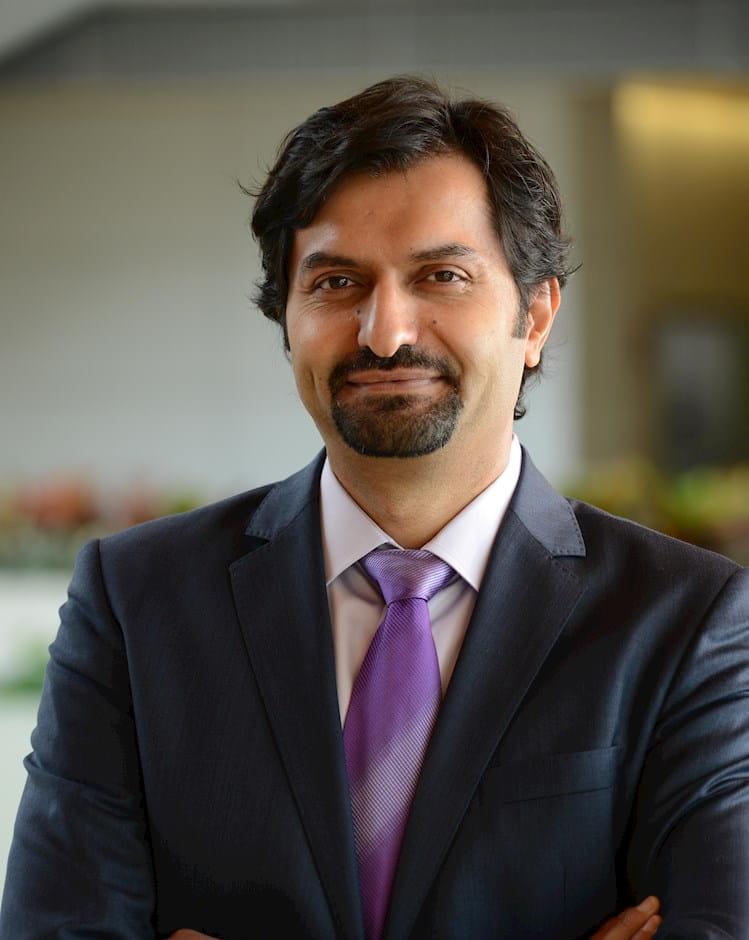
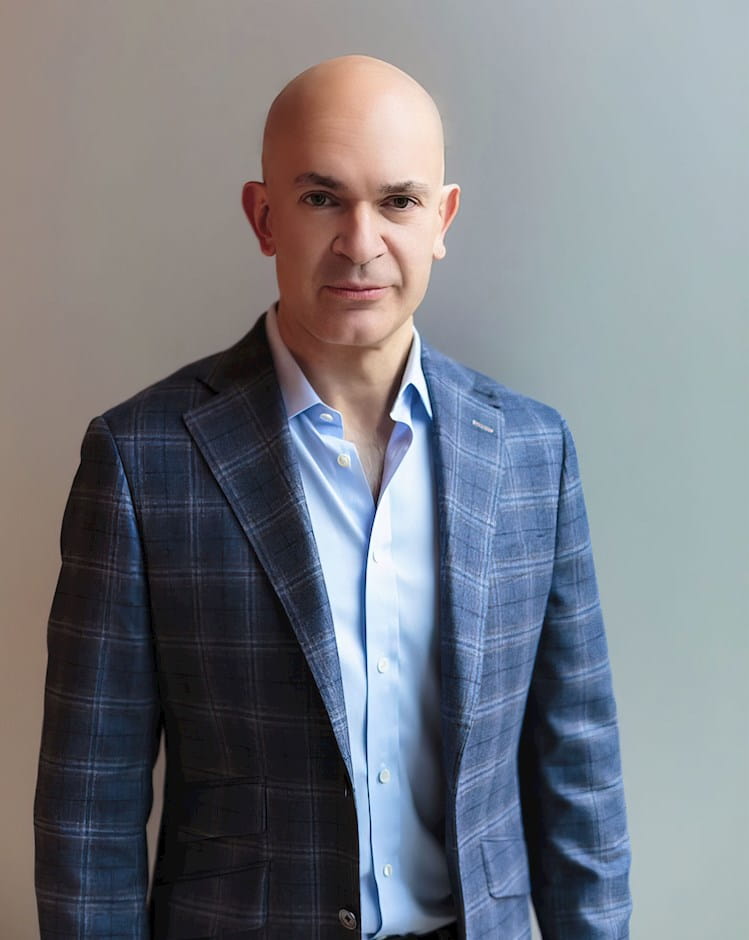
Baris Ata is the Sigmund E. Edelstone Distinguished Service Professor of Operations Management at the University of Chicago Booth School of Business. His work bridges theoretical operations management with practical applications, focusing on dynamic decision-making under uncertainty. Research Interests Ata’s research spans stochastic networks, manufacturing/service operations, healthcare delivery, and social sector innovation. Recent projects address high-dimensional stochastic control, xenotransplantation candidate selection, criminal justice logistics, and last-mile delivery challenges in Africa. Scientific Awards Best Paper in Service Science Award, INFORMS (2009) William Pierskalla Best Paper Award, INFORMS (2015) Wickham Skinner Best Paper Award, POMS (2019) Manufacturing and Service Operations Management Young Scholar Prize, INFORMS (2015) Emory Williams MBA Teaching Award (2021) Recent Publications Ata’s recent work includes topics in dynamic pricing, stochastic control, and healthcare logistics. His papers examine congestion-based pricing strategies, equilibrium analysis in queues, and policy design for organ transplantation. Broad disciplines include operations management, stochastic modeling, and healthcare analytics.
Yolanda Vidal Segui is an Associate Professor in the Department of Mathematics at the Universitat Politècnica de Catalunya (UPC), affiliated with the Escola d'Enginyeria de Barcelona Est (EEBE). Her research focuses on wind energy systems, predictive maintenance, and structural health monitoring of wind turbines. She leads projects in the CoDAlab and WinTurCoM research groups, specializing in data-driven models, condition monitoring, and failure prognosis. Her work integrates machine learning, mathematical modeling, and sensor technology to enhance turbine reliability and energy efficiency. Dr. Vidal holds a PhD in Applied Mathematics and has authored over 350 publications. Her contributions include advancements in SCADA data analysis, vibration-based diagnostics, and AI-driven condition monitoring systems. She has received several accolades, including the WindEurope Technology Workshop recognition and the IFIT Distinction in Mechanism and Machine Science. Her research bridges academia and industry, addressing challenges in offshore wind turbine integrity and maintenance strategies. Active in professional service, she serves on conference committees and editorial boards (e.g., Mechanical Systems and Signal Processing, Wind Energy). Her work emphasizes sustainable energy solutions and has been applied in real-world scenarios like the Alpha Ventus wind farm. She also contributes to educational initiatives, developing innovative teaching materials for engineering students.
Dae-Jin Lee is an Assistant Professor at IE University’s School of Science and Technology, specializing in statistical modeling and data science. Previously, he served as a Research Line Leader at the Basque Centre for Applied Mathematics (BCAM) and coordinated the Knowledge Transfer Unit in Data Science/AI. His academic background includes a Ph.D. in Mathematical Engineering (2010) from Universidad Carlos III de Madrid and postdoctoral research at CSIRO (Australia). His research focuses on statistical methods for complex data, including penalized splines, tensor product smooths, and applications in biomedicine, epidemiology, environmental science, and sports analytics. He has led multidisciplinary projects funded by public and industry grants, collaborating globally with experts across fields like engineering, medicine, and biology. Key research themes include predictive modeling for health outcomes (e.g., SARS-CoV-2 pneumonia severity), sports injury prevention, and AI in healthcare. His work integrates machine learning with traditional statistical techniques, addressing real-world challenges like pedestrian dynamics simulations and automated medical diagnostics. He is actively involved in scientific organizations, including the Spanish Biostatistics Society and the Statistical Modelling Society. His recent publications highlight innovations in growth curve modeling, AI ethics, and spatiotemporal data analysis, reflecting his commitment to advancing both theoretical and applied statistics.
Günter J. Hitsch is the Kilts Family Professor of Marketing at the University of Chicago Booth School of Business, where he has been a faculty member since 2001. His academic leadership extends to editorial roles as Co-Editor of the Journal of Quantitative Marketing and Economics and Associate Editor at Marketing Science and Management Science. Hitsch's educational journey includes an undergraduate degree from the University of Vienna (1995), followed by master's degrees in economics (1997, 1998), and a PhD in economics from Yale University (2001). This strong foundation in economics informs his approach to marketing research. His research program focuses on quantitative marketing and industrial organization, with particular emphasis on dynamic models of firm and consumer decision-making. Key areas include advertising effectiveness, pricing strategies, sequential learning and experimentation, and intertemporal consumer choice. Hitsch is pioneering in applying causal inference and machine learning to solve practical marketing problems such as optimal customer targeting. His work on dating and marriage markets demonstrates innovative application of economic theory to social phenomena. Hitsch's publication trajectory shows evolution from foundational work on consumer choice and switching costs to more recent applications of machine learning in marketing contexts. His research spans theoretical development and practical application, examining everything from private label demand during economic recessions to television advertising effectiveness across hundreds of brands. Co-Editor, Journal of Quantitative Marketing and Economics Associate Editor, Marketing Science Associate Editor, Management Science Hitsch's editorial leadership has significantly shaped the direction of quantitative marketing research. His commitment to methodological rigor and generalizable results ensures his work provides reliable inputs for both marketing practitioners and academic researchers. As an educator, Hitsch teaches advanced courses in quantitative marketing and business analytics, with scheduled courses for 2024-2026. He emphasizes that 'good marketing isn't fluffy,' challenging students to develop analytical approaches to marketing problems. His research philosophy prioritizes providing generalizable results that apply beyond specific case studies, serving as inputs for both practitioner decision-making and academic advancement.
Silverio Juan Martinez Fernandez is a Professor at the Universitat Politècnica de Catalunya (UPC) , affiliated with the Barcelona School of Informatics (FIB) and the Department of Service and Information Systems Engineering . He is a core member of the inSSIDE and GESSI research groups. His expertise spans Empirical Software Engineering , Green AI , MLOps , and Software Analytics . Education: Bachelor's in Computer Engineering PhD from UPC in Software Engineering Master's in Computing Research Interests: Focuses on sustainable AI practices, energy-efficient ML systems, and MLOps education. He investigates architectural design for green AI, energy labeling tools for ML models, and agile software development methodologies. His work bridges theoretical research and industrial applications, emphasizing data-driven decision-making. Grants & Collaborations: Leads projects like Green AI-Based Systems Architecture and Q-Rapids , funded by national and EU programs. Collaborates with institutions like Softeam and industry partners to apply software analytics in real-world scenarios. Labs & Teams: Coordinates the inSSIDE group, focusing on integrated software and data engineering. Active in organizing conferences like GREENS and ESEM , and co-develops tools like Skuld for technical debt management.
Carolina Luis Bassa is a Research Professor at the Universitat Pompeu Fabra Barcelona School of Management (UPF-BSM), serving as Academic Director and leading the Department of Business and Strategic Management. She directs multiple master’s programs and heads the Mercadona UPF-BSM Chair of Circular Economy. Her expertise spans Marketing, Sustainability, and Technology applied to business strategy, with a focus on digital transformation and circular economy practices in industries like agri-food distribution. Her academic journey includes roles as Vice-Dean of Teaching Staff and Academic Director, reflecting her commitment to educational innovation. Research interests emphasize sustainable consumer behavior, data-driven business models, and the integration of technology in CRM and customer experience management. Over 35 years, she has advised students and professionals on strategic applications of marketing and technology. Research Trends: Recent publications highlight circular economy adoption in agriculture, transparency in sharing economies, and data-driven strategies in customer-centric models. She bridges academic insights with industry challenges, particularly in leveraging technology for sustainable business practices. Awards & Grants: No specific awards are listed, but her leadership roles and chair position indicate significant institutional recognition. Grants and partnerships likely stem from her involvement with initiatives like the Mercadona Chair. Labs & Teams: Leads the Mercadona UPF-BSM Chair, focusing on circular economy research and collaboration with industry partners.
Meritxell Sáez Cornellana serves as a Contracted Professor of Ph.D in the Department of Mathematics and Data Analytics at IQS School of Engineering, part of Universitat Ramon Llull in Barcelona, Spain. She leads the ADAMIQS (Applied Data Analytics and Modelling IQS) research group funded by AGAUR, and participates in multiple interdisciplinary projects including CERTERA (advanced therapies development), NFT value drivers research, and international collaborations with China on sustainable development in population medicine. Her research focuses on applying mathematical modeling to biological systems, particularly in understanding cell fate decisions through dynamical landscapes and chemical reaction networks. She has developed geometrical frameworks for analyzing gene regulatory dynamics and cell differentiation processes, bridging mathematical theory with biological applications. Her work spans mathematical biology, dynamical systems theory, and data analytics, with particular expertise in bifurcation analysis, model reduction techniques, and statistical approaches to biological decision-making. Analysis of her publication record reveals a clear trajectory from foundational mathematical work in algebraic geometry toward increasingly biological applications, with a significant shift around 2016 toward systems biology. Her most impactful work involves creating geometrical landscapes that capture decision-making dynamics during cell fate transitions, which has been cited over 60 times. Recent publications show expansion into statistical approaches for university education and continued development of mathematical frameworks for understanding biological networks. Research leadership and funding: Principal Investigator for ADAMIQS project (Applied Data Analytics and Modelling IQS) funded by AGAUR (2022-2025) Researcher in CERTERA consortium for advanced therapies development (Carlos III Health Institute, 2024-2026) Researcher in NFT value drivers project (Fundación Ramón Areces, 2023-2026) Researcher in PoPMeD-SuSDeV project on sustainable development and global health (2023-2026) Researcher in 2IDLATRL project on learning analytics tools (2022-2023) Professor Sáez Cornellana directs the Applied Data Analytics and Modeling research line at IQS, supervising multiple research projects that integrate mathematical theory with practical applications in biology and education. Her team collaborates across disciplines, connecting mathematical modeling with biological experimentation and educational innovation, creating a unique interdisciplinary research environment focused on extracting meaningful insights from complex data systems.
Dr. Marc Ph. Stoecklin is a Principal Research Staff Member and head of the Security Research Department at IBM Research Europe in Zurich, Switzerland. He co-leads IBM's global research strategy on Quantum Safe Cryptography and Migration, focusing on cryptographic artifact identification and migration implementation. Previously, he directed Threat Management research, applying AI and automation to threat detection, investigation, and response. Education: PhD in Computer, Communication and Information Sciences, École Polytechnique Fédérale de Lausanne (EPFL), Switzerland His research spans quantum safe cryptography, threat management, AI security, threat detection, identity management, cyber deception, big data analytics, and security visualization. He pioneered AI-powered security operations, contributing to Watson for Cyber Security and QRadar Advisor with Watson, and analyzes AI/quantum computing misuse in cyber attacks. His 2016-2020 publications emphasize advanced threat detection, malware analysis, and AI security, featuring evasive malware deactivation, threat intelligence computing, and neural network watermarking. These works bridge research and product development, directly influencing IBM security offerings. Dr. Stoecklin led IBM's Cognitive Cyber Security Intelligence group (2014-2019) and the Security Research Department since 2019. As tech lead for IBM's COVID-19 task force (2020-2022), he developed IBM Digital Health Pass, deployed in New York's Excelsior Pass with over 1 million passes issued in two months. He heads the Security Research Department at IBM Research Europe in Zurich and has been integral to the Global Security Analysis Lab (GSAL) and Cognitive Cyber Security Intelligence (CCSI) group at IBM T.J. Watson Research Center.
Maria Cristina Marinescu is a Professor in the Department of Mathematics and Data Analytics at IQS School of Engineering , with a focus on Applied Data Analytics and Modeling . She has an active research profile in interdisciplinary domains connecting computational methods with public health, social sciences, and medical applications.
Xavier Busquets Carretero is an Associate Professor at Esade Business School (Ramon Llull University), affiliated with the Department of Operations, Innovation and Data Sciences . He is a core member of the Grup de recerca en iniciativa emprenedora (GRIE) research group, participating in multiple funded projects since 2014. His work bridges business strategy with innovative methodologies, focusing on network science applications in organizational and sports contexts. Research interests include business model innovation, precision medicine decision systems, and AI governance frameworks. Notable projects involve analyzing agile innovation in pharmaceuticals (Novartis case study) and applying network analysis to football tactics (Barcelona FC analysis). He has collaborated extensively with Spanish institutions like ILUNION Hotels, exploring inclusive business practices. His publications span Journal of Information Technology Teaching Cases , Scientific Reports , and Chaos, Solitons and Fractals , demonstrating interdisciplinary reach. Current research emphasizes strategic adaptation in dynamic environments and state-level AI policy design. Grants include three cycles of the GRIE project (2014–2025), focusing on entrepreneurial initiatives and business ecosystems. His teaching integrates real-world case studies with cutting-edge analytical tools, reflecting his dual focus on academic rigor and practical relevance.
Josep Mas-Pla is a Professor in the Department of Environmental Sciences at the University of Girona (UdG) and a Research Professor at the Catalan Institute for Water Research (ICRA). He holds a PhD in Geology from the Universitat Autònoma de Barcelona (1988) and a PhD in Hydrology and Water Resources from the University of Arizona (1993). His academic career includes positions at UAB (1993–2006) before joining UdG in 2006. He is affiliated with the Research Group in Environmental Geology and Cartography and has led the consolidated GAiA research group since 2009. His research focuses on hydrogeological dynamics, groundwater contamination (particularly nitrates and emerging pharmaceutical contaminants), natural attenuation, vulnerability assessment, and surface water–groundwater interactions. He employs field data, hydrochemical and isotopic tracers, and numerical modeling to study regional flow systems and assess water resource sustainability under human and climate pressures. His work has significant implications for water management and policy, especially regarding the EU Nitrates Directive. His recent publications highlight trends in emerging contaminants, antibiotic resistance in groundwater, climate change impacts on hydrological systems, and integrated modeling approaches. He has contributed extensively to understanding nitrate pollution sources and attenuation mechanisms using multi-isotopic methods, and his 2024 paper explores hydrological trends in Mediterranean basins under changing land use and water demand. Fulbright Scholar (1990–1992) Associate Editor, Hydrogeology Journal (Springer, since 2019) Vice President, Tracers in Hydrogeology Commission, IAHS-IUGG (2012–2019) Board Member, International Association of Hydrogeologists – Spanish Chapter (2022–2026) Coordinator, Consolidated Research Group 'Applied and Environmental Geology (GAiA)' (since 2009) He has directed six PhD theses and numerous master’s theses, and has secured significant funding as Principal Investigator for 13 Spanish competitive projects, 2 EU Alfa programs, 1 EU Marie Curie project, and 2 EU Framework projects (including GLOBAQUA and PERSIST). He currently leads the EU Water4All project TREASURE (2024–2027) on drought adaptation. He collaborates with institutions in Italy, the UK, Argentina, Tunisia, and New Zealand, and has served as visiting researcher at UC Davis and Lincoln University. He leads research in groundwater-surface water interactions, contaminant fate, and sustainable water management, with active projects on antibiotic pollution (GW-GEN, ADVANCE4WATER) and induced in-situ remediation (REMÉDIATE). His lab integrates hydrogeochemical analysis, field monitoring, and numerical modeling to address complex water challenges.
Pablo Calleja is a Research Fellow at the Faculty of Computer Science, Polytechnic University of Madrid (UPM), where he has been a member of the Ontology Engineering Group (OEG) since March 2014. His research focuses on Natural Language Processing (NLP), medical terminology mapping, and legal domain applications. He holds a degree in Computer Engineering from San Pablo CEU University (2013) and has prior industry experience as a software developer at IECISA (2008–2011) and a collaboration grant at the Open Access Classroom, San Pablo CEU University (2011–2013). Key contributions include projects like Drugs4covid for pandemic drug discovery, TermitUp for terminological enrichment, and esT5s , a Spanish text summarization model. His work spans legal knowledge graphs, multilingual compliance systems, and NER techniques for academic content analysis. He has also explored accessibility multimedia services and semantic graph applications in tourism ( DBtravel ). Professional roles include collaboration grants at UPM and active participation in interdisciplinary projects such as SNOMED-CT annotation for medical technical sheets. Research trends emphasize cross-domain adaptation (e.g., K-Flares), data augmentation (Widaug), and multilingual NLP solutions. Advising and grants: His current position is supported by a collaboration grant at OEG. Earlier grants include work at San Pablo CEU University. No formal advisees are listed, but he contributes to collaborative research teams. Labs and teams: Core member of the Ontology Engineering Group (OEG), focusing on knowledge representation, NLP, and applied informatics in healthcare and law domains.
Belen Masia is a tenured Associate Professor in the Computer Science Department at Universidad de Zaragoza , Spain. She is affiliated with the Graphics & Imaging Lab (part of the I3A Institute ) and the Vision, Image and Neurodevelopment Group (within the IIS Aragon Institute ). Her research bridges computational imaging , applied perception , and virtual reality , focusing on modeling human visual behavior and improving graphics/vision algorithms through perceptual insights. Education : Ph.D. in Computer Science (Eurographics PhD Award 2015), postdoctoral work at Max Planck Institute for Informatics . Research Highlights : Virtual Reality : Studying user behavior, saliency prediction, multimodal perception, and cinematography in VR. Appearance Modeling : Developing intuitive material representations and metrics for editing. Applied Perception : Leveraging human vision insights to diagnose defects in non-verbal patients. Computational Displays : Exploring HDR imaging and display optimization. Scientific Awards : Eurographics Young Researcher Award 2017 Eurographics PhD Award 2015 MIT Technology Review Top Ten Innovators Below 35 in Spain 2014 NVIDIA Graduate Fellowship 2012 Leonardo Fellowship from BBVA Foundation 2020 Leadership & Editorial Roles : Co-chair of Full Papers track at Eurographics 2026 Associate Editor for ACM Transactions on Graphics, Computers and Graphics, and ACM Transactions on Applied Perception Co-founder of DIVE Medical , a startup for automated visual function diagnosis PhD Students : Dario Lanza (2025, Modeling, Perception and Editing of Volumetric Materials ) Daniel Martin (2024, Computational Models of Visual Attention in VR , Best PhD Thesis Award EGSE) Julia Guerrero-Viu (2023, WiGRAPH Rising Star) Sandra Malpica (2023, VR Gaze Behavior ) Manuel Lagunas (2021, BBVA/SCIE Young Researcher Award) Ana Serrano (2019, Eurographics PhD Award & Unizar Outstanding Thesis) Collaborations & Grants : Involved in the EU-funded PRIME Innovative Training Network (predictive rendering and appearance reproduction) and leading projects on deep learning for pediatric visual diagnosis.
Carlos Platero Dueñas is a Full Professor at the Department of Electrical, Electronic and Automatic Engineering and Applied Physics at the Universidad Politécnica de Madrid (UPM), where he has served for 31 years. He leads the research group Tecnologías para Ciencias de la Salud since 2015 and contributes to interdisciplinary research at the intersection of biomedical engineering, neuroscience, and artificial intelligence. Department: Electrical, Electronic and Automatic Engineering and Applied Physics Research Group: Tecnologías para Ciencias de la Salud (Health Science Technologies) Teaching: 34 years of academic experience, including 128 final projects supervised His research focuses on applying computational methods to neurodegenerative diseases , particularly Alzheimer's and Parkinson's, through neuroimaging analysis, predictive modeling, and hippocampal segmentation. Recent work includes AT(N) profiles for dementia prediction and machine learning techniques for clinical data modeling. The 15 most recent publications reveal a strong emphasis on Alzheimer's disease progression , hippocampal segmentation , and predictive analytics using neuroimaging and clinical markers. Key methodologies involve graph cuts algorithms, longitudinal modeling, and label fusion techniques applied to MRI and CT scans. Teaching contributions include: 128 final projects supervised (undergraduate and master's) 2 doctoral theses directed Active participation in university governance through the School Council and Researcher Staff Committee
Berta María Guijarro Berdiñas is a Researcher in the Department of Computer Science and Artificial Intelligence at the University of A Coruña , Spain. She is affiliated with the Laboratory for Research and Development in Artificial Intelligence and teaches courses like Machine Learning , Development of Intelligent Systems , and Programming at both undergraduate and postgraduate levels. Research Focus: Her work lies at the intersection of Artificial Intelligence , Machine Learning , and Knowledge-Based Systems . Key contributions include frugal learning (limited data), anomaly explanation , and distributed learning for edge devices. She applies these to areas like health informatics , forest fire management , and human-robot interaction . Recent Publications span explainable AI , anomaly detection , multi-agent systems , and low-power machine learning . Her articles appear in top venues like Expert Systems with Applications and IEEE Transactions on Neural Networks and Learning Systems . Grants & Projects include EU-funded initiatives, Spanish Ministry of Science grants, and regional collaborations. She focuses on AI for healthcare , smart systems , and distributed learning .