André GagnéView profile
Professor
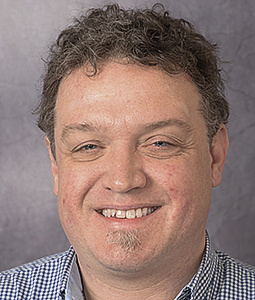
André Gagné is a Full Professor and Chair of the Department of Theological Studies at Concordia University, currently on research leave (July-December 2025). His work bridges theology, political science, and sociology with global recognition through 400+ media features in outlets like The New York Times, The Guardian, and Le Monde. Education: Conjoint PhD from Université catholique de Louvain and Université de Montréal M.A. from Université de Montréal B.Th. from Université de Montréal His research centers on Christian Political Thought (examining theology-state dynamics), Global Pentecostal and Charismatic movements (analyzing their sociopolitical impact worldwide), and Reception History of the Bible (tracing interpretive trajectories across cultures). This interdisciplinary approach integrates historical analysis with contemporary case studies, particularly focusing on evangelical movements in the Americas and Europe. His eight books and recent journal articles reveal consistent thematic focus: the weaponization of spiritual warfare rhetoric in politics, apocalyptic narratives in populist movements, and religious violence in Western traditions. The 2024 publications on Trump-era evangelicalism demonstrate methodological innovation through media discourse analysis combined with theological critique. Scientific awards: Newsmaker of the Week (4 times) Newsmaker of the Month (4 times) President's Opinion Leader of the Year (2016) Expert Communicator of the Year (2024) Dr. Gagné supervises MA students in Theological Studies and PhD candidates in Individualized Programs and Humanities. His policy impact is evidenced by service on Public Safety Canada's National Expert Committee on Countering Radicalization to Violence (2023-2025), where he contributed theological perspectives on religious extremism. His media engagement strategy represents a deliberate effort to translate academic research for public discourse. He co-directs the Spirit, State, and Society podcast and maintains affiliations with Concordia's Centre for the Study of Learning and Performance, Université de Sherbrooke's Centre de recherche Société, Droit et Religions, and the multi-university Political Theology Research Group (McGill, Concordia, UdeM, ULaval).