Jakub Zamorski is a researcher at the Department of Comparative Civilization Studies within Jagiellonian University , specializing in the history of Buddhist religion and philosophy in China and Japan. His work integrates Buddhist studies with broader East Asian 'history of thought' (思想史), examining how classical Chinese civilization influenced regional traditions. Focus on demythologization of Pure Land Buddhism Investigates Buddhist impact on modern European thought reception (19th-20th c.) Expert in East Asian Buddhist logic (hetu-vidyā/yinming) Zamorski's publications span comparative Buddhist studies, including collaborations on dharmadhatu analysis and translations of early Mahayana texts. He has received prestigious fellowships from Jōdo-shinshū Higashi Honganji and Sheng Yen Education Foundation, and participates in international conferences like International Association of Buddhist Studies and American Academy of Religion. 2020-2023: Collaborator on Japanese government-funded project analyzing Early Mahayana Sutras 2016: Foguang University research on early modern East Asian Buddhist texts 2011: Participant in study of 6th-7th century Chinese Buddhist thought
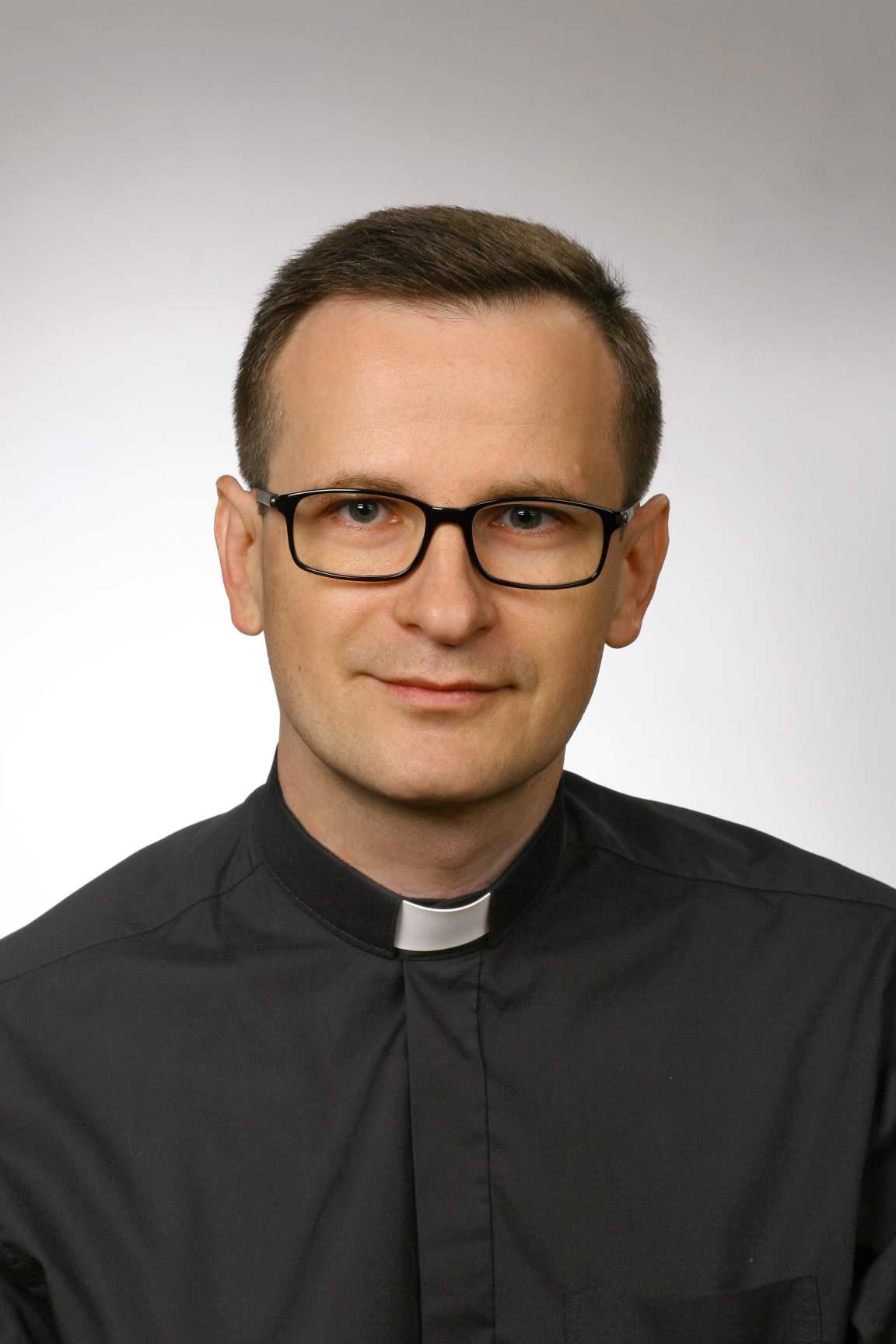
Rev. Prof. Dr. Hab. Henryk Drawnel is a leading scholar in biblical theology and Qumran studies at the Institute of Biblical Studies, Faculty of Theology, John Paul II Catholic University of Lublin. His work bridges Second Temple Judaism with Aramaic literature, focusing on Enochic texts and their Mesopotamian influences. Education: Studied at Salesian seminaries in Cracow and Cremisan, Israel; Pontifical Biblical Institute (Rome); École Biblique (Jerusalem); Harvard Divinity School. His research centers on Aramaic manuscripts from Qumran, particularly the Book of Enoch and Levi Document , examining intersections with Mesopotamian astronomy, priestly education, and apocalyptic traditions. Key projects include critical editions of 4Q201-212 Enoch fragments and Mesopotamian influences on Jewish angelology. Recent publications (2025–2010) analyze literary structures of Enochic texts, lunar calculations, and Fallen Angels' theology. His 2011 monograph on the Aramaic Astronomical Book earned the Minister of Science award. Scientific Awards: Bronze Cross of Merit (2021) Minister of Education and Science Award (2021) KUL Internal Award for Top Publications Minister of Science and Higher Education Prize (2011) Drawnel's editorial roles include Journal for the Study of the Pseudepigrapha and Biblical Annals . He has organized major conferences, such as the 2017 Qumran Scrolls 70th Anniversary Symposium.
Rev. Dr. hab. Tomasz Siemieniec serves as an Assistant Professor in the Department of Protestant Theology at the John Paul II Catholic University of Lublin. His academic profile centers on advanced biblical scholarship with specialized expertise in New Testament exegesis, particularly the Book of Revelation, where he investigates linguistic, historical, and theological dimensions of apocalyptic literature. His research trajectory reveals deep engagement with Johannine literature, focusing on concepts like time (καιρός/χρόνος), judgment, community identity, and afterlife terminology within Revelation. He systematically examines intertextual connections between Old and New Testaments while analyzing ancient cultural contexts—such as Greek linguistic nuances in Rev 22:15—to illuminate theological meanings. His work bridges exegetical precision with contemporary theological relevance, especially regarding Mariological interpretations and Pauline soteriology. Analysis of his 15 most recent publications indicates dominant specialization in Revelation studies (80% of output), with recurring methodological emphasis on Greek terminology analysis, historical-cultural contextualization, and ecumenical implications. Key thematic clusters include death/eschatology (Rev 14:13, 20:4-5), community formation (Rev 1:9, 22:15), and intertestamental hermeneutics (Numbers-Revelation links). Scientific recognition includes: Individual award for an outstanding habilitation dissertation (2018) As Editor-in-Chief of Kielce Theological Studies and active reviewer for Verbum Vitae and Kieleckie Studia Teologiczne, he contributes significantly to academic discourse. His public engagement extends through Radio Maryja's "Searching for the Word of God," TV Trwam's "Word of Life" commentaries, and Lectio Divina workshops—demonstrating commitment to bridging scholarly theology with pastoral practice. He also organizes biblical competitions for Civitas Christiana and contributes to Catholic weekly publications on theological topics.
Professor Joanna Durczak serves at Maria Curie-Skłodowska University in Lublin, Poland, as a leading academic in American Literature through her Department of English affiliation. With over 40 years of scholarly contributions since the 1970s, she has established herself as a pioneering voice in environmental and ecological literary criticism. PhD (1984) and Habilitation (1997) from Jagiellonian University Elected Professor (2014) after decades of academic service Contributor to Polish-American literary dialogue through editorial work Her research focuses on North American environmental literature, including: Ecocritical analysis of contemporary American and Canadian writing Historical development of nature writing traditions Intersections between agrarian literature and cultural resistance Urban ecology representation in modern fiction Twentieth and twenty-first century poetic movements Ethnic literature's environmental perspectives Recent publications demonstrate her ongoing engagement with ecological themes and agrarian resistance narratives. Her work has earned multiple prestigious recognitions including: National Education Minister’s Award Individual Rector’s Award (Grade III) Collective Ministry of Education Award Silver Cross of Merit National Education Medal Professor Durczak has guided 107 master’s theses and supervised 5 doctoral dissertations while maintaining active roles in academic governance (UMCS Senate 2012-2016) and research leadership (Head of Canadian Research Laboratory 2013-2017). Her international academic engagements include fellowships at SUNY Buffalo, Berlin’s Kennedy Institute, and London’s Eccles Centre.
Rev. Prof. Dr. Hab. Mirosław Wróbel is a Professor in the Department of Biblical Philology and Intertestamental Literature at the Institute of Biblical Studies, Faculty of Theology, John Paul II Catholic University of Lublin. His academic work focuses on the intersection of Jewish and Christian biblical traditions, with special expertise in the Gospel of John, Targum studies, and intertestamental literature. His educational background and specific degrees are not explicitly detailed in the provided texts, but his title "Prof. Dr. Hab." indicates he has achieved the highest academic rank in the Polish system, requiring both a doctoral degree and habilitation. Prof. Wróbel's research interests span multiple areas of biblical scholarship: Biblical Studies with emphasis on both Old and New Testaments Johannine Literature, particularly the Gospel of John Targum Studies (Aramaic Bible translations) Jewish-Christian Dialogue throughout history Intertestamental Literature and Second Temple Judaism Biblical Theology and Hermeneutics His publication record shows a consistent focus on the relationship between Jewish and Christian biblical interpretation, with particular attention to how early Christian texts engaged with Jewish traditions. His work on the Gospel of John examines its relationship with Judaism, challenging simplistic readings of "anti-Judaism" in the text. His research on Targums (Aramaic Bible translations) explores how Jewish communities interpreted Scripture, providing valuable context for understanding early Christian interpretation. Prof. Wróbel has received several prestigious awards for his scholarly contributions, including the Rector's Award of the Catholic University of Lublin, the Phoenix Award from the Association of Catholic Publishers, and the Award from the President of Lublin City. His editorial work includes serving as editor-in-chief for the "Commentary on Genesis, Exodus, Leviticus, Numbers, and Deuteronomy" and membership on the editorial board of "Biblical Annals." As an academic mentor, Prof. Wróbel has served as a doctoral dissertation advisor and reviewer for numerous scholarly works. He has organized and participated in many international conferences, particularly the International Autumn Biblical Days, focusing on various biblical themes. His scholarly service includes membership in the Polish Academy of Sciences Theological Commission and the Polish Society for Jewish Studies. His research program demonstrates a commitment to building bridges between Jewish and Christian scholarship, with special attention to how biblical texts were interpreted in both traditions. His work on the Aramaic Bible translation project represents a significant contribution to making these important texts accessible to Polish scholars.
Dr. Marcin Kowalski is Assistant Professor at the Institute of Biblical Studies, Faculty of Theology, John Paul II Catholic University of Lublin. He specializes in Pauline letters, socio-rhetorical criticism, and intertextuality between biblical texts and Greco-Roman/Jewish traditions. PhD in Biblical Theology (Pontifical Biblical Institute, 2011) Habilitation in Theology (KUL, 2019) His research focuses on Pauline pneumatology, ancient rhetoric, apocalyptic empire criticism, and socio-cultural contexts of Corinthian correspondence. Recent publications explore connections between Paul’s theology and Stoic concepts of pneuma , as well as biblical anthropology. Scientific awards include: 2020 Phoenix Award for spiritual writing Multiple Rector’s Awards for academic excellence He serves as editor-in-chief of The Biblical Annals and directs the Abraham J. Heschel Center for Catholic-Jewish Relations at KUL. His media work includes TV and radio programs on biblical themes.
Rev. Dr. hab. Grzegorz Barth is a Professor at the John Paul II Catholic University of Lublin (KUL) in the Department of Christology and Christian Personalism. His academic career focuses on theological hermeneutics, personalism, and Christological engagement with earthly realities. He has contributed extensively to peer-reviewed journals and edited scholarly publications. Department: Christology and Christian Personalism University: John Paul II Catholic University of Lublin Barth's research centers on personalism and hermeneutical theology , particularly through the lens of Karol Wojtyła (John Paul II) and Wincenty Granat. His work explores the synthesis of objective/subjective theological dimensions, Trinitarian foundations of faith, and the person as the core of theological method. Key themes include solidarity, identity in Europe, and health as life balance. His publications span 2012–2025, with recent works on apocalyptic/eschatological theology, migration ethics, and the hermeneutics of personhood. He has served on editorial boards of journals like Ethos and Teologia w Polsce , and organized the Lublin Days of Personalism conferences.
Julia Maria Seltnerajch is an Assistant Professor at the Department of English and American Studies , Faculty of Languages, Literatures and Cultures, Maria Curie-Skłodowska University, Lublin. Her research focuses on postmodernism, spatial semiotics, and dystopian narratives in contemporary British and American fiction. Key affiliations: Department of English and American Studies, UMCS Faculty of Languages, Literatures and Cultures ORCID: 0000-0003-0143-4874 Research interests include urban space in postmodern literature, metafictional techniques, the evolution of detective and road fiction, and memory studies. She explores how cities function as active agents in narratives by Paul Auster, Neil Gaiman, and Dmitry Glukhovsky. Her work intersects literary theory with urban studies, emphasizing chronotopes, heterotopias, and semiotic space. Scientific contributions are evident in 15 recent publications (2016–2024) analyzing dystopian environments (Auster’s In the Country of Last Things , Gaiman’s Neverwhere , DuPrau’s The City of Ember ), metafictional structures (Auster’s Man in the Dark , Travels in the Scriptorium ), and genre transformations (road narratives in The Music of Chance , underground spaces in Metro 2033 and Neverwhere ).
Rev. Dr. Marcin Biegas is an Assistant Professor in the Department of Biblical Philology and Intertestamental Literature at the Faculty of Theology, John Paul II Catholic University of Lublin. His scholarly work focuses on the Dead Sea Scrolls, particularly the Great Psalms Scroll (11Q5), and the portrayal of King David in intertestamental literature. He is actively engaged in research, publication, academic service, and public outreach. John Paul II Catholic University of Lublin – Assistant Professor, Department of Biblical Philology and Intertestamental Literature, Faculty of Theology His research interests lie at the intersection of biblical exegesis, early Jewish writings, and Qumran studies. He investigates literary structures, theological themes, and textual variants in apocryphal and pseudepigraphal works, especially those concerning Davidic traditions and the Psalms. His work combines philological precision with theological insight. The recent publications and conference presentations of Dr. Biegas reveal a consistent focus on the figure of King David across Qumran texts, the structure of the Psalms Scroll (11Q5), and comparative analyses of apocryphal and canonical writings. His work spans textual criticism, literary analysis, and theological interpretation, primarily within Second Temple Judaism. He frequently contributes to Biblical Annals , participates in national and international conferences, and engages in collaborative research projects. Reviewer, Biblical Annals (2022–2024) Reviewer, Sandomierz Studies. Theology-Philosophy-History (2020) Member, Association of Polish Biblical Scholars (since 2021) Member, Association for the Support of Biblical Studies "Verbum Sacrum" Dr. Biegas has served as a scientific supervisor (promoter) for doctoral research on apocryphal Davidic texts from Qumran and is a contractor in a Ministry of Education and Science-funded project titled "From the Book of Enoch to the Fourth Sibylline: The Old Testament Apocrypha between Tradition and Innovation." He has organized and co-hosted national and international conferences on biblical themes and has delivered lectures on television and at academic institutions. His fieldwork includes research trips to Jerusalem and archaeological sites in Israel such as Tel Arad, Tel Beer Sheva, Shiloh, Samaria, Gerizim, and Tell Balata, supporting his textual research with historical and archaeological context. He has not established a named laboratory, but his work is deeply integrated into the academic and research infrastructure of the Faculty of Theology at KUL.
Michał Wojciechowski is a Professor at the University of Warmia and Mazury, Faculty of Theology, Department of Fundamental Theology, Dogmatic Theology and Biblical Studies. His work bridges theological sciences, history, and Hellenistic culture, focusing on Biblical ethics, deuterocanonical texts, and early Christian sociology. ORCID: 0000-0002-5658-7512 Email: m.wojciechowski@uwm.edu.pl Personal Website: ResearchGate Profile Research interests include: Biblical exegesis and its Hellenistic influences Social and economic ethics in religious contexts Comparative analysis of Greek fables and New Testament narratives Laypeople's roles in Church history His 15 most recent publications explore themes such as deuterocanonical literature (60% of works), ethical frameworks in apocalyptic texts (30%), and intersections between Greek philosophy and Biblical theology (10%). As a doctoral supervisor, he supports projects requiring institutional resources and funding, with 2 promoted doctors and 1 current supervisee (both Polish and international candidates).
Dr Karolina Wierel is a Researcher at the University of Białystok's Faculty of Cultural Studies, specializing in contemporary cultural narratives. Her research examines apocalyptic imagination across media, with focus areas including ecological humanities, media discourse analysis, and transformations in post-apocalyptic fiction. Her publications explore cultural responses to catastrophe, analyzing how literature and film mediate societal anxieties about environmental collapse and technological risks. Recent work investigates affirmative humanities frameworks for addressing ecological crises. Article analysis reveals concentrated expertise in decoding catastrophe narratives across media, with consistent attention to power dynamics, environmental ethics, and the evolution of apocalyptic genres in contemporary culture.
Professor Mirosława Ołdakowska-Kufel is a distinguished academic at the John Paul II Catholic University of Lublin, where she serves as Professor in the Department of Polish Literature of the 20th and 21st Centuries within the Faculty of Humanities. With decades of scholarly contributions, she has established herself as a leading expert in Polish literature, particularly focusing on biblical inspirations in literature, works of Karol Wojtyła (Pope John Paul II), Stanisław Vincenz, and Zofia Kossak. Her research interests span Polish literature of the 20th and 21st centuries, biblical studies in literature, Polish-Ukrainian literary relations, Catholic literature, and sacral elements in contemporary writing. Professor Ołdakowska-Kufel has supervised numerous doctoral and master's theses since 2002, demonstrating her commitment to academic mentorship and the development of new scholarly generations. Her recent publications (2022-2024) reveal a strong engagement with contemporary issues including Russia's war against Ukraine as reflected in Polish poetry, biblical interpretation through literary works, and Polish-Ukrainian cultural relations. Her scholarship demonstrates consistent attention to religious and spiritual dimensions of literature while maintaining rigorous academic standards. Odznaka Honorowa 'Zasłużony dla Województwa Lubelskiego' (Honorary Badge 'Meritorious for Lublin Voivodeship') Złoty Krzyż Zasługi (Gold Cross of Merit) Special Award of the Board of the Association of Polish Writers Abroad (2009) Professor Ołdakowska-Kufel has organized numerous international and national conferences, particularly focusing on biblical themes in literature, Polish-Ukrainian cultural relations, and the works of significant Polish literary figures. Her leadership in the Commission of Polish-Ukrainian Cultural Associations demonstrates her commitment to fostering cultural dialogue between nations.
Dr hab. Monika Sidor, Professor at the Catholic University of Lublin , serves as Deputy Dean for Education at the Faculty of Humanities. Her research focuses on the intersections of literature and history, particularly in Russian emigrant contexts. Specializes in literary anthropology , autobiographical theory , and urban space in diaspora narratives . Engages with spirituality in Russian literature and post-Soviet memory studies . Recent publications analyze contemporary Russian authors, historical reception, and interdisciplinary themes. She has also contributed to studies on local governance and social participation.
Rev. Dr. Tomasz Bartłomiej Bąk is Assistant Professor at the Department of Biblical Philology and Intertestamental Literature, Faculty of Theology, John Paul II Catholic University of Lublin (KUL). Ordained in 2004, he combines philological precision with theological insight, specialising in Coptic and Egyptian languages, the Synoptic Gospels, and inter-testamental literature. Education 1998–2004: Philosophical and theological studies, Major Seminary, Rzeszów 2004: M.A. Biblical Theology (thesis on Prov 31:10-31) 2005–2014: Pontifical Biblical Institute, Rome 2006/07: Hebrew University, Jerusalem (six-month stay) 2010: Licentiate in Biblical Studies (Markan use of ἀποστέλλω) 2011: B.A. Oriental Studies (biblical citations in Shenute) 2014: Ph.D. Oriental Studies (critical edition of Proto-Isaiah in Sahidic Coptic) Research Interests His work centres on linguistic and philological analysis of biblical texts, especially the Coptic versions of Isaiah and the Gospel of Mark. He explores the interface between language, theology, and manuscript tradition , producing critical editions that illuminate the textual history of both Old and New Testaments. Publications & Trends Since 2015 he has authored more than a dozen peer-reviewed articles and a major monograph on the Sahidic Coptic Proto-Isaiah. Recurring themes include textual criticism of Isaiah 40–50, the semantics of ἀποστέλλω in Mark, and the authenticity of controversial Coptic fragments such as the Gospel of Jesus’ Wife . Grants & Awards 2017 National Science Centre “Miniatura-1” grant for critical edition of Isaiah 40 in Coptic 2019-2020 KUL Faculty of Theology research grant “Edycja manuskryptu koptyjskiego” Editorial & Service Roles Secretary, Editorial Board, The Biblical Annals (2015–) Member, Editorial Team, Analecta Biblica Lublinensia (2014–) Secretary, Faculty of Theology Council, KUL (2015–) Teaching & Outreach He teaches Patristic Greek, Textual Criticism, Apostolic Letters, and Old Testament History at KUL, and offers courses on the Pentateuch and Pauline letters at the Rzeszów Seminary. His media presence includes regular contributions to TV Trwam (“Word of Life”), Radio Maryja , and Catholic Radio Via .
Professor Urszula Terentowicz-Fotyga from the University of Maria Curie-Skłodowska's Faculty of Languages, Literatures and Cultures has established herself as a leading scholar in literary spatiality and dystopian studies. With MA degrees in English Literature (UMCS) and Culture and Criticism (University of London), a PhD (2004), and habilitation (2016), she founded the Interdisciplinary Team for Space Semiotics and co-organizes Signifying Spaces conferences. PhD: University of Maria Curie-Skłodowska (2004) MA: Culture and Criticism, University of London MA: English Literature, University of Maria Curie-Skłodowska Her research explores spatial representation in literature and culture, with particular focus on dystopian narratives. The National Program for the Development of Humanities grant (ID 457841) examines utopian literary canon translation, while her OPUS 23 award-winning project (ID 562236) analyzes social media's role in contemporary dystopian fiction. Recent publications examine digital dystopias in works by Dave Eggers and postmodern spatial concepts. She has co-edited comparative volumes including Space in Literature: Method, Genre, Topos and authored studies on Woolf's spatial semiotics. National Science Centre grants Three Rector's Awards for academic excellence Co-organizer of Signifying Spaces conference Established Interdisciplinary Team for Space Semiotics