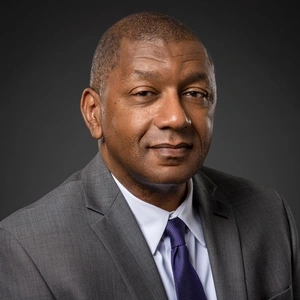
Willie F. Tolliver is an Associate Professor and Director of Social Justice Education and Equity at the Silberman School of Social Work, City University of New York. His scholarship focuses on anti-oppression social work practice, racial justice, and transformative leadership in human services. He developed and chairs the Committee for Undoing Racism at Hunter College. Research examines structural factors contributing to police violence against Black communities, decolonizing approaches in therapeutic practices, and equity-focused organizational leadership. His publications integrate critical race theory with social work education and community practice frameworks. Administratively, he directs initiatives promoting equity in social work curriculum and previously led the One Year Residence MSW pathway program. Community engagement includes collaborative projects with Westchester County Family Court and Administration for Children's Services.
Associate Professor Jacob Prehn is an Associate Dean (Indigenous) and Indigenous Principal Research Fellow in the School of Social Sciences at the University of Tasmania, within the College of Arts, Law and Education. He holds a PhD in Society and Culture and a Master of Social Work, with additional certifications in Aboriginal research and leadership. His research focuses on Indigenous Data Sovereignty, men’s health, and educational equity. Current roles include Director of Research at the Treaty Authority (Victoria) on leave from his academic position. Key research interests include Indigenous data governance, Aboriginal men’s health masculinities, and culturally responsive education. He leads projects totaling $3.83M in grants, including Movember Foundation initiatives on Indigenous social and emotional wellbeing. Awards include the 2024 APS Data Diversity Excellence Award and John Malvaney Fellowship. Teaching responsibilities include coordinating the Master of Social Work program and units like Indigenous Lifeworlds. Collaborations include Maiam nayri Wingara (Indigenous Data Sovereignty Collective) and the Longitudinal Study of Indigenous Children. His work emphasizes decolonizing methodologies and community-driven solutions.
Dr. Trishna Patel is a Research Director at the Childhood & Social Care Research Institute, University of East London. Her research focuses on mental healthcare ethics, social justice in clinical practice, and LGBTQ+ youth services. She critically examines racial attitudes, moral values, and systemic inequities in healthcare decision-making. Her work spans ethical considerations in therapeutic settings, cognitive behavioral processes, and veterans' mental health. Her research interests emphasize transforming healthcare systems to address marginalized groups' needs, particularly through a social justice lens. She has explored interventions targeting intrusive memories in depression and developed psychometric tools for assessing cognitive processes across disorders. A trend in her recent work (2019–2025) highlights racial disparities and social justice frameworks in mental healthcare. Earlier studies (2007–2015) focused on cognitive-behavioral therapy innovations and metacognitive approaches for depression and PTSD. Dr. Patel has contributed to clinical guidelines and policy advocacy, though no specific awards or grants are noted in the provided texts. She collaborates within interdisciplinary teams at her research institute, addressing complex societal challenges in mental health.
Dr. Yara Mekawi is an Assistant Professor in the Department of Psychological and Brain Sciences at the University of Louisville and the founder of the Challenging Ongoing Legacies of Racism (COLOR) Lab. Her work focuses on dismantling racial inequities through interdisciplinary research examining how racism impacts mental health, cognitive processes, and systemic models of psychopathology. Education: PhD in Clinical and Community Psychology (University of Illinois at Urbana-Champaign, 2019), Postdoctoral Fellowship (Emory University School of Medicine, 2021). Research Interests: Racial discrimination's effects on mental health, cognitive/affective mechanisms of prejudice, and culturally responsive interventions. Her lab employs multi-method approaches to address systemic racism and promote equity. Dr. Mekawi’s research bridges clinical psychology with social justice, emphasizing marginalized communities’ resilience and the biological embedding of racism. Her studies explore trauma, emotion regulation, and intersectional oppression, with a focus on Black populations. Lab Activities: The COLOR Lab collaborates on projects like the REAP parenting model and mindfulness-based interventions for trauma survivors. Ongoing work investigates polygenic risk, racial identity profiles, and institutional disparities in academia.
LaTasha Smith, Ph.D., LCSW, CGP, is an Adjunct Associate Professor at the Smith College School for Social Work . She teaches in the M.S.W. program, focusing on social justice, assessment, fieldwork, and clinical practice. Additionally, she has adjunct roles at Fairfield University and Columbia University School of Social Work, where she has taught courses on clinical case evaluation, advanced practice, and mental health in medical contexts. Her research examines internalized racial oppression's impact on mental health among African American women clinicians. Smith holds advanced certifications as a Certified Group Psychotherapist (CGP) and has extensive clinical experience in outpatient, inpatient, and hospital settings, with a specialization in trauma recovery. She currently maintains an online private practice in New York and Connecticut. She has served as a Sotomayor Fellow at Smith College and contributes to racial justice initiatives within the institution. Her professional background includes roles in community mental health and advocacy, informed by her commitment to anti-racist clinical practice and social equity. Smith’s work integrates narrative therapy, somatic approaches, and culturally-responsive interventions to address systemic inequities in mental health care.
James Turner is an Associate Professor and Subject Group Lead in Mental Health Nursing at Sheffield Hallam University, leading course development, research, and academic leadership. He holds a Visiting Professorship at Suzhou College, China, focusing on collaborative mental health initiatives. His academic qualifications include an HND, RMN, BA (Hons), MA, Dip CAT, Pg Dip Ed., RNT, and a PhD. Research focuses on clinical supervision, therapeutic interventions, and mental health service innovations. Notable areas include the use of metaphors in therapy, end-of-life care, and digital technologies in healthcare transitions. He has led projects such as the 'Medicines with Respect' initiative and evaluations of peer support groups and teleconsultation services. Teaching expertise spans mental health nursing, therapeutic relationships, and clinical skills like de-escalation. He is a Senior Fellow of the Higher Education Academy and contributes to national and international advisory roles, including vice-chair of MHNAUK and expert panels for NHS England/HEE. Awarded for his academic contributions, including the SFHEA designation, he has supervised postgraduate research, notably T.O. Labinjo’s thesis on Nigerian internal migrants’ mental health. His work bridges clinical practice and academia, emphasizing leadership, innovation, and interdisciplinary collaboration.
Professor Fiona White is a distinguished academic in the Faculty of Science at the University of Sydney, where she serves as a Professor in Social Psychology and Director of the Sydney University Psychology of Intergroup Relations (SUPIR) Research Lab. With a PhD from the University of Sydney (1997), she has established herself as an internationally recognized expert in prejudice and stigma reduction, particularly through innovative electronic contact (E-contact) interventions. Her research aligns with the Faculty of Science Research Strengths in Brain Behaviour and Cognition, and Health and Wellbeing Across the Lifespan. White's research focuses on developing and evaluating social cognitive strategies to reduce prejudice and stigma, with particular emphasis on E-contact tools that facilitate intergroup harmony. Her internationally acclaimed work includes the Dual Identity Electronic (E)-Contact (DIEC) framework, which has demonstrated long-term bias reduction between diverse groups including Muslims and Christians, Protestants and Catholics, and various sexual and gender identities. She has pioneered research examining both ingroup and outgroup perspectives in prejudice reduction, arguing that both voices need to be heard for effective interventions. Her extensive publication record includes over 100 peer-reviewed articles with more than 5,000 citations (h-index=38), reflecting the significant impact of her work. Recent publications demonstrate her continued leadership in developing innovative prejudice reduction methods, including virtual reality applications and mixed-reality technology for racism reduction. Her research spans multiple contexts including educational settings, online environments, and international conflict zones. 2024: Faculty of Science Learning & Teaching Award for HDR Supervisor of the Year 2024: Faculty of Science Teacher Commendation Award 2023: SUPRA Supervisor of the Year Award 2022: LOGIE nomination for 'The School That Tried To End Racism' 2021: AACTA nomination for same documentary series 2017: Vice Chancellor's Award for Excellence in Mentoring and Leadership 2013: Office of Learning and Teaching Citations Award Professor White has supervised two post-docs, 24 postgraduates, and over 66 honours students to completion, with recent PhD completions focusing on topics such as mental health stigma, transgender prejudice, and intergroup relations. She currently leads two Australian Research Council funded projects: a Discovery Project on 'Using Mixed-Reality Technology to Develop Effective Racism Reduction Methods' and a Linkage Project on 'Respect Against Racism: Advancing new anti-racist educational e-modules'. As Director of the SUPIR Lab, she oversees a vibrant research team conducting cutting-edge work on intergroup relations across multiple cultural contexts and demographic groups.
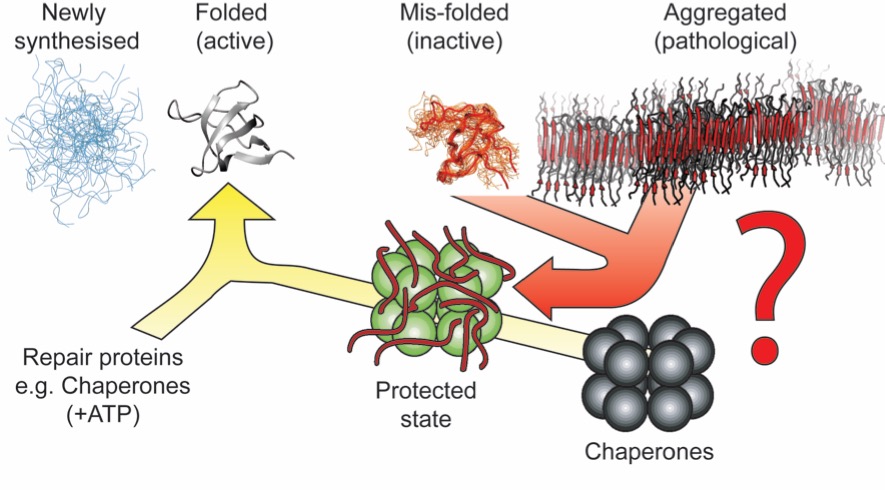
Professor Andrew Baldwin is a faculty member in the Department of Physical and Theoretical Chemistry at the University of Oxford, affiliated with Pembroke College. His research integrates biomolecular NMR spectroscopy, ion-mobility mass spectrometry, and electron microscopy to study protein structure-dynamics relationships in health and disease. Key focuses include protein misfolding in neurodegenerative diseases (e.g., Alzheimer’s, Parkinson’s), molecular chaperone mechanisms, and translational NMR methodologies. Research areas encompass three interlinked themes: 1) biophysical basis of protein aggregation diseases, 2) NMR-based structural dynamics at atomic resolution, and 3) oligomer-level structural analysis combining multi-technique data. His group develops novel experimental and computational tools to tackle heterogeneous protein systems. Recent work emphasizes small molecule modulation of stress granules, redox-driven aggregation inhibition, and interdisciplinary approaches to probe protein phase transitions. While no awards are explicitly listed, his contributions to NMR methodology (e.g., UnidecNMR software) and disease-related research are highlighted. Labs/Teams: Baldwin Research Group focuses on advancing structural biology and biophysical techniques, with applications in drug discovery and disease mechanisms. Collaborative efforts bridge chemistry, physics, and biology to address complex macromolecular systems.
Dr. Sara Paparini is a Senior Lecturer in Public Health and Equity at the Wolfson Institute of Population Health, Queen Mary University of London, and Co-Lead of the GPHU. She holds a BA, MSc, and PhD, and her work focuses on intersectional health inequalities, anti-racist methodologies, and participatory research in public health. Prior to her current role, she worked at institutions such as the University of Oxford, Geneva Graduate Institute, and the London School of Hygiene and Tropical Medicine. Her research explores topics including HIV/AIDS, infectious diseases, chronic illness, and critical implementation science, emphasizing qualitative methodologies like ethnography and case studies. Her research interests include addressing health disparities through anti-racist frameworks, community-led approaches, and longitudinal studies. She leads the SHARE collaborative as the social science lead and has contributed to NHS social research on HIV in East London hospitals. Dr. Paparini’s work often intersects with policy and practice, aiming to improve healthcare equity and patient engagement. Recent articles highlight her contributions to understanding mpox outbreak responses, barriers to prostate cancer detection among Black men, and the acceptability of long-acting HIV treatments. She supervises doctoral students in areas such as sickle cell crises, clinician-patient interactions, and primary care recovery post-pandemic. Key Awards: None explicitly listed. Grants & Funding: Not detailed in provided texts, inferred through research activities. Labs/Teams: Co-leads the GPHU and is part of the SHARE collaborative.
Howard C. Stevenson is the Constance Clayton Professor of Urban Education and Professor of Africana Studies at the University of Pennsylvania’s Graduate School of Education. He directs the Resilience Empowerment Collaborative (REC), a center focused on racial literacy and health in schools and communities. His work emphasizes culturally responsive interventions to address racial stress and trauma, including the PLAAY Project (using basketball and therapy) and the SHAPE-UP Project (training barbers as health educators). Stevenson has been recognized with the 2020 Gittler Prize and membership in the National Academy of Education. His research is funded by the W.T. Grant Foundation, Robert Wood Johnson Foundation, and NIH. He frequently engages media to discuss racial literacy, mental health equity, and youth development, appearing in outlets like the New York Times and TED. Stevenson’s career includes roles such as faculty master at W.E.B. Du Bois College House (1994–2002) and co-director of Forward Promise (2015–2021). His awards include the RHSU Edu-Scholar Public Influence Rankings (2021, 2024) and the 1993 W.T. Grant Faculty Scholar Award. Key grants include NIH-supported projects on racial literacy interventions. His book Promoting Racial Literacy in Schools is a cornerstone of his work. Current initiatives focus on Philadelphia community programs and national advocacy for marginalized youth. Grants and labs include the PLAAY and SHAPE-UP projects, funded by multiple foundations. Media contributions highlight his role as a thought leader on racial trauma, with recent features addressing police violence, school shootings, and anti-racist parenting. Stevenson’s work bridges academia and community, emphasizing practical solutions to systemic racial inequities.
Martez Files is an Assistant Professor of Black Studies in Teacher Education at the University of Pittsburgh’s School of Education, holding the Faculty Leadership Fellow position for Political Education at the Center for Urban Education (CUE). His work bridges Black Studies, Black Feminism, and critical race theory to address antiblackness, gender dynamics, and educational justice. Dr. Files earned his Ph.D. from the University of Alabama at Birmingham (UAB), M.A.T. from Brown University, and dual B.A. degrees in History and African American Studies from UAB. His research focuses on Black mothering, critical caring pedagogies, and the intersection of gender/race in education. Recent publications explore topics such as Afrofuturism, community resilience, and post-pandemic teaching strategies in Black rural contexts. His scholarship emphasizes actionable community engagement, reflected in a decade of activism addressing mental health, police accountability, and educational equity. Dr. Files leads workshops and curricula development to advance Black educational studies and has contributed to panels on race, gender, and pedagogy. Professional service includes leadership roles in organizing critical educational initiatives and community dialogues. His work at CUE amplifies political education for marginalized communities, while his academic writing challenges systemic inequities through interdisciplinary frameworks.
Professor Elizabeth Manias is a Research Professor at Monash University's School of Nursing and Midwifery. She holds dual qualifications as a registered nurse and pharmacist, with expertise in health communication science, medication safety, and healthcare quality improvement. Her research focuses on patient safety, cultural diversity in healthcare, and patient-family engagement strategies. As a Board Certified Geriatric Pharmacist and Medication Management Review (MMR) Accredited Pharmacist, she leads multidisciplinary teams in observational cohort studies, clinical audits, and intervention design. Education: PhD in Health Sociology (La Trobe University), MNursStud, MPharm, BPharm, RN Awards: Fellow of American Academy of Nursing, ISPOR Distinguished Service Award Her work addresses equity in healthcare delivery for culturally and linguistically diverse populations, with a focus on aged care and chronic disease management. Recent projects include co-designing patient-reported experience measures for intellectual disability communities and optimizing medication handover processes post-hospital discharge. Key research areas include: Medication safety across care transitions Cultural sensitivity in end-of-life communication Health literacy and chronic disease self-management Over 400 publications and 22 active research projects highlight her global impact in healthcare improvement. Major grants include leadership in Australia's APRICOT initiative for primary care medicine safety and an NHMRC Leadership Fellowship.
Dr. Fiona Thomas is an Assistant Professor in the Department of Psychology at Toronto Metropolitan University (TMU), Faculty of Arts. Her work bridges clinical psychology and public mental health, with a strong emphasis on culturally-informed practice and community engagement. She is actively involved in research addressing mental health disparities among marginalized and post-conflict populations. PhD in Clinical Psychology, Toronto Metropolitan University MSc in Health, Community and Development, London School of Economics and Political Science Predoctoral Residency, London Clinical Psychology Residency Consortium Postdoctoral Fellowship in Implementation Science and Evidence-Based Trauma Interventions, joint project between Stanford University and TMU Dr. Thomas’ research focuses on culturally responsive and sustainable mental health interventions, particularly for communities affected by war, displacement, and structural inequities. She employs qualitative, quantitative, and participatory methodologies to understand trauma, resilience, and implementation challenges in diverse global contexts. Her work emphasizes adapting evidence-based therapies to fit sociocultural realities in both local (e.g., Toronto) and international (e.g., Sri Lanka, Nepal) settings. Her recent publications highlight a consistent trend in trauma-focused research, particularly examining PTSD, displacement stressors, and culturally adapted interventions in post-conflict regions. She has contributed significantly to understanding how war exposure and ongoing stressors affect mental health, with a special focus on children, refugees, and women of color. Her work often involves mixed methods and international collaboration, reflecting a deep commitment to global mental health equity. Dr. Thomas has received several scientific awards and research funding, including: Vanier Canada Graduate Scholarship (SSHRC) Michael Smith Foreign Study Supplement (SSHRC) RBC Immigrant Diversity and Inclusion Project She is actively involved in mentoring and training psychology students, particularly through reflective supervision practices that support equity and inclusion. Her grants support research on trauma intervention implementation, immigrant mental health, and capacity building in community health centers. Dr. Thomas collaborates with interdisciplinary teams across North America and South Asia, including labs at Stanford University and research groups in Sri Lanka and Nepal, working to improve mental health systems through community-led innovation and evidence-based practice.
Erin Vanessa Spearman-McCarthy serves as Professor and Associate Dean for Belonging & Inclusivity at Augusta University's Medical College of Georgia (MCG), holding dual academic appointments in the Department of Psychiatry and Health Behavior and Department of Medicine (General Internal Medicine). Her leadership spans academic affairs, curriculum development, and community engagement initiatives within MCG. Her educational foundation includes: MD in Medicine from Medical College of Georgia (2005) BS in Biology/Biological Sciences from Spelman College (2001) Dr. Spearman-McCarthy's research critically examines systemic racism in healthcare delivery, focusing on mental health disparities among African American populations. She investigates clinician bias in psychiatric treatments like electroconvulsive therapy, the intersection of religious coping mechanisms with mental health during crises like the COVID-19 pandemic, and linguistic strategies for advancing racial health equity in academic medicine. Her interdisciplinary approach bridges psychiatry, internal medicine, and public health to develop actionable interventions for equitable care. Analysis of her 2018-2022 publications reveals a consistent trajectory addressing racial inequities through clinical psychiatry and internal medicine frameworks. Key trends include documenting treatment disparities in electroconvulsive therapy, analyzing pandemic-related mental health impacts on Black communities, and developing academic medicine protocols for anti-racist scholarship. Her work demonstrates growing emphasis on practical solutions for institutional change within medical education. Her contributions are recognized through prestigious honors: Gold Humanism in Medicine Honor Society Inductee (2017) Augusta University Department of Psychiatry Educator of the Year (2017) MCG Gold Humanism Honor Society Keynote Speaker (2018) Election to MCG Alumni Association Board of Directors (2017) Faculty Participant in School of Medicine Class of 2018 Hooding Ceremony As Associate Dean for Belonging & Inclusivity, she actively mentors students and shapes institutional culture through curriculum development and community partnerships. Her teaching portfolio includes Psychiatry (RPSY 5000), Medicine (RMED 5000), Scientific Interpretation (MEDS 3100), and advanced clerkships, reflecting deep engagement in medical education across disciplines. While the text doesn't specify dedicated laboratories, her leadership in MCG's inclusivity initiatives establishes her as a central figure in diversity-focused academic teams driving systemic change across Augusta University's medical education framework.
Kathleen Sitter is a Research Professor at the Faculty of Social Work , University of Calgary, and an Adjunct Professor in the Faculty of Medicine at Memorial University. She holds the Canada Research Chair in Multisensory Research and Knowledge Translation and leads the Multisensory Studio Lab . Educational Background Doctor of Philosophy (2012) Master of Social Work (2008) Master of Communication Studies (2002) Bachelor of Public Relations (1997) Kathleen's research focuses on innovative sensory and arts-based methodologies for knowledge translation, particularly in disability, mental health, and social justice contexts. Her work includes developing digital storytelling as therapy, creating theatre/film for research dissemination, and exploring smellmaps, soundscapes, and 4-D installations. Trends in Publications : Her articles emphasize participatory arts, accessibility, and interdisciplinary approaches, spanning social work, disability studies, and mental health interventions. Scientific Awards : Dorothy Killam Fellow (2024) Killam Emerging Research Leader Award (2023) Research Innovation Award (2021) Canada Research Chair (2020) Teaching Excellence Award (2019) Kathleen has secured over $11 million in research funding and produced 200+ arts-based works. She teaches courses in qualitative methods, disability studies, and participatory arts. Her lab, the Multisensory Studio, integrates creative practices with social work pedagogy.






.jpg)