Nadia E. Brown is a Professor of Government and Director of the Women's and Gender Studies Program at Georgetown University's College of Arts and Sciences. She holds a Ph.D. in Political Science from Rutgers University and specializes in intersectional analyses of Black women’s politics, legislative studies, and identity politics. Her work emphasizes holistic approaches to understanding race, gender, and their intersections in political systems. Dr. Brown leads the #MeTooPoliSci Collective, focusing on eradicating sexual harassment in political science, and co-PIs a million-dollar NSF grant addressing systemic issues in the discipline. She is editor of Politics, Groups and Identities and contributes to The Monkey Cage blog. Her research spans Black women’s legislative representation, digital activism, and feminist methodologies, with award-winning books including Sisters in the Statehouse and Sister Style . Education: Ph.D. in Political Science, Rutgers University Key Affiliations: African American Studies Program, #MeTooPoliSci Collective Research Methods: Case studies, ethnography, interviews Her advocacy extends beyond academia, influencing public discourse on racial justice and gender equity through media engagement and policy-focused scholarship.
Tracey Galloway is an Associate Professor in the Department of Anthropology at the University of Toronto Mississauga (UTM), where she conducts critical research on Indigenous health disparities and policy interventions in northern Canada. Her work bridges medical anthropology, public health, and community-based participatory research to address systemic inequities affecting circumpolar populations. Education: PhD, McMaster University, 2008 MA (institution unspecified) BA (institution unspecified) BScN (institution unspecified) Dr. Galloway's research program centers on chronic disease risk assessment and health system improvement in Indigenous communities, with specific expertise in nutrition transition, food security, child growth patterns, and public health policy evaluation. She examines the impact of federal programs like Nutrition North Canada while developing community-led solutions for health equity. Her methodological approach combines quantitative analysis of health outcomes with qualitative community engagement, emphasizing Indigenous research sovereignty and decolonizing methodologies. Her publication record reveals consistent thematic focus across 15 recent articles, demonstrating interdisciplinary collaboration between anthropology, epidemiology, and health economics. Key trends include rigorous evaluation of colonial impacts on Indigenous food systems, innovative analysis of subsidy program effectiveness, and centering Indigenous patient experiences in healthcare design. Her work consistently prioritizes community-defined research questions and actionable policy recommendations. Dr. Galloway actively mentors graduate students including Darci Belmore, Carly Checholik, Neda Maki, and Hiliary Monteith, guiding research on Indigenous health determinants and policy interventions. While specific grant details aren't publicly enumerated, her collaborative projects involve partnerships with Indigenous communities across Northern Canada and interdisciplinary teams addressing complex health system challenges. She maintains strong community partnerships for her applied research, particularly in Nunavut and Northwestern Ontario, working directly with Anishinabeck and Inuit communities to translate findings into culturally safe health initiatives and policy reforms that address the root causes of health inequities.
Kent A. Ono is a Distinguished Professor in the Department of Communication at the University of Utah, where he has held faculty appointments since 2012. Previously, he served as Department Chair (2012-2017) and has held leadership positions including Director of Asian American Studies at UIUC (2002-2007) and Director of Cultural Studies at UC Davis (1999-2002). He earned his PhD in Rhetorical Studies from the University of Iowa (1992), MA from Miami University (1988), and BA from DePauw University (1987). Professor Ono's research examines critical media analysis through frameworks of race, gender, sexuality, and nation. His work spans rhetorical theory, intercultural communication, and cultural studies, with emphasis on: Representations of Asian Americans in media Immigration discourse and border rhetoric Postcolonial media criticism Critical race methodologies Transnational cultural flows His recent publications demonstrate sustained focus on immigration rhetoric, racial representation in media, and critical intercultural communication. Thematic analysis reveals consistent engagement with power structures, identity negotiation, and resistance narratives across 30+ years of scholarship, with emerging work on K-pop globalization and digital culture. Awards & Honors: Presidential Citation, National Communication Association (2024) Fellow, International Communication Association (2021) Douglas W. Ehninger Distinguished Rhetorical Scholar (2018) Distinguished Scholar Awards from NCA (2015, 2022), WSCA (2020) Teachers on Teaching Award, NCA (2015) He has held editorial leadership positions including Editor of Communication and Critical/Cultural Studies and co-editor of NYU Press's Critical Cultural Communication series. As NCA President (2020), he advanced equity initiatives and disciplinary transformation. Ono founded the Asian American Cultural Politics Research Cluster at UC Davis and secured grants including 'Portraits of Courage: Photographs by Shane Sato' (2019). He teaches graduate seminars in Rhetorical Studies and International Communication.
Kisha Porcher is an Associate Professor in the Department of English at the University of Delaware, specializing in English Education. She serves as the Student Teaching Coordinator and holds a Ph.D. in Teaching and Teacher Education from George Mason University, alongside degrees from Spelman College and Teachers College Columbia University. B.A., English and Secondary Education, Spelman College M.A., Curriculum and Instruction, Teachers College Columbia University Ph.D., Teaching and Teacher Education, George Mason University Her research focuses on centering Blackness through frameworks like the Black Gaze and archeology of the self (Sealey-Ruiz, 2019), emphasizing racial identity development and community-engaged learning. She explores systemic assets for Black and Brown students while advocating for anti-racist pedagogies in urban education settings. Her recent publications highlight trends in critical literacy instruction , decolonizing curricula , and equity-driven teacher training , with a strong emphasis on racial justice and linguistic diversity. Notably, she received the College of Arts & Sciences Faculty Teaching Excellence Award in 2022. Porcher’s work bridges teacher self-reflection and structural reform , positioning educators as disruptors of systemic inequities. Her scholarship spans topics from cultural competency to community-embedded pedagogies, reflecting her commitment to redistributing power in educational systems.
Eileen A. Lacey is the Class of 1933 Chair in Biological Sciences and Professor in the Department of Integrative Biology at UC Berkeley. She leads the Lacey Lab based at the Museum of Vertebrate Zoology, focusing on vertebrate social behavior and population biology. Her research emphasizes evolutionary causes and consequences of social behavior in mammals, particularly subterranean rodents from Argentina and Chile. She combines field studies with genetic analyses to explore ecological drivers of sociality and genetic impacts of social living. Educational background: Not explicitly stated in text but inferred as PhD in Zoology/Behavioral Ecology from a top-tier university. Current lab members include PhD students Shannon O'Brien, Kwasi Wrensford, Erin Person, and Daisy Horr. Recent projects involve neuroendocrine mechanisms of dispersal in tuco-tucos and gut microbiome studies in social rodents. Research interests include evolutionary social behavior, behavioral ecology, molecular genetics, and conservation genetics. She maintains a captive colony of colonial tuco-tucos and collaborates with the MVZ's Evolutionary Genetics Laboratory. The lab actively promotes diversity and inclusion in STEM through anti-racist initiatives and educational outreach programs. Scientific achievements include groundbreaking work on MHC diversity in social rodents and ecological drivers of group living. Recent recognition includes NSF postdoctoral fellowships for lab members and awards like the Ford Foundation Dissertation Fellowship. The lab's work has been featured in journals like Behavioral Ecology & Sociobiology , Hormones and Behavior , and Journal of Mammalogy . Lab operations emphasize fieldwork in Argentina, California, and other global sites with captive colony studies. Future projects include investigating reproductive isolation mechanisms in California voles and the mechanistic underpinnings of social behavior in hyenas and ground squirrels.
Michael Classens is an Assistant Professor in the Teaching Stream at the School of the Environment, University of Toronto , specializing in social and environmental justice within food systems. He serves as Undergraduate Associate Director, emphasizing community-based learning and integration of Indigenous and community knowledge into pedagogy. Education: PhD in Environmental Studies (York University, 2015), MA (University of Windsor), BA (Western University) His research explores environmental injustice/racism , food systems governance , and prefigurative learning spaces , particularly through campus food initiatives and critical cartography. He has published extensively on food solidarity, racialized food insecurity, and transformative pedagogies. Recent publications (2021–2024) analyze neoliberal responses to food crises, anti-racist food system frameworks, and campus foodscapes as sites of radical pedagogy. Keywords span environmental justice, critical race theory, urban agriculture, and labor studies. Scientific Awards: 2024 A&S Outstanding Teaching Award (Early Career, Faculty of Arts and Science) He advocates for informal and prefigurative learning , connecting classroom knowledge to real-world justice movements. His work bridges academic research with grassroots activism, focusing on equitable food systems and decolonizing educational practices.
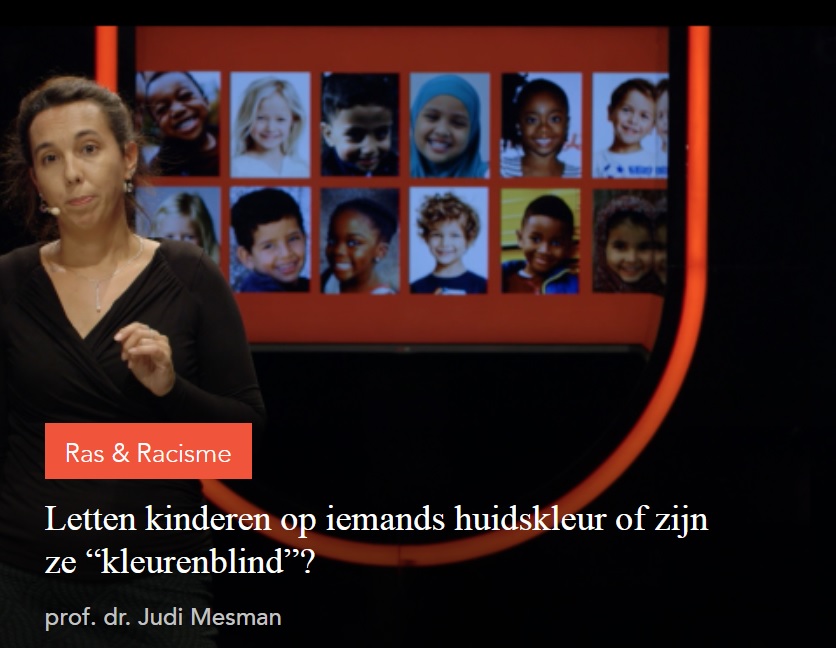
Judi Mesman is a Professor of the Interdisciplinary Study of Social Challenges at Leiden University, where she also holds the position of University Professor of Societal Responsibility and Impact since 2024. She is affiliated with the School of Governance and Global Affairs and the Department of Education and Child Studies. Previously, she served as Dean of Leiden University College The Hague from 2016 to 2022 and as Scientific Director of the Institute of Education and Child Studies from 2012 to 2016. Mesman's research focuses on social (in)justice, particularly intergenerational issues at individual and institutional levels. Her work examines how social and cultural norms in children's upbringing and education influence their self-image and worldview, with special attention to how children perceive and internalize norms regarding sexuality, ethnicity, and gender. She investigates how parents and educators unintentionally transfer prejudices to children through subtle messages and implicit stereotyping. Mesman's research program has significant societal impact, as demonstrated by her receipt of the prestigious Stevin Prize in 2021, the highest award in the Netherlands for researchers who effectively translate knowledge into societal benefits. Her work has influenced educational publishers, teacher training programs, and diversity initiatives. She has conducted studies on implicit stereotyping in schoolbooks and developed interventions to promote anti-racist education. Stevin Prize (2021) Member of Royal Netherlands Academy of Arts and Sciences (2018) Member of Royal Holland Society of Sciences and Humanities Recipient of NWO Veni, Vidi, Vici grants Recipient of ERC Starting and Consolidator Grants Mesman has supervised 26 PhD students to completion and teaches Intercultural Pedagogy in the Bachelor's program in Educational Sciences. She has developed the minor 'The (Un)Just Society' and created a podcast series on working with youth in a multicultural society, for which she received a teaching award. Her current research focuses on how norms and values about gender, ethnicity, and sexuality are transferred among professionals who work with children, including in teacher training programs.
Kihana Miraya Ross is an Assistant Professor in the Department of Black Studies at Northwestern University, affiliated with the Weinberg College of Arts & Sciences. She holds a Ph.D., M.A., and B.A. from UC Berkeley in Social and Cultural Studies of Education, African American Studies, and Sociology. Her research focuses on antiblackness in education, Black educational fugitivity, and educational reparations, employing critical ethnography and participatory design methods. Her book project examines the afterlife of school segregation and strategies for Black educational futurities. She co-directed the documentary Stolen School , exploring the closure of Evanston’s Foster School and its lasting impacts. Ross has received major grants from the Spencer Foundation and fellowships from the Ford Foundation. Education: Ph.D. in Social and Cultural Studies of Education (UC Berkeley, 2016) M.A. in Social and Cultural Studies of Education (UC Berkeley, 2011) B.A. in African American Studies, Sociology, and Education (UC Berkeley, 2002) Key Projects: Spencer Foundation-funded research on Evanston’s educational reparations Documentary Stolen School (2023) Awards: 2021 Spencer Foundation Large Grant 2017 Ford Foundation Postdoctoral Fellowship Ross’s work bridges historical analysis and contemporary activism, advocating for systemic change through frameworks like Black fugitivity. She collaborates with community organizations like Shorefront Legacy Center and mentors interdisciplinary projects on race, education, and spatial justice.
Dr. Darryl Dickerson is an Assistant Professor in the Department of Mechanical and Materials Engineering at Florida International University (FIU), part of the College of Engineering. His research focuses on mechanical characterization of biological interfaces, design of bioinspired materials, and advancing inclusive engineering education practices. He holds a Ph.D. (details not explicitly provided in text). Research Interests: Dr. Dickerson’s work bridges biomechanics and biomaterials engineering with social equity in education. Key areas include: Mechanical properties of biological interfaces (e.g., bone-cartilage junctions) Development of biomaterials for tissue repair using 3D printing and electrospinning Anti-marginalization strategies in engineering education, particularly for Black and Brown students Publications Trends: Recent work emphasizes dual themes: (1) Biomedical innovation through advanced material fabrication and (2) Inclusive pedagogy addressing systemic inequities in STEM education. Notable contributions include scaffold designs for osteochondral repair and frameworks for reducing microaggressions in team-based learning. Grants and Advising: No specific grants or advisees listed in the provided text. His work appears to be grant-funded through NIH/National Science Foundation pathways common in biomaterials and education research. Labs and Teams: While not explicitly stated, his research likely involves collaborations with FIU’s Center for Engineering and Computing’s diversity initiatives and biomaterials labs focusing on tissue engineering applications.
Joe Feagin is the Ella C. McFadden Professor and Distinguished Professor of Sociology at Texas A&M University, College of Arts and Sciences. He holds a Ph.D. from Harvard University (1966) and has held prominent roles such as President of the American Sociological Association (1999-2000). His research focuses on systemic racism, racial and ethnic relations, and anti-racist education. Feagin has authored over 30 books and numerous articles, including seminal works like White Racism: The Basics and The White Racial Frame . He has received prestigious awards such as the W.E.B. Du Bois Career of Distinguished Scholarship Award (2013) and the Arthur Fletcher Lifetime Achievement Award (2013). Feagin's academic journey includes positions at the University of Texas, University of Florida, and Texas A&M. He served as Scholar-in-Residence at the U.S. Commission on Civil Rights (1974-1975). His courses at Texas A&M include the Sociology of African Americans, Classical Social Theory, and Racism and Anti-Racism. His research spans racial discrimination, gender relations, urban sociology, and systemic racism’s impacts. He has pioneered theories like systemic racism and the white racial frame. Feagin’s work emphasizes societal transformation through critical sociology and anti-racist practices. Key awards and recognitions include the Cox-Johnson-Frazier Scholarship Award (2018), Soka Gakkai International Social Justice Award (2012), and multiple fellowships. His grants and administrative roles include leadership in diversity initiatives at Texas A&M and national sociological organizations. Feagin’s legacy includes fostering anti-racist education, leading interdisciplinary research teams, and advocating for social justice. His work continues to influence policy, education, and public discourse on race in the U.S. and globally.
Academic Profile Christina Harrington is an Assistant Professor at Carnegie Mellon University with dual appointments in the School of Computer Science (Human Computer Interaction Institute) and School of Design. She directs the Equity and Health Innovations Design Research Lab , focusing on community-centered technology design. Her work bridges industrial design, interactive systems, and human factors psychology to advance health equity through technology. Research Focus Harrington's research employs participatory and speculative design methods to address systemic inequities in technology. She examines how design can support health autonomy for older adults, people with disabilities, and historically excluded communities (particularly Black and Latinx populations). Her work actively challenges corporate design paradigms through frameworks like design justice and community collectivism , with recent emphasis on ethical AI and conversational technologies. Research methodologies include: Community-based participatory research Speculative co-design Critical race and disability frameworks Intersectional analysis of technology impacts Publications Focus Her recent publications (2023-2025) demonstrate strong focus on equity-centered design with three dominant themes: 1) Health technology disparities affecting Black older adults, 2) Participatory AI and algorithmic justice, and 3) Design justice pedagogy. Over 60% of recent works explicitly examine racial equity in AI systems, health interfaces, and design education. Honors & Recognition Google Award for Inclusive Research (2022) for "Transforming theory into practice: eliciting cultural imaginaries and design thinking to understand Black-Centered Design" Skip Ellis Early Career Award (2022) Data & Society Faculty Fellow (2022-2023) Leadership & Impact As lab director, Harrington leads community-engaged projects that translate design justice principles into practice. She serves on committees for community tech initiatives and has industry experience at Apple, Lenovo, and Motorola. Her work influences both academic discourse (ACM CHI, CSCW, DIS) and industry practices in ethical design.
Auritro Majumder is Associate Professor of English at the University of Houston's College of Liberal Arts and Social Sciences, holding a courtesy appointment in the India Studies Program. His academic profile spans literary scholarship, critical theory, and intellectual history with a focus on non-Western perspectives. His educational background includes a Ph.D. in English from Syracuse University (2014), a Certificate in Critical Theory from Cornell University (2012), an M.A. (First Class) in English from Jadavpur University (2009), and a B.A. (First Class Honours) in English from Jadavpur University (2007). Majumder's research centers on peripheral internationalism and decolonial knowledge production , examining literary traditions across India, the Soviet Union, China, Latin America, and the United States. His work bridges literary theory , critical race studies , and global political movements , with particular emphasis on Bengali literature, caste-race intersections, and South-South cultural networks. His monograph Insurgent Imaginations: World Literature and the Periphery (Cambridge University Press, 2020) redefines world literature through non-Western frameworks. Analysis of his 15 most recent publications reveals consistent engagement with decolonial aesthetics , transnational solidarity , and subaltern epistemologies . His scholarship demonstrates interdisciplinary reach spanning literary studies, political theory, film criticism, and comparative intellectual history, with increasing focus on contemporary debates around planetary consciousness and peripheral modernities. His scientific recognition includes: Project Completion Grant, CLASS (2019) William Lee Pryor College Professorship (2018-2019) Research Progress Grant (2017) CLASS Research Funds (2016) New Faculty Summer Research Grant (2015) Majumder actively contributes to academic service as Executive Committee member of the Modern Language Association’s South Asian and South Asian Diasporic Language, Literature and Culture Forum, editorial board member for Mediations , jurist for the National Endowment for the Humanities, and reviewer for multiple international journals. He has lectured globally across North America, South Asia, Europe, and Brazil. His teaching portfolio includes courses on postcolonial literature, modern Indian literature, and graduate seminars in postcolonial theory. Current projects include a monograph titled The Global South in Literature and Theory and a co-edited anthology Cultures of the Cold War in South Asia .
Song-Chong Lee is an Associate Professor of Religious Studies and Philosophy at the University of Findlay, focusing on the intersection of race, religion, and pedagogy. His work addresses systemic inequities and explores innovative teaching methods in theological education. Affiliation: University of Findlay, College of Arts and Sciences, Department of Religious Studies Key Themes: Race matters in classrooms, social justice, trauma-informed teaching, online education challenges, and anti-racist strategies. In his October 2, 2014 blog post titled "In the Classroom, Race is More Than Race," Lee reflects on navigating racial homogeneity at his institution and the evolution of his pedagogical focus toward inclusion. He contributes to discussions on emotional labor in teaching, democratic classroom practices, and the adaptation of pedagogy during crises like the COVID-19 pandemic. Notable Collaborations: Wabash Center for Teaching and Learning in Theology and Religion Focus Areas: Decolonial practices, embodied learning, and addressing white privilege in education.
Nicholas Ng-A-Fook is a Full Professor in the Faculty of Education at the University of Ottawa, where he has served as former Associate Dean of Graduate Studies and Director of Teacher Education and Indigenous Teacher Education Programs. His work is deeply engaged with the Truth and Reconciliation Commission's 94 Calls to Action, working in partnership with Indigenous communities and school boards to disrupt colonialism, systemic racisms, and inequalities in educational curricula. Dr. Ng-A-Fook's educational background includes a Ph.D. in Curriculum and Instruction from Louisiana State University (2006), an M.A. in Education (Multicultural Education) from York University (2001), a Graduate Diploma in Education (Secondary Science and History) from the University of Western Sydney (1998), and a B.A. in Classical Studies from the University of Ottawa (1996). His research interests span Curriculum Studies, History of Education (particularly oral history), Life-writing research (autobiography and narrative inquiry), Critical Youth Studies (focusing on first-generation immigrant and Indigenous youth), Community-based research, and Contemporary perspectives in philosophy, science and technology including AI, genomic education, and anti-racist science education. Dr. Ng-A-Fook approaches his work as a curriculum theorist who draws on life writing research methodologies to co-create culturally responsive, relevant, and relational curriculum with educators. Dr. Ng-A-Fook's publications reveal a strong focus on reconciliation education, decolonizing curriculum, and addressing systemic racism in educational contexts. His work increasingly engages with digital technologies and artificial intelligence from a critical, decolonial perspective, examining how these technologies intersect with historical and ongoing colonial structures. His research shows a clear evolution toward more interdisciplinary work connecting curriculum studies with Indigenous knowledge systems, technology studies, and social justice movements. Among his notable honors are the 2024 Coutts Prize, the Ted T. Aoki Distinguished Service Award (2018), and the R.W.B. Jackson Award for an outstanding article in the Canadian Journal of Education. He also serves as Director of the EdCan Network and was Past-President of the Canadian Society for the Study of Education. As a supervisor, Dr. Ng-A-Fook currently mentors several graduate students including Melissa Daoust, Lisa Ambaye, Bahareh Samsamiardekani, and Madelaine McCracken. He created the FooknConversation podcast to address educational challenges with colleagues, community activists, artists, education leaders, teachers, and politicians, and maintains the Canadian Curriculum Theory Project website as a resource for his research.
Associate Professor Helen Adam is a leading academic in the School of Education at Edith Cowan University (ECU), specializing in culturally responsive pedagogy and the role of children’s literature in fostering equity and inclusion. She holds a PhD in Early Years Education (2019) and has extensive experience in primary education and literacy research. Her career includes roles as a teacher, researcher, and leader in teacher education, particularly in addressing systemic inequities through literature. She is Board President of the Primary English Teaching Association of Australia (PETAA) and actively contributes to national and international educational initiatives. Research interests focus on diverse children’s literature, social-emotional development, and dismantling prejudice through books. Notable projects include a Churchill Fellowship (2022) exploring global practices in children’s literature and equity-driven education. Her work has been recognized with awards such as the 2023 Churchill Fellowship and multiple ECU research accolades. Helen supervises postgraduate research in literacy and diversity, including projects on postmodern picturebooks and culturally diverse family representation. She collaborates with institutions like ECU’s Kurongkurl Katitjin Centre for Indigenous Education, emphasizing allyship and support for marginalized groups.