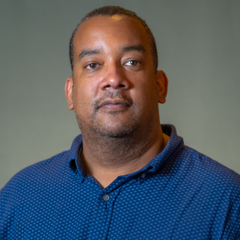
Nicole K. Eberhart is a Senior Behavioral Scientist at the RAND Corporation and a Professor of Policy Analysis at the RAND School of Public Policy. She holds a Ph.D. in Clinical Psychology from UCLA. Her work focuses on mental health and well-being, including evaluations of behavioral health programs, integration of primary and behavioral healthcare, military/veteran mental health, prevention/early intervention, adverse childhood experiences (ACEs), and trauma-informed care. Affiliations: RAND Corporation, RAND School of Public Policy Education: Ph.D. in Clinical Psychology, University of California, Los Angeles Her research emphasizes program evaluation, policy analysis, and addressing systemic gaps in mental health care. Key areas include: - Military/Veteran Mental Health: Examines service delivery models and policy impacts. - Prevention & Early Intervention: Focuses on reducing mental health stigma and improving access. - ACEs-Driven Care: Evaluates screening and intervention strategies in pediatric and community settings. Recent work highlights systemic challenges in California’s mental health infrastructure, including bed shortages and underfunded county systems. She has authored over 100 research publications, emphasizing policy-relevant insights for healthcare equity and crisis response systems like the 988 hotline.
Jeffrey S. Brooks is the Head of School and Professor of Educational Leadership at Curtin University's School of Education, part of the Faculty of Humanities. He holds a prominent role in the Office of the Provost. Brooks is a two-time J. William Fulbright Senior Scholar with extensive international research experience across the U.S., Australia, Thailand, Indonesia, the Philippines, and other global contexts. His work focuses on educational leadership dynamics, including social justice, racism, globalization, and school reform. He has authored over 100 scholarly publications and secured over $8 million in research funding. Research interests include educational leadership theory, anti-racism leadership, qualitative research methods, and systemic inequities in education. His award-winning books such as Black School, White School: Racism and Educational (Mis)leadership and Whiteucation: Privilege, Power, and Prejudice in School and Society highlight his contributions to critical educational discourse. Brooks also serves as Lead Series Editor for multiple educational leadership book series. His recent work examines policy implementation, school funding equity, and the intersection of religion and leadership in diverse contexts like the Philippines and Bangladesh. Awards include the AESA Critics Choice Award for his 2013 book and recognition for his Fulbright engagements. Brooks actively advises on leadership preparation programs and collaborates internationally to advance equitable educational practices.
Dr. Andrew Young Choi is an Assistant Professor of Psychology at Pace University’s Dyson College of Arts and Sciences, where he teaches and supervises in the Clinical Health Psychology Program. He is board-certified in Counseling Psychology by the American Board of Professional Psychology (ABPP) and licensed to practice in New York, California, Washington DC, and Hawaiʻi, offering telehealth services to high-achieving professionals from diverse backgrounds, particularly BIPOC and LGBTQ+ individuals. PhD in Counseling, Clinical, and School Psychology – University of California, Santa Barbara (2019) MA in Education – University of California, Santa Barbara (2018) MA in Counseling Psychology – University of California, Santa Barbara (2015) BS in Psychology and Sociology – University of Utah (2013) Dr. Choi’s research employs queer of color critique and psychoanalytic theory to explore intersectionality, racism-related stress, and internalized oppression among Asian Americans. His work emphasizes culturally responsive, integrative psychodynamic psychotherapy and examines gendered racism, masculinities, and sexualities within marginalized communities. He has contributed significantly to the understanding of affirmative mental health practices for bisexual and LGBTQ+ clients, as well as the psychological impacts of online racism and pandemic-related discrimination. His recent publications reveal a consistent focus on identity formation, mental health disparities, and intervention development for racially and sexually minoritized populations. Using advanced statistical methods like latent class analysis and mixture modeling, his scholarship bridges critical theory with empirical research, particularly in the areas of internalized stigma, gendered racial socialization, and syndemic risks among adolescents and emerging adults. Dr. Choi has received numerous national awards recognizing his contributions to diversity and inclusion in psychology, including honors from APA Divisions 17, 39, and 45, the Asian American Psychological Association, and Psi Chi. His editorial service includes roles on the review boards of Cultural Diversity and Ethnic Minority Psychology and Psychology of Sexual Orientation and Gender Diversity . He is actively involved in mentoring, professional service, and clinical training, having served as a Postdoctoral Fellow at Cambridge Health Alliance/Harvard Medical School and a Doctoral Intern at the University of Hawaiʻi at Mānoa. He also contributes to community-based initiatives supporting BIPOC and LGBTQ+ mental health, including through the Asians for Mental Health Project and Asian Mental Health Collective. Dr. Choi’s lab and clinical work emphasize integrative, culturally attuned approaches that combine cognitive-behavioral, psychodynamic, and humanistic frameworks to support personal agency, resilience, and self-actualization.
Stephanie A. Jacobson is Professor of Social Work and Associate Provost for Faculty Affairs and Development at Quinnipiac University, where she has held progressive academic and administrative roles since 2013. She is affiliated with the Department of Social Work within the College of Health Sciences and maintains clinical practice through Compassionate Counseling and Culinary Arts Therapy, LLC. Her work bridges academia, leadership, and clinical social work. Areas of Expertise: Geriatrics/Gerontology/Ageing End-of-Life Care, Hospice & Palliative Care Mental Health/Behavioral Health Teaching and Learning in Social Work Telehealth and Digital Interventions Cultural Consciousness and Inclusive Education Her research focuses on innovative teaching methods in social work, particularly the use of standardized clients to enhance cultural competence, telehealth training, and suicide risk assessment. She has led curriculum development efforts that integrate interprofessional education and experiential learning. Her recent publications reflect a strong commitment to adapting social work education to modern challenges, especially during and after the pandemic. The trends in her scholarly output show a consistent emphasis on pedagogical innovation, student competency development, and addressing systemic issues in healthcare and education. Her work often involves collaborative, interdisciplinary approaches to improve clinical training and expand access to care. Professional Recognition and Service: Licensed Clinical Social Worker (LCSW) in New York and Connecticut Active contributor to national social work education conferences (CSWE, NASW) Leadership in faculty development and interprofessional education initiatives Dr. Jacobson has advised curriculum reform and faculty development programs at Quinnipiac University. While no formal student advisees are listed, her leadership as MSW Program Director and Associate Department Chair indicates significant mentorship and academic guidance responsibilities. She has secured institutional support for educational innovations and contributed to university-wide scholarship initiatives, including exhibits highlighting faculty research. She is involved in advancing social work education through simulation-based learning and interprofessional collaboration. Her clinical and academic work supports the integration of evidence-based practices in geriatric and mental health settings.
Lorenz S. Neuwirth, Ph.D., is an active researcher in neuroscience, focusing on developmental neurotoxicology, epigenetics, and neurodegenerative diseases. His work investigates the impact of environmental toxins like lead on brain development and cognitive function, while also pioneering the use of virtual reality in medical and neuroscience education. His research interests span: Developmental behavioral neurotoxicology Molecular epigenetics and gene-environment interactions Neurodegeneration in aging and Alzheimer’s disease Lead and metal neurotoxicity Virtual and augmented reality for medical training Diversity, equity, and inclusion in neuroscience education Dr. Neuwirth's recent publications reveal a strong trend toward interdisciplinary research, combining neuroscience with public health, educational technology, and social justice. His work on VR-based surgical training, cognitive impacts of lead exposure, and neurodegenerative biomarkers reflects a commitment to translational research. He also contributes editorially to high-impact journals such as Frontiers in Molecular Neuroscience and Frontiers in Psychology . His scientific contributions include: Editorial roles in multiple Frontiers journals Research on VR in medical education Studies on neurotoxicants and cognitive development Advocacy for DEI in neuroscience training Dr. Neuwirth actively mentors and collaborates on research, particularly in early-career training and innovative pedagogy. While no formal grant information is listed, his editorial roles and publication output suggest sustained research activity and academic engagement. He is also involved in developing prescriptive technologies for students with disabilities and advancing anti-racist frameworks in science education. He contributes to research teams focused on: Neurotoxicology and environmental health Immersive medical simulation Neurocognitive assessment tools Equity in STEM education
Frances McClain (Dr. Mac) is an Associate Professor and Director of Clinical Training in the Counseling Psychology Department at The Chicago School. With over four decades in mental health, her work spans clinical practice, supervision, program development, and advocacy for marginalized populations. Education: PhD in Counselor Education & Supervision, The Chicago School (2015) MA in Counseling, Governors State University (1990) BA in Psychology, MacMurray College (1984) Research Interests: Social justice, anti-racism, counseling sexology, and culturally responsive approaches to human sexuality intersect with her clinical expertise in LGBTQIA+/BIPOC mental health, trauma, and serious mental illness. Academic Contributions: Her publications focus on systemic integration of sexuality education in counseling and geographic trends in sex therapy practices, reflecting her commitment to ethical, inclusive mental health frameworks. Leadership & Service: Co-founder and President (2022-2023) of the Association of Counseling Sexology & Sexual Wellness (ACSSW) Editor of ACSSW newsletter and member of the Journal of Counseling Sexology & Sexual Wellness editorial board Advisory Board Member for Teach While Queer Coordinated webinars on sexuality and sexual wellness since 2021 Professional Context: Active in national and international presentations on cultural sensitivity, ethics, and human sexuality, with licenses as a Clinical Professional Counselor (LCPC) and National Certified Counselor (NCC).
Jemel Aguilar serves as Associate Professor at Fordham University's Graduate School of Social Service, where his scholarship critically examines oppression frameworks and health disparities among marginalized populations. His interdisciplinary approach integrates social work practice with public health methodologies to address systemic inequities in healthcare access and mental health service utilization. Education: Ph.D. in Social Welfare, University of Minnesota Twin Cities MSW in Children and Family Community Services, University of Minnesota Twin Cities MPH in Data Science for Health Promotion, Southern Connecticut State University B.A. in Human Development, Empire State College Dr. Aguilar's research centers on the intersection of structural oppression and health outcomes, with particular emphasis on invisible disabilities, HIV-related stigma, and mental health disparities among low-income communities. His work employs community-partnered methodologies to develop culturally responsive interventions while advancing decolonial approaches in human behavior theory. Recent scholarship demonstrates growing integration of data science applications for health promotion within marginalized contexts. Analysis of his publication trajectory reveals consistent focus on anti-oppressive frameworks across diverse populations—from transgender youth healthcare training innovations to street children interventions in Bangladesh. His 2024-2025 work increasingly addresses chronic illness adaptation and multidimensional human behavior models, while maintaining critical examinations of white supremacy in professional practice. Key thematic clusters include structural racism analysis, HIV stigma measurement across cultural contexts, and digital pedagogy adaptations for healthcare education. As faculty at Fordham's Graduate School of Social Service, Dr. Aguilar contributes to curriculum development including editing a Human Behavior in the Social Environment textbook focused on marginalized identities. His teaching and mentorship emphasize anti-oppressive practice frameworks, though specific student advisees aren't documented in available materials. Current research initiatives appear centered on invisible disability experiences and data-driven health equity solutions within complex social systems.
Celia B. Fisher, PhD is the Marie Ward Doty University Endowed Chair in Ethics and Professor of Psychology at Fordham University. She serves as Director of the Fordham University Center for Ethics Education and the HIV/Drug Abuse Prevention Research Ethics Institute. Dr. Fisher leads the Human Development and Social Justice Lab and is actively involved in research ethics, health disparities, and social justice issues affecting vulnerable populations. Dr. Fisher's research focuses on bioethics, research ethics, racial justice, HIV prevention, addiction and drug abuse, health disparities, and the social determinants of health. Her work particularly emphasizes stigmatized and underserved populations, including adolescents, ethnic minorities, LGBTQ+ individuals, and people with intellectual disabilities. She has conducted federally funded research on assessing and enhancing the consent capacity of adults with intellectual and developmental disabilities and has written extensively on social justice issues regarding the ethical role of psychologists. Her recent publications demonstrate a strong focus on health disparities, vaccine hesitancy, racial discrimination, and the impact of social media on vulnerable populations. Dr. Fisher's work often employs mixed-methods approaches and addresses critical ethical issues in research involving marginalized communities. She has been particularly active in examining the impact of the COVID-19 pandemic on mental health and health disparities across different demographic groups. Dr. Fisher has received numerous prestigious awards for her contributions to ethics education and research: American Psychological Association's Award for Outstanding Contributions to Ethics Education (2017) Health Improvement Institute's Lifetime Achievement Award for Excellence in Human Research Protection (2011) Fellow of the American Association for the Advancement of Science (2012) Presidential Citation, American Psychological Association (2003) Distinguished Alumni Award, Graduate Faculty, New School University (2004) Fellow, Society for the Study of Ethnic Minority Issues, Division 45, American Psychological Association (2006) Dr. Fisher has been principal investigator on multiple major research grants from NIDA, NICHD, NIAID, NIAAA, NSF, and NIMHD. She currently directs the NIDA-funded Fordham University HIV/Drug Abuse Prevention Research Ethics Training Institute, which provides early career investigators with research ethics training. She has mentored numerous students and early career researchers through various training programs and has served on national advisory boards related to research ethics and human subjects protections. Dr. Fisher leads the Human Development and Social Justice Lab at Fordham University, which focuses on the intersection of developmental science and social justice. The lab applies developmental theory and research methods to examine experiences that promote equity and wellbeing among under-researched populations, with a particular focus on stigma, identity, and health disparities among underserved adolescent groups including ethnic minorities, LGBT individuals, and those with mental health and substance-use conditions.
Moira Szilagyi, M.D., Ph.D., is a HS Clinical Professor in the Department of Pediatrics at the University of California, Los Angeles (UCLA) School of Medicine . She holds the Peter Shapiro Term Chair for Enhancing Children’s Developmental and Behavioral Health. Her research focuses on pediatrics with a strong emphasis on trauma-informed care , adverse childhood experiences (ACEs) , and child welfare . She has contributed extensively to understanding the intersection of child development , behavioral health , and health equity , particularly in vulnerable populations such as children in foster care and those facing systemic racism. Recent articles analyze trends in pediatric mental health crises , trauma-responsive training for medical professionals , and policy interventions to address child poverty and racial disparities . Her work consistently advocates for integrating developmental science into clinical practice and broader public health strategies. Scientific Awards : Peter Shapiro Term Chair for Enhancing Children’s Developmental and Behavioral Health Moira has collaborated with leading institutions and experts in pediatrics and child health advocacy , with numerous high-impact publications in journals like Pediatrics and Academic Pediatrics . While no formal student list is provided, her mentorship is evident through co-authored studies with junior researchers.
Kjartan Belseth is a Senior Lecturer in Pedagogy at Østfold University College (HiØ), specializing in Early Childhood Education. He holds a PhD candidate position at NTNU, focusing on pedagogy within educational leadership and diversity. His research explores religion in kindergartens, multilingual children's inclusion, and decolonial practices. Belseth teaches pedagogy in full-time and part-time kindergarten teacher training programs and has served in roles like Course Leader for 'Art, Culture and Creativity' and Section Head for the Pedagogy Section. He is actively involved in research networks like NORBARN and the Nordic Research School for Educational Research. Education Bachelor's in Early Childhood Education (Oslo University College) Master's in Early Childhood Pedagogy (Oslo and Akershus University College) PhD candidate in Educational Science at NTNU Research Interests Belseth’s work centers on educational philosophy, postcolonial theory, and leadership in early childhood settings. Key projects include 'Gender-Equal Educational Leadership' and 'Diversity in Kindergarten,' collaborating with researchers like Tina Binfield-Skøie. His publications address topics like religion’s role in education, multilingual children’s positioning, and ethical challenges in early childhood research. Recent Trends in Publications His recent articles emphasize social justice (e.g., Black Lives Matter discourse in kindergartens), critical pedagogy (Hannah Arendt’s influence), and ethical dilemmas in early childhood studies. He consistently advocates for inclusive practices and decolonizing educational frameworks. Awards & Recognition Nominated for Årets barnehageinspirator (2017, 2023) Recipient of the Laurbærbladet Award (2019) for supervising an award-winning thesis Professional Roles Belseth currently leads the PhD group at DMMH and has held positions such as Course Supervisor for Bachelor’s theses and External Examiner at other institutions. He co-authored textbooks on kindergarten diversity and actively contributes to academic journals as a peer reviewer. Current Projects PhD thesis on kindergarten leadership dynamics Collaborative projects on Sami perspectives in teacher education
Niku Dorostkar is a Professor at KPH Vienna/Lower Austria , specializing in German language education (including German as a second language) across primary and secondary school levels. Their work bridges traditional didactics with digital innovation, particularly through projects like the GameLab collaboration with the University of Vienna, which explores the educational potential of video games. Dorostkar leads the Sparkling Science project SpraBiF , focusing on early language education frameworks, and contributes to critical discourse analysis in educational contexts. Research Priorities: Game-based language and literary learning Digital Game-Based Language Learning (DGBLL) Early language support in elementary education Language policy and multilingualism Critical discourse analysis in digital spaces Recent Publications examine the interplay of video games with literary education (e.g., Storyteller and A Juggler’s Tale ), alongside studies on Austrian language policy and cognitive development in children. Dorostkar advocates for pedagogical approaches that contextualize digital media within educational theory, emphasizing Design-Based Research and Citizen Science collaborations. Teaching includes courses at KPH Vienna/Lower Austria and the University of Vienna, with a focus on integrating digital tools into German education. The GameLab project provides hands-on experience with Nintendo Switch and Steam Deck consoles, fostering exploratory learning and didactic material development. Dorostkar also contributes to continuing education platforms like bildung.kphvie.ac.at , offering resources for teachers across Austria.
Dr. Alicia Moore is a Professor of Education at Southwestern University, specializing in multicultural education, culturally responsive teaching, and early childhood education. She holds a PhD from the University of Texas at Austin (1997) and has 33 years of higher education experience. Her roles include teaching undergraduate courses in early childhood, special education, and diversity studies, supervising student teachers, and conducting research on culturally responsive pedagogy. Education: PhD in Education, University of Texas at Austin (1997) MEd in Education, University of Texas at Austin (1990) BSEd in Education, Huston-Tillotson University (1988) Research Interests: Culturally responsive teaching, diversity and inclusion advocacy, early childhood best practices, and the experiences of faculty of color in predominantly white institutions. Her work emphasizes anti-racist pedagogy, social justice, and equitable educational practices. Recent Articles/Trends: Recent publications focus on culturally responsive field experiences, inclusive literacy instruction, and play-based pedagogy for social justice. She has also contributed to national discussions on supporting faculty of color through cross-institutional mentorship programs. Awards: Cargill Endowed Professorship Exemplary Teaching Award from the United Methodist Church Recipient of the Unity in Action Diversity Award Grants/Mentorship: Secured grants like the Cullen Faculty Development Grant and co-led the ACS-funded FOC CONNECT project to retain faculty of color. Labs/Teams: Involved with the Education Department’s field-based learning initiatives and the Army Command and General Staff College advisory role.
Dr. Ngoc T. Bui is a tenured full professor in the Psychology Department at the University of La Verne and currently serves as Associate Dean for Effectiveness, Planning, and Faculty Affairs in the College of Arts and Sciences. She holds a Ph.D. in Social Psychology from the University of Nebraska-Lincoln (2000), and previously taught at Metropolitan Community College (1999–2002). Her research focuses on teaching methodologies, attitudes, procrastination, social cognition, and media psychology, with over 20 peer-reviewed publications and extensive collaborative work with students. Dr. Bui has received multiple awards for advising, including the Psi Chi National Faculty Advisor Award (2012) and repeated recognition as Outstanding Club Advisor. She has led initiatives in anti-racism training, equity in education, and academic mentorship, while serving on key university committees such as the Promotion and Tenure Committee and the General Education Committee. Her leadership extends to roles in professional organizations like Psi Chi International Honor Society, where she served as President (2021–2023). Education: B.A. Psychology (California Polytechnic University, Pomona, 1994), M.A. and Ph.D. in Social Psychology (University of Nebraska-Lincoln, 1997 and 2000). Research emphasizes practical pedagogy and social psychology applications. Notable publications address equity in two-year college education, anti-racism frameworks, and student success through APA guidelines. Her work on attachment styles and mental health professionals expands into clinical psychology domains. Advisor initiatives have been central to her career, fostering student research and mentorship. Awards highlight her dedication to student development and institutional service, including induction into La Verne Academy (2017) for leadership in scholarship. She collaborates with faculty on curricular reforms and interdisciplinary projects, balancing administrative duties with research.
Andrea Thomson is an Assistant Professor in the Department of Psychiatric Nursing at Brandon University. Her research focuses on suicide prevention in rural Canada, trauma-informed care methodologies, and innovations in psychiatric nursing education. She collaborates extensively with community stakeholders and fellow researchers to address gaps in mental health service provision and nursing pedagogy. Her work demonstrates a strong emphasis on vulnerable populations, including rural communities, youth exiting care systems, and marginalized racial groups within nursing education. Thomson has pioneered boundary education frameworks for nursing students and developed practical resources for teaching professional ethics. Publications consistently emphasize participatory research methods, with over 10 peer-reviewed articles since 2019. Her articles show thematic continuity in addressing both clinical practice challenges and systemic barriers in mental healthcare access. Notable collaborations include projects with colleagues like Ryan, Rauch, and Waddell-Henowitch on rural suicidality research. No specific scientific awards or grants are explicitly listed in the provided materials. Her advising record remains unreported here, though her publications suggest involvement in graduate-level research supervision. Thomson's academic profile reflects a dual commitment to advancing nursing education standards and improving mental health outcomes through community-engaged scholarship.
Andre Etchebarne is a Lecturer in Counselling Psychology at the Manchester Institute of Education, University of Manchester, and serves as the associate Placement Director for the Doctorate in Counselling Psychology program. He is an HCPC-registered Counselling Psychologist with active involvement in NHS community pain management services, delivering psychological interventions to individuals and groups. His work bridges academic research and practical application, emphasizing real-world relevance in teaching and clinical practice. Education Doctor of Counselling Psychology (2021), supervised by Dr. T. Hanley and Prof. L. A. Winter, focusing on “Exploring the Wellbeing of Black and Minority Ethnic Academics.” Research Interests Psychological interventions for chronic health conditions. Racism and health inequities, particularly in healthcare access and service delivery. Wellbeing in Higher Education, addressing systemic challenges for minority ethnic academics. Teaching Contributions Lead instructor for the Doctorate unit “Working in Different Modalities and Across the Lifespan in Counselling Psychology.” Delivers modules on “Formulation in Counselling Psychology” and “Cognitive Behavioural Counselling Psychology Theory and Practice.” Grants & Advising His doctoral research explored the wellbeing of Black and Minority Ethnic academics, contributing to institutional equity initiatives. Though no explicit grants are listed, his NHS collaborations and academic roles reflect sustained engagement with applied research and training.