Tania Islas Weinstein is an Assistant Professor of Political Science at McGill University’s Department of Political Science. Her work bridges art, politics, and aesthetics, particularly in the context of Mexico’s democratic transitions and socio-cultural dynamics. She holds a PhD from the University of Chicago and has held academic appointments at institutions including the University of Colorado Denver and the University of Chicago. Education: PhD in Political Science, University of Chicago (2019) MA in Political Science, University of Chicago (2011) BA in Political Science and International Relations, Centro de Investigación y Docencia Económicas (CIDE), Mexico (2007) Research focuses on how art shapes political imaginaries, with a current book project analyzing Mexico’s cultural policies post-autocratic rule. Key themes include nationalism, racial justice, and the intersection of art with state violence. She co-edited Beyond Mestizaje: Contemporary Debates on Race in Mexico (2024) and has published in Journal of Latin American Studies and Signs . Awards include a FQRSC Team Grant for governance research in Latin America and fellowships from the University of Chicago and CONACyT. She actively collaborates with artists, such as on Sun Ra’s poetry translation, and teaches courses on art politics, qualitative methods, and anti-racism in Latin America.
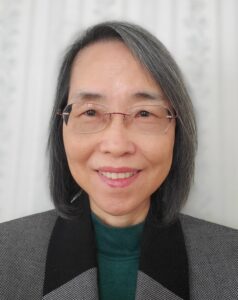
Dr. Winnie Lem is a Professor in the Department of International Development Studies and Gender and Social Justice program at Trent University. Her research focuses on migration, transnationalism, citizenship, and political economy with a regional emphasis on Europe and Asia. She holds a Ph.D. from the University of Toronto. Her academic work spans migration studies, urbanization, gender, and rural politics. Notable contributions include analyses of Chinese migrant entrepreneurs in France, militant populism in contemporary France, and the dialectics of migration. Lem has co-edited several volumes on migration and capitalism, including Migration Temporalities and Capitalism (2018) and Confronting Capital (2012). Lem teaches courses on global inequality, migration, and development studies. She actively contributes to interdisciplinary research through collaborations with institutions like the Canadian Anthropology Society. Her work often bridges anthropological theory with critical political economy frameworks, examining how global capitalism shapes migrant experiences and social structures. Her recent scholarship (2020) contextualizes the Gilets Jaunes movement within broader populist trends in France, while earlier work (2001–2009) explored labor dynamics in rural France and transnational migrant economies. Lem’s research emphasizes the intersection of class, gender, and ethnicity in migration narratives.
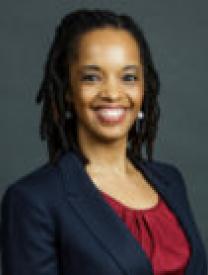
Stephanie Creary is an Assistant Professor of Management at The Wharton School , University of Pennsylvania. She serves as the Faculty Director of the Relationships Across Differences (RADs) Roundtable , a collaborative initiative with Harvard Business School, INSEAD, and NYU Stern. Research Focus: Identity, diversity and inclusion, emotional dynamics, and leadership in diverse organizations. Teaching: Offers courses on leading across cultural and relational differences (MGMT2240, MGMT6240) and advanced organizational effectiveness (MGMT8920). Key Contributions: Conceptualizes DEI work through emotional ambivalence transformation and workplace allyship frameworks (LEAP). Her work appears in top journals like Academy of Management Review , Organization Science , and Harvard Business Review . Scientific Awards: Thinkers50 Radar Class of 2023 NACD Directorship 100 Award Dorothy Harlow/McGraw Hill Best Paper Award (2023) Phillips and Nadkarni Outstanding Paper Award (2022) Multiple Best Reviewer Awards Additional Roles: Visiting Faculty Fellow at Harvard Business School (2022-2024) Host of Knowledge at Wharton Leading Diversity at Work Podcast (4 years)
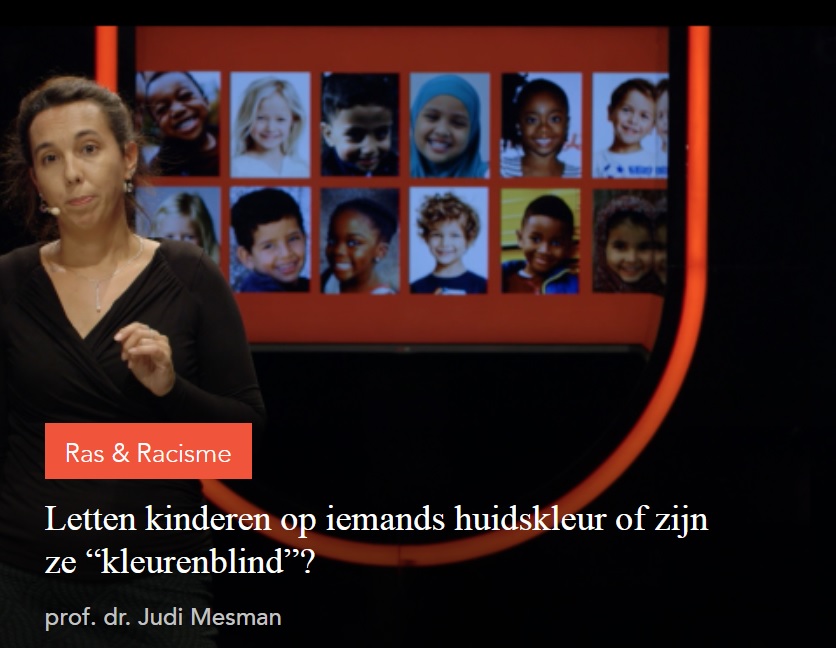
Judi Mesman is a Professor of the Interdisciplinary Study of Social Challenges at Leiden University, where she also holds the position of University Professor of Societal Responsibility and Impact since 2024. She is affiliated with the School of Governance and Global Affairs and the Department of Education and Child Studies. Previously, she served as Dean of Leiden University College The Hague from 2016 to 2022 and as Scientific Director of the Institute of Education and Child Studies from 2012 to 2016. Mesman's research focuses on social (in)justice, particularly intergenerational issues at individual and institutional levels. Her work examines how social and cultural norms in children's upbringing and education influence their self-image and worldview, with special attention to how children perceive and internalize norms regarding sexuality, ethnicity, and gender. She investigates how parents and educators unintentionally transfer prejudices to children through subtle messages and implicit stereotyping. Mesman's research program has significant societal impact, as demonstrated by her receipt of the prestigious Stevin Prize in 2021, the highest award in the Netherlands for researchers who effectively translate knowledge into societal benefits. Her work has influenced educational publishers, teacher training programs, and diversity initiatives. She has conducted studies on implicit stereotyping in schoolbooks and developed interventions to promote anti-racist education. Stevin Prize (2021) Member of Royal Netherlands Academy of Arts and Sciences (2018) Member of Royal Holland Society of Sciences and Humanities Recipient of NWO Veni, Vidi, Vici grants Recipient of ERC Starting and Consolidator Grants Mesman has supervised 26 PhD students to completion and teaches Intercultural Pedagogy in the Bachelor's program in Educational Sciences. She has developed the minor 'The (Un)Just Society' and created a podcast series on working with youth in a multicultural society, for which she received a teaching award. Her current research focuses on how norms and values about gender, ethnicity, and sexuality are transferred among professionals who work with children, including in teacher training programs.
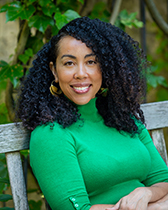
Kihana Miraya Ross is an Assistant Professor in the Department of Black Studies at Northwestern University, affiliated with the Weinberg College of Arts & Sciences. She holds a Ph.D., M.A., and B.A. from UC Berkeley in Social and Cultural Studies of Education, African American Studies, and Sociology. Her research focuses on antiblackness in education, Black educational fugitivity, and educational reparations, employing critical ethnography and participatory design methods. Her book project examines the afterlife of school segregation and strategies for Black educational futurities. She co-directed the documentary Stolen School , exploring the closure of Evanston’s Foster School and its lasting impacts. Ross has received major grants from the Spencer Foundation and fellowships from the Ford Foundation. Education: Ph.D. in Social and Cultural Studies of Education (UC Berkeley, 2016) M.A. in Social and Cultural Studies of Education (UC Berkeley, 2011) B.A. in African American Studies, Sociology, and Education (UC Berkeley, 2002) Key Projects: Spencer Foundation-funded research on Evanston’s educational reparations Documentary Stolen School (2023) Awards: 2021 Spencer Foundation Large Grant 2017 Ford Foundation Postdoctoral Fellowship Ross’s work bridges historical analysis and contemporary activism, advocating for systemic change through frameworks like Black fugitivity. She collaborates with community organizations like Shorefront Legacy Center and mentors interdisciplinary projects on race, education, and spatial justice.
Dr. Ali Kassem is a Lecturer in Sociology and Anthropology at the National University of Singapore (NUS), Faculty of Arts and Social Sciences. His academic work spans multiple disciplines, focusing on decolonial approaches to understanding power dynamics, knowledge production, and social formations across the Arab-majority world and beyond. Dr. Kassem received his PhD from the School of Law, Politics, and Sociology at the University of Sussex. He completed postdoctoral research at the Institute for Advanced Studies at the University of Edinburgh and was an early career fellow with the Arab Council for Social Sciences funded by the Carnegie Corporation of New York. His academic journey includes teaching and research positions at Ludwig-Maximillian University in Munich, EHESS in Paris, American University of Beirut, and Lebanese American University. Dr. Kassem's research examines contemporary coloniality across questions of power and knowledge. His work spans anti-Muslim racism within Arab-majority contexts, transformations in Islamic educational institutions, dehumanization of Syrian refugees, and urban transformations in Lebanon. His transdisciplinary approach engages ethnic and racial studies, sociology of religion, social psychology, migration studies, and urban studies, working alongside anticolonial thinkers including Frantz Fanon, Ali Shariati, and James Baldwin. His recent publications reveal a strong focus on decolonial theory applied to education, urban studies, and Islamic contexts. Dr. Kassem's work consistently challenges Eurocentric frameworks while exploring alternatives emerging from the Global South. His research demonstrates particular attention to Lebanon and the eastern Mediterranean region as sites for theorizing global coloniality. Dr. Kassem has authored the book "Islamophobia and Global Coloniality: the Lived Erasure of Visibly Muslim Women in Lebanon" (Bloomsbury Academic, February 2023) and is currently editing "Decoloniality and Arabo-Islamicate Worlds" (Bristol University Press, 2025). His scholarly contributions appear in journals including Ethnic and Racial Studies, Globalizations, Contemporary Religion, and Review of Middle East Studies.
Professor Holly Thorpe is a Professor of Sociology in Te Huataki Waiora / School of Health at the University of Waikato, specializing in Sport and Human Movement. She serves as Associate Dean Research in the Division of Health PVC Office and is an internationally recognized sociologist of sport, physical culture and gender whose work has earned prestigious fellowships and awards including Fulbright, Leverhulme, and Royal Society honors. Her educational background includes a PhD from the University of Waikato and Papa Reo Level 1 certification from Te Wananga o Aotearoa, reflecting both academic excellence and cultural engagement with Māori language and knowledge systems. Professor Thorpe's research centers on equity and inclusion in sporting cultures, with particular attention to women's health and wellbeing, sport and gender, and the impact of social media on athletic experiences. She employs critical and feminist theoretical frameworks with expertise in qualitative methods to examine how sport, physical activity, and health intersect in rapidly changing social landscapes. Her work spans gender studies, feminist methodologies, sports science, sociology of health, and digital media studies within sporting contexts, with a strong commitment to community-engaged research. Her extensive publication record reveals consistent thematic focus on contemporary issues including menstruation in sport, digital technologies and athlete experiences, pandemic impacts on wellbeing, and the gendered dimensions of mega-sport events. Her work frequently employs intersectional analysis and collaborates across disciplines to address complex questions about embodiment, identity, and social change in sporting cultures, particularly as they relate to women and marginalized communities. Professor Thorpe's significant scholarly recognition includes: Royal Society Early Career Research Excellence Award for Social Sciences (2018) Fellow of the North American Society for the Sociology of Sport (2018) Royal Society James Cook Fellowship for a two-year project focused on women's wellbeing through and beyond pandemic (2021) She actively supervises students and has secured substantial research funding including the Te Punaha Matatini CORE Research Institute project 'Youth Wellbeing in Uncertain Times: The Voices of Rangatahi from Flood-Effected Tairāwhiti Gisborne' (2023-2025). Professor Thorpe collaborates extensively with international and national sports organizations including the International Olympic Committee, High Performance New Zealand, Sport New Zealand, Skateistan, and Voice in Sport to ensure her research has real-world impact on policy and practice. She serves as Series co-editor for 'New Femininities in Digital, Physical and Sporting Cultures' and maintains active media engagement through The Conversation and other outlets. Professor Thorpe leads several significant research initiatives including 'Reimagining Fields of Play' (2023) and co-organized the 'Gender, Health and Wellbeing Symposium' (2022), demonstrating her commitment to creating spaces for critical dialogue about sport, gender, and health while advancing culturally responsive methodologies that center Indigenous and diverse perspectives.
Kwok Pui-lan is the Dean’s Professor of Systematic Theology at the Candler School of Theology, Emory University. Her work bridges postcolonial and feminist theological frameworks with contemporary social justice issues. She is a prominent author of works including Postcolonial Politics and Theology , Occupy Religion , and Introducing Asian Feminist Theology . Her research focuses on globalization, gender, peacebuilding, and the intersection of theology with race, power, and pedagogy. Dr. Kwok actively contributes to academic discourse through her blog (http://kwokpuilan.blogspot.com) and writings for the Wabash Center, addressing themes such as embodied teaching in digital spaces, anti-racism in academia, and theology’s role in responding to societal crises. Her scholarship emphasizes critical reflection on religious education and the ethical implications of emerging technologies. Her teaching philosophy integrates collaborative learning, arts-based methods, and embodied practices to foster transformative education. She has explored topics like machine learning’s impact on religious imagination and the role of spirituality in pandemic-era learning environments. Dr. Kwok’s work consistently interrogates systems of power and oppression, advocating for marginalized voices in theological discourse. Her contributions to the field include reimagining pedagogical approaches to address contemporary challenges in religious education and social justice advocacy.
Amber M. Neal-Stanley serves as Assistant Professor of Curriculum Studies in Purdue University's College of Education, where her scholarship interrogates Black educational experiences through critical qualitative frameworks and faith-based liberation traditions. Her work centers on structural inequity, historical resistance, and humanizing pedagogical approaches grounded in Black radical thought. Education: Ph.D. in Educational Theory and Practice, University of Georgia M.S.W. in Social Work, University of Georgia B.S. in Human Development and Family Studies, Bowling Green State University Research Focus: Dr. Neal-Stanley's research synthesizes Black education studies, critical qualitative inquiry, and faith as transformative praxis. She examines historical Black women teachers' abolitionist traditions, the Black Church's role in early childhood education, and digital humanities for recovering marginalized educational histories. Her scholarship consistently centers re membering Black radical traditions while confronting anti-Blackness in educational systems through humanizing frameworks. Publication Trends: Recent publications (2021-2025) reveal three dominant trajectories: (1) Historical analyses of Black women educators' spiritual resistance, (2) Conceptual models for leveraging religio-spiritual capital against anti-Blackness, and (3) Digital methodologies for reconstructing Black educational history. Her work increasingly integrates Black feminist thought with critical race theory to address contemporary educational struggles. Scientific Recognition: Purdue University College of Education Outstanding Faculty Teaching Award (2023-2024) Research Fellow, The Crossroads Project at Princeton University's Center for Culture, Society, and Religion (2024-2025) Academic Leadership: Teaching graduate courses in critical theory, qualitative methods, and Black educational history, Dr. Neal-Stanley prepares educators to dismantle structural inequity. Her Detroit Public Schools background and social work experience inform community-engaged scholarship that bridges historical analysis with contemporary activism, particularly through faith-based resistance frameworks.
Libby Gerard is an Associate Adjunct Research Professor at the University of California, Berkeley School of Education and a Research Director for the Technology-Enhanced Learning in Science (TELS) Center. Her work focuses on leveraging innovative technologies to enhance science education through student idea capture, automated assessment, and teacher professional development. Doctorate in Educational Leadership (EdD), Mills College (2008) Bachelor’s in English Literature and Philosophy, Emory University (2000) Her research emphasizes: Automated scoring of student essays using NLP to improve science explanations Real-time instructional customization using embedded assessment data Technology-driven professional development for teachers and principals Social justice integration in science pedagogy Collaborative revision frameworks for inquiry-based learning K-12 education adaptation during the pandemic Recent publications highlight trends in educational technology for science learning, with a focus on NLP applications, interactive inquiry modules, and equitable teaching practices. She has authored studies in journals like Science , Review of Educational Research , and Computers & Education , often exploring how automated systems can enhance teacher-student dynamics. Scientific Awards : Best Paper Award at the AI4EDU Workshop (AAAI Conference, 2020) Libby leads funded projects such as: TIPS (NSF, 2021-2025): NLP for science education ARISE (Hewlett Foundation, 2020-2023): Anti-racism in science education STRIDES (NSF, 2018-2022): Responsive instruction for science teachers PLANS (NSF, 2015-2020): Automated learning support systems She contributes to teacher training through courses like Research Methods for Science Teachers and Apprentice Teaching in Science , emphasizing data-driven pedagogy and inquiry-based instruction.
Sveinung Sandberg is a Professor at the Department of Criminology and Sociology of Law, University of Oslo. His research spans marginalization, illegal drug markets, radicalization, and narrative criminology, combining theoretical frameworks from Bourdieu and narrative analysis. Academic Interests: Marginalisation, Legal & Illegal Drugs, Violence, Radicalization, Bourdieusian Criminology, Narrative Criminology, Latin American Studies, Social Movements Education: PhD from University of Bergen Research Focus includes: Street capital theory in criminology Drug market cultural dynamics Narrative approaches to extremism Latin American criminal trajectories Recent Publications examine pandemic-related crime shifts, gendered drug use patterns, and narrative mechanisms in criminal justice. His 2021-2025 projects Radicalization and Resistance and Crime in Latin America (CRIMLA) involve cross-country life-story analyses. Scientific Awards: Fridtjof Nansen's Award for Young Researchers (2011) The Meltzer Prize for Young Researchers (2010) Editorial Roles include board memberships at Theoretical Criminology , Deviant Behavior , and International Criminal Justice Review . He has conducted fieldwork in Mexico and held visiting positions at institutions including CIDE (Mexico City) and European Monitoring Centre for Drugs and Drug Addiction (Lisbon).
Joe Feagin is the Ella C. McFadden Professor and Distinguished Professor of Sociology at Texas A&M University, College of Arts and Sciences. He holds a Ph.D. from Harvard University (1966) and has held prominent roles such as President of the American Sociological Association (1999-2000). His research focuses on systemic racism, racial and ethnic relations, and anti-racist education. Feagin has authored over 30 books and numerous articles, including seminal works like White Racism: The Basics and The White Racial Frame . He has received prestigious awards such as the W.E.B. Du Bois Career of Distinguished Scholarship Award (2013) and the Arthur Fletcher Lifetime Achievement Award (2013). Feagin's academic journey includes positions at the University of Texas, University of Florida, and Texas A&M. He served as Scholar-in-Residence at the U.S. Commission on Civil Rights (1974-1975). His courses at Texas A&M include the Sociology of African Americans, Classical Social Theory, and Racism and Anti-Racism. His research spans racial discrimination, gender relations, urban sociology, and systemic racism’s impacts. He has pioneered theories like systemic racism and the white racial frame. Feagin’s work emphasizes societal transformation through critical sociology and anti-racist practices. Key awards and recognitions include the Cox-Johnson-Frazier Scholarship Award (2018), Soka Gakkai International Social Justice Award (2012), and multiple fellowships. His grants and administrative roles include leadership in diversity initiatives at Texas A&M and national sociological organizations. Feagin’s legacy includes fostering anti-racist education, leading interdisciplinary research teams, and advocating for social justice. His work continues to influence policy, education, and public discourse on race in the U.S. and globally.
Margaret Robinson is an Associate Professor at Dalhousie University, holding dual appointments in the Department of English and Department of Sociology and Social Anthropology within the Faculty of Arts and Social Sciences. She is a bisexual two-spirit scholar from Eski'kewaq, Nova Scotia, and a member of the Lennox Island First Nation. Her interdisciplinary work bridges Indigenous studies, queer theory, and intersectional feminism, with a focus on decolonizing methodologies and Indigenous oral traditions. Robinson’s research explores representation of Indigenous peoples and sexual/gender minorities in creative works, including fanfiction and popular culture. She holds a Tier 2 Canada Research Chair in Reconciliation, Gender, & Identity (2019-2023) and leads the Mi’kmaw Cultural Research Lab funded by the Canadian Foundation for Innovation (2021-2024). Her education includes a BA from Saint Mary’s University and MA/PhD from the University of Toronto. Key research areas include Indigenous New Wave literature, Mi’kmaw spirituality, and Two-Spirit feminism. Recent grants focus on reconciliation frameworks and LGBTQ2S+ health equity. She has published widely on topics like queer mental health, animal personhood in Mi’kmaw cosmology, and decolonizing pedagogies.
Dr. Prerna Arora is Associate Professor of Psychology and Education at Teachers College, Columbia University, within the Graduate School of Education, Health & Psychology and the Department of Health Studies & Applied Educational Psychology. She directs the School Mental Health for Minoritized Youth and Families (SMILE) Research Lab, where she leads innovative research on mental health equity for immigrant-origin, racial and ethnic minoritized, and historically marginalized youth. Ph.D. in School Psychology – University of Texas at Austin M.A. in Educational Psychology – University of Texas at Austin B.S. in Biology – Arizona State University Predoctoral Internship – Children’s Hospital of Philadelphia Postdoctoral Training – University of Maryland School of Medicine Dr. Arora’s research focuses on culturally tailored mental health interventions, school-based services, barriers to care, and trauma-informed, equity-driven practices. Her work is grounded in participatory action research and mixed methods, aiming to bridge research-practice gaps and empower communities. She has led major funded projects from the Spencer Foundation, National Institute of Mental Health (NIMH), and the U.S. Department of Education, including a $4.9 million grant to train clinicians in culturally responsive services. Her recent publications reflect a strong thematic focus on mental health disparities, cultural adaptation of interventions, school climate, and help-seeking behaviors among AAPI, Latino/a, and immigrant youth. The body of work demonstrates a commitment to advancing equity, social justice, and measurement-based care in school psychology. American Psychological Association Minority Fellowship Program Spencer Foundation Research Grant NIMH Funding U.S. Department of Education OSEP Grant ($4.9 million) Dr. Arora actively mentors PhD and graduate students, many of whom co-author her publications. She has secured major grants that support training, research, and community partnerships. Her leadership extends to editorial roles as Associate Editor of School Mental Health and Consulting Editor of School Psychology Review , and she is a vocal advocate for diversity, equity, and inclusion in academic training and practice. She collaborates extensively with NYC-based organizations, building community-driven research models through the SMILE Lab.
Michael Classens is an Assistant Professor in the Teaching Stream at the School of the Environment, University of Toronto , specializing in social and environmental justice within food systems. He serves as Undergraduate Associate Director, emphasizing community-based learning and integration of Indigenous and community knowledge into pedagogy. Education: PhD in Environmental Studies (York University, 2015), MA (University of Windsor), BA (Western University) His research explores environmental injustice/racism , food systems governance , and prefigurative learning spaces , particularly through campus food initiatives and critical cartography. He has published extensively on food solidarity, racialized food insecurity, and transformative pedagogies. Recent publications (2021–2024) analyze neoliberal responses to food crises, anti-racist food system frameworks, and campus foodscapes as sites of radical pedagogy. Keywords span environmental justice, critical race theory, urban agriculture, and labor studies. Scientific Awards: 2024 A&S Outstanding Teaching Award (Early Career, Faculty of Arts and Science) He advocates for informal and prefigurative learning , connecting classroom knowledge to real-world justice movements. His work bridges academic research with grassroots activism, focusing on equitable food systems and decolonizing educational practices.