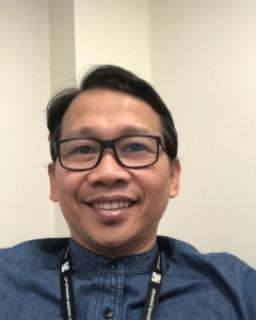
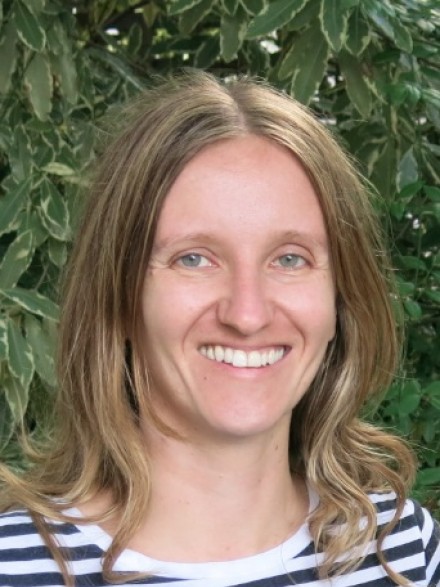
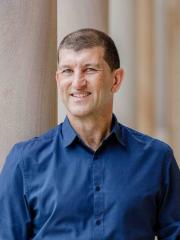
Professor Nick Paul is a marine scientist at the University of the Sunshine Coast (UniSC), leading applied research in seaweed and algae for sustainable product development. He holds a PhD and BSc (Hons) from UNSW and a Graduate Certificate in Tertiary Education Management from the University of Melbourne. His work focuses on seaweed aquaculture innovations, including waste-to-resource biotechnology, functional foods, and environmental remediation. He leads international projects funded by organizations like ACIAR, CSIRO, and Advance Queensland. Research interests include seaweed-based solutions for livestock health, wastewater treatment, and sustainable aquaculture expansion near the Great Barrier Reef. He has pioneered commercial land-based seaweed farming and developed intellectual property in this field. Awards include the 2015 UNAA World Environment Day Award for Sustainable Water Management and the 2015 Queensland Water Innovation Forum Best Paper. He serves on the Asian Fisheries Society Council and Fiji’s National Seaweed Taskforce. Key publications span seaweed cultivation methods, marine genomics, and socio-economic impacts of aquaculture in the Pacific. Grants total over A$3.7 million for projects like diversifying Pacific Island seaweed industries and improving Indonesian seaweed production.
Julian Millie is a Professor in Indonesian Studies at Monash University, Faculty of Arts, where he coordinates and teaches in the Indonesian Studies program. His academic work bridges anthropology, religious studies, and Southeast Asian studies, with a focus on the social and political dimensions of Islamic practice in Indonesia. His research centers on embodied Islamic routines, including preaching, ritual, and commemoration of regional Islamic figures. He has led major ARC-funded projects such as Preaching Islam: politics, performers and publics and Glocalisation and sub-national Islams , and currently leads the international project Islamic Bureaucracies and Pious Publics in Turkey and Indonesia . Anthropology of Indonesia Islamic Culture and Society Ritual and Religion Public Islam and Preaching Social Change in Muslim Societies Political Anthropology His recent publications (2023–2024) reveal a continued focus on Islamic consumerism, reformist critiques of consumption, ritual embodiment, and the politics of Islamic education. These works span journals like Asian Studies Review and edited volumes on preaching and Malay-Indonesian Islamic studies, showing strong interdisciplinary reach into sociology, cultural studies, and education policy. Julian Millie has contributed to scholarly discourse through editorial roles, including guest editorships for Asian Studies Review (2023) and International Journal of Cultural Studies (2013). His media engagements highlight his commitment to public anthropology, commenting on the state of Indonesian studies in Australia and Islamic education policy. He is actively involved in research grants, including current funding from 2020 to 2025, and has collaborated with scholars across Australia, Indonesia, and Turkey. While no formal advisees are listed, his leadership in research projects suggests mentorship and team coordination. He is a central figure in the study of contemporary Indonesian Islam, contributing to both academic and public understanding.
Dr. Farid Saenong is a Visiting Fellow at the Centre for Arab and Islamic Studies (CAIS) at the Australian National University (ANU). He concurrently serves as a faculty member and lecturer in the Faculty of Islamic Studies at the Indonesian International Islamic University. His academic background includes a PhD in Anthropology from ANU, an MA in Islamic Studies from the University of Manchester, and another MA in Islamic Studies from Universiteit Leiden. His research focuses on the Global Politics of Moderate Islam, particularly in Indonesia, Egypt, and Morocco, funded by the Henry Luce Foundation and hosted by Emory University. His academic interests span classical and contemporary Islamic studies, Indonesian studies, religion and social media, religion and gender dynamics, Middle Eastern and Southeast Asian studies, and the evolution of religious authority. Dr. Saenong's publications include articles in journals such as Religion , Tamaddun , Intersections , and Jurnal Studi al-Qur’an , as well as chapters in edited volumes. His work bridges anthropological, religious, and regional studies perspectives. He is affiliated with the Centre for Arab and Islamic Studies (CAIS) at ANU, leveraging this platform to advance interdisciplinary research on Islamic and regional studies. His current project, supported by the Henry Luce Foundation, underscores his engagement with transnational religious and political dynamics.
Dr Anna Sanders is a Research Fellow at the ANU Institute for Climate, Energy & Disaster Solutions, part of the College of Science at The Australian National University. Her research focuses on transformational climate adaptation, environmental governance, and multi-level decision-making in rapidly changing environments. Previously, she held roles at the University of Melbourne, where she remains an honorary fellow at the School of Agriculture, Food and Ecosystem Sciences. Her work spans environmental policy analysis, political ecology, and interdisciplinary research methods. Key areas include climate adaptation strategies, landscape change, and resource governance in Southeast Asia and Australia, particularly in Indonesia’s tropical peatlands, oil palm regions, and the Northern Territory. She emphasizes participatory research approaches, ethical practices, and long-term place-based studies to enhance local capabilities and policy relevance. Anna’s research groups include Agriculture, Food and Nutritional Security; Indigenous Knowledges and Development in Asia/Pacific; and Law, Governance and Institutions. Her contributions address global environmental challenges through nuanced, culturally attuned frameworks.
Professor Adrian Vickers is a renowned scholar in Southeast Asian Studies at the University of Sydney, holding the title of Professor of Southeast Asian Studies. He is affiliated with the Sydney Southeast Asia Centre and the Vere Gordon Childe Centre. His research focuses on Indonesian history, Balinese art, and Australian-Indonesian relations, with a particular emphasis on cultural history and digital humanities. Education: PhD (Sydney), BA (Hons) (Sydney). His work has been supported by grants from the Australian Research Council and the Getty Foundation. Notable projects include the Multilingual Australia and Virtual Museum of Balinese Painting . Research Interests: Asia-Australia relations, labour history, maritime Southeast Asia, and Panji epic traditions. He has authored influential books like The Pearl Frontier (2015) and A History of Modern Indonesia (2013). His articles explore themes like Indonesian revolutionary solidarity, historical revisionism, and inter-Asia referencing methodologies. Awards: Elected Fellow of the Australian Academy of the Humanities (2014), Brayton Wilbur Jr Fellowship (2018), and multiple literary awards for The Pearl Frontier . He has supervised over 35 PhD candidates and teaches courses on Southeast Asian history and culture. Current Projects: Leading Opening Australia’s Multilingual Archive (ARC Discovery Grant) and Site and Space in Southeast Asia (Getty Foundation). Serves on editorial boards of journals like Journal of the Society for Asian Humanities .
Dina Afrianty is a Lecturer in Law at the Faculty of Law and Business, Thomas More Law School. Her research focuses on disability rights, gender studies, Islamic law reforms, and sociolegal issues in Indonesia. She has published extensively on topics such as inclusive education policies, the intersection of faith and gender-based violence, and the role of civil society in legal advocacy. Her work often bridges religious ethics with modern legal frameworks, particularly examining how Islamic institutions and policies impact marginalized groups. Notable contributions include critiques of Indonesia’s Omnibus Law, the implementation of Sharia regulations in Aceh, and advocacy for disability inclusion in education and disaster responses. Key research themes include: Disability rights and religious institutions Gender equity in Islamic legal systems Sharia governance and regional autonomy Intersectionality of faith, gender, and public policy Her articles highlight tensions between traditional religious norms and progressive social justice goals. Recent work emphasizes climate policy’s exclusion of people with disabilities and the need for inclusive legal frameworks. No formal scientific awards are listed, but her research has been widely disseminated through academic presses and public policy platforms like The Conversation. She collaborates closely with disabled peoples’ organizations and women’s NGOs to drive legal reforms.
Professor Michael Fabinyi is a distinguished academic at the University of Technology Sydney, where he serves as Professor in Social and Political Sciences within the Faculty of Design and Society. Previously, he held positions as Associate Professor (2019-2023) and Senior Lecturer (2016-2018) at the same institution. His academic journey includes significant research experience at the Australian Research Council Centre of Excellence for Coral Reef Studies at James Cook University (2010-2016), where he progressed from Postdoctoral Research Fellow to Senior Research Fellow. Professor Fabinyi completed his PhD at the Australian National University in 2009 and earned his BA (Hons.) from the University of Melbourne. His international experience is extensive, having lived and worked in China, Indonesia, Malaysia, Papua New Guinea, the Philippines, and Solomon Islands. He has held visiting appointments at Peking University (2013-14) and WorldFish in Malaysia (2015), and currently serves as an Adjunct Associate Professor at Palawan State University in the Philippines. Professor Fabinyi's research focuses on the social, political, and cultural dimensions of marine resource use and management. His work spans coastal livelihoods, agrarian change, food security in coastal contexts, seafood trade, fisheries governance, and coral reef restoration. His research approach integrates theories and methods from anthropology, development studies, and human geography, with a strong emphasis on Southeast Asian contexts, particularly the Philippines. He has developed expertise in political ecology, environmental anthropology, and the blue economy, examining how maritime zone developments impact small-scale fishing communities across Southeast Asia. His recent publications reveal a strong focus on coral reef restoration governance in Southeast Asia, small-scale fisheries contributions to global food systems, and China's role in global seafood trade. Professor Fabinyi's work consistently addresses the intersection of environmental conservation and human wellbeing, with particular attention to governance structures, equity issues, and the social dimensions of marine resource management. His research often employs ethnographic methodologies including interviews, focus group discussions, and participant observation to understand local perspectives on marine resource management. Professor Fabinyi has secured significant research funding from various sources including the Australian Research Council, Australian Centre for International Agricultural Research, and the Nippon Foundation Ocean Nexus Centre. His current projects focus on sandfish mariculture, coral reef restoration and governance in the Philippines, small-scale fisheries governance in the Philippines, edible bird's nest trade in Indonesia, and China's role in global fisheries. At UTS, Professor Fabinyi coordinates and teaches undergraduate subjects on political economy, sociology, and climate justice and policy. He actively supervises PhD students researching fisheries governance and coastal livelihoods. His work engages with multiple UN Sustainable Development Goals, particularly Life Below Water (14), No Poverty (1), Reduced Inequalities (10), Responsible Consumption and Production (12), Zero Hunger (2), and Decent Work and Economic Growth (8). Professor Fabinyi is an active contributor to international research networks, collaborating with scholars across Southeast Asia, Australia, and globally. His work bridges academic research with policy relevance, contributing to debates on sustainable ocean governance, equitable blue economy development, and effective coral reef conservation strategies that consider both ecological and social dimensions.
Professor Daniel Fitzpatrick is an Adjunct Professor at the Faculty of Law, Monash University. Previously, he served at the Australian National University (ANU) as Director of the Centre for Commercial Law and established the Masters in Law, Governance and Development. He has held visiting roles globally, including at New York University School of Law, National University of Singapore, University of Muenster, and University of Toronto. In 2022, he was a Scholar-in-Residence at the Woodrow Wilson Institute for International Scholars. His research focuses on property rights in disaster and climate-affected contexts, contributing to UN Sustainable Development Goals. Key areas include land tenure systems in fragile states, climate mobility governance, and adaptive legal frameworks for environmental displacement. He has authored or co-authored 6 books and published in leading journals such as the Yale Law Journal and American Journal of Comparative Law. With over A$1,031,690 in ARC funding since 2012, Fitzpatrick’s work addresses property resilience in Indonesia, the Solomon Islands, and other disaster-prone regions. He advises international organizations like the World Bank on land policies for disaster risk management and climate mobility. His expertise also includes post-conflict land policy, having served as the UN’s land rights adviser in East Timor and Aceh, and as a consultant for Oxfam, OECD, and UN agencies. Fitzpatrick has been recognized with the Hart Article Prize (2007) and Australian Research Council Future Fellowship (2012–2016). His teaching excellence was acknowledged through nominations at ANU (2010–2011). Current affiliations include the expert advisory committee for the Platform on Disaster Displacement and collaborative projects with the Pacific Islands Forum Secretariat.
Assoc. Prof Natasha Stacey is an anthropologist with a PhD and over two decades of experience in socio-economics, marine resource management, and fisheries research across the Asia-Pacific region and North Australia. Her work focuses on small-scale fisheries, aquaculture, and enhancing livelihoods for Indigenous and rural coastal communities. Education: PhD in Anthropology Her research spans interdisciplinary themes in sustainable development, ecosystem services, and policy analysis. She investigates socio-economic drivers of natural resource use, women's empowerment in agriculture, and food security challenges in Timor-Leste, Indonesia, and Bangladesh. Recent publications highlight collaborative studies on tropical sardine fisheries, forest management policies, and maternal nutrition impacts. Stacey's articles emphasize socio-economic factors, cross-disciplinary methodologies, and regional applications in fisheries and agriculture. While no explicit awards or grants are listed, her work demonstrates a commitment to addressing livelihood and sustainability issues through anthropological and environmental science lenses.
Dr Brooke Wilmsen is an Associate Professor in Anthropology at La Trobe University, working within the Department of Social Inquiry in the School of Humanities and Social Sciences. She serves as the Director of the Master of International Development and Convenor of the Major in Sustainability and Development in the Bachelor of Arts program. Her academic journey includes a Bachelor of Science (Environmental Science), a Bachelor of Arts (First Class Honours), and a PhD in Geography, all from The University of Melbourne. Her research expertise spans: Resettlement and displacement studies Climate adaptation and social protection Agrarian change in China and Southeast Asia Sustainable development and social justice Wilmsen's research demonstrates a distinctive longitudinal approach, particularly evident in her work on the Three Gorges Dam in China where she tracked displacement impacts over time. Her more recent scholarship has expanded to climate-related resettlement in the Philippines, Indonesia, and the Maldives, examining power dynamics, justice outcomes, and community agency in adaptation processes. Her publications appear in leading journals including Global Environmental Change , World Development , and Progress in Human Geography . Her significant research projects include: ARC DECRA fellowship (2012-2017) on Three Gorges Dam impacts World Social Science Fellowship with ISSC (2014) UNRISD New Directions in Social Policy Project (2015-2019) ARC Discovery Project on China's agricultural restructuring (2018-2023) Current ARC-funded project 'Reframing the yield gap' in the Philippines (2023-2025) Wilmsen's scholarly contributions have been recognized with multiple awards including the Vice Chancellor's Mid Career Researcher Award (2018) and International Academic Collaboration Award (2020). Her work aligns with UN Sustainable Development Goals 13 (Climate Action), 10 (Reduced Inequalities), and 15 (Life on Land). Prior to academia, she worked as a consultant for the World Bank, Asian Development Bank, and government agencies, bringing practical policy experience to her research. She is available for Masters Research and PhD student supervision and actively collaborates with international institutions.
Associate Professor Patrick Jory is a distinguished scholar of Southeast Asian History at the University of Queensland's School of Historical and Philosophical Inquiry, where he serves as Director of Research Training (Higher Degree Research). With a career spanning over two decades, he has established himself as a leading expert on Thai history, politics, and religious studies. His academic journey began at the University of Western Australia, continued at Walailak University in Thailand, and has flourished at the University of Queensland since 2011. Dr. Jory's research interests form a comprehensive exploration of Southeast Asian societies, with particular emphasis on Thai political, intellectual, and religious history. His work delves into the intricate relationships between Theravada Buddhism and state formation, the historical development of secularization in Asia, and the complex dynamics of the conflict in southern Thailand/Patani region. He has made significant contributions to understanding Islam and Muslim societies in Southeast Asia within their broader historical and political contexts. His scholarship bridges historical analysis with contemporary political developments, offering nuanced perspectives on Southeast Asian politics that challenge simplistic narratives. Jory's prolific publication record demonstrates remarkable thematic consistency while expanding into new areas of inquiry. His recent works reveal a growing focus on the politics of death and sovereignty, state building processes, and the civilizing processes in Thai society. The 2021 publication of A History of Manners and Civility in Thailand represents a culmination of his long-standing interest in social behavior and cultural norms. His scholarship consistently challenges conventional interpretations, as seen in his work on Thai monarchy, republican traditions, and the historical relationship between Siam and imperial China. Manners in Thailand's Social and Political Transformation, 1880-1980 (ARC Discovery Projects, 2018-2022) The Politics of Politeness: A History of Manners in Thailand (UQ New Staff Research Start-Up Fund, 2011-2012) Professor Jory has supervised numerous PhD candidates across diverse topics related to Southeast Asian history and politics. His supervision portfolio reflects the breadth of his expertise, spanning Chinese diaspora studies, Islamic movements, political history, and cultural studies across the region. His commitment to mentoring the next generation of scholars is evident in his extensive supervision record, which includes both principal and associate advisory roles for doctoral candidates working on projects from Indonesia to Vietnam to Sri Lanka. His research continues to shape contemporary understanding of Thailand's complex historical trajectory and its implications for current political developments in Southeast Asia.
Professor Hans Pols is a historian specializing in the history of medicine, psychiatry, and mental health in colonial and postcolonial contexts. He holds a position at the University of Sydney's Faculty of Science and is affiliated with the Sydney Centre for Healthy Societies and the Sydney Southeast Asia Centre. His academic credentials include degrees from Groningen University (Drs), York University (MA), and the University of Pennsylvania (PhD). His research focuses on the intersection of medicine, colonialism, and mental health in Southeast Asia, particularly Indonesia. Key projects include an ARC-funded study on Australia's community mental health history and investigations into Dutch East Indies medical systems. He has authored influential works such as Nurturing Indonesia: Medicine and Decolonisation and edited volumes on traumatic pasts in Asia and mental health in Indonesia. Prof. Pols has received prestigious fellowships including FAHA, FASSA, and FRSN. His publications span books, edited collections, and over 50 journal articles addressing topics like colonial race theories, mental health activism, and decolonization of medical knowledge systems. He actively collaborates across disciplines and regions, contributing to global health initiatives such as the Regional Mental Health Care Atlas project in Indonesia. Education: Drs (History), University of Groningen MA (History), York University PhD (History of Science), University of Pennsylvania Grants: Australia-Indonesia Institute: Mental Health through Social Media during Pandemic ARC Linkage: Socio-cultural Factors in Therapeutic Opioids Use DFAT/KONEKSI: Mental Health Care Atlas in Central Java Awards: Fellow of the Australian Historical Association (FAHA) Fellow of the Academy of the Social Sciences in Australia (FASSA) Fellow of the Royal Society of New South Wales (FRSN) His work bridges historical scholarship with contemporary health policy, emphasizing the importance of understanding colonial legacies in modern healthcare systems. Current research explores transnational mental health frameworks and the co-production of historical knowledge with affected communities.
Dr Lee Wilson is an Adjunct Senior Fellow at the School of Social Science, University of Queensland. His research spans anthropology, political science, and security studies, with a focus on Indonesia, Papua New Guinea, and broader Southeast Asian contexts. He examines themes such as cultural dynamics, development practices, gender issues, and the interplay between security and normative orders. His work integrates ethnographic methods with critical analyses of contemporary social, political, and cultural challenges. Notable research areas include polygyny practices in Papua New Guinea, security governance in Bali and Indonesia, and the role of martial arts in shaping national identity. Lee’s articles reflect interdisciplinary engagement, bridging anthropology, technology, and policy. His 2023 paper offers insights into development practitioner ethics, while earlier works explore digital health innovations and historical narratives of Indonesian independence. He contributes to initiatives like the SocioHealthLab, emphasizing collaborative, socially engaged research. No scientific awards are listed, though his extensive publication record highlights academic impact. His advising and grants remain unspecified, but his involvement in research groups underscores commitment to interdisciplinary innovation and ethical research practices.
Sandra Pannell is an academic researcher affiliated with James Cook University. Her work focuses on archaeology, anthropology, and cultural studies, with a regional emphasis on Southeast Asia, particularly East Timor and Eastern Indonesia. She has contributed to interdisciplinary studies on topics such as Indigenous rights, historical fortifications, cultural heritage preservation, and the socio-political impacts of violence and development projects. Her research spans diverse themes, including cave use in East Timor, the legacy of colonialism, and the intersection of infrastructure development with cultural landscapes. Her publications reflect a commitment to understanding marginalized communities' experiences through ethnographic and archaeological methods. No scientific awards or grants are explicitly listed. Her advisory roles or lab affiliations remain unspecified in the provided texts.
Professor James J. Fox is a distinguished academic specializing in the history and anthropology of Indonesia and East Timor, affiliated with the Coral Bell School of Asia Pacific Affairs at the Australian National University (ANU). He has held a Professorial role at ANU since 1975 and has been a visiting scholar at numerous institutions globally, including Harvard, Leiden, and Duke Universities. His research focuses on rural development, resource management, social organization, linguistic anthropology, and comparative Austronesian ethnology. Education: Harvard University (AB 1962), Oxford University (B Litt 1965, DPhil 1968, Rhodes Scholar) Affiliations: Foreign Fellow of the Royal Dutch Academy of Sciences; Fellow of the Academy of the Social Sciences in Australia Research contributions span multi-decadal studies in Java, Timor, and broader Asia-Pacific regions. He has led the Research School of Pacific and Asian Studies at ANU (1998–2006) and contributed to initiatives like the Australian Energy Emissions Monitor and Zero Carbon Energy for the Asia-Pacific. Current research groups include Carbon Removal, Extreme Events and Future Scenarios, and Adaptation Livelihoods in Asia-Pacific.