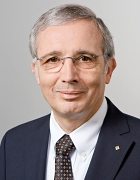
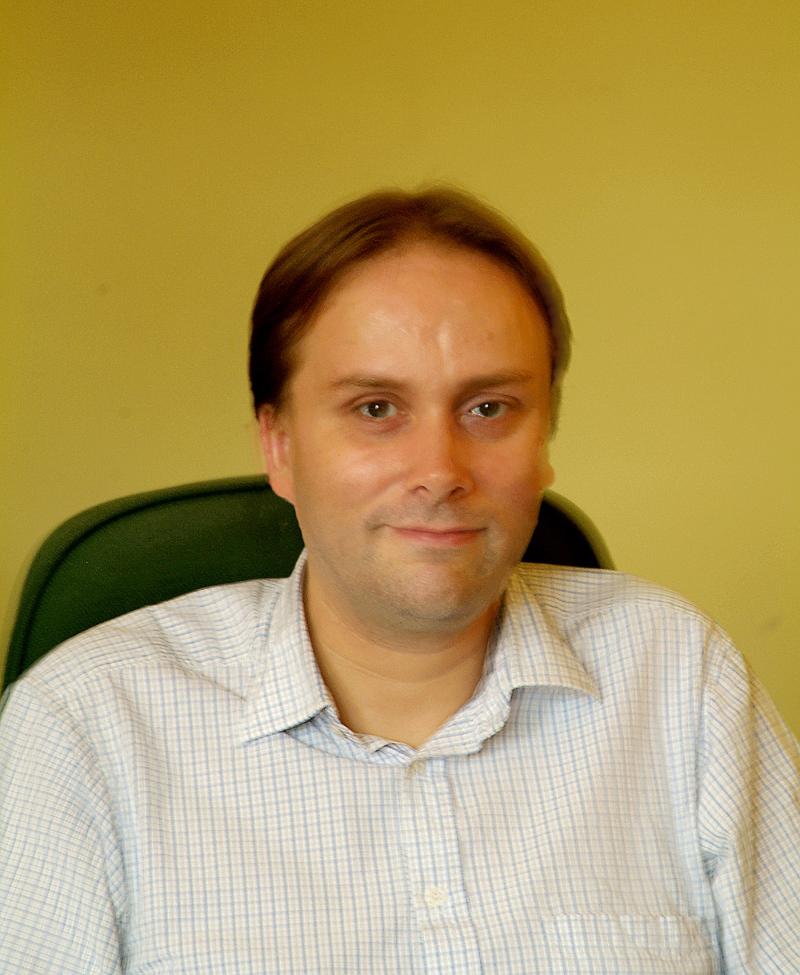
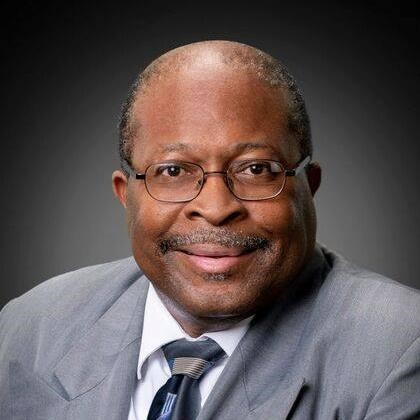
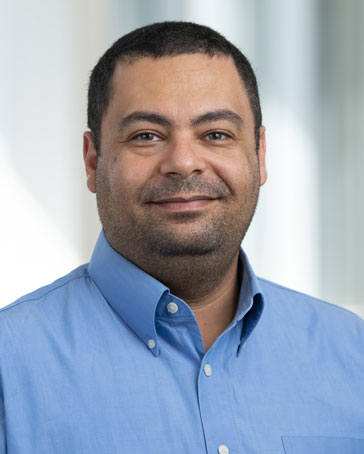
Amir Borji is a Research Assistant Professor and Sessional Lecturer at the University of Waterloo. His work focuses on advanced antenna engineering, electromagnetics, and microwave systems with a strong emphasis on millimeter-wave technologies, computational electromagnetics, and RF systems design. Research Interests: Design and analysis of millimeter-wave antennas and phased arrays Electromagnetic modeling of periodic structures and metamaterials Optimization of antenna performance in high-frequency regimes Integration of substrate integrated waveguides (SIW) in antenna systems Recent work highlights include developing low-profile mmWave 5G antennas, analyzing graphene-based periodic structures, and improving broadband tunable systems. His publications reflect a trend toward practical solutions for modern wireless communication challenges. Scientific Awards: None explicitly listed in the provided information. Advising/Grants: No specific students, grants, or lab affiliations mentioned in the current data. His contributions appear primarily through independent and collaborative research publications.
Prof. Kin Leung is the Tanaka Chair Professor in Internet Technology at Imperial College London's Department of Electrical and Electronic Engineering, Faculty of Engineering. He holds affiliations with the Artificial Intelligence Network, Quantum Engineering, Science and Technology, and the Space Lab. His research focuses on distributed optimization, machine learning, communication networks, and quantum engineering. Education: Ph.D. (Computer Science, UCLA, 1985), M.S. (Computer Science, UCLA, 1982), B.S. (Electronics, Chinese University of Hong Kong, 1980). Research interests span machine learning, AI, wireless communications, distributed computing, and quantum networks. Recent work includes quantum circuit partitioning, federated learning in edge networks, and reinforcement learning applications in UAV crowdsensing. Major awards include Fellow of the Royal Academy of Engineering (2022), IEEE Fellow (2001), and the Lanchester Prize Honorable Mention (1997). He leads projects like the EPSRC TITAN Com Hub and HASC Com Hub, focusing on network connectivity and quantum computing. Professional roles include editorships at ACM Computing Surveys and guest editorships at multiple journals. Current projects involve distributed quantum computing, edge computing resource management, and network security. Labs/Teams: Quantum Engineering Group, Communications and Signal Processing Group, and collaborations with UCL and U.S. Army Research Lab.
Dr. Waqas Bin Abbas is a Senior Research Associate at the School of Electrical, Electronic and Mechanical Engineering, University of Bristol. His research focuses on wireless communication systems, particularly in the domains of Massive MIMO, energy efficiency, antenna selection, and machine learning applications. He has contributed extensively to advancements in mmWave systems, reconfigurable intelligent surfaces (RIS), and indoor localization technologies using WiFi, BLE, and UWB. Recent Work : RIS-assisted near-field communications, hybrid precoding for MIMO systems Emerging Themes : Zero-touch networking, net-zero energy systems, AI-driven signal processing Scientific Contributions : Key work in optimizing spectral/energy efficiency of 5G/6G systems Leading advancements in UWB-based indoor positioning Developing low-complexity detectors for underwater IoT systems
Prof. Josef Nossek is a Full Professor of Network Theory and Signal Processing at the Technical University of Munich (TUM), Department of Electrical Engineering and Information Technology. His research focuses on signal processing in mobile communications, multi-antenna systems deployment, and technical/physical constraints in communication systems. He holds visiting professorships at UC Berkeley, Vienna University of Technology, and Pazmany University in Budapest. Before joining TUM in 1989, he worked at Siemens AG as Head of Microwave Radio Systems Development. He is a Fellow of IEEE and a member of acatech (German Academy of Science and Engineering). Notable awards include the Federal Cross of Merit (2008), IEEE Education Award (2008), and Bavaria's Prize for Good Teaching (1998). His research interests emphasize practical applications of signal processing theory, including MIMO systems, reconfigurable intelligent surfaces (RIS), and antenna array design. His work bridges theoretical foundations with real-world constraints to optimize wireless communication performance.
John Thompson is Professor of Signal Processing and Communications at the University of Edinburgh, where he heads the Research Institute for Imaging, Data and Communications. His research advances signal processing for next-generation wireless systems including 5G/6G networks and integrated sensing-communication technologies. His qualifications include: Bachelor of Engineering (First Class) PhD in Electrical Engineering Thompson's research focuses on energy-efficient millimeter wave communications, massive MIMO systems, and integrated radar-communication networks. He develops novel algorithms for channel estimation, beamforming, and signal detection using machine learning approaches. Current projects examine UAV-assisted networks, non-terrestrial satellite systems, and adaptive techniques for dynamic wireless environments. Honored as IEEE and EURASIP Fellow, Thompson leads major research initiatives in next-generation wireless technologies. His group collaborates with industry partners to transfer innovations in signal processing, antenna design, and network optimization to practical systems.
Lars Denayer is affiliated with the Faculty of Engineering at Vrije Universiteit Brussel. His research focuses on antenna engineering, computational electromagnetics, and Volterra series analysis. He holds a PhD in Electricity and has contributed to advanced topics like phased array antenna design and signal processing methodologies. His recent work includes an article on Hadamard-based excitations for radiation pattern prediction. Professional activities include submitting FWO proposals for developing the Best Volterra Approximation theory in 2024 and 2025, and presenting this research at a conference in March 2024. His research portfolio bridges theoretical advancements in signal processing with practical applications in antenna systems.
Yves Rolain is a Professor at the Vrije Universiteit Brussel in Belgium, actively contributing to research in microwave engineering, nonlinear systems, and electromagnetic modeling. His work spans fundamental and applied domains, including projects like SRP-Onderzoekszwaartepunt and ROAMI. He has supervised numerous PhD and Master’s theses and collaborates internationally. Education: Ingenieur in Engineering, PhD in Engineering, Master in Computer Science. His research focuses on nonlinear distortion , microwave systems , and calibration frameworks , with recent publications on digital predistortion, EMI shielding, and electromagnetic simulations. Trends include adaptive modeling, real-time RF techniques, and microwave filter design. Scientific Awards: Best Conference Paper Awards (1999, 2000, 2001) Best Paper Award, Automated RF Techniques Group (2009, 2010) He has advised students like Maral Zyari and Matthias Vaes, and his projects include collaborations with institutions in Belgium, the Netherlands, and Italy. Activities include conference participation and workshops since 1999.
Associate Professor Erwin Chan is a faculty member at the University of Sydney's Faculty of Engineering and Information Technologies, specializing in fiber optics and photonics. A Senior Member of the IEEE, he has contributed over 100 technical publications and earned awards such as the University of Sydney Early Career Development Award and an Australian Research Council Postdoctoral Fellowship. His research focuses on microwave photonic signal processing, transcending traditional photonics transmission by enabling direct processing of high-bandwidth signals modulated on optical carriers. Key areas include optical communications, nonlinear fiber optics, optically-controlled phased arrays, and fiber optic sensors for structural monitoring, chemical/biological applications, and the oil and gas industry. Recent publications emphasize advancements in photonic systems for angle of arrival (AOA) measurements, Doppler frequency shift detection, and optoelectronic oscillators with low phase noise. His work integrates photonics with radar and communication systems, addressing challenges in signal integrity and system reconfigurability. Awards: University of Sydney Early Career Development Award Australian Research Council Postdoctoral Fellowship Supervision: PhD and Master’s by Research candidates in fiber optics and photonics are welcomed. Research opportunities span photonic signal processing, optically-controlled phased arrays, fiber optic sensors, and microwave photonic systems.
Dr. Paul Ruffin is a Professor in the Department of Physics at Alabama A&M University, within the College of Engineering, Technology, and Physical Sciences. His research focuses on micro sensors, fiber optics, nanomaterials, and photonic devices with applications in optical communication and sensing technologies. He has contributed to advancements in Raman spectroscopy, femtosecond laser fabrication, and harsh-environment optical fiber sensors. His work spans interdisciplinary areas including nanophotonics, laser-material interactions, and smart materials integration. Notable collaborations include projects with colleagues such as S. Yin, C. Brantley, and E. Edwards, addressing challenges in sensor miniaturization and environmental monitoring. Recent publications highlight innovations in nanoscale sensor substrates, beam steering techniques, and polymeric strain transducers. His contributions to the field include co-editing Fiber Optic Sensors (2nd Ed., CRC Press) and authoring book chapters on fiber gyroscope sensors and nanowire biosensors. Dr. Ruffin's research has been supported through collaborations involving applied physics and engineering teams, with a focus on translating laboratory innovations into practical sensor technologies.
Dr. Said Abushamleh is an Associate Professor of Electrical Engineering at Indiana Tech's Talwar College of Engineering and Computer Sciences. He teaches courses such as Circuits I/II, Electromagnetic Fields & Waves, Microwave Engineering, and Digital System Design. His academic advising focuses on Electrical Engineering and Robotics/Mechatronics Engineering students. He holds a Ph.D. in Electrical Engineering from the University of Arkansas at Little Rock (2015), an M.S. in Wireless Communications from Lund University (2009), and a B.S. in Electrical and Computer Engineering from Hashemite University (2007). Dr. Abushamleh's research interests span antenna systems, RF engineering, wireless communications, and microwave design. His work emphasizes antenna miniaturization, power divider optimization, and high-frequency circuit solutions. Recent publications explore topics like 5G channel modeling, substrate integrated waveguide filters, and decoupling techniques for MIMO antennas. He actively contributes to IEEE conferences and serves as an advisor to the IEEE Student Chapter at Indiana Tech. His research has been presented at venues such as the IEEE International Symposium on Antennas and Propagation and the Applied Computational Electromagnetics Society Conference. Notable contributions include advancements in power divider designs using Fourier-based modulation, compact antenna structures with ledge edges, and innovative crosstalk mitigation strategies for PCB traces. His work bridges theoretical electromagnetics with practical applications in telecommunications and wearable electronics.
Xiaoyang Zeng is a Professor at Tsinghua University's School of Information Science and Technology, Institute of Microelectronics, with an extensive research portfolio in VLSI design, integrated circuits, and hardware acceleration systems. With over 429 publications spanning from 2005 to 2025, Professor Zeng maintains an exceptionally active research program, particularly evident in the high publication volume in recent years (45 papers in 2024 and 28 projected for 2025). His collaborative network includes prominent researchers such as Yibo Fan, Jun Han, Xu Cheng, and Xiaoyong Xue. Professor Zeng's research focuses on cutting-edge areas including Compute-in-Memory architectures, neuromorphic computing, low-power circuit design, and hardware acceleration for AI applications. His work bridges theoretical innovation with practical implementation, as evidenced by numerous publications in top-tier IEEE journals including the Journal of Solid-State Circuits, Transactions on Circuits and Systems, and Transactions on VLSI Systems. Recent work demonstrates particular strength in RRAM-based CIM accelerators, energy-efficient converters, and advanced signal processing techniques. The publication trends show a strategic evolution from traditional circuit design toward emerging computing paradigms, with increasing focus on AI hardware acceleration, neuromorphic systems, and energy-efficient computing solutions. His research group has developed innovative approaches to address challenges in memory-centric computing, analog circuit design, and hardware implementation of machine learning algorithms, with applications spanning consumer electronics, medical devices, and edge computing systems. Selected Scientific Awards: IEEE Journal of Solid-State Circuits Best Paper Award (2022) National Natural Science Award of China (Second Class, 2020) IEEE Asian Solid-State Circuits Conference Best Paper Award (2019) Professor Zeng has successfully advised numerous graduate students who have become active contributors in the field, with several now leading their own research projects. His research has been supported by multiple national-level grants from the National Natural Science Foundation of China and the Ministry of Science and Technology, focusing on next-generation computing architectures and advanced circuit design methodologies. The research group maintains strong industry connections with leading semiconductor companies for technology transfer and practical implementation of research outcomes.
Gilles CHARDON is an Associate Professor at CentraleSupélec and a member of the Laboratoire des Signaux et Systèmes (L2S). His research focuses on inverse problems in acoustics, sparsity-based methods, and compressed sensing. He holds a PhD in Acoustics from Pierre and Marie Curie University (2012) and an HDR (Habilitation) in 2025. His work includes contributions to acoustic source localization, radar emitter classification using optimal transport, and algorithmic developments for large-scale problems. **Education**: École Polytechnique (2005–2009) Telecom ParisTech (2008–2009) Master in Acoustics, Music, and Signal Processing (ATIAM) (2008–2009) PhD in Acoustics from UPMC (2009–2012) **Research Interests**: Acoustic imaging and sparse signal processing Radar signal analysis and optimal transport applications Source localization and covariance matrix fitting **Notable Contributions**: Development of the DAMAS algorithm for acoustic source localization Work on compressive beamforming and gridless methods Publications in IEEE Transactions, Journal of Sound and Vibration, and top conferences like GRETSI and EUSIPCO **Students**: Supervised PhD/Master students including Pierre Avital, Manon Mottier, Emilien Boizard, and Sarah Roual.
Sylvie MARCOS is a Senior Researcher at CentraleSupélec, France, affiliated with the Laboratoire des Signaux et Systèmes (L2S). She holds a PhD in Telecommunications (1987) and an HDR in Signal Processing (1995) from the University of Paris-Sud. Her research focuses on signal processing, radar systems, machine learning applications in environmental monitoring, and chaotic sequence generation for telecommunications. She has supervised numerous doctoral students and co-authored over 50 publications in high-impact journals and conferences. Education: Engineer, Ecole Centrale de Paris (1984) PhD in Telecommunications, University of Paris-Sud (1987) Habilitation à Diriger des Recherches (HDR), University of Paris-Sud (1995) Research Interests: Time series analysis and anomaly detection Radar signal processing and LPI radar detection Chaotic sequences for MIMO radar and CDMA systems High-resolution source localization and sparsity-based methods Adaptive filtering and neural network applications Her recent work emphasizes environmental monitoring using machine learning and deep learning techniques, as well as robust radar systems design. She collaborates with institutions like CEA-DAM Valduc and Onera on defense-related signal processing challenges. Grants/Projects: Active involvement in European and national research projects on radar systems, environmental signal processing, and sparse signal recovery. Labs/Teams: Member of L2S research groups MODESTY, COMEDY, and SYCOMORE, focusing on systems modeling and robust control.
Syed Ali Hamza, PhD, is an Assistant Professor in the Department of Electrical Engineering at Widener University’s School of Engineering. His research focuses on radar sensing, signal processing, and machine learning applications in self-driving cars, healthcare, and communication systems. He holds a PhD in Electrical Engineering from Villanova University (2020). Education : PhD in Electrical Engineering, Villanova University (2020) Research Interests : Hamza’s work addresses challenges in high-resolution radar imaging for autonomous vehicles, RF sensing for healthcare monitoring (e.g., fall detection, remote patient monitoring), and optimizing radar-communication coexistence via AI-driven solutions. His technical contributions include sparse array design, cognitive radar systems, and adaptive beamforming for 6G networks. Grants & Awards : 2024: National Science Foundation (NSF) Engineering Research Initiation Grant ($200,000) for cognitive radar/communication systems research Teaching & Mentorship : Hamza emphasizes hands-on learning in courses like RF systems design and signal processing. He mentors students in lab-based projects involving radar prototypes and AI algorithms, supported by NSF-funded initiatives. Labs & Collaborations : His lab at Widener develops radar systems for automotive safety and healthcare applications, leveraging machine learning to enhance signal detection accuracy in noisy environments.
Jan Bergman is a Doctoral Researcher at the Department of Electronics and Nanoengineering, School of Electrical Engineering, Aalto University. He is part of the Ville Viikari Group, focusing on advanced antenna design and related technologies. His research interests include antenna engineering, antenna arrays, microwave engineering, and wireless communication systems. Jan holds a Master's degree in Engineering and Technology from Aalto University (2022) and a Bachelor's degree in the same field (2020). His research interests span antenna engineering, with a focus on antenna arrays, parasitic scatterers, phased arrays, and metallic structure applications. He explores topics such as waveguide systems, measurement data analysis, and component optimization. His work contributes to advancements in microwave engineering and wireless communication technologies. Bergman's recent publications (2020–2025) concentrate on antenna design innovations, including Bluetooth antennas for smartwatches, aperture-coupled Vivaldi arrays, and transmitarray characterization. His research emphasizes practical applications in wearable devices and high-frequency communication systems, addressing challenges in performance optimization and structural design. Scientific Awards: No awards explicitly mentioned. Advising & Grants: No advising or grant information is provided. He is affiliated with the Ville Viikari Group at Aalto University, contributing to collaborative research in antenna systems and microwave engineering.