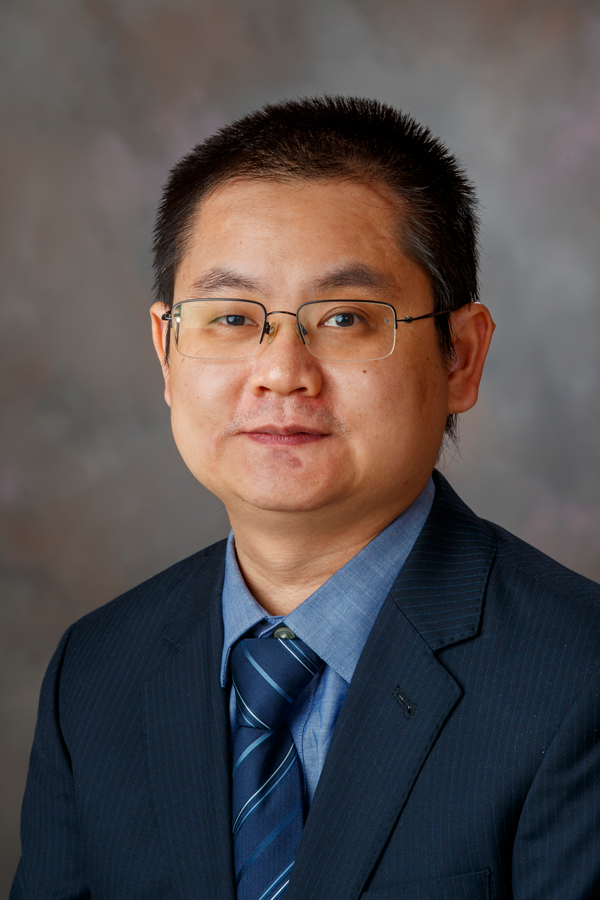
Qiuming YaoView profile
Assistant Professor
Qiuming Yao is an Assistant Professor in the Department of Computer Science at the School of Computing, University of Nebraska-Lincoln since 2020. His research develops computational methods for integrating multi-omics data to decode complex biological systems at the interface of computer science, biology, and medicine. PhD in Computer Science, University of Missouri, 2014 MA in Statistics, University of Missouri, 2014 Dr. Yao's work pioneers scalable algorithms for genomics, transcriptomics, proteomics and metabolomics integration. His lab investigates microbiome ecology (environmental/health impacts), genetic mutation functionality (gene therapy applications), molecular isoform quantification (medical/plant contexts), and interpretable machine learning. He bridges frequentist and Bayesian statistical frameworks to model biological uncertainty while developing tools for causal inference in high-dimensional omics data. His publication record (2012-2021) reveals consistent innovation in bioinformatics tool development, with flagship projects including Motif Raptor for transcription factor analysis, Storm/Omega2 for metagenomic pipelines, and P3DB/Musite for phosphorylation databases. These tools, published in Nature Genetics, Nature Communications, and Bioinformatics, demonstrate cross-domain applicability from human genetics to plant proteomics through rigorous algorithmic design. No scientific awards were documented in the source material. Dr. Yao actively mentors postdocs (offering salaries exceeding NIH standards), graduate RAs (with tuition waivers), undergraduates, and visiting scholars through his Integrated Digital Omics Lab. His lab culture emphasizes interdisciplinary collaboration, self-directed learning, and translating computational research into publishable outcomes for academic or industry careers. The Integrated Digital Omics Lab (IDOL) cultivates a collaborative environment where computer scientists, biologists, and statisticians develop omics integration frameworks. The lab welcomes researchers passionate about algorithm development for biological discovery, with current focus on microbiome modeling, mutation impact prediction, and interpretable machine learning for molecular systems.