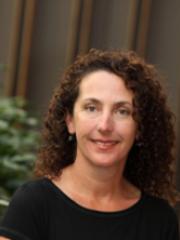
Associate Professor Robyn King is a faculty member in the Accounting Department at the UQ Business School, University of Queensland. Her research focuses on management control systems in healthcare, innovative organizations, and not-for-profit settings. She has collaborated with Queensland hospitals, health services, and private healthcare businesses. Key areas of expertise include governance of primary healthcare practices, private equity in healthcare, and technology adoption in billing systems. She is part of the Future of Health Research Hub at UQ. Education: PhD in Management Accounting (2012, UQ Business School), Honours in Accounting (2006, UQ School of Business). Research Themes: Healthcare management control systems Ownership-performance linkages in professional services Innovation in start-ups and healthcare organizations Technology integration in accounting practices Notable Contributions: Published widely on management control systems design, including studies on commercial space travel investment mechanisms, private equity in healthcare, and digital tools for case-based learning. Active in industry partnerships, particularly in Australian healthcare sectors. Engagement: Serves as Discipline Convenor for Accounting at UQ Business School, contributing to curriculum development and pedagogical innovation.
Professor Melinda Hodkiewicz is a leading academic at the University of Western Australia (UWA), affiliated with the School of Engineering's Mechanical Engineering department. Her work focuses on advancing maintenance, asset management, and safety practices through data-driven approaches, particularly in Technical Language Processing (TLP) and industrial ontologies. She has held significant roles such as the BHP Fellow for Engineering for Remote Operations (2015–2022) and leadership in the $8.8M Australian Government-funded Training Centre for Transforming Maintenance through Data Science. Research interests include applying TLP to maintenance and safety texts, ontology development for industrial interoperability, and advancing standards like ISO 23726. Awards include the MESA Medal (Lifetime Achievement in Asset Management) and Fellow of the Australian Academy of Technology and Engineering (ATSE). She has contributed to international standards (ISO 55000 series) and served on boards of organizations like NOPSEMA and MRIWA. Her work aligns with UN SDG 4 (Quality Education) and SDG 9 (Industry, Innovation & Infrastructure). Key contributions include developing the Industrial Ontology Foundry's Maintenance Working Group, creating open-source tools like OpenBoltRF for wind turbine analysis, and advancing semantic quality assurance frameworks for maintenance procedures. Her research bridges technical language processing with industrial applications, enhancing safety and operational efficiency in sectors like mining, energy, and offshore engineering. Education: BA(Hons) in Metallurgy (University of Oxford, 1985), PhD in Engineering (UWA, 2014) Grants: ARC Training Centre for Transforming Maintenance (2019–2025), ARC Hub for Offshore Floating Facilities (2014–2021) Advisory Roles: Standards Australia EL-069 (Automation Systems), ISO TC184/SC4 (Industrial Data)
Md Abul Bashar is a Research Fellow at the Queensland University of Technology's Centre for Data Science and School of Computer Science. His research focuses on developing deep learning and machine learning solutions for natural language processing tasks, including abusive content detection, misinformation analysis, and social media mining. Industrial applications include unconscious bias detection systems deployed at Fortune 500 companies and automated marketing strategy generation commercialized by Robotic Marketer. Research areas span multimodal fusion (uncertainty-guided meta-learning in 2025, pre-gating attention mechanisms in 2024), longitudinal data analysis (GAN-based imputation in 2024), and cybersecurity applications (Log4Shell threat detection in 2023). Articles demonstrate strong emphasis on NLP techniques adapted for low-resource scenarios through transfer learning and generative models. Significant Applications Unconscious bias detection for enterprise content management Automated marketing report generation (commercialized) Misogyny detection featured in Forbes, Daily Mail Energy payment propensity prediction Indigenous heritage repatriation support systems
Professor Xiang Zhang serves as President and Vice-Chancellor of The University of Hong Kong , combining academic leadership with active research in speech processing and machine learning. His work bridges theoretical and applied advancements in speech enhancement, depression detection, and multilingual speech recognition. Speech Enhancement : Comparative studies on long-context networks and selective state space models Acoustic Representation : Feature codecs, landmark extraction, and frame-rate analysis Mental Health Applications : Depression detection using large language models and speech timing Code-Switching Recognition : Interactive language biasing and alignment techniques Interdisciplinary Research : Unidirectional brain-computer interfaces and quantum language models Recent publications highlight trends in transformer alternatives like Mamba architectures, self-supervised learning for speech tasks, and efficient diffusion-based audio processing. His work spans technical reporting, open-source dataset development, and pedagogical innovations in computational linguistics.
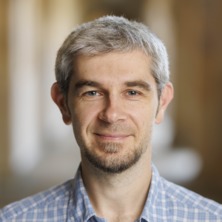
Dr. Guy Tsafnat is an Adjunct Professor at Macquarie University's Australian Institute of Health Innovation (AIHI) within the Centre for Health Informatics. His primary focus is on advancing healthcare through systematic review automation, antibiotic resistance research, and health informatics. He contributed to the Centre of Research Excellence in Digital Health (CREDiH) from 2018 to 2022, a project exploring digital health innovations. His work emphasizes bridging gaps between evidence-based medicine and technological solutions, such as automated tools for systematic reviews and antibiotic resistance analysis. Research Interests: Systematic reviews, automation in healthcare, antibiotic resistance mechanisms, clinical decision support systems, and open data standards in healthcare. His efforts aim to improve evidence synthesis efficiency and clinical practice through interdisciplinary approaches. Key Projects: Participated in the CREDiH project, focusing on digital health excellence. His research spans developing tools like the Multiple Antibiotic Resistance Annotator (MARA) and exploring living systematic reviews to keep evidence dynamic and up-to-date. Grants & Funding: Involved in the CREDiH project funded from 2018–2022. His work often intersects with collaborative initiatives to advance healthcare informatics and automation. Labs/Teams: Part of the AIHI's Centre for Health Informatics, contributing to interdisciplinary teams addressing healthcare challenges through technology and informatics.
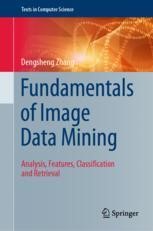
Dr. Dengsheng Zhang is a Senior Lecturer at Federation University Australia (formerly Monash University) and a Guest Professor at Xi'an University of Posts & Telecommunications, China. He holds a PhD in Computing (2002) and a GCHE (2006). His expertise spans over 25 years in artificial intelligence, big data, image processing, and music classification. He has published over 100 refereed papers (10,000+ citations) and authored the award-winning book Fundamentals of Image Data Mining (Springer, 2019). His research focuses on image classification, object detection, deep learning, and feature extraction. Dr. Zhang leads the Computational Science and Mathematics Group, contributing to projects like SIRBOT (Semantic Image Retrieval) and VFR (Visiting Friends and Relatives Travel Research). He serves as an Associate Editor for World Scientific's Transactions on Signal Processing. His teaching spans calculus, web design, computer networks, and project management. He has supervised 8 completed PhD students and actively engages in grants, including two ARC Discovery projects. His lab explores innovations in image retrieval, music classification, and machine learning applications.
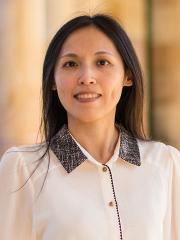
Cecilia Chiu serves as a Lecturer in the School of Business at the University of Queensland. Her pedagogical research focuses on innovative teaching methodologies in accounting education, particularly exploring how technology-enhanced learning tools can improve educational outcomes. Her scholarly work examines practical applications of digital annotation systems and interactive spreadsheet exercises to enhance student engagement and learning efficiency.
Professor Gianluca Demartini is a Professor in Data Science and an ARC Future Fellow at the School of Electrical Engineering and Computer Science, Faculty of Engineering, Architecture and Information Technology at the University of Queensland, Australia. He also serves as an affiliate of the Centre for Enterprise AI. His research focuses on human-in-the-loop artificial intelligence systems with applications for public good, bridging structured knowledge graphs and unstructured text analytics to address societal challenges. Dr. Demartini earned his Ph.D. in Computer Science from Leibniz University of Hannover in Germany in 2011, with a focus on Semantic Search. His academic journey includes positions as a Lecturer at the University of Sheffield (UK), post-doctoral researcher at the eXascale Infolab at the University of Fribourg (Switzerland), visiting researcher at UC Berkeley, junior researcher at the L3S Research Center (Germany), and intern at Yahoo! Research (Spain). His research interests span four major interconnected domains: Misinformation (studying human interaction with misinformation and AI-based mitigation strategies), Crowdsourcing and Human Computation (improving efficiency of human-in-the-loop systems), Big Data Analytics (designing scalable algorithms for large datasets), and AI for Public Good (applying AI for societal and environmental benefits). His work consistently addresses real-world challenges in information quality, human-AI collaboration, and ethical technology deployment. Analysis of Professor Demartini's recent publications reveals a clear trajectory toward addressing misinformation through sophisticated human-AI collaboration frameworks, with increasing emphasis on cognitive aspects of fact-checking, data bias management, and strategic application of large language models. His research bridges theoretical advances in information retrieval with practical applications for societal challenges, particularly in media literacy, online safety, democratic discourse, and environmental conservation. Professor Demartini has received numerous prestigious awards recognizing the quality and impact of his work: Best Paper Award at ACM SIGIR International Conference on the Theory of Information Retrieval (ICTIR) in 2023 Best Paper Award at AAAI Conference on Human Computation and Crowdsourcing (HCOMP) in 2018 Best Paper Awards at European Conference on Information Retrieval (ECIR) in 2016 and 2020 Best Demo award at International Semantic Web Conference (ISWC) in 2011 Honorable Mention Award at CSCW 2020 (Top 2% of submissions) As an active supervisor, Professor Demartini currently guides PhD students working on cutting-edge topics including Retrieval Augmented Generation, Human-in-the-Loop Decision Systems for Online Safety, Human-Centred Artificial Intelligence for Democracy, and Bias in Data Pipelines. His research program is generously funded through multiple major grants: ARC Future Fellowships (2025-2028): PBIAS - A Principled Approach to Data Bias Management Swiss National Science Foundation (2022-2025): Large-Scale Political Participation: Issue Identification, Deliberation, and Co-creation ARC Training Centre for Information Resilience (2021-2026) Previous funding from Wikimedia Foundation, Meta, Google, and Facebook for projects on misinformation detection and human-AI collaboration Professor Demartini's work sits at the critical intersection of human computation, information retrieval, and AI ethics. Through extensive collaborations with industry partners including Facebook, Google, Microsoft, Yahoo!, IBM, SAP, and The National Archives (UK), he has developed practical systems that address real-world challenges in misinformation detection, data quality, and human-AI collaboration. His research group actively explores how to make AI systems more transparent, accountable, and beneficial for society through principled human-in-the-loop approaches that leverage both machine intelligence and human expertise.
Associate Professor Negin Mirriahi is affiliated with UniSA Education Futures at the University of South Australia (UniSA). Her research focuses on learning analytics, educational design, flipped classroom strategies, and video-based learning. She actively contributes to understanding how educational technology can enhance teaching and learning outcomes, particularly in higher education contexts. Research Interests: Her work spans learning analytics integration into instructional design, student motivation in remote and emergency teaching environments, and cognitive aspects of video-based learning. She explores how reflective practices and self-regulated learning can be supported through digital tools like video annotation and analytics platforms. Her studies often address ethical considerations in data use and pedagogical impacts of technology adoption. Publications: Her recent work includes analyzing the role of learning analytics in decision-making (LAK 2025), studying second-year students' motivational strategies during remote learning (2025), and addressing mind wandering in video learning through self-explanation techniques (2024). Earlier contributions include foundational studies on flipped classroom predictability (2019), systematic reviews of video-based learning efficacy (2018), and ethical frameworks for learning analytics (2019). Awards & Grants: While no specific awards are listed, her prolific publication record and collaborative projects suggest sustained academic recognition. She has led initiatives using tools like OnTask for personalized learning support and contributed to institutional pedagogical strategies at UniSA. Advising & Labs: As a Research Degree Supervisor, she guides students in learning analytics and educational technology. Her work is often interdisciplinary, collaborating with teams across institutions like Monash University and Stanford University.
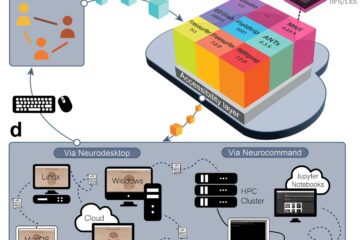
Dr. Steffen Bollmann is a Senior Research Fellow at The University of Queensland's School of Electrical Engineering and Computer Science, leading the Computational Imaging Group. He joined UQ in 2020 and was appointed AI Lead for Imaging at the Queensland Digital Health Centre (QDHeC) in 2023. His research focuses on computational methods for extracting clinical insights from MRI data, including quantitative susceptibility mapping (QSM), image segmentation, and reproducible neuroimaging tools such as Neurodesk.org. Education: PhD in multimodal imaging from the Swiss Federal Institute of Technology (ETH) Zurich and University Children's Hospital, Switzerland. Prior roles include a National Imaging Facility Fellowship at UQ's Centre for Advanced Imaging and industry collaboration at Siemens Healthineers. Research interests include developing open-source platforms for reproducible neuroimaging, advancing QSM techniques, and translating algorithms into clinical applications. Key projects include Neurodesk (Nature Methods) and the VesselBoost segmentation tool. He collaborates widely with academic and industry partners, emphasizing open science and accessible tools. Publications (selected): Over 80 articles in journals like Nature Methods, NeuroImage, and Magnetic Resonance in Medicine. Recent work includes multi-site MRI datasets for tongue musculature and advancements in QSM artifact reduction. Grants and future work: Funded projects include developing standards for reproducible neuroimaging pipelines. Active roles in initiatives like MRItogether and OHBM Brainhack promote open, inclusive research practices.
Associate Professor Wei Liu is a full-time academic in the Department of Computer Science and Software Engineering at The University of Western Australia (UWA), leading the UWA Centre for Natural and Technical Language Processing. Her research focuses on knowledge discovery from natural language text, generative AI, semantic technologies, deep learning for knowledge graphs, and sequential data mining. She holds a PhD from the University of Newcastle (2003) and an MEng from Huazhong University of Science and Technology (China). Research Interests: Generative AI and Large Language Models (LLM) Multimodal Knowledge Graph Construction Human-AI Collaboration Systems Clinical Data Analysis (Ophthalmology) Technical Language Processing for Maintenance Data Neural-Symbolic Computation Recent Work Trends: Her publications emphasize multimodal systems integration, knowledge graph refinement, and adversarial AI applications. Notable 2025 work includes Docs2KG (human-LLM collaboration), Auto-Regressive Diffusion for 3D interactions, and spherical embeddings for logical queries. Scientific Awards: First Prize in IEEE ICDM/ICBK Knowledge Graph Contest (2020) Best Contribution to Science Award at DICTA 2020 2022 Students Choice Award for academic support Advising & Grants: Leads 25 active grants including ARC Training Centres in Critical Resources and Maintenance Data Science. Collaborates with industry partners like Aspire Digital Group and Minerals Research Institute of Western Australia. Labs/Teams: Directs UWA's Natural and Technical Language Processing Centre, focusing on projects like maintenance work order analysis, geological survey data fusion, and clinical data integration in ophthalmology.
Professor Stefan Williams is a prominent academic at the University of Sydney, leading the Australian Centre for Robotics and the School of Aerospace, Mechanical and Mechatronic Engineering. His research focuses on marine robotics, particularly autonomous underwater vehicles (AUVs), for high-resolution 3D mapping of marine habitats. He has pioneered techniques to document coral reefs, hydrothermal vents, and kelp forests, aiding ecological conservation efforts. Notable accolades include the 2020 VC Award for Teaching and Research, 2019 Payne Scott Professorial Distinction, and 2018 IEEE Distinguished Lecturer honor. Current projects: Marine Robotics Program, Trusted Autonomous Marine Systems, and self-supervised feature learning for marine imagery. Research emphasizes underwater sensor systems, habitat complexity, and robotic surveying. His work integrates robotics, computer vision, and environmental science to address global marine challenges. Over 200 publications span robotics journals, ecological studies, and IEEE conferences.
João Gama is a Full Professor at the School of Economics, University of Porto, Portugal, and a researcher at LIAAD - INESC TEC (Laboratory of Artificial Intelligence and Decision Support). He holds the position of Professor Emeritus at the University of Porto and serves on the board of directors of LIAAD. His professional affiliations include being a Fellow of EurIA (since 2020), IEEE Fellow (since 2021), Fellow of the Asia-Pacific AI Association, and an ACM Distinguished Speaker. Dr. Gama received his Ph.D. in Computer Science from the University of Porto in 2000. His academic journey has established him as a leading researcher in the field of machine learning and data mining, with an h-index of 67 on Google Scholar. Professor Gama's research primarily focuses on knowledge discovery from data streams , evolving data , probabilistic reasoning , and causality . His work addresses fundamental challenges in processing continuous, high-volume data streams where traditional batch processing methods are inadequate. He has made significant contributions to developing algorithms that can adapt to concept drift, handle evolving data distributions, and maintain high performance in real-time applications. His research has practical applications in diverse domains including predictive maintenance, financial analysis, transportation systems, and environmental monitoring. With over 300 publications to his name, he is the author of the influential book 'Knowledge Discovery from Data Streams' (2010). With an extensive publication record of over 300 reviewed papers in top-tier journals and conferences, Professor Gama's recent work shows a strong trend toward explainable AI for predictive maintenance , edge computing for IoT data streams , and advanced techniques for handling concept drift . His 2024-2025 publications demonstrate increasing focus on practical industrial applications, particularly in transportation systems (like the Metro do Porto case study), financial portfolio management, and resource-constrained edge devices. There's also a clear emphasis on making stream mining techniques more interpretable and applicable to real-world problems, with several papers specifically addressing how to explain anomalies and failures in complex systems. Professor Gama's scientific achievements have been recognized through several prestigious fellowships: EurIA Fellow (since 2020) IEEE Fellow (since 2021) Fellow of the Asia-Pacific AI Association ACM Distinguished Speaker As an educator and mentor, Professor Gama has supervised numerous doctoral students who have gone on to establish their own research careers. His current PhD students include Thiago Andrade, Mário Cordeiro, Shazia Tabassum, and Sofia Fernandes. Among his former students are notable researchers such as Pedro Pereira Rodrigues, Hadi Fanaee, and Elena Ikonomovska. Professor Gama has secured significant research funding through projects like MAESTRA (Learning from Massive, Incompletely annotated, and Structured Data) and Knowledge Discovery from Ubiquitous Data Streams (PTDC/EIA/098355/2008). He has also served in leadership roles for major conferences including ECMLPKDD 2005, IDA 2011, ECMLPKDD 2015, and DSAA 2017, and is currently organizing ECMLPKDD 2025. Professor Gama leads research activities at LIAAD - INESC TEC, where he heads a team focused on data stream mining and knowledge discovery. His laboratory collaborates extensively with industry partners, particularly on predictive maintenance applications as evidenced by the MetroPT-3 Dataset developed for train systems. The team has developed several influential algorithms and frameworks for processing data streams, with applications spanning transportation, finance, healthcare, and environmental monitoring. Current research directions include integrating foundational models with stream processing, enhancing explainability of stream mining results, and developing efficient techniques for edge devices that can operate with limited computational resources.
Alzayat Saleh is a Postdoctoral Research Fellow at James Cook University specializing in deep learning applications for aquaculture and marine sciences. His research focuses on developing novel methods for underwater fish detection, segmentation, tracking, and biomedical image analysis. He has published 15 articles in prestigious journals/conferences with over 200 citations, and received awards like the Australian Research Training Program Scholarship and Food Agility HDR Top-Up Scholarship. Research Interests: Deep learning frameworks for underwater visual analysis Applications in aquaculture automation and environmental robotics Self-supervised learning for annotation-poor datasets Biomedical image analysis using deep learning techniques Article Trends: His work bridges computer vision advancements with real-world challenges in agriculture and marine biology. Recent efforts emphasize lightweight networks for real-time applications, self-supervised methods to reduce annotation dependency, and robotic systems for sustainable farming practices. Key contributions include FieldNet for shadow removal, WeedCLR for long-tailed datasets, and MFLD-net for aquatic morphometry. Awards: Australian Research Training Program Scholarship Food Agility HDR Top-Up Scholarship Collaborations: Actively engages in cross-disciplinary projects with industry partners and academic institutions to advance AI-driven solutions for environmental and agricultural challenges.
Tingting Bi is a Lecturer in the School of Computing and Information Systems at the University of Melbourne, equivalent to an Assistant Professor in the U.S. academic system. She concurrently holds an adjunct position at the University of Western Australia's School of Physics, Maths and Computing. Her research focuses on software architecture for AI-based systems, LLM applications in knowledge engineering, and responsible AI development. Bi earned her PhD from Monash University under Prof. John Grundy, and previously worked as a Research Scientist at CSIRO's Data61. She actively contributes to top-tier conferences such as ICSE and journals like TSE, serving on program committees. Her research interests span knowledge-based engineering, vulnerability detection in smart contracts, and decentralized intelligence systems. Notable awards include Distinguished Reviewer recognitions (2023-2024) and teaching excellence awards.