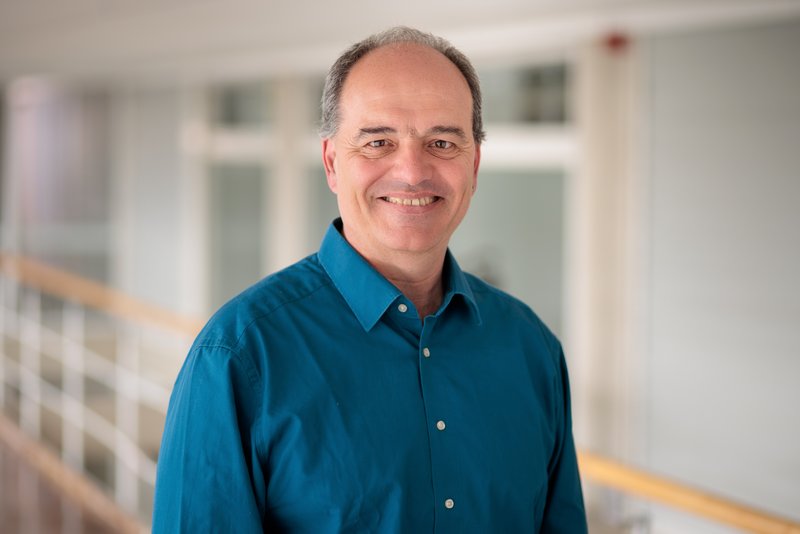
Prof. Uwe Kloos is a faculty member in the Department of Media Informatics at Reutlingen University, specializing in Computer Graphics and Visualization. He holds the rank of Professor and leads roles including Chair of the Examination Board for the Human-Centered Computing program and Dean of Studies for the same program. His teaching focuses on Computer Graphics, Visualization, and Data Science. Research activities center around VRlab, exploring VR/XR technologies and applications in collaborative virtual environments, digital human models, and group simulations. Kloos has a PhD in Computer Science from the University of Tübingen and prior industry experience at Hewlett-Packard and ILITS GmbH. His lab work includes projects like the Virtual Reality Gravity Offload System (ViRGOS) and interactive tools for automotive product development. He contributes to academic conferences such as Informatics Inside and publishes on visualization, VR, and AR applications. His research spans navigation systems, Formula 1 analytics, and collaborative mobile AR games. Education: PhD in Computer Science (University of Tübingen, 1994), Diplom in Biology (Universities of Saarbrücken and Tübingen, 1989). Research Labs: VRlab, AIDA AI Lab, Cloud Lab. Key Projects: IDEA creativity tool, PasVis public transport visualization, ViRGOS gravity simulation.
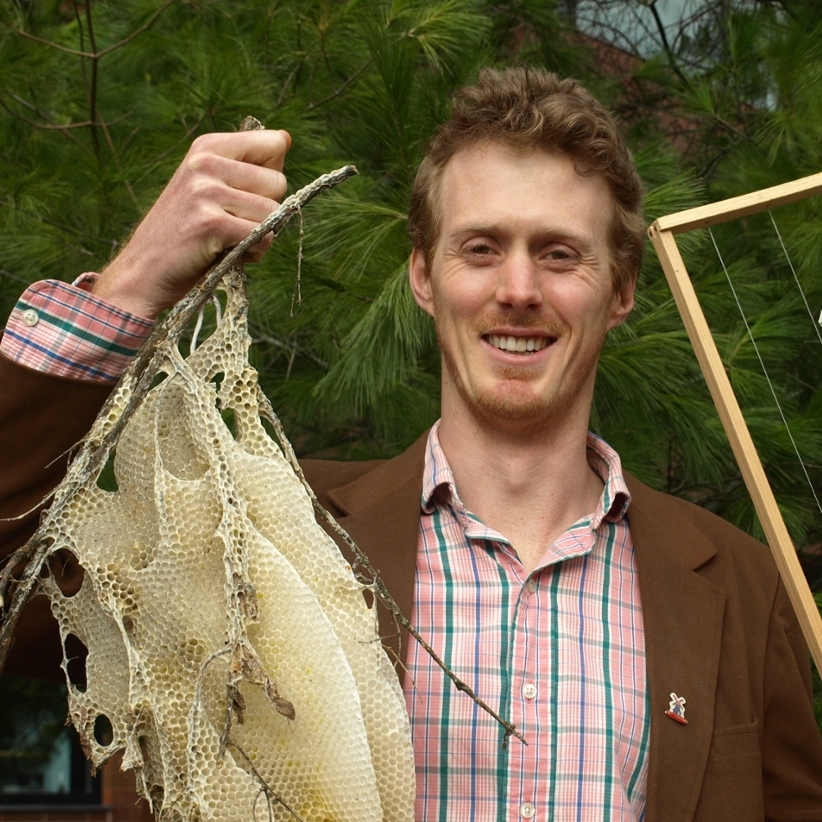
Michael Smith is an Assistant Professor in the Department of Biological Sciences at Auburn University, where he leads the Smith Bee Lab. His research focuses on honey bee colonies as superorganisms, investigating how they develop, organize, and respond to biotic and abiotic changes at both individual and colony levels. The lab employs diverse methodologies, ranging from simple experimental tools to advanced computer vision and automated tracking systems. Dr. Smith welcomes researchers from biology, computer science, engineering, physics, and chemistry, fostering an interdisciplinary and collaborative environment. His research interests include honey bee biology, collective behavior, social insect organization, and environmental response mechanisms. By integrating experimental and technological approaches, his work contributes to understanding complex biological systems. Dr. Smith is actively recruiting postdoctoral researchers, graduate students (M.Sc. and Ph.D.), and undergraduate researchers. He emphasizes teamwork, curiosity, and dedication, and does not require prior experience with honey bees for lab membership. Email: mls0154@auburn.edu Prospective Ph.D. students are encouraged to apply for the NSF-GRFP fellowship, with Auburn providing recipients a personal research grant of approximately $12,000 per year for three years. Graduate applications are due in February, with interviews in January and a typical August start date. Undergraduate researchers can apply for summer opportunities through the Undergraduate Research Fellowship Program. The Smith Bee Lab promotes inclusivity and collaboration, explicitly stating a no-jerks policy to maintain a positive and productive research environment. Dr. Smith collaborates informally with Dr. Geoffrey Williams of the AU Bee Lab for agriculturally focused bee research.
Christine Beardsworth is a Lecturer at the School of Biological and Environmental Sciences , Liverpool John Moores University. Her research focuses on Animal Behaviour , Individual Differences , and Animal Cognition , with a strong emphasis on Tracking Systems and Movement Ecology . She has contributed to understanding how cognitive traits influence ecological outcomes, such as predation risk and foraging strategies in birds like pheasants and red knots. Christine earned her PhD in Animal Behaviour from the University of Exeter (2015-2020) and holds an MSc (by Research) in Animal Behaviour from Manchester Metropolitan University (2014-2015) and a BSc (Hons) in Zoology with French from the University of Manchester (2008-2012). She is an Associate Fellow of the Higher Education Academy and a member of the British Ecological Society and the Association for the Study of Animal Behaviour . Her work spans animal tracking technology (e.g., ATLAS systems), cognitive ecology , and behavioral adaptation . Key trends in her publications include spatial memory analysis , inhibitory control studies , and exploratory behavior in avian species. She has authored significant articles in journals like Nature Ecology & Evolution , Science , and Animal Behaviour , often collaborating with interdisciplinary teams. Scientific Awards Associate Fellow, Higher Education Academy (2018-present) Member, British Ecological Society (2019-present) Member, Association for the Study of Animal Behaviour (2015-present) Christine serves as a peer reviewer for journals including Behavioral Ecology , Movement Ecology , and Scientific Reports , advancing methodological rigor in animal behavior research.
Rachael Antwis is a Lecturer in Global Ecology and Conservation at the University of Salford since 2015. Her research bridges microbial ecology, host-microbiome interactions, and conservation biology, focusing on amphibians and trees endangered by fungal pathogens like chytridiomycosis and ash dieback disease. PhD in Environmental Biology (University of Manchester, 2014) BSc (Hons) Zoology (University of Manchester, 2010) Her work employs amplicon sequencing and multi-omics to explore microbial drivers of disease resistance, with funding from the Tree Research and Education Endowment Fund, Scottish Natural Heritage, and the Woodland Trust. She has developed fungal sequencing protocols at the University of Salford and investigated probiotic applications for amphibian conservation. Her peer-reviewed articles (2014-2025) highlight microbial influences on host immunity, environmental factors in disease management, and conservation strategies. Awards include grants from the Society for Applied Microbiology, British Ecological Society, and University of Salford Manchester.
Ethan Weiss, MD, is an Associate Professor in Residence in the Department of Medicine at the University of California, San Francisco (UCSF), School of Medicine. He is a board-certified cardiologist with clinical expertise in general and preventive cardiology, focusing on genetics of coronary disease, risk assessment, and heart disease in young patients. Dr. Weiss earned his MD from Johns Hopkins University in 1996 and completed his cardiology fellowship at UCSF. His research integrates genetic models to investigate metabolic disorders such as obesity, fatty liver disease, and diabetes, as well as the coagulation system, aiming to develop safer antithrombotic therapies. His research interests include: Metabolic regulation and insulin resistance Genetic basis of lipid disorders Time-restricted eating and ketogenic diets JAK2 and growth hormone signaling in metabolism Sex differences in thrombosis and liver disease Digital health interventions for weight management Dr. Weiss has published extensively in top-tier journals including The Lancet , Science , JAMA Internal Medicine , and Diabetes . His recent work centers on lipid-lowering therapies, body composition analysis via 3D scanning, and clinical trials on dietary patterns such as time-restricted eating. His publications demonstrate a strong trend toward translational research bridging molecular mechanisms with clinical applications in cardiometabolic health. He collaborates with key investigators at UCSF, including Eric Vittinghoff and Jeffrey Olgin, and has contributed to significant studies on metabolic liver disease, clotting disorders, and nutritional interventions. While no formal awards are listed in the provided text, his work has been widely cited and featured in media outlets and social platforms. Dr. Weiss is actively involved in clinical trials and digital health research, particularly in evaluating mobile apps for dietary adherence and metabolic outcomes. He maintains a public presence on X (@ethanjweiss) and has participated in public discussions on metabolism, gene editing, and physician entrepreneurship. He is affiliated with the UCSF Cardiology division and contributes to both patient care and biomedical research, embodying a physician-scientist role dedicated to advancing understanding and treatment of metabolic and cardiovascular diseases.
Youssef Z. Wadghiri is an Associate Professor in the Department of Radiology at NYU Grossman School of Medicine and Director of the Preclinical Imaging (PCI) Laboratory. He holds a PhD from the University of Lyon-Claude Bernard. His research focuses on advancing molecular and cellular imaging techniques, contrast agent development, and preclinical MRI applications in animal models of human diseases. Key areas include drug delivery systems, nanomedicine, and translational imaging solutions for cancer and liver disorders. Wadghiri's work bridges biomedical engineering, radiology, and physiology to address challenges in disease modeling and diagnostics. His research interests emphasize MRI innovation, collagen-targeted imaging, and engineered protein systems for therapeutic delivery. Collaborations span protein engineering, biomaterials, and developmental biology. Recent work includes oxytocin's role in embryonic diapause and corticothalamic connectivity mapping in mouse models. He directs the PCI Lab, which specializes in preclinical imaging technologies and multidisciplinary approaches to biomedical research. Wadghiri's contributions include over 100 publications, focusing on imaging modalities, drug delivery, and translational research.
Shujie Deng is a Researcher affiliated with Bournemouth University under the Faculty of Media and Communication . Her work focuses on Human-Computer Interaction and Virtual Reality , particularly exploring multimodal interaction , eye tracking , and gesture control in immersive environments. Research Trends Developing semantic frameworks for interactive animation and digital storytelling Investigating gaze-informed mid-air gestures for 3D object manipulation Advancing haptic feedback in serious games and virtual environments Her publications highlight collaborations with colleagues like Hui Liang, Jian Chang, and Jian Jun Zhang, emphasizing multimodal interaction and virtual puppetry .
Karl-Heinz Frommolt is a Researcher at the Museum of Natural History, Leibniz Institute for Evolution and Biodiversity Research, where he serves as the Scientific Director of the Animal Sounds Archive and Head of the Bioacoustics Laboratory . His work focuses on bioacoustic monitoring of vertebrates, particularly breeding bird communities, using automated acoustic detection and pattern recognition technologies. Key Projects: Automated Multisensor Station for Monitoring Species Diversity (AMMOD) Development of Intelligent Acoustic Sensor Technology (DeViSe) Integrative Analysis of Pesticides and Land Use Effects on Biodiversity (INPEDIV) His research integrates bioacoustics with environmental monitoring, including work on bat call reference libraries and acoustic communication in vertebrates. Recent publications highlight applications of multisensor stations, microphone array signal processing, and long-term acoustic studies in wetlands and Mediterranean ecosystems. His team develops tools for automated detection, localization, and tracking of vocal animal species, contributing to biodiversity conservation and ecological data management. Dr. Frommolt's work spans taxonomy, ecological informatics, and conservation technology, with field applications in Germany, Greece, and international collaborations.
Gullal Cheema is a Researcher at the Visual Analytics department of Technische Informationsbibliothek (TIB), the German National Library of Science and Technology. Based in Hannover, Germany, Cheema is actively engaged in cutting-edge research at the intersection of computer vision, natural language processing, and multimedia analysis with a particular focus on news media and social platforms. Research interests primarily center around multimodal analysis, with specialization in news video processing, fake news detection, claim verification, and image-text relation understanding. Cheema's work bridges the gap between technical AI approaches and real-world media analysis challenges, particularly in the context of misinformation detection and verification. The research spans multiple modalities including text, images, and video, with applications in social media analysis, news verification, and hate speech detection. Cheema's publication record shows a consistent trajectory of impactful research in multimodal AI, with a strong emphasis on practical applications for media verification. Recent work has focused on speaker role identification in news videos, multimodal claim detection, and the analysis of image-text relations in news contexts. The research demonstrates expertise in both theoretical approaches and practical system development for complex multimodal challenges. Best Paper Award at International Conference on Multimedia Retrieval (ICMR 2024) for work on speaker roles and situation types in news videos Multiple publications at premier venues including ACM conferences, IEEE workshops, and Frontiers in Artificial Intelligence Active participation in major evaluation labs like CLEF CheckThat! and MediaEval Cheema is an active member of the Visual Analytics research group at TIB, contributing to projects that address contemporary challenges in media analysis and verification. The work has significant implications for understanding and combating misinformation in digital media landscapes.
Bernard Lanz is a Researcher at the CIBM-AIT (Animal Imaging and Technology) unit within École Polytechnique Fédérale de Lausanne (EPFL) , with concurrent Lecturer roles in the EDPY-ENS and SB-SPH-ENS teaching programs. His work integrates Magnetic Resonance Spectroscopy (MRS) , Positron Emission Tomography (PET) , and mathematical modeling to study brain energy metabolism , neuroglial interactions , and metabolic flux dynamics in health and disease. Research Interests : Neuroenergetics : Quantifying glucose and lactate metabolism in rodent models of liver disease and cancer. Metabolic Imaging : Developing hyperpolarized C-13 glucose techniques for real-time metabolic tracking. Brain-Liver Axis : Investigating metabolic disruptions in hepatic encephalopathy via in vivo PET-MRS. Publication Trends : Recent work focuses on ultrahigh-field MRI , FLASH radiotherapy effects , and cross-disease metabolic comparisons (Alzheimer’s, glioblastoma, depressive disorders). Collaborative studies emphasize methodological innovation in MRS quantification and neurochemical modeling . Teaching & Supervision : Co-teaches MRI Practicals and Translational MR Neuroimaging courses. Advises PhD student Siviglia Alessio . Labs & Teams : Affiliated with the CIBM center and EPFL’s Swiss School of Physics units, contributing to interdisciplinary research in biomedical imaging .
Valentina Gatteschi is an Associate Professor at the Department of Control and Computer Engineering (DAUIN) at the Polytechnic University of Turin, Italy. She is a member of the GRAphics and INtelligent Systems (GRAINS) research group and has been actively involved in teaching and research in the fields of blockchain technology, human-computer interaction, and distributed systems. Dr. Gatteschi received her BSc and MSc degrees in management engineering and her PhD degree in computer engineering from Politecnico di Torino in 2005, 2008, and 2013, respectively. Her research focuses on blockchain technology, smart contracts, and their applications across various domains. She has made significant contributions to understanding how blockchain can be applied in areas such as decentralized finance, sustainable mobility, energy data marketplaces, and digital identity. Her work often bridges the gap between theoretical blockchain concepts and practical implementations, with a particular emphasis on user experience and system integration. She has led several research projects including "B4A - Blockchain for All" (2023-2025), which aims to make blockchain technology more accessible to diverse user groups. Her recent publications reveal a strong trend toward practical blockchain applications, particularly in sustainability contexts (CO2 tracking, circular economy), finance (DeFi), and transportation (smart mobility solutions). She has also been exploring the intersection of blockchain with emerging technologies like large language models for smart contract generation and analysis. Dr. Gatteschi serves as a supervisor for PhD students working on blockchain-related topics, including Alberto Butera (researching Blockchain Technology for Intelligent Vehicles) and Emanuele Antonio Napoli (analyzing smart contracts). She has been involved in multiple research projects funded by both national and commercial sources, demonstrating the practical relevance of her work to industry and government sectors. She is actively involved in teaching courses related to information visualization, digital transformation technologies, and database systems at both undergraduate and graduate levels at the Polytechnic University of Turin.
Dr. Timm A. Wild serves as a Project Leader within the Department of Migration at the Max Planck Institute of Animal Behavior in Radolfzell, Germany, where he directs the Animal-borne Sensor Networks Group. His position signifies an independent research leadership role focused on technological innovation in ecological studies. His research spans the integration of sensor technology with animal behavior analysis, specifically targeting migration patterns through: Development of animal-mounted sensor systems Real-time wildlife movement tracking Ecosystem-scale data collection methodologies Behavioral response modeling during migration As head of the Animal-borne Sensor Networks Group, Dr. Wild pioneers field-deployable technologies that transform how migration ecology is studied, with direct applications in conservation biology and environmental monitoring. His work bridges engineering solutions with fundamental biological questions about animal navigation and movement dynamics.
Dr. Yutao Liu is a Professor at Augusta University's Medical College of Georgia where he holds appointments in the Department of Cellular Biology and Anatomy, The Graduate School, and the Center for Biotechnology and Genomic Medicine. He also serves as Director of the CBA Graduate Program and Basic Science Co-Director of the James & Jean Culver Vision Discovery Institute. Education: MD, Beijing Medical University, Beijing, China (1990-1995) MS, Biology/Biological Sciences, Truman State University, Kirksville, MO (1999-2001) PhD, Genome Sciences/Genomics, University of Tennessee, Knoxville, TN (2001-2006) Postdoctoral Associate, Duke University Medical Center, Durham NC (2006-2010) Dr. Liu is a human geneticist specializing in the genetic etiology of glaucoma and keratoconus. His research laboratory employs high-throughput sequencing, genotyping, and integrative genomic technologies to investigate age-related vision disorders. The lab has extensive experience in human genetics, bioinformatics, and functional genomics using human samples, cell culture, and mouse models. Current research focuses on understanding the molecular mechanisms of keratoconus and glaucoma, with particular interest in exosomes and their miRNA/protein contents in aging-related disorders. Dr. Liu's publication record demonstrates consistent productivity in ocular genetics, with recent work emphasizing exosome research in vision disorders. His publications span high-impact journals including Nature Genetics, PLoS Genetics, AJHG, PNAS, HMG, IOVS, EER, and Molecular Vision. Collaborative efforts extend to researchers across California, Iowa, Illinois, Saudi Arabia, Israel, and Duke University. Scientific Awards: Experimental Eye Research Top Cited Article (2008-2010) Thomas R. Lee Award for National Glaucoma Research (2010-2013) Annual Educator Award from Duke University (2013) Basic Science Research Distinguished Faculty Award (2021) ARVO Fellow (Silver, 2022; Gold, 2024) Distinguished Service Award from The Graduate School (2023) Dr. Liu serves as Director of the CBA Graduate Program and has mentored numerous graduate students to completion of their PhDs with distinction. His research has been supported by multiple organizations including the National Eye Institute at NIH, The Glaucoma Foundation, the Glaucoma Research Foundation, BrightFocus Foundation, and Research to Prevent Blindness. As a Co-Investigator of the NEIGHBORHOOD glaucoma genetics consortium, he has contributed to identifying several glaucoma-associated genes. The Liu laboratory maintains active collaborations and employs cutting-edge technologies including whole exome/genome sequencing, RNA-Seq, DNA genotyping, PCR techniques, and nanoparticle tracking analysis. The team is highly collaborative and trainee-friendly, with a focus on translational research to improve understanding and treatment of vision disorders.
Dr. Tim Raupach is a Scientia Fellow (Level C) at the University of New South Wales in the School of Biological, Earth & Environmental Sciences . His research focuses on the impacts of climate change on hailstorms , convective processes , and precipitation microstructure , using high-resolution numerical weather simulations and remote sensing techniques to analyze small-scale precipitation variability. Education: PhD, École Polytechnique Fédérale de Lausanne (2016) Master of Science, Australian National University (2009) Bachelor of Software Engineering, Australian National University (2004) Research Interests include: Climate change impacts on severe weather Advanced hailstorm and thunderstorm analysis Improvement of remote sensing techniques (radar, microwave links) Statistical modeling of precipitation patterns Recent Work Trends reflect studies on hail damage potential in Australian cities, hail-hazard mapping across Australia, Bayesian hailstorm detection frameworks , and multi-hazard climate risk assessments for decision-making. Teaching: In 2022, he served as primary convenor for CLIM3001/6001 Climate Systems Science . Research Supervision: He supervises students including Isabelle Greco and Quincy Tut .
Dr Yohan Noh is a Lecturer in Manufacturing Engineering at Brunel University , affiliated with the Mechanical and Aerospace Engineering department within the College of Engineering, Design and Physical Sciences . He holds dual B.Sc. degrees in Mechanical and Electrical Engineering from Seoul National University of Science and Technology (2002) and Yonsei University (2004), followed by M.Sc. and Ph.D. in Robotics from Waseda University (2007, 2011). His career includes postdoctoral work at King's College London and active involvement in robotics research across Japan, Korea, and the UK. Education : B.Sc. (Mechanical Engineering, Seoul National University of Science and Technology, 2002); B.Sc. (Electrical Engineering, Yonsei University, 2004); M.Sc./Ph.D. (Robotics, Waseda University, 2007/2011) His research focuses on medical robotics and optoelectronic sensor development , particularly for minimally invasive surgery (MIS) and ultrasound systems. Key projects include the STIFF-FLOP soft manipulator (EU-funded), force/torque sensors for MIS, and optoelectronic shape sensing for flexible robots. His work has been supported by grants like the EU-project STIFF-FLOP (Grant No. 287728) and Wellcome Trust IEH project iFIND (Grant No. 102431) . He has 11 patents and over 70 publications, emphasizing commercialization of robotic systems for healthcare. Recent publications highlight advancements in medical robotics and sensor technology , with a focus on miniaturized optical sensors, low-cost force measurement systems, and shape-sensing methods for continuum robots. His collaborative work spans institutions in the UK, EU, and Japan. Professional memberships include IEEE Robotics and Automation Society, IEEE Engineering in Medicine and Biology Society, ASME, and The Robotics Society of Japan. He has organized major conferences like RSJ, ROMANSY, and ICRA. Teaching includes Engineering Practice (BE1602) , Computer Aided Engineering (MN5562) , and Advanced Computer Aided Engineering (ME5047) . He supervises Ph.D. students and contributes to the IMM research group at Brunel.