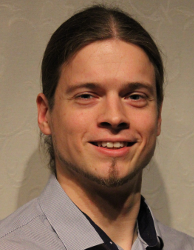
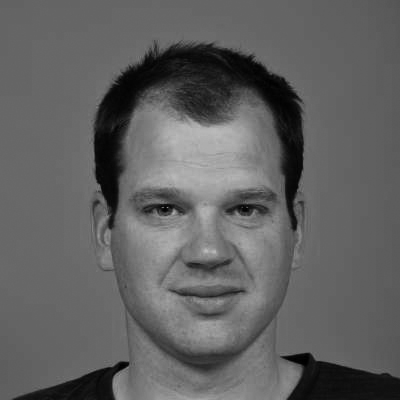
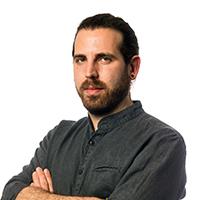
Dennis Krupke is a Researcher at the Department of Informatics, University of Hamburg, affiliated with the Human-Computer Interaction (HCI) group and the Technical Aspects of Multimodal Systems (TAMS). His work bridges robotics, virtual reality, and human-computer interaction, focusing on natural interfaces for human-robot cooperation. Education: Diploma in Informatics (2014), University of Hamburg Research Interests: Human-Robot Interaction (HRI) Bio-inspired Robotics and Sensor Systems Modular Robotics and Low-cost Prototyping Mixed Reality for Immersive Scenarios Scientific Awards: Finalist, IROS KROS Best Paper Award on Cognitive Robotics (2018) Highly Commended Paper, Industrial Robot Innovation Award (2017) CLAWAR Association Best Technical Paper Award (2015) Best Innovative Robot Award, CLAWAR (2014) Publications & Projects: Co-developed a printable modular robot with Florens Wasserfall Contributed to ROS-Unity integration for VR-based robotics Explored locomotion techniques for modular robots using reinforcement learning
Arthur G Richards serves as Professor of Robotics and Control within the Dynamics and Control department at the University of Bristol's School of Engineering Mathematics and Technology. His research specializes in trajectory optimization for aerospace applications, focusing on UAV autonomy, spacecraft rendezvous, and air traffic management through advanced optimization techniques. His educational foundation includes an M.Eng. from the University of Cambridge and S.M./Ph.D. degrees from MIT. Research interests center on solving complex aerospace challenges through: Non-convex optimization for obstacle avoidance in cluttered environments Robust model predictive control for real-time disturbance compensation Distributed optimization enabling large-scale vehicle cooperation Scalable algorithms for high-traffic scenarios with minimal fuel consumption Analysis of his 132 research outputs reveals evolving emphasis on reliability-aware UAV path planning, interpretable reinforcement learning for aircraft control, and swarm robotics with real-world validation. Recent work increasingly integrates machine learning with traditional control theory while addressing practical constraints like sensor noise and system failures. Professor Richards has supervised 22 research students and secured funding for 11 projects, including the active Aerial Robotics for Search and Rescue (2022-2026) and PORTAL (2022-2024) initiatives. His industry collaborations with Thales and focus on technology transfer demonstrate strong academic-industrial integration. He actively contributes to the Smart Networks for Sustainable Futures and Robotics research groups, developing frameworks for multi-robot systems that balance theoretical rigor with practical deployment requirements in conservation, inspection, and exploration scenarios.
Marc David Normandin is an Associate Professor of Radiology and Biomedical Imaging at Yale School of Medicine, where he serves as Director of the Yale PET Core. He is affiliated with the Bioimaging Sciences Center, Center for Molecular Imaging Technology and Translation (CMITT), and Yale Biomedical Imaging Institute. His research focuses on advanced PET imaging techniques for neurodegenerative diseases and psychiatric disorders, with expertise in kinetic modeling, radioligand development, and multimodal neuroimaging. He collaborates extensively with Georges El Fakhri, Nicolas Guehl, and other researchers across 84 publications. Recent publications highlight innovations in tau burden quantification, 5D proton therapy delivery for cardiac arrhythmias, and receptor occupancy mapping with novel radiotracers. His work bridges biomedical engineering and clinical applications in nuclear medicine. Normandin holds a PhD in Biomedical Engineering from Purdue University (2008) and completed postdoctoral training at Yale School of Medicine (2011). He maintains contact via marc.normandin@yale.edu and office number 203.737.4803.
Royal Netherlands Institute for Sea ResearchNetherlands
Dr. Roeland Bom is a Postdoctoral Researcher in the Coastal Systems Department at the Royal Netherlands Institute for Sea Research (NIOZ), specializing in marine organism responses to environmental change. His work spans international field sites including Oman's Barr Al Hikman mudflats, Guinea-Bissau's Bijagós Archipelago, and North Sea ecosystems. Dr. Bom's research focuses on migration ecology of shorebirds (particularly Bar-tailed Godwits), intertidal ecosystem dynamics , and climate change impacts on avian populations . His innovative work combines GPS telemetry with historical ecological data to establish baselines for measuring biodiversity change. Recent projects examine how warming climates homogenize migratory bird subspecies and track epic migration routes across three continents. His publication record demonstrates consistent output in marine ecology journals, with recent work published in Journal of Natural History and ZooKeys . Key findings include the discovery of new burrow morphologies in Omani mudflats, documentation of skate recovery in the North Sea, and recognition of a new bar-tailed godwit subspecies. Dr. Bom maintains active collaborations with: University of Amsterdam (climate-bird interactions) Sultan Qaboos University (Oman migration tracking) University of Aveiro (West African fieldwork) WWF (North Sea conservation initiatives) His research methodology integrates cutting-edge telemetry with historical ecological analysis, providing unique insights into ecosystem resilience under rapid environmental change. Current work emphasizes real-time migration tracking through radio transmitters and citizen science platforms, particularly for Bar-tailed Godwits wintering in the Middle East.
Leibniz Institute for the Analysis of Biodiversity ChangeGermany
Wei Liang is a Professor at Hainan Normal University in Haikou, China, where he has been employed since October 2007. He holds a PhD from Beijing Normal University (1997-2000). His research focuses on behavioral ecology and coevolutionary dynamics, with specialization in avian brood parasitism systems, particularly cuckoo-host interactions across China. Primary research interests include: Behavioral adaptations of birds to urbanization Coevolutionary arms races in avian brood parasitism Geographic variation in anti-parasite defenses Acoustic communication and deception in birds Urban ecology and conservation bioindicators Liang's recent publications (2024-2025) demonstrate strong focus on: Avian responses to urban environments Cuckoo-host behavioral interactions Egg rejection cognition across species Acoustic signaling and deception Morphological predictors of avian traits with fieldwork concentrated across diverse Chinese ecosystems.
Daniela Schulz is an Associate Professor at Boğaziçi University's Institute of Biomedical Engineering, where she has been teaching since 2018. She coordinates the international iNavigate project and leads research on behavioral neuroscience, neuroimaging, and animal models of psychiatric disorders. Her work bridges engineering and neuroscience to develop innovative approaches for understanding brain function and behavior, with particular emphasis on translating basic research into clinical applications. Education: BA in Psychology, Boğaziçi University (1996) MA in Psychological Sciences, Boğaziçi University (1998) PhD in Behavioral Neuroscience, University of Düsseldorf, Germany (2005) Post-doctoral training at University of Düsseldorf and Brookhaven National Laboratory (2005-2011) Research Interests: Dr. Schulz specializes in behavioral neuroimaging, particularly using the RatCAP (Rat Conscious Animal PET) scanner she helped develop, which enables PET imaging of awake, behaving animals. Her research spans multiple domains including depression models, Parkinson's disease, cognitive effort, and neurotechnology applications. She investigates how motivation, learning, and emotional states correlate with brain activity patterns, with particular focus on dopamine systems and neural circuitry involved in helplessness and despair models. Her work integrates molecular, behavioral, and imaging approaches to understand brain function in both healthy and pathological states. Publications Trends: Dr. Schulz's publication record reveals a clear trajectory from basic neuroscience methodology development to increasingly translational and interdisciplinary applications. Her early work focused on developing the RatCAP technology and establishing behavioral neuroimaging as a discipline. This evolved into sophisticated applications studying dopamine systems during natural behaviors, followed by investigations of animal models of depression and Parkinson's disease. More recently, her work has expanded to include human applications of neurotechnology and societal implications of neuroscience advances, reflecting a broader vision of how neuroscience can address real-world challenges. Grants and Leadership: Coordinator of H2020-MSCA-RISE-2019 "iNavigate" project (2023-present) PI for "Understanding societal challenges: a NeurotechEU perspective" (2021-present) Researcher for TÜBITAK "Small animal imaging application" project (2023-present) PI for BAP Start-Up "Experience-driven DBS for Parkinson's model" (2020-2023) Editorial and Professional Activities: Dr. Schulz serves as Associate Editor for Frontiers in Behavioral Neuroscience and is on the Editorial Board of Behavioural Brain Research. She has guest edited special issues on depression symptomatology and behavioral neuroimaging, reflecting her standing in these research communities. Her lab (BBL) at Boğaziçi University continues to push the boundaries of behavioral neuroscience methodology while addressing clinically relevant questions in mental health and neurological disorders.
Christopher M McGraw, MD, PhD, serves as Assistant Professor in Neurology (Epilepsy/Clinical Neurophysiology) at Northwestern University's Feinberg School of Medicine, with clinical practice at Northwestern Memorial Hospital. Education: PhD: Baylor College of Medicine (2012) MD: Baylor College of Medicine (2014) Residency: UC San Francisco (2018) Fellowship: Massachusetts General Hospital, Harvard Medical School (2020) Postdoctoral Fellowship: Boston Children's Hospital, Epilepsy Genetics (2020) His research investigates molecular mechanisms of refractory seizure disorders through cross-species approaches combining human genetics with zebrafish and mouse models. Key methodologies include electrophysiology, calcium fluorescence imaging, CRISPR/Cas9 gene editing, and computational analysis of seizure dynamics. Primary focus areas encompass genetic epilepsy modifiers, NORSE pathophysiology, quantitative EEG biomarkers, and functional validation of pathogenic variants. Recent publications demonstrate integration of machine learning with high-throughput zebrafish screening, natural language processing of clinical epilepsy notes, and large-scale genomic studies. These works bridge neurogenetics, computational neuroscience, and pharmacology to identify novel therapeutic targets and improve seizure management metrics. Scientific Awards: K08 Career Development Award, NIH/NINDS (2020) Taking Flight Award, Citizens United for Research in Epilepsy (2019) Dr. McGraw leads an NIH-funded research program focusing on SCN1A, SLC6A1, and CDKL5-related epilepsies. He serves on the Coalition to Cure CHD2 Scientific Advisory Board and collaborates with Northwestern's Center for Genetic Medicine. His clinical work informs translational research on refractory status epilepticus and precision epilepsy therapies. The McGraw Lab employs chemical seizure models (PTZ, organophosphates) alongside genetic models to study inter-regional brain dynamics using GCaMP6s calcium imaging. Current projects combine whole-organism screening with single-neuron analysis to develop functional assays for variant pathogenicity assessment and anti-seizure compound discovery.
Max Planck Institute for Dynamics and Self-OrganizationGermany
Gholamhossein Bagheri is a Scientist and Group Leader at the Max Planck Institute for Dynamics and Self-Organization in Göttingen, Germany, where he heads the Turbulence and Particles in Fluids research group within the Laboratory for Fluid Physics, Pattern Formation and Biocomplexity (LFPB). His research focuses on the complex physics of particle-laden turbulent flows across environmental, atmospheric, and biological systems. Dr. Bagheri's research spans multiple interconnected domains of fluid physics with significant real-world applications. His primary areas of investigation include: Cloud physics and aerosol-cloud interactions, particularly their role as major sources of uncertainty in weather models and climate projections Atmospheric transport of non-spherical particles such as volcanic ash, microplastics, pollen, and snowflakes Indoor air quality dynamics and the spatio-temporal evolution of respiratory aerosols relevant to infectious disease transmission Development of advanced measurement techniques for studying particle-laden flows in both laboratory and field conditions Analysis of Dr. Bagheri's publication record reveals a trajectory from fundamental fluid dynamics toward increasingly applied research addressing critical environmental and public health challenges. His work on respiratory particle transmission during the COVID-19 pandemic provided key evidence for mask efficacy that influenced policymakers and the public. His research consistently tackles significant uncertainties in atmospheric science while developing innovative instrumentation to bridge laboratory and field measurements. Dr. Bagheri leads an active research team that has developed several groundbreaking measurement platforms including the Max Planck CloudKite (MPCK), the HoloTrack instrument for cloud droplet measurements, and the WinDarts system for atmospheric turbulence measurements. His group has conducted major field campaigns such as the Pallas Cloud Experiment (PaCE) in September 2022 and IMPACT (In-situ Measurement of Particles, Atmosphere, Cloud, and Turbulence) from May to June 2024, where up to six second-generation WinDarts units were successfully deployed over Pallas, Finland.
Professor Kristina Schädler is a faculty member at the West Coast University of Applied Sciences (FH Westküste), where she serves as Professor of Data Processing within the School of Technology. She has been with the university since 2005 and also served as Dean of the Department of Technology. Her academic background includes a PhD in machine learning from TU Berlin, where she was awarded the Chorafas Research Prize for young scientists. West Coast University of Applied Sciences (since 2005) TU Berlin, Institute of Computer Science (1994-1999) Martin Luther University Halle/Wittenberg (1990-1994) Professor Schädler's research focuses on artificial intelligence and machine learning applications, particularly in image processing and data analysis. Her work spans multiple domains including industrial automation, agricultural technology, renewable energy, and animal husbandry. She has led numerous research projects that bridge academic theory with practical industrial applications, with particular emphasis on developing robust image processing systems that can be deployed in real-world settings. Her research portfolio demonstrates a consistent pattern of applying advanced machine learning techniques to solve practical problems across diverse industries. The ANIMET project, which developed facial recognition for horses, and the MaviSeg system for multichannel image segmentation represent her innovative approach to adapting computer vision technologies for specialized applications. Her work often involves close collaboration with industry partners to ensure practical relevance and implementation. Chorafas Research Prize for young scientists Innovationspreis at Equitana (2013) for the ANIMET project Professor Schädler has supervised numerous student theses that have resulted in practical applications across various domains. Her research group has secured funding from multiple sources including the European Commission, BMBF, and regional development agencies. She has established the CICAD project as a sustainable competence center for industrial image processing, which has trained multiple doctoral students through cooperative programs with the University of Lübeck. Her work demonstrates strong industry connections with companies like HIT Hinrichs Innovation + Technik, MBJ Solutions, and Fischer und Tausche Kondensatoren. Her research laboratory focuses on industrial image processing applications, with specialized equipment for 2D/3D imaging, spectral analysis, and machine learning implementation. The CICAD project established a dedicated competence center that continues to develop new applications of image processing technology across multiple industries.
Dr. Susan Draine joined Hannibal-LaGrange University (HLGU) in Fall 2024 as an Adjunct Professor, passionately teaching BSN students while integrating Christian faith with clinical nursing expertise. Her 30-year CCRN-certified clinical background spans medical-surgical, open-heart, life-flight, and critical care nursing environments. Education: Bachelor of Science in Nursing, Olivet Nazarene University Master of Science in Nursing (Adult Health Clinical Nurse Specialist), University of Alabama at Birmingham Master of Business Administration, Olivet Nazarene University Doctor of Education in Instructional Technology & Distance Education, Nova Southeastern University As a Certified Nurse Educator (CNE) and Clinical Nurse Specialist (CNS), her research focuses on innovative nursing pedagogy, leveraging instructional technology to enhance both online and classroom learning. Her military nursing experience as an Air Force Reserve flight nurse directly informs her critical care teaching methodology, emphasizing aeromedical transport protocols and emergency response systems within clinical education. Dr. Draine is a retired Air Force Reserve Nurse Corps officer with extensive service as a C-130 flight nurse, critical care aeromedical transport (CCATT) specialist, and aeromedical staging facility (ASF) nurse. Outside academia, she performs flute with the Highlands Ranch Concert Band and maintains a lifelong dedication to animal welfare.
University of Colorado Colorado SpringsUnited States
Aaron Corcoran serves as an Assistant Professor in the Department of Biology within the College of Letters, Arts & Sciences at the University of Colorado Colorado Springs (UCCS). His office is located in OCSE B419 with laboratory space in OCSE 401, and he maintains active contact via acorcora@uccs.edu and (719) 255-4504. Education: 2013: Ph.D. in Biology, Wake Forest University, NC 2007: M.A. in Biology, Humboldt State University, CA 2003: B.S. in Wildlife (honors) with Computer Science minor, Purdue University, IN Dr. Corcoran's research program centers on animal behavior and sensory ecology, particularly investigating bioacoustic communication systems in predator-prey dynamics. His interdisciplinary approach integrates field observations with controlled laboratory experiments to explore evolutionary adaptations in sensory processing and anti-predator strategies, leveraging his dual background in wildlife biology and computational methods. Professional trajectory: Current Assistant Professor appointment at UCCS represents his first tenure-track position Extensive postdoctoral training under prominent researchers including Dr. Cynthia Moss (University of Maryland, bat echolocation), Dr. William Conner (Wake Forest, moth defense mechanisms), and Dr. Tyson Hedrick (UNC Chapel Hill, flight biomechanics) Progressed from Research Assistant Professor role at Wake Forest University (2014-2019) to independent faculty position His academic journey demonstrates specialization in behavioral neuroethology with growing independence from postdoctoral mentorship to principal investigator status. Current research likely continues investigations into acoustic signaling and evolutionary arms races observed during his postdoctoral work.
Nicola Tommasi serves as Assistant Professor of Zoology in the Department of Biotechnology and Biosciences at the University of Milano-Bicocca, maintaining both office (room 4004, building U4) and laboratory facilities (room 4012, building U4) within the university's scientific campus. His research program centers on urban ecology and molecular ecology , with pioneering work on pollinator responses to anthropogenic stressors. Key interests include DNA metabarcoding applications for biodiversity assessment, plant-animal interaction networks in human-dominated landscapes, and intraspecific adaptation mechanisms in urban environments. The lab's focus on ecosystem services bridges fundamental ecological research with practical conservation applications. Analysis of Professor Tommasi's 2021-2022 publications reveals a consistent methodological approach combining molecular techniques with field ecology across diverse geographical contexts. His work demonstrates how urbanization gradients and land-use intensification disrupt pollination services, with particular emphasis on functional trait variations in pollinators and spatial patterns of plant-pollinator interactions. The research shows strong interdisciplinary connections between molecular biology, landscape ecology, and conservation science. Leading the #TommasiLab_BtBs research group, he maintains active field sites across Europe, Sub-Saharan Africa, and island ecosystems. The lab operates as a hub for molecular ecological research within the Department of Biotechnology and Biosciences, fostering collaborations that integrate genetic analysis with traditional ecological field methods to address pressing biodiversity challenges in anthropogenically altered habitats.
Dr Thomas Woolley is a Reader in Applied Mathematics at Cardiff University's School of Mathematics, where he leads research in mathematical biology with a focus on pattern formation and cellular dynamics. His academic journey began at the University of Oxford (2004-2017), where he specialized in mathematical biology, completing doctoral research on the pattern formation behind fish spots and zebra stripes. At Cardiff, he maintains an active research program while supervising PhD students and engaging in significant mathematical outreach. Dr Woolley's research interests center on mathematical biology, particularly morphogenesis, reaction-diffusion theory, cellular motion, stochastic dynamics, and neurobiology. His current work investigates muscle stem cell protrusions known as blebs that enable cells to navigate toward damaged muscle tissue for healing and regeneration. He develops analytical links between discrete cellular protrusions and continuous population distributions, with the goal of algebraically coupling observable cellular motion to unobservable structural features of the cell membrane. His research also explores Turing-type pattern formation across biological systems, from feather development to fingerprint variation. His recent publications demonstrate consistent output across high-impact journals, with work spanning theoretical mathematical biology, medical applications, and public health modeling. Notable recent projects include modeling indoor airborne transmission during the pandemic, analyzing bat movement patterns, and investigating pattern formation in biological systems. His research shows strong interdisciplinary connections between mathematics, biology, and medicine. Poster prize at international biology conference Dr Woolley actively supervises doctoral students and research assistants, with a track record of successful PhD completions. His supervision approach emphasizes connecting mathematical theory with biological applications, often through collaborations with experimentalists. He has developed several interactive web applications to implement research findings, including tools for predicting Covid-19 transmission and optimizing public transport seating during the pandemic. His work on stem cell motion and pattern formation continues to advance our understanding of fundamental biological processes with potential therapeutic applications.