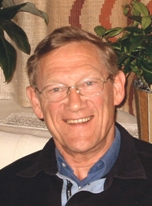
Prof. Doekele Stavenga is a Professor at the Faculty of Science and Engineering, University of Groningen. He leads the Van der Kooi lab - Evolutionary Biophysics, focusing on the physics of invertebrate vision and animal coloration. His research spans topics like butterfly wing scales, insect light attraction, and circadian rhythms. Collaborates internationally on optical signaling and pollinator interactions. Active in research since at least 2022, with ongoing projects like 'Scales and facets: Optical signaling and sensing in flies and butterflies' (2023–2027). Research Interests: Biophysics of vision, structural coloration, light pollution effects on insects, and evolutionary adaptations in coloration. Utilizes advanced optical techniques and interdisciplinary approaches. Key Contributions: Over 214 publications, including studies on Morpho butterfly flashiness, circadian rhythms in wasps, and carotenoid-based pigmentation. Media coverage highlights his work on iridescent animal colors and insect behavior. Grants & Projects: Co-Principal Investigator on an active project exploring optical signaling mechanisms in flies and butterflies. Supervised 27 works, contributing to entomological and biophysical research.
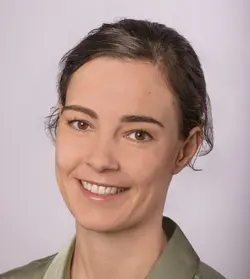
Elisa Frasnelli is an Associate Professor at the University of Trento, Italy, affiliated with the Center for Mind/Brain Sciences (CIMeC). Her research focuses on animal cognition, cerebral asymmetry, and neuroethology across species including honeybees, bumblebees, octopuses, and domestic animals. She holds editorial roles at journals like Animal Behaviour and Learning & Behavior , and serves as Secretary of the Association for the Study of Animal Behaviour (ASAB). Education: PhD in Cognitive and Brain Sciences, University of Trento (2010) MSc in Physics and Biomedical Technologies, University of Trento (2007) BSc in Applied Physics, University of Trento (2004) Research Interests: Lateralization in invertebrates and vertebrates Spatial navigation and visual-motor control in insects Neuromodulation of pain perception in bumblebees Impact of environmental stress on pollinator health Awards: JSPS Fellowship (2017) ASAB Above & Beyond Award (2016) PRIN 2022 Grant (€230k) for LADISEX Project Grants & Collaborations: PI of MicroBeeH Project (CARITRO, 2024) Coordinator of IBC Project on pollinators and climate change Teaching: Leads courses on Invertebrate Neurosciences and Mathematical Foundations for Cognitive Science at the University of Trento.
Barbara Wittmann is Assistant Professor of European Ethnology with a focus on Intangible Cultural Heritage at Otto-Friedrich-University Bamberg, where she has held a junior professorship since 2022. She is affiliated with the Faculty of Humanities and Cultural Studies and actively contributes to the Bachelor’s and Master’s programs in European Ethnology, as well as interdisciplinary research in cultural heritage preservation. Her academic background includes a doctorate (summa cum laude) from the University of Regensburg (2020), a Master’s in Comparative Cultural Studies from Regensburg and Lucerne, and earlier training as a church painter. Her research spans a wide range of fields, including agro-food studies , environmental anthropology , intangible cultural heritage , medical anthropology , and multispecies studies . She investigates cultural dimensions of intensive livestock farming, food culture, gender medicine, and rural identities, often combining historical analysis with ethnographic fieldwork. Her recent publications and conference contributions reveal a strong thematic focus on the moral positioning of farmers, the cultural construction of illness (especially ME/CFS), and the interplay between tradition and sustainability in rural and food practices. Her recent scholarly output reflects a deep engagement with socio-ecological challenges, particularly in agriculture and health. She critically examines how cultural narratives shape perceptions of factory farming, dietary choices, and medical systems, while also exploring pathways for more sustainable and equitable practices. Her work bridges academic research with public discourse through media appearances and policy-relevant contributions. Research Award of the Faculty of Linguistics, Literature and Cultural Studies, University of Regensburg (2022) Sponsorship Award of the Bavarian Academy of Rural Areas (2020) Young Scientist Award of the German Society for Agricultural History (2016) Barbara Wittmann is actively involved in academic service, including co-editing the Journal for Empirical Cultural Studies , serving as spokesperson for the Commission for the Cultural Analysis of the Rural, and as a member of the Expert Committee on Intangible Cultural Heritage of the German UNESCO Commission. She has supervised student research and taught courses on food culture, heritage, and rural studies. She has also conducted fieldwork in refugee accommodations and farming communities, demonstrating a commitment to engaged, ethical research. Her work is supported by fellowships such as her residency at the Rachel Carson Center for Environment and Society.
Dr. James Pay is a Research Fellow in Conservation Biology at the School of Natural Sciences, University of Tasmania. His work focuses on the behavioral ecology and conservation of threatened avian species, particularly the endangered Tasmanian wedge-tailed eagle (Aquila audax fleayi). He employs high-frequency GPS tracking and novel technologies to study flight behavior, habitat selection, and environmental contaminant impacts on top predators. Behavioral ecology of endangered raptors Spatial ecology and habitat use Environmental contaminant exposure (lead, rodenticides) Renewable energy mitigation strategies Population modeling for conservation His research examines how anthropogenic activities like wind farms, power lines, and land-use changes affect predator-prey dynamics and ecosystem health. Current projects address: Collision risk modeling with renewable infrastructure Population estimation methods via citizen science and genetics Acoustic-GPS tracking for habitat and vocalization analysis Detection probability estimation in threatened species James is actively involved in: Supervising doctoral research on wedge-tailed eagles and goshawks Collaborating with industry partners on eagle-safe wind farm planning Developing spatial risk models for infrastructure mitigation Leading field studies on predator response to human disturbance
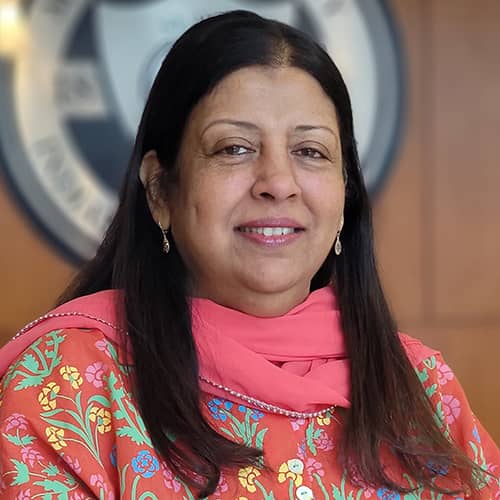
Samina Akbar, Ph.D., is a Professor of Microbiology at Marian University College of Osteopathic Medicine, where she has held positions since 2013, advancing to full professor in 2023. She earned her Ph.D. in Microbiology and Molecular Biology from UC Davis, followed by postdoctoral training at Harvard Medical School and research roles at the University of British Columbia's Center for Disease Control. Her expertise spans bacterial pathogenesis, antibiotic resistance mechanisms, and environmental microbiology. Dr. Akbar’s research focuses on multidrug-resistant bacteria in clinical, agricultural, and environmental settings. She leads projects isolating antibiotic-resistant organisms from Indiana waterways and studying Salmonella virulence factors. Her work emphasizes translational research, including probiotic applications and public health policy advocacy. She chairs the Indiana Academy of Sciences DEI Committee, securing grants to address diversity initiatives. Her educational contributions include osteopathic medical training and contributions to NBOME item development. Professional affiliations include the American Society for Microbiology and Indiana Academy of Sciences. Key research areas include plasmid-mediated antibiotic resistance in Enterobacteriaceae, aquaculture pathogen surveillance, and plant-microbe interactions in invasive species. Her lab’s environmental studies aim to influence state regulations on waste management practices. Collaborations with institutions like Des Moines University and University of Karachi highlight her global academic network.
Ivan Maggini serves as a Researcher and Scientific Coordinator of the Austrian Ornithological Centre at the University of Veterinary Medicine Vienna, where he leads the Ornithology unit within the Department of Interdisciplinary Life Sciences. His work focuses on physiological constraints shaping bird migration strategies across extreme environments like deserts and seas. Maggini holds a PhD in Ornithology from the University of Oldenburg (2005-2009) and a Diploma in Zoology from the University of Zurich (1998-2004). His postdoctoral training includes fellowships at the Institute of Avian Research Helgoland (2009-2010) and the University of Western Ontario (2012-2014), where he studied migratory physiology under Prof. Franz Bairlein and Prof. Christopher Guglielmo. His research centers on how physiological limitations—particularly water balance and energy management—determine migratory behavior in passerines crossing the Sahara. By measuring cutaneous water loss in species from different habitats and tracking birds via Motus nanotags, he investigates why Mediterranean species successfully refuel without surface water while central European species require drinking sources. His work integrates field studies in Morocco, Israel, and Italy with advanced tracking technologies to assess climate change impacts on migration flexibility. Recent publications reveal consistent themes in physiological migration ecology, with emphasis on hormonal regulation (corticosterone, testosterone), thermoregulation in extreme heat, and innovative methods like diet metabarcoding. His work demonstrates how physiological adaptations constrain responses to environmental change, particularly in trans-Saharan migrants facing desert and sea crossings. Maggini actively supervises four students—Armando Aispuro, Clara Machowetz, Bernhard Paces, and Barbara Waringer—and leads three major projects: 1) Water balance mechanisms in desert-crossing migrants; 2) Austria's Motus tracking network expansion across the Alps; 3) Coordination of the national bird ringing scheme integrating traditional methods with modern tracking. His research receives support through international collaborations with European institutions and the Motus wildlife tracking network. As Scientific Coordinator of the Austrian Ornithological Centre, he directs the Ornithology unit at the Konrad Lorenz Institute of Ethology, maintaining field operations at key migration hotspots including Neusiedlersee, Grünau, and Ventotene Island. His team collaborates with Mediterranean ringing stations to study migratory connectivity across the European-African flyway.
Muhammad Ihtisham Babar is a PhD candidate in Aerospace Engineering at UNSW Canberra, working under the supervision of Associate Professor Sridhar Ravi in the Bio-Engineering Research Group. He serves as a Wind Tunnel Lab Demonstrator at the School of Engineering & Technology, UNSW ADFA Canberra. Education: PhD (Inprogress), Aerospace Engineering, University of New South Wales, 2025-28 BE, Aerospace Engineering, National University of Sciences and Technology, 2015-19 Ihtisham Babar's research focuses on bio-inspired flight systems, particularly studying insect flight in unsteady flow conditions. His work combines experimental approaches including wind tunnel testing and insect flight tracking with the development of bio-inspired flapping wing mechanisms. His research interests span aerodynamics, flapping wing biomechanics, fluid-structure interaction, and computational/experimental aerodynamics, with applications in understanding animal behavior and improving aircraft performance. Before commencing his PhD at UNSW Canberra in July 2024, Babar worked as a Design Engineer at the National Aerospace Science and Technology Park (NASTP), where he focused on aerodynamic design, computational fluid dynamics (CFD), and experimental fluid mechanics. His industry experience includes internships at Turkish Aerospace Industries, Pakistan International Airlines (PIA), and Pakistan Aeronautical Complex (PAC), providing him with practical knowledge in aircraft manufacturing, maintenance, and structural inspection.
Nicholas Bertozzi is an Adjunct Professor in the Robotics Engineering Department at Worcester Polytechnic Institute (WPI), with a career spanning decades in engineering education and program development. Previously, he served as Dean of the School of Engineering and Computer Science at Daniel Webster College (DWC) from 2009 to 2015, where he played a pivotal role in transforming the engineering curriculum through the CDIO (Conceive-Design-Implement-Operate) framework. BS, Northeastern University (1977) MS, Northeastern University (1982) His research focuses on Active Learning , Flipped Classroom methodologies, and Program Assessment , emphasizing the integration of hands-on and collaborative learning experiences. He pioneered the application of CDIO principles in robotics education, particularly through his involvement with FIRST and VEX Robotics competitions, which inspired innovative approaches to undergraduate engineering programs. The articles in his scholarly work reveal a consistent emphasis on leveraging technology-driven educational tools to enhance student outcomes. His research spans Engineering Education , Robotics , and Medical Engineering , with sub-fields including CDIO Initiative , Medical Robotics , and Automated Assessment . These works highlight his commitment to bridging practical design challenges with pedagogical innovation. At WPI, Bertozzi continues to mentor undergraduate students in conference participation and the creation of flipped classroom learning modules with automated assessment. His collaborations with institutions like DWC and his judging roles at robotics events underscore his dedication to advancing engineering education through real-world applications and partnerships.
Cardinal Stefan Wyszyński University in WarsawPoland
Maciej Fuszara serves as a Lecturer at the Faculty of Biology and Environmental Sciences, Cardinal Stefan Wyszyński University in Warsaw. His academic profile centers on interdisciplinary biological research with 100% focus in biological sciences. His research spans evolutionary and behavioral ecology, specializing in animal communication systems, bioacoustics, echolocation mechanisms, and cognitive ethology including problem-solving and sensory decision-making in animals. Key areas include bat monitoring methodologies, life history adaptations, species distribution dynamics, and feather wear analysis in barn swallows as indicators of flight performance and environmental adaptation. His scholarly output includes 2 publications with consistent h-index metrics of 2 on both Scopus and Web of Science, reflecting focused contributions to niche ecological subfields. The total ministerial score of 115 indicates recognized academic impact within the Polish evaluation system. Active in academic service, he maintains regular consultation hours (Wednesdays 11:30-13:00 in room 416, building 24) and utilizes standardized research identifiers including ORCID: 0000-0003-0106-2177. His methodological expertise extends to scientific research design in animal ecology studies.
Didone Frigerio is a Senior Scientist at the University of Vienna, affiliated with the Faculty of Life Sciences and the Department of Behavioral and Cognitive Biology. She leads third-party funded projects like 'Visible Science' and 'GRASS' and has previously led initiatives such as 'Northern Bald Ibis goes Citizen Science' and 'Social Zusammenhalt und Ausflugsgebiet beim Waldrapp'. Her work bridges academic research with public engagement through citizen science programs. Research Focus: Frigerio investigates the interplay between social context and physiology in group-living birds, particularly focusing on greylag geese ( Anser anser ) and northern bald ibises ( Geronticus eremita ). Her research spans behavioral ecology, hormonal regulation, and conservation biology, emphasizing non-invasive methods and societal collaboration. Scientific Contributions: Her recent publications explore topics such as flight initiation distance, dominance hierarchies, facial individuality in geese, and drone impacts on avian physiology. These works highlight her expertise in behavioral data analysis, physiological stress markers, and citizen science integration. Awards: Citizen Science Award (2020, 2019, 2018) COST Action Networking (2018) Back-to-Research-Grant (2017) Technology Award (2016) Post-Graduate Scholarship (1995) Teaching & Outreach: Frigerio actively contributes to Austrian KinderUnis (Children Universities) and organizes scientific and public outreach events, including symposia at European conferences and regional educational programs. She supervises students and PhD candidates while promoting science communication to diverse audiences.
Joseph V. McHugh is the Herbert H. and Jean A. Ross Memorial Distinguished Professor of Insect Systematics and Evolutionary Biology in the Department of Entomology , College of Agricultural and Environmental Sciences , University of Georgia . He also serves as Curator of the Collection of Arthropods at the Georgia Museum of Natural History and holds faculty appointments in the Integrated Life Sciences Program . Education B.S. in Entomology, Cornell University (1984) M.S. in Evolutionary Biology, University of Connecticut (1987) Ph.D. in Insect Systematics, Cornell University (1995) Research Interests McHugh’s research centers on Coleoptera systematics , integrating taxonomy, morphology, phylogeny, and evolutionary biology to understand the diversity and natural history of beetles. His lab focuses on: Discovery and description of new beetle species, especially poorly known taxa Phylogenetic reconstruction and classification of Coleoptera Contributions to fundamental biology through morphological and ecological studies Conservation implications of saproxylic beetle communities in forest ecosystems Scientific Awards & Honors Herbert H. and Jean A. Ross Memorial Distinguished Professorship Past President, The Coleopterists Society (2007–2008) Past Chair, Morphology and Systematics Section, Entomological Society of America (2000–2001) Past President, Sigma Xi Scientific Research Society, UGA Chapter (1999–2000) Teaching & Mentorship McHugh teaches advanced courses in Insect Taxonomy (ENTO 8010/8010L) and Phylogenetics, Systematics and Evolution (ENTO 8050). He has advised numerous graduate students and post-doctoral researchers, though specific names are not listed in the provided text. Affiliations & Service Editor, Vaurie Monograph Series , The Coleopterists Society Former Co-Editor, Arthropod Systematics and Phylogeny (2015–2021) Faculty Adviser, H.O. Lund Club, University of Georgia (1998–2019) Lab & Collections McHugh directs the McHugh Lab, which conducts integrative research on beetle systematics, and oversees the University of Georgia’s Collection of Arthropods , a globally significant resource for entomological research and education.
Christa Thöne-Reineke is a University Professor and Director of the Institute for Animal Welfare, Animal Behavior and Laboratory Animal Science at the Free University of Berlin's Department of Veterinary Medicine. She serves as the animal welfare officer for the university and is a specialist veterinarian for laboratory animal science and physiology. Her academic career spans over three decades with significant contributions to animal welfare science and laboratory animal medicine. Studied veterinary medicine at Free University of Berlin (1988-1994) Dr. in Veterinary Medicine from Free University of Berlin (1997) Habilitation in experimental pharmacology from Charité University Medicine Berlin (2012) Specialist veterinarian in physiology (2005) Specialist veterinarian in laboratory animal science (2000) Professor Thöne-Reineke's research focuses on animal welfare assessment, refinement of animal experiments, and the application of the 3R principles (Replacement, Reduction, Refinement) in biomedical research. Her work spans laboratory animal science, farm animal welfare, and wildlife conservation. She has pioneered methods for non-invasive stress assessment in animals and developed alternatives to animal use in education. Her research also addresses ethical considerations in veterinary medicine and the psychological impact of animal care work on professionals. Her recent publications demonstrate a strong focus on technological innovations for animal welfare assessment, including automated tracking systems and non-invasive stress measurement techniques. She has extensive work on laboratory mouse behavior and housing, as well as investigations into farm animal welfare, particularly dairy cows and poultry. A significant portion of her research addresses the implementation of 3R principles across various animal species and research contexts. 2015 Berlin State Award for Replacement and Alternative Methods for Animal Experiments in Teaching and Training 2018 Teaching Award from Free University of Berlin for "The Pig and the Human" 2018-2019 Wilma von Döhring Research Prize for student dissertations 2018 Boehringer Ingelheim Animal Welfare Medal 2021 FLI Support Association Promotion Award 2021 Professor Dr. Walther Bolz Prize 2022 EUSAAT Congress Young Scientists Travel Award and Best Oral Talk Award Professor Thöne-Reineke has supervised numerous doctoral students including Charlotte Leidinger, Katharina Hohlbaum, Beryl Euseman, and Angelique Wolter, whose work has received multiple awards. She serves in leadership roles for several 3R initiatives including as Vice-Spokesperson for EC3R (2020-present) and BB3R (2019-present). She is actively involved in national and international committees focused on animal welfare policy, ethics, and regulation. As Director of the Institute for Animal Welfare, Animal Behavior and Laboratory Animal Science, she leads a multidisciplinary team conducting research on animal welfare assessment methods, refinement strategies for animal experiments, and alternatives to animal use. The institute collaborates with multiple European networks including COST Actions on 3R concepts and automated behavior monitoring.
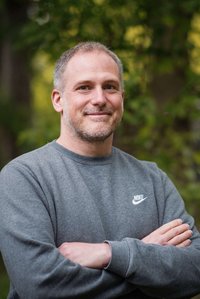
Tilman Triphan is a Scientific Staff member at the Institute of Biology, University of Leipzig. His research focuses on the neurogenetic basis of Drosophila behavior, including motor control, decision-making, spatial orientation memory, and voluntary passive movement. Institute of Biology, University of Leipzig Genetics Department Triphan investigates how fruit flies overcome obstacles, maintain directional flight, and adapt their behavior through sophisticated movement patterns. His work employs high-speed videography and genetic techniques to analyze neuronal circuits and behavioral flexibility. Recent publications span topics such as starvation effects on fly activity, olfactory object recognition, and visual distance estimation. Collaborations with the AG Huetteroth research group are integral to his work. Former students: Julia Vetter (BA 2019), Kristian Schufft (Staatsexamen 2019) Contact: Room 318, Genetics Institute Building, Talstraße 33, Leipzig. Phone: +49 341 97-36962 | Fax: +49 341 97-36720
Jessie Williamson is an Assistant Professor in the Department of Zoology and Physiology at the University of Wyoming, where her research focuses on evolutionary ecology and physiological adaptations of birds in mountainous ecosystems across the South American Andes and Intermountain West. Her academic credentials include: Ph.D. in Biology from the University of New Mexico (2022) M.S. in Biology from the University of New Mexico (2019) B.A. in Biology from Middlebury College (2012) Dr. Williamson's research integrates Evolution, Ecology, Ecophysiology, Ornithology, Migration, and Population Genomics through methodologies including migration tracking, field experiments, genomics, transcriptomics, and museum specimen analysis. Her lab investigates: Extreme elevational migration in species like giant hummingbirds Physiological and genomic adaptations to high-altitude environments Phenotypic plasticity versus genetic adaptation across elevational gradients Abiotic drivers of spatial biodiversity patterns Her 2019-2024 publications reveal a cohesive research trajectory centered on oxygen transport limitations, elevational range constraints, and speciation mechanisms in birds. This work consistently employs hummingbirds as model systems to explore physiological extremes, demonstrating strong integration of field ecology with molecular techniques across eight high-impact publications. No scientific awards were listed in the available information. Details regarding student advising and research grants were not specified in the source material. The Williamson Lab operates within the University of Wyoming's Department of Zoology and Physiology and maintains a strategic partnership with the Museum of Vertebrates, contributing genomic resources for cross-temporal studies of avian diversity.
Andrew Cannestra is a Lecturer in the Music Department at St. Olaf College. He is a distinguished pianist and composer, celebrated for his solo performances, chamber collaborations, and commitment to promoting works by living and historically underrepresented composers. Education Bachelor of Music, St. Olaf College Master of Music, Chicago College of Performing Arts Doctoral candidate, University of Oregon His performance career includes solo engagements such as the 2024 Seattle International Piano Competition Bronze Medal and the 2022 solo album Mystic Pool , featuring his own composition and works by William Grant Still, Alexander Scriabin, Frederic Chopin, and Henri Dutilleux. In 2025, he will release a Naxos album of eight rare works by Josef Wieniawski as part of the Romantic Piano Series. As a composer, Cannestra's works have been performed by ensembles like the Milwaukee Symphony Orchestra, St. Olaf Band, and Artaria String Quartet. Notable premieres include Oregon Soundscapes (2025, University of Oregon), Flight (St. Olaf Orchestra's Norway tour), and The Chronicles of Stumpy, the Squirrel Without a Tail . His music has also been featured in Peter Nelson’s award-winning animated film Intruder Man . Scientific Awards Bronze Medal, Seattle International Piano Competition (2024) Grand Prize Winner, Aeolian Classics Emerging Artist Competition (2021) Cannestra regularly collaborates with ensembles such as the Oasis Ensemble (co-founded with Dawn Weiss and Louis Lowenstein) and has performed with members of the Emerson Quartet, Viano Quartet, Delgani Quartet, and major symphonies across the U.S. He has been featured at festivals like the Manchester Music Festival and on radio stations including All-Classical Radio (OR) and Vermont Public Radio.