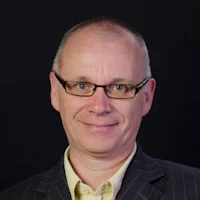
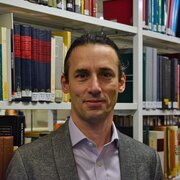
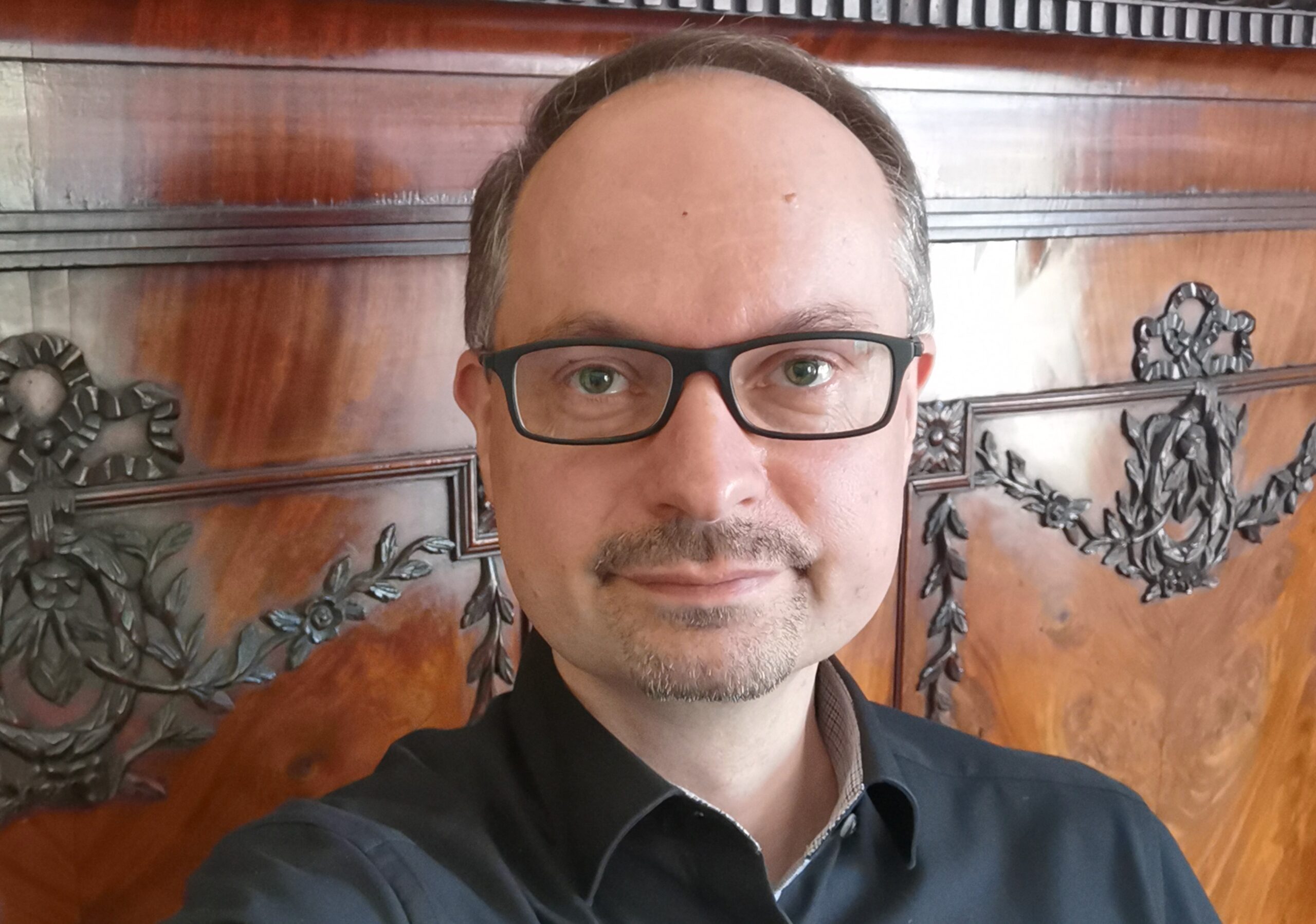
Professor Max Deeg is a leading scholar in Buddhist Studies at Cardiff University , holding a personal chair since 2009. With a career spanning institutions in Germany, Austria, and the UK, his research focuses on transcultural Buddhist history from India to East Asia, Chinese Buddhist travelogues , and interreligious encounters in medieval China. He has held visiting positions at universities in Japan, Nepal, the US, and Germany, and currently directs the Centre for the History of Religion in Asia (CHRA) . PhD from University of Würzburg (1990) Dr. phil. habil. in Religious Studies (1998) Full Professor at University of Vienna (2002-2006) His research explores Buddhist narratives as tools for constructing religious identity, foundation myths in trans-Himalayan contexts, and terminology evolution in Chinese Buddhist translations. Recent publications analyze Indian Buddhist monasticism through Chinese sources and religious concepts like xin (trust) across Buddhist, Manichaean, and Christian traditions. Awarded the KHK Visiting Research Fellowship (2016) and a DAAD Scholarship (1986-87) , Prof Deeg contributes to editorial boards of major journals. He supervises PhD students and teaches Buddhist Studies , Life of the Buddha , and Chinese Buddhist Texts .
Rhenish Friedrich Wilhelm University of BonnGermany
Prof. Waldemar Kolanus leads the Molecular Immunology and Cell Biology department at the University of Bonn's Life & Medical Sciences Institute (LIMES) . His research bridges immunoregulation , stem cell dynamics , and metabolic stress responses in immune cells. Unit 2 member at LIMES Principal investigator in SFB 704 and ImmunoSensation Cluster Leads a multidisciplinary lab with postdocs, PhD students, and technical staff His work focuses on intracellular signaling pathways connecting immune activation to tissue homeostasis, particularly through: Cytohesin proteins in integrin-mediated adhesion and migration TRIM71 in stem cell regulation and congenital hydrocephalus High-salt environments affecting macrophage function Publication trends show expertise in immune cell migration , genetic models , and chemical inhibition , with frequent use of mice and zebrafish for in vivo studies. Key articles explore: TRIM71's dual role in auditory development and germ cell maintenance Cytohesin family's Golgi regulation and insulin signaling Ruxolitinib's off-target migration inhibition of dendritic cells Contact details: Address: LIMES Institute, Carl-Troll-Straße 31, Bonn Email: kolanus.sekretariat@uni-bonn.de Phone: +49 228 73-62788
Viktor Golinets is a Professor of Hebrew Linguistics at the Heidelberg University of Jewish Studies , where he has held the Chair of Hebrew Linguistics since 2018. Previously, he served as a Junior Professor at the same institution from 2012 to 2018. His academic journey includes a PhD in Ancient Near Eastern Studies from the University of Munich (2010) and a Magister degree in Semitics from Ludwig-Maximilians-Universität München (2004). Education: PhD (Altorientalistik, LMU Munich, 2010), Magister (Semitics, LMU Munich, 1997-2004) Professional Roles: Professor (Heidelberg University of Jewish Studies, since 2018), Junior Professor (Heidelberg University of Jewish Studies, 2012-2018), Scientific Assistant (University of Basel, 2007-2012) Golinets’ research focuses on the linguistic and textual history of the Hebrew Bible , ancient Bible translations , and historical grammar of Hebrew . He specializes in Masoretic studies, Semitic epigraphy, and comparative analysis of Northwest Semitic languages like Amorite, Aramaic, and Ugaritic. His work addresses textual criticism, biblical hermeneutics, and the evolution of Hebrew from Masoretic to modern usage. His publications and articles reveal a strong emphasis on Hebrew onomastics , epigraphic analysis , and the role of language in Jewish cultural identity . He has contributed to international colloquia on textual criticism and Semitic philology. Memberships: German Oriental Society, European Association of Biblical Studies, International Association for Comparative Semitics, Association of Judaists in Germany, and others Golinets serves as Deputy Rector at Heidelberg University of Jewish Studies and has collaborated on projects like the Hebrew-Greek Text-Critical Synopsis of the Book of Jeremiah and the Biblia Hebraica Transkripta. His expertise in Hebrew manuscripts and Semitic languages informs both his teaching and research.
Dr. Andreas Goltz is an Academic Director in the Department of Ancient History at Johannes Gutenberg University Mainz since 2021, with a focus on interdisciplinary research bridging Roman history, media studies, and public historiography. He has held various academic roles at institutions including Bamberg, Berlin, and Dresden. Doctorate in Ancient History (summa cum laude, Freie Universität Berlin, 2005) Master of Arts in Ancient History, Art History, and Psychology (Freie Universität Berlin, 1995) His research spans the Roman Republic , Late Antiquity , and historical reception , emphasizing cross-era analysis, Roman-Germanic interactions, and media representations of antiquity. His publications include a monograph on Theodoric the Great and editorial collaborations on Diocletian, Constantine, and Late Antique historiography. Recent articles reflect expertise in Spätantikfilm (late antique cinema), Byzantine sources , and ethnogenesis , with keywords spanning Political History to Visual Culture . Scientific Awards Teaching Award of Rhineland-Palatinate (2022) Lehrpreis der Johannes Gutenberg-Universität Mainz (2020, 2014) He contributes to the Clio 2punkt0 project on historical communication and advises graduate theses on topics from Julian's Edict to Caesar's Monarchical Ambitions .
Jonathan Miles Robker is a Lecturer (Privatdozent) at the University of Münster's Faculty of Protestant Theology. He holds a Habilitation in Old Testament (2018), Doctor of Theology (2011), Master of Theological Studies (2006), and dual Bachelor's degrees in History and Philosophy (2003). Since 2020, he serves as Editor for Biblical Studies and has held research positions at the university since 2013. His research focuses on textual criticism, ancient Near Eastern epigraphy, Deuteronomistic history, and literary analysis of biblical texts. Primary interests include the Book of Kings, history of Israel, and comparative ancient Near Eastern traditions. Robker's publications demonstrate consistent engagement with textual variants across ancient manuscripts, particularly examining the Deuteronomistic History through Septuagint and Masoretic textual traditions. His works frequently analyze political theology, prophetic literature, and the development of biblical canons.
Prof. Dr. Frank Kammerzell is a Professor at the Department of Archaeology and Cultural History of Northeast Africa within Humboldt University of Berlin since May 2003. His academic career includes habilitation at the University of Göttingen (1999) and extensive research collaborations with Hebrew University of Jerusalem and University of Vienna. His educational background encompasses Medieval and Modern History (major 1980), Egyptology (major), Coptic Studies, General and Indo-European Linguistics, and Assyriology. He earned his Dr. phil. from Göttingen with a dissertation on 'Studies on the Language and History of the Carians in Egypt' (1990) and completed habilitation with 'Language contact and language change in ancient Egypt' (1999). Kammerzell's research spans Egyptian phonology, morphology, syntax, lexis, language history, diachronic typology, language contact, writing systems, and Carian history in Egypt. His work integrates linguistic analysis with archaeological contexts, examining language evolution through contact and typological shifts. Notable projects include studies on Egyptian-Akkadian typological developments and classifiers in ancient Egypt. His publications since 2000 demonstrate sustained focus on Egyptian linguistic structures, writing systems, and cross-linguistic influences. Key themes include verb classifiers, glossing rules for Ancient Egyptian, and lexical semantics-pragmatics interfaces, bridging Egyptology with broader linguistic theory. Graduate Scholarship from the State of Lower Saxony (Doctoral Scholarship) 1987-1989 Kammerzell has led significant research projects funded by the DFG, Fritz Thyssen Foundation, and Volkswagen Foundation. His collaborative work with institutions in Jerusalem and Göttingen highlights international partnerships. While specific advisees aren't listed, his editorial roles suggest mentorship in academic publishing. He co-founded research groups on multilingualism and script systems, contributing to journals like Lingua Aegyptia and Ägypten und Levante , underscoring team-based archaeological-linguistic research.
Max Planck Institute for the History of ScienceGermany
Zhigang Ji is a Professor at the School of History and Culture of Science at Shanghai Jiao Tong University since 2000. He earned his PhD in History of Mathematics from Northwest University, China, in 1994. He previously served as President of the Chinese Society for the History of Mathematics (2015–2019) and as an executive member of the Chinese Society for the History of Science and Technology (2015–2019). Education: PhD in History of Mathematics, Northwest University, China (1994) His research focuses on the cross-cultural exchange of mathematical knowledge between China and the West, particularly during the late Ming and early Qing dynasties. He explores historical contexts of translation, cultural influences on mathematical practices, and the integration of Western and Chinese mathematical traditions. His publications highlight the transmission of Western mathematics along the Silk Road, cultural interpretations of mathematics, and ancient Chinese mathematical developments. His work bridges historical analysis with transnational science studies. He has led two funded projects: Studies on the Cultural History of the Chinese Translation of the Jihe yuanben (National Social Sciences Fund) and Communication and Transmission of Mathematical Knowledge along the Silk Road (Ministry of Education Fund). He frequently presents at international conferences on topics related to mathematical history and translation studies.
Michael Beaney is Regius Professor of Logic at the University of Aberdeen, holding this position since June 2020. He also maintains a half-time position as Professor of History of Analytic Philosophy at Humboldt University in Berlin (since 2016). Previously, he served as Professor of Philosophy at King's College London (2016-20, part-time), Reader and then Professor of Philosophy at the University of York (2005-15), and held positions at the Open University, University of Manchester, University of Leeds, Birkbeck College London, and University of Sheffield. In Germany, he has held Alexander von Humboldt Research Fellowships at the University of Jena and University of Erlangen-Nürnberg. He has been actively engaged with Chinese academia since 2011, serving as Visiting Professor at Peking University and currently as Visiting Chair Professor at Tsinghua University, while also chairing the British Committee of the Summer School in China Programme. Beaney received his undergraduate education in PPE at St. Catherine's College, Oxford (1978-81), followed by a B.Phil. (1985) and D.Phil. (1990) in Philosophy from the same institution. He also holds an MA from the University of Keele (1983). Professor Beaney's research spans several interconnected areas within philosophy. His primary focus is on the history of analytic philosophy, with special attention to the works of Frege, Wittgenstein, Stebbing, and Collingwood. He has made significant contributions to understanding the development of analytic methodology and the historiography of philosophy. His work on Chinese philosophy explores ancient Chinese philosophy of language and logic, as well as the development of Chinese analytic philosophy, representing an important bridge between Eastern and Western philosophical traditions. Beaney is particularly interested in philosophical methodology, especially the role of analysis and creativity throughout the history of philosophy. His comparative work examines Chinese-Western philosophical comparisons and the philosophy of comparison itself. Additionally, he has made notable contributions to the theory and practice of philosophical translation, particularly between German-English and English-Chinese. Beaney's recent publications demonstrate a consistent focus on the history and methodology of analytic philosophy. His work frequently examines the intersection of historical analysis with contemporary philosophical concerns, particularly regarding conceptual creativity and the evolution of philosophical ideas. A significant portion of his recent scholarship addresses translation issues in philosophy, especially concerning Frege's works and Chinese philosophical texts. His editorial work on the British Journal for the History of Philosophy for nearly a decade reflects his commitment to advancing scholarly discourse in the field. Michael Beaney currently serves as President of the Society for the Study of the History of Analytical Philosophy (SSHAP). He was Editor of the British Journal for the History of Philosophy from 2011 to 2020 and remains on the Editorial Board as an Associate Editor. He serves on the Editorial Board of Russell: the Journal of Bertrand Russell Studies and on the Advisory Boards of the Journal of Chinese Philosophy and the Journal for the History of Analytical Philosophy. Beaney is General Editor of a book series on the history of analytic philosophy published by Palgrave Macmillan (30+ volumes) and Co-Editor of a new book series entitled 'New Texts in the History of Philosophy' published by Oxford University Press. He has been a member of the AHRC Peer Review College since 2010 and is a Fellow of the Royal Society of Arts. Professor Beaney welcomes PhD students in all areas of his research expertise, particularly in history of analytic philosophy, Chinese philosophy, philosophical methodology, historiography of philosophy, comparative philosophy, and philosophical translation. His extensive editorial experience and leadership roles in professional organizations provide valuable mentorship opportunities for graduate students. While specific grant information isn't detailed in the provided text, his ongoing research projects, international collaborations (particularly with Chinese institutions), and editorial work suggest substantial research activity supported by various funding mechanisms. Though not explicitly mentioned as leading a specific laboratory, Beaney is deeply involved in several collaborative research initiatives. His work with Prof. Karyn Lai (UNSW) on ancient Chinese epistemology represents an important international collaboration. His leadership of the British Committee of the Summer School in China Programme fosters ongoing academic exchange between British and Chinese philosophers. Additionally, his editorial roles with multiple journals and book series create virtual research communities centered around the history of analytic philosophy.
Elena Vanelli is a Lecturer for special tasks in Ancient and Medieval History at the University of Kassel, where she has been employed since April 2021. Previously, she worked as a Research Associate at the University of Hamburg starting in April 2016. Education: Bachelor's degree in History from Catholic University of Milan (2009-2013) Semester abroad at Eberhard Karls University, Tübingen (2013-2014) Master's degree in 'Filologia Moderna' with history focus from Catholic University of Milan (2013-2015) Dr. Vanelli's research specializes in Medieval History with particular emphasis on women's religious communities and monastic institutions in Italy and Germany. Her work examines social structures within monasteries, the role of noble families in religious institutions, and ecclesiastical power dynamics between papal authority and local bishoprics during the 10th-15th centuries. She has conducted significant research on Cistercian nuns in Northern Italy and the social organization of German monasteries in the late Middle Ages. Her publication record shows expertise in analyzing historical documents across multiple languages, with translations of scholarly works between German and Italian. Her research bridges linguistic and cultural boundaries to provide comprehensive analyses of medieval religious institutions and their political contexts.
Dr. Uta Kornmeier served as a Research Curator at the Humboldt-Universität zu Berlin's Department of Classics, affiliated with the Alexander von Humboldt Professorship. Her work focused on ancient concepts of the body and soul, particularly through curating the exhibition "Die Seele ist ein Octopus: Antike Vorstellungen vom belebten Körper" . She contributed to interdisciplinary projects exploring the intersection of classical studies and the history of medicine. Her research is highlighted in two edited volumes: The Soul is an Octopus. Ancient Ideas of Life and the Body (2016) and its German counterpart Die Seele ist ein Oktopus... (2017). These publications analyze ancient philosophical and medical perspectives on life, embodiment, and vitality, featuring contributions from international scholars. Dr. Kornmeier’s academic contributions emphasize the cultural and intellectual history of medicine in antiquity, bridging classical philology with the history of science. She collaborated with institutions like the Berliner Medizinhistorisches Museum der Charité, reflecting her engagement with public scholarship and exhibition curation.
Max Planck Institute for Legal History and Legal TheoryGermany
Dr. Natalie Cobo is an active Affiliate Researcher at the Max Planck Institute for Legal History and Legal Theory since July 2025, previously serving as an External Researcher from 2016 to 2021. She co-founded a Colombian non-profit foundation (2015–present) dedicated to digitizing endangered archives and promoting digital humanities in Latin America. Her academic credentials include: DPhil in History, University of Oxford (2016–2024), supervised by Prof. Alan Strathern; thesis: Conversion, ethnology, and law in the conquest of the Philippines MPhil in Classics, University of Cambridge (2013–2014), supervised by Prof. Carrie Vout; thesis: Infanticide in Ancient Art BA in Classics, University of Cambridge (2010–2013) Cobo's research critically examines Spanish colonial legal frameworks through the lens of normative regime development, with specialized focus on early modern Philippines and Iberian colonial translation practices. Her work reveals how religious institutions like the Synod of Manila (1581–82) engineered moral authority through confession protocols and restitution systems, while her analysis of trans-Pacific trade routes demonstrates the Philippines' pivotal role in global colonial networks. She bridges legal anthropology with textual scholarship to expose how Latin legal traditions were adapted across Asian and American contexts. Her publication trajectory shows consistent engagement with Pacific colonial dynamics, evolving from foundational archival work on Philippine legislation (2018) to contemporary analyses of maritime piracy's legal dimensions (2025). Recent outputs increasingly emphasize cross-cultural legal translation and the material production of normative behavior in mission contexts. No scientific awards are documented in available records. Her research is sustained through institutional affiliation with the Max Planck Institute and leadership of the non-profit neogranadina.org , which executes large-scale digitization projects across Latin American archives. While formal advisees aren't listed, her collaborative publications with scholars like Thomas Duve and Tatiana Seijas indicate active mentorship within transnational research networks. Cobo operates at the intersection of the Max Planck Institute's legal history research division and her non-profit's field operations, directing teams that combine digital humanities methodologies with traditional archival preservation. Current projects include All Translate Solórzano Iberian Worlds , which decodes early modern Latin legal manuscripts through comparative colonial frameworks.
Sophia Papaioannou serves as Professor of Latin Literature at the National and Kapodistrian University of Athens, holding advanced degrees in Classics from the University of Texas at Austin following undergraduate studies at the University of Crete. Her scholarly identity centers on classical philology with particular emphasis on Latin literary traditions. Her academic formation includes: BA in Classics from the University of Crete MA in Classics from the University of Texas at Austin PhD in Classics from the University of Texas at Austin Research expertise spans Roman Comedy (especially Plautus and Terence), Latin Epic (Ovid's Metamorphoses and imperial poetry), and Augustan literature , with significant contributions to understanding Greco-Roman cultural interplay in Late Antiquity. Current projects involve a detailed commentary on Plautus' Curculio and monographic analysis of Nonnus' Dionysiaca, reflecting sustained engagement with textual interpretation and cultural transmission. Publication trends from 2005-2017 reveal consistent focus on epic intertextuality (particularly Ovidian reworkings of Homeric and Virgilian traditions) and Roman comedy, complemented by interdisciplinary editorial work bridging literature, religion, landscape studies, and performance theory. Her scholarship demonstrates methodological versatility through monographs, critical editions, and collaborative volumes examining Greek-Latin cultural dynamics across multiple genres and historical periods.
Dr. Irene Calà is a Researcher at Ludwig-Maximilians-Universität München (LMU) and Ulm Universität, specializing in ancient medicine and Byzantine philology. Her work focuses on the textual transmission of medical works from Late Antiquity, particularly Aetius of Amida’s Libri medicinales . She holds a PhD from Università di Bologna and has held postdoctoral positions at Humboldt Universität zu Berlin and the Max Planck Institut für Wissenschaftsgeschichte. Education: PhD in Byzantine Philology, Università di Bologna (2012) Master’s in Classical Letters, Università degli Studi di Palermo (2008) Research Interests: Medical manuscripts of Late Antiquity Transmission of Galenic texts into Syriac and Latin History of pharmacology and gynaecology Manuscript paleography and codicology Current Projects: DFG-funded critical edition of Aetius’ Libri medicinales Books 10/14 (2018–2024) Analysis of Syriac Galen Palimpsest manuscripts Teaching: Medical Terminology courses at Ulm Universität Seminars on Aetius’ manuscript tradition at Staatsbibliothek zu Berlin Labs/Networks: Member of ‘Interpreters of Medicine’ research group (Castilla-La Mancha University) Associated with ‘Médecine grecque’ (CNRS UMR 8167, Paris)
Max Planck Institute for the History of ScienceGermany
Karine Chemla is a Senior Researcher at the French National Center for Scientific Research (CNRS) in the SPHERE laboratory (CNRS & University Paris Diderot). She has held significant research positions including Principal Investigator of the ERC Advanced Research Grant 'Mathematical Sciences in the Ancient Worlds' (SAW) from 2011 to 2016 and George Sarton Chair Holder at Universiteit Gent (2013-2014). She has collaborated with the Max Planck Institute for the History of Science, working with Glenn Most on mathematical commentaries in the ancient world. Chemla earned her PhD in mathematics in 1982 from University Paris XIII-Villetaneuse, with a dissertation on a thirteenth-century Chinese mathematical writing. Her education included mathematics studies at the Ecole Normale Supérieure de Jeunes Filles (1976–1982) and history of mathematics at the Institute for the History of Natural Sciences in Beijing (1981). Her research focuses on the relationship between mathematics and various cultures from a historical anthropology perspective, examining how mathematical practices emerge and evolve within specific cultural contexts. She specializes in comparative studies of mathematical traditions across civilizations, particularly ancient China, with significant work on mathematical commentaries, the transmission of mathematical knowledge, and the historical development of mathematical reasoning. Her approach integrates historical, anthropological, and philosophical perspectives to understand mathematics as a human practice deeply embedded in cultural frameworks. Her scientific awards include the Prize Binoux of the French Academy of Science (2006), the Prize Hirayama of the Academy of Inscriptions & Belles-Lettres (2006), and the silver medal from CNRS (2008). She is an elected member of both the Deutsche Akademie der Naturforscher Leopoldina (2005) and the Academia Europaea (2013). Chemla has led significant research initiatives including the ERC Advanced Grant SAW project, which investigated mathematical practices across ancient civilizations. Her scholarly activities include numerous invited lectures at prestigious institutions including the Hans Rausing Lecture at Uppsala University (2017) and a plenary lecture at the European Congress of Mathematicians (2016). She is affiliated with the SPHERE laboratory (Science, Philosophy, History of Science), a joint research unit of CNRS and University Paris Diderot, which provides an interdisciplinary environment for her work on the historical and cultural dimensions of scientific practices.
Peter von Möllendorff is Professor of Classical Philology/Greek Philology at Justus Liebig University Giessen (JLU), where he has served since March 2003. He currently holds the position of Dean of Department 04 History and Cultural Studies (since WS 2015/16) and is a member of the university Senate (since summer semester 2013). Previously, he served as Managing Director of the Institute of Classical Studies (2011-2014) and Dean of the same department (2008-2011). His academic journey began with studies in Classical Philology and Romance Studies at universities in Cologne, Freiburg, and Munich. He completed state examinations in 1989 and 1990 at Ludwig Maximilian University of Munich, earned his doctorate in 1994, and completed his habilitation in winter 1998/99. Prior to his appointment at JLU, he served as Acting Professor at the University of Heidelberg (2001-2002). Von Möllendorff's research primarily focuses on Greek drama, Literature of the Imperial Period, aesthetic and poetological conceptions of antiquity, and concepts of intertextuality. His scholarly work centers on Lucian of Samosata and Aristophanes, with significant contributions to understanding ancient satire, literary theory, and the Second Sophistic. His publications demonstrate a consistent exploration of how ancient authors engaged with literary tradition through intertextual strategies and aesthetic innovation. His publication record spans from the mid-1990s to 2017, showing remarkable consistency in focus while evolving in methodological sophistication. The most recent works reveal increasing attention to metalepsis, media theory, and the intersection of pagan and Christian literary traditions during the Imperial period. His scholarship often bridges philological precision with theoretical frameworks from modern literary criticism. As an academic leader, von Möllendorff has served in multiple administrative capacities including membership on the Board of Directors of the Center for Teacher Education (since 2005) and the Department Council of FB 04 (since WS 2005/6). His editorial work includes co-founding and co-editing the Millennium series and contributing to numerous academic journals. His teaching and scholarly activities demonstrate strong engagement with both traditional philological methods and innovative digital approaches, as evidenced by his work on the e-learning unit 'Symposium 2.0' and various editorial projects documenting interdisciplinary conference proceedings.