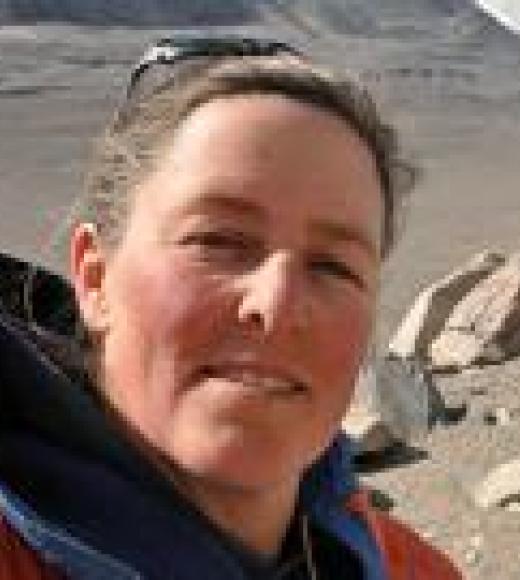
Dawn Y. Sumner is a Professor in the Department of Earth and Planetary Sciences at the University of California, Davis. Her research focuses on geobiology, paleobiology, and planetary science, particularly reconstructing ancient environments on Earth and Mars. She is a key member of NASA’s Mars Science Laboratory team, contributing to the Curiosity rover’s exploration of Gale Crater on Mars. Sumner’s work integrates field studies, lab analyses, and interdisciplinary approaches to understand microbial life’s role in shaping Earth’s history and potential habitability on other planets. Education: Ph.D., Massachusetts Institute of Technology (1995). Research interests include microbialite formation, Antarctic lake ecosystems, and the evolution of oxygenic photosynthesis. She investigates modern microbial communities in ice-covered lakes (e.g., Lake Vanda) to understand ancient environments and their biosignatures. Her scientific awards include the California Academy of Sciences Academy Fellow (2020) and Geological Society of America Fellow (2014). Sumner emphasizes inclusive education and supports student success in STEM through feminist research practices. Labs/Teams: W.M. Keck Center for Active Visualization in the Earth Sciences (KeckCAVES), Antarctic Lake Research Group.
Benjamin Yelle serves as a Teaching Professor in the Department of Philosophy and Religion at Northeastern University's College of Social Sciences and Humanities, specializing in ethical theory and practical moral dilemmas. He earned his PhD in Applied Ethics from the University of Miami in 2014, establishing his scholarly foundation in value theory and practical ethics. Yelle's research program integrates normative ethics —where he pioneers a subjectivist theory of well-being reconciling personal valuation with objective constraints—and applied ethics with focus on bioethical challenges in neurological degeneration. His scholarship extends to philosophy of technology , examining ethical implications of biotechnology, information systems, and virtual reality through courses like PHIL 1145. He also investigates happiness's normative role in conceptions of the good life, creating interdisciplinary connections between ancient eudaimonism and contemporary ethical frameworks. As an active member of Northeastern's Ethics Institute, Yelle contributes to collaborative research initiatives while maintaining teaching responsibilities in undergraduate ethics education. His professional network includes departmental colleagues across philosophy and religious studies, supporting a robust academic environment for ethical inquiry.
University of California, Los AngelesUnited States
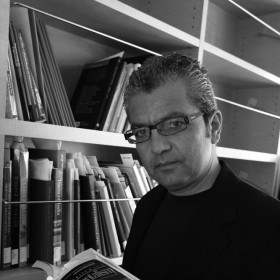
Ali Mousavi is Assistant Professor of Iranian Archaeology in UCLA’s Department of Near Eastern Languages and Cultures and a core faculty member of the Cotsen Institute of Archaeology. A Berkeley PhD and former fellow of the Smithsonian, Maison de l’Orient and Global Heritage Fund, he has directed excavations and UNESCO World-Heritage projects at Pasargadae, Bam, Susa, Sultaniyeh and Turang Tepe and authored prize-winning volumes Ancient Iran from the Air and Persepolis: Discovery and Afterlife of a World Wonder . Education PhD, Near Eastern Studies (Archaeology), University of California, Berkeley (2005) MA, Archaeology, History and Languages of Old World Civilizations, Université Lyon II, France (1997) BA, Archaeology and Art History of Europe and the East Mediterranean, Université Lyon II, France (1996) Research interests span the archaeology and art history of Iran from the Neolithic to the early-20th century, with particular focus on Achaemenid and Sasanian monumental architecture, ancient irrigation (qanats), landscape archaeology, digital heritage, and the modern historiography of Iranian archaeology. His field projects integrate remote sensing, epigraphy, GIS and conservation science to investigate imperial capitals, rock-cut monuments and water-management systems across the Iranian plateau. Across more than 30 peer-reviewed articles and book chapters, Mousavi has re-examined dating criteria for Achaemenid stone monuments, analysed royal inscriptions as visual displays, traced medieval Persian pilgrims’ graffiti at ancient sites, and produced synthetic archaeological surveys of the Sasanian empire and the Central Alborz Iron-Age cultures. The corpus reflects a sustained engagement with primary field data, archival research and critical historiography of 19th- and 20th-century excavations. Selected honours Ehsan Yarshater Book Award (2014) Iranian Ministry of Culture World Book Award (2014) Leon Levy – Shelby White publication grant (2008) UNESCO award for World-Heritage nomination files (2003) Iran Heritage Foundation field-work award (2003) Guitty Azarpay Fellowship, UC Berkeley (2000-2003) IFRI Fellowship, Paris (1998) At UCLA he offers undergraduate courses “Archaeology of Iran” and “Ancient Cities of Iran (4000 BC-AD 1900)” and mentors graduate researchers in the Cotsen Institute. His grants and fellowships from NSF-equivalent European and American agencies underwrite both field seasons and publication of critical archaeological corpora, while his service on Iranian, UNESCO and international heritage boards continues to link scholarly output with heritage-management policy.
Devin Stauffer is a Professor and Associate Chair in the Department of Government at the University of Texas at Austin . Holding a Ph.D. from Boston College, he specializes in classical and early modern political philosophy, with a focus on Plato, Thomas Hobbes, and Leo Strauss. His career spans teaching roles at Kenyon College and St. John's College prior to joining UT Austin in 2004. Education: Ph.D., Boston College Professor Stauffer's research explores intersections of ancient and modern political thought, examining themes like justice, rhetoric, democracy, and the theological-political problem. His recent scholarly work continues to engage deeply with Strauss's interpretations of Hobbes, Locke, and classical texts. Key trends in his publications include: Interpretations of Strauss's correspondence and lectures Critical analyses of Hobbes's ethical and theological foundations Comparative studies of Socratic thinkers in classical texts Reconsideration of Locke's political conscience Debates on classical vs. modern approaches to natural right Scientific Awards : Two Teaching Excellence Awards at Kenyon College Three Teaching Awards at University of Texas Carl Friedrich von Siemens Foundation Fellowship (2013-14, Munich) He has taught courses including Machiavelli's Discourses , Socratic Political Philosophy , and Classical Quest for Justice . His visiting appointment at Harvard (2018) underscores his scholarly impact in political philosophy circles.
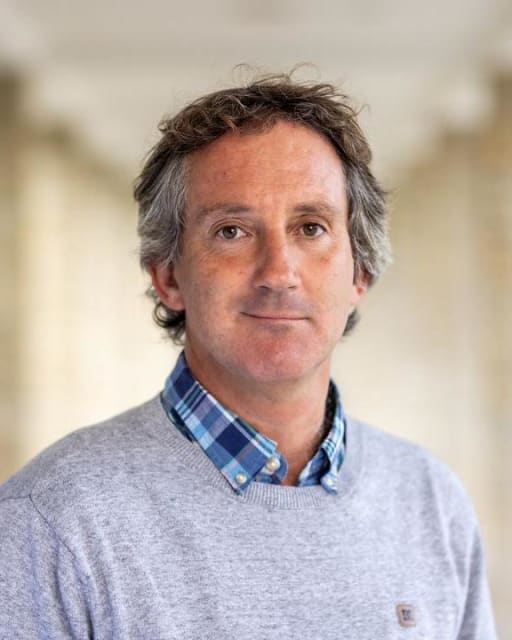
Peter Wilf is a Professor in the Department of Geosciences at Pennsylvania State University's College of Earth & Mineral Sciences. His research focuses on fossil plants as indicators of past climates, biodiversity, and environmental disturbances from the latest Cretaceous through middle Eocene (~67-45 million years ago). Wilf leads significant research projects including the Origins of Southeast Asian Rainforests from Paleobotany and Machine Learning and the Patagonia Paleofloras Project. His research interests span paleobotany, paleoclimatology, plant-insect interactions, and biogeography, with emphasis on how deep-time data illuminate modern ecosystems and their responses to anthropogenic change. Wilf's work primarily focuses on the latest Cretaceous through middle Eocene, examining global disturbances including warming and cooling events, the end-Cretaceous mass extinction, and recovery periods. His research has significant implications for understanding climate change, biodiversity conservation, and ecosystem dynamics. Wilf's extensive publication record demonstrates consistent high-impact research across paleobotany, with recent work focusing on Southeast Asian rainforests, Patagonian paleofloras, and the connections between Gondwanan landmasses. His research integrates fieldwork in Patagonia and Southeast Asia with advanced analytical techniques, including machine learning applications for fossil leaf identification. Fellow, American Association for the Advancement of Science (AAAS) 2022 Wilson Award for Excellence in Research, Penn State College of Earth & Mineral Sciences 2022 Fellow, Paleontological Society 2017 Fellow, Geological Society of America 2016 Paul F. Robertson Research Breakthrough of the Year Award, Penn State College of Earth & Mineral Sciences 2016 George W. Atherton Award for Excellence in Teaching, Pennsylvania State University 2013 Wilf maintains an active research program with numerous NSF-funded projects and international collaborations. He leads a productive lab group conducting extensive fieldwork in Patagonia, Argentina, and Southeast Asia. His research has transformed understanding of Southern Hemisphere floras, the role of Patagonia in plant evolution, and connections between ancient and modern ecosystems across continents. Wilf's laboratory serves as a hub for paleobotanical research, bringing together students, postdocs, and international collaborators to study fossil plant collections from around the world. The lab integrates traditional paleobotanical methods with cutting-edge technologies including machine learning for fossil identification and advanced imaging techniques for detailed morphological analysis.
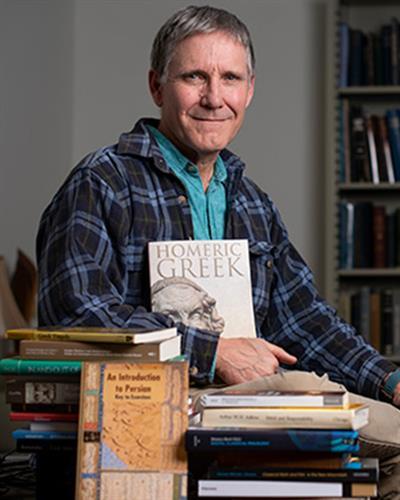
Gregory Crane is Professor of Classical Studies and Computer Science at Tufts University, where he holds the Winnick Family Chair in Technology and Entrepreneurship and serves as Chair of the Classical Studies Department. He also maintains a professorship in the School of Engineering's Computer Science department. Previously, he was Alexander von Humboldt Professor of Digital Humanities at Leipzig University in Germany from 2013-2019. PhD in Classical Philology, Harvard University (1985) BA in Classics, Harvard University (1979) Crane's research bridges traditional classical scholarship with digital technology. His work in classical studies focuses on ancient Greek authors, particularly Thucydides, with two major books published on the subject. Simultaneously, he has been a pioneer in digital humanities, beginning work on digital tools for classics as a graduate student in 1982. He is the Editor-in-Chief of the Perseus Project, which he has directed since 1985, developing morphological analysis systems and overseeing the project's evolution through multiple generations of digital library technology. His recent publications demonstrate a strong trend toward integrating artificial intelligence with classical language studies, developing next-generation digital libraries, and exploring new methods for engaging with classical texts in the digital age. Crane's work increasingly focuses on making ancient languages more accessible through technology, with research spanning digital philology, language learning tools, and corpus-based approaches to historical languages. Winnick Family Chair in Technology and Entrepreneurship Alexander von Humboldt Professor of Digital Humanities Crane has secured substantial research funding from major organizations including the National Endowment for the Humanities, the Andrew W. Mellon Foundation, the National Science Foundation, and Google. His current and recent projects include "Reinventing the study of ancient languages" and "Beyond Translation -- new possibilities for reading in a digital age." He has advised numerous students through senior honors theses and directed dissertation research in Classical Studies at Tufts University. Crane leads the Perseus Digital Library research program, which has evolved through multiple generations of technology to become a leading resource for classical studies. His work has established critical infrastructure for digital classics, including named entity identification systems and morphological analysis tools that have shaped the field of digital humanities.
Claudia Berger is a Visiting Assistant Professor at the School of Information, Pratt Institute, and serves as the Digital Humanities Librarian at Sarah Lawrence College. They are actively engaged in digital scholarship, critical making, and interdisciplinary research at the intersection of libraries, technology, and the humanities. Education: MSLIS and Advanced Certificate in Digital Humanities, School of Information, Pratt Institute MA in Classics & Ancient History, University of Exeter BA in Electronic Media & Art and Classics, Bard College at Simon’s Rock Their research focuses on innovative methodologies in digital humanities, particularly data physicalization, digital environmental humanities, and critical engagement with data through craft and tactile experiences. They explore how digital tools can be reimagined through embodied and inclusive practices, often integrating queer perspectives and ecological awareness into scholarly work. Their recent publications reflect a strong trend toward interdisciplinary making, environmental justice, and pedagogical innovation in library and information science. Themes include countermapping, plant-human relations, craft-based digital scholarship, and inclusive professional identity formation. Their work bridges technical practice with critical theory, emphasizing accessibility and material engagement. Professional Service: Editor, dh+lib and dh+lib Review Deputy Secretary, Association for Computers and the Humanities (ACH) Former Librarian, The Mellon Foundation (supporting research in higher learning, arts and culture, public knowledge, and humanities in place) Claudia Berger is deeply involved in mentoring and shaping the future of information professionals through curriculum analysis, editorial work, and collaborative projects. While no formal grants or advising relationships are listed, their leadership in digital humanities education and community-building initiatives demonstrates significant scholarly impact. They maintain an active public research presence through a Zotero repository on physical data visualization.
Freya Morris is a Visiting Assistant Professor in the Department of Geosciences at Hamilton College, appointed in 2025. Previously, she served as a Visiting Assistant Professor at Whitman College during the 2023-2024 academic year following her Ph.D. defense in summer 2023, and took a gap year for solo global travel. Her research integrates field-based sedimentology and structural geology to reconstruct paleoenvironments and basin evolution, focusing on climate-tectonics interactions and life's evolution through Earth history. Dr. Morris holds a Ph.D. and M.S. from the California Institute of Technology and a B.S. from Lafayette College. She employs geochemical methods and glacial isostatic adjustment modeling to support lithostratigraphic correlations and sea-level history reconstructions during deglaciation events. Her recent publications examine Ediacaran cap carbonates in Namibia and Marinoan Snowball Earth deglaciation dynamics, advancing understanding of ancient climate systems and extreme climate change records. These works demonstrate interdisciplinary approaches combining field geology with quantitative modeling. Scientific Awards: National Science Foundation Graduate Research Fellowship (2017-2022) Supported by the NSF Graduate Research Fellowship during doctoral studies, Dr. Morris now develops her research program at Hamilton College while mentoring undergraduate students in geoscience through field-based courses like Principles of Geoscience: Our Interconnected Earth.
Dr. Andrew Martin is an Associate Professor and Chair of the Sociology/Anthropology Department at Principia College. He holds a PhD in Archaeology from the University of Cambridge, alongside an MPhil and BA from UK institutions. Specializing in the archaeology of the Hopewell people and Stonehenge, he integrates multidisciplinary research into his teaching across Art History, Sociology, Anthropology, and Archaeology. His work explores object agency, symbolic warfare, and prehistoric cultural dynamics. Education: PhD, Archaeology, University of Cambridge, UK MPhil, University of Cambridge, UK BA, University of Reading, UK Research interests include reconstructing prehistoric worlds, analyzing material culture’s role in societal structures, and bridging ancient and modern cultural studies. His publications span theoretical archaeology, regional prehistory, and digital heritage practices. Contributions include organizing major conferences and presenting at 17 professional events. He is affiliated with the College Art Association, Society for American Archaeology, and The Prehistoric Society. His teaching philosophy emphasizes interdisciplinary learning, encouraging students to synthesize ideas across disciplines. Past roles include research positions at the Universities of Cambridge and Bournemouth, and teaching at the University of Leicester.
Zhiqiang Yu serves as an Associate Professor in the Department of Modern Languages and Comparative Literature at Baruch College's Weissman School of Arts and Sciences, City University of New York. With over two decades of teaching experience, he has established himself as a dedicated educator specializing in Chinese language, cinema, and civilization courses. Education: Ph.D. in Chinese, University of Washington M.A. in Asian Civilization, University of Iowa B.A. in Chinese Literature, Fudan University (Shanghai) Professor Yu's research focuses on innovative approaches to Chinese language pedagogy, with particular interest in applying economic principles and artificial intelligence to language teaching. His work bridges traditional linguistic scholarship with modern educational technology, examining how efficiency, resource allocation, and technological advancements can enhance language learning outcomes. His research spans Chinese linguistics, dialectology, cinema studies, and cultural elements in language teaching. His publication record reveals a consistent trajectory toward optimizing language instruction through systematic analysis. Recent work increasingly focuses on AI applications in language education and the economic framework of pedagogical efficiency. His scholarship demonstrates a progression from traditional linguistic analysis toward innovative teaching methodologies that incorporate modern technological and theoretical frameworks. Scientific Awards: Award of Excellent Academic Research Reviewer from Journal of International Chinese Education (2016) Graduate Teaching Fellowship from University of Washington (1993) Graduate Teaching Fellowship from University of Iowa (1989) Graduate Research Fellowship from University of Iowa (1988) Student Excellency Award from Fudan University (1984) Professor Yu has served extensively on departmental committees including as Department Assessment Coordinator and Secretary of the Asian and Asian-American Studies Committee. He has organized numerous academic events featuring prominent Chinese cultural figures and has contributed to developing Chinese language curriculum resources including online placement tests. His professional service extends to editorial work for CUNY publications and Chinese language training for the New York Police Academy. He maintains active involvement with multiple professional organizations including the American Name Society, American Oriental Society, American Society of Geolinguistics, Association for Asian Studies, and Chinese Language Teachers Association, frequently presenting at international conferences on Chinese language pedagogy.
John Stolz is Professor of Environmental Microbiology and Director of Environmental and Energy Engineering at Duquesne University's School of Science and Engineering. His NASA-trained research examines microbial metal reduction, modern stromatolite ecosystems, and shale gas extraction impacts. His lab investigates arsenic/selenium biotransformation pathways, microbial communities in Shark Bay stromatolites, and environmental impacts of unconventional energy development. Recognized with multiple excellence awards including the Nobel J. Dick Endowed Chair. Over 150 publications explore microbial respiration mechanisms, biogeochemical cycling, and environmental bioremediation. Current grants support water quality testing near shale gas operations.
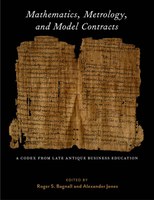
Alexander Jones is a Professor of the History of the Exact Sciences in Antiquity at New York University's Institute for the Study of the Ancient World (ISAW). He holds a Classics degree from the University of British Columbia and a PhD in the history of ancient mathematical sciences from Brown University. Previously, he served for sixteen years at the University of Toronto in the Classics Department and the Institute for the History and Philosophy of Science and Technology. His research focuses on the history and transmission of mathematical and astronomical knowledge across ancient cultures, with particular emphasis on Babylonian, Greek, and Roman contexts. Key areas include the Antikythera Mechanism, Ptolemaic astronomy, and the cultural exchanges between Mesopotamia and the Greco-Roman world. He has curated major exhibitions such as Before Pythagoras (2011) and Time and Cosmos in Greco-Roman Antiquity (2016-17). Education: B.A. Classics, University of British Columbia PhD History of Mathematical Sciences, Brown University His publications include groundbreaking editions of ancient scientific texts, such as Pappus of Alexandria's commentary on geometrical methods and fragments from the Oxyrhynchus papyri. His current research involves reconstructing ancient Babylonian chronology through the NEH-funded Shanati project. Awards: Guggenheim Fellowship Francis Bacon Award in the History of Science Membership in the Académie Internationale d'Histoire des Sciences As Principal Investigator of the Shanati project, he leads efforts to synchronize Babylonian calendars with the Julian calendar. His work bridges material culture and textual analysis, often involving interdisciplinary collaboration with archaeologists and historians of technology.
Jay Crisostomo is an Associate Professor and Director of Graduate Studies at the University of Michigan's Department of Ancient Near Eastern Civilization and Languages and Civilizations within the College of Literature, Science, and the Arts. He holds the George G. Cameron Professorship. His research focuses on the languages and intellectual histories of ancient Mesopotamian cuneiform cultures, with emphases on sociolinguistics, multilingualism, translation, and scribal practices. He earned a Ph.D. from the University of California, Berkeley in 2014. Teaching encompasses courses on ancient Middle Eastern history, languages, and cultures, including 'Science and Technology in the Ancient Middle East' and 'Madness, Medicine, and Magic in the Middle East.' He also teaches on sport history and language in the ancient Mediterranean. As Director of Graduate Studies, he supports MES program students, advising prospective PhD candidates in ancient Middle East history/Assyriology. Research highlights include his book Translation as Scholarship: Language, Writing, and Bilingual Education in Ancient Babylonia and ongoing projects on the 3,000-year history of Sumerian language use, Babylonian scholars, and Sumerian-Akkadian linguistic contact. Current efforts involve editing 150 lexical tablets in Germany's collections. His work bridges ancient textual analysis with broader themes in cultural transmission and knowledge systems. He collaborates on critical editions of cuneiform texts and maintains affiliations with international research networks. Contactable via cjcrisos@umich.edu, his office is located at 202 South Thayer Street, Ann Arbor.
Leila Character is an Assistant Professor at Texas A&M University, with expertise in machine learning and geospatial analysis. Her research bridges disciplines like archaeology, environmental science, and geospatial intelligence, often involving fieldwork and computational modeling. She has a multidisciplinary background as a professional geologist, environmental scientist, and AI researcher. Ph.D. and M.A. in Geography and the Environment from University of Texas at Austin B.S. in Geology with a minor in Anthropology/Archaeology from Sewanee: The University of the South Her active projects focus on underwater aircraft wreck detection for MIA service members, multimodal sensor fusion with autonomous underwater vehicles, seafloor characterization in West Africa, and ancient burial mound detection in Romania using vegetation indices. All projects emphasize combining computational rigor with field validation. Recent publications highlight deep learning applications in marine archaeology, Maya cave detection, and sensor fusion technologies. These articles span 2019–2025 and reflect cross-cutting themes in AI-driven geospatial analysis, underwater exploration, and archaeological discovery.
Charles C. Davis is a Professor of Organismic and Evolutionary Biology at Harvard University and Curator of Vascular Plants in the Harvard University Herbaria. He leads the Davis Lab, focusing on plant diversity through integrative research in systematics, paleobiology, ecology, and molecular biology. His work emphasizes phylogenetic theory, biogeography, and the application of herbarium collections to address global change challenges. Davis is particularly noted for leveraging herbarium specimens to study plant responses to climate change, phenology, and biodiversity patterns. Research interests include plant-insect interactions, genome architecture evolution in parasitic plants, and the ethical use of herbarium specimens. His lab has pioneered high-throughput phylogenomic pipelines (e.g., PhyloHerb) and explored the future of herbaria in the digital age. Collaborations span global institutions, emphasizing digitization, spectral imaging, and AI-driven analysis of biodiversity data. Recent work highlights the impact of anthropogenic change on plant communities, the role of phenology in species survival, and strategies to mitigate collecting biases in herbaria. Davis teaches courses on plant systematics and evolution, and his lab actively participates in public engagement through exhibits like the HMNH’s *In Search of Thoreau’s Flowers*. His research has been featured in *Trends in Ecology & Evolution*, *Molecular Phylogenetics and Evolution*, and *Current Biology*, with a focus on advancing methodologies for biodiversity science while addressing ethical challenges in specimen sampling.