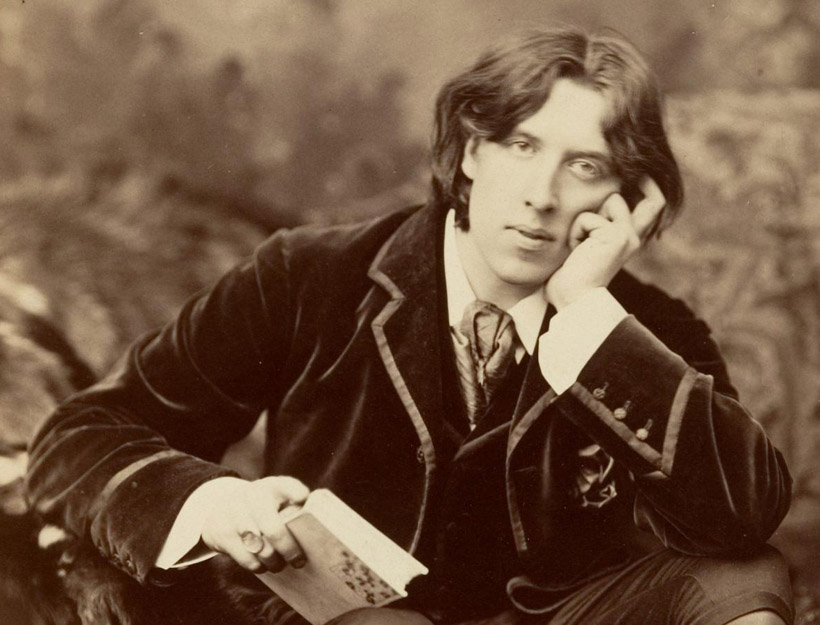
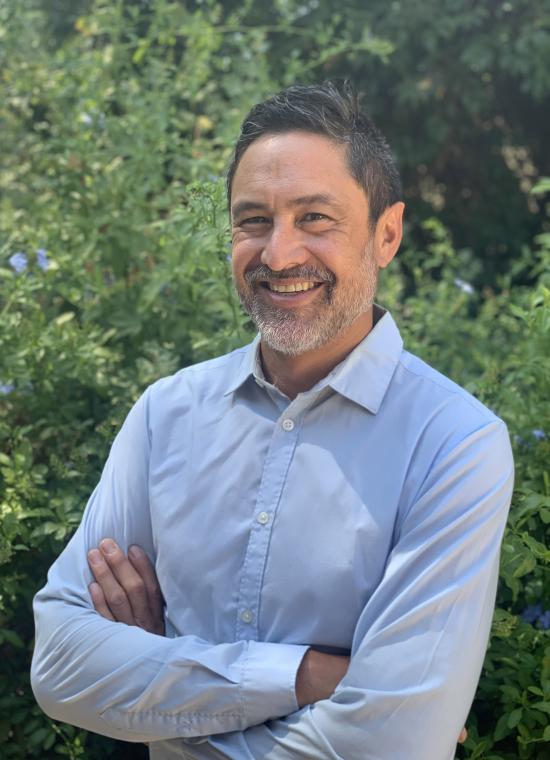
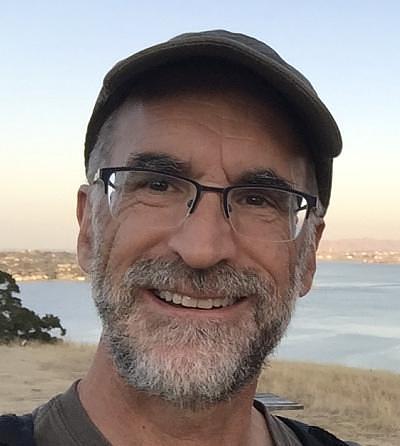
Matthew Potolsky is Professor of English at the University of Utah, specializing in nineteenth-century literature and literary theory. His career spans from 1998 Lecturer at Harvard University to current University Professorship. He earned a BA in Comparative Literature and Philosophy (1990), followed by MA and PhD in Comparative Literature (1992, 1997) from UC Irvine. Chair of English Department (2013-2016) University Professor (2014-2016) Research focuses on Decadence , Mimesis , Finance-Aesthetics intersections , and Government Secrecy . His work traces connections between financialization and decadent aesthetics, revealing how economic cycles influence artistic production. Key themes include: Decadent anti-realist literary movements Finance capital's cultural impact Decadent counterpublic formations Victorian aesthetic education debates Sublime aesthetics in national security Cosmopolitanism in literary communities Recent publications analyze: Decadent style as financialization rhetoric Reintroduction of verisimilitude theory Decadent responses to financial crises Mimetic labor in artistic production Decadent cosmopolitan counterpublics Historical parallels between financialization and literary decadence
Prof. Dr. Ahmet Taşağıl is a prominent historian specializing in Turkic studies, Eurasian history, and pre-Islamic cultures. He holds the rank of Professor at Yeditepe University's Faculty of Arts and Sciences, History Department, since 2015, and previously served at Mimar Sinan Fine Arts University. His academic journey includes a PhD from Istanbul University (1989-1991) and extensive research on ancient Turkic empires like the Gokturks and Huns. Education: PhD in General Turkish History (Istanbul University), MSc in Medieval History (Istanbul University), BA in History (Istanbul University). Affiliations: Currently at Yeditepe University; previously at Mimar Sinan Fine Arts University and Kirgizistan-Türkiye Manas Üniversitesi. Research Interests : Focuses on early Turkic states (Gokturks, Huns, Uyghurs), cross-cultural relations between Turkic and Chinese empires, shamanism, and pre-Islamic Turkic societies. His work bridges archaeology, ethnohistory, and political analysis, with a particular emphasis on primary sources like Chinese records and Orkhon inscriptions. Publications : Over 50 books and articles, including seminal works like Kök Tengri’nin Çocukları , Avrasya'nın Sekiz Asrı Çengizoğulları , and İslamiyet Öncesi Türkler . His research often examines the socio-political structures of nomadic empires and their legacy in Eurasian history. Awards : Recipient of the Moğalistan Devlet Onur Madalyası, Muğla Sıtkı Koçman Tarih Ödülü, and numerous academic honors. His contributions to Turkic cultural heritage are widely recognized internationally. Grants & Projects : Led projects on Central Asian archaeology, cultural atlas of the Turkic world, and historical studies of Siberian tribes. Collaborated with institutions in Kazakhstan, Russia, and Turkey. Teaching : Offers courses on pre-Islamic Turkic history, Eurasian empires, and historical methodology in Turkish and English.
Christopher M. Chinn is a Professor of Classics at Pomona College since 2007, specializing in Augustan and Imperial Roman poetry. He teaches Latin and Greek languages alongside translation courses like Ancient Epic and Introduction to the Greeks and Romans . Research Focus: Roman poetry, ecocriticism, art-text relationships Key Contributions: Studies on Statius, Pliny, and intertextual analysis His work bridges visual art analysis with literary interpretation, particularly in Flavian-era texts. Recent publications address environmental themes in ancient Mediterranean literature and the evolution of ekphrastic techniques. Scientific Awards & Honors Jim Greenfield Dissertation Fellowship (University of Washington, 2001-2002) Downing-Pomona Exchange Fellow (2009) Pomona College Summer Research Grant (2011) His teaching includes advanced language courses and senior seminars on classical studies, reflecting his commitment to both pedagogy and research in ancient literature.
Nathaniel Street is Associate Professor and Writing Minor Coordinator in the English Department at Mount Saint Vincent University. He holds a PhD in English (Composition and Rhetoric) from the University of South Carolina. His research examines the intersections of philosophy, rhetoric, and pedagogy, with particular focus on the performative power of writing. Street's scholarly work analyzes persuasion mechanisms and figuration in rhetorical traditions, drawing on thinkers like Deleuze and Guattari. His recent publications explore philosophical approaches to writing practice and pedagogical frameworks. His articles demonstrate consistent engagement with rhetorical theory across historical and contemporary contexts, examining writing as both theoretical concept and practical discipline. No awards listed
Martin Kern is the Joanna and Greg Zeluck ’84 P13 P18 Professor in Asian Studies at Princeton University. He specializes in ancient Chinese literature, philology, and textual studies, with a focus on poetry, ritual, and cultural memory. Kern co-edits T'oung Pao and directs the "International Center for the Study of Ancient Text Cultures" at Renmin University, Beijing. Education: Ph.D. in Sinology, Cologne University M.A. in Sinology, Cologne University His research spans early Chinese rhetoric, authorship debates, manuscript analysis, and the intersection of writing/orality. He has led Princeton's "Comparative Antiquity" initiative (2018–2022) and co-directs the Princeton-Venice Summer School in Classical Chinese. Recent publications include studies on the Classic of Poetry , Chuci , and Zuozhuan , emphasizing newly discovered manuscripts and their impact on understanding ancient Chinese textuality. His work often bridges philological rigor with comparative theoretical frameworks. Scientific Awards: Member of the American Philosophical Society President of the American Oriental Society (2023–2024) Kern's editorial roles include co-editing the monograph series Studies in the History of Chinese Texts and the Handbook of Oriental Studies: Section 4 China . He has held leadership positions in major academic initiatives on ancient China.
John MacFarlane is a Professor of Philosophy at the University of California, Berkeley , with affiliations to the Group in Logic and the Methodology of Science and co-organizer roles in the Meaning Sciences Club and Townsend Center Working Group . His research spans philosophy of language, philosophical logic, metaphysics, epistemology, philosophy of mathematics, history of logic , and ancient philosophy , particularly Aristotle . He has held visiting positions at institutions like École des Hautes Études en Sciences Sociales (EHESS), Paris . Education : Ph.D. in Philosophy (2000, University of Pittsburgh), M.A. in Classics (1997) and Philosophy (1994), A.B. summa cum laude in Philosophy (1991, Harvard). Research Interests focus on semantic relativism , particularly assessment sensitivity as explored in his book Assessment Sensitivity: Relative Truth and Its Applications (Oxford, 2014). He investigates how epistemic modals and vagueness interact with truth evaluation. His work in philosophical logic includes a textbook Philosophical Logic: A Contemporary Introduction (Routledge, 2021). Secondary interests include ancient philosophy (Aristotle, Plato), formal logic , and fiddlosophy . Article Trends reveal contributions to relativism , epistemic modals , vagueness , and logicism . His recent work (2025) examines Plato’s Protagoras and belief utility , while 2022–2020 articles address semantic indecision and probabilistic knowledge . Earlier works (2008–2000) include foundational studies on Frege, Kant, and Aristotle . Scientific Awards include a 2023 Residential Fellowship at Wissenschaftskolleg, Berlin (declined), 2016–17 Fellow at IEA Paris , and 2015 American Academy of Arts and Sciences membership . He has received multiple Humanities Research Fellowships at Berkeley (2016, 2008, 2003) and Research Enabling Grants (2000–2009). Advising includes supervising 15+ PhD students in areas like logic, epistemology, and philosophy of language . Notable advisees include Richard Lawrence (2017) and Sophie Dandelet (2021). He also guided honors theses at Berkeley, such as Benjamin Logan’s work on epistemic modals (2018). Labs and Teams involve co-organizing the Townsend Center Working Group in History and Philosophy of Logic, Mathematics, and Science and contributing to the Group in Logic and Methodology of Science . His interdisciplinary approach integrates philosophy, logic, and computational tools , including creating Pandoc for document conversion.
Professor Arlene Holmes-Henderson is a Professor of Classics Education and Public Policy at Durham University, holding a British Academy Innovation Fellowship (2022-2024). She teaches on the Latin with Classics PGCE course in the School of Education and leads interdisciplinary research projects on oracy, Classics education, and policy engagement. Education: Studied Classics at Oxford, Harvard, and Cambridge. Qualified as a schoolteacher and taught for over a decade before returning to academia. Affiliations: Visiting Research Fellow at the Institute of Classical Studies (School of Advanced Study) and Affiliated Researcher at the Bennett Institute for Public Policy, University of Cambridge. Research Interests: Focuses on Classics education, oracy development, and the intersection of policy and the humanities. Key projects include Shy Bairns Get Nowt (oracy and employability) and Aristotle Beyond the Academy (reception of rhetoric in non-academic contexts). Co-directs the Advocating Classics Education project and chairs the Classics Development Group. Publications: Over 80 articles and books, including Expanding Classics (Routledge, 2023) and Forward with Classics (Bloomsbury, 2018). Recent work emphasizes policy engagement and levelling-up through oracy education. Awards: MBE (2023) for services to education Elected Member of Academia Europaea (2024) Grants and Roles: Chair of the Latin Expert Panel at the UK Department for Education Advisor to All-Party Parliamentary Groups on Classics, Oracy, and Political Literacy Member of the Universities Policy Engagement Network (Vice Chair) Labs and Collaborations: Directs Durham’s Centre for Classics Education Research and EngagementS (CERES). Collaborates with institutions like the AHRC, Leverhulme Trust, and Novus Education to bridge academia and policy.
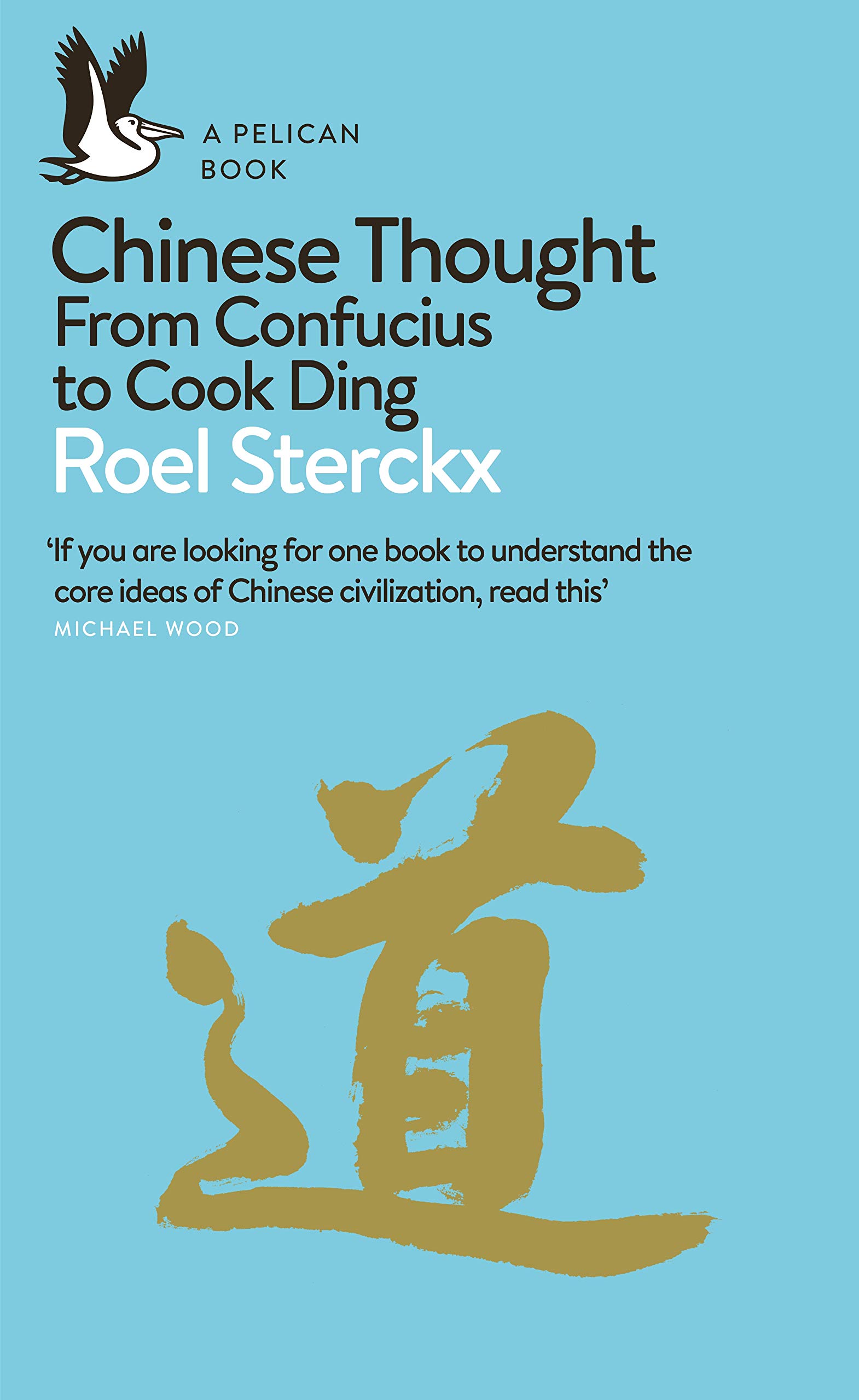
Professor Roel Sterckx is the Joseph Needham Professor of Chinese History, Science, and Civilization at the University of Cambridge, affiliated with Clare College. He specializes in pre-imperial and early imperial Chinese thought, classical Chinese language, and natural history. His research bridges anthropology and the history of science, focusing on topics like ritual, economic thought, and animal studies. He has authored influential books including Food, Sacrifice, and Sagehood in Early China and Animals through Chinese History . Sterckx is a Fellow of the British Academy (since 2013) and holds leadership roles at the Needham Research Institute. He supervises PhD students on subjects ranging from Warring States rhetoric to Han Dynasty apocrypha. Education: BA/PGCE in Sinology and History, Katholieke Universiteit Leuven Masters in Classical Chinese and Philosophy, National Taiwan University PhD in Chinese History, University of Cambridge Research Interests: Early Chinese cultural ecology, ritual economy, and the interplay of moral and material values. His work analyzes texts like the Rites of Zhou , Mozi , and Huainanzi , emphasizing agricultural thought and animal symbolism. Awards: British Academy Fellowship (2013) Grants and Labs: Directs the Cambridge-based Needham Research Institute, focusing on East Asian science and technology history. Current projects include studies on Han perceptions of southern regions and the economics of ritual in early China.
University of North Carolina at Chapel HillUnited States
James J. O’Hara is the George L. Paddison Professor of Latin at the University of North Carolina at Chapel Hill. His academic journey includes a B.A. from the College of the Holy Cross and a Ph.D. from the University of Michigan. He has held significant roles, such as Department Chair (2003-2007), Director of Graduate Studies, and President of the Vergilian Society. His research focuses on Greek and Latin poetry, with a special emphasis on the Augustan period, epic, didactic literature, and satire. Education highlights include studies at the College of the Holy Cross (A.B., 1981) and the University of Michigan (Ph.D., 1986). He taught at Wesleyan University before joining UNC in 2001, where he has contributed extensively to teaching and scholarship. Research interests span Latin poetry, particularly Vergil, Catullus, Lucretius, and Ovid. Notable works include Death and the Optimistic Prophecy in Vergil’s Aeneid (1990), True Names: Vergil and the Alexandrian Tradition of Etymological Wordplay (1996), and Inconsistency in Roman Epic (2007). Current projects explore teaching authority in didactic and satirical works. Publications include over 40 articles and book reviews, with a focus on Vergilian studies, Lucretian analysis, and classical pedagogy. Recent lectures address topics like Aeneid Book 8 and Horace’s Ars Poetica . Grants/Awards: James Gilmore Fletcher Whitton Faculty Fellowship (2012), Loeb Classical Library Fellowship (2015-2016), SUTASA Teaching Award (2013). Students: Directed 15+ M.A. and Ph.D. theses, including works on Lucan, Lucretius, and Vergilian reception. Labs/Teams: Collaborative projects include the Focus-Hackett Aeneid commentary series and editorial work for Vergilius . Active in professional organizations like the Vergilian Society and Classical Association of the Middle West and South.
University of Illinois Urbana-ChampaignUnited States
Kirk Sanders is an Associate Professor split between the Departments of Classics and Philosophy at the University of Illinois. He holds a PhD in Philosophy from the Joint Classics-Philosophy Program at the University of Texas at Austin. His research focuses on Hellenistic philosophy and Xenophon's Socratic writings, with notable contributions including co-editing Epicurus and the Epicurean Tradition (2011) and ongoing projects on Xenophon's texts. His work bridges classical philology, philosophical analysis, and historical context. Education: PhD in Philosophy (UT Austin) Research interests include Hellenistic philosophical traditions, Socratic literature, and ancient Greek language structures. His recent publications explore Roman Epicureanism and textual analysis of classical works like Xenophon's Apology . Publications include contributions to Mnemosyne , Illinois Classical Studies , and edited volumes. Sanders also serves as an editor for peer-reviewed journals and maintains affiliations with the Center for Hellenic Studies. His current projects involve translating and commenting on Xenophon's Socratic writings, combining philological rigor with philosophical interpretation.
David Friedman is a Researcher affiliated with the Faculty of Classics at the University of Cambridge and serves as Director of Studies in Classics at St Edmund's College. His research focuses on Judaism in the Greco-Roman world, particularly through the lens of ancient historians like Josephus. Fields of Interest: Judaism in the Greco-Roman world, Ancient History, Josephus Studies, Roman Imperialism, Religious Studies, Historiography, Classical Literature, and Cultural Exchange. Email: daf39@cam.ac.uk His recent work includes the 2024 edited volume Looking in, looking out: Jews and non-Jews in mutual contemplation , studies on Dionysius of Halicarnassus and Augustan Rome (2020), and analyses of Josephus's accounts of Jewish origins in Egypt (2017, 2014). No scientific awards or students are mentioned in the provided texts.
Dr. Fabian Schulz is a Senior Researcher in Ancient History at the University of Tübingen, where he works in the Department of History within the Faculty of Humanities. He leads a prestigious Junior Research Group under the Emmy Noether Programme of the German Research Foundation (DFG), titled 'Power and Influence: Influencing Emperors between Antiquity and the Middle Ages.' His academic profile also includes association with the Collaborative Research Center (SFB) 923 'Threatened Order - Societies under Stress' and active participation in the 'Tübingen Theosophy' research group. Previously, he contributed to the Heidelberg Academy of Sciences and Humanities project on John Malalas' Chronicle and the University of Tübingen's DFG project 'East and West 400-600 AD.' Dr. Schulz earned his PhD in Classics from Freie Universität Berlin (2006-2010), where he also served as a teaching assistant. During his doctoral studies, he was a Pensionnaire étranger at the École Normale Supérieure Paris. Prior to that, he completed an MA equivalent degree in Classics at Freie Universität Berlin, with time spent as a visiting student at the University of Oxford (1999-2005). His early career included teaching Latin and Greek at a grammar school in Lübeck (2006). His research specializes in power structures and influence mechanisms in ancient societies, with particular focus on how advisors shaped imperial decisions in Late Antiquity. He has made significant contributions to understanding councils of elders in Archaic Greece (especially the Spartan Gerousie), Byzantine chronography (particularly John Malalas' works), and the complex dynamics between Eastern and Western Roman empires during the 5th and 6th centuries. His methodological innovation lies in applying modern sociological models of interpersonal influence to historical analysis of ancient political culture, bridging literary representation with political reality in pre-modern monarchical states. Young researchers award for 'Ratgeber, Experten, Manipulatoren: Einfluss als Machtfaktor und Diskursobjekt in der Antike' As principal investigator of his Emmy Noether project, Dr. Schulz has secured substantial research funding from the German Research Foundation. His collaborative work includes multiple edited volumes on Late Antique history and Byzantine chronography, reflecting his strong international scholarly network. He currently serves as a deputizing member (non-professorial academic staff) on the faculty board of Humanities at the University of Tübingen. His research often intersects with contemporary concerns about power dynamics, political influence, and historical memory, as evidenced by his work on video game representations of ancient history. Dr. Schulz is an active contributor to the online commentary project on John Malalas' chronicle, specifically editing sections of Book XVIII. His work frequently involves detailed textual criticism and analysis of historical sources, with particular attention to how narratives are transmitted and reinterpreted across different cultural contexts. His scholarly approach combines philological precision with broader historical and sociological perspectives.
Matthew V. Novenson is a Professor of Biblical Criticism and Biblical Antiquities at the University of Edinburgh, where he also serves as Director of the Centre for the Study of Christian Origins. He holds honorary fellow status and has held visiting roles at Dartmouth College, Duke University, and Durham University. Novenson specializes in ancient Mediterranean religions, focusing on early Judaism and Christianity within Greco-Roman contexts. His research emphasizes Pauline epistles, early Christology, and the socio-political dimensions of messianic discourse. Qualifications include a BA, MDiv, ThM, and PhD. Teaching responsibilities span undergraduate courses on biblical languages, Second Temple Judaism, and New Testament themes, as well as postgraduate seminars on biblical exegesis and ancient religious texts. He actively supervises PhD students exploring topics like messianism in Pauline letters, ancient Christology, and eschatological frameworks. Novenson’s scholarship is reflected in major publications such as Christ among the Messiahs (2012), The Grammar of Messianism (2017), and Paul, Then and Now (2022), alongside edited volumes like The Oxford Handbook of Pauline Studies . His work interrogates the linguistic and ideological nuances of religious terminology in antiquity, particularly around concepts of messiahship, monotheism, and divine agency. Service roles include Associate Editor of New Testament Studies and co-editor of Edinburgh Studies in Religion in Antiquity . Past and current PhD advisees (listed above) reflect his commitment to mentoring rigorous research in early Christian origins and biblical interpretation.
University of California, Los AngelesUnited States
M. Rahim Shayegan is a prominent scholar in Iranian and Near Eastern studies, specializing in Old and Middle Iranian philology, Achaemenid-Sasanian history, and Greco-Roman-Iranian cultural interactions. He holds a PhD from Harvard University and has conducted postdoctoral research at the University of Göttingen and Sorbonne. His work bridges philology, epigraphy, and historical analysis to explore ancient political ideologies, religious traditions, and cross-cultural exchanges. Education: PhD, Iranian Philology & Ancient History, Harvard University MA, Iranian Philology, Sorbonne University BA, Philosophy & Comparative Philology, University of Cologne Research Interests: Iranian epigraphy and royal inscriptions Political dynamics of pre-Islamic Iranian empires Greco-Roman and Iranian cultural dialogues Zoroastrianism and ancient Near Eastern religions His publications include seminal works like Arsacids and Sasanians: Political Ideology in Post-Hellenistic Persia (2011) and Cyrus the Great: Life and Lore (2019). He has held prestigious fellowships at the Guggenheim Foundation and is a member of the Austrian Academy of Sciences. Awards: Ehsan Yarshater Book Award (2012) Academia Europaea Membership (2019–) Courses Taught: Achaemenid Civilization Sasanian History Old Persian Cuneiform Zoroastrianism and Ancient Religions
Professor D Graham J Shipley is the Professor of Ancient History at the University of Leicester's School of Archaeology and Ancient History since 2002. His research focuses on Hellenistic and Classical antiquity, particularly on political landscapes, environmental studies, and urban planning. He holds a D.Litt. from the University of Oxford (2020) and is a Senior Fellow of the Higher Education Academy (2014). Education: Graduated in Classics from Oxford University. Academic roles include serving on the Oxford Classical Texts Committee and the UK Education Honours Committee. Previously chaired the Council of University Classical Departments and convened the Dorothy Buchan Memorial lectures. Research interests emphasize ancient geography, socio-political structures, and environmental interactions. His work spans studies of Sparta, Greek urban planning, and the cultural impact of Hellenistic expansion. Recent publications examine Pseudo-Skylax's geographical texts and post-Alexandrian political dynamics. Scientific Awards: Senior Fellow of the Higher Education Academy (2014) D.Litt. (Doctor of Letters) from University of Oxford (2020) Advising and Grants: No specific advisees listed, but supervises research in ancient history and archaeology. Active in collaborative projects such as the Laconia Survey. Grants have supported archaeological fieldwork and publication initiatives. Labs/Teams: Collaborates with the Oxford Classical Texts Committee and has led interdisciplinary teams in regional archaeological surveys.