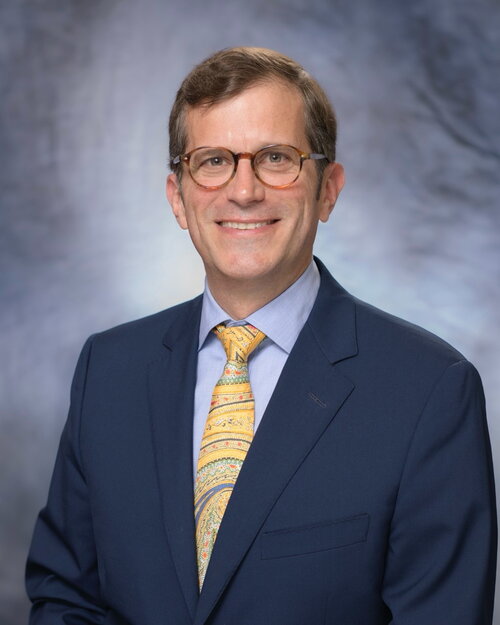
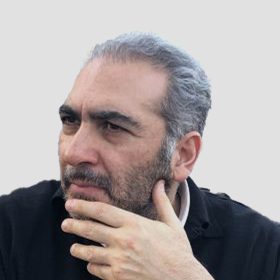
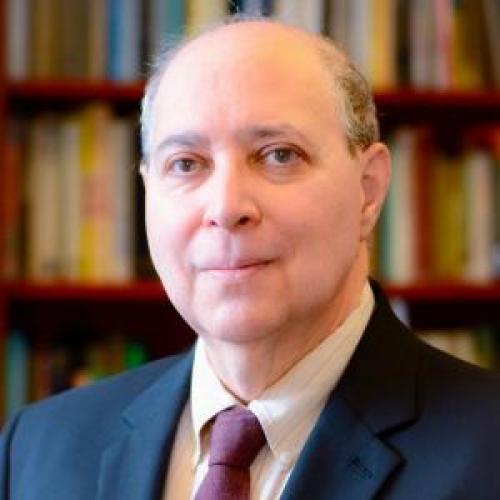
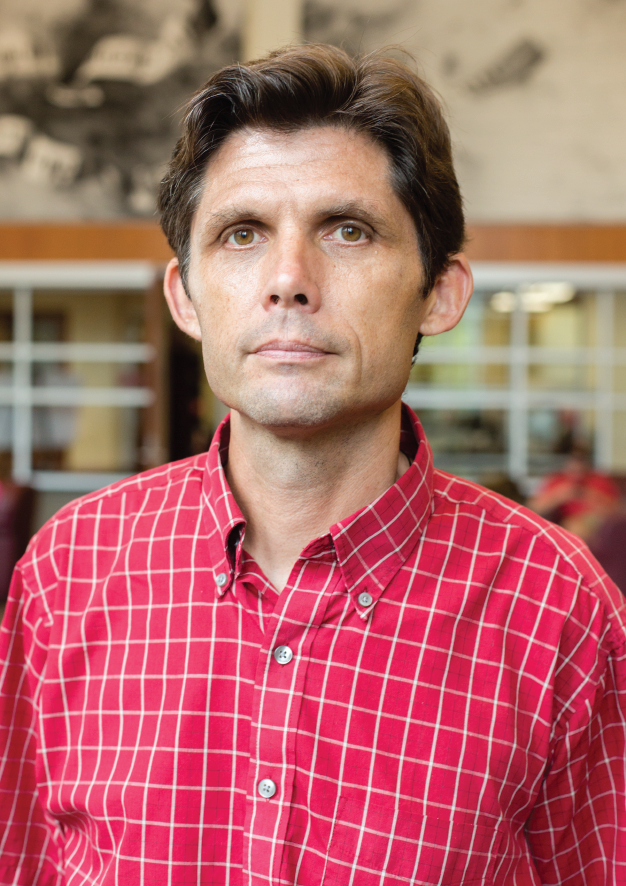
Matthew Potolsky is Professor of English at the University of Utah, specializing in nineteenth-century literature and literary theory. His career spans from 1998 Lecturer at Harvard University to current University Professorship. He earned a BA in Comparative Literature and Philosophy (1990), followed by MA and PhD in Comparative Literature (1992, 1997) from UC Irvine. Chair of English Department (2013-2016) University Professor (2014-2016) Research focuses on Decadence , Mimesis , Finance-Aesthetics intersections , and Government Secrecy . His work traces connections between financialization and decadent aesthetics, revealing how economic cycles influence artistic production. Key themes include: Decadent anti-realist literary movements Finance capital's cultural impact Decadent counterpublic formations Victorian aesthetic education debates Sublime aesthetics in national security Cosmopolitanism in literary communities Recent publications analyze: Decadent style as financialization rhetoric Reintroduction of verisimilitude theory Decadent responses to financial crises Mimetic labor in artistic production Decadent cosmopolitan counterpublics Historical parallels between financialization and literary decadence
Christopher M. Chinn is a Professor of Classics at Pomona College since 2007, specializing in Augustan and Imperial Roman poetry. He teaches Latin and Greek languages alongside translation courses like Ancient Epic and Introduction to the Greeks and Romans . Research Focus: Roman poetry, ecocriticism, art-text relationships Key Contributions: Studies on Statius, Pliny, and intertextual analysis His work bridges visual art analysis with literary interpretation, particularly in Flavian-era texts. Recent publications address environmental themes in ancient Mediterranean literature and the evolution of ekphrastic techniques. Scientific Awards & Honors Jim Greenfield Dissertation Fellowship (University of Washington, 2001-2002) Downing-Pomona Exchange Fellow (2009) Pomona College Summer Research Grant (2011) His teaching includes advanced language courses and senior seminars on classical studies, reflecting his commitment to both pedagogy and research in ancient literature.
Martin Kern is the Joanna and Greg Zeluck ’84 P13 P18 Professor in Asian Studies at Princeton University. He specializes in ancient Chinese literature, philology, and textual studies, with a focus on poetry, ritual, and cultural memory. Kern co-edits T'oung Pao and directs the "International Center for the Study of Ancient Text Cultures" at Renmin University, Beijing. Education: Ph.D. in Sinology, Cologne University M.A. in Sinology, Cologne University His research spans early Chinese rhetoric, authorship debates, manuscript analysis, and the intersection of writing/orality. He has led Princeton's "Comparative Antiquity" initiative (2018–2022) and co-directs the Princeton-Venice Summer School in Classical Chinese. Recent publications include studies on the Classic of Poetry , Chuci , and Zuozhuan , emphasizing newly discovered manuscripts and their impact on understanding ancient Chinese textuality. His work often bridges philological rigor with comparative theoretical frameworks. Scientific Awards: Member of the American Philosophical Society President of the American Oriental Society (2023–2024) Kern's editorial roles include co-editing the monograph series Studies in the History of Chinese Texts and the Handbook of Oriental Studies: Section 4 China . He has held leadership positions in major academic initiatives on ancient China.
John MacFarlane is a Professor of Philosophy at the University of California, Berkeley , with affiliations to the Group in Logic and the Methodology of Science and co-organizer roles in the Meaning Sciences Club and Townsend Center Working Group . His research spans philosophy of language, philosophical logic, metaphysics, epistemology, philosophy of mathematics, history of logic , and ancient philosophy , particularly Aristotle . He has held visiting positions at institutions like École des Hautes Études en Sciences Sociales (EHESS), Paris . Education : Ph.D. in Philosophy (2000, University of Pittsburgh), M.A. in Classics (1997) and Philosophy (1994), A.B. summa cum laude in Philosophy (1991, Harvard). Research Interests focus on semantic relativism , particularly assessment sensitivity as explored in his book Assessment Sensitivity: Relative Truth and Its Applications (Oxford, 2014). He investigates how epistemic modals and vagueness interact with truth evaluation. His work in philosophical logic includes a textbook Philosophical Logic: A Contemporary Introduction (Routledge, 2021). Secondary interests include ancient philosophy (Aristotle, Plato), formal logic , and fiddlosophy . Article Trends reveal contributions to relativism , epistemic modals , vagueness , and logicism . His recent work (2025) examines Plato’s Protagoras and belief utility , while 2022–2020 articles address semantic indecision and probabilistic knowledge . Earlier works (2008–2000) include foundational studies on Frege, Kant, and Aristotle . Scientific Awards include a 2023 Residential Fellowship at Wissenschaftskolleg, Berlin (declined), 2016–17 Fellow at IEA Paris , and 2015 American Academy of Arts and Sciences membership . He has received multiple Humanities Research Fellowships at Berkeley (2016, 2008, 2003) and Research Enabling Grants (2000–2009). Advising includes supervising 15+ PhD students in areas like logic, epistemology, and philosophy of language . Notable advisees include Richard Lawrence (2017) and Sophie Dandelet (2021). He also guided honors theses at Berkeley, such as Benjamin Logan’s work on epistemic modals (2018). Labs and Teams involve co-organizing the Townsend Center Working Group in History and Philosophy of Logic, Mathematics, and Science and contributing to the Group in Logic and Methodology of Science . His interdisciplinary approach integrates philosophy, logic, and computational tools , including creating Pandoc for document conversion.
University of North Carolina at Chapel HillUnited States
James J. O’Hara is the George L. Paddison Professor of Latin at the University of North Carolina at Chapel Hill. His academic journey includes a B.A. from the College of the Holy Cross and a Ph.D. from the University of Michigan. He has held significant roles, such as Department Chair (2003-2007), Director of Graduate Studies, and President of the Vergilian Society. His research focuses on Greek and Latin poetry, with a special emphasis on the Augustan period, epic, didactic literature, and satire. Education highlights include studies at the College of the Holy Cross (A.B., 1981) and the University of Michigan (Ph.D., 1986). He taught at Wesleyan University before joining UNC in 2001, where he has contributed extensively to teaching and scholarship. Research interests span Latin poetry, particularly Vergil, Catullus, Lucretius, and Ovid. Notable works include Death and the Optimistic Prophecy in Vergil’s Aeneid (1990), True Names: Vergil and the Alexandrian Tradition of Etymological Wordplay (1996), and Inconsistency in Roman Epic (2007). Current projects explore teaching authority in didactic and satirical works. Publications include over 40 articles and book reviews, with a focus on Vergilian studies, Lucretian analysis, and classical pedagogy. Recent lectures address topics like Aeneid Book 8 and Horace’s Ars Poetica . Grants/Awards: James Gilmore Fletcher Whitton Faculty Fellowship (2012), Loeb Classical Library Fellowship (2015-2016), SUTASA Teaching Award (2013). Students: Directed 15+ M.A. and Ph.D. theses, including works on Lucan, Lucretius, and Vergilian reception. Labs/Teams: Collaborative projects include the Focus-Hackett Aeneid commentary series and editorial work for Vergilius . Active in professional organizations like the Vergilian Society and Classical Association of the Middle West and South.
University of Illinois Urbana-ChampaignUnited States
Kirk Sanders is an Associate Professor split between the Departments of Classics and Philosophy at the University of Illinois. He holds a PhD in Philosophy from the Joint Classics-Philosophy Program at the University of Texas at Austin. His research focuses on Hellenistic philosophy and Xenophon's Socratic writings, with notable contributions including co-editing Epicurus and the Epicurean Tradition (2011) and ongoing projects on Xenophon's texts. His work bridges classical philology, philosophical analysis, and historical context. Education: PhD in Philosophy (UT Austin) Research interests include Hellenistic philosophical traditions, Socratic literature, and ancient Greek language structures. His recent publications explore Roman Epicureanism and textual analysis of classical works like Xenophon's Apology . Publications include contributions to Mnemosyne , Illinois Classical Studies , and edited volumes. Sanders also serves as an editor for peer-reviewed journals and maintains affiliations with the Center for Hellenic Studies. His current projects involve translating and commenting on Xenophon's Socratic writings, combining philological rigor with philosophical interpretation.
University of California, Los AngelesUnited States
M. Rahim Shayegan is a prominent scholar in Iranian and Near Eastern studies, specializing in Old and Middle Iranian philology, Achaemenid-Sasanian history, and Greco-Roman-Iranian cultural interactions. He holds a PhD from Harvard University and has conducted postdoctoral research at the University of Göttingen and Sorbonne. His work bridges philology, epigraphy, and historical analysis to explore ancient political ideologies, religious traditions, and cross-cultural exchanges. Education: PhD, Iranian Philology & Ancient History, Harvard University MA, Iranian Philology, Sorbonne University BA, Philosophy & Comparative Philology, University of Cologne Research Interests: Iranian epigraphy and royal inscriptions Political dynamics of pre-Islamic Iranian empires Greco-Roman and Iranian cultural dialogues Zoroastrianism and ancient Near Eastern religions His publications include seminal works like Arsacids and Sasanians: Political Ideology in Post-Hellenistic Persia (2011) and Cyrus the Great: Life and Lore (2019). He has held prestigious fellowships at the Guggenheim Foundation and is a member of the Austrian Academy of Sciences. Awards: Ehsan Yarshater Book Award (2012) Academia Europaea Membership (2019–) Courses Taught: Achaemenid Civilization Sasanian History Old Persian Cuneiform Zoroastrianism and Ancient Religions
Jacqueline Vayntrub is an Associate Professor of Hebrew Bible at Yale University's Yale Divinity School (YDS). Her expertise spans the Hebrew Bible, wisdom literature, biblical poetry, philology, and the reception history of biblical scholarship. She holds a PhD in Near Eastern Languages and Civilizations from the University of Chicago (2015), along with earlier degrees from UCLA and Hebrew University. Dr. Vayntrub’s research examines biblical genres within ancient Near Eastern literary contexts, focusing on how textual values evolve through transmission and reception. Her first monograph, Beyond Orality: Biblical Poetry on its Own Terms (Routledge, 2019), critiques scholarly assumptions about biblical poetry’s oral origins. Her current projects include Reframing Biblical Poetry (Yale U.P.) and Seeking Eternity , exploring transmission and mortality in biblical texts. She directs the international Renewed Philology working group and chairs SBL units in Hebrew Bible and philology. Vayntrub has published widely in journals like Harvard Theological Review and Catholic Bible Quarterly , and her work has been reviewed at prestigious institutions including Yale and NYU. She received a 2019-20 Katz Center fellowship for her Seeking Eternity project. Her academic service includes organizing conferences at Yale, Harvard, and Princeton, and editorial roles for Studies in Cultural Contexts of the Bible . Her teaching and scholarship emphasize critical engagement with ancient texts and their enduring cultural impact.
Devin Stauffer is a Professor and Associate Chair in the Department of Government at the University of Texas at Austin . Holding a Ph.D. from Boston College, he specializes in classical and early modern political philosophy, with a focus on Plato, Thomas Hobbes, and Leo Strauss. His career spans teaching roles at Kenyon College and St. John's College prior to joining UT Austin in 2004. Education: Ph.D., Boston College Professor Stauffer's research explores intersections of ancient and modern political thought, examining themes like justice, rhetoric, democracy, and the theological-political problem. His recent scholarly work continues to engage deeply with Strauss's interpretations of Hobbes, Locke, and classical texts. Key trends in his publications include: Interpretations of Strauss's correspondence and lectures Critical analyses of Hobbes's ethical and theological foundations Comparative studies of Socratic thinkers in classical texts Reconsideration of Locke's political conscience Debates on classical vs. modern approaches to natural right Scientific Awards : Two Teaching Excellence Awards at Kenyon College Three Teaching Awards at University of Texas Carl Friedrich von Siemens Foundation Fellowship (2013-14, Munich) He has taught courses including Machiavelli's Discourses , Socratic Political Philosophy , and Classical Quest for Justice . His visiting appointment at Harvard (2018) underscores his scholarly impact in political philosophy circles.
Alexander Tulin is an Associate Professor in the Department of English at Howard University, within the College of Arts & Sciences. He has been a faculty member at Howard since 1990, originally in the Department of Classics, which he chaired from 2017 to 2021 before its closure led to his transition to the English Department. Institution: Howard University School: College of Arts & Sciences Department: Department of English Academic Rank: Associate Professor Email: atulin@Howard.edu Education: PhD in Classics, Columbia University, 1990 Dr. Tulin's research and teaching span classical antiquity and modern literature. His primary scholarly interests include Ancient Greek Philosophy, Plato, Ancient Law, and Rhetoric, with a current focus on the interstices between Antiquity and Modernity. In the English Department, his teaching centers on Modernism, modern art from 1870–1950, and the 20th-century novel in Europe and America. His publications reflect a deep engagement with classical philosophy and textual analysis. The most recent works show a sustained interest in Platonic dialogues, Socratic method, philosophical rhetoric, and the interpretation of ancient legal and literary texts. He has also contributed numerous scholarly reviews, demonstrating active participation in the academic discourse of classical studies. Scientific Awards: No specific awards or honors are mentioned in the provided text. Advising and Grants: There is no information available regarding students advised, research grants, or funding received. Labs and Research Teams: No information is provided about laboratories, research groups, or collaborative teams associated with Dr. Tulin.
Wolfgang R. Mann is a Professor of Philosophy and Director of Undergraduate Studies at Columbia University. He joined the Philosophy Department in 1992 and holds degrees from Princeton University (A.B., 1978; Ph.D., 1987). His research spans Ancient Philosophy, German Idealism, and Metaphysics, with a focus on theories of argumentation (logic/rhetoric), metaphysical contrasts in antiquity, and ethical concepts of freedom. He also explores English/German Romanticism (Wordsworth, Hölderlin) and the reception of classical antiquity in 19th-century thought. His work frequently bridges philosophical analysis with historical and literary methodologies. Professor Mann’s publications include The Discovery of Things: Aristotle’s Categories and Their Context (2000) and co-edited volumes like Oxford Studies in Ancient Philosophy (2011). His articles address topics such as Stoic paradoxes, Seneca’s ethical writings, and the intersection of ancient philosophy with political figures like Helvidius Priscus. His research emphasizes interdisciplinary approaches, blending metaphysics, ethics, and classical textual analysis. Though no specific awards are listed, his contributions to ancient philosophy and historiography reflect sustained scholarly engagement. His advising and grants focus on mentoring students in these areas, though specific grant details are not provided. His work contributes to both academic philosophy and the broader humanities through its rigorous historical contextualization.
Casey Boyle serves as Associate Professor in the Department of Rhetoric and Writing at the University of Texas at Austin's College of Liberal Arts, where he also directs the Digital Writing & Research Lab. His academic profile demonstrates significant contributions to digital rhetoric, accessibility studies, and posthuman theory through both research and teaching. Boyle's research interests span Rhetorical Theory, Digital Rhetoric, Accessibility, Aesthetics, Digital Humanities, Media Studies, AI & Reading/Writing, Techno-poetics/ethics, and Posthumanism . His work explores how digital technologies reshape rhetorical practices, with particular attention to accessibility as both ethical imperative and theoretical framework. His book Rhetoric as a Posthuman Practice examines information as embodied material practice, arguing that digital rhetoric concerns how bodies become informed through practice that includes not only traditional communication but also how information technologies organize those bodies. Analysis of Boyle's recent publications reveals consistent engagement with posthuman and material approaches to rhetoric, with increasing focus on accessibility, digital environments, and the intersection of rhetoric with environmental concerns. His work demonstrates interdisciplinary reach across philosophy, media studies, and digital humanities, with recurring themes of embodiment, materiality, and the ethics of digital communication. Through his teaching, Boyle offers courses such as RHE 330C (Access Designed), RHE 391 (Rhetoric and Aesthetics), and RHE 325M (Advanced Writing), with course descriptions emphasizing experiential learning and practical application of accessibility principles. His Racing to Empathy project (with Terrance Green) develops immersive digital environments to address implicit bias against Black girls in primary education, while A Version to Access (with Nathaniel Rivers) explores accessibility ontologically through the concept of nonequal design.
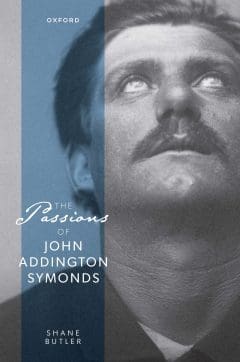
Shane Butler is the Nancy H. and Robert E. Hall Professor in the Humanities and Professor of Classics at Johns Hopkins University, where he also directs the Classics Research Lab and serves as Director of Graduate Studies. He holds a PhD from Columbia University (2000) and has taught at the University of Bristol, UCLA, and the University of Pennsylvania. His research spans Latin literature, classical reception, sensation studies, aesthetics, queer theory, and media history, focusing on the interplay between embodiment and art. Education: PhD in Classics from Columbia University (2000). Prior to Hopkins, he held faculty positions at the University of Bristol, UCLA, and UPenn. He has been a residential fellow at the American Academy in Rome, Villa I Tatti, the Getty Villa, and the MPIWG Berlin. Research focuses on Latin literature from antiquity to early modernity, classical reception theory, and the sensory dimensions of ancient aesthetics. Notable works include The Passions of John Addington Symonds (2022), The Ancient Phonograph (2015), and Sound and the Ancient Senses (2019). He co-edits the Classical Philology special issue on 'Philology Transfigured' and directs the John Addington Symonds Project. Awards include fellowships at leading institutions and editorial roles, including Associate Editor of the I Tatti Renaissance Library. His recent work explores queer philology and the intersection of sound studies with ancient literature.
Jamie H. Ferguson is an Associate Professor in the Department of English at the University of Houston, with a cross-appointment to the Honors College. He specializes in Renaissance and early modern literature, focusing on intersections between biblical hermeneutics, literary poetics, and translation theory. Renaissance Literature Shakespeare Studies Biblical Translation Great Books Tradition His research explores how theological debates shaped vernacular literary production in Early Modern Europe, with particular attention to textual materiality and interconfessional dialogues. Ferguson's publication record spans Latin, Italian, French, Polish, and English contexts. Recent projects include the annotated translation of Joachim du Bellay's Deffence et illustration de la langue françoyse and a forthcoming book on European Biblical Poetics . He has received multiple Martha Gano Houstoun Research Grants and been recognized with Honors College lecture awards.
Mario Telò is a Professor of Ancient Greek & Roman Studies, Comparative Literature, and Rhetoric at the University of California, Berkeley, with an affiliation in the Program for Critical Theory. He serves as Chief Editor of the journal Classical Antiquity and sits on the editorial board of Representations . His work bridges antiquity and modernity through interdisciplinary lenses, focusing on psychoanalysis, queer theory, and political theory. Telò has authored monographs such as Archive Feelings: A Theory of Greek Tragedy (2020) and Resistant Form: Aristophanes and the Comedy of Crisis (2023), exploring themes like tragic aesthetics, crisis, and canonical reimagining. Recent projects include co-editing Reading Greek Tragedy with Judith Butler (2024) and organizing conferences on Jean-Luc Nancy and Classics. His research emphasizes textual form’s emancipatory potential, engaging with art, film, and architecture to deconstruct normative narratives. Education : His academic background is not detailed here, but his prolific publications reflect advanced expertise in Classics and interdisciplinary humanities. Research Interests : Telò’s work critically examines Greek tragedy and comedy through modern theoretical frameworks. He investigates the interplay between aesthetic form and political/social issues, leveraging psychoanalysis (Freud, Lacan) and queer theory (Judith Butler, Lee Edelman) to analyze ancient texts. His focus on 'resistant form' highlights how classical works challenge equilibrium and normativity, offering tools for contemporary critical discourse. Grants & Collaborations : He co-organizes international conferences (e.g., on Jean-Luc Nancy) and collaborates on interdisciplinary projects like a forthcoming book on artist William Kentridge. His editorial work spans special journal issues on topics like elemental objects and queer philology. Labs/Teams : He leads editorial initiatives and hosts academic events such as the Townsend Center book chats and Syndicate symposia, fostering dialogue between classicists and modern theorists.