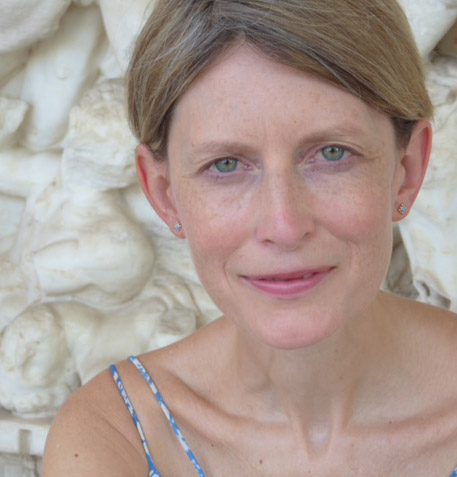
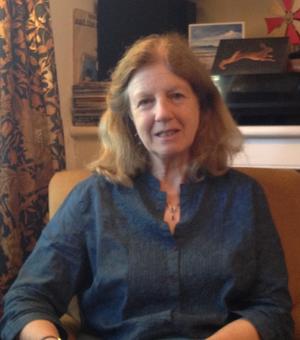
Professor Alison G. Salvesen (University of Oxford, Asian and Middle Eastern Studies) is a leading scholar in Early Judaism and Christianity, affiliated with the Oxford Centre for Hebrew and Jewish Studies and Mansfield College. Her work bridges textual criticism, translation history, and reception studies. Current Projects: Hexapla Institute Executive Committee (electronic database of Origen's Old Testament), monograph on Jacob of Edessa (d. 708 CE) Teaching: Septuagint studies, Patristic texts, Textual criticism, Syriac literature Specializing in ancient Hebrew Bible interpretations, she examines Greek (Septuagint), Aramaic (Targums), Syriac (Peshitta), and Latin (Vulgate) traditions. Her research spans rabbinic Judaism and early Christian exegesis. Scientific leadership includes co-editing major reference works and directing the Polonsky Fellowship. Current DPhil students include Joel Bell, Yael Krämer, and Paul Ulishney. Key grants/awards: Polonsky Fellow in Early Judaism and Christianity
Professor D Graham J Shipley is the Professor of Ancient History at the University of Leicester's School of Archaeology and Ancient History since 2002. His research focuses on Hellenistic and Classical antiquity, particularly on political landscapes, environmental studies, and urban planning. He holds a D.Litt. from the University of Oxford (2020) and is a Senior Fellow of the Higher Education Academy (2014). Education: Graduated in Classics from Oxford University. Academic roles include serving on the Oxford Classical Texts Committee and the UK Education Honours Committee. Previously chaired the Council of University Classical Departments and convened the Dorothy Buchan Memorial lectures. Research interests emphasize ancient geography, socio-political structures, and environmental interactions. His work spans studies of Sparta, Greek urban planning, and the cultural impact of Hellenistic expansion. Recent publications examine Pseudo-Skylax's geographical texts and post-Alexandrian political dynamics. Scientific Awards: Senior Fellow of the Higher Education Academy (2014) D.Litt. (Doctor of Letters) from University of Oxford (2020) Advising and Grants: No specific advisees listed, but supervises research in ancient history and archaeology. Active in collaborative projects such as the Laconia Survey. Grants have supported archaeological fieldwork and publication initiatives. Labs/Teams: Collaborates with the Oxford Classical Texts Committee and has led interdisciplinary teams in regional archaeological surveys.
Rosa Andujar is a Senior Lecturer in Liberal Arts at King's College London, where she is affiliated with both the Department of Liberal Arts and the Department of Classics within the Faculty of Arts & Humanities. She serves as Editor of the American Journal of Philology and holds positions on the editorial boards of Brazilian journals Nuntius Antiquus and PhaoS - Revista de Estudos Clássicos. Dr. Andujar was elected to the Program Committee of the Society for Classical Studies for a three-year term (2022-2025), serving as Vice President for Program and Chair from 2023-2025. Her research focuses on two complementary areas: Ancient Greek tragedy, particularly the tragic chorus and its performance capabilities Global receptions of Greek drama, with special emphasis on Latin America and the Caribbean Dr. Andujar's work examines how engagements with Graeco-Roman antiquity intersect with questions of gender, race, class, and national identity. She has particular expertise in Cuban adaptations of Greek tragedy and Latinx receptions of classical drama, exploring how these cultural encounters create new narratives that challenge traditional understandings of classical reception. Her research has been recognized with prestigious awards including the 2020 London Hellenic Prize for 'The Greek Trilogy of Luis Alfaro' and the 2022 AJP Best Article Prize. She has secured significant research funding from the Loeb Classical Library Foundation, British Academy, A. G. Leventis Foundation, Harvard Center for Hellenic Studies, Andrew W. Mellon Foundation, and Fundación BBVA. Dr. Andujar's current research projects include 'The Cambridge Companion to Classics and Race' (edited volume), 'La Puerta Electra/The Electra Door' (critical bilingual anthology of Cuban rewritings), and 'Tragedy and Revolución' (monograph on Greek drama in Caribbean cultural history), supported by recent fellowships from the Loeb Classical Library Foundation and British Academy. She is actively involved in academic service as Editor of the American Journal of Philology, co-editor of the 'Classics and the Postcolonial' book series for Routledge, and Advisory Board member of 'Hesperides: Classics in the Luso-Hispanic World.' Her external examining work for the University of Birmingham (2018-2023) demonstrates her commitment to academic standards across institutions.
Bruno Currie is a Professor of Greek Literature at the University of Oxford and holds the position of Monro Fellow and Tutor in Classics at Oriel College. He specializes in early Greek poetry, particularly Homer, Hesiod, and Pindar, with a focus on interactions between ancient Near Eastern mythology and early Greek literature. His research also explores ancient Greek religion and its relationship with poetry, emphasizing intertextuality in epic and lyric traditions. Currie's academic background includes qualifications of MA and DPhil from Oxford. His recent publications analyze topics such as Homeric epic, textual interpretations of ancient works, and religious themes in classical texts. He is currently working on a book titled *Hesiod and Myth*. His work bridges literary analysis with historical context, contributing to understanding the cultural and mythological foundations of ancient Greek literature. He has collaborated on edited volumes like *Epic Interactions: Perspectives on Homer, Virgil, and the Epic Tradition* and authored influential books such as *Pindar and the Cult of Heroes* (2005) and *Homer’s Allusive Art* (2016). His research highlights interdisciplinary approaches to classical studies, blending philology, religion, and literary theory.
Professor Alberto Rigolio is a scholar of Classics and Ancient History at Durham University, specializing in the Eastern Mediterranean during the Roman and Late Antique periods. He focuses on Syriac literature, Greco-Roman intellectual traditions, and the reception of classical texts in early Christian and Islamic contexts. Rigolio holds a D.Phil. from Oxford University and has held prestigious fellowships at Harvard, Princeton, and All Souls College, Oxford. He serves as Chair of the Board of Examiners at Durham and is a Fellow of the Higher Education Academy. His research explores the transformation of classical dialogue forms in late antiquity, the transmission of Greek texts into Syriac and Arabic, and the cultural intersections between Greco-Roman, Christian, and Islamic traditions. Key works include Christians in Conversation (Oxford UP, 2019), which examines late antique dialogue literature, and a forthcoming book on the emergence of Syriac literature supported by British Academy and Princeton IAS fellowships. Education: BA/Milan, D.Phil./Oxford, Postdoctoral Fellowships at Harvard and Princeton Affiliations: Institute of Medieval and Early Modern Studies, Durham Rigolio's articles analyze Syriac translations of Aristotelian works, Plutarch, and Themistius, revealing how Greco-Roman thought was adapted to meet religious and cultural needs. His projects include studies on Syriac rhetoric, the Roman household in late antique conflicts, and para-biblical narratives. He supervises postdoctoral researchers and PhD students on topics ranging from Syriac literary culture to late antique religious identity. Awards: British Academy Mid-Career Fellowship (2024), All Souls College Visiting Fellowship (2024) Grants: Leverhulme Trust, British Academy, American Philosophical Society He directs research labs examining Syriac intellectual culture and co-ordinates interdisciplinary projects on late antique translation movements. Rigolio is actively involved in public outreach, offering talks on Roman religion, Palmyrene military identity, and the Graeco-Syro-Arabic textual tradition.
Kai Brodersen is a Professor of Ancient Culture at the University of Erfurt (since 2008) and a Full Professor of Ancient History at the University of Mannheim (since 1996/97). He previously served as Vice-Rector at the University of Mannheim and President of the University of Erfurt (2008–2014). Brodersen has held visiting professorships at Newcastle upon Tyne, St. Andrews, Royal Holloway, Oxford, and UWA Perth, and has been an honorary lecturer at the University of Sibiu since 2014. He was a Senior Fellow at the Wissenschaftskolleg Greifswald (2019/20). Born in 1988, with four children and four grandchildren ORCID: 0000-0003-1202-7625 His research spans ancient history, historiography, geography, rhetoric, mythography, paradoxography, Septuagint studies, ancient jokes, inscriptions, curse tablets, early Greek and Hellenistic history, Roman provinces, gender dynamics in antiquity, and the history of science and reception (including Asterix). He has contributed to children's literature and has a particular focus on applied sciences in antiquity.
Professor Bert Smith is a distinguished academic at the University of Oxford, serving as a Fellow of Lincoln College. He holds the position of Professor in the Faculty of Classics, with a specialization in Greek Archaeology and Roman Art/Archaeology. His academic journey includes MA, MPhil, and DPhil degrees from Oxford University. Prior to his current role, he was a Harkness Fellow at Princeton University (1983-85) and taught Hellenistic and Roman art at New York University’s Institute of Fine Arts (1986-1995). His research focuses on the art and visual cultures of the ancient Mediterranean, particularly the relationship between visual representation and social/political contexts. As director of the Aphrodisias excavation project since 1991, he has contributed significantly to understanding the archaeology of Greek cities in the Eastern Roman Empire. Key achievements include a British Academy/Philip Leverhulme Fellowship (2007-2008) and leadership in the AHRC-funded 'Last Statues of Antiquity' project (2009-2012), resulting in a collaborative book (2016). Teaching responsibilities include lectures and seminars on Greek and Roman art and archaeology. His publications span over four decades, with notable works on sarcophagi iconography, Aphrodisias excavations, and Hellenistic art. He actively collaborates with institutions like the Oxford Centre for Greek and Roman Antiquity (OCGRA). Current research continues to explore late antiquity art and archaeology through fieldwork and interdisciplinary projects.
Professor Alberto Rigolio is a leading scholar of Classics and Ancient History at Durham University, specializing in the cultural and intellectual history of the Eastern Mediterranean during the Roman and late antique periods. He holds a D.Phil. from Oxford University and has held prestigious fellowships at Harvard Dumbarton Oaks, Princeton Society of Fellows, and All Souls College Oxford. His research focuses on Syriac literature, Greco-Syro-Arabic translation movements, and religious debates in late antiquity. Rigolio has published extensively, including his award-winning monograph Christians in Conversation (2019), and currently leads projects supported by the British Academy and the Institute for Advanced Study. He supervises PhD students across multiple institutions and mentors postdoctoral researchers like Dr. Karl Heiner Dahm and Dr. Mara Nicosia. His work bridges classical antiquity with early Christian and Islamic intellectual traditions, emphasizing literary and educational exchanges in late antique societies. Educations: D.Phil., University of Oxford (2014) MPhil/BA, University of Milan and Oxford Research Interests: Syriac literary emergence, Greek-Syriac-Arabic translation networks, late antique dialogues, early Christian theology, and the cultural history of the Roman Near East. Rigolio's current projects investigate how Syriac became a major literary language and its role in transmitting Graeco-Roman thought to early medieval cultures. Grants & Awards: British Academy Mid-Career Fellowship (2024) All Souls College Visiting Fellowship (2024) Princeton IAS Membership (2023) Advising & Mentoring: Supervised 9 PhD students, including Cédrik Michel (Lancaster University Lecturer) and Lila Knight (awarded 2024). Mentors postdoctoral scholars in areas like Syriac rhetoric and late antique religious conflict. Labs/Teams: Leads interdisciplinary research groups at Durham and collaborates with institutions like the Institute for Advanced Study, focusing on textual analysis and cultural history.
Dr Ellen Adams is a Reader in Classical Archaeology and Liberal Arts at King’s College London, affiliated with the Departments of Classics and Interdisciplinary Humanities. She holds a PhD from the University of Cambridge (2004) and has conducted archaeological fieldwork across Europe. Her research focuses on Minoan Crete, disability studies in classical contexts, and museum accessibility for sensory-impaired audiences. She co-organizes the ICS Mycenaean Seminars and founded the Museum Access Network for Sensory Impairments (MANSIL) in 2018. Her work bridges archaeology and modern accessibility, emphasizing audio description, touch tours, and British Sign Language in museums. Recent projects include Disability Studies and the Classical Body (Routledge, 2021) and collaborations with institutions like the British Museum and the Courtauld Gallery. She teaches Greek archaeology, museum studies, and interdisciplinary modules in global cultures. Adams has appeared on BBC Radio discussing Minoan civilization and classical reception. Her research projects include Making Sense of Visual Art Through a Visual Language (BSL) and Anosmia in Culture and History . She actively curates public engagement events, such as BSL storytelling in Holyrood Park and creative writing competitions for blind/visually impaired audiences.
Isobel Hurst is a Lecturer in the Department of English and Creative Writing at Goldsmiths, University of London. Her research specializes in Classical Reception Studies, focusing on the interplay between Greek and Roman literature and 19th-century women's writing. Academic qualifications: D.Phil. (2003), M.Phil. in English Studies (2000), BA in Classics and English (1995) - all from the University of Oxford Her research explores how women writers like Elizabeth Barrett Browning and George Eliot creatively engaged with classical texts to challenge gender norms and societal constraints, particularly through reworkings of Homeric and Virgilian themes. She examines intersections between domesticity and epic traditions, feminist reinterpretations of mythology, and the role of classical education in women's authorship. Recent publications analyze Louise Glück's mythic poetry, Victorian epic traditions, and transatlantic classical dialogues. She supervises PhD students working on topics including Sapphic poetics, prophetic figures in literature, and epic subversions in contemporary forms. Isobel contributes to academic discourse through her involvement with the Decadence Research Centre and Centre for Comparative Literature, bridging classical traditions with modern literary innovations through both teaching and research.
Caroline Vout is Professor of Classics at the University of Cambridge, holding a Fellowship at Christ's College where she serves as Director of Studies for Prelims and Part 1A in Classics. She directs the Museum of Classical Archaeology (MOCA) and co-directs Cambridge Visual Culture. From 2019-2024, she held the Byvanck Chair of Classical Archaeology/Art History at Leiden University. Born in Durham, Vout completed her undergraduate studies at Newnham College, Cambridge, followed by an MA at the Courtauld Institute of Art in London, then returned to Newnham for her PhD. Before joining Cambridge in 2006, she taught at London, Bristol, and Nottingham Universities. Vout is a cultural historian and art historian specializing in the Roman imperial period and its reception. Her research explores power dynamics in classical art, erotic representation, and how antiquity has been reinterpreted through history. She examines how classical visual culture functions as both historical evidence and living cultural force, with particular expertise in body representation and political dimensions of reception. Her publication history reveals deep engagement with classical material across centuries - from detailed artifact studies (Peplos Kore, Discobolus) to broad cultural analyses. Recent work connects antiquity with modern contexts including the Olympic Games and Victorian reinterpretations, showing consistent interest in how classical art remains dynamically relevant. As Director of Studies at Christ's College, Vout mentors undergraduate Classics students while her MOCA leadership bridges academic research and public engagement. Her curatorial work, including the upcoming 'Paris 1924: the Art of the Olympics' exhibition with Chris Young, demonstrates commitment to making classical art accessible through innovative programming and digital initiatives like MOCA's video series. Vout's interdisciplinary approach through Cambridge Visual Culture and her editorial roles (Omnibus, Sculpture Journal advisory board) reflect her position at the intersection of traditional classical scholarship and contemporary visual studies, connecting ancient artifacts with modern cultural discourse.
Eliza Little is an Assistant Professor of Philosophy at the University of Warwick. Her research focuses on post-Kantian European philosophy, particularly Hegel's theories of self-consciousness and perception, and Simone de Beauvoir's aesthetics. She explores the role of art and literature in shaping human experience. Education includes a PhD from the University of Chicago (2020), MA from St. John’s College Annapolis, and BA from Oberlin College. Prior roles include Postdoctoral Fellow at Auburn University. Education: PhD in Social Thought, University of Chicago (2020) MA in History of Western Thought, St. John’s College BA in Politics, Oberlin College Her interdisciplinary work bridges philosophy with literary studies and social theory. Recent publications analyze Hegel's critiques of Schelling, Kant's influence on Hegel, and the social dimensions of aesthetic perception. She is completing a book manuscript on Beauvoir's aesthetics titled *The Aesthetic Lives of Others*. Teaching includes courses on philosophy and tragedy, and 20th-century French philosophy. Supervises projects on Kant, Hegel, Beauvoir, and aesthetics.
Professor Rosalind Thomas is Professor of Ancient Greek History at the University of Oxford and Fellow and Tutor in Classics at Balliol College. Her research centers on Greek historiography, particularly local histories and collective memory in the Greek world. Recent scholarship includes a comprehensive study of polis and island histories during the late Classical and early Hellenistic periods, analyzing these writings as cultural and political artifacts. Current work examines Greek interactions with the Persian Empire and Archaic Greek state formation processes. As Fellow of the British Academy, she maintains active research programs exploring how historical narratives shaped Greek identity and political organization across Mediterranean contexts.
Professor Andrew George is a distinguished scholar at SOAS, University of London, affiliated with the School of History, Religions and Philosophies. With over four decades of academic contributions from 1979 to 2021, he has established himself as a leading authority in Assyriology and ancient Mesopotamian studies. His work primarily focuses on cuneiform texts, Babylonian religion, and the Epic of Gilgamesh, making significant contributions to our understanding of ancient Near Eastern civilizations. George's research interests span a wide range of topics in ancient Mesopotamian studies. He specializes in the analysis of cuneiform tablets, Babylonian cosmogony, religious knowledge transmission, and ancient literary traditions. His work often bridges disciplines, connecting Assyriology with religious studies, history, and comparative literature. George has particular expertise in Old Babylonian texts, including school exercises, letters, and literary compositions like the Epic of Gilgamesh. An analysis of George's recent publications reveals a consistent focus on primary source material from ancient Mesopotamia. His work demonstrates exceptional philological skill in textual criticism and historical analysis of cuneiform documents. George frequently collaborates with international scholars and institutions, working with important collections like the Schøyen Collection and the academic papers of W. G. Lambert (1926-2011). His research shows particular strength in connecting textual evidence with broader historical and cultural contexts of ancient Mesopotamian civilization. Specializes in cuneiform tablet analysis and interpretation Expert in Old Babylonian and Standard Babylonian literary traditions Focuses on religious knowledge transmission in ancient societies Works extensively with previously unpublished materials from major collections
Simon Swain is Professor of Classics and Greco-Arabic at the University of Warwick, concurrently serving as Vice-President (Engagement) at the university and Vice-President (Research and Higher Education Policy) at the British Academy. His leadership roles include former positions as Pro-Vice-Chancellor (International), Chair of the Faculty of Arts, and multiple terms as Head of the Department of Classics. His educational background includes: MA, Oxford (Pembroke College), 1980-1984 D.Phil., Oxford (Wolfson College), 1987 Swain's research centers on the reception of Greek thought in the Islamic Middle Ages and the social-cultural history of the Greek East during the Roman period. He investigates the transmission of ancient Greek science, medicine, and political thought into Islamic scholarship, employing interdisciplinary approaches that bridge Classics, History, and Islamic Studies. His work emphasizes textual transmission, cultural adaptation, and the socio-political contexts of knowledge transfer. Analysis of his publications reveals consistent engagement with Greco-Roman intellectual history and its Islamicate legacy. Key thematic trajectories include the evolution of medical knowledge from Galen to medieval Arabic texts, political theory in imperial contexts, and sociolinguistic dynamics of bilingualism. His editorial projects demonstrate increasing focus on cross-cultural transmission, particularly through critical editions of foundational texts like Ibn Abī Uṣaybiʿah's medical biographies. His honors include: Fellow of the British Academy (2015) Wellcome Trust Collaborative Investigator Award Swain supervises postgraduate research in Greek world studies, late antiquity, and Greco-Arabic scholarship. He has secured major funding from AHRC, Leverhulme, Wellcome, and EU bodies for collaborative projects examining ancient knowledge systems. Current initiatives like the "Streamlining Galen" project support early-career researchers while investigating how canonical medical texts were adapted for medieval Islamic pedagogy. He actively leads research collectives including the "Streamlining Galen" project team, which analyzes condensed medical texts that facilitated the teaching of Galenic medicine in medieval Islamic institutions. His collaborative approach extends to mentoring networks that connect Warwick with international scholars across Classics and Islamic Studies disciplines.


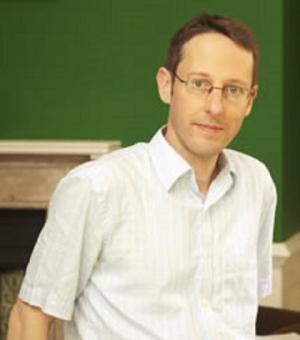
.jpg)