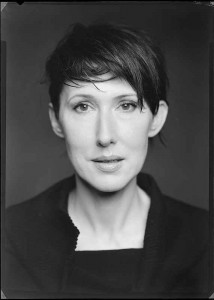
William Graham Claytor VI is a Professor and Chair of Epigraphy and Papyrology at the University of Warsaw , affiliated with the Faculty of Archaeology . His work focuses on ancient textual studies in Greco-Roman contexts. Research Interests: Epigraphy Papyrology Greco-Roman Egypt
Agnieszka Wojciechowska, PhD is an assistant professor at the Institute of Classical Philology and Ancient Culture within the Faculty of Historical and Pedagogical Sciences at the University of Wrocław. Her academic career focuses on the intersection of Ancient Egypt, Hellenistic history, and epigraphic studies. Education : BA/MA in History and Classical Philology (University of Wrocław, 1999-2008) Key Research Areas : Alexander the Great's campaigns in Egypt, Greek epigraphy, Achaemenid-Persian interactions, and economic history of the 4th century BCE. Grants : Multiple research grants from the National Science Center and University of Wrocław, along with Lanckoronski Foundation Scholarships (2008, 2010). Her publications emphasize the epigraphic and numismatic evidence for cultural transitions in Egypt, spanning from the Persian period to the Roman era. She has co-organized major international conferences on Alexander the Great and contributed to edited volumes on the subject. Scientific Awards : Best student of 2004 class (University of Wrocław) Lanckoronski Foundation Scholarships Wojciechowska's international collaborations include fieldwork in Egypt (PCMA scholarships) and academic visits to institutions like Brown University (2018). She has served as a co-investigator in National Science Center grants since 2013 and 2015.
Dr. Sławomir Jędraszek serves as an Adjunct Professor at the University of Gdańsk within the Faculty of History, Institute of Archeology and Ethnology, Division of Mediterranean Archeology. His academic career spans over two decades with specialized focus on Ancient and Hellenistic Egypt, particularly military institutions and coroplastic art from the Graeco-Roman period. His educational foundation includes: 1997: Commenced Archaeology studies at Nicolaus Copernicus University in Toruń 2002: Master's degree in Archaeology (specializing in Conservation of Archaeological Monuments) with thesis "Dog burials from the Roman period in the Kuyavia region" 2006: PhD in Humanities (Archaeology) with dissertation "Terracotta representations of warriors of the Ptolemaic period" supervised by Dr. hab. N.V. Sekunda Dr. Jędraszek's research critically examines military structures in Lagid Egypt, including war elephants and naval forces, while pioneering analysis of coroplastic art as evidence for religious and military practices. His work reveals how terracotta figurines reflected personal piety among soldiers and evolving religious syncretism during the Ptolemaic-Roman transition, with particular expertise in the iconography of deities like Bes within military contexts. Recent publications (2020-2025) demonstrate deepening analysis of Amarna period theology, expanded investigation into early Christian Egypt's material culture, and continued exploration of military religion through terracotta artifacts. His scholarship consistently bridges textual analysis with archaeological evidence to reconstruct social dynamics in Graeco-Roman Egypt. He actively mentors students as supervisor of the Student Scientific Circle of Mediterranean Archaeology (SKNAS) and contributes to academic discourse through the editorial board of "Inne Oblicza Historii". His fieldwork includes multiple excavation seasons (2004-2008) at Falasarna, Crete, under Dr. hab. N.V. Sekunda's direction, focusing on Hellenistic-Roman material culture.
Tomasz Derda is a full Professor at the University of Warsaw, holding the Chair of Epigraphy and Papyrology. His research spans papyrology, Greco-Roman Egypt, administrative history, and Christian inscriptions in Egypt. Research Trends: Recent publications focus on late antique monastic economies, Byzantine urban transformation in the Mareotis region, and interdisciplinary analysis of papyri and archaeological evidence. His work bridges textual analysis with physical site excavations, particularly in the Fayum and Mareotis regions. Editorial Contributions: He has served as Editor of The Journal of Juristic Papyrology since 1995 and oversees its supplement series. He was Co-Editor of Nubica et Æthiopica (1997–2006). Grants: Directed multiple NCN-funded projects including studies on: Land lists in Upper Egypt (2000) Naqlun papyri (2007) Wine storage in Greco-Roman Egypt (2011) Gurna eremitic practices (2014) Wrocław University papyri (2015) 5th-century basilica construction in Marea (2017) Current NCN OPUS project on Marea/Philoxenite (2018–2021)
Dr. Grzegorz Ochała is Chair of Epigraphy and Papyrology at the Faculty of Archaeology, University of Warsaw. His work focuses on medieval Nubian epigraphy, papyrology, and sociolinguistics, with expertise in Coptic, Greek, and Old Nubian languages. Since 2011, he has led the Database of Medieval Nubian Texts. He serves as epigraphist for the Polish-Sudanese mission in Ghazali (Sudan) since 2012. Collaborates internationally on projects like ‘Edfu in the 7th century’ and ‘Deir al-Surian Church Analysis’. His research integrates textual analysis with archaeological findings, exploring literacy, multilingualism, and socio-cultural processes in Christian Nubia (4th–15th centuries). Projects include studying liturgical calendars, onomastics, and historical memory in medieval African societies. Major grants include Marie Skłodowska Curie and National Science Centre funding. Current work involves analyzing wall inscriptions, papyri, and artifacts from Sudanese and Egyptian sites, emphasizing cross-disciplinary methodologies combining epigraphy, art history, and sociolinguistics.
Professor Krzysztof Nawotka is a leading academic at the University of Wrocław , serving as Chair of the Department of Ancient History and Director of the Center for the Study of the Ancient World . He earned his MA in history from Wrocław (1983), PhD in classics from The Ohio State University (1991), and held visiting positions at Oxford (1986–1987) and Brown University (2014). His research focuses on Greek epigraphy , Alexander the Great , and the political organization of Hellenistic cities . His work examines the interplay between Greek city-states and imperial powers, particularly the Hellenistic and Roman periods . He has edited the Studia Antiquitatis et Medii Aevi Incohantis and co-edited Eos , contributing to debates on Ancient political structures and historiography . His recent publications analyze the Alexander Romance , Babylonian omens , and Seleucid dynastic ideology . NCN Maestro grant (2015–2022): Greek cities under Roman rule NCN Opus grant (2013–2016): Alexander's legacy in the East FNP MPD grant (2010–2015): Eastern Mediterranean history Scientific honors include Academia Europaea membership (2015–present) and Honorary Research Fellow at the University of Liverpool (2011–2015). He has directed the NAVE and Greek City Project initiatives, fostering international collaboration.
Dr. hab. Wojciech Mrozowicz, Assistant Professor at the Institute of Classical Philology and Ancient Culture, University of Wrocław, specializes in the history of Ancient Egypt, Alexander the Great, and Greek epigraphy. He earned his PhD in 2008 with a dissertation on Egypt's 4th-century BC political landscape under Persia and Macedonia. Education : BA/MA in History and Classical Philology (University of Wrocław, 2004), Erasmus exchange in Classics/Egyptology (University of Liverpool, 2003-2004) Key Projects : Co-investigator in two National Science Center grants on Alexander the Great and Hellenistic cities (2013-2016), EU-funded International Doctoral Project coordinator (2010-2013) His research focuses on: Egyptian interactions with Persia and Macedon Epigraphic evidence in the Eastern Mediterranean Greek historiographical traditions Hieroglyphic and Demotic script analysis Numismatic studies of Persian and Ptolemaic Egypt Recent publications analyze epigraphic culture in Alexandria and economic policies under Nektanebo I. He has co-organized international conferences on Alexander's historiography and participated in research stays at Brown University (2018), Oxford (multiple), and the American Numismatic Society (2011).
Dr. Marta Kaczanowicz is a researcher affiliated with the Department of Archaeology of Egypt and Nubia at the Faculty of Archaeology, University of Warsaw. Her work focuses on the archaeology of Egypt during the first millennium BCE, with a particular emphasis on monument reuse, gender roles in ancient Egypt, and the history of Egyptology. Specializes in First Millennium BCE Egyptian archaeology Investigates the symbolic and functional reuse of monuments and objects Advocates for recognition of women’s contributions to Egyptology Conducts interdisciplinary research on plant cultivation in ancient Egypt Her recent publications highlight trends in Theban Necropolis studies, Kushite-Egyptian interactions, and the historiography of archaeological work. She has extensively analyzed tomb reuse patterns, early excavation records, and material culture from Third Intermediate and Late Period sites. Dr. Kaczanowicz contributes to the academic community through her research on underrepresented female pioneers in archaeology, such as Dorothy Mackay and Agatha Christie’s Egyptological connections. Her fieldwork centers on West Thebes, with ongoing projects documenting unrecorded tombs and artifacts.
Professor Adam Łukaszewicz is a distinguished academic at the University of Warsaw, where he chairs the Department of Epigraphy and Papyrology. A renowned Mediterranean archaeologist, papyrologist, epigraphist, and historian of antiquity, he has made significant contributions to the study of Roman Egypt, Hellenistic history, and classical philology. Key Affiliations: Vicepresident of the Committee on Ancient Culture (Polish Academy of Sciences), member of the Polish Academy of Learning, and alumnus of the Institute for Advanced Study (Princeton). Leadership: Directed the Polish Centre of Mediterranean Archaeology's mission in Dendera (1999–2002) and promoted the 2012 doctorate honoris causa at KU Leuven. His research spans textual criticism, Mediterranean archaeology, and the reception of antiquity in Polish literature. He has participated in 128 scientific conferences (2005–2018) and delivered 101 papers internationally. Recent publications focus on Roman Egypt, Ptolemaic interactions, and Alexandrian urbanism. These works integrate epigraphic evidence, papyrological analysis, and cultural reception studies to explore Greco-Roman Egypt's administrative, religious, and social dynamics. Scientific Honors: Honorary member of the Society of Historians of Antiquity Active role in Polish academic societies (e.g., Societas Philologa Polonorum) Recipient of Humboldtian distinction As director of the Dendera mission and translator of foundational Egyptological texts, he bridges fieldwork, textual analysis, and historiographical interpretation.
Dr. Piotr Kolodziejczyk is a researcher affiliated with the Bronisław Czech Academy of Physical Culture in Kraków , specifically within the Department of Tourism and Recreation under the Institute of Recreation and Sports of Space . His work focuses on Middle Eastern archaeology, environmental anthropology, and cultural heritage preservation. Key research areas include the emergence of early state entities in the Middle East, human-environment interactions, and philosophical developments in ancient Egypt. Education: Not explicitly detailed in the text, but his research expertise implies advanced training in archaeology and cultural studies. His research interests span archaeological methodology, cultural landscape protection, and the reception of travel narratives in antiquity. He has contributed to interdisciplinary projects such as the LAS initiative for landscape analysis and surveys. His publications address topics ranging from Nabataean architecture conservation to abstract thinking in ancient Egyptian societies. Dr. Kolodziejczyk has explored the intersection of archaeology and pop culture, critiquing media representations of historical narratives. His work bridges academic research with practical conservation strategies, emphasizing the importance of cultural heritage in modern contexts.
Dr. Grażyna Bąkowska-Czerner is an Assistant Professor at the Department of Comparative Civilisation Studies , Jagiellonian University, since 2011. Prior roles include assistant professor at the Institute of Archaeology, University of Agriculture (2006-2011), and lecturer at Jagiellonian University's Department of Jewish Studies and the University of Wrocław. She earned her PhD in Humanities (2004) and MA in Mediterranean Archaeology (1998) at Jagiellonian University. Education : PhD in Humanities (2004), MA in Mediterranean Archaeology (1998) Her research focuses on the art and archaeology of ancient Egypt (Greco-Roman period) , with expertise in Meroitic pottery and magic gems. She leads archaeological research at Marina El Alamein (since 2001) and Sudanese sites (since 2004), collaborating with institutions like the University of Warsaw and Ca'Foscari University of Venice. Recent publications analyze Roman baths, Meroitic ceramics, and the intersection of Greco-Roman settlements with WWII battlefields. She has participated in 15+ international fieldwork projects across Italy, Cyprus, Israel, Egypt, Sudan, Peru, and Ukraine. Scientific Awards : Italian Government Scholarships (1996-2003) Egyptian Government Scholarships (1999-2004) Lanckoroński Foundation Scholarships (2006, 2012) As part of the Polish-Egyptian Conservation Mission, she supervises archaeological research and contributes to collective baths studies, architectural analysis, and ceramic typology. Her work spans 25+ years of fieldwork in the Mediterranean, Nubian, and Andean regions.
Dr. Agnieszka Ryś-Jarmużek is a researcher at the Department of Archaeology of Egypt and Nubia, University of Warsaw, specializing in domestic contexts and material culture of ancient Egypt and Nubia. Her current research focuses primarily on settlement patterns, household economics, and ground stone tool technology during the 2nd and 1st millennium BC in Egypt and Sudan. Her research interests center on settlement and household economics during the 2nd and 1st millennium BC in Egypt and Sudan, socio-economic aspects of production and crafts in ancient Egypt, ground stone tool technology, and documentation and analysis of artefacts from domestic contexts. She employs intensive approaches to domestic open spaces, activity-area analysis, and material culture studies to understand ancient household organization and economic practices. Analysis of Dr. Ryś-Jarmużek's publication record from 2015-2025 reveals a strong focus on Tell el-Retaba in Egypt and Old Dongola in Sudan, with particular emphasis on the Third Intermediate Period. Her work demonstrates methodological innovation in high-resolution archaeology of domestic spaces, combining spatial analysis with material culture studies. The recurring themes across her publications include settlement reuse patterns, domestic architecture evolution, and technological aspects of grinding tools within household contexts. Dr. Ryś-Jarmużek participates in international archaeological fieldwork, notably with the Polish-Slovak Archaeological Mission at Tell el-Retaba. Her research involves intensive documentation of domestic contexts, spatial organization analysis, and material culture studies. She maintains active scholarly profiles on Academia.edu and Researchgate.net to disseminate her research findings.
Dr. Sławomir Rzepka serves as Associate Professor in the Department of Archaeology of Egypt and Nubia at the University of Warsaw's Faculty of Archaeology. He maintains regular duty hours for student consultations and has directed the Polish-Slovak Archaeological Mission at Tell el-Retaba since 2007 while co-organizing the annual "Poles on the Nile" conference series since 2006. His research centers on settlement archaeology of ancient Egypt, Egyptian military architecture, graffiti studies, and Old Kingdom art, with particular focus on the Nile Delta site of Tell el-Retaba. Investigations span multiple historical periods from the Second Intermediate Period through the Late Period, examining military installations, settlement patterns, and epigraphic evidence to understand cultural transitions and daily life in ancient Egypt. Dr. Rzepka's publication record (2009-2016) consists primarily of excavation reports documenting the Polish-Slovak Mission's work at Tell el-Retaba. These studies reveal evolving research methodologies incorporating archaeobotany, geophysics, and material analysis across periods including Hyksos, New Kingdom, and Third Intermediate contexts. Key thematic developments include systematic investigation of mud brick technology, royal iconography, and community graffiti practices. As director of the Polish-Slovak Archaeological Mission since 2007, Dr. Rzepka has secured continuous funding for fieldwork and conference organization. Though specific grant details remain unreported, the mission's sustained operation indicates substantial institutional support. His leadership involves mentoring international teams of archaeologists, though formal student advisees aren't documented in available materials. The Polish-Slovak Archaeological Mission forms Dr. Rzepka's primary research platform, operating as a multidisciplinary unit combining Polish and Slovak expertise. The team conducts annual excavations at Tell el-Retaba with specialized subgroups for archaeobotany, geophysics, and epigraphic analysis, reflecting comprehensive investigation of this strategically important Nile Delta site.
Professor Dorota Kołodyńska is a distinguished set and costume designer and educator at the Academy of Fine Arts in Warsaw, where she serves as a full professor in the Faculty of Scenography. She runs her own Costume and Stage Design Studio and has established herself as one of Poland's leading theatrical designers with over 100 productions to her credit across major national theaters and opera houses including the National Theatre, Polish Theatre, Dramatic Theatre, and Polish Royal Opera. Her educational background includes studies at the Faculty of Graphic Arts and Department of Scenography at the Academy of Fine Arts in Warsaw under Professor Janusz Stanny, Professor Andrzej Sadowski, and Professor Marcin Jarnuszkiewicz, complemented by a year of set design studies in Milan through the European Community TEMPUS program at Nuova Accademia di Belle Art. Professor Kołodyńska's creative work spans Set Design , Costume Design , Stage Design , Theatrical Production , and Fashion Design . Her portfolio demonstrates remarkable versatility across classical and contemporary theater, opera, musicals, and film. She has developed a distinctive approach that bridges traditional theatrical design with contemporary aesthetics, evident in her work on both classical productions like Handel's Rinaldo and modern musicals like We Will Rock You . Her collaborations with renowned directors including Krystyna Janda, Jarosław Kilian, and Wojciech Kępczyński showcase her ability to interpret diverse theatrical styles. Her creative output reveals consistent innovation in theatrical design with particular emphasis on cultural reinterpretation, as demonstrated by her participation in the Global Qipao Invitational Exhibition where she reimagined traditional Chinese dress. Professor Kołodyńska has made significant contributions to Polish theater by bringing international musical productions to Polish audiences through original, non-replica versions that respect both source material and Polish theatrical traditions, having designed costumes for 11 world-famous musicals including Cats , Grease , and Mamma Mia! Her work has been featured in prestigious international exhibitions including at the National Silk Museum of China in Hangzhou, the State Theatre Museum in Moscow, and the Teatr Wielki – Polish National Opera in Warsaw. These exhibitions highlight the cross-cultural significance of her contributions to costume and stage design. Professor Kołodyńska's studio serves as an important training ground for emerging designers, continuing the tradition of Polish theatrical excellence while embracing new creative approaches. Her collaborations span across various theatrical genres from classical opera to contemporary drama and large-scale musical productions, demonstrating her versatility and enduring influence on Polish performing arts.
Institute of Dendrology, Polish Academy of SciencesPoland
Dr. Ahmed M. Youssef is a distinguished researcher at the National Research Centre in Egypt since 2004, with international affiliations at Université Grenoble Alpes (France) and Szegedi Tudományegyetem (Hungary). His work focuses on nanotechnology, environmental science, and bioengineering, particularly in synthesizing bio-nanocomposites for heavy metals removal and sustainable packaging applications. Affiliated with: National Research Centre (Egypt), Université Grenoble Alpes (France), Szegedi Tudományegyetem (Hungary), LGP2 Laboratory (France) Research priorities: Green synthesis methods, biodegradable composites, environmental remediation, biofunctional materials, and interdisciplinary studies of ancient Egyptian embalming techniques His recent publications demonstrate a dual focus on practical applications (e.g., UV-blocking packaging materials) and theoretical advancements in nanoparticle synthesis and morphology control. Over 60% of his work involves international collaborations, as reflected in affiliations with institutions across 4 countries. Dr. Youssef's research has been sponsored by leading organizations including: National Institutes of Health (NIH) Centre National de la Recherche Scientifique (CNRS) Academy of Scientific Research and Technology (Egypt) Ministère de l’Enseignement Supérieur et de la Recherche (France) His work maintains high academic impact with 161 citations, 44 sponsors, and 78 institutions citing his research.