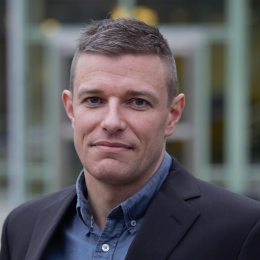
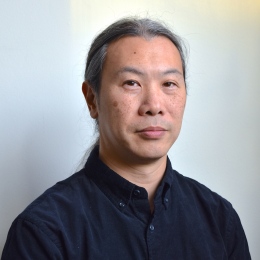
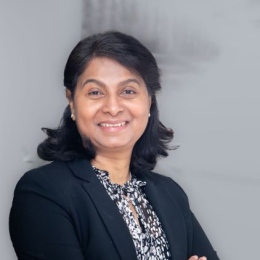
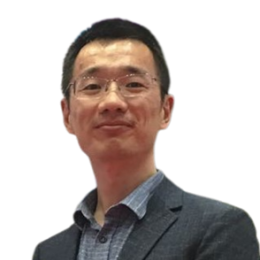
Thamani Freedom Gondo is affiliated with the Lund University Centre for Analysis and Synthesis , focusing on Food Science and Bioactive Compounds . Their work emphasizes analytical techniques for plant-based and marine food resources, particularly using supercritical fluid extraction . Key affiliations: Lund University, FORMAS-funded projects Research themes: Bioactive compound analysis, polyphenol characterization, sustainable food processing Recent publications highlight advancements in phlorotannin analysis from brown seaweeds and Lactiplantibacillus plantarum applications in non-dairy fermentation. Their 2023 work on ternary solvent systems demonstrated high selectivity in seaweed extraction.
Christian Lindh is an active Associate Professor and Senior Lecturer at Lund University's Division of Occupational and Environmental Medicine. He serves as Research Team Manager for Applied Mass Spectrometry in Environmental Medicine and is affiliated with EpiHealth: Epidemiology for Health. His research focuses on environmental and occupational exposures and their health impacts, with particular expertise in biomonitoring and analytical chemistry. His research interests span Occupational Health , Environmental Health , Analytical Chemistry , Exposure Assessment , and Epidemiology . Lindh specializes in studying human exposure to environmental pollutants including PFAS, heavy metals, phthalates, and polycyclic aromatic hydrocarbons, with particular focus on vulnerable populations such as pregnant women and children. His work contributes to UN Sustainable Development Goals related to health and environmental protection. Analysis of his recent publications reveals a strong focus on environmental epidemiology, particularly examining PFAS exposure patterns, heavy metal toxicity, and the health impacts of environmental contaminants across different life stages. His research employs advanced analytical techniques, particularly mass spectrometry, to precisely measure exposure levels and investigate dose-response relationships. Lindh has secured significant research funding, currently leading projects including 'Temporal Trends in Lead, Mercury, and Cadmium Levels in Children' (Swedish Environmental Protection Agency, 2025-2026) and 'Trade-offs between food safety and food security' (FORMAS, 2024-2027). He serves as Principal Investigator on multiple active research projects totaling 15, with 7 currently active and 7 completed. As Manager of the 'Targeted Exposomics at Lund University' infrastructure, Lindh leads the Applied Mass Spectrometry in Environmental Medicine research team. His work bridges analytical chemistry with public health research, developing methodologies to assess human exposure to environmental chemicals and evaluating their health consequences through epidemiological studies.
Jonathan Benskin is a Full Professor in the Department of Environmental Science at Stockholm University. He joined Stockholm University as an Associate Professor in 2014 and was promoted to Full Professor in 2021. His educational background includes a BSc in Chemistry from the University of Victoria and a PhD in Medical Sciences from the University of Alberta, where he specialized in isomer profiling of PFAS. His research focuses on high-resolution mass spectrometry-based non-target screening, fluorine mass balance experiments to identify novel organofluorine compounds, and contaminant fate/trend analysis in environmental and biological matrices (e.g., human serum, marine mammals, wastewater). Key projects include 'The organohalogen iceberg' and the EU-funded 'PERFORCE3' initiative on PFAS risk assessment. Professor Benskin teaches graduate courses in Contaminant Analysis (MI7019) and Environmental Protection Technology (MI8011), and has supervised multiple Master's students whose thesis work resulted in peer-reviewed publications. He currently leads a research group developing analytical methods for environmental monitoring and collaborates with the Swedish Museum of Natural History, Swedish Food Agency, and Swedish EPA.
Thomas Winkler is an Associate Professor at the Division of Micro and Nanosystems, KTH Royal Institute of Technology, Sweden, and collaborates with TU Braunschweig, Germany. His research focuses on solving life science challenges using microsystems tools, particularly in neuropsychiatric disorders like schizophrenia. He develops organ-on-chip models, engineered microfluidic platforms, and biosensors for point-of-care diagnostics. Winkler leads an interdisciplinary ERC-funded team addressing metabolic coupling in neurovascular units and oxidative stress biomarkers. Key achievements include the ERC Starting Grant (2023) and work on electrochemical sensors for clozapine monitoring. He teaches courses such as Microsystem Technology (EK2350) and supervises PhD and postdoctoral researchers. Current projects include machine learning-guided robotic organoid maturation and electrochemical technology development for the CHIPzophrenia initiative. His lab actively seeks talent through open positions in Stockholm and Braunschweig. Scientific awards include the ERC Starting Grant and Marie Skłodowska-Curie Actions Fellowship. Research spans sensor development, microfabrication, and biomaterials, with a focus on translating lab technologies to clinical applications. Collaborations bridge engineering and life sciences, emphasizing personalized mental healthcare solutions.
Cheuk Wai Tai is a Senior Staff Researcher at Stockholm University's Department of Environmental and Materials Chemistry since 2009. He manages the transmission electron microscopes and sample preparation equipment at the Electron Microscopy Center and serves as Section Editor for the Journal of Electronic Materials. His work focuses on quantitative structure characterization in functional materials research, particularly within nanoscience and nanotechnology contexts. Education: Ph.D. in Applied Physics, The Hong Kong Polytechnic University, 2004 M.Phil. in Applied Physics, The Hong Kong Polytechnic University, 2001 M.Sc. in Physics, The Chinese University of Hong Kong, 1998 B.Sc. (Hons) in Engineering Physics, The Hong Kong Polytechnic University, 1997 Dip. in Mechanical Engineering (Computer Aided Engineering), Institute of Vocational Education (formerly Haking Wong Technical Institute), Hong Kong, 1992 His research centers on structure-property relationships in functional materials through advanced electron microscopy techniques. Current specializations include Pair Distribution Function (ePDF) & Diffuse Scattering, Energy Materials characterization, and EM sample preparation methodology development. The group maintains strong focus on translating structural data into functional performance metrics for nanomaterials. Recent publications (2013-2019) demonstrate consistent emphasis on electron microscopy applications for energy storage materials (batteries, photocatalysts) and functional ceramics. Key trends include structural disorder analysis in piezoelectrics, development of quantitative TEM methods like SUePDF, and nanoscale characterization of electrocatalyst surface phases. His work bridges materials chemistry with advanced imaging techniques. Scientific recognition includes: Fellow of The Royal Microscopical Society (U.K.) Senior Member of IEEE Marie Curie Fellowship (2007-2009) from European Commission Sir Edward Youde Memorial Fellowship (2003/2004) from Hong Kong S.A.R. Government He teaches Solid State Chemistry (KZ7003) and leads Introduction to Analytical Electron Microscopy (KZ8009), having previously taught Advanced Transmission Electron Microscopy (KZ8010) before 2011. Major grants supporting his work include: "Quantitative structural characterisation using 3D electron-based pair distribution function" (Swedish Research Council) "A Multidimensional Toolkit for Modern Electron Microscopy" (Swedish Foundation for Strategic Research) "Mitigating Ni-rich Li-ion cathode side-reactions" (Swedish Energy Agency, Co-applicant) He leads the Cheuk-Wai Tai group within Stockholm University's chemistry department and oversees operations at the Electron Microscopy Center, where his team develops and applies advanced characterization techniques for functional materials research.
Aji Mathew is a Professor at the Department of Materials and Environmental Chemistry, Stockholm University. He holds a PhD in polymer chemistry from Mahatma Gandhi University (2001) and conducted postdoctoral research at CERMAV (Grenoble, France) and NTNU (Trondheim, Norway). His academic career includes roles as an assistant professor (2007–2011) and associate professor (2011–2015) at Luleå University of Technology before becoming an associate professor (2015) and subsequently a professor (2017) at Stockholm University. His research focuses on bio-based nanocomposites and sustainable materials, particularly nanocellulose and its applications in environmental remediation, advanced materials, and circular economy solutions. His group, the Aji Mathew Group , specializes in designing bio-based materials for diverse applications, including water treatment, 3D printing, and biomedical uses. Key projects involve upcycling textile waste, developing eco-friendly composites, and creating functional hydrogels. His work bridges fundamental polymer chemistry with practical sustainability challenges. Publications highlight innovations like nanocellulose-based foams, zeolitic frameworks for water purification, and bio-based coatings. While no awards are explicitly mentioned, his extensive peer-reviewed contributions reflect significant scholarly impact. His research emphasizes scalability and real-world applicability, addressing global environmental and material science challenges.
Yael Feldman Maggor is a Postdoctoral Fellow at KTH Royal Institute of Technology, affiliated with the Media Technology & Interaction Design Division and the Digital Futures research center. Her work bridges educational technologies, artificial intelligence, and science education, with a focus on enhancing pedagogy through innovative tools. Research Themes: Generative AI in education, self-regulated learning, learning analytics, chemistry education, and ethical considerations in AI integration. Key Projects: Contributions to the International Journal of Science Education, development of AI-driven evaluation frameworks, and pandemic-era online teaching analysis. Methodologies: Expertise in quantitative and qualitative research, educational data mining, and design of interactive learning platforms. Recent publications emphasize cross-cultural trust in AI, generative AI applications in chemistry education, and explainable AI for teacher professional development. She co-authored studies on nanotechnology courses for educators and self-regulation strategies in online learning environments.
Professor Ian Cousins is a leading researcher in the Department of Environmental Science at Stockholm University, specializing in the study of persistent organic pollutants, particularly per- and polyfluoroalkyl substances (PFAS). With over 200 peer-reviewed publications and recognition as a Highly Cited Researcher in 2018 and 2020, his work has significantly influenced environmental policy and scientific understanding of chemical pollution. BSc (Hons) in Chemistry, University of York (1989) Master's in Environmental Management, University of Surrey (1991) PhD in Environmental Science, Lancaster University (1998) Prof. Cousins' research focuses on the sources, transport, fate, and exposure pathways of contaminants in the environment, with particular emphasis on PFAS. His work combines experimental and modeling approaches to investigate how these persistent chemicals move through ecosystems, with recent studies examining sea spray aerosol transport of PFAS and their global distribution. His research has contributed to understanding PFAS as a planetary boundary issue, demonstrating that environmental contamination by these substances has exceeded safe operating limits. Prof. Cousins' extensive publication record shows a clear trend toward addressing the complex challenges of PFAS pollution, including their environmental behavior, risk assessment methodologies, regulatory frameworks, and the application of the essential-use concept for phasing out non-essential PFAS applications. His work spans fundamental environmental chemistry to policy-relevant research that has directly influenced European environmental decision-making. Highly Cited Researcher (2018, 2020) Listed among 30 EU politicians and professionals with greatest impact on European environmental policy (2023) Associate Editor of Environmental Science and Technology (2020-present) Associate Editor of Environmental Au (2021-present) Prof. Cousins actively supervises master's students focusing on organic pollutants and has coordinated major research projects including PERFORCE3, a Europe-wide doctoral training program on PFAS, and ZeroPM, targeting PFAS and persistent, mobile substances. His research has been supported by multiple European Union Horizon 2020 grants, reflecting the significance and impact of his work on global environmental challenges. He leads a research group that works closely with analytical chemists to better understand the behavior of PFAS and other contaminants, contributing to the development of evidence-based approaches for managing chemical pollution and protecting environmental and human health.
Professor Ingrid Undeland leads the Marine research group at the Division of Food and Nutrition Science, Department of Life Sciences at Chalmers University of Technology. She is a distinguished researcher with expertise spanning marine food science, lipid chemistry, and blue biorefining, having established herself as a leading figure in sustainable seafood research and marine biotechnology. Her educational background includes food science studies from Linnaeus University and a PhD in bioscience from Chalmers University of Technology and SIK (now RISE). Between 1999-2002, she was a post-doctoral fellow at University of Massachusetts Marine Station, which significantly shaped her research trajectory in marine food science. Professor Undeland's research focuses on pioneering next-generation seafood through innovative value chains from seaweed, small pelagic fish, fish side streams, mussels, and microalgae. Her specialized expertise lies in marine lipids and proteins, particularly their stabilization, isolation from complex sources, and nutritional properties including digestibility. She has extensive experience with antioxidant strategies using plant-derived side streams or extracts and fundamental studies of fish hemoglobins as pro-oxidants. Her work also encompasses innovative technologies for biomass fractionation and nutrient recycling to build blue biorefineries, along with in vitro digestion models and general seafood analytics. Beyond marine research, she explores filamentous fungi as sustainable alternative food protein sources. The trends in her recent publications reveal a strong emphasis on valorizing marine resources through advanced processing techniques. Her work increasingly focuses on sustainable extraction methods for seaweed proteins, particularly Ulva fenestrata, and developing antioxidant strategies using berry side streams to stabilize fish proteins. There's a growing interest in understanding the nutritional properties and digestibility of alternative marine proteins, along with environmental assessments of processing technologies. Her research consistently bridges fundamental science with practical applications for creating sustainable seafood value chains. Swedish representative in Nordic Lipidforum, WEFTA, and EuCheMS Editorial board member of Journal of the Aquatic Food Product Technology Member of the National Committee for Nutrition and Food Science at the Royal Swedish Academy of Sciences Co-founder of the startup company AquaFood H-index of 47 according to Google Scholar Professor Undeland has an extensive record of academic mentorship, having supervised or currently supervising 23 PhD students, 14 postdoctoral researchers, and examining over 25 MSc students. Her research is supported by numerous grants, including the WaSeaBi Project which focuses on valorizing seafood side-streams through holistic value chain design. She collaborates with various industry partners and academic institutions across Europe. Her laboratory includes technicians Dr. Karin Larsson and Dr. Rikard Fristedt, and she leads a dynamic research team working on multiple projects related to marine biorefining and sustainable seafood development. Her research group operates within well-equipped facilities at Chalmers University, with specialized laboratories for marine food analysis, protein extraction, lipid oxidation studies, and in vitro digestion modeling. The team also maintains cultivation systems for seaweed and filamentous fungi, enabling integrated research from raw material production to final product development.
Yu Xia is a Post Doc at the Department of Chemistry, Stockholm University, Sweden. He is affiliated with the Tom Willhammar Research Group, focusing on advanced electron microscopy and diffraction techniques for structural characterization of materials. PhD (2019–2023) from a joint program between the University of Birmingham (UK) and the Southern University of Science and Technology (China). Research emphasizes fabrication of metallic nanoparticles with non-equilibrium structures and shapes using gas-phase condensation and thermal shock methods. Specializes in scanning transmission electron microscopy (STEM), in-situ heating experiments, and electron energy loss spectroscopy (EELS) for nanoparticle analysis. Current work prioritizes 4DSTEM imaging for electron beam-sensitive materials and Python-based post-processing of electron microscopy datasets. Yu Xia's research spans Materials Science , Nanotechnology , and Electrocatalysis , with applications in photocatalytic hydrogen evolution , graphene composites , and advanced electron microscopy techniques . His work often integrates computational image processing with structural characterization to optimize material properties. Publications highlight innovations in heterostructure engineering , metallic alloy catalysts , and electron beam-sensitive material imaging . No scientific awards are explicitly mentioned in the provided text. Yu Xia's technical expertise includes Python scripting for image analysis, in-situ electron microscopy , and multifunctional graphene-based materials .
Klas Hjort is a Professor of Materials Science at Uppsala University's Ångström Laboratory , specializing in Microsystems Technology . He leads the microsystems technology program and has pioneered research in heterogeneous microsystems on stainless steel, flexible foils, and elastic substrates for biomedical applications and wireless sensor/actuator systems . Key projects: SSF robotic textiles , PERSIMMON smart patches Research themes: Microfluidic actuation , Liquid metal patterning , Stretchable electronics His recent publications focus on soft robotics , smart patches , and high-pressure microfluidic systems , with keywords spanning Microfluidics , Biomedical Engineering , and Stretchable Electronics . He collaborates extensively in robotic textiles , microvalve design , and liquid metal composites . Contact: klas.hjort@angstrom.uu.se
Roland Larsson is a Professor and Head of Subject in Machine Elements at Luleå University of Technology, Sweden. His research focuses on Tribology, particularly lubrication regimes (boundary to elastohydrodynamic), contact mechanics, surface roughness effects, and applications in rolling element bearings, clutches, hydraulic systems, tires, and sports equipment. He has supervised over 20 doctoral and licentiate students, contributed to advanced courses, and developed teaching methods like Flipped Classroom and Constructive Alignment . Education: Ph.D. (1996, Luleå University of Technology), Docent (2001), M.Sc. in Mechanical Engineering (1988). Research: Central themes include elastohydrodynamic lubrication, surface roughness in contact interfaces, and sustainable lubricants. His work explores water-based lubricants, ionic liquids, and glycerol mixtures. Publications: Recent articles (2025) investigate water-based lubricants' film formation, ski-snow friction dynamics, and tribochemical properties of green lubricants. Earlier works (2024-2023) cover micropitting, wear models, and multi-scale contact analysis. Awards: Recipient of multiple tribology awards including ASME Best Paper, Nordea's Vetenskapliga Pris, and Venture Cup North. He has held leadership roles at Luleå University, including Dean and Vice-Dean of the Faculty of Engineering Board. Collaboration: Active in international research networks as peer-reviewer, faculty opponent, and external examiner. His post-doctoral work includes affiliations with Leeds University and SKF Engineering Research Centre.
Anders Hofer is an Associate Professor and Docent in Medical Biochemistry at Umeå University's Department of Medical Biochemistry and Biophysics, serving as Director of Studies. His research focuses on nucleotide metabolism in pathogens and mammalian cells, with an emphasis on enzymes like ribonucleotide reductase and nucleoside kinases. His work targets pathogens such as Trypanosoma brucei (African sleeping sickness), Giardia intestinalis, and Borrelia burgdorferi (Lyme disease), aiming to develop drugs exploiting their metabolic vulnerabilities. His lab employs techniques like GEMMA analysis, mass photometry, and nucleotide quantification methods. Recent grants include a three-year strategic research grant from the Medical Faculty in 2023. Key projects include studying nucleotide salvage pathways in pathogens and developing adenosine analogues as antiparasitics. Collaborations span structural biology, enzymology, and drug discovery. His work addresses antibiotic resistance by targeting unique pathogen features.
Jens Carlsson is a Professor at Uppsala University, affiliated with the Department of Cell and Molecular Biology and the Science for Life Laboratory (SciLifeLab) . His research focuses on computational biochemistry , particularly G protein-coupled receptors (GPCRs) , using physics-based modeling to advance structure-based drug design . Academic rank: Full Professor (since 2022) Key methodologies: Molecular dynamics simulations, docking, free energy calculations Research themes: GPCR ligand interactions, virtual chemical space screening, allosteric modulators Recent work (2025) highlights AI-driven discovery of brain disease therapeutics and DNA repair inhibitors , while 2024 projects explore AlphaFold applications in TAAR1 agonist design . His group has received Swedish Research Council grants (3.6M SEK, 6M SEK) and industry collaborations . Scientific awards include the Göran Gustafsson Prize (2016), Excellence Prize in Molecular Design (2022), and Ingvar Carlsson Award (2012). Key students include PhD candidates Mariama Jaiteh and Pierre Matricon , with postdocs like Nicolas Panel and Duy Duc Vo .
Christer Malm is a Professor at Umeå University's Department of Community Medicine and Rehabilitation, Section of Sports Medicine. His research spans molecular muscle adaptation, anti-doping technologies, and physical performance optimization for firefighters and athletes. Primary Affiliation: Umeå University, Sweden Key Focus Areas: Exercise physiology, proteomics, anti-doping, muscle disease mechanisms Research Interests: Muscle Adaptation: Revisiting the damage-repair hypothesis using proteomic screening to study cytoskeletal remodeling. Anti-Doping: Developing proteomic methods to detect autologous blood doping and investigate erythrocyte breakdown mechanisms. Work Capacity: Establishing physiological benchmarks for Swedish firefighters through extensive testing. Musculoskeletal Diseases: Comparative proteomic analysis of trapezius, vastus lateralis, and extraocular muscles to uncover disease resistance mechanisms. Exercise Impact: Exploring how physical activity modulates immunity in health and disease contexts. Scientific Contributions: Over 20 years of publications in Journal of Sports Sciences , PLOS ONE , and Scandinavian Journal of Medicine & Science in Sports , including studies on anabolic steroid effects and cold climate physiology. Ongoing Projects: PhD studies on blood doping detection, firefighter performance limits, and cross-country skiing physiology. Contact: christer.malm@umu.se