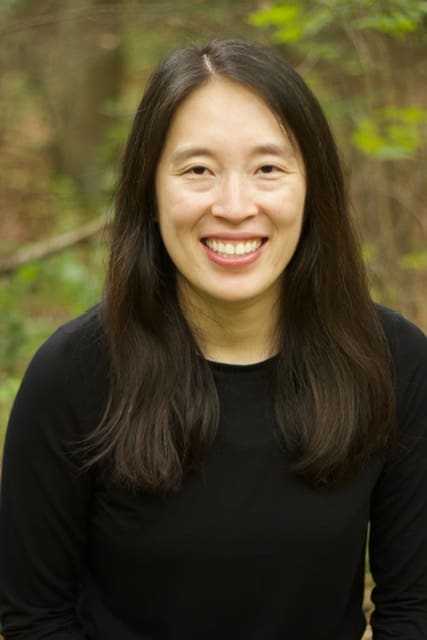
Annemarie Kocab is an Assistant Professor at Johns Hopkins University, affiliated with the Krieger School of Arts and Sciences. Her research focuses on language emergence, acquisition, and processing, particularly in sign languages like Nicaraguan Sign Language (LSN) and American Sign Language (ASL). She investigates conceptual representations in homesign systems, linguistic structures in emerging languages, and comprehension mechanisms using EEG studies. Education: PhD in Cognitive Science from Harvard University In her lab, the Language Creation and Learning Lab , she combines experimental paradigms with computational models to study: Conceptual foundations of homesign systems Evolution of linguistic structures in LSN over generations ASL comprehension and prediction mechanisms Evaluation of deep learning models for sign language data Contact: kocab@jhu.edu , William James Hall, 33 Kirkland Street, Cambridge, MA 02138.
Edgar Garcia is an Associate Professor in the Department of English Language and Literature at the University of Chicago. He holds a Ph.D. from Yale University (2015) and has taught at UChicago since 2015. His work bridges poetry, poetics, and anthropology, focusing on hemispheric American literatures, indigenous and Latino studies, and the intersection of crisis and creativity. Ph.D., Yale University B.A., University of California, Berkeley A.A., Chaffey Community College His research explores marginalized cultural practices such as non-alphabetical sign systems (pictographs, khipu), dreams, divination, and magic, emphasizing their role in world-making. Teaching involves creative and critical approaches to poetry, with courses on the Popol Vuh, migrant poetics, and dream ethnography. Recent publications include Emergency: Reading the Popol Vuh in a Time of Crisis (2022) and Signs of the Americas (2019), analyzing indigenous epistemologies and experimental literary forms. His in-process works include Migrant Lots (risk analysis beyond demographics) and Caravaggio’s Americas (baroque-indigenous intersections). Franke Institute Residential Fellow (2024-2025) Discipline Representative for the Americas, Renaissance Society of America (2026-2028) Guest Editor-in-Chief, Fence (2022-2024) Garcia advises BA, MA, and PhD students in 20th-century poetry and poetics, often integrating creative components into his courses. He collaborates with interdisciplinary teams in theatre and opera and contributes to archival and museological projects.
Sandra Waxman is a Professor of Cognitive Psychology and holds the Louis W. Menk Chair in Psychology at Northwestern University. She is an IPR Fellow, leading research at the intersection of developmental science, cognitive psychology, and cultural studies. Her work focuses on how infants and young children acquire language and conceptual knowledge across linguistic and cultural contexts. She directs the Infant and Child Development Center, exploring cross-linguistic development in languages like English, Mandarin, and Spanish, as well as cultural influences on understanding human-nature relationships. Her research bridges disciplines, emphasizing the interplay between language and cognition. Collaborations include projects with Native American communities and Argentina’s CONICET. Waxman’s studies reveal how early language shapes cognitive development and how cultural frameworks influence children’s reasoning about the natural world. She also investigates how infants integrate sensory and linguistic information to form concepts, with implications for education and policy. Waxman’s contributions span over 200 publications, addressing topics like infant categorization, bilingualism, and the role of context in learning. Her work underscores the universality and diversity of developmental processes, advocating for interdisciplinary approaches to understand childhood cognition. She actively engages with policymakers through IPR, translating research into strategies that support early childhood development.
Thomas Graf is an Associate Professor in the Department of Linguistics and an Affiliate Professor at the Institute for Advanced Computational Science (IACS) at Stony Brook University. He holds a Ph.D. from UCLA (2013) and an M.A. from the University of Vienna. His research focuses on the intersection of theoretical linguistics and computer science, exploring structural complexity in syntax, morphology, and phonology, and its implications for language processing and acquisition. Graf’s work emphasizes computational constraints on natural language, such as subregular complexity and parsing efficiency, and involves empirical studies across languages like English, Icelandic, and American Sign Language. Education: Ph.D., University of California, Los Angeles (2013) M.A., University of Vienna Research interests include computational syntax and phonology, parsing theory, and the formal characterization of linguistic universals. Key themes involve the computational power of linguistic frameworks (e.g., Minimalist grammars), the subregular hierarchy, and the typological implications of computational constraints. Graf’s recent work investigates how empirical phenomena like syntactic islands arise from complexity limits in natural language. His contributions to computational linguistics include Python tools for Minimalist grammar processing and collaborations in labs like the Computational Linguistics Lab (CompLab) at Stony Brook. He has also received a NSF CAREER grant for research on abstract universals in morphosyntax. Labs/Teams: Active member of the Computational Linguistics Lab (CompLab) at Stony Brook University. Leads the MathLing Reading Group and contributes to NLP research initiatives.
Catherine Caldwell-Harris is an Associate Professor in the Department of Psychological & Brain Sciences at Boston University. She holds a PhD from UC San Diego (1991), studying under Elizabeth Bates, Jeffrey Elman, and others. Her research integrates cognitive psychology, linguistics, and neuroscience, focusing on language processing, emotion, and bilingualism. Key contributions include documenting heightened emotional reactivity in native vs. second languages and pioneering work on repetition blindness in visual cognition. Her research interests encompass second language acquisition, emotional language processing, and autism spectrum disorders. Notable projects include cross-cultural studies on Russian, Mandarin, and Spanish bilinguals, and investigations into the Personality-Culture Clash hypothesis regarding mental health and cultural values alignment. She collaborates internationally, notably with German colleagues on consciousness studies using repetition blindness paradigms. Publications span over three decades, addressing topics like neurodivergent language strategies, affective neuroscience, and bilingual ethical decision-making. Her work bridges theoretical models (e.g., emergentist accounts of language learning) with empirical findings in psycholinguistics and cognitive science. She maintains active involvement in deaf education research, exploring ASL's role in supporting English literacy among deaf children.
Prof. Dr. Nikolai Grube is a University Professor in the Department of Ancient American Studies & Ethnology at the Institute of Archaeology and Cultural Anthropology, University of Bonn. He has held this position since 2004 and is a leading expert in Maya archaeology, epigraphy, and cultural anthropology. His research spans Mesoamerica, with a focus on the Maya Lowlands, political anthropology, state formation, writing systems, and cultural heritage. Research Interests: His work integrates archaeology, historical linguistics, and digital humanities to study Classic Maya writing, literacy, and political structures. He investigates the evolution of hegemonic rule through fieldwork at Uxul, Mexico, and leads the Text Database and Dictionary of Classic Maya project. His research bridges epigraphic analysis with broader cultural and historical contexts. Recent Publications Trends: His recent scholarly output emphasizes digital epigraphy, glyph decipherment, ceramic inscriptions, and collaborative international research. Themes include lunar astronomy, punctuation in writing, animated logographs, and the sociopolitical rhetoric of Terminal Classic inscriptions, reflecting a deep integration of linguistic, archaeological, and computational methods. Scientific Awards and Honors: Doctor honoris causa, Instituto Politécnico Nacional, Mexico (2016) Benedictus Polonius Prize, University of Warsaw (2015) Honorary Citizenship of Guatemala City (2007) Full member, German Archaeological Institute Full member, North Rhine-Westphalian Academy of Sciences Heisenberg Professorship (DFG, 1999) Advising and Grants: While specific students are not listed, Grube leads major collaborative projects funded by international bodies and has served as an expert reviewer for NWO, FNRS, CNRS, and NEH. He has organized academic symposia, curated exhibitions, and held editorial roles, demonstrating extensive mentorship and academic leadership in the field of Mesoamerican studies. Labs and Teams: He is central to the Text Database and Dictionary of Classic Maya team at the University of Bonn, promoting digital epigraphy and open-access research. His work involves interdisciplinary collaboration with linguists, archaeologists, and computer scientists to advance the understanding of Maya writing and culture.
Brenda M. Farnell is a Professor in the Department of Anthropology and the American Indian Studies Program at the University of Illinois Urbana-Champaign. With a professional background in modern dance and dance education in England, she bridges anthropological theory with embodied practice, critically examining the marginalization of movement in Western academic thought. Her educational background includes: Ph.D. in Social Cultural & Linguistic Anthropology, Indiana University Bloomington (1990) M.A. in Anthropology of Human Movement, New York University (1984) Advanced Diploma in Dance and Human Movement Studies, Laban Dance Center, Goldsmiths College, London University (1977) B.Ed. in Dance Studies & Physical Education, I.M. Marsh College, Liverpool University (1969) Dr. Farnell's research centers on embodiment across three interconnected domains: the anthropology of dance (focusing on choreographic processes and performance arts), linguistic anthropology (analyzing gesture/speech integration and signed languages), and Indigenous epistemologies (particularly Plains Nations storytelling traditions). Her fieldwork with Nakota, Crow, Kiowa, and Comanche communities informs her decolonial approach to embodied knowledge systems. Recent publications demonstrate consistent thematic focus on Indigenous performance practices (e.g., 2023 monograph Chocolate Woman Dreams the Milky Way ) and foundational embodiment concepts (e.g., 2018 encyclopedia entries on Mindful Body and Techniques of the Body ), reflecting sustained engagement with semiotic anthropology and movement literacy.
Mahanth Gowda is an Associate Professor in the Department of Computer Science and Engineering, leading a prolific research program at the intersection of mobile systems, wireless sensing, and human-computer interaction. His work has been continuously funded by the U.S. National Science Foundation since 2019, serving as Principal Investigator on four awards and Co-PI on two others, collectively spanning edge computing for XR, sign-language recognition, next-generation wireless networking, and healthcare-oriented wearables. Research Interests Millimetre-wave and ultra-wideband sensing for 3-D finger motion tracking and speech eavesdropping Edge-IoT platforms for real-time sign-language recognition and translation Neural-augmented game streaming and super-resolution on commodity mobile devices Open-source wearable systems for sports analytics and rehabilitative healthcare Security and privacy implications of motion sensors in smartphones and IoT devices Over the past five years his publication trajectory has concentrated on leveraging emerging radio modalities—especially millimetre-wave radar, Wi-Fi, and UWB—to extract fine-grained human-centric information such as finger gestures, facial micro-motions, and spoken content. A complementary thread develops edge-native machine-learning frameworks that push intelligence to resource-constrained devices, enabling immersive AR/VR experiences and assistive technologies for the Deaf and hard-of-hearing communities. Grants & Projects CAREER: Sign-to-Speech – NSF, $500k, 2021-2026; Edge-IoT platform for real-time ASL recognition. SHF: Medium: Next-Gen XR Edge Platform – NSF, $1.2M, 2022-2025; Co-PI with Das, Sivasubramaniam, Kandemir. CNS Core: IoTScope – NSF, $450k, 2020-2025; Sensing physical materials via low-cost IoT radios. CNS Core: Medium: ML-driven Next-G Wireless – NSF, $800k, 2020-2024; Co-PI with Yang and Mahdavi. I-Corps: Smart Ring for Healthcare Analytics – NSF, $50k, 2023-2025; Commercialization of finger-motion wearables. Labs & Teams Gowda directs a research group that operates at the confluence of wireless networking, embedded systems, and applied machine learning. The lab maintains active collaborations with faculty in computer architecture, augmented reality, and accessibility studies, and routinely mentors graduate researchers whose work appears in top-tier venues such as ACM MobiCom, IEEE INFOCOM, ISCA, and ACM IoTDI.
Hernisa Kacorri is an Associate Professor in the College of Information (iSchool) at the University of Maryland with an appointment in the University of Maryland Institute for Advanced Computer Studies. She is a member of the Human-Computer Interaction Lab (HCIL) and the Institute for Trustworthy AI in Law & Society. Her research focuses on building technologies that address real-world problems by integrating data-driven methods and human-computer interaction, with particular emphasis on assistive technologies for people with disabilities. Her work includes developing sign language avatars, technologies for independent mobility for the blind, and math-to-speech systems. Dr. Kacorri's research primarily addresses accessibility challenges through technological innovation. Her work spans multiple domains including American Sign Language animation where she develops systems for synthesizing syntactic facial expressions, technologies for people with visual impairments focusing on object recognition and navigation, and accessibility solutions for mathematical content. Her approach combines data-driven methods with rigorous user-centered evaluation involving disabled communities. Her publication record shows a consistent focus on accessibility technologies, particularly in American Sign Language processing and visual impairment solutions. Her work demonstrates strong interdisciplinary connections between computer science, linguistics, and human factors research, with a clear emphasis on practical applications that address real accessibility barriers. Best Paper Honorable Mention at CHI 2017 Best Paper Finalist at ASSETS 2016 NSF Award #1506786 for Syntactic Facial Expression Synthesis research Dr. Kacorri collaborates with researchers at Boston University and Rutgers University on sign language processing projects. Her research methodology emphasizes involving disabled users early in the design process and developing rigorous evaluation frameworks that account for demographic factors and user experience. She has contributed to the development of automatic metrics for evaluating sign language animations and has explored innovative approaches like gamification to improve video captioning through crowdsourcing. Her laboratory work focuses on the Human-Computer Interaction Lab at the University of Maryland, where she leads projects on assistive technologies, sign language animation, and accessibility solutions for mathematical content. Her research group develops technologies that model communication and behavior to benefit people with disabilities.
Michael Higgins is a Senior Lecturer in Journalism, Media and Communication at the University of Strathclyde, where he has served since 2007. As Programme Leader for the MSc in Media and Communication, he focuses on teaching and research in political communication, media discourse, and mediated populism. He holds editorial roles at Communication Theory and Journal of Language and Politics , and co-authored Conflict Culture: Anger in a Mediated World (forthcoming 2026). His research explores incivility in media, political discourse, and broadcast talk. Higgins has supervised AHRC and Carnegie Trust-funded PhD students, with topics spanning social media engagement and gender representation in politics. Education : BA (Hons), MLitt, PhD External Roles : Visiting Professor in Political Communications at LUISS University, Rome; External Examiner at Swansea University and American College of Greece. His work intersects with UN Sustainable Development Goals, particularly in promoting inclusive societies. Recent projects include the Kate Adie Archive (AHRC-funded) and election monitoring initiatives. Higgins has appeared as a media analyst on BBC Radio and Al-Jazeera, emphasizing the role of journalism in shaping political narratives. Higgins’ 90+ publications include seven books and over seventy peer-reviewed articles, with a focus on mediated populism, political communication, and broadcast journalism. He co-founded Palgrave Communications’ Mediated Populism section and chairs the Political Studies Association’s Media and Politics Group.
Kenneth DeHaan is an Associate Professor in the Language, Education, and Culture school at Gallaudet University, specializing in American Sign Language (ASL) education. He teaches advanced courses such as ASL-761 Seminar in Sign Language Education - Professional Preparation and ASL-790 Sign Language Teaching Internship . His research focuses on integrating technology into sign language education, including gesture recognition via wearables, radar-based interactive learning, and accessibility tools for deaf students. He has advised numerous graduate students in ASL education programs. Dr. DeHaan’s work bridges linguistics, computer science, and education, with publications on topics like the Computerized Revised Token Test for ASL assessment and SignQuery , a wearable-sensor-based search engine for sign languages. He has also contributed to initiatives like the Youth Enjoy Science (YES) Academy, promoting STEM access for underserved populations. His teaching spans both undergraduate and graduate levels, including courses on ASL methodology, practicums, and internship preparation. He actively collaborates with researchers in artificial intelligence, wearable technology, and deaf education to advance inclusive learning environments.
Dr. Anne Wienholz is a Researcher at the Institute for German Sign Language (IDGS) within the Department of Language, Literature, and Media, University of Hamburg's Faculty of Humanities. She works on DFG-funded projects focused on experimental sign language research. Her research spans sign language linguistics, psycholinguistics, and neurolinguistics. Key interests include sentence processing in German Sign Language (DGS) and American Sign Language (ASL), language acquisition in deaf children, pronominal reference resolution, and age-of-acquisition effects. She employs eye tracking, ERP, and experimental methodologies to investigate cognitive and neurophysiological mechanisms. Analysis of her 12 publications (2018-2025) reveals consistent experimental investigations of sign language syntax, reference resolution, and developmental trajectories. Work frequently compares DGS and ASL, examining adjective placement, anaphora, and age effects through integrated behavioral and neurophysiological approaches. Dr. Wienholz contributes to DFG projects advancing sign language resources including the DGS Corpus and specialized dictionaries. These grants support corpus development and experimental infrastructure at the IDGS. She is affiliated with the Experimental Sign Language Laboratory (EGS-Labor), utilizing eye tracking and EEG. The IDGS develops critical resources like the Digital Dictionary of German Sign Language (DW-DGS) and domain-specific lexicons for health, psychology, and social work.
Elizabeth Ahl is a Professor and Coordinator of the Eagle Pond Authors' Series at Plymouth State University, where she has taught since 2001. Holding a PhD from the University of Nebraska and MFAs/BFAs from the University of Pittsburgh and Emerson College, her work bridges poetry with interdisciplinary explorations in mathematics, science, and the fine/performing arts. She has performed poetry with musicians, curated gallery shows pairing poets and printmakers, and written extensively on topics ranging from the U.S. space program to letterpress printing. Education: BFA in Creative Writing from Emerson College; MFA in Poetry from the University of Pittsburgh; PhD in English from the University of Nebraska. Interdisciplinary Focus: Explores intersections between poetry, systems theory, historical events (e.g., Apollo 1 fire), and creative pedagogy. Her recent publications in journals like Passengers and Stanza Cannon reflect themes of environmental impermanence, familial bonds, and the materiality of language. She won the 2023 New Hampshire Literary Award for A Case for Solace and the 2008 Slapering Hol Press Chapbook Contest. Her creative pedagogy emphasizes physicality in writing processes, such as cut-up poem assignments and collage-based drafting. Scientific and Literary Contributions: Examines the etymology of language and its cognitive implications Analyzes failures of imagination in technical systems (e.g., NASA's "sneak circuits") Advocates for libraries as "vital circulatory systems" through essays and public commentary Professor Ahl’s practice extends to community engagement, including leaving signed copies of her books in Little Free Libraries nationwide. Her teaching philosophy integrates creative constraints as tools for innovation, demonstrated through assignments that blend physical craft with digital reflection.
David P. Corina is a Professor of Linguistics and Psychology at the University of California, Davis, and Director of the Cognitive Neurolinguistics Laboratory at the Center for Mind and Brain. His research bridges cognitive neuroscience and linguistics, specializing in signed and spoken language processing across deaf and hearing populations. His educational background includes: Ph.D. in Psychology and Cognitive Science, UC San Diego (1991) M.A. in Linguistics, Gallaudet University (1983) B.S. in Educational Psychology, New York University (1982, magna cum laude) Corina investigates neural mechanisms of language comprehension and production, focusing on American Sign Language (ASL) and spoken language. His work examines developmental trajectories in deaf children, neurological impairments, and the interplay between language and gesture processing. Using EEG/ERP, fMRI, and behavioral methods, his lab explores brain plasticity and sensory adaptation in language systems, with particular emphasis on visual-spatial processing in signers. Recent publications (2019-2024) reveal three dominant research threads: (1) structural and functional brain differences in multilingual speakers, (2) electrophysiological responses to language in cochlear implant users, and (3) age-related changes in sign language processing. His work consistently demonstrates how language modality shapes neural organization while highlighting cross-linguistic commonalities. Scientific recognition includes: Fulbright Global Scholar, United States Fulbright Commission (2019-2020) Corina has held significant academic leadership roles including Chair of UC Davis' Undergraduate Cognitive Science Program (2018-2023) and Program Committee Chair for the Society for Neurobiology of Language (2016-2018). He serves as an ad hoc reviewer for NIH study sections, scholarly journals, and international funding agencies, contributing to peer review in neuroscience and linguistics. He directs the Cognitive Neurolinguistics Laboratory, which integrates interdisciplinary approaches to study language-brain relationships through collaborative projects with deaf communities, neurologists, and developmental psychologists.
Dr. Diane Brentari is the Mary K. Werkman Professor of Linguistics at the University of Chicago and Co-Director of the Center for Gesture, Sign, and Language. Her research focuses on sign language grammars, phonology, and the emergence of protactile systems in DeafBlind communities. She holds a Ph.D. from the University of Chicago (1990) and has taught there since 2011. Key interests include modality effects on language structure, language variation, and typological comparisons. Her work has been supported by the National Science Foundation, a Guggenheim Fellowship, and the Neubauer Collegium. Notable contributions include books like Sign Language Phonology (2019) and edited volumes on sign language creation and phonological theory. Awards include Fellow of the Linguistic Society of America and membership in the American Academy of Arts and Sciences. Research Highlights: Analysis of Nicaraguan Sign Language emergence, tactile phonology in protactile communities, and cross-modal comparisons of gesture and sign. Courses Taught: Phonological Analysis, American Deaf Community Studies, and Seminars on Multiple Verb Predicates. Dr. Brentari's lab investigates sign language morpho-phonology and its sociocultural dimensions. Recent projects explore how tactile languages utilize touch and proprioception as linguistic resources. Her work bridges theoretical linguistics with empirical studies of language emergence and variation.