Matthew Potolsky is Professor of English at the University of Utah, specializing in nineteenth-century literature and literary theory. His career spans from 1998 Lecturer at Harvard University to current University Professorship. He earned a BA in Comparative Literature and Philosophy (1990), followed by MA and PhD in Comparative Literature (1992, 1997) from UC Irvine. Chair of English Department (2013-2016) University Professor (2014-2016) Research focuses on Decadence , Mimesis , Finance-Aesthetics intersections , and Government Secrecy . His work traces connections between financialization and decadent aesthetics, revealing how economic cycles influence artistic production. Key themes include: Decadent anti-realist literary movements Finance capital's cultural impact Decadent counterpublic formations Victorian aesthetic education debates Sublime aesthetics in national security Cosmopolitanism in literary communities Recent publications analyze: Decadent style as financialization rhetoric Reintroduction of verisimilitude theory Decadent responses to financial crises Mimetic labor in artistic production Decadent cosmopolitan counterpublics Historical parallels between financialization and literary decadence
Sean Cao serves as Associate Professor (with tenure) at the Robert H. Smith School of Business, University of Maryland, where he is Director and Co-founder of the AI Initiative for Capital Market Research. He also holds an affiliation as professor at Harvard Business School's D 3 Institute. His academic journey began with a Ph.D. from the University of Illinois at Urbana-Champaign. Dr. Cao's research focuses on the intersection of artificial intelligence and capital markets, with particular expertise in how machine learning transforms financial analysis, corporate disclosure practices, and investment decision-making. His work examines the evolving relationship between human analysts and AI systems, blockchain applications in financial reporting, and the strategic adaptation of corporate communications for machine readership. He has pioneered research on the "AI divide" among investor groups and developed frameworks for human-AI collaborative stock analysis. His publication portfolio spans top journals including Journal of Financial Economics, Review of Financial Studies, Journal of Accounting Research, and Management Science. The research demonstrates consistent thematic progression toward increasingly sophisticated AI applications in finance, with recent work exploring distributed ledger technologies for auditing, machine learning for extracting private information from disclosures, and the economics of greenwashing in ESG funds. His studies frequently combine textual analysis with traditional financial metrics to uncover novel market insights. Fama-DFA Prize from Journal of Financial Economics for best paper in capital markets and asset pricing Michael J. Brennan Award from Review of Financial Studies Deloitte Initiative for AI and Learning award for developing trustworthy AI for social equity PanAgora Asset Management's Dr. Richard A. Crowell Memorial Prize Multiple best paper awards from Midwest Finance Association, Global AI Finance Conference, and Asian Finance Association Dr. Cao has delivered over 200 invited research talks at major institutions including the Central Bank of Japan, Central Bank of Thailand, and U.S. Securities and Exchange Commission. He serves as Guest Associate Editor for Management Science and has co-chaired Review of Financial Studies conferences on FinTech and Machine Learning. His educational initiatives include a widely adopted free AI textbook for finance and accounting that has been implemented at universities worldwide including Indiana University, UT Dallas, and University of Minnesota. As Director of the AI Initiative for Capital Market Research, Dr. Cao leads a multidisciplinary team exploring practical AI applications in finance. The initiative has secured significant funding including a $150,000 grant from GRF CPAs & Advisors. His research group maintains strong industry connections through partnerships with regulatory bodies, financial institutions, and technology companies, facilitating the translation of academic research into practical financial applications.
Timothy M. Hospedales is a Professor of Artificial Intelligence at the Institute of Perception, Action and Behaviour within the School of Informatics at the University of Edinburgh . He also serves as VP AI and Head of Samsung AI Research Centre Europe . His research focuses on efficient and robust AI , emphasizing meta-learning , lifelong transfer-learning , and domain adaptation in both probabilistic and deep learning frameworks. Applications span computer vision , vision and language , reinforcement learning for robotics , and finance . Professor at University of Edinburgh (2020–present) ELLIS Fellow (2021) Head of Samsung AI Research Europe (2020–present) Founding Director of Applied Machine Learning Lab at QMUL (2012–2016) His work includes pioneering contributions to meta-learning , few-shot learning , and self-supervised methods , with notable awards such as the Best Paper Prize at ICML AutoML 2018 and Best Student Paper at ICPR 2018 . He has co-authored 15+ recent papers on topics like Vision-Language Models , Medical AI Fairness , and Diffusion Model Optimization . He served as Program Co-Chair for BMVC 2018 and AAAI 2022 , and authored a book on Visual Adaptation in the Deep Learning Era (2022). Co-Chair, BMVC 2018 Guest Editor, IET CV Special Issue (2016) Keynote Speaker at TASK-CV Workshop (ECCV 2016) Special Issue on Fewer Labels (IEEE PAMI 2020) His leadership extends to organizing workshops like the Learning-to-Learn Workshop at ICLR 2021 , Meta-Learning Workshop at NeurIPS 2020 , and Domain Generalisation Workshop at ICLR 2023 . Current projects include Meta-Omnium (CVPR 2023) for general-purpose meta-learning and MetaAudio (ICANN 2022) for few-shot audio classification benchmarks.
Yochai Benkler is the Berkman Professor of Entrepreneurial Legal Studies at Harvard Law School and faculty co-director of the Berkman Klein Center for Internet and Society at Harvard University. He specializes in Law and Political Economy, Technology Law and Policy, Communications Law, and Access to Knowledge. His work bridges academia and activism, focusing on the intersection of technology, collaboration, and societal structures. Benkler's research emphasizes decentralized collaboration, information commons, and the impact of technology on democracy. He has advised governments and international organizations on innovation policy and telecommunications. His notable works include The Wealth of Networks (2006), which explores social production in the digital age, and Reconstructing Class Analysis (2024), co-authored with Talha Syed, which rethinks class dynamics within capitalism. He has received numerous awards, including the Oxford Internet Institute Lifetime Achievement Award (2012), Ford Foundation Visionaries Award (2011), and Electronic Frontier Foundation Pioneer Award (2007). His work is publicly accessible at benkler.org . Benkler serves on the boards of the Open Society Foundations and the Freedombox Foundation. His research spans law, political economy, and technology, addressing issues like fake news, network propaganda, and the role of the internet in governance.
David A. Hsieh is the Bank of America Professor of Finance at the Fuqua School of Business, Duke University, where he has been a faculty member since 1993. Previously, he served as Associate Professor and Assistant Professor at the University of Chicago's Graduate School of Business from 1981-1989. His extensive research has significantly contributed to the understanding of hedge funds, financial risk management, and nonlinear dynamics in financial markets. Massachusetts Institute of Technology, Ph.D. in Economics, 1981 Yale University, B.S. in Economics and Mathematics, 1976 (Summa Cum Laude, Phi Beta Kappa) Phillips Academy, Andover, 1972 (Cum Laude) Dr. Hsieh's research primarily focuses on the dynamics of asset prices and their implications for financial risk management. He has made significant contributions to understanding risk and return characteristics in hedge funds and commodity funds, pioneering work on nonlinear dynamics applications to financial markets. His research has evolved from early work on exchange rates and volatility modeling to more recent comprehensive analyses of hedge fund strategies, performance measurement, and industry structure. Hsieh's publication history reveals a clear progression from foundational work on nonlinear dynamics in financial markets to increasingly sophisticated analyses of hedge fund strategies and risk characteristics. His recent work, often in collaboration with William Fung and other prominent finance researchers, has focused on mega hedge fund firms, franchise value in the industry, and the evolution of hedge fund strategies toward more index-like products. The research consistently combines rigorous theoretical frameworks with robust empirical analyses across diverse market conditions. CAIA Award for Excellence in Alternative Investment Research (2015) CFA Institute Graham and Dodd Award of Excellence (2004) Bank of America Faculty Award (2002) Duke Cross-Continent Executive MBA Teaching Excellence Award (2002) Fischer Black Memorial Foundation Robert J. Schwartz Memorial Prize (1999) Smith Breeden First Prize (1990) Yale Science and Engineering Association High Scholarship Award (1976) Russell Henry Chittenden Prize (1976) Dr. Hsieh has served as a consultant for the International Monetary Fund (2007-2016) and the Bank for International Settlements (1998), and as a Visiting Scholar at both the International Monetary Fund and the Board of Governors of the Federal Reserve System. His editorial service includes Finance Editor for Management Science (2003-2009) and Associate Editor roles for several leading finance journals. He has developed extensive research resources including a Hedge Fund Data Library that has become widely used in academic and industry research.
Peter Nilsson is a Professor of Economics at the Institute for International Economic Studies (IIES) , Stockholm University. He also holds a guest professorship at Linnaeus University and serves as a research fellow at IFAU , Uppsala Center for Labor Studies , CESifo , and CEPR . Previously, he was a postdoctoral fellow at Stanford University and obtained his PhD from Uppsala University (2010). Research Focus: His work bridges Labor Economics , Health Economics , and Environmental Economics , analyzing how early-life exposures (alcohol, lead), workplace dynamics, and policy interventions (unemployment insurance, congestion pricing) shape long-term socioeconomic outcomes. Key themes include Environmental Health Impacts on Cognition and Crime Labor Market Responses to Insurance Policies Peer Effects in Workplace Behavior Policy Design for Social Equity Scientific Awards: Nilsson has been recognized through research fellowships at leading institutions and editorial roles, including Associate Editor at The Economic Journal since 2021. His work has been featured in American Economic Review , Journal of Political Economy , and NBER platforms. Key Contributions: He provided testimony for Connecticut’s HB-5045 to reduce childhood lead exposure and contributed to Sweden’s Corona Commission report on pandemic responses. His empirical methods combine natural experiments with administrative datasets to identify causal relationships in health, labor, and environmental economics.
Dr. Jérôme Verny is an Associate Professor specializing in transport, logistics, and supply chain management. He is the founder and director of the research institute in innovative transport and logistics, as well as the co-founder of the DISC Master's program (Digital & Innovative Supply Chain) in Paris and the Mobility Accelerator. His expertise spans digitalization in logistics, blockchain applications, and sustainable development. Educated at the University of Lille Nord de France (PhD in Economics and Management) and engineering schools like École Nationale des Ponts et Chaussées, he advises both public institutions (OECD, EU) and private enterprises on transportation strategies. Research Interests: Dr. Verny focuses on supply chain innovation, digital transformation, and strategic logistics. His work integrates blockchain technology for supply chain transparency, optimizes last-mile delivery in urban environments, and analyzes the impact of geopolitical actors like China on global trade networks. He also explores sustainable practices in transportation, including CO2 reduction strategies and pandemic response logistics. Awards: Recipient of the 2009 OECD-FIT Young Researcher Prize in Transport. His contributions bridge academic research with practical applications in industry, policy, and international trade. Key Activities: Co-founded the DISC Master’s program and leads research initiatives on blockchain adoption, Arctic shipping routes, and Mediterranean trade dynamics. He actively contributes to conferences such as the International Association of Maritime Economists (IAME) and publishes in journals like Structural Change and Economic Dynamics and International Journal of Shipping and Transport Logistics . Labs/Teams: Directs the Institut de Recherche en Transport et Logistique Innovante and collaborates with institutions like the OECD and European Commission on transport policy. His interdisciplinary approach involves engineering, economics, and data science to address global supply chain challenges.
Carolina Alves is an Associate Professor in Economics at University College London's Institute for Innovation and Public Purpose (IIPP). She holds a distinguished position as a Fellow in Economics at Girton College, University of Cambridge, and serves on the Leadership Team of the UCL Centre for Capitalism Studies. Her academic journey spans prestigious institutions including SOAS, University of London for her PhD, and Unesp and Unicamp in Brazil for her undergraduate and master's degrees. BSc in Economic Science from Unesp (Brazil) MPhil in Sociology of Labour from Unicamp (Brazil) PhD in Economics from SOAS, University of London Joan Robinson Research Fellow in Heterodox Economics at Girton College, University of Cambridge Dr. Alves' research spans critical areas including Critical Macro-Finance, Structuralist Macroeconomics, and the Decolonisation of Economics, with influences rooted in Classical Political Economy, Latin American Structuralism, Dependency Theory, and Marxian economics. Her work critically examines the international monetary system, power relations in economic systems, and Eurocentric limitations in economic theory. Her recent publications demonstrate a strong focus on heterodox economic approaches, with particular attention to government bonds, international financial subordination, and the historical development of economic thought. Her eight most recent publications reveal a consistent research trajectory examining the intersections of political economy, financial systems, and economic theory development, with increasing attention to decolonial perspectives in economics. This work has garnered significant attention across academic and policy circles, with multiple citations and social media engagement. Joan Robinson Research Fellowship in Heterodox Economics at Girton College, University of Cambridge Co-founder of Diversifying and Decolonising Economics initiative Co-editor of The Developing Economics blog Trustee for Cambridge Trust for New Thinking in Economics As an educator, Dr. Alves serves as module leader for 'New Economic Thinking and Public Value' and co-leader for 'Rethinking Capitalism' at UCL. She is deeply engaged in initiatives aimed at transforming economics education, particularly through the Diversifying and Decolonising Economics movement which she co-founded. Her leadership extends to multiple advisory roles including the Rebuilding Macroeconomics Advisory Board, Progressive Economy Forum Council, and Positive Money Advisory Panel.
Kevin Pisciotta is an Assistant Professor of Finance at the University of Kansas School of Business, specializing in empirical corporate finance, initial public offerings (IPOs), and information intermediaries. His work bridges corporate finance theory with real-world market dynamics, focusing on IPO processes, analyst behavior, and economic impacts of social issues like opioid abuse and sports betting. Education: Ph.D. in Business Administration, Pennsylvania State University M.S. in Finance, University of Delaware B.S. in Finance, University of Delaware Research Interests: His research explores how IPO bookbuilding mechanisms influence market outcomes, the role of sell-side analysts in information dissemination, and the macroeconomic consequences of phenomena like opioid abuse and sports gambling. He also investigates labor economics through the lens of corporate innovation and workforce productivity. Publications Trends: Recent work examines the interplay between sports betting and household financial stability (2024), IPO marketing strategies post-JOBS Act reforms (2018), and the spillover effects of opioid abuse on regional innovation ecosystems (2023). His studies frequently employ large-scale datasets to analyze market microstructure and policy impacts. Grants/Advising: No specific grants or advisee names are listed in available materials. Teaching experience includes undergraduate courses in investments, international finance, and corporate financial management. Labs/Teams: No dedicated lab affiliation is mentioned, though collaborations with institutions like Pennsylvania State University and the University of Delaware are implied through his educational background and co-authorships.
Erik P.M. Vermeulen is a Full Professor of Business and Financial Law at Tilburg University and a key researcher at the Tilburg Law and Economics Center (TILEC) in the Netherlands. He also serves as Senior Counsel Corporate/Vice President at Philips International B.V. , focusing on corporate governance, M&A, and securities law. His academic work spans comparative company law, innovation, and sustainable legal frameworks. Current Affiliation: Professor at Tilburg Law School Practice: Corporate governance and venture capital at Philips His research explores how legal structures influence corporate competitiveness and innovation, particularly in digitalization and AI. He emphasizes the intersection of Law & Technology , Responsible Organizations , and Entrepreneurial Finance . Recent article trends include insights on: 2025: AI-driven corporate transformation and global compliance 2024: Gen X's tech struggles and urban well-being 2020: Evolution of governance frameworks He directs Tilburg's International Business Law Program and advises SMEs through the International Venture Club . His global teaching spans institutions in Colombia, Belgium, Japan, and Israel.
Dr. Paola Madini serves as Senior Lecturer in Accounting within the Department for Accounting and Finance at Kent Business School, University of Kent. Holding a PhD from Bocconi University and PGCHE from Kent, she specializes in management control systems with prior academic appointments at ESADE and SDA Bocconi School of Management. Education: PhD in Business Administration and Management (Accounting and Control specialization), Bocconi University PGCHE, University of Kent Fellow of the Higher Education Academy Her research examines management control systems (MCS) design and behavioral implications, focusing on budgeting processes, performance measurement, and inter-organizational relationships. Using field-based case studies and surveys with finance professionals, she bridges academic theory with practical applications in accounting management. Recent work investigates pandemic impacts on UK healthcare organizations' MCS and explores management accounting education through participative teaching methodologies and flipped learning approaches. Publication analysis reveals consistent contributions to management accounting literature, with recurring themes in MCS configurations (coercive, enabling, diagnostic, interactive), budgetary design, and industry-specific applications in fashion/retail sectors. Her work demonstrates evolving focus from traditional budgeting processes toward contemporary challenges like emerging market dividend policies and pandemic-driven organizational adaptations. Scientific Awards: Distinguished Reviewer Award 2017 (Journal of Management Control) Runner up reviewer 2015 (Journal of Management Control) She actively supervises postgraduate research including six Master's theses on managerial reporting systems in retail, fashion company accounting implementations, and neo-colonial accounting education frameworks. Industry collaborations include IBM Italy (integrative finance organizations), DocFlow (document management systems), and CIMA (fashion company accounting systems), with current projects examining pandemic impacts on UK healthcare management control systems. As member of the McGraw Hill Higher Education Advisory Board and conference committees (Socialising Business Research, AAA Annual Meeting), she contributes to academic community development while advising publishers on management accounting textbook development and portfolio strategies.
John H. Arnold is Professor of Medieval History at the University of Cambridge and Fellow of King's College. Educated at the University of York (BA History, D.Phil Medieval Studies), his academic career includes positions at University of East Anglia and Birkbeck, University of London before joining Cambridge in 2016. He holds editorial roles at Cultural and Social History, Past & Present, and directs publication series at both York Medieval Press and Cambridge University Press. Arnold's research centers on medieval religious culture, particularly lay belief, heresy, inquisition, and the history of gender. His monograph 'The Making of Lay Religion in Southern France' (2024) exemplifies this focus. Current projects investigate the social history of confession and the repression of usury. Analysis of Arnold's 15 most recent publications reveals consistent engagement with medieval religious dissent and belief systems. Key themes include: reinterpretations of heresy trials (2019), sensory dimensions of faith (2018), historiographic debates about Catharism (2016), and methodological examinations of archival sources (2022). His work frequently employs theoretical frameworks from sociology and philosophy to reinterpret medieval religious conflict. Arnold maintains active research networks through editorial leadership and supervision. His Cambridge Studies in Medieval Life and Thought series promotes innovative scholarship in medieval history.
SUNY College of Environmental Science and ForestryUnited States
Chie Togami is an Assistant Professor in the Department of Environmental Studies at SUNY College of Environmental Science and Forestry (ESF). Her research focuses on environmental policy, social movements, gender studies, and community sustainability. She examines how grassroots movements mobilize resources, the intersections of gender and environmentalism, and the governance of environmental issues like air quality in urban contexts. Her work spans theoretical and applied dimensions, including analyses of philanthropy in climate action, ecovillage community dynamics, and knowledge systems around environmental justice. Togami’s publications bridge sociology, gender studies, and environmental science, addressing pressing issues such as equity in environmental policymaking and the role of social movements in driving systemic change. Her research trends reflect a commitment to interdisciplinary approaches, blending policy analysis with qualitative studies of community practices. While no explicit grants or awards are listed, her work demonstrates engagement with emerging themes in environmental studies, such as gendered dimensions of activism and sustainable living models.
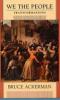
Bruce Ackerman is Sterling Professor of Law and Political Science at Yale University, holding one of the most prestigious academic positions at Yale. He has made significant contributions to constitutional law, political philosophy, and public policy over his distinguished career. His educational background includes an LL.B. from Yale (1967) and a B.A. from Harvard (1964). Ackerman has received numerous honors including the Henry Phillips Prize for lifetime achievement in Jurisprudence (2002), an Honorary Doctorate from the University of Milan (2023), and recognition as a Commander of the French Order of Merit. Ackerman's research focuses on American Constitutionalism, Comparative Constitutionalism, and Theories of Justice. His groundbreaking work includes the three-volume series We the People , which explores great turning points in American constitutional history. His scholarship has had global impact, influencing constitutional reforms in France, Brazil, Britain, and other countries. His recent work examines the constitutional challenges posed by the internet revolution and digital age. His publications reveal consistent engagement with constitutional crises across different nations and time periods, with particular attention to emergency powers, presidential authority, and democratic resilience. Ackerman's work connects historical constitutional development with contemporary challenges to democratic institutions. Commander of the French Order of Merit Henry Phillips Prize for lifetime achievement in Jurisprudence (2002) Honorary Doctorate from University of Milan (2023) Member of the American Law Institute Member of the American Academy of Arts and Sciences Named Leading Global Thinker by Foreign Policy magazine Ackerman has advised numerous governments and constitutional bodies worldwide. His work Before the Next Attack served as basis for French constitutional reform on emergency powers, while The Stakeholder Society influenced wealth distribution reforms in Brazil and Britain. He continues to actively engage with current constitutional challenges through scholarly publications, media commentary, and direct consultation with constitutional institutions globally.
Dr Isik Akin is a Senior Lecturer in Accounting and Finance at Bath Spa University and leads the Accounting Pathway. He teaches undergraduate and postgraduate modules including Financial Accounting, Management Accounting, Corporate Financial Management, and Quantitative Research Methods. Education: PhD in Accounting and Finance (Bath Spa University), PhD in Economics and Finance (Istanbul Gelisim University), MSc in Finance (University of the West of England), BSc in Mathematics (Trakya University) Professional Qualifications: Fellowship in Higher Education Academy, Chartered Institute for Securities & Investment (CISI) His research focuses on Behavioral Finance , FinTech , Credit Risk Management , and Sustainable Finance . Recent publications analyze: Enterprise valuation dynamics (FTSE 100) Metaverse asset valuation frameworks Interconnected financial markets (stocks, commodities, crypto) Green investments in real estate He has secured significant international funding including the Connect4Innovation UK-Turkey partnership grant (2021-2022, £50,000) and coordinated EU projects like the Life-Long Learning Programme (2016-2017). Scientific Awards & Roles: Chartered Institute for Securities & Investment (CISI) certified Fellow of the Higher Education Academy Advisory Board Member: Izlek Academic Journal, Metropolitan Business Review Editorial Board Member: International Journal of Economics and Financial Research His career spans multiple institutions including Worcester University and University of Arts London, with expertise in international finance, quantitative methods, and financial globalization.









-726x726.jpg)