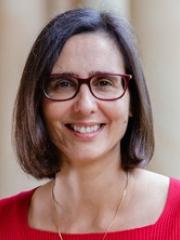
Associate Professor Gilda Carvalho is a leading researcher at the Australian Centre for Water and Environmental Biotechnology (ACWEB) and the School of Chemical Engineering at the University of Queensland. She leads the Drinking and Recycled Water research group and specializes in Environmental Bioengineering , focusing on microbial processes for water/wastewater treatment and resource recovery. Research areas: Chemicals of Emerging Concern (CEC), Biological Nutrient Removal (BNR), biofilm systems, membrane processes, and polyhydroxyalkanoate (PHA) production Key methodologies: Molecular tools linking microbial ecology to process performance Academic output: Over 90 peer-reviewed papers and >40 multinational research projects with industrial partners Educational impact: Coordinator of Postgraduate Programs in Urban Water Engineering and supervisor of >20 PhD students Her recent research explores phage-based biofilm disruption , micropollutant removal via advanced oxidation, and resource recovery from waste streams. Current funding includes projects on biofilm solutions for drinking water and sustainable wastewater reuse. She integrates multidisciplinary approaches across biotechnology, chemical engineering, and environmental science to address global water challenges.
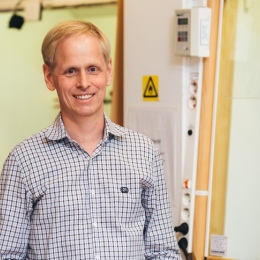
Niklas Hedin is a Professor and Head of the Department of Chemistry at Stockholm University . His research group specializes in developing advanced materials for environmental and energy applications, with a particular focus on CO₂ capture technologies , green material synthesis , and biochar-based solutions for pollution mitigation and sustainable resource utilization. Professor at Department of Chemistry Head of Department Stockholm University affiliation The research spans from fundamental molecular spectroscopy studies to industrial-scale applications . Key projects include the use of activated limestone for Baltic Sea eutrophication control, colloidal porous liquids for energy-efficient carbon capture, and engineered biochars for dual environmental remediation and agricultural applications. Recent publications highlight 2025 breakthroughs in aminated cellulose aerogels , graphene oxide composites for direct air capture , and ultrasound-assisted hydrogen peroxide synthesis . These works demonstrate Hedin's commitment to multiscale material engineering combining experimental validation with computational modeling. The group includes several PhD students and postdoctoral researchers working on specialized aspects of material synthesis and environmental application. His team actively collaborates with industrial partners and government agencies to translate laboratory findings into real-world solutions for sustainable chemistry and climate change mitigation .
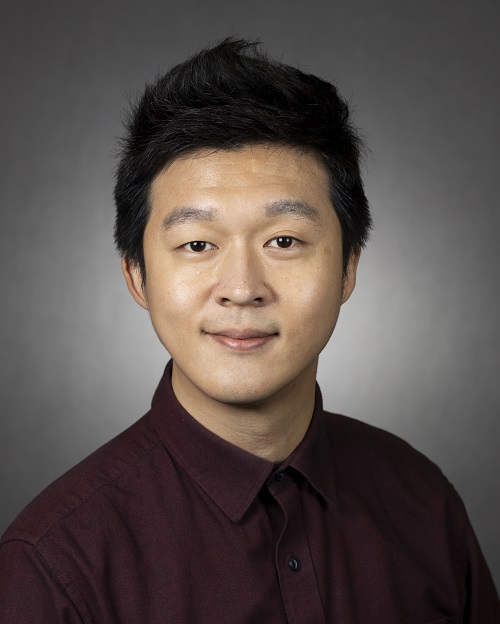
Joonhyuk Suh is an Assistant Professor in the Department of Food Science & Technology at the University of Georgia's College of Agricultural & Environmental Sciences. His research focuses on applying analytical chemistry and metabolomics/flavoromics to enhance food flavor, quality, and safety. Research Interests : Multidisciplinary food chemistry analysis Metabolite and flavor profiling Nut and fruit quality evaluation Dairy product flavor chemistry Food safety biomarkers Recent Publication Trends (2025-2022) show expertise in: Metabolomic evaluation of agricultural products Flavor chemistry in tropical fruits and nuts Food processing safety and contaminant analysis Plant-based food characterization Microbiome and nutritional interventions
Shirley Micallef is Professor in the Department of Plant Science & Landscape Architecture at University of Maryland's College of Agriculture and Natural Resources. Her research addresses microbiological safety of fresh produce, focusing on enteric pathogen-plant interactions, irrigation water quality, and sustainable management practices. Current projects examine Salmonella/E. coli dynamics on leafy greens under variable environmental conditions. Research pillars: 1) Preharvest factors affecting pathogen persistence; 2) Metabolomic basis of plant-pathogen interactions; 3) Validation of sanitation technologies; 4) Irrigation water safety. Recent work (2020-2025) emphasizes molecular mechanisms of bacterial colonization and climate impacts on food safety risks. Article trends: 75% focus on pathogen-plant interactions, 60% on leafy greens, 40% on irrigation water/sanitation. Methodological strengths include transcriptomics, metabolomics, and advanced detection platforms.
John Anthony (Tony) Byrne is Professor of Photocatalysis and Research Director in the School of Engineering at Ulster University. He leads the Clean Technology research theme within the Nanotechnology and Integrated BioEngineering Centre (NIBEC) and heads the Photocatalysis Research team. Byrne earned his 1st class honors degree in biology and chemistry at Ulster University, followed by a DPhil in chemistry under Dr. Brian Eggins. Appointed as a lecturer in the School of Engineering in 2005, he was rapidly promoted and made Professor in 2012. Professor Byrne's research focuses on photocatalytic nanomaterials for environmental remediation and renewable energy applications, with particular emphasis on metal oxides. His work significantly contributes to UN Sustainable Development Goals, especially in clean water and sanitation. He has developed expertise in titanium dioxide-based photocatalysis, water disinfection technologies, and nanomaterial fabrication and characterization. His recent publications demonstrate a strong trend toward practical water treatment applications, particularly in household and rural settings. The research spans photocatalytic, photoelectrocatalytic, and UVC-based disinfection methods, with increasing focus on contaminants of emerging concern and waterborne pathogens in diverse water matrices. Fellow of the Higher Education Academy Fellow of the Royal Society of Chemistry Byrne serves on multiple professional committees including the RSC Northern Ireland Section Committee, the Chemical Nanoscience and Nanotechnology Interest Group, and chairs the Professional Bodies Forum supporting the All Party Group on Science and Technology in the NI Assembly. He is a founding Board Member of the Northern Ireland Science Festival. His research portfolio includes numerous projects such as SAFEWATER POC, funded by Invest Northern Ireland, focusing on commercializing water treatment technologies. Professor Byrne leads the Photocatalysis Research team at Ulster within the Nanotechnology and Integrated BioEngineering Centre (NIBEC), where he directs the Clean Technology research theme. His laboratory work focuses on developing and testing photocatalytic nanomaterials for water treatment applications, with strong emphasis on practical implementation in real-world settings.
Dr. Matthew James Slater is the Head of the Aquaculture Research Group at the Alfred Wegener Institute, focusing on sustainable marine bioeconomy. His work emphasizes integrated multitrophic aquaculture (IMTA), holothurian ecology, and economic development through aquaculture. He leads applied research with industry partners to develop sustainable feed solutions and improve aquaculture practices. Research interests include optimizing feed ingredients from by-products (e.g., black soldier fly larvae, shrimp processing remains) and exploring the ecological roles of sea cucumbers. He investigates the effects of environmental factors (soundscapes, light, temperature) on aquatic species and promotes circular economy principles in aquaculture. Key contributions span over 60 peer-reviewed publications, with recent work on microplastic contamination in fish and the economic value of small-scale fisheries. His research integrates interdisciplinary approaches to address global challenges in aquaculture sustainability and food security. Contact: matthew.james.slater@awi.de | +49(471)4831-2727 | Alfred Wegener Institute, Bussestraße 27, 27570 Bremerhaven
Camila Biazus-Dalcin is a Lecturer (Teaching & Research) at the University of Dundee's School of Health Sciences, affiliated with the Mother, Infant and Child Health Research Group (MIRU). She holds a PhD in Nursing (2020) and a PhD in Philosophy (2022). Her research focuses on addressing health inequalities in marginalized communities, including Gypsy/Traveller populations, people in prison, and those experiencing homelessness. She employs qualitative methods like ethnography and creative approaches, while expanding into mixed methods. She collaborates internationally with colleagues in Brazil, Portugal, Australia, and the USA. Awards include the 2022 Sigma European Early Career Researcher award and the Dr Doris J. Froebe Leadership Education Grant. Research Interests: Health inequalities, sexual and reproductive health, perinatal mental health, and community-engaged research. Recent work includes studies on HIV outcomes, perinatal healthcare access, and disinfection protocols in pediatric units. Awards: Sigma European Early Career Researcher award (2022) Dr Doris J. Froebe Leadership Education Grant (2022) Teaching & Supervision: Teaches undergraduate/postgraduate modules like Fundamentals of Adult Health and Nursing Skills. Supervises PhD students in global health and public health topics. Nominated for multiple teaching awards (2023–2024). Projects: Leads initiatives such as the 'My Data' Project (co-producing tools with drug users) and the Gypsy/Traveller Community Health Worker evaluation. Collaborates on improving healthcare access for marginalized groups.
Onita Basu, Professor in the Department of Civil and Environmental Engineering at Carleton University's Faculty of Engineering and Design, specializes in water and wastewater treatment technologies. With a Ph.D. from the University of Waterloo, she leads the Basu Research Group, focusing on filtration/membrane bioreactors, biological removal of pharmaceuticals, and community-based water solutions in Tanzania. Her teaching includes courses like ENVE 3001 Water Treatment Principles and Design and graduate-level membrane processes. B.A.Sc., M.A.Sc. (University of British Columbia) Ph.D. (University of Waterloo) Professional Engineer (P.Eng.) Research Interests: Professor Basu investigates integrated water treatment systems, emphasizing membrane fouling control, nanoparticle disinfection mechanisms, and removal of recalcitrant organics. Her work bridges advanced technologies like ceramic ultrafiltration with practical implementations in low-resource settings through projects such as the Tanzania Water Hub. Recent Publications: Her 2025 studies on silver-doped zinc oxide for antimicrobial water treatment and PFAS removal strategies highlight emerging contaminant solutions, while 2024 work explores graphene oxide adsorption and climate change education programs. Earlier articles focus on membrane fouling, nanoparticle elution, and biofiltration optimization. Labs & Projects: The Basu Research Group operates pilot plants for membrane testing, biofiltration systems, and community engagement initiatives in Tanzania. They hosted Carleton's 3MT event in 2023 and collaborate with institutions like Humber College on NSERC-funded projects.
Siddhartha Roy is an Assistant Professor in the Department of Environmental Sciences within the School of Environmental and Biological Sciences at Rutgers University. His research focuses on water quality and treatment, public health, environmental epidemiology, and international development, with particular emphasis on lead contamination issues and the Flint Water Crisis. Dr. Roy earned his PhD from Virginia Tech and has established himself as a leading expert in drinking water safety and environmental justice. His research interests center on understanding water infrastructure failures, developing solutions for lead contamination, and examining the public health implications of water quality issues. Roy employs a transdisciplinary approach that combines laboratory research, field studies, citizen science, and policy analysis to address complex water quality challenges, particularly in underserved communities and low-resource settings. His work bridges engineering, public health, and social sciences to create practical solutions for water safety issues. Dr. Roy's publication record demonstrates consistent contributions to understanding lead contamination, corrosion mechanisms in water systems, and the public health impacts of water quality issues. His research shows a clear trajectory from technical investigations of water infrastructure failures to broader examinations of policy implications, ethical considerations in environmental engineering, and the psychological impacts of environmental crises. His work on the Flint Water Crisis has been particularly influential in shaping national conversations about drinking water safety. Virginia Tech 2017 Graduate Student of the Year Top 100 'Sustainability' papers of 2023 Featured in Physics Magazine for highly cited work Featured in Mayo Clinic Press' 2024 Book 'The Nocebo Effect' Recognized as 'Rising Star of the Water Industry' Authored paper that became 'Most Read' in Environmental Engineering Science journal's history (250,000+ downloads) Dr. Roy actively mentors students through research opportunities and has developed a 'Public Inspired Science' graduate training program. His laboratory receives funding from multiple sources including NIEHS, Rutgers SEBS, and USGS. He has been instrumental in connecting research findings to policy recommendations and public awareness through extensive media engagement, congressional testimony, and community outreach. His TEDxVirginiaTech talk 'Science in service to the public good' has garnered over 1.1 million views and exemplifies his commitment to applying scientific knowledge for societal benefit.
Dr. Rosalee Hellberg is an Associate Professor at Chapman University's Schmid College of Science and Technology, specializing in Food Science. Her work combines molecular biology and analytical chemistry to combat food fraud and ensure safety. Lewis & Clark College (BA) | Oregon State University (MS, PhD in Food Science & Technology) Research focuses on: DNA barcoding applications for species identification Food fraud detection in seafood and botanical products Pathogen detection using molecular techniques Labeling compliance in processed foods Development of rapid authentication methods Recent publications address seafood mislabeling patterns, ginseng supplement authenticity, and pathogen control through advanced spectroscopy. Awards include multiple recognitions for research and mentorship excellence. Her work bridges regulatory compliance, consumer protection, and food supply chain integrity through innovative molecular approaches. Key Scientific Awards: Wang-Fradkin Assistant Professorship Award (2015-2017) Institute of Food Technologists Emerging Leaders Network Award (2017) Mentorship of Undergraduate Research Award (2018-2019)
James A. Smith is the Henry L. Kinnier Professor of Civil Engineering at the University of Virginia's Department of Civil and Environmental Engineering. He holds a Ph.D. from Princeton University and has extensive experience in water treatment technologies and environmental engineering. His research focuses on sustainable water solutions for developing regions, nanomaterial applications in filtration, and green infrastructure. Education: Ph.D. Civil Engineering, Princeton University, 1992 M.S. Environmental Engineering, Virginia Tech, 1984 B.S. Civil Engineering, Virginia Tech, 1983 Research Interests: Sustainable water treatment, nano-silver disinfection, low-impact development, emerging pollutants, and global health interventions. He pioneered the MadiDrop+ technology and founded PureMadi and Silivhere Technologies to address waterborne diseases in underserved communities. Awards: AEESP/McGraw Hill Teaching Award (2002) Fulbright Research Fellow (2017) Rudolph Hering Medal (2011) Cavaliers’ Distinguished Teaching Professor (2000-02) Advising & Innovation: Developed PureMadi to produce low-cost water filters in South Africa. His work bridges engineering and global health through community-driven solutions. Collaborates with institutions like the University of Venda and Stanford University. Labs & Teams: Operates research facilities in Thornton Hall, focusing on advanced filtration systems and nanotechnology applications.
Thomas J. McDonald is a Regents Professor in the Department of Environmental and Occupational Health at Texas A&M University's School of Public Health. He holds a PhD in Chemical Oceanography from Texas A&M University (1988) and has over three decades of academic and industry experience in environmental chemistry, petroleum geochemistry, and bioremediation. His professional roles include serving as Assistant Dean for Academic Affairs (2014–2017), Department Head (2010–2014), and leadership in research projects funded by federal agencies like NOAA, EPA, and NIH. McDonald's research focuses on environmental contaminant analysis, including PAHs, petroleum biomarkers, and toxicology. He has led over 20 major projects totaling millions in funding, addressing issues like oil spill identification, bioremediation strategies, and environmental justice. His work spans academic collaborations, federal grants, and industry partnerships, emphasizing community engagement and disaster response. He has authored/co-authored over 150 peer-reviewed publications and received awards such as the Aggies Celebrate Teaching Award (2020), Regents Professor title (2019), and Distinguished Achievement Award (2015). His labs and teams prioritize translational research, integrating advanced analytical methods with public health applications. McDonald's advisory contributions include mentoring students in environmental health and toxicology, with a focus on training future public health professionals through programs like the Public Health Traineeship supported by HRSA grants. His research also addresses emerging challenges like PFAS contamination and post-hurricane environmental recovery in Houston.
Professor Thomas Jüstel is a leading researcher in inorganic chemistry and applied materials science at the Münster University of Applied Sciences, where he heads the AG TOM (Arbeitsgruppe Thomas Jüstel) research group within the School of Engineering's Chemical Engineering department. His work focuses on the development and characterization of luminescent materials, particularly phosphors for solid-state lighting applications. Dr. Jüstel's research spans multiple areas of optical materials science, with special emphasis on rare earth compounds, transition metal-doped phosphors, and novel host materials for lighting and display technologies. His work addresses fundamental structure-property relationships in luminescent materials while also developing practical applications in solid-state lighting, UV disinfection, and biomedical imaging. His research group has made significant contributions to understanding energy transfer mechanisms, thermal quenching behavior, and crystal field effects in various phosphor systems. Analysis of his recent publications reveals a strong focus on rare earth carbodiimides, tungstate and molybdate phosphors, UV-C emitting materials for disinfection applications, and sustainable recycling methods for critical elements in phosphors. His work bridges fundamental materials science with practical applications in lighting, environmental technology, and medical devices. Recipient of the 1st Innovation Price (2018) for 'Mit Polyphosphat beschichteten Photokatalysatoren gegen Plastikmüll' Recognized in the AD Scientific Index Maintains a high H-Factor as documented in 2024 metrics Professor Jüstel has supervised numerous students and researchers, with an extensive list of former and current team members working on various aspects of luminescent materials. His research group collaborates with institutions across Europe and has secured funding for projects related to sustainable materials, lighting technology, and environmental applications of luminescent compounds. The AG TOM laboratory facilities support synthesis, structural characterization, and optical property measurements of advanced luminescent materials.
William Arnold is a Professor in the Department of Civil, Environmental, and Geo- Engineering at the University of Minnesota . He leads the Arnold Research Group and contributes to the Circularity Impact Program and Institute on the Environment . His research focuses on the fate of anthropogenic chemicals in natural and engineered systems, emphasizing transformation processes , reaction mechanisms , and water quality improvement . His academic qualifications include a PhD from Johns Hopkins University , an MS from Yale University , and a BS from MIT . Key research areas are: Photochemical fate of pharmaceuticals/pesticides Mineral surface reaction dynamics PFAS remediation technologies Micropollutant detection Disinfection byproduct assessment Sustainable fluorochemical design His recent publications (2023-2025) emphasize PFAS transformation , 19F NMR spectroscopy , and chloramine/nitrosamine interactions , with a focus on environmental degradation pathways. Collaborations include projects with the National Science Foundation , Legislative-Citizen Commission on Minnesota Resources , and U.S. Geological Survey . Notable work includes in situ sequestration methods and micropollutant analytical frameworks .
Marijana Vučinić is a full Professor at the Department of Zoohygiene within the Faculty of Veterinary Medicine at the University of Belgrade. She teaches multiple courses including Experimental Animals and Experimental Models, Methodology of Clinical Trials, Prevention of Animal Behavioral Disorders, Environmental Protection, Psychosocial Aspects of Animal Keeping, Animal Behavior, Welfare and Protection, and Standards of Good Veterinary Practice. Dr. Vučinić's research interests span multiple areas of veterinary science with particular emphasis on: Animal welfare assessment methodologies across multiple species Dog behavior, welfare, and human-dog interactions Stress physiology and indicators in domestic animals Alternative feed sources in animal nutrition Experimental animal models and ethical considerations Behavioral disorders and their prevention in domestic animals Analysis of her recent publications reveals a consistent focus on practical animal welfare assessment through both behavioral observations and physiological indicators. Her work demonstrates significant expertise in dog welfare, including studies on stray dog populations, dog bite prevention, and human management impacts. She has also conducted extensive research on earthworm meal as an alternative protein source for poultry, examining effects on growth performance, meat quality, and health. Her research bridges theoretical ethology with practical veterinary applications, making it valuable for both academic and clinical settings. Dr. Vučinić has made notable contributions to understanding how environmental factors affect animal welfare, with practical applications in veterinary medicine and animal husbandry. Her work on fish welfare, particularly regarding pain perception in fish, and her research on essential oils in veterinary medicine (especially oregano oil and carvacrol) as natural alternatives for pain management demonstrate the breadth of her expertise.