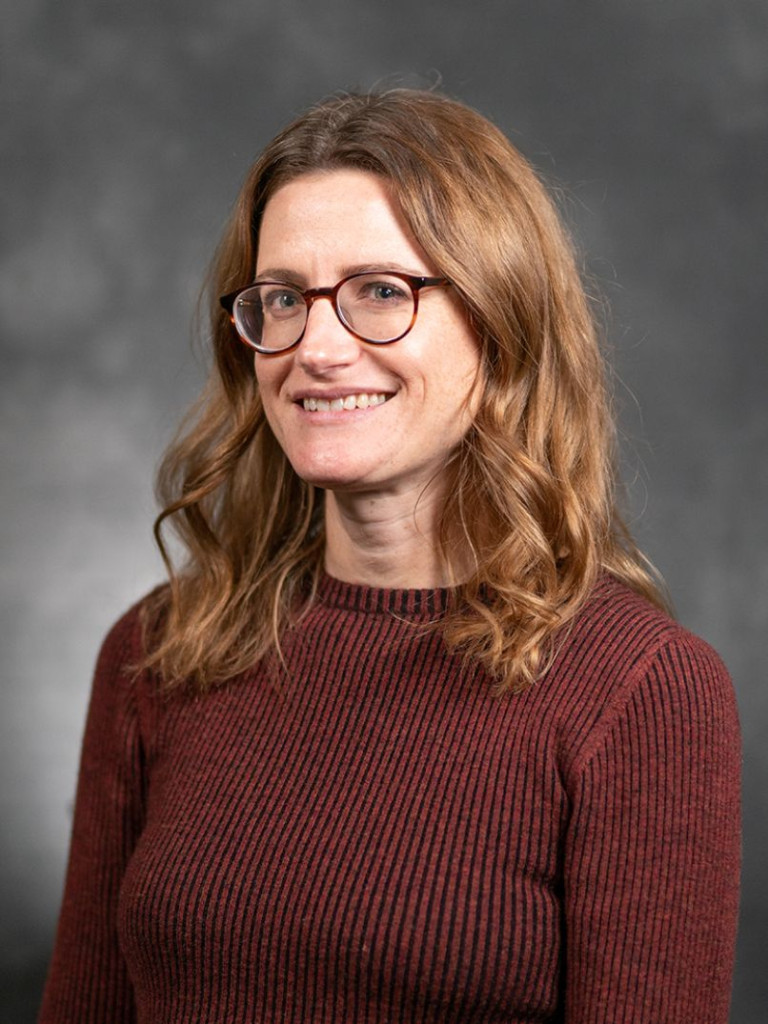
Dr. Milan Kooplikkattil Sadan is a Visiting Researcher at the Dyson School of Design Engineering, part of the Faculty of Engineering at Imperial College London. His expertise lies in advanced battery materials research, focusing on cutting-edge chemistries and technologies. PhD in Chemical and Biological Engineering (Gyeongsang National University, 2020) Marie Skłodowska-Curie fellowship awardee Galileo Master Certificate in Renewable Energy Research interests: Sodium-ion batteries Room-temperature sodium-sulfur batteries Lithium-sulfur batteries Potassium-ion batteries All-solid-state batteries Flexible batteries Dry electrode fabrication Self-healing batteries mimicking biological processes Scientific awards: Marie Skłodowska-Curie fellowship Galileo Master Certificate Academic positions: Faraday Institution Research Fellow, University of Sheffield (2022-2023) Senior Researcher, Gyeongsang National University (2020-2022)
Apparao M. Rao is the Robert A. Bowen Endowed Professor of Physics, specializing in advanced energy storage systems and materials science. His research focuses on battery technologies, particularly potassium-ion and lithium-sulfur batteries, solid electrolytes, and thermoelectrochemical systems. He leads projects on high-capacity anodes/cathodes, electrolyte design, and waste heat harvesting. Rao’s work integrates nanomaterials, electrochemistry, and energy conversion, addressing challenges in battery stability, energy density, and environmental impact. His research has produced breakthroughs in solid electrolyte interphase engineering, stress-resilient carbon materials, and oscillatory energy systems. Rao collaborates on cutting-edge projects like bio-derived silicon nano-quills and graphene-based electrodes. His affiliations include roles as a Director and faculty member in physics and materials science departments. Rao’s publications span over 100 peer-reviewed articles (2022–2025), emphasizing sustainable electrolytes, high-voltage cathodes, and scalable battery architectures. His work has implications for renewable energy storage and next-generation energy technologies.
Dr. Francisco Javier Bonilla is a Colombian researcher specializing in advanced materials characterization for energy storage systems. As Platform Manager of the Electron Microscopy Platform at CIC energiGUNE, he oversees state-of-the-art facilities supporting battery and thermal storage research. His career includes postdoctoral roles at France's LPCNO and INSP, focusing on nanomaterials synthesis and magnetic properties analysis. Bonilla's expertise spans electron microscopy techniques (SEM, TEM, in-situ TEM), crystal structure characterization, and materials for electrochemical applications. He holds a PhD from Sorbonne University (2013) and has contributed to projects like EKIZIEN and a 2018 Jose Castillejo Fellowship-funded collaboration with Oak Ridge National Laboratory. Education: PhD in Physics & Chemistry of Nanomaterials (UPMC Paris 6), Master in Nanoparticles (INSP Paris), BSc in Physics/Engineering (University of Cauca, Colombia) His research bridges nanoscale characterization with energy storage innovation, emphasizing battery materials' structural evolution under electrochemical conditions. Over 15 peer-reviewed articles analyze cathodes/anodes for Na/Li-ion batteries, electrolyte behavior, and advanced TEM applications. Bonilla's work addresses challenges in solid-electrolyte interphase formation, high-voltage electrolytes, and sustainable electrode materials. Awards: Jose Castillejo Fellowship (2018) He advises CIC energiGUNE's interdisciplinary teams on microscopy applications and collaborates on national projects. The Electron Microscopy Platform under his leadership serves as a central resource for material science investigations into energy systems.
Joachim Hering is a Research Associate at the Institute of Energy and Process Systems Engineering within the Faculty of Mechanical Engineering at Technical University of Braunschweig. He has been working at the institute since 2022, contributing to research in advanced battery technologies. His primary research focus centers on optimizing the anode of secondary zinc-manganese dioxide batteries. His academic background in chemistry provides a strong foundation for his current work in electrochemical energy storage systems. His research interests span battery technology, electrochemistry, and various energy storage systems including redox-flow batteries and lithium-sulfur batteries. Hering completed his Master of Science in Chemistry at Justus-Liebig-University Gießen (2019-2021), where his thesis focused on the electrochemical characterization of phenazines for application in redox-flow batteries. He previously earned his Bachelor of Science in Chemistry from the same institution (2016-2019), with thesis work on optimizing all-solid-state lithium sulfur batteries.
Jodie Lutkenhaus is a Professor in the Artie McFerrin Department of Chemical Engineering at Texas A&M University, serving as Associate Dean for Research in the College of Engineering and Associate Agency Director of the Texas A&M Engineering Experiment Station. She holds the Axalta Coating Systems Chair and is a Presidential Impact Fellow. Her research focuses on redox-active polymers, energy storage systems, and advanced materials such as MXenes and polyelectrolyte complexes. Educated at the Massachusetts Institute of Technology (PhD, 2007) and the University of Texas at Austin (BS, 2002), her work emphasizes sustainable, metal-free battery technologies and structural energy storage materials. Notable achievements include co-discovering the world's first polypeptide organic battery and pioneering studies on MXene nanocomposites for aerospace applications. Her research portfolio spans over 40 peer-reviewed articles since 2021, with a focus on organic radical polymers, MXene-based composites, and energy storage mechanisms. Awards include the 2023 Falling Walls Engineering & Technology Prize, ACS Global Mentorship Award, and multiple fellowships from the World Economic Forum and Kavli Foundation. Lutkenhaus leads interdisciplinary projects funded by NSF, AFOSR, and industry partners, emphasizing translational research in structural batteries and recyclable materials. Her lab explores applications in aerospace, renewable energy systems, and smart coatings.
Robert Q. Topper is a Professor of Chemistry at The Cooper Union's Albert Nerken School of Engineering. He holds a B.S. in Physics and Chemistry from Florida State University and a Ph.D. from Yale University. His research focuses on computational and theoretical chemistry, including nanoscience, material science, and biophysics, with emphasis on Monte Carlo methods, machine learning, and quantum mechanics. He has mentored over 115 students and published extensively in top journals like Physical Review Letters and the Journal of Chemical Physics. Dr. Topper’s academic journey includes roles as Department Chair at Monmouth University and a visiting researcher at NYU. He has organized 5 international conferences and delivered 23 invited seminars. His awards include the 2025 Teaching Award from the New York American Chemical Society and two recognitions on Cooper Union’s 'Student’s List.' Teaching spans general, physical, and theoretical chemistry at all academic levels. He collaborates with researchers globally, including NYU’s Tuckerman group. His work bridges theory and experiment, addressing environmental and material challenges. Beyond academia, he volunteers with the New Jersey State Youth Orchestra and enjoys music, hiking, and graphic novels. Research highlights include studies on ammonium nitrate nanoparticles, atmospheric aerosols, and computational methods for battery research. He leads a lab advancing machine learning applications in molecular dynamics, with recent grants for next-gen battery materials development.
Daniele Pergolesi serves as a Senior Scientist at the Paul Scherrer Institute (PSI), holding a dual appointment across the Nuclear Energy and Safety (NUM) and Energy and Environment (ENE) Divisions within the Thin Films and Interfaces Group under Prof. Thomas Lippert since 2012. His role bridges fundamental materials research with energy applications at Switzerland's premier research institution for natural and engineering sciences. Academic Background: Associate Professor Habilitation in Experimental Solid State Physics (2013, Area 02/B1), Ministry for Education, University and Research of Italy Ph.D. in Materials Science, University of Genova, Italy (2004) Laurea in Physics, University of Genova, Italy (1999) Dr. Pergolesi's research centers on advanced thin film synthesis and multiscale materials characterization , with deep expertise in solid-state ionics for energy conversion systems. His work systematically investigates oxygen-ion/proton conducting oxides for solid oxide fuel cells, oxynitride semiconductors for solar hydrogen production, and cryogenic detector materials for high-resolution spectroscopy. He pioneers pulsed laser deposition techniques to engineer epitaxial heterostructures while correlating nanostructural features with charge transport phenomena, leveraging PSI's neutron and synchrotron facilities for in situ analysis. Analysis of his 2021-2025 publications reveals dominant research thrusts in solid-state microbattery development (particularly all-oxide architectures) and photoelectrochemical water splitting . Key methodological trends include in situ impedance spectroscopy for electrolyte characterization, momentum-resolved electronic structure mapping of photocatalysts, and domain engineering in complex oxide heterostructures. His work consistently bridges fundamental charge transport mechanisms with device-level performance metrics. Scientific Recognition: No formal awards documented in source materials Academic Contributions: While no advisees are listed in institutional records, Dr. Pergolesi's technical guide on pulsed laser deposition has become a reference in thin film communities. His research directly supports PSI's strategic initiatives in sustainable energy through collaborations with MANA-NIMS and European neutron facilities. Research Infrastructure: As core personnel in the Thin Films and Interfaces Group, he operates within PSI's Laboratory for Multiscale Materials Experiments, utilizing the institute's neutron spallation source, Swiss Light Source synchrotron, and specialized cleanroom facilities for thin film fabrication and characterization under controlled atmospheres.
Prof. Yoon Seok Jung is a Professor at Yonsei University, affiliated with the Multidimensional Energy Storage Engineering Lab in Seoul, Republic of Korea. His research focuses on advancing inorganic solid electrolytes (SEs) to achieve stable interfaces for all-solid-state batteries (ASSBs), addressing critical challenges in energy density, safety, and material cost-effectiveness. He explores sulfide and halide SEs, emphasizing their electrochemical stability, mechanical properties, and scalability. Research interests include designing composite cathodes, optimizing electrode/SE interfaces, and mitigating interfacial degradation caused by volume changes in electrodes. His work highlights novel halide SEs with high oxidation stability (>4 V vs. Li/Li+) while addressing cost barriers associated with rare metals like Y, Sc, and Ta. Prof. Jung’s recent advancements aim to develop cost-effective SEs for practical ASSB applications. Publications reflect a focus on material synthesis, interfacial stability, and performance optimization in solid-state systems. His lab collaborates on multidisciplinary projects bridging materials science and energy engineering.
Dr. Ainara Aguadero is a Visiting Professor in Energy Materials at the Department of Materials, Faculty of Engineering, Imperial College London. She holds a primary affiliation with the Institute of Materials of Madrid (ICMM), CSIC, Spain. Her research focuses on optimizing ion/electron dynamics in solid-state electrochemical devices like batteries and fuel cells through advanced surface/interface analysis techniques. Her work combines structural, chemical, and electrochemical methods including isotopic labelling, in situ/operando spectroscopy (SIMS, XPS, LEIS), and computational modeling. Key contributions include improving solid electrolyte/metal interface stability in all-solid-state batteries, particularly for Li and Na systems. Dr. Aguadero has published over 69 high-impact papers (2.5k citations) and holds a patent in this field. Her research program is supported by grants such as EP/P029914/1. Lab affiliations include the Energy Conversion, Harvesting and Storage Group at ICMM and collaborations with Imperial College's Materials Department.
Runzi Wang is a Visiting PhD student at the University of Oxford's Department of Engineering Science, focusing on All-Solid-State Battery (ASSLB) modeling. His research addresses commercial challenges in ASSLBs through Finite Element Method (FEM) and phase-field modeling techniques. He holds a Master's in Mechanical Engineering from the University of Manchester (2018-2019) and is conducting his PhD at Imperial College London under Dr. Emilio Martínez-Pañeda. Research interests include electro-chemo-mechanical analysis of ASSLB interfaces and void evolution, with applications to battery safety and performance. His work integrates multi-coupled phase-field models to predict lithium dendrite growth and interface degradation. Notable publications explore lithium depletion-driven short circuiting and void formation mechanisms in solid-state batteries. Collaborations with industry and academia aim to advance energy storage technologies.
Chandramohan George serves as an Associate Professor and Royal Society Research Fellow at Imperial College London's Dyson School of Design Engineering within the Faculty of Engineering. His research leadership spans multiple institutional affiliations including the Electrochemical Science and Engineering group and the Cellular Mechanosensing and Functional Microscopy Centre. His research focuses on smart energy technologies and materials , specifically developing tailor-made materials for solar-batteries, flexible batteries, post-Li ion technologies, and smart materials. Key research areas include mechanical resilience in ultra-flexible battery systems, solid-state electrolyte engineering, and in situ characterization of electrochemical processes using advanced microscopy techniques. Recent publications demonstrate a strong emphasis on Solid-state battery interfaces and stability In situ/operando TEM for real-time battery analysis NASICON-type electrolyte optimization Flexible electrode architectures using carbon-metal hybrids His work bridges fundamental materials science with practical energy storage applications. Award Highlights: Royal Society Research Fellowship His research program integrates advanced microscopy with electrochemical engineering to address critical challenges in next-generation energy storage, with significant focus on interface stability and mechanical durability in flexible and solid-state systems. The work spans fundamental crystallography studies to scalable manufacturing processes for battery components. George maintains active collaborations through Imperial's specialized research centres focused on electrochemical science and cellular mechanosensing, leveraging cross-disciplinary approaches to energy materials challenges.
Laisuo Su is an Assistant Professor of Material Science Engineering at the Erik Jonsson School of Engineering and Computer Science at the University of Texas at Dallas. His research group focuses on interdisciplinary investigations into revolutionary energy storage materials, particularly addressing surface and interface scientific challenges in battery systems. Key areas include solid-state electrolytes, sodium-ion batteries, and lithium metal battery optimization. He leads the Su Lab and maintains an active Google Scholar profile . His work emphasizes high-voltage cathodes, electrolyte design, and interfacial stability, with notable contributions to understanding space charge effects in solid electrolytes and dual-anion systems. Collaborations involve sponsors and industry partners aiming to advance practical battery technologies for high-energy applications. Recent publications (2023–2025) highlight trends in sodium-ion battery materials, localized high-concentration electrolytes, and machine learning-driven electrolyte optimization. His research bridges fundamental material science with applied engineering solutions for next-generation energy storage systems.
Daniel Monteiro Cunha is a PhD Researcher in Inorganic Materials Science at University of Twente specializing in advanced materials for energy storage applications. His research focuses on developing next-generation solid-state batteries with enhanced safety and performance characteristics compared to conventional liquid electrolyte systems. His primary research interests include: Lithium-ion battery technology and limitations All-solid-state micro-batteries for improved safety Vertically aligned nanocomposite (VAN) thin films as novel materials platforms Pulsed laser deposition techniques for material synthesis Nanoscale electrochemical characterization using advanced microscopy Dr. Cunha's research program is structured around three main pillars: controlled fabrication of lithium-based nanocomposites through self-assembly, Kinetic Monte-Carlo simulations of VAN growth, and nanoscale mapping of local electrochemical behavior. His work has significant implications for UN Sustainable Development Goals related to clean energy. With 34 research outputs documented, his publication record shows consistent productivity with 2 publications in 2025, 8 in 2024, and 3 in 2022. His work has accumulated 467 citations according to Scopus with an h-index of 10, indicating substantial impact in the materials science community. Lithium Chemistry (100%) Nanocomposites Material Science (97%) Thin Films Material Science (92%) Pulsed Laser Deposition Material Science (87%) Oxide Material Science (73%) Dr. Cunha has presented his research at multiple international conferences including presentations on 'Oxide Interfaces for Energy Applications' (2022), 'Morphology Evolution during Lithium-based Vertically Aligned Nanocomposite Growth' (2019), and 'Cathode/electrolyte nanocomposite films for enhanced 3D solid-state batteries' (2018).
Yifei Mo is an Affiliate Professor in the Department of Materials Science and Engineering at the University of Maryland , contributing to research in Solid-State Batteries , Ionic Conductors , and Computational Materials Design . His work bridges fundamental understanding of ion transport with practical applications in energy storage.
Prof Sian Dutton is a Professor of Physics and Solid State Chemistry at the University of Cambridge, affiliated with the Cavendish Laboratory and serving as Director of the Winton Programme for the Physics of Sustainability. Her research focuses on functional energy materials, particularly battery technologies and solid-state magnetic cooling. She leads projects on non-molecular solids for rechargeable batteries and magnetic cooling systems, collaborating with researchers in materials synthesis and characterization. Her work employs techniques such as X-ray diffraction, in-situ measurements, and electrochemical testing. Key areas include Li-ion and Mg-ion batteries, solid-state electrolytes, and perovskite solar cells. Prof Dutton’s contributions address challenges in energy storage and sustainability, with implications for next-generation battery technologies and low-carbon materials. Recent publications highlight advancements in sodium-ion battery cathodes, Jahn-Teller distortions in transition metal oxides, and glass formation in hybrid perovskites. She directs the Winton Programme, fostering interdisciplinary research in energy and materials science.