Dr. Mialy Razanajatovo is a Researcher at the Department of Landscape Ecology and Vegetation Science, focusing on ecological and environmental research. Her work integrates climate change impacts, plant biology, and biodiversity conservation, with a strong emphasis on Madagascar's ecosystems. She actively contributes to teaching and research activities, including the 'Agrarbiologisches Projekt - Landschaftsökologie und Botanik' course in 2025. Her research interests span ecology, climate change adaptation, pollination dynamics, and invasive species biology. She explores how floral traits and phylogenetic relationships influence plant invasions and investigates the socio-ecological dimensions of climate change, particularly for marginalized communities like disabled populations. Recent studies highlight the vulnerability of plant seed production to pollinator declines and the role of selfing in plant colonization. Dr. Razanajatovo's publications (2015–2024) address topics such as phenological shifts, herbivore-plant interactions, and gender equity in science in Madagascar. Though no specific awards or grants are listed, her work reflects interdisciplinary engagement with environmental sustainability and policy.
Univ.-Prof. Dr. Ursula Kessels (Freie Universität Berlin) is a leading professor in education research focusing on heterogeneity and education. Her work bridges basic and applied research in school and classroom contexts, drawing on educational psychology, social psychology, and developmental psychology. Research methodology emphasizes experimental designs, complemented by correlational and evaluation studies. She investigates motivational, identity-related, and attitudinal predictors of school learning , equity in education systems (especially gender, ethnicity, and socioeconomic disparities), and developed the Interests as Identity Regulation Model (IIRM) to map interactions between academic interest/achievement and identity development. Key research areas: Gender stereotypes in education, STEM engagement, feedback bias, school burnout, and shifting standards in evaluating stereotyped groups Recent projects: DFG-funded studies on performance feedback to learners with migration backgrounds and boys' educational disparities Collaborations span planetary sciences, health sciences, and international networks Her 15 most recent publications (2021–2024) focus on gendered/ethnic biases in education , shifting standards theory, and identity dynamics in STEM. Topics include prosocial behavior backlash in classrooms, math career aspirations, and feedback inflation for minority students. Methodologically, she combines experimental designs , implicit association measures, and cross-national comparisons. Key grants include DFG projects (2013–2022) and Jacobs Foundation funding (2008). She contributes to policy discussions through invited lectures at institutions like Ghent University and University of Wuppertal.
Prof. Dr. Regina Kreide is a Full Professor of Political Theory and History of Ideas at Justus Liebig University Giessen. She serves as Co-Director of the DFG-funded Collaborative Research Center 'Dynamics of Security' and leads the DAAD ISAP partnership with Universidad de Antioquia in Colombia. Her research focuses on critical analyses of security mechanisms, minority rights, and democratic transformations in global contexts. Her scholarly work engages with: Political and critical theory examining global justice paradigms Securitization dynamics affecting marginalized communities Democratic theory in digital and transnational spaces Housing justice and property relations as sites of political struggle AI's impact on public discourse and democratic deliberation Kreide's publications demonstrate sustained engagement with Habermasian critical theory while addressing contemporary challenges like migration governance, algorithmic power, and housing inequality. Her recent work shows increased focus on material inequalities and technological disruptions to democratic processes. She actively mentors doctoral candidates, having supervised 16 PhD students on topics ranging from digital activism to postcolonial democracy. As project leader for major DFG and DAAD initiatives, she coordinates international research on Roma minorities and security politics. Her team includes four researchers and administrative staff supporting the Collaborative Research Center's operations.
Johanna Baumann is a Research Associate at the Seminar for Reformed Theology within the Faculty of Protestant Theology at the Westfälische Wilhelms-Universität Münster. She holds a Magistra Theologiae from the University of Münster and has studied at the University of Tartu and Kiel University. Currently, she works under Prof. Dr. Anne Käfer and is affiliated with the Center for Interdisciplinary Sustainability Research. Education: Magistra Theologiae (2022), Westfälische Wilhelms-Universität Münster 1st Theological Examination (2022), Confederation of Protestant Churches in Lower Saxony Protestant Theology studies (2015–2022), University of Münster, Tartu, and Kiel Her research focuses on Faith and Identity , Alienation Phenomena , and Theological Gender Studies , with interdisciplinary ties to sustainability research. Her 2025 publication explores Rudolf Bultmann’s hermeneutic approach to faith history, while her 2024 article analyzes the "Exodus from Eden" narrative. Baumann actively collaborates in teaching roles, co-leading weekly seminars on Kierkegaard and Bultmann. She is a member of the Rudolf Bultmann Society for Hermeneutic Theology, the Luther-Gesellschaft, and the Faculty of Protestant Theology’s Workgroup Queer. Her work bridges systematic theology with contemporary ethical and gendered discourses.
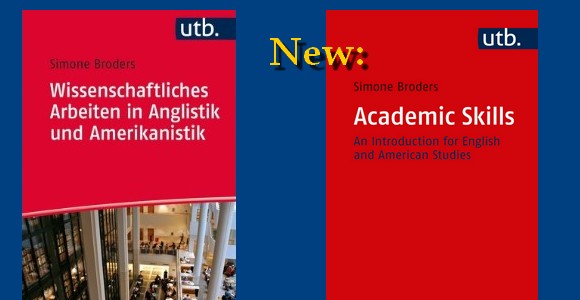
PD Dr. Simone Broders is an Associate Professor-level academic (Privatdozentin) at Friedrich-Alexander-Universität Erlangen-Nürnberg (FAU), affiliated with the Department of English Studies. She holds visiting positions at the University of Magdeburg and previously served as Acting Professor at the University of Cologne. Her academic foundations include a Magister Artium in English Studies and Computational Linguistics from FAU and the University of Kent, followed by a Dr. phil. (2007) and habilitation (2018). Her research explores interdisciplinary intersections across: 18th-century English literature, particularly discourses of curiosity Contemporary British fiction and popular culture Gothic/vampire tropes as sociocultural critique Digital humanities applications in literary studies Theories of alterity, non-knowledge, and parallel societies Her publications demonstrate a consistent focus on epistemological boundaries, with recent work examining agnotology and ignorance as productive forces in literature. Gothic heroism, dystopian societies, and feminist reinterpretations of horror genres are recurring themes, often analyzed through frameworks like historiographic metafiction and cultural memory. Awards and grants include: DAAD grants for projects on Shakespeare in science fiction (2014) and 18th-century curiosity (2019) Alfred-Vinzl-Stiftung research funding (2012) PhD scholarship from Konrad-Adenauer-Stiftung (2004-2006) She collaborates extensively through the DFG-funded network 'Para-Societies' and the Interdisciplinary Centre for Contemporary Literature and Culture. Current projects investigate the ethics of non-knowledge and medical humanities, with future work planned on Enlightenment-era periodicals.
Jonathan Jeschke is an Associate Professor and Principal Investigator (DFG) at the Department of Ecology and Ecosystem Management, Technische Universität München (TUM). He holds a habilitation in Ecology from both TUM and LMU Munich (2011), focusing on invasion biology and ecological interactions. His research explores invasion dynamics, functional responses, and the ecological impacts of non-native species, with a focus on aquatic systems. Jeschke has held roles at LMU Munich, the Cary Institute of Ecosystem Studies (USA), and the University of Helsinki (Finland). His work addresses global challenges in biological invasions, climate change, and conservation policy. He leads research on invasive species impacts, ecological modeling, and biodiversity conservation. Education: PhD (2002) and studies (1992–1998) in Biology at LMU Munich. Key contributions include seminal studies on invasion success of vertebrates, predator-prey dynamics, and the integration of climate change into ecological frameworks. His lab, affiliated with TUM’s Restoration Ecology unit, collaborates internationally, publishing in high-impact journals like *Oikos*, *Ecology*, and *Environmental Sciences Europe*. Jeschke’s work bridges theory and application, influencing policy on invasive species management in Europe. Research Interests: Invasive species ecology, functional responses, aquatic ecosystem dynamics, climate change impacts, and conservation biology. His publications analyze ecological drivers of invasion success, model species distributions, and assess socio-economic dimensions of biological invasions. Collaborations with institutions like the Seeon Limnological Station (SLS) and the Cary Institute enhance field-based research.
Julian Rosefeldt is a Professor of Digital and Time-based Media at the Academy of Fine Arts Munich , where he has taught since 2011. He is also a member of the Bavarian Academy of Fine Arts (since 2010) and previously served as a visiting professor at Bauhaus University Weimar (2009–2010). His studio is located in the Altbau building at A.O2.46, with classrooms at A.O1.18 & 23. He lives and works in Berlin. Born: 1965, Munich, Germany Education: MA in Architecture, Technical University of Munich and Barcelona His research and artistic practice lie at the intersection of video art, narrative film, and multi-channel installations , often exploring ideological frameworks, identity, and societal structures. He is best known for works such as Manifesto (2015), featuring Cate Blanchett performing collaged artist manifestos, and Asylum (2001/2002), a critical examination of immigrant stereotypes. His work blends theatrical staging with conceptual depth, oscillating between fiction and political commentary. His recent artistic output, as seen in the 15 most recent works listed, demonstrates a consistent engagement with allegory, performance, and socio-political themes . Projects like Requiem and Deep Gold explore environmental collapse and myth, while The Perfectionist and Clown delve into psychological and existential conditions. His use of multi-channel formats and immersive soundscapes underscores his focus on experiential media art rather than traditional cinematic storytelling. Julian Rosefeldt’s work has been recognized through exhibitions in major institutions worldwide , including MoMA New York, Hamburger Bahnhof Berlin, and the National Gallery of Victoria Melbourne. Notable solo exhibitions include Manifesto at the Park Avenue Armory (New York), the Ruhrtriennale, and the Palazzo delle Esposizioni (Rome), as well as Deep Gold at Wemhöner Collection (Berlin) and Asylum at Haus der Kunst (Munich). He has been featured in numerous international film festivals and group exhibitions , such as Sundance, Berlinale, Tribeca, and the Athens Biennale. His work is held in prominent collections, including the Goetz Collection, Deutsche Bank Collection, and the Saatchi Collection. Though no formal students or academic grants are listed, his role as a professor indicates mentorship within the art academy context. He has collaborated on commissioned works for theater and concert halls, including The Creation for the Holland Festival and Ruhrtriennale. His artistic lab or creative team is not formally described, but his works involve large-scale productions with actors, composers, and technical crews, particularly evident in Manifesto and The Creation . Collaborations with institutions like ACMI Melbourne and the Burger Collection suggest ongoing interdisciplinary and international partnerships.
Mario Jokisch is a Professor at the Faculty of Social Sciences and Health at Kempten University of Applied Sciences. He leads research initiatives at the Bavarian Center for Digital Care and Institute Management , focusing on digital literacy, eHealth services, and human-computer interaction in aging populations. His research spans Gerontechnology , Technology Acceptance Models , and Digital Inclusion Strategies . He has developed frameworks for assessing digital competence in elderly populations and investigates the psychological impacts of technology adoption in later life. Key article trends include eHealth literacy (2025), digital alienation theories (2024), and longitudinal studies of technology acceptance (2023-2022) Focus on ICT volunteering and digital competence frameworks for caregivers Examines rubber hand illusion applications in rehabilitation (2012)
Zarin Aschrafi is a Research Associate at Leipzig University and an Affiliated Researcher in the 'Knowledge' unit at the Dubnow Institute. She completed her PhD candidacy at the Dubnow Institute from 2016 to 2022. Her academic background includes an MA in History and German Language from the universities of Munich, Freiburg, and Tübingen, with a thesis on Frankfurt's role in post-WWII Jewish life. Her research focuses on Jewish intellectual history in Germany, diaspora studies, and political movements. Key themes include Frankfurt's Jewish community reconstruction, leftist Jewish activism, and transnational intellectual exchanges. Publications analyze German-Jewish identity formation, Holocaust memory, and cultural institutions. Aschrafi's scholarly contributions have earned significant recognition, including: Leo Baeck Fellowship (2019-2020) Fellowship from the German National Academic Foundation (Studienstiftung des deutschen Volkes) Visiting Research Fellowship at Hebrew University of Jerusalem's Franz Rosenzweig Center She maintains active institutional ties with the Dubnow Institute and Leipzig University, contributing to research on Central European Jewish history and contemporary memory politics.
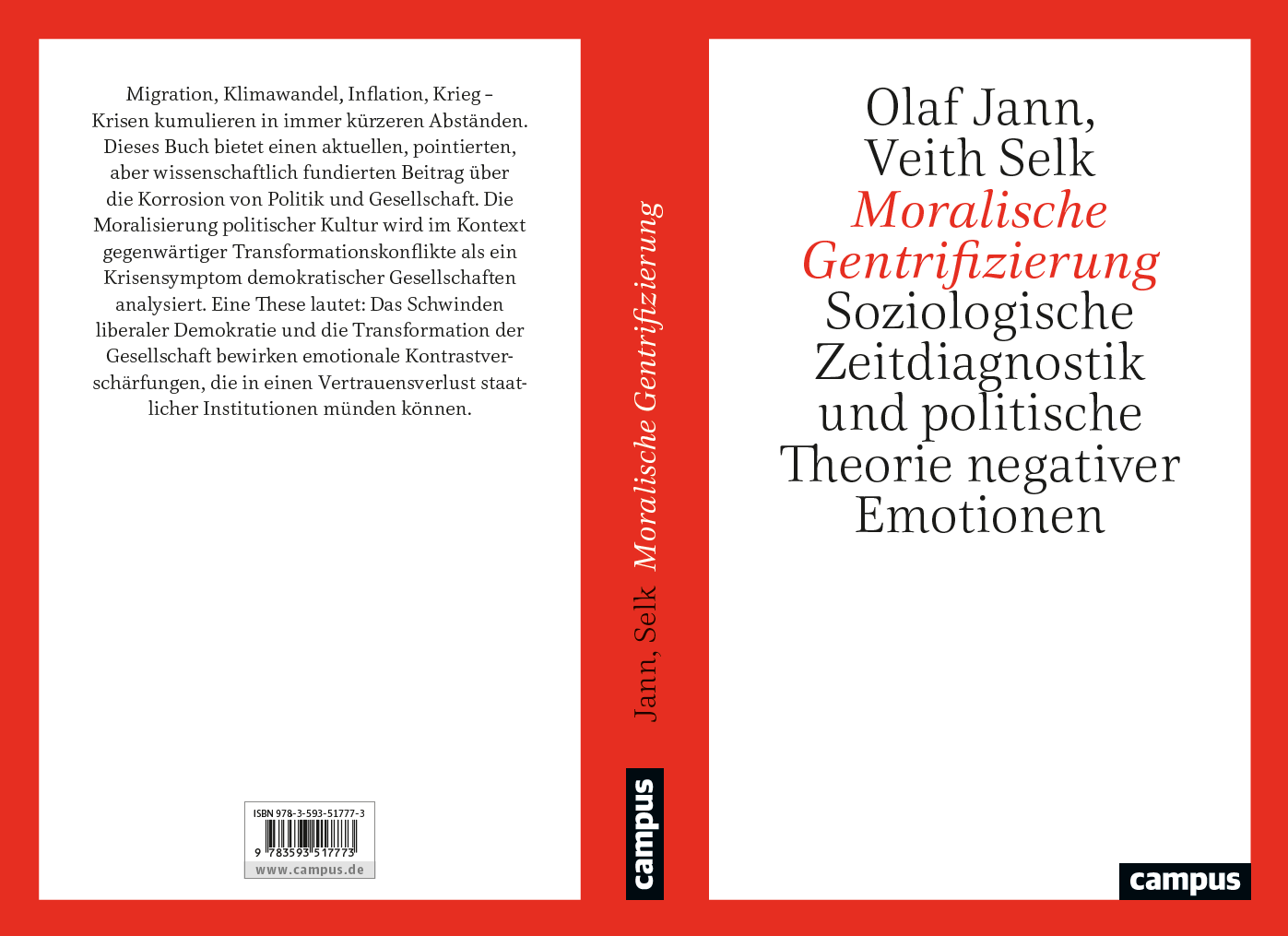
Dr. Olaf Jann is a Lecturer in the Department of Social Sciences at the Faculty of Arts, University of Siegen. His work spans political sociology, sociological and political theory, and the history of ideas, with a strong emphasis on democracy, populism, and social conflict. He is actively engaged in interdisciplinary research and public discourse. His research interests include: Democracy and Populism Social and Political Conflict Theories Transformations in Higher Education Moralization, Emotionalization, and Polarization in Politics Critical Theory and Poststructuralism Neo-Machiavellian Political Thought Dr. Jann's recent publications and projects reflect a deep engagement with contemporary political phenomena, particularly the emotional and moral dimensions of public discourse. His work often explores the tensions between democratic ideals and current socio-political realities, analyzing movements, elite dynamics, and citizen science initiatives. He has co-led Volkswagen Foundation-funded projects on hate and moralization, emphasizing real-world societal challenges. His scientific contributions include a monograph on Moral Gentrification (2023) and numerous articles in journals such as psychosozial , vorgänge , and Leviathan . His publications demonstrate a consistent focus on diagnosing contemporary society through a critical theoretical lens. Dr. Jann is also active in public engagement, delivering lectures, workshops, and participating in media interviews on topics such as political hate, populism, and academic precarity. He has collaborated with researchers like Veith Selk and contributed to civic projects such as 'Talking about Populism.' While no formal students are listed, he has worked with student assistants, indicating mentorship roles. He is affiliated with research teams and projects centered on political theory and social diagnostics, often bridging academic and civic spheres. His work exemplifies a commitment to both scholarly rigor and societal relevance.
Prof. Bernhard Schmalenbach is a Professor of Special Education and Inclusive Education at Alanus University of Arts and Social Sciences (Alfter, Bonn) since 2008, and a lecturer in Inclusion at University of Bonn since 2017. His work focuses on curative education, autism research, phenomenology of corporeality, and the role of art in social professions. He holds a doctorate from the University of Cologne and has extensive experience in working with individuals with disabilities in Camphill communities. Educational Background: Studium der Heilpädagogik at University of Cologne Key Roles: Programme Director for Master of Arts in Special Education, Department of Educational Science Research interests include biographical research, support planning for individuals with disabilities, and Goethean phenomenological approaches to education. His publications span monographs, edited volumes, and journal articles on topics like diagnostic methods in special education and the anthropological significance of the hand in pedagogy. His recent articles (2020–2022) analyze needs assessment frameworks and the intersection of Waldorf pedagogy with philosophical methodologies. Despite prolific output, no scientific awards are explicitly mentioned. He advises multiple research projects and contributes to teacher training programs emphasizing art integration. Labs/Teams: Involved in research initiatives at Alanus University focusing on inclusive education and curriculum development.
M. Gaertner is a Research Fellow at Nürtingen-Geislingen University of Applied Science in Germany, with a concurrent research position at Stellenbosch University's Department of Botany and Zoology in South Africa. His work focuses on invasion ecology, ecological restoration, and biodiversity conservation, particularly in South African ecosystems like the Cape Floristic Region. Gaertner's research examines: Legacy effects of invasive plants (e.g., soil nitrogen changes post- Acacia removal) Urban invasion dynamics and ecosystem service tradeoffs Active restoration techniques for degraded fynbos habitats Prioritization frameworks for managing biological invasions Analysis of his 15 most recent publications (2018–2022) reveals consistent emphasis on: Urban/peri-urban invasion patterns Long-term vegetation recovery after invasive species control Soil-plant interactions in restoration contexts Multi-scale management strategies for alien species
Henriette Gunkel is a Professor at the Institute for Media Studies at Ruhr University Bochum, Germany, specializing in the transformation of audiovisual media with a focus on gender and queer theory . Her research interrogates the politics of time through decolonizing and queer-feminist frameworks. Affiliated with the Africa Multiple Cluster of Excellence as a Fellow Co-editor of We Travel the Space Way (2019) and Futures & Fictions (2017) Her current work explores mediated landscapes through imaging technologies (sensors, satellites) and landscapes as sentient media. She investigates the Namib Desert as a site of colonial violence and contemporary extraction, linking time, space, and non-life via Octavia Butler's concept of alien time and Elizabeth Povinelli's theoretical contributions. Recent publications analyze queer visual cultures , Black imagination , and care ethics in digital art practices. Collaborations with Ayesha Hameed, kara lynch, and Simon O’Sullivan underscore her interdisciplinary focus.
Jonathan Jeschke is Professor of Ecological Novelty at the Free University of Berlin's Department of Biology, Chemistry, and Pharmacy, and Head of the Evolutionary and Integrative Ecology Department at the Leibniz Institute of Freshwater Ecology and Inland Fisheries (IGB). He holds a Heisenberg Professorship funded by the DFG (2014-2019) and is a member of the Berlin-Brandenburg Institute of Advanced Biodiversity Research (BBIB). His research focuses on theoretical ecology, invasion biology, ecological novelty, evolutionary ecology, predator-prey relationships, biodiversity research, and urban ecology. Jeschke employs interdisciplinary integration and research synthesis approaches to understand biological invasions, species distribution dynamics, and ecological responses to global change. His work spans from theoretical frameworks to practical applications in invasion management. Analysis of his recent publications reveals strong emphasis on invasion mechanisms (niche dynamics, propagule pressure), cross-taxonomic impact assessment (GIDIAS database), cultural dimensions of invasions, and theoretical advances in ecological novelty. His work shows increasing integration of computational approaches with field studies. Heisenberg Professorship (DFG, 2014-2019) Jeschke leads the Jeschke Group focusing on Ecological Novelty, coordinating research across multiple institutions including IGB and FU Berlin. His work involves substantial grant funding for projects addressing biological invasions, ecological novelty, and biodiversity conservation. He actively contributes to international initiatives like the Alliance for Freshwater Life and develops standardized assessment protocols for invasive species.
Prof. Dr. Fabian Schuppert is a political theorist at the University of Potsdam , holding the Chair of Political Theory since 2020. His academic career spans institutions including Queen's University Belfast and the University of Zurich , with research focusing on republicanism, social equality, climate justice, and ethical risk frameworks. Current affiliation: University of Potsdam Prior roles: Senior Lecturer at Queen's University Belfast (2016-2019), Research Fellow (2013-2016), Postdoctoral Fellow (2010-2013) Research Themes explore: Republican theories of global justice and non-domination Ethical implications of climate change and systemic risks Structural inequality and decolonialism Intergenerational justice and historical responsibility Post-capitalist political economy models His peer-reviewed outputs demonstrate interdisciplinary engagement across political philosophy, environmental ethics, and social justice. Recent publications in npj Urban Sustainability and PNAS address planetary governance and climate transition policies. He co-edited Social Equality: Essays on What it Means to Be Equals (Oxford University Press, 2015). Advising includes mentoring PhD candidates like Glorianne Wilkins and Rabea Scholz . His teaching spans courses on climate justice, republicanism, and political institutions. Contact: fabian.schuppert@uni-potsdam.de | Office hours: Wednesdays 10:00-12:00 (Zoom and in-person)