Prof. Dr. Matthias Hoesch is a Professor of Practical Philosophy at the University of Trier since 2025. Previously, he held interim professorships at Trier University (2024) and served as Head of Project at the Cluster of Excellence 'Religion and Politics' at the University of Münster (2018-2022). His research focuses on Ethics of Migration , Political Philosophy , and Philosophy of History . Key Research Areas: Ethics of Migration Political Philosophy Normative Ethics Philosophy of History Digital Ethics Notable Academic Contributions: His recent publications examine refugee distribution ethics, integration obligations, and Kantian/Benthamite models. As convenor of the 2021-2024 Cooperation Group 'Normative Challenges of the European Asylum System' (ZiF), he advanced interdisciplinary migration policy analysis. He received the 2015 Society for Analytic Philosophy Prize for his essay on refugee admission quotas. Teaching: Offers courses on Introduction to Ethics , Philosophy of Digitalization , and Kant's Peace Treatise . His work bridges classical philosophical traditions with contemporary migration dilemmas, emphasizing secular reasoning and normative frameworks.
Dennis Sölch is a German philosopher and academic specializing in American philosophy, particularly Transcendentalism and Pragmatism, Process Philosophy, and Existential Philosophy. He holds a position as Associate Professor at the Faculty of Arts and Humanities, Department of Philosophy at Heinrich Heine University Düsseldorf. After completing his State Examination in Philosophy, English and American Literature, and English Linguistics in 2008, he served as a Research Assistant at Düsseldorf University from 2008-2010 and received a Doctoral Fellowship from the German National Academic Foundation from 2009-2012. He earned his PhD in Philosophy in 2013 with a dissertation on Process Philosophies, focusing on Alfred North Whitehead, Henri Bergson, and William James. In 2025, he completed his Habilitation at the University of Düsseldorf with the thesis 'Transcendentalism and Existential Philosophy: Historical and Systematic Perspectives from Ralph Waldo Emerson to Albert Camus.' Sölch's research interests span Metaphysics and the History of Metaphysics, American Philosophy (particularly Transcendentalism and Pragmatism), Process Philosophy, Philosophy of Education, Philosophy of Religion, and Philosophy of Hope. His work demonstrates a deep engagement with figures such as Ralph Waldo Emerson, Henry David Thoreau, William James, Alfred North Whitehead, Albert Camus, and Gabriel Marcel. He has held numerous visiting positions including at Klagenfurt University (multiple terms), Potsdam University, Opole University in Poland, and Tampere University in Finland. In 2016, he served as the William James Scholar in Residence at Potsdam University. Sölch's recent publications (2021-2024) reveal a strong focus on the intersections between Existential Philosophy and the Philosophy of Hope, with particular attention to Gabriel Marcel's thought. His work also explores connections between American Transcendentalism and European philosophical traditions, examining figures like Emerson and Thoreau through contemporary philosophical lenses. His publications span diverse formats including monographs, edited volumes, journal articles, and book chapters, demonstrating both scholarly depth and breadth across multiple philosophical subfields. Sölch has received recognition through several book reviews in prominent philosophical journals including Philosophisches Jahrbuch, Zeitschrift für Philosophische Forschung, and Nietzsche-Studien. His recent work shows increasing engagement with phenomenological approaches to hope and existential questions, suggesting an evolving research trajectory that bridges American and European philosophical traditions. His academic contributions include significant editorial work, particularly in the areas of Whitehead studies, American Pragmatism, and Existential Philosophy. He has organized and contributed to multiple edited volumes that bring together international scholars working at the intersections of these philosophical traditions.
Timothy Sparks is a Research Fellow at Coventry University's Department of Engineering and Computing, affiliated with the TUM Institute for Advanced Study (TUM-IAS) as a 2010 Hans Fischer Senior Fellow. His research focuses on detecting climate change impacts through long-term ecological data, particularly in phenology and biodiversity. He holds visiting professorships at Poznań University of Life Sciences and the University of Liverpool. Notable awards include the 2007 British Ecological Society Award and the Royal Meteorological Society Margary Lecturer (2002). Sparks' work emphasizes interdisciplinary collaboration, especially with Central/Eastern European researchers. His studies explore phenological shifts in plants, animals, and ecosystems, with contributions to global change biology. He has edited Climate Research and served on editorial boards of five journals, reflecting his leadership in ecological science. Recent publications highlight climate-driven changes in plant and animal behavior, invasive species resilience, and museum data applications for historical trends. His TUM-IAS fellowship advanced projects like biodiversity indicators and phenological forecasting for pests like bark beetles. Awards include recognition for ecological engagement and contributions to climate science. His research bridges data-driven methods with practical conservation, addressing urgent environmental challenges.
PD Dr. Cora Bender serves as an Associate Professor at the Institute of Social Anthropology within the Center for Media and Modernity Research (MeMo) at the University of Cologne, where her office is located at Liliencronstr. 6, 2.04, 50931 Cologne. Her academic profile centers on critical examinations of media practices, indigenous sovereignty, and the historical foundations of anthropological thought, particularly concerning Native North American communities. Her research program investigates tribal sovereignty through food systems in Upper Midwest Indigenous communities, indigenous media history, and the colonial legacy in anthropological knowledge production. Key methodological contributions appear in her co-edited Handbuch der Medienethnographie (2015), establishing frameworks for analyzing boundary objects in cultural transmission and media ethnography. Analysis of her 15 most recent publications (2014-2025) reveals three dominant trajectories: (1) Historical anthropology critiques through figures like Hortense Powdermaker and Dorothy Lee; (2) Contemporary indigenous sovereignty studies focusing on food security and media practices; (3) Theoretical interventions in boundary object theory and post-frontier cultural production. Her 2025 chapter "Collageable Lives" exemplifies this synthesis by re-examining Julius and Eva Lips' work through decolonial lenses. Scientific Awards: No awards are documented in the provided institutional profile. Advising and Grants: The University of Cologne profile does not reference doctoral advisees, research grants, or supervisory activities. Dr. Bender maintains active collaboration within the Center for Media and Modernity Research (MeMo), contributing to interdisciplinary projects examining media's role in cultural transformation, particularly regarding indigenous knowledge systems and post-colonial identity formation in North American contexts.
Friedhelm Decher is an Honorary Professor at the University of Siegen , specializing in philosophical anthropology, ethics, aesthetics, and the history of philosophy. His work explores intersections of philosophy with psychology, literature, and pedagogy. Education: Studied philosophy, German studies, psychology, and educational science; obtained Dr. phil. in Philosophy and German Studies Research Interests : Decher's scholarship focuses on existentialist themes like boredom, envy, and suicide, with significant contributions to understanding Nietzsche's and Schopenhauer's philosophies. His work bridges classical and contemporary debates in ethics, metaphysics, and emotional theory. Publications Trends : His recent articles (2007-2015) emphasize the philosophy of mind, epistemology, and existential emotions. Earlier works analyze 19th-century philosophical anthropology and Nietzsche-Schopenhauer comparisons. Teaching and Media Contributions : He has authored textbooks on values and norms, created lecture manuscripts on the mind, and produced radio/television segments on envy and boredom for outlets like WDR 3 and ORF.
Prof. Dr. Jonathan Jeschke is a Professor at the Department of Biology, Chemistry, Pharmacy of the Free University of Berlin and Head of the Department of Evolutionary and Integrative Ecology at the IGB Berlin. Since 2014, he has held a DFG-funded Heisenberg Professorship in Ecological Novelty. He is a member of the Berlin-Brandenburg Institute of Advanced Biodiversity Research (BBIB) since 2014 and previously served as Spokesperson for the Aquatic Biodiversity Programme at IGB Berlin (2016–2021). Education: Habilitation in Ecology (2011, LMU Munich & TUM), Doctorate in Ecology (2002, LMU Munich) Research Interests: Theoretical ecology, invasion biology, ecological novelty, evolutionary ecology, predator-prey relationships, biodiversity research, urban ecology, interdisciplinary integration, and research synthesis His research explores the dynamics of biological invasions, particularly focusing on niche shifts, management frameworks, and ecological novelty. He has contributed to the development of classification systems like EICAT+ and SEICAT, and his work bridges invasion ecology with network theory, game design, and citizen science. Recent publications emphasize predictive modeling, climate-driven invasions, and cross-border aquatic species management. Scientific awards include the DFG Heisenberg Professorship (2014–2019). He has served as an editor for Basic and Applied Ecology , Diversity and Distributions , and NeoBiota , among others. His group actively collaborates with international institutions and engages in policy advising for biodiversity protection.
Dr. Luke Adamson is a tenure-track Researcher in Research Area 3 'Syntax and Lexicon' at the Leibniz-Zentrum Allgemeine Sprachwissenschaft (ZAS), Berlin. Previously, he held a Postdoctoral Fellowship at Harvard University (2020–2022) and served as Lecturer at Rutgers University (2022–2023). He earned his PhD in Linguistics from the University of Pennsylvania (2019) and holds dual degrees from Oberlin College: a Bachelor of Arts in Psychology and a Bachelor of Music in Cello Performance (2010–2014). His research focuses on nominal features, grammatical gender, and syntactic modularity, with notable projects exploring gender locality hypotheses, coordination resolution in three-gendered languages, and suppletion phenomena. Collaborators include prominent linguists such as Elena Anagnostopoulou (University of Crete), Ruth Kramer (Georgetown University), and Stanislao Zompì (Universität Potsdam). Key contributions include work on gender assignment constraints in languages like Greek, Swedish, and Lithuanian, as well as syntactic interfaces in Jarawara and Italian. Recent presentations include invited talks at the University of Geneva (June 2025), Yale University (October 2024), and the Brussels Conference on Generative Linguistics (December 2024). He co-edits Linguistic Inquiry Squibs & Discussion and organizes the ZAS Brown Bag Lunches. His work has been supported by grants from the National Science Foundation and the European Research Council. Adamson’s academic networks span formal linguistics and typological studies, with ongoing projects addressing politeness pronouns in Romance languages, emotive predicates in clausal complements, and allosemy in Greek gender systems.
Anna-Sophie Schönfelder is a doctoral candidate and research assistant at Justus Liebig University Giessen in the CRC/TRR 138 'Dynamics of Security', focusing on Subproject C10. She serves as Deputy Spokesperson for doctoral students. Her academic career includes roles as Lecturer in political theory at Universities of Hamburg, Lüneburg, and Osnabrück (2014–2021), and Research Associate in DFG projects on Marx’s social critique (2012–2019). Schönfelder holds an M.A. in Democratic Governance and Civil Society from the University of Osnabrück (2012), with research on Marx and Arendt’s theories of political action. Her research focuses on critique of political economy , Marx studies , Arendtian political theory , and critique of antiziganism . Notable works include co-authored monographs like Truth and Revolution in Marx's Critique of Society (2023) and edited volumes like Kritik im Handgemenge (2018). She received the 2017 David Ryazanov Prize for contributions to Marx research. Teaching highlights include courses on State Theories (Leuphana Universität Lüneburg), Political Philosophy (Universities of Hamburg and Osnabrück), and Democratization Theories . Her articles span Marx’s journalistic work, revolutionary dynamics, and feminist critiques of gender norms, published in venues like Marx-Engels-Jahrbuch , Zeitschrift für politische Theorie , and public platforms like taz nord .
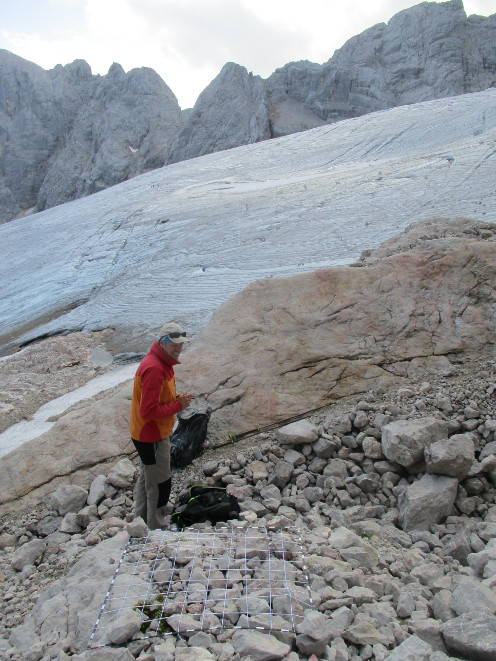
Ingolf Kühn is a Professor of Macroecology at Martin-Luther University Halle-Wittenberg and Head of the Department of Community Ecology at the Helmholtz Centre for Environmental Research (UFZ) in Halle, Germany. He is also a member of the German Centre for Integrative Biodiversity Research (iDiv) and holds a fellowship at the Swiss Federal Institute for Forest, Snow and Landscape Research (WSL). His research is centered on plant invasions, functional traits, and biodiversity responses to global change, with a strong methodological focus on spatial and phylogenetic modeling. His research interests span macroecology , plant invasion dynamics , urban and alpine flora , and data-driven ecological modeling . He has led major projects such as Biodiversity Meets Data (BMD) , eLTER PLUS , and AlienScenarios , and contributed to EU frameworks like EuropaBON and DAISIE . He is deeply involved in developing and managing large databases, including BiolFlor and the TRY Plant Trait Database . His recent publications focus on functional traits of invasive plants, biodiversity digital twins, and climate-driven shifts in species distributions. They reflect a strong trend toward integrating big data, machine learning, and macroecological theory to predict ecological change. Scientific Awards: Highly Cited Researcher (2014–2022) Fellow of the Swiss Federal Institute for Forest, Snow and Landscape Research (WSL) He serves as Editor-in-Chief of NeoBiota and Associate Editor of Journal of Vegetation Science . His advising spans PhD students and postdocs in the GLIMPSE cohort and iDiv projects. He leads multiple long-term monitoring initiatives, including alpine glacier forefield studies in the Dachstein and Berchtesgaden regions. He is affiliated with key research teams and platforms such as: Macroecology & Vegetation Science Working Group iDiv Science Strategy Board Task Forces: sTWIST, sUMMITDiv, sCoMuCra, sREGPOOL eLTER Research Infrastructure Biodiversity Digital Twin initiative
Richard Dören is a Senior Research Fellow at the Max Planck Institute for Comparative Public Law and International Law (MPIL) in Heidelberg, Germany. He serves as Ombudsperson for Good Scientific Practice (since 2023) and previously worked as Research Fellow at the MPIL (2018–2023). His academic work focuses on Public International Law, Comparative International Law, German Constitutional Law, and Legal History. Education: LL.M. from University of Michigan (2020), PhD in Law from University of Heidelberg (2023), specializing in business and human rights Current roles: Senior Research Fellow (since 2023), Book Review Editor of the Zeitschrift für ausländisches öffentliches Recht und Völkerrecht (2018–2024) His research explores intersections between business activities and international human rights obligations, jurisdictional immunities in international law, and historical dimensions of colonial legal frameworks. He has contributed to debates on cultural property restitution, corporate litigation under the Alien Tort Statute, and EU sanctions policy. Dören has received multiple prestigious awards, including the Salzburg Cutler Fellowship (2020) and DAAD scholarships. He actively participates in international conferences and academic networks related to international law and has taught tutorials at Heidelberg University since 2020. Scientific awards: Studienstiftung ius vivum PhD grant (2024), Konrad-Adenauer-Foundation scholarships, DAAD funding Professional memberships: Heidelberger rechtshistorische Gesellschaft, Deutsch-Amerikanische Juristen-Vereinigung He contributes regularly to academic blogs including Völkerrechtsblog and EJIL Talk! , focusing on contemporary legal challenges related to international litigation, cultural property, and geopolitical conflicts.
Dr. Christian Wendelborn is an academic staff member and visiting lecturer at the University of Mannheim's Department of Practical Philosophy / Business Ethics, where he has taught and conducted research since 2016. He concurrently serves as lecturer and coordinator for Ethics-Philosophy Studies at the University of Konstanz since 2014-2015. From 2020-2022, he contributed as a research assistant in the DATABLIC project at the German Cancer Research Center (DKFZ) in Heidelberg. His research spans: Metaethics : Normativity, theories of practical reasons, prudential good Applied Ethics : Data ethics, bioethics, animal ethics Political Philosophy : Freedom of expression, alienation theories Educational Philosophy : Pedagogy, educational justice His publications demonstrate consistent focus on metaethical frameworks (2015-2018) with later expansion into applied domains like migration ethics and educational policy. Recent works increasingly engage with sociopolitical applications of philosophical principles. Teaching includes seminars on practical philosophy (metaethics, normative ethics, political philosophy) and professional development courses for educators in philosophy/ethics. He leads specialized training in data ethics at the University of Konstanz. Research collaborations include the DATABLIC project at Heidelberg DKFZ, examining ethical dimensions of data utilization in scientific contexts.
Mattia De Vivo is a current Postdoctoral Researcher at the University of Trier (Faculty VI, Biogeography department) since September 2023, supervised by Prof. Dr. Henrik Krehenwinkel. He holds a Ph.D. in Biodiversity from the Taiwan International Graduate Program on Biodiversity (TIGP-BIODIV), jointly organized by National Taiwan Normal University and Academia Sinica, Taipei, Taiwan (2019–2023), with a dissertation on Chordodes formosanus (Nematomorpha). Education: Ph.D., Master’s (Sapienza University of Rome), Bachelor’s (University of Naples Federico II) Research Focus: Zoology, speciation, species delimitation, population genetics, phylogenomics, parasitology, and biogeography Key Projects: Environmental DNA (eDNA) applications, conservation genetics of stag beetles, niche modeling of invasive species Scientific Awards: AS-TIGP Research Performance Fellowship (2022) TIGP PhD Scholarship (2019–2022) Publications: 15 most recent include works on horsehair worms, coral reef zooplankton, stag beetles, and environmental DNA applications, covering disciplines like genetics, ecology, and parasitology.
Richard Hall is Professor of Education and Technology based in the Division of Education within De Montfort University's School of Applied Social Sciences. He contributes to teaching on evidence-based education and educational leadership, while supervising Masters and PhD students. His academic career is deeply embedded in critical perspectives on higher education structures and practices. Professor Hall's research spans several interconnected areas including higher education policy and pedagogy, co-operative and alternative forms of higher education, academic labour and alienation, and neoliberalism's impact on education. His work consistently examines the political economy of higher education, with particular attention to how market forces reshape academic work and student experiences. In recent years, he has focused on the experiences of marginalized student groups, especially Muslim students navigating the UK student finance system. His publications reveal a trajectory from analyzing academic labor conditions to broader critiques of the university as an institution, with increasing attention to decolonial perspectives, indigenous knowledge systems, and the potential for alternative educational models. His work increasingly engages with generative AI's implications for pedagogy and the future of intellectual work. HEA National Teaching Fellow (2009) Fellow of the Higher Education Academy Professor Hall actively supervises students and collaborates on research projects, notably mentoring Yusraa Maryam on her dissertation about Muslim student experiences with interest-bearing loans, which later expanded into a funded project with The Aziz Foundation. His current work includes a significant institutional audit examining British Muslim students' experiences in higher education. He is also engaged in critical analysis of academic complicity regarding Palestine-Israel, advocating for anti-colonial approaches in higher education.
Dr. Jakob Hartl is a Lecturer at the Institute of Sociology of Martin Luther University Halle-Wittenberg and a Research Fellow at the Research Institute for Social Cohesion since 2021. He holds a PhD in Sociology from the University of Bristol (2015-2019) and has been affiliated with the university's Institute of Sociology since 2018. Education: Diploma in Sociology from the University of Vienna (2005-2012) Prior roles: Research Associate at University of Bristol (2015-2018), Researcher at Institute for Advanced Studies Vienna (2012-2015) Dr. Hartl’s research focuses on social cohesion , political participation , and social inequality , with particular attention to electoral integrity, right-wing extremism, and the impact of precariousness on civic engagement. His work bridges empirical sociology with policy analysis, examining how structural factors shape individual outcomes across urban, regional, and national contexts. Recent publications (2017-2025) reveal a trajectory from educational and labor market dynamics to political sociology , including analyses of the Halle (Saale) attack, rural migration patterns, and electoral behavior. Articles often intersect with social inequality , urban development , and democratic legitimacy .
Dr. Anusa Daimon is a Senior Lecturer in the Department of History at the University of Malawi, Zomba, and a Research Fellow at the University of Freiburg (Germany) through the Alexander von Humboldt Foundation Georg Forster Fellowship (2023–2025). His academic career includes roles as Senior Lecturer and Chairperson at the University of Zimbabwe, as well as Research Associate at the University of the Free State. He holds a PhD from the University of the Free State (2016), an MA from the University of Zimbabwe (2007), and a BA Honours (2003). His research focuses on migration, border dynamics, citizenship, and ethnic minorities in Southern Africa, with regional emphases on Malawi, Zimbabwe, Mozambique, and South Africa. Current projects examine the African Union Border Program’s impact on Malawian-Mozambican border communities. His work integrates historical analysis with contemporary socio-political issues, emphasizing marginalized groups’ agency and state-society interactions. Key contributions include analyses of transnational labor movements, xenophobia, and citizenship struggles. His book Being Alien and Stateless: Trans-Zambezian Migrant Encounters with State Social Engineering in Zimbabwe (under review) explores state policies and migrant resilience. Other notable works address HIV/AIDS mobilization through cultural practices and the political manipulation of migrant votes in Zimbabwean elections. Awards include the prestigious Georg Forster Fellowship. His teaching spans African and global history at undergraduate/postgraduate levels at the University of Malawi and Zimbabwe since 2008.