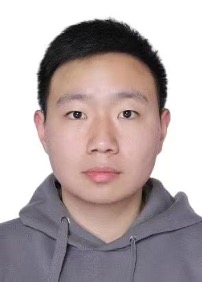
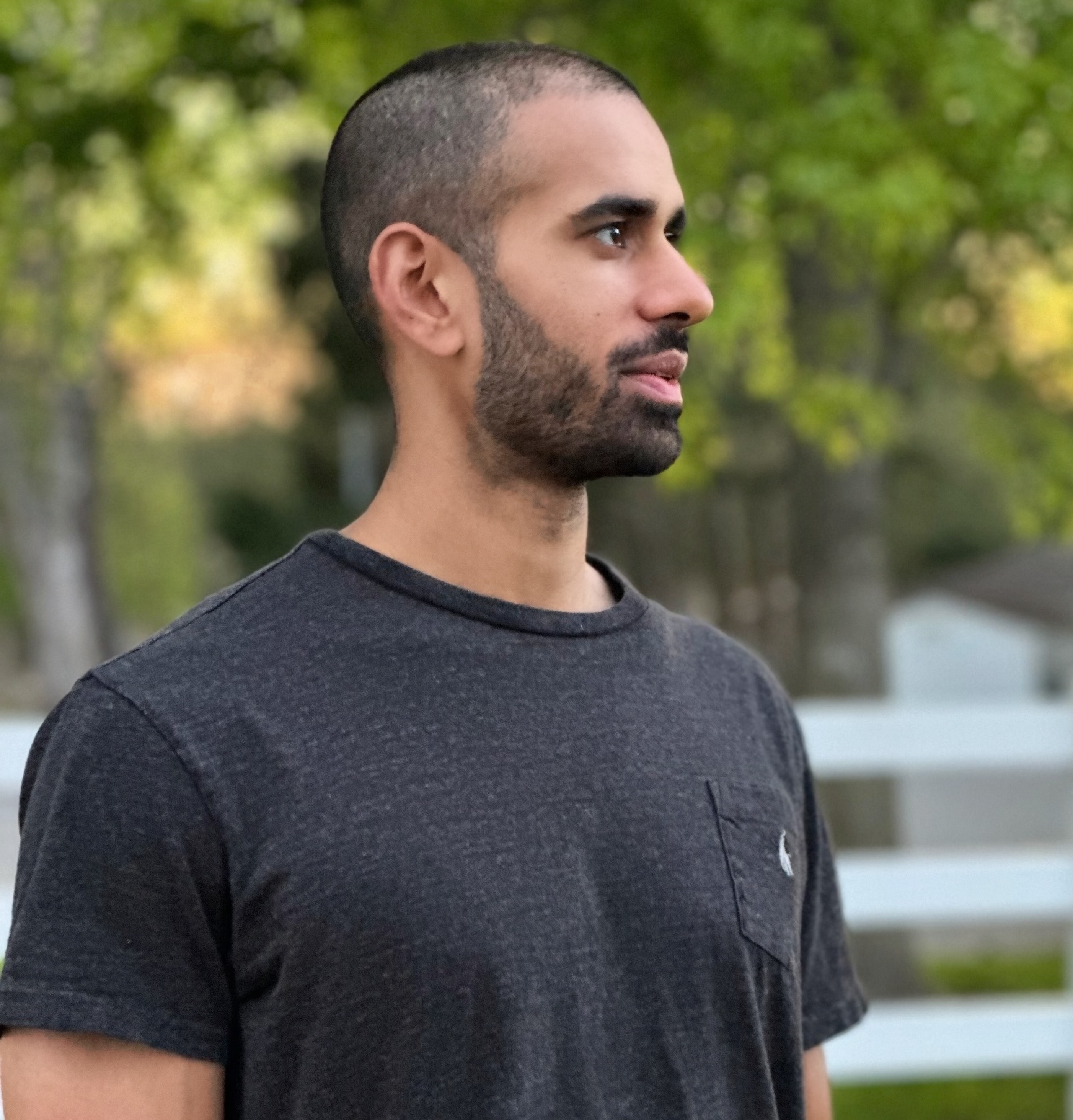
Dr. Kevin Kochersberger is an Associate Professor in the Department of Mechanical Engineering at Virginia Tech , with a career spanning academic research, technical innovation, and educational leadership. His work focuses on autonomous aerial systems , robotic control , and applied aerodynamics , particularly through the Uncrewed Systems Laboratory . Kochersberger's research has pioneered UAV-based radiation detection , 3D terrain mapping , and low-resource drone applications , including establishing the African Drone and Data Academy in Malawi . Education: Ph.D., Mechanical Engineering, Virginia Tech (1994) M.S., Mechanical Engineering, Virginia Tech (1984) B.S., Mechanical Engineering, Virginia Tech (1983) A.S., Engineering Science, Jamestown Community College (1981) Kochersberger's publications demonstrate expertise in UAV path planning , smart material actuation , and radiation source localization , with over $9M in research funding. His scientific awards include AIAA Associate Fellow (2009) and Aviation Week Aerospace Laureate (2003). Notable projects involve helicopter-deployable robotic systems and urban canyon navigation without GPS. Recent articles highlight BVLOS drone simulators , 2.5D terrain mapping , and autonomous negative obstacle traversal , reflecting his focus on real-time adaptive control and heterogeneous robotic systems . He teaches Drone Technology and Flight Operations and Advanced Design Projects , emphasizing student-driven innovation and industry collaboration .
Matthew Lakin is an Associate Professor with tenure in the Department of Computer Science at the University of New Mexico, with a courtesy appointment in the Department of Chemical & Biological Engineering. He is affiliated with the UNM Center for Biomedical Engineering and the School of Engineering, and collaborates extensively with the UNM Health Sciences Center and external institutions. Education: Ph.D., Computer Science, University of Cambridge, 2010 M.A. (Cantab), University of Cambridge, 2009 B.A. (Hons), Computer Science, University of Cambridge, 2005 Dr. Lakin's research focuses on molecular computing, DNA nanotechnology, synthetic biology, and formal verification of biomolecular circuits. He develops computational models and experimental systems for programmable biological devices, especially using heterochiral DNA to enhance stability in living cells. His work spans software tools for biodesign and experimental validation in mammalian systems, with applications in nanomedicine and biosensing. The recent publications highlight a strong trend in engineering robust, intelligent biomolecular systems. His work integrates machine learning concepts into chemical reaction networks, advances geometric modeling of DNA systems, and pioneers L-DNA-based circuits for intracellular applications. The research spans theoretical foundations, software tools, and wet-lab experimentation, emphasizing interdisciplinary innovation. Scientific Awards: Presidential Early Career Award for Scientists and Engineers (PECASE), 2025 NSF CAREER Award, 2021 UNM School of Engineering Junior Faculty Research Excellence Award, 2021 Multiple student awards under his mentorship, including the Outstanding Graduate Student Award and DNA28 Best Student Presentation recognition Dr. Lakin has advised numerous graduate and undergraduate students, including Ph.D. graduates in Biomedical Engineering and Computer Science. He leads major funded projects such as the NSF CAREER grant on heterochiral molecular computing, an EPSCoR Research Fellowship, and a $3M NSF grant on heavy metal biosensing in collaboration with Native American communities. He is also PI on multiple NSF grants related to synthetic cells and nucleic acid technologies. He directs the Lakin Lab for Programmable Biology, which operates within the Department of Computer Science and collaborates with Chemical & Biological Engineering and the Center for Biomedical Engineering. The lab emphasizes both computational modeling and experimental molecular biology, and runs an NSF-funded biotechnology summer camp in partnership with ¡Explora! science museum to strengthen STEM education in New Mexico.
Ruichen Zhang is a Research Fellow affiliated with the School of Physical and Mathematical Sciences and the School of Computer Science and Engineering at Nanyang Technological University (NTU). He earned his Ph.D. in Sept. 2023 from the School of Computer and Information Technology at Beijing Jiaotong University, China, with a visiting scholar stint at NTU's School of Computer Science and Engineering during his doctoral studies. Research Focus: AI for networking, generative AI-enabled networking, reinforcement learning in wireless communication networks, and AI applications in plasma turbulence analysis. Contact: Email ruichen.zhang@ntu.edu.sg . Recent Work: 2023 publication on energy efficiency in RIS-assisted SWIPT networks using PPO-based AI models and a 2022 study on coordinated beamforming in MU-MISO SWIPT-enabled HetNets with multi-agent DDQN approaches.
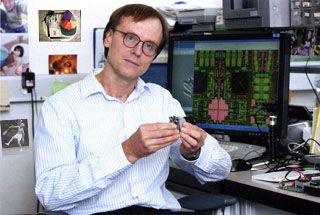
Brandon Lucia is a Professor in the Department of Electrical and Computer Engineering at Carnegie Mellon University's College of Engineering. He holds the Kavčić-Moura Professorship and leads the Abstract research group. As CEO and co-founder of Efficient Computer Corp., he bridges academic research with commercial applications in energy-efficient computing. Dr. Lucia received his Ph.D. in Computer Science and Engineering from the University of Washington in 2013, following an MS from the same institution in 2010 and a BS in Computer Science from Tufts University in 2007. His research focuses on the intersection of computer architecture, computer systems, and programming languages, particularly in energy-constrained environments. His primary research interests include intermittent computing, energy harvesting computers, orbital edge computing, and parallel computing systems. Lucia's work addresses fundamental challenges in creating programmable, reliable computing devices that operate without batteries by harvesting energy from their environments, with applications in sensing, medical implants, and space systems. He also investigates software systems and architectures for making parallel computing correct, reliable, and efficient in the post-Moore's Law era. Lucia's publication record shows a clear trajectory toward orbital edge computing and nanosatellite systems, with recent work focusing on computational constellations, visual navigation for satellites, and energy-efficient processing in space. His research spans both theoretical foundations of intermittent computing and practical implementations in hardware and software. 2021 Sloan Research Fellowship 2018 NSF CAREER Award 2018 ASPLOS Best Paper Award IEEE MICRO Top Picks in Computer Architecture (2009, 2010, 2016) 2015 OOPSLA Best Paper Award 2019 IEEE TCCA Young Computer Architect Award 2022 Engineering Faculty Award As an advisor, Lucia has mentored numerous graduate students including Brad Denby, Zhuo Cheng, and Kyle McCleary, many of whom have become co-authors on his significant publications. His lab developed the world's first batteryless PocketQube nanosatellite (Tartan-Artibeus-1), which was deployed to low-Earth orbit aboard the SpaceX Transporter-3 Rocket. Lucia's research has received funding from sources including NSF, DARPA, Google, and VMware, supporting both fundamental research and practical implementations of energy-harvesting computing systems.
Pratul Srinivasan is a Researcher at Google DeepMind specializing in Neural Radiance Fields (NeRF) , 3D scene reconstruction , and view synthesis at the intersection of computer vision , graphics , and machine learning . He earned his PhD from the EECS Department at UC Berkeley in 2020 under Ren Ng and Ravi Ramamoorthi , with prior research at Duke University on medical computer vision under Sina Farsiu . Research Interests: Pratul focuses on 3D reconstruction using neural fields, light field synthesis , illumination modeling , and diffusion-based 3D generation . His work addresses challenges in photorealistic rendering , real-time view synthesis , and inverse rendering with applications in astronomy and medical imaging . Publication Trends: Recent articles emphasize real-time NeRF (e.g., Bolt3D), refractive material modeling , shadow-based illumination recovery , and cross-scale generative synthesis . Collaborations span institutions including MIT , NVIDIA , and ETH Zurich . Scientific Awards: 2025 SIGGRAPH Significant New Researcher Award 2021 ACM Doctoral Dissertation Award Honorable Mention 2020 David J. Sakrison Memorial Prize Best Paper Awards at ECCV 2020, ICCV 2021, and CVPR 2022 Advising & Collaborations: Advised by Ren Ng and Ravi Ramamoorthi during his PhD, Pratul collaborates with researchers like Jonathan T. Barron , Ben Mildenhall , and Katherine L. Bouman . His work integrates differentiable simulations , Fourier feature networks , and multiplane image extrapolation . Technical Contributions: Key innovations include anti-aliased NeRF , memory-efficient rendering , refractive relighting , and multi-view relighting techniques , with impacts on virtual reality , astronomical imaging , and 3D content creation .
Tatsunori Hashimoto is an Assistant Professor of Computer Science at Stanford University, specializing in artificial intelligence, machine learning, and natural language processing. His research focuses on developing robust and ethical language models, addressing challenges in bias mitigation, fairness, and transparency. He leads projects like the Stanford Alpaca, exploring instruction-following models and their societal impacts. Key research interests include generative models, AI ethics, and privacy-preserving techniques. His recent work examines language model behaviors, security risks, and the societal implications of AI systems. Notable contributions include frameworks for auditing language models, improving factual accuracy, and reducing disparities in speech recognition. His publications highlight advancements in long-context processing, few-shot learning, and automated benchmarking. He emphasizes practical applications of AI while addressing dual-use concerns and ensuring alignment with human values.
Michael Feeley is an Associate Professor in the Department of Computer Science at the University of British Columbia (UBC), affiliated with the Institute for Computing, Information and Cognitive Systems (ICICS). His research focuses on operating systems, distributed systems, and their applications in scalable file systems, cloud storage, and mobile computing. He leads projects such as the Unico file system, Parallax storage system, and Remus virtual machine replication framework. His research interests include peer-to-peer file systems, mobile ad hoc networks, interference mitigation in wireless networks, and system software for workstation clusters. He has supervised numerous graduate students, contributing to advancements in distributed systems and networking. His work often addresses challenges in resource management, fault tolerance, and performance optimization. Publications span topics like interference detection in WiFi networks, dynamic program analysis (Tralfamadore), and distributed storage solutions. Feeley teaches courses such as CPSC 213, emphasizing operating systems fundamentals. His office is located in CISR 393, with contact details available via email and phone.
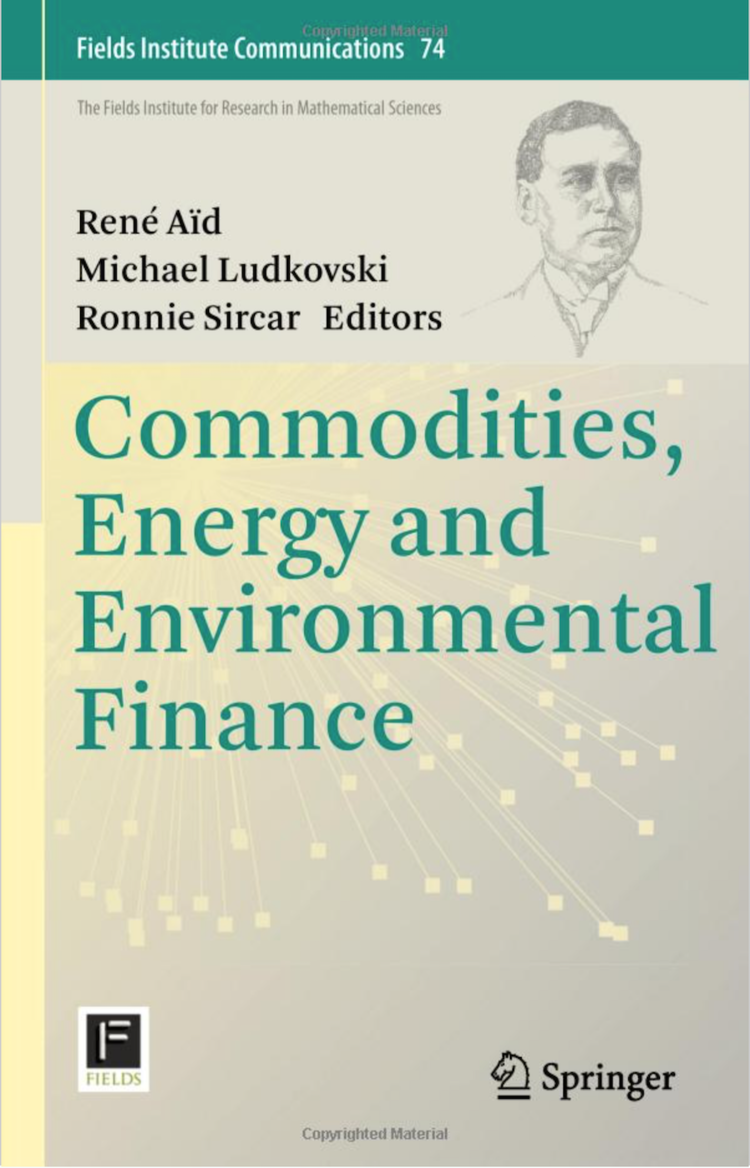
Ronnie Sircar is the Eugene Higgins Professor of Operations Research and Financial Engineering at Princeton University , where he contributes to the Department of Operations Research and Financial Engineering (ORFE). His work spans financial mathematics, stochastic modeling, and applied probability, with a focus on market volatility, optimal investment strategies, and dynamic game theory. Email: sircar@princeton.edu Office: Sherrerd Hall, Room 208, Princeton, NJ 08544 His research interests include: Stochastic Volatility: Asymptotic analysis, calibration, and impact on option pricing and portfolio optimization. Mean Field Games: Applications to cryptocurrency mining, energy markets, and interbank network formation. Portfolio Theory: Forward performance processes, drawdown constraints, and risk-averse strategies. Credit Risk: Multi-name credit derivatives, CDO valuation, and risk measures. Energy Systems: Renewable reliability, unit commitment, and electricity market design. Recent publications emphasize mean field games in energy and blockchain, stochastic volatility in portfolio optimization, and machine learning applications for financial engineering. He has advised graduate students such as Giulia Crippa, Nicolas Garcia, and Burak Aydin, often collaborating with researchers including M. Soner, P. Chan, and A.M. Reppen.
Jose Israel Rodriguez is an Associate Professor in the Department of Mathematics at the University of Wisconsin-Madison. His research bridges applied algebraic geometry and algebraic statistics, focusing on nonlinear algebra, maximum likelihood estimation, monodromy, and polynomial systems in engineering and science applications. Primary Affiliation: Department of Mathematics , UW-Madison Additional Affiliations: Department of Electrical & Computer Engineering , Institute for Foundations of Data Science Research Interests : Applied algebraic geometry for nonlinear eigenvalue problems and kinematics Algebraic statistics in nearest point problems and likelihood geometry Numerical methods for monodromy, Galois groups, and polynomial optimization Teaching and Mentorship : Co-organized the Collaborative Undergraduate Research Laboratory (CURL) for Spring 2020 Advises PhD students Julia Lindberg and Zinan Wang , with Bernd Sturmfels as his own PhD advisor Developed software tools like Multiregeneration and Decomposable Sparse Polynomial Systems Academic Contributions : Authored over 20 peer-reviewed publications in journals like SIAM Journal on Applied Algebra and Geometry, Foundations of Computational Mathematics, and Journal of Symbolic Computation Organized international conferences including Monodromy and Galois Groups in Enumerative Geometry and SIAM AG19 Active member of the SIAM community and developer of the Matroids Day seminar
Kwang Moo Yi is an Assistant Professor in the Department of Computer Science at the University of British Columbia (UBC), where he conducts research in computer vision and machine learning. He is affiliated with the Computer Vision Lab, CAIDA (Centre for Artificial Intelligence Decision-making and Action), and ICICS (Institute for Computing, Information and Cognitive Systems) at UBC. Education: B.Sc. from Seoul National University Ph.D. from Seoul National University under Prof. Jin Young Choi Post-doctoral researcher at École Polytechnique Fédérale de Lausanne (EPFL) with Prof. Pascal Fua and Prof. Vincent Lepetit Dr. Yi's research focuses on Visual Geometry with the goal of understanding local environments, adapting to them, and acting within them. His work spans applications in autonomous vehicles, drones, robots, and Augmented/Mixed Reality systems. He employs machine learning, particularly deep learning, as the primary tool for advancing computer vision capabilities. His recent publications demonstrate a strong focus on neural rendering techniques, especially 3D Gaussian Splatting and Neural Radiance Fields (NeRF). The research trends show increasing sophistication in handling occlusions, improving rendering quality, and developing more efficient training methods for neural fields. There's also significant work connecting computer vision with practical applications in industrial settings and energy systems. Dr. Yi serves as an area chair for top computer vision and machine learning conferences including CVPR, ICCV, ECCV, NeurIPS, ICML, and AAAI. He was part of the organizing committee for CVPR 2023. He supervises graduate students including Eric (who recently completed his PhD), Gopal (now at Samsung Research), and Jeong-Gi (joining as a postdoctoral fellow). His teaching includes CPSC 425: Computer Vision and CPSC 533Y: 3D Computer Vision with Deep Learning. Dr. Yi is actively involved with the Computer Vision Lab at UBC, collaborating with researchers across CAIDA and ICICS. His work bridges theoretical computer vision with practical applications in various domains including astronomy, industrial automation, and energy systems.
Risto Miikkulainen is a Professor of Computer Science and Neuroscience at the University of Texas at Austin and VP of AI Research at Cognizant AI Lab. He directs the UTCS Neural Networks Research Group and is currently on leave from UT, working on Evolutionary Computation and Deep Learning at Sentient Technologies, Inc. Education: Ph.D. in Computer Science, UCLA, 1990 M.S. in Applied Mathematics, Helsinki University of Technology (now Aalto University), 1986 Risto Miikkulainen's research focuses on biologically-inspired computation such as neural networks and evolutionary computation. His work spans three main areas: (1) Neuroevolution, evolving complex deep learning architectures and recurrent neural networks for sequential decision tasks in robotics, games, and artificial life; (2) Cognitive Science, developing models of natural language processing, memory, and learning that shed light on disorders such as schizophrenia and aphasia; and (3) Computational Neuroscience, studying the development, structure, and function of the visual cortex, episodic memory, and language processing. His research combines theoretical understanding of biological information processing with practical applications for developing intelligent artificial systems. His recent publications (2025) show a strong focus on evolutionary approaches to AI development, particularly in neural architecture search, loss function optimization, and explainable AI. Many papers explore the intersection of evolutionary computation with deep learning, creating more efficient and transparent AI systems. His work spans theoretical foundations and practical applications in areas ranging from environmental control systems to cognitive modeling. Scientific Awards: College of Fellows, International Neural Network Society, 2024 Best Pathway to Impact Award, NeurIPS Climate Change workshop, 2024 AAAI Fellow, 2023 IEEE CIS Evolutionary Computation Pioneer Award, 2020 Gabor Award, International Neural Network Society, 2017 Outstanding Paper of the Decade Award, International Society for Artificial Life, 2017 IEEE Fellow, 2016 Multiple Best Paper Awards at GECCO, CIG, and CEC conferences Deployed Application Award, AAAI/IAAI-2013, AAAI/IAAI-2018 Miikkulainen has extensive experience mentoring students through undergraduate research courses like CS378 Computational Intelligence in Game Design I and II, where students develop independent research projects on the OpenNERO research platform. He has received multiple awards for deployed applications, demonstrating the practical impact of his research. His work has led to the development of the NERO game platform, which serves as both an educational tool and research platform for AI. He directs the UTCS Neural Networks Research Group, which focuses on neuroevolution, cognitive science models, and computational neuroscience. The group has developed the NERO (Neuro-Evolving Robotic Operatives) platform, a machine learning game that allows users to train intelligent agents through evolutionary computation. The group's work spans theoretical research and practical applications in AI, with connections to both academic and industry partners.
Tobi Delbruck is a titular professor of physics and electrical engineering at ETH Zurich, where he leads the Sensors Group at the Institute for Neuroinformatics (INI) in Zurich, Switzerland. He collaborates closely with Shih-Chii Liu and Giacomo Indiveri as part of the 'hardware groups' at INI. Delbruck has also served as visiting faculty at Caltech and is a Fellow of the IEEE. His work focuses on bio-inspired and neuromorphic event-based sensory processing systems. Professor Delbruck's research spans multiple areas of neuromorphic engineering, with particular emphasis on event-based vision systems and low-power analog VLSI circuits. His work has significantly advanced the field of Dynamic Vision Sensors (DVS), which mimic the human retina's response to changes in brightness rather than capturing full frames. This approach enables extremely low-latency vision processing with minimal power consumption, making it ideal for high-speed applications and robotics. His research has applications in robotics, autonomous systems, and low-power embedded vision. Delbruck is an active contributor to the neuromorphic engineering community, co-organizing the annual Telluride Workshop on Neuromorphic Engineering and serving in leadership roles with IEEE. He has authored numerous influential publications and co-authored books including "Event-Based Neuromorphic Systems" and "Analog VLSI: Circuits and Principles." His jAER (Java Address-Event Representation) project provides open-source tools for real-time event-based sensory processing. Analysis of his recent publications shows a clear trend toward integrating event-based vision with deep learning techniques and applying these systems to practical robotics problems. His scientific achievements have been recognized with multiple awards including: IEEE Fellow Winner of Best Live Demonstration award at ISCAS 2012 Honorable Mention Award from Sensory Systems Technical Committee at ISCAS 2012 Overall Best Student Paper Award and Best Paper Award from Sensory Systems Technical Committee at ISCAS 2010 Winner of the 2006 ISSCC Jan Van Vessem Outstanding European Paper Award Professor Delbruck actively mentors students and has supervised numerous PhD and Master's theses in the areas of neuromorphic engineering and event-based vision systems. His group has secured significant research funding from various sources to support their innovative work in bio-inspired sensory processing. He teaches courses on "Electronics for Physicists II (Digital)" and "Neuromorphic Engineering," helping to train the next generation of researchers in this field. The Sensors Group at INI, which Delbruck leads, operates state-of-the-art facilities for designing and testing neuromorphic vision systems. The group maintains close collaborations with researchers worldwide and has developed several important open-source resources including the jAER project and bias generator design kits. Their work continues to push the boundaries of what's possible with event-based sensory processing, with applications ranging from high-speed robotics to low-power embedded vision systems.
Aviad Levis is an Assistant Professor at the University of Toronto's Department of Computer Science, starting July 2024. He is affiliated with the Dunlap Astronomical Data Science and Technology Group (DADDAA) and collaborates with the Toronto Computational Imaging Group alongside Kyros Kutulakos and David Lindell. Previously, he was a postdoctoral researcher at Caltech's Computing + Mathematical Sciences department under Katherine Bouman, working with the Event Horizon Telescope (EHT) collaboration. PhD in Electrical Engineering from the Technion (supervised by Yoav Schechner) Research focuses on computational imaging tools at the intersection of AI and physics Develops algorithms for 3D tomography in both cloud physics and black hole imaging Recipient of ERC Synergy grant for CloudCT space mission His research spans two major domains: Computational Climate Imaging through cloud tomography to improve climate models, and Black Hole Imaging with the EHT collaboration. He pioneered methodologies for 3D cloud structure recovery using scattered sunlight and contributes to dynamic 3D reconstructions of black hole environments. Current interests include non-linear inverse problems, equation discovery from data, and ML-accelerated scientific simulations. Recent publications highlight advancements in atmospheric tomography and black hole emission modeling. His work on CloudCT involves coordinated nano-satellites for 3D cloud imaging, while EHT contributions include first images of Sagittarius A* (2022) and ongoing development of algorithms for 3D structure recovery. The ERC Synergy grant underscores his impact on climate imaging technology. Personal Website Work Email
Scientia Professor Robert Kohn is a distinguished academic at the University of New South Wales, holding a position in the School of Economics within the UNSW Business School. With a career spanning several decades, Professor Kohn has established himself as a leading expert in statistical methodology and econometric modeling. His research has significantly contributed to Bayesian statistics and computational methods for complex data analysis. Professor Kohn's research focuses on advanced statistical methodologies including Bayesian methodology, variable selection and model averaging, nonparametric regression models, time series modeling, multivariate Gaussian and non-Gaussian regression, and Markov chain Monte Carlo simulation algorithms. His work bridges theoretical statistics with practical applications across economics, finance, and cognitive science. His research demonstrates a consistent trajectory toward developing more efficient computational methods for complex statistical models, with recent work emphasizing variational Bayesian methods, particle filtering techniques, and applications to time series analysis. Analysis of his recent publications (2022-2025) reveals a strong focus on advancing computational statistical methods, particularly in Bayesian inference for complex models. His work shows increasing integration of machine learning techniques with traditional statistical methods, especially in handling high-dimensional data and complex time series structures. Professor Kohn has made significant contributions to variational inference methods, particle-based computational techniques, and applications to financial time series and cognitive modeling. Professor Kohn has maintained an exceptionally productive research career with continuous publication output since the 1970s, demonstrating remarkable longevity and adaptability in his research focus as statistical methodologies have evolved. His work shows strong international collaboration, particularly with researchers in Australia, the United States, and Europe, reflecting his standing in the global statistical community.
Justine Sherry is the A. Nico Habermann Associate Professor of Computer Science at Carnegie Mellon University, affiliated with the College of Engineering. She holds a PhD (2016) and MS (2012) from UC Berkeley and a BS/BA (2010) from the University of Washington. Her research focuses on networked systems, including middleboxes, cloud computing, congestion control, and hardware acceleration (e.g., SmartNICs/FPGAs). Notable projects include Pigasus (open-source 100Gbps IDS), APLOMB (cloud-based middlebox scaling), and BlindBox (encrypted traffic scanning). Her academic roles include serving on the SIGCOMM CARES Committee, DARPA ISAT Study Group, and ACM CoNEXT Steering Committee. Awards include the Alfred P. Sloan Fellowship, VMware Systems Award, and IETF Applied Networking Prize. She advises over 15 students and collaborates with industry partners like Intel and VMware. Research highlights include radical shifts in datacenter architectures (SmartNIC compute control), fairness in congestion algorithms (BBR analysis), and database-proxy innovations (Tigger with eBPF). Her teaching emphasizes systems as science labs, integrating experimental design and hypothesis testing into projects. Education: PhD UC Berkeley (2016), MS UC Berkeley (2012), BS/BA University of Washington (2010) Labs/Teams: CyLab, SNAP Research Group, CMU Portugal Collaboration Grants: NSF, Intel, Google Faculty Awards