Amirreza Yousefzadeh is an Assistant Professor specializing in computer architecture design for embedded systems. His research focuses on hardware acceleration for artificial intelligence, particularly in energy-efficient neuromorphic computing and edge AI applications. Research Interests Neuromorphic computing architectures Event-driven AI hardware Sparsity exploitation in neural networks Embedded vision systems Digital circuit design for AI Research Trends Recent work (2024-2025) demonstrates expertise in spiking neural networks (SNNs), activation sparsity, and hardware-software co-design for neuromorphic processors. Key areas include object detection, energy efficiency optimization, and digital implementations of synaptic delays. Technical Contributions Developed SENMap for multi-objective data-flow mapping Created SENSIM simulator for multi-core neuromorphic systems Investigated 3D stacking for memory-dominated architectures Explored temporal sparsity in event-based processing
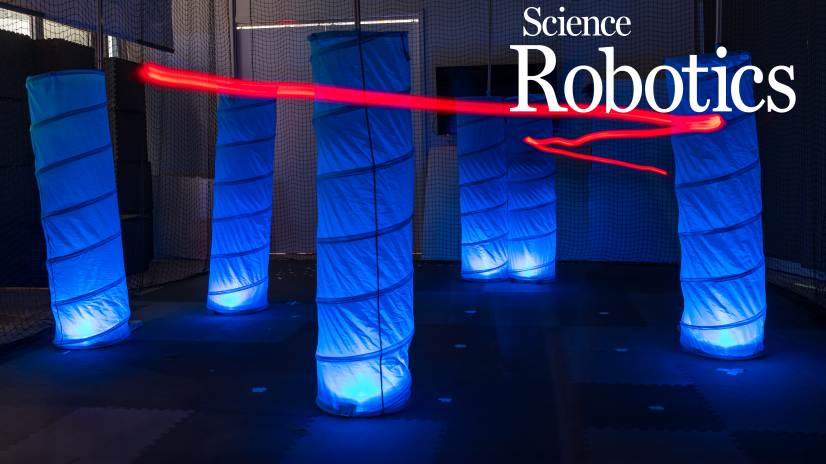
Nitin J Sanket is an Assistant Professor in the Robotics Engineering Department at Worcester Polytechnic Institute, where he leads the Perception and Autonomous Robotics Group (PeAR) founded in 2022. His research focuses on advancing autonomy for tiny mobile robots through bio-inspired approaches that enable on-board sensing and computation without external infrastructure. Ph.D. in Computer Science from University of Maryland, College Park (2021) M.S. in Robotics from University of Pennsylvania (2016) B.E. in Electronics and Communication from M. S. Ramaiah Institute of Technology, Bangalore, India (2013) Professor Sanket's research centers on four interconnected thrusts: Active perception (using movement to simplify perception problems), Interactive perception (selectively interacting with the environment), Novel perception (using data statistics like neural network uncertainty), and Novel sensing (employing sensors like event cameras). His work targets extreme resource-constrained robots, exemplified by the world's first RoboBeeHive prototype – hummingbird-sized nano-quadrotors capable of pollination with all sensing and computation performed on-board. His lab's 'Minimal-AI' philosophy emphasizes efficiency, using perception-action synergy to solve complex problems with minimal computational resources. His recent publications reveal a strong focus on efficient vision algorithms for tiny robots, with papers in Science Robotics (featured on the cover), IEEE ICRA, IROS, and CVPR. Key themes include uncertainty modeling for resource-constrained systems, event-based vision, and bio-inspired navigation. His work frequently bridges theoretical innovation with practical implementation on real hardware. Larry S. Davis Award for Best Computer Science PhD Thesis at University of Maryland (2021) MDPI Drones 2021 PhD Thesis Award Brin Family Prize (2018) Science Robotics cover feature (2023) Professor Sanket actively mentors 19 students (3 PhD, 6 Masters, 10 undergraduates) and recently secured a $705K NSF grant (September 2025) for bio-inspired sound navigation in tiny robots. His lab emphasizes hands-on experience with real hardware systems rather than pure simulation. His research on bat-inspired drones for search and rescue operations has received extensive media coverage from Associated Press, Washington Post, NPR, and other major outlets, demonstrating the real-world relevance of his work. The Perception and Autonomous Robotics Group (PeAR) provides students with opportunities to work on cutting-edge problems in nano-drone development, bio-inspired navigation, and minimal-AI approaches, preparing them for careers at the forefront of robotics innovation.
Prof. Dr. Klaus R. Pawelzik is a Professor at the University of Bremen's Institute for Theoretical Physics, where he leads the Theoretical Bio- and Neurophysics research group. His research bridges theoretical physics and neuroscience, with laboratories located in the Cognium building on the university campus. His primary research interests include: Computational models of neural dynamics and information processing Neurophysics and mechanisms of cortical computation Brain-computer interfaces and neuroprosthetic systems Dynamical systems approaches to causality and network analysis Biologically plausible learning algorithms for spiking neural networks Attention mechanisms and sensory processing in primate brains Recent publications (2015-2020) demonstrate strong focus on attention mechanisms in visual processing, causal inference methods for dynamical systems, hardware implementations for neuroprosthetics, and biologically inspired learning algorithms. The work consistently integrates mathematical rigor with experimental neuroscience, featuring collaborations with neurophysiology labs and engineering groups. Prof. Pawelzik leads an active research team developing both theoretical frameworks and experimental platforms for neuroscience research. The lab specializes in open-source neurotechnology solutions, including wireless implantable devices for electrocorticography and FPGA-based processing systems for real-time neural signal analysis.
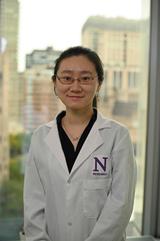
Dr. Zibo Zhao serves as Assistant Professor in the Department of Biochemistry and Molecular Genetics at Northwestern University's Feinberg School of Medicine. His primary affiliations include the Simpson Querrey Institute for Epigenetics, Robert H. Lurie Comprehensive Cancer Center, and Northwestern University Clinical and Translational Sciences Institute (NUCATS), where he conducts research at the intersection of cancer biology and epigenetic regulation. His academic training comprises: BS from Hong Kong University of Science and Technology (2011) PhD from University of Wisconsin-Madison (2015) Postdoctoral Fellowship in Cancer Epigenetics at Northwestern University (2021) Dr. Zhao's research centers on epigenetic drivers of cancer progression, with focus on chromatin remodeling complexes, transcriptional regulation, and molecular mechanisms in small-cell lung cancer and lymphoma. His work explores how epigenetic alterations influence tumor growth, immune evasion, and therapeutic resistance, particularly through MHC-II expression pathways and testis-specific transcription factors. Analysis of his recent publications reveals a strong interdisciplinary focus on cancer epigenetics (75% of output), with emerging collaborations in computational imaging and materials science. The predominant themes include chromatin-based therapeutic targets in aggressive cancers, epigenetic-immune system crosstalk, and molecular mechanisms of oncogenesis, reflecting his dual expertise in basic molecular biology and translational cancer research. No scientific awards are listed in his current professional profile. While specific student mentorship details aren't provided, his research program within the Lurie Cancer Center likely involves graduate trainees through Feinberg's PhD programs. His work appears supported by institutional resources from NUCATS and the Simpson Querrey Institute, with potential industry collaborations indicated through Northwestern's clinical trial infrastructure. Dr. Zhao maintains an active laboratory within the Simpson Querrey Institute for Epigenetics, conducting research at the Simpson Querrey Building (7-513) that integrates molecular biology approaches with computational analysis to identify novel epigenetic vulnerabilities in cancer.
Evi Zouganeli is an Associate Professor at the University of Oslo's Faculty of Mathematics and Natural Sciences, Department of Informatics. Her research spans from smart home technologies for elderly care to cognitive robotics and earlier work in optical networking. She leads interdisciplinary research in the "Assisted Living Project" funded by the Research Council of Norway under the SAMANSVAR programme (247620/O70), focusing on responsible innovations for dignified lives at home for people with mild cognitive impairment or dementia. Her research interests center around smart home technology, activity recognition, and sensor data analysis for elderly care applications. She develops advanced machine learning approaches including probabilistic models like SPEED and Active LeZi, as well as deep learning techniques like LSTM networks for predicting sensor events and activities of daily living. Her work involves collecting data from real homes with older adult residents using binary sensors and depth video cameras, with applications in healthcare monitoring and assistive living technologies. More recently, she has expanded into cognitive robotics, investigating how cognitive architectures can enhance AI-enabled robotic systems. Professor Zouganeli's publications show a clear research trajectory from optical networking in the early 2000s to her current focus on AI applications for healthcare. Her most recent work demonstrates strong interdisciplinary collaboration across computer science, healthcare, and gerontology fields. The research shows consistent improvement in prediction accuracy, with recent implementations achieving 77-87% accuracy for sensor event prediction and 61-90% for activity recognition depending on the apartment setup. As a supervisor, she has guided PhD students in the Faculty of Mathematics and Natural Sciences at the University of Oslo, with research funded by the Research Council of Norway. Her work involves collaboration with researchers from multiple disciplines, as indicated by the interdisciplinary nature of the "Assisted Living Project." She has also contributed to educational research, particularly in project-based learning approaches for programming education in electrical engineering.
Professor Evgeny Osipov is a full professor in Dependable Communication and Computation Systems at Luleå University of Technology, Department of Computer Science within the Department of Systems and Space Engineering. His research focuses on Communication and computing systems, with particular expertise in Artificial Intelligence frameworks. His educational background includes: PhD in Computer Science (Cum Laude) from University of Basel, Switzerland (2005) Licentiate of Technology in Telecommunications from KTH Royal Institute of Technology, Sweden (2003) Pre-doctoral school in Communication Systems from EPFL, Switzerland (1999) Engineer degree with Honors from Krasnoyarsk State Technical University, Russia (1998) Professor Osipov's research interests center around Vector Symbolic Architectures (also known as hyperdimensional computing), which serves as a bridge between symbolic and connectionist AI approaches. His work explores how mathematical properties of random hyperdimensional spaces can be leveraged for AI functionality, with potential applications in creating artificial general intelligence. His research is particularly relevant for low-resource machine learning tasks, such as those encountered in wearable Internet of Things devices. His recent publications (2024-2025) demonstrate a strong focus on improving classification performance using hyperdimensional computing techniques. He has explored confidence-driven training of centroids, implementations for spiking neural networks, and margin-based training approaches across numerous datasets to validate these techniques. Professor Osipov has received research funding from several notable organizations: Swedish Foundation for Strategic Research (grants UKR22-0024, UKR24-0014) Swedish Research Council (grants GU 2022/1963, 2022-04657) Luleå University of Technology Flemish Government Scholars at Risk (SAR) His active publication record across multiple high-impact journals indicates ongoing research activity and collaboration. His work on Vector Symbolic Architectures represents a significant contribution to the field of efficient AI computation, particularly for resource-constrained environments where traditional deep learning approaches would be impractical.
Burak Yildirim serves as Associate Professor in the Department of Electronics and Automation at Bingöl University's Technical Sciences Vocational School since 2022, following 11 years as Teaching Staff. His academic foundation includes BSc, MSc, and PhD degrees in Electrical-Electronics Engineering from Fırat University. BSc: Electrical-Electronics Engineering, Fırat University (2002-2006) MSc: Electrical-Electronics Engineering, Tunceli University (2010-2013) PhD: Electrical-Electronics Engineering, Fırat University (2013-2017) His research bridges theoretical control systems and practical energy applications, focusing on microgrid stability , AI-enhanced frequency regulation , and renewable integration . Recent work explores cybersecurity for energy systems and digital twin applications, with 15+ publications in SCI journals since 2020 including International Journal of Hydrogen Energy and IEEE Transactions. Dr. Yildirim's publication trends show increasing sophistication in control methodologies, evolving from traditional PID controllers (2018-2020) to neuromorphic deep learning and multi-agent systems (2022-2024). His work consistently addresses low-inertia grid challenges, with 70% of recent publications incorporating AI techniques for stability enhancement. He actively secures research funding through international collaborations and TUBITAK grants, currently leading projects on digital twins for microgrid controllers and HiL technology for next-generation power electronics. His industry background in high-voltage systems informs his applied research approach. Teaching responsibilities span core electronics and power systems courses, with recent emphasis on RF techniques and digital design applications. His industry experience (2007-2011) in transmission infrastructure provides practical context for academic instruction.
Nancy Lynch is the NEC Professor of Software Science and Engineering in MIT's Department of Electrical Engineering and Computer Science. She heads the Theory of Distributed Systems Group at MIT's Computer Science and Artificial Intelligence Laboratory (CSAIL). Her affiliations include MIT, University of Southern California, Brooklyn College, University of Washington, and Georgia Tech. Her research spans: Distributed computing theory and algorithms Formal modeling and verification of real-time systems Wireless network protocols Biological distributed algorithms (ant colonies, neural networks) Nanobot systems for medical applications Recent publications show a strong interdisciplinary focus, with work combining theoretical computer science with neuroscience and biology. Her group maintains an active publication record in top-tier conferences and journals. Professor Lynch actively advises graduate students and teaches courses including Distributed Algorithms at MIT. Her lab develops open-source tools like ParSwarm for evaluating distributed algorithms.
Professor Martin Bogdan serves as a Professor for Neuromorphic Information Processing at the University of Leipzig within the Faculty of Mathematics and Computer Science. His research spans multiple interdisciplinary domains including spiking neural networks, neuromorphic computing, and medical signal processing applications. University: University of Leipzig School: Faculty of Mathematics and Computer Science Department: Department of Neuromorphic Information Processing Office: Augustusplatz 10, Room P 531, 04109 Leipzig Contact: +49 (341) 97-32208 | bogdan@informatik.uni-leipzig.de Professor Bogdan completed his doctorate at the University of Tübingen in 1998 with research focused on signal processing of biological nerve signals for controlling prostheses using artificial neural networks. His educational background includes communications engineering at Offenburg University of Applied Sciences and studies at Université Grenoble I Joseph Fourier. Professor Bogdan's research interests center on neuromorphic information processing, with particular emphasis on spiking neural networks (SNNs), neurological plausible learning algorithms, and the incorporation of dynamics within synaptic efficiency. His work bridges computational neuroscience with practical applications in medical diagnostics, embedded systems, and real-time signal processing. His team has made significant contributions to understanding consciousness in locked-in syndrome patients through EEG analysis and developing innovative approaches to agricultural quality control using hyperspectral imaging and neural networks. The research demonstrates a consistent trajectory from foundational neural network architectures toward increasingly sophisticated neuromorphic computing applications. Analysis of Professor Bogdan's recent publication record reveals a strong focus on advancing spiking neural network architectures, particularly liquid state machines and synaptic dynamics models. His work increasingly bridges theoretical neuroscience with practical applications in medical diagnostics (particularly consciousness assessment in locked-in syndrome patients) and agricultural technology (using hyperspectral imaging for seed purity analysis). A notable emerging theme is the exploration of cognitive concepts like boredom in artificial intelligence systems, suggesting expanding interest in higher-order cognitive modeling within neuromorphic computing frameworks. Professor Bogdan leads the Department of Neuromorphic Information Processing at the University of Leipzig, supervising numerous PhD students and postdoctoral researchers. His team includes researchers specializing in various aspects of neural networks, signal processing, and applications in medical and agricultural domains. The department maintains active collaborations with medical institutions for clinical applications of their research, particularly in the area of brain-computer interfaces and consciousness assessment.