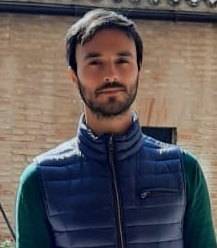
Domenico Amato is a Researcher (INFO-01/A) at the University of Palermo in the Department of Mathematics and Computer Science . He holds regular office hours on Mondays from 3:00 PM to 4:00 PM at Via Archirafi 34, Room 203, Second Floor. His research focuses on machine learning, biomedical image analysis, and data structure optimization. His recent work includes: Explainable AI for medical imaging (brain MRIs, histopathology) Graph Neural Networks in biomedical applications Development of Learned Indexes and efficient search algorithms Deep learning applications in data analysis and classification The trends in his publications show a strong emphasis on: Medical imaging analysis (gliomas, diabetic maculopathy, histopathology) Neural network interpretability and transparency Optimization of data structures through machine learning techniques Applications of AI in both healthcare and fundamental computer science
Giuseppe De Luca is a Research Fellow at the Department of Physics and Chemistry - Emilio Segrè, University of Palermo. His work spans interdisciplinary domains including theoretical physics, biophysics, machine learning, and social dynamics. Research Themes : Model averaging techniques, liquid-liquid phase separation, quantum complexity, holography, and social exclusion effects in education. Methodologies : Bayesian inference, multiscale analysis, and machine learning optimization. Recent publications focus on weighted-average least squares estimation, structural degradation in biomaterials, and virtual reality applications in psychological research. He contributes to the SHARE project with statistical expertise in survey weighting and imputation strategies.
Alessandro Emmanuel Pecora is a Ph.D. candidate in Computer and Systems Engineering (40th cycle, 2024-2027) at the Department of Control and Computer Science (DAUIN), Politecnico di Torino. He also serves as an external lecturer and teaching assistant. As a member of the Computer Graphics and Vision Group (CGVG), his research focuses on memory models for virtual agents and humans, integrating psychological foundations with computational architectures. This work aligns with emerging trends in artificial intelligence and extended reality (XR). He contributes to teaching as a course collaborator for Algorithms and Data Structures in the Computer Engineering program (2025/26 academic year).
Stefano Vigogna is an Associate Professor in the Department of Mathematics at the University of Rome Tor Vergata with significant contributions to theoretical machine learning. He is affiliated with the Rome Center on Mathematics for Modeling and Data Sciences (RoMaDS), focusing on the mathematical foundations of learning algorithms. His research expertise spans: Machine Learning Statistical Learning Theory Harmonic Analysis Professor Vigogna's publication record demonstrates deep theoretical work connecting advanced mathematics to machine learning. His research investigates the spectral properties, geometric structure, and convergence behavior of neural networks using functional analysis and harmonic analysis techniques. Notable publications include his 2022 ICML paper on multiclass learning with exponential convergence rates and numerous works exploring the mathematical properties of deep learning systems through reproducing kernel spaces. He teaches Statistica for the Master's program in Environmental Biology and Statistical Learning for the Master's program in Pure and Applied Mathematics, reflecting his dual expertise in mathematical theory and practical data science applications. Professor Vigogna maintains active collaborations with leading researchers including Lorenzo Rosasco and Ernesto De Vito, advancing our fundamental understanding of learning algorithms through rigorous mathematical analysis. His work represents an essential bridge between pure mathematics and the theoretical foundations of modern artificial intelligence.
Paola Magillo is an Associate Professor at the University of Genoa, affiliated with the Department of Computer Science, Bioengineering, Robotics and Systems Engineering (DIBRIS) and the Interschool Section of Mathematical, Physical and Natural Sciences. Her academic focus combines theoretical and applied aspects of computing with interdisciplinary engineering domains. Teaching Responsibilities: PROGRAMMING 1 (Code 52473) for Mathematical Statistics and Computer Data Processing PROGRAMMING 2 (Code 48382) for Mathematical Statistics and Computer Data Processing Her research interests span: Computer Science Fundamentals including algorithm design and data structures Bioengineering applications of computational methods Robotics systems development and automation Engineering methodologies for complex systems Contact Information: Email: paola.magillo@unige.it Phone: +39 010 353 6705 Appointments scheduled via email request
Valerio Freschi is an Associate Professor in the Department of Pure and Applied Sciences (DiSPeA) at the University of Urbino Carlo Bo. He specializes in computer science with a focus on algorithms, machine learning, and computational methods. His research interests span across several key areas in computer science including algorithms design, machine learning applications, deep learning architectures, and scientific computing. His work demonstrates a strong emphasis on both theoretical foundations and practical implementations of computational methods. Professor Freschi has been consistently teaching advanced computer science courses including Algorithms and Data Structures, Machine Learning, Deep Learning and Scientific Computing across multiple degree programs such as Informatics - Science and Technology and Informatics and Digital Innovation. Contact information: Phone: 0722 304418 Email: valerio.freschi@uniurb.it Address: Piazza della Repubblica, 13 - 61029 Urbino PU, Italy
Daria Arkhipova serves as Associate Professor in the Department of Management at Ca' Foscari University of Venice's Venice School of Management. Specializing in Business Economics (ECON-06/A), she maintains an active research profile centered on sustainability accounting and digital transformation in financial practices. Her academic work bridges theoretical frameworks with practical applications in evolving regulatory environments. Professor Arkhipova's research interests focus on ESG reporting mechanisms , non-financial disclosure practices , and digital technologies' impact on accounting professions . Her recent publications analyze European sustainability frameworks including CSRD implementation challenges, double materiality assessments, and big data applications in financial risk management. Current work examines how stakeholder pressures influence corporate ESG disclosure strategies across diverse industrial sectors. Her five most recent publications (2023-2025) reveal consistent thematic development toward understanding regulatory-compliance dynamics in sustainability reporting. Key trends include the integration of digital tools in ESG data verification, cross-border comparison of disclosure practices, and the evolving role of management accountants in sustainability governance structures. Professor Arkhipova actively contributes to academic knowledge through collaborative research projects. Her current work 'Fostering sustainability mindset' investigates how non-financial disclosure and corporate risk assessment drive ESG value creation, involving a multi-institutional research team examining European corporate practices. Available contact information includes university email (daria.arkhipova@unive.it) and office hours at San Giobbe campus (Fridays 13:45-15:45 by appointment). While specific teaching assignments aren't detailed, her expertise suggests involvement in graduate-level courses on sustainability accounting and digital transformation in financial management.
Dr. Giulia Risca is a researcher in the Department of Medicine and Surgery at the University of Milano-Bicocca, School of Medicine and Surgery. She recently completed her doctoral thesis on Bayesian methods for basket trials in rare diseases under the supervision of Professor Stefania Galimberti. Her research spans multiple domains including clinical trial methodology, hematology/oncology, and proteomics. Dr. Risca's research interests focus on developing innovative clinical trial designs for rare diseases, with particular expertise in Bayesian statistics and basket trial methodology. Her work addresses critical challenges in rare disease research where limited patient populations make traditional trial designs impractical. She has made significant contributions to understanding how information can be borrowed across sub-trials while maintaining appropriate statistical properties. Additionally, she conducts important translational research in CAR-T cell therapy for leukemia and develops diagnostic algorithms for iron metabolism disorders. Analysis of Dr. Risca's publication record reveals a strong focus on methodological innovation in clinical trials combined with impactful clinical applications. Her work demonstrates expertise in bridging statistical theory with practical clinical research needs, particularly in areas with limited patient populations. The publications span multiple disciplines but maintain a cohesive thread of methodological rigor applied to challenging clinical problems. Dr. Risca actively collaborates with clinical researchers across multiple medical specialties, contributing her statistical expertise to studies in hematology, oncology, nephrology, and ophthalmology. Her work on CARCIK-CD19 cell therapy, rare disease trial design, and diagnostic algorithms for iron overload represents significant contributions to their respective fields. She participates in multicenter studies across European institutions, demonstrating her integration into the broader research community. Dr. Risca leads research activities in biostatistics and clinical trial methodology, supervising analytical components of multiple clinical studies. Her work often involves developing and implementing sophisticated statistical approaches to address complex research questions where traditional methods are inadequate, particularly in the context of rare diseases with small sample sizes.
Antonio Genova is an Associate Professor in the Department of Mechanical and Aerospace Engineering at Sapienza University of Rome, where he has been working since 2019 (initially as Assistant Professor, promoted to Associate Professor in 2022). His expertise spans planetary geodesy, radio science, and spacecraft navigation, with significant contributions to multiple NASA and ESA missions including Europa Clipper, EnVision, BepiColombo, and JUICE. Dr. Genova received his PhD in Aerospace Engineering (2013) and Master of Science in Astronautical Engineering with honors (2009) from Sapienza University of Rome. Prior to his current position, he worked as a Research Scientist and Postdoctoral Associate at MIT's Department of Earth, Atmospheric and Planetary Sciences, with off-campus assignments at NASA Goddard Space Flight Center. His research focuses on planetary interior structure determination through gravity field analysis, precise orbit determination techniques, and radio science investigations of planetary bodies. His work has significantly advanced our understanding of Mercury's interior structure (including evidence for a solid inner core), Mars' polar ice deposits, and the geophysical properties of icy moons like Europa and Enceladus. Dr. Genova has developed innovative methods for spacecraft navigation using sensor fusion of optical and radiometric data, and has made important contributions to understanding planetary atmospheres through radio occultation measurements. Dr. Genova's recent publications demonstrate a strong focus on cutting-edge techniques in spacecraft navigation and planetary science. His work spans multiple planetary bodies including Mercury, Venus, Mars, Jupiter's moons, and Saturn's moons. A significant portion of his recent research involves the analysis of data from current and upcoming missions like BepiColombo, EnVision, and Europa Clipper, with emphasis on gravity science, atmospheric studies, and interior structure characterization. Rita Levi Montalcini Award for Young Researchers by the Italian Ministry of Education, University and Research (MIUR) (2018) Planetary Science (690) Division Peer Award at NASA Goddard Space Flight Center (2017) Dr. Genova has supervised multiple graduate students, including 5 M.Sc. students and 1 Ph.D. student in 2020, and 2 M.Sc. students in 2019. He has served as Co-Investigator on numerous high-profile space missions including Europa Clipper, EnVision, BepiColombo, and JUICE. He was Principal Investigator for a NASA-funded project on 'Solar System Planetary Geodesy Research' (2017-2018) and has been a member of multiple NASA mission teams including GRAIL, LOLA, MRO, and MESSENGER. As Co-chair of the Geodesy and Geophysics Working Group for the ESA/JAXA BepiColombo mission, Dr. Genova plays a key role in Mercury exploration. He is also a member of ESA's Science Program Voyage 2050 Topical Team, contributing to the strategic planning of future European space science missions.
Giulio Stefanini serves as Associate Professor of Cardiology at Humanitas University and Clinical and Interventional Cardiologist at IRCCS Humanitas Research Hospital and Humanitas S.Pio X Hospital in Milan. He leads clinical research for the Cardio Center at Humanitas Research Hospital, directing studies on complex cardiovascular interventions and outcomes. His educational background includes: Medical degree from Sapienza University of Rome PhD in Experimental Medicine MSc in Health Economics, Outcomes and Management in Cardiovascular Sciences from London School of Economics Professor Stefanini's research spans interventional cardiology with emphasis on coronary artery disease, transcatheter valve procedures, and antiplatelet therapy optimization. He integrates advanced imaging techniques like cardiac MRI and intravascular ultrasound with health economics analysis to improve procedural outcomes and patient management. His work frequently addresses high-bleeding-risk scenarios and complex vascular access challenges. Recent publications demonstrate concentrated focus on TAVR innovations, drug-coated balloon applications, AI-driven risk prediction, and in-silico procedural simulation. Key trends include personalized antiplatelet duration, mitral valve interventions, and registry-based evidence for complex coronary lesions. His scientific recognition includes: Fellow of the European Society of Cardiology (FESC) William Harvey Award from Italian Society of Cardiology Health Young Physician Leaders (YPL) programme nomination Multiple research grants from ESC and EAPCI Professor Stefanini has secured competitive funding including the Swiss National Science Foundation's SPUM grant and EAPCI research support. His leadership in the Cardio Center coordinates multicenter registries like HOSTILE and ULTRA-BIFURCAT. Current projects emphasize procedural standardization, minimalistic interventional approaches, and cardiovascular safety of emerging therapies. He directs the Cardio Center's clinical research activities, overseeing trials in complex PCI, structural heart disease, and cardiovascular outcomes research.
Maurizio Patrignani is a Full Professor of Computer Science at the Department of Civil, Computer and Aeronautical Engineering at Roma Tre University, where he has served since May 2017. Since November 2022, he has also held the position of Chair of the Computer Science and Engineering Faculty Board. His academic journey began with a "Laurea" degree in Electronic Engineering from the University of Rome "La Sapienza" in 1996, followed by a Ph.D. in Computer Science from the same institution in 2001. Patrignani's research spans multiple areas within computer science, with a strong focus on graph-related disciplines. His primary research interests include Computer Networks, Graph Drawing, Information Visualization, and Computational Geometry. He has developed expertise in Dynamic Graph Drawing, Orthogonal Drawings, Planarity and Planar Graphs, Upward Planarity, and Data Center Networking. His work often bridges theoretical computer science with practical applications, particularly in network visualization and analysis. The analysis of Patrignani's recent publications reveals a consistent focus on graph theory and its applications. His work demonstrates expertise in planar graph embeddings, orthogonal drawings, and upward planarity. Recent publications show increasing attention to practical applications of graph theory in network visualization, data center networking, and route planning. His research combines theoretical algorithm design with experimental validation and user studies, reflecting a comprehensive approach to solving complex problems in graph drawing and network analysis. Patrignani has been actively involved in numerous research projects throughout his career, including EU-funded initiatives like DELIS (Dynamically Evolving, Large Scale Information Systems) and GraDR (Graph Drawings and Representations), as well as national projects funded by MIUR. His collaborative work spans multiple institutions and researchers across Europe and beyond, demonstrating his significant role in the international computer science community. He has served on numerous program committees for major conferences in graph drawing and visualization, including the International Symposium on Graph Drawing (GD) where he was co-chair for GD 2008 and GD 2012. His organizational contributions extend to the Summer Workshop on Graph Drawing (SWGD) where he has been a member of the organizing committee since 2021. Patrignani's teaching portfolio at Roma Tre University includes courses on Algorithms and Data Structures, Computer Networks, Information Visualization, and Big Data Algorithms.